1890 Nickel Error List with Pictures

Thinness can reveal when a coin’s metal separated. Two different 1890 nickels sold for $690 and $1,050 in October 2022: one split before striking, while the other split afterward.
These 1890 Liberty Nickel errors have estimated values from $15–$3,500. The list also covers extra date strokes, incomplete blanks, displaced designs, and reversed impressions.
Compare the shape and both faces below to understand which manufacturing step produced each feature.
1. 1890 Liberty Nickel Curved Clip
A small crescent missing from the edge can start before the coin receives its design. The metal disk, or blank, is cut incompletely when the cutting punch overlaps an earlier hole in the strip.
The press can still strike that disk. A recorded 1890 example graded NGC VG10 has a curved clip of about 5% near three o’clock.
VG10 means the coin has substantial circulation wear. Even on a worn piece, the original rim beside the gap can retain clues that distinguish a clipped blank from a section removed afterward.
Estimated Value
Estimate $25–$350 for a genuine curved clip, depending on wear, size, and date readability. The recorded VG10 coin is a worn example, not a basis for assuming an unworn premium.
A different-design 1997-P Jefferson Nickel with a larger 20% clip sold for $124 in March 2025. That is a comparison for the mechanism, not a sale of the 1890 specimen.
A clear original edge matters more than a perfectly smooth arc that might have been cut later.
How to Identify
Hold the date upright and locate the recorded gap near three o’clock.
Inspect its upper and lower junctions with the rim through a 10× magnifier, looking for natural weakness rather than cuts through finished detail.
A scale can compare the reduced weight with the normal 5 g. Calipers across intact spans may still measure close to the usual 21.2 mm.
Look at the remaining plain edge and opposite rim, where weakness can support a clip. That opposite weakness is helpful but not enough on its own.
Check the missing arc for saw grooves or filing. The rim’s natural approach to both ends of the opening is a stronger test than the curved outline alone.
2. 1890 Liberty Nickel Broadstrike with a Complete Design
A wider border can surround a complete design when the coin spreads beyond its usual size during striking. The surrounding ring, called the collar, normally keeps that expansion under control.
Without normal collar restraint, the metal flows outward. This produces a broadstrike, which may be wider on one side than the other.
The type is reported for ordinary 1890 Liberty Nickels without a fixed measured specimen. Normal nickels already have plain edges, so missing edge grooves cannot establish a broadstrike, and a coin hammered flat afterward can also become unusually wide.
Estimated Value
A genuine 1890 broadstrike suggests an estimated $75–$750 whole-coin range. Natural expansion, preservation, and a clearly complete design are the main reasons to move within it.
For a related mechanism on a later design, a 1999-P Jefferson broadstrike brought $89 in March 2025. The older Liberty coin needs its own condition comparison rather than inheriting that exact figure.
This is an estimate for an identified example, not a recorded sale assigned to the year report.
How to Identify
Use calipers in several directions to compare a loose coin with the normal 21.2 mm diameter, then weigh it against 5 g. Expansion alone should not remove metal, so a large weight loss needs a separate explanation.
Follow every outer letter, star, and border detail on both faces through a 10× magnifier. All should fit inside the enlarged outline, unlike an off-center strike that loses part of the design.
Inspect the extended border and plain edge for flattening, hammer marks, or later rolling that could have widened a finished coin. Confirm that the complete design survives within naturally spread metal before treating extra width as a broadstrike.
3. 1890 Liberty Nickel Repunched Date
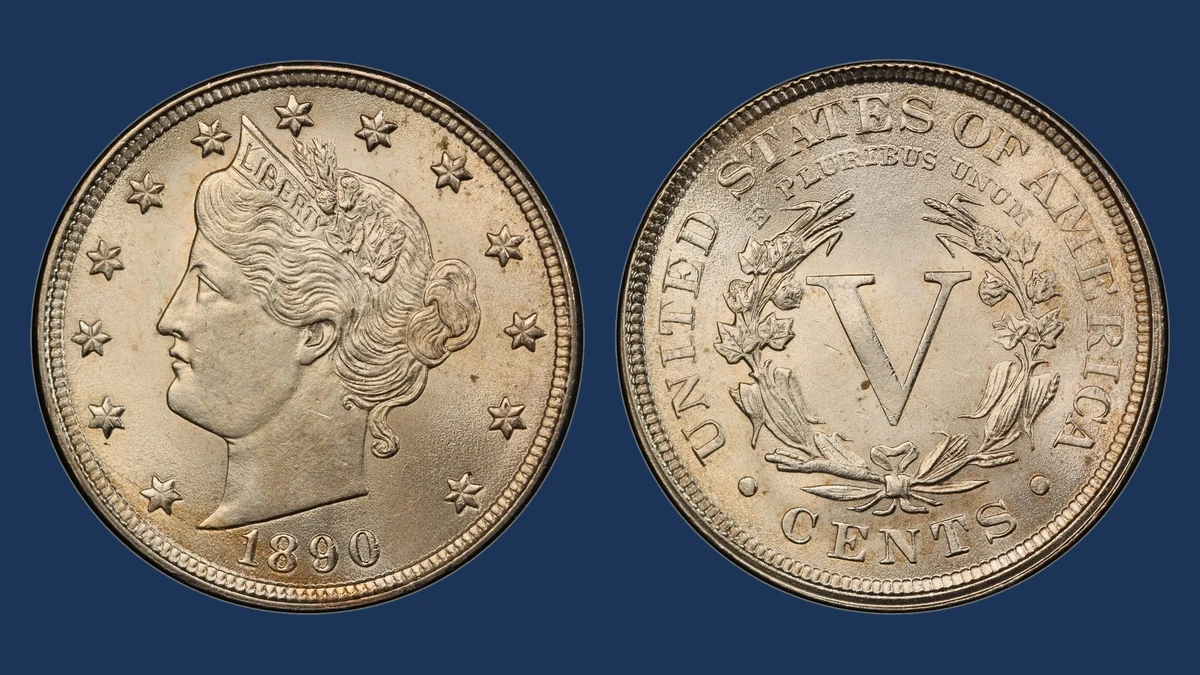
Tiny older date strokes can appear beneath or inside the finished numerals. They result from the date being punched into the steel stamping tool more than once in slightly different positions.
The finished coins repeat those outlines, producing a repunched date. Reported 1890 details include a trace below the top of 1 and traces inside the upper loops of 8 and 9.
FS-301 is a recorded variety for ordinary 1890 nickels. Matching an identified coin remains important, because roughness, scratches, or flat movement beside a digit can suggest extra strokes without the same tool-preparation mistake.
Estimated Value
An AU50 FS-301 example sold for $517 at GreatCollections in July 2013. Estimate $40–$1,000 for identified 1890 repunched dates, allowing for wear and the clarity of the extra outlines.
The PCGS record supplies that lightly worn comparison. It does not mean every thick-looking 1890 date belongs to FS-301.
An attractive unworn coin can be worth more than a heavily worn example, while cleaning may lower the value despite a visible extra date stroke.
How to Identify
Look inside the upper loops of the 8 and 9 rather than checking only the digits’ outer edges. A 10× magnifier also helps reveal the reported trace beneath the top of 1.
Compare the complete date with an identified example at the same scale. Use light from two directions to decide whether a trace is raised metal, a cut, or merely a reflection.
A loose nickel normally weighs 5 g and measures 21.2 mm; check with a scale and calipers and inspect its plain edge. Those standards help identify the coin but do not prove the variety.
Return to the three date locations and match the actual extra shapes. A doubled-looking rim elsewhere cannot substitute for the digit evidence.
4. 1890 Liberty Nickel Off-Center Strike
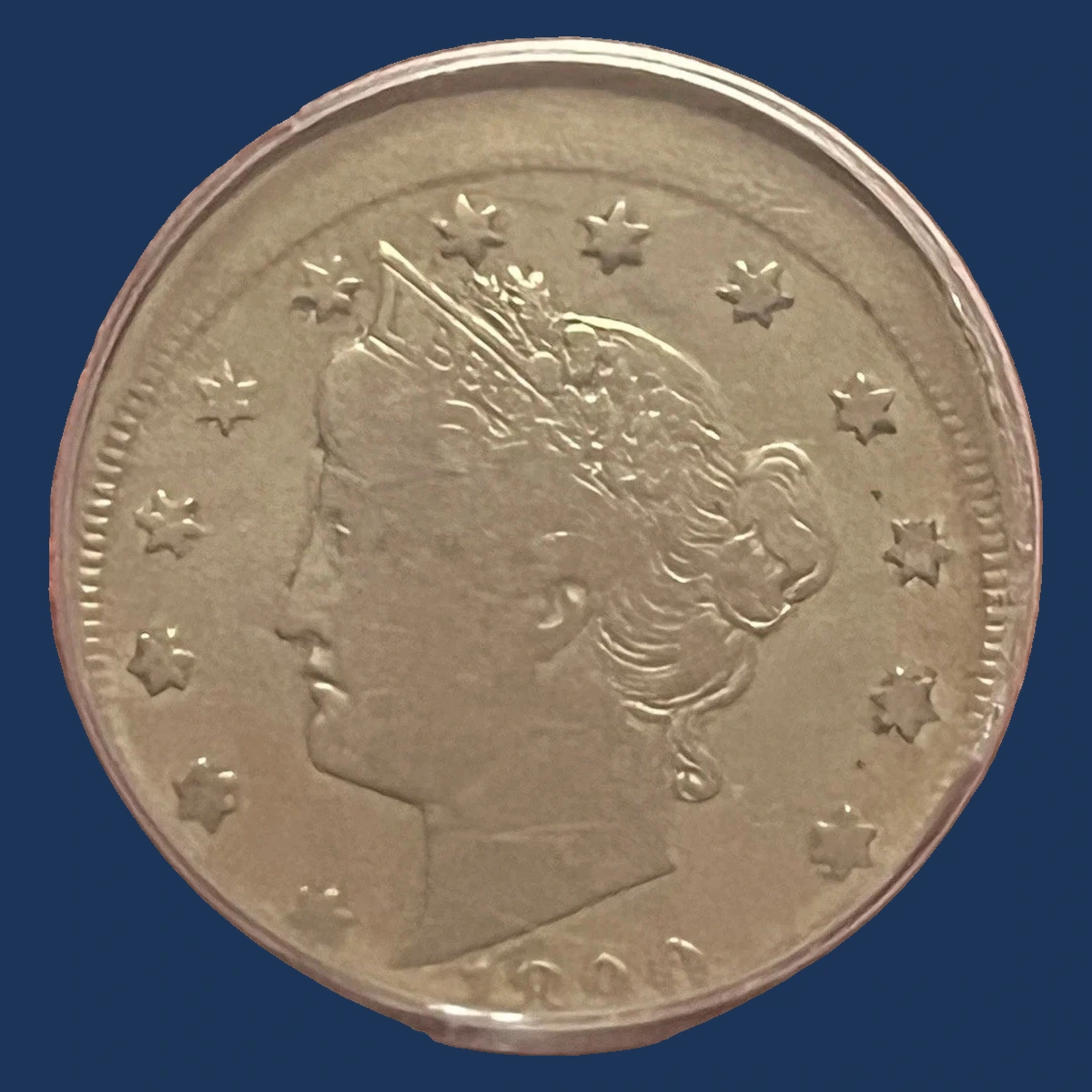
The upper stars can run out of metal when the blank sits too far to one side of the press. An unused area remains opposite the displaced design.
A recorded 1890 example graded PCGS VF35 is about 10% off center toward eleven o’clock. VF35 describes a circulated coin with substantial detail remaining.
This is an offset of the entire strike, not simply an uneven border on one face. It also differs from the separate 1890 coin that was both off center and later split through its thickness, leaving a lighter fragment.
Estimated Value
Allow an estimated $100–$1,500 for genuine dated off-center pieces across worn and attractive unworn condition. No selling price is assigned here to the recorded 10% VF35 coin.
A 1902 Liberty Nickel struck 20% off center, graded XF40, sold for $561.20 in March 2026. This different-year comparison supports the general range while preserving the differences in displacement and wear.
Extra metal separation belongs to a different combined example and should not be silently included in this estimate.
How to Identify
Find the upper stars under a 10× magnifier and inspect where they end at the outline. The recorded VF35 coin loses parts of them toward eleven o’clock, rather than simply showing a wide intact border.
Turn it over and compare the shifted strike on the back. Both faces should fit the same displaced blank.
Check a loose example on a scale against 5 g and with calipers against 21.2 mm. An unusually low weight requires another explanation beyond design displacement.
Inspect the plain edge for a cut or grinding that removed star tips after striking. Look for original unused metal opposite the lost design to support a genuine off-center strike.
5. 1890 Liberty Nickel Peeling Layers and Split Metal
A small peel and a much thinner coin can both begin with a weakness inside the metal. A local layer may lift, or the blank may separate across much of its thickness.
A 2.7 g 1890 example split before striking and received weak design on both faces. NGC graded it MS63.
Another piece weighs 3 g, graded NGC MS64, and was struck 10% off center before it separated. These are different coins, and the timing of the separation explains why their exposed surfaces and struck details need different comparisons.
Estimated Value
For local peeling, estimate $15–$250; more extensive authenticated split pieces suggest roughly $300–$2,000. These are prices for individual coins or fragments, not a matching pair.
The 2.7 g before-strike piece sold for $690, and the 3 g after-strike off-center piece brought $1,050, both in October 2022. NGC reports both results with buyer’s premiums included.
The larger result reflects that particular combined error rather than the value of every small peel.
How to Identify
Weigh a loose piece first, comparing its reading with the normal 5 g on a scale. The recorded 2.7 g and 3 g values belong to different specimens, not a before-and-after measurement of one coin.
Use calipers to check diameter against 21.2 mm and record the reduced thickness. Examine the plain edge and exposed separation with a 10× magnifier.
A thin piece struck after splitting can carry design on both faces, often weakly. A piece that split after striking exposes an inner surface that never directly touched the stamping tool.
For a local peel, keep any flap attached and inspect its natural layer boundary. Decide whether design was added to the separated surface or whether the split exposed the coin’s interior afterward.
6. 1890 Liberty Nickel Sunken Mirror-Image Impression
Reversed lettering or a sunken portrait on one face can come from contact with a previously struck coin inside the press. That coin replaces the normal stamping-tool surface for the next blow.
Its raised design pushes a mirror image into the new blank. Collectors call this a brockage.
The type is reported for 1890 without an identified complete mirror-image specimen or fixed face. The actual surviving image must be examined, because pressing two finished coins together after minting can also leave reversed marks without creating a genuine original brockage.
Estimated Value
Estimate $250–$3,500 for an authenticated 1890 brockage, with the upper end requiring a clear substantial impression and attractive preservation. This is a conditional estimate, not a claimed sale of a known 1890 specimen.
A different-design 1990-P Jefferson double strike with front brockage sold for $139 in October 2022. Its different combined error provides only a lower comparison, not the price of a complete Liberty Nickel brockage.
Extent, readability, and originality must justify the stronger value.
How to Identify
Mirror a normal nickel photograph and place it beside the suspect sunken image. Try to match a recognizable letter or portrait detail, rather than calling any depression a brockage.
A 10× magnifier should show the reversed design below the surrounding surface. Check the other face for the normal raised design and inspect how the impressed image meets the original metal.
For a loose coin, use a scale against 5 g and calipers against 21.2 mm. Examine the plain edge for squeezing, seams, or other later work.
Pressure between finished coins can imitate a mirror image. Compare the struck surface around that image with an authenticated example to test whether it formed during the original minting blow.
Conclusion
Estimated $15–$3,500 values for 1890 Liberty Nickel errors cover small surface defects through more unusual reversed impressions. An auction price for one split piece should not be transferred to a different peel or an ordinary off-center coin.
Check the date, both faces, and original edge before settling on a type. Weight is especially helpful for separated metal, while matching design outlines matters most for repunching and brockage.