2022 Half Dollar Error List with Pictures

A 1977-D half struck on a silver blank sold for $6,405 in June 2026. That different-year sale helps estimate a major silver-blank error if the reported 2022 candidate is confirmed.
This 2022 Kennedy half dollar error list spans estimated values from $3 to $8,000. More visible reports include a raised line through LIBERTY and a strip of rim metal folded into DOLLAR.
Read on to learn the checks that separate these mistakes from ordinary damage.
1. 2022-D Kennedy Half Dollar Die Crack (Estimated Up to $25)
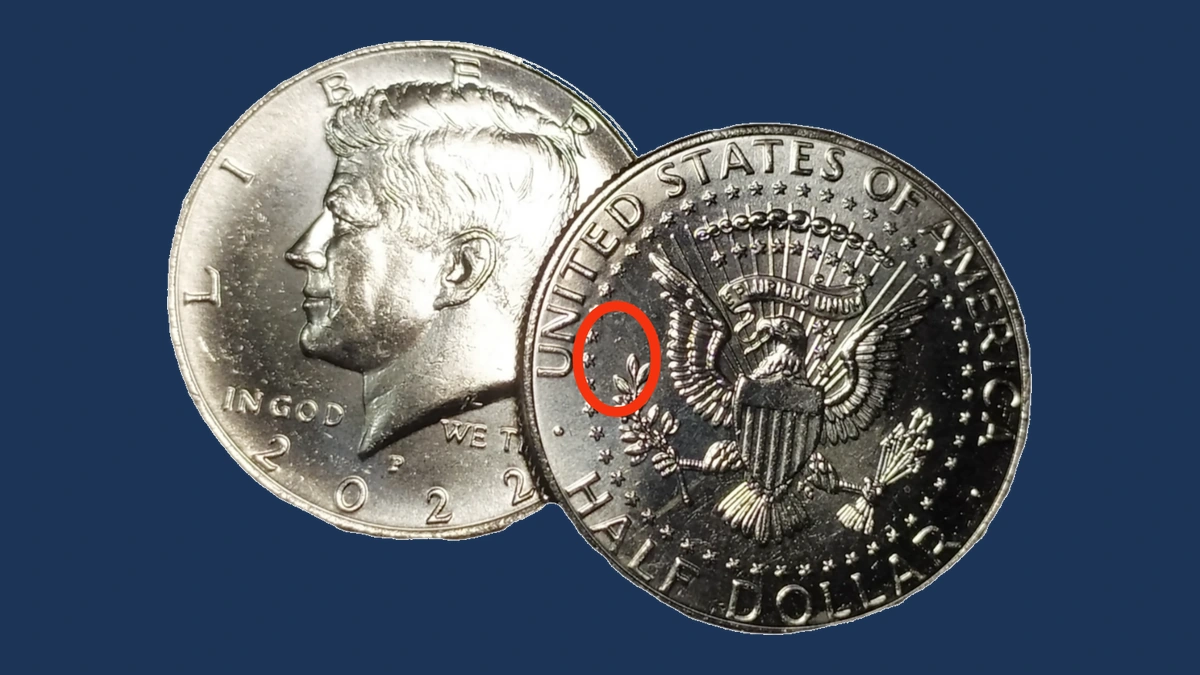
Look at the E in LIBERTY on the reported 2022-D example. A thin raised line crosses that letter.
The mark comes from a crack in the die, the steel tool that stamps the coin. Metal enters the opening during striking and leaves a small ridge.
The coin itself does not have to split. The damaged tool is what creates the extra line.
A crack can lengthen while the tool keeps working, so examples may differ slightly. The report identifies the E, but does not establish a complete route for every part of the crack.
Estimated Value
A small raised line on an unworn coin has an estimated value of $3–$25. The year guide places minor examples around $3–$10 and clearer ones around $15–$25.
These are estimates, not a named 2022-D auction result. A line that clearly crosses the E makes comparisons easier.
The rest of the coin still matters. A tiny ridge on a heavily marked surface may attract less interest than the same feature on a clean example.
How to Identify
Focus on the E with a magnifier and move a lamp across its strokes. Check whether the line stands above the metal or cuts into it.
A scratch can have a raised lip beside a groove. Follow the whole line rather than treating that lip as proof of an error.
Confirm the D mintmark, then use calipers for about 30.61 mm and a scale for 11.34 g. Inspect the grooves around the edge for impact damage.
Do not trace the line with a fingernail or borrow its route from another year. A raised line crossing the E and joining the original surface is the first feature to match.
2. 2022-D Kennedy Half Dollar Reported Doubled Die Obverse (Estimated Up to $75)
The reported 2022-D doubling is most specifically described on Y and R in LIBERTY. The motto is another area mentioned for comparison.
A doubled die has extra design detail on the steel stamping tool before coins are made. The same repeated shape can then appear on several coins.
The advertised example also carried a clash claim. A clash transfers pieces of the opposite design, while doubling repeats the intended picture.
These need separate checks. Compare the repeated letter edges first, then look separately for a transferred piece of the eagle’s design.
Estimated Value
The combined doubling-and-clash listing had a $23 asking price. It was not a completed sale and did not price the two claimed features separately.
Estimate $15–$75 for a confirmed modest doubled front. The guide’s $50–$75 comparison applies to stronger examples with a clear match.
Rounded extra outlines and good condition support more interest. A flat shelf caused during striking does not receive the same value simply because it makes a letter look doubled.
How to Identify
Use a 10× magnifier on Y and R rather than enlarging the entire coin. Move the light to see whether an extra outline remains physically raised.
A flat shelf can narrow the original letter’s shape. Look for added rounded detail instead, and compare it with another confirmed example.
Inspect the motto as a separate supporting area. Keep any opposite-side clash trace out of the doubling comparison.
A scale near 11.34 g, calipers near 30.61 mm, and intact edge grooves help check the normal coin. Rounded extra relief matching the reported letters is the first useful test, rather than thickness or a shadow alone.
3. 2022-D Kennedy Half Dollar Reported Die Clash (Estimated Up to $100)
Faint lines resembling eagle feathers on Kennedy’s side can suggest a die clash. The possible source is the tool that normally stamps the back.
When the two tools strike each other without a metal disc between them, their designs can leave marks on each other. Later coins may carry those unwanted outlines.
The 2022-D listing reports a clash together with front doubling. Each feature needs its own comparison.
For the clash, the extra outline must fit the opposite design. A random line or scratch is not enough, even if it vaguely resembles a feather.
Estimated Value
An estimated $15–$100 covers modest through clear clashes on ordinary layered-metal examples. Recognizable pieces of the opposite design support more interest than an unexplained line.
The combined listing offers an asking-price comparison for two claimed features. It does not establish an independent clash sale.
This range follows minor modern Kennedy tool-error estimates. Condition matters, and a faint line described as a feather still needs a convincing match before receiving an error premium.
How to Identify
Compare photographs of both faces at the same size and with their normal alignment. Test whether the suspected front mark fits a particular part of the back design.
Use a magnifier and changing light to inspect the actual line. Long parallel polishing marks or scratches may look suggestive without reconstructing that design.
Check about 30.61 mm with calipers and 11.34 g with a scale, then inspect the edge grooves. A mark pressed in by another finished coin can also disturb the surrounding surface.
Do not rely on a feather-like nickname. A matching back-design fragment on an otherwise untouched front is the quickest useful clue to a genuine clash.
4. 2022 Kennedy Half Dollar Reported Clipped Planchet (Estimated Up to $150)
A clipped coin starts as an incomplete metal blank. Its gap existed before the design was stamped.
Nearby detail may weaken as the metal spreads toward that boundary. The original edge shape therefore matters as much as the missing piece.
Clips are reported on ordinary layered-metal 2022 halves without a specific mint established here. The report does not identify a silver Proof, a specially made collector coin.
A folded strip of rim metal can look like a shortage from above. Checking the edge helps show whether the piece is absent or still attached.
Estimated Value
Small to moderate genuine clips have an estimated value of $40–$150. The range follows modern Kennedy comparisons rather than a recorded 2022 sale.
A dealer offers a 1971-D with a ten-percent clip, graded PCGS MS64, for $90. That is an asking price for an unworn coin with some marks.
The different-year offer does not establish a 2022 mint or finish. Readable date, visual appeal, and remaining original detail all affect the price.
How to Identify
View the edge before calling an apparent shortage a clip. A thin strip may be folded onto the face while still attached to the rim.
If metal is truly absent, weigh the coin against the ordinary 11.34 g standard. Measure across an intact span with calipers against 30.61 mm.
Use a magnifier at the gap to look for natural transitions into the struck rim. Inspect surviving edge grooves for saw marks or filing.
Weakness on the opposite rim can support the identification, but it may be faint. Original design meeting an incomplete edge, without evidence of later cutting, is the first useful distinction.
5. 2022-P Kennedy Half Dollar Folded Rim Burr (Estimated Up to $150)
A narrow strip of rim metal folds inward toward DOLLAR on one reported 2022-P coin. The strip was caught as the design was stamped.
This can leave both an irregular edge and metal pressed into the back picture. The loose edge strip is called a rim burr.
The finder’s discussion describes two examples, including one at O and L. The finder later reported ANACS confirmation and a grade of 67.
That high grade describes an unworn coin with very few marks. The two examples remain separate coins, so each strip’s position needs its own photograph.
Estimated Value
The guide gives an estimated $20–$150, from ungraded examples to more attractive coins with the error identified. A clear folded strip and strong preservation support the higher portion.
The finder’s ANACS grading update comes with no realized price used here. The range is therefore a comparison-based estimate, not a sale assigned to that coin.
A visible connection between the rim and folded metal is more useful than a small unexplained notch alone.
How to Identify
Follow the strip back to the edge with a magnifier, then inspect its contact with DOLLAR. Metal caught during striking may receive design detail or press a hollow into the coin below.
Turn the coin to see both faces and the side of the rim. A straight-on picture can hide the connection that explains the apparent gap.
Use a scale against about 11.34 g and calipers against 30.61 mm. Inspect the remaining edge grooves for the strip’s starting point and any later tool marks.
Do not lift or unfold it. The visible rim-to-strip connection and its struck relationship with DOLLAR provide the quickest check against a clip or an added fragment.
6. 2022 Kennedy Half Dollar Reported Missing Clad Layer (Estimated Up to $200)
A copper-colored face can show where an outer layer is missing. Ordinary Kennedy halves have copper-nickel coverings bonded over a copper core.
A narrow copper band at the edge is normal. A broad exposed face needs a closer check of the metal layers.
Missing coverings are reported for 2022 without one measured coin’s affected side or mint established here. The category concerns the ordinary layered-metal construction.
The year’s 99.9-percent-silver proofs are different coins, not missing-layer examples. Surface treatment and normal darkening can also change color without removing a covering, so color alone does not settle the question.
Estimated Value
A confirmed missing-layer example has an estimated value of $50–$200, based on other Kennedy error prices. Greater exposure with clean original detail generally supports the stronger end.
This is a series estimate, not a certified 2022 auction result. It applies to demonstrably missing metal on an ordinary layered coin.
Normal copper at the edge, brown toning, or later plating does not qualify. Nor should a legitimate silver proof be priced as though its different metal were this error.
How to Identify
Use a magnifier along the edge to locate the remaining outer layers. Compare the exposed face with the intact side and check for scraping or chemical roughness.
A scale should show less than the normal 11.34 g, in keeping with how much metal is absent. Calipers can compare the outline with 30.61 mm.
Keep the normal 2022-S silver proof separate: it weighs 12.685 g and contains 99.9 percent silver. Its different edge does not prove a missing layer.
Inspect the edge grooves and original struck detail as well as the weight. Exposed core, an actual layer gap, and matching weight loss together give the first strong check.
7. 2022 Kennedy Half Dollar Struck Through (Estimated Up to $350)
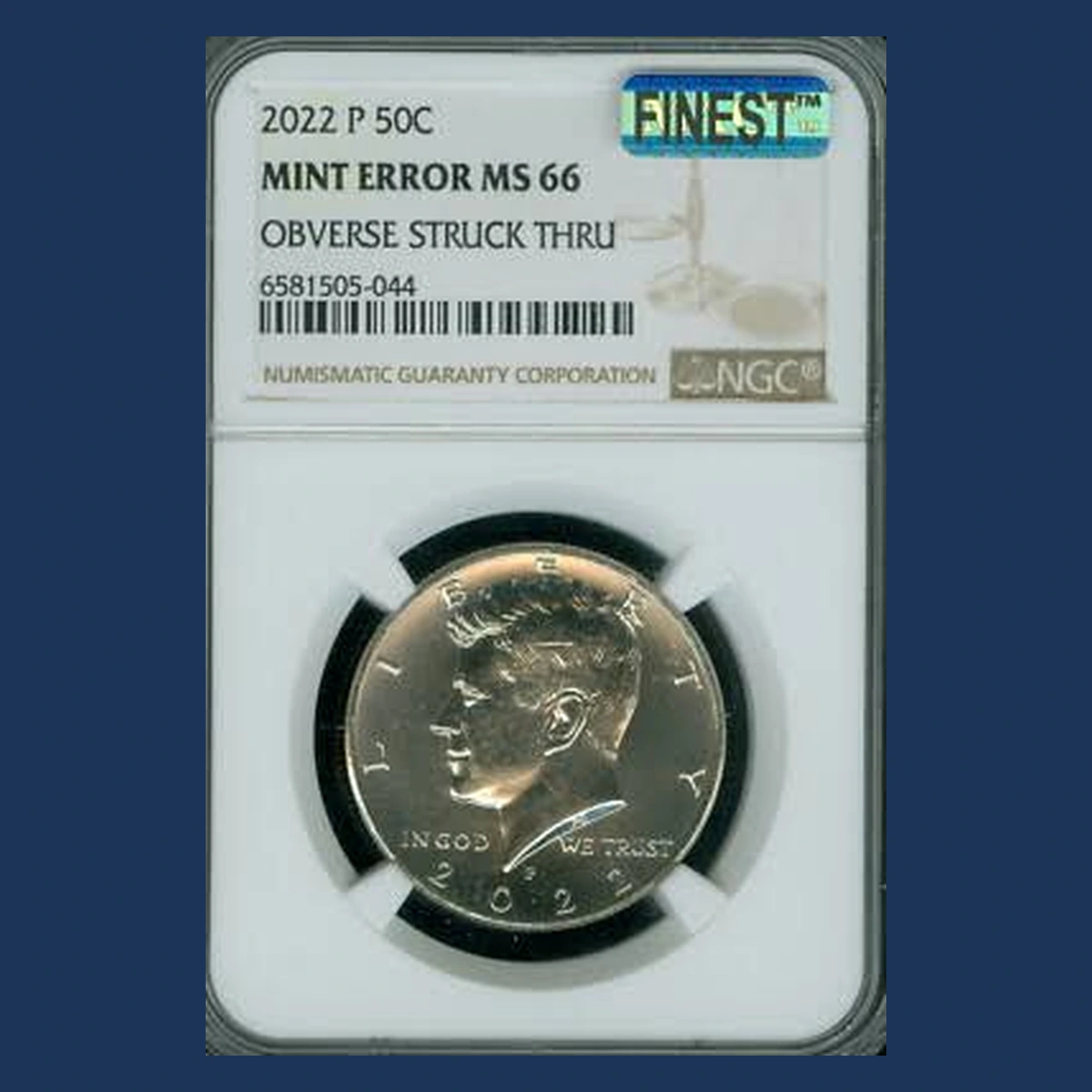
A textured patch across Kennedy’s face is the main feature in the 2022-P strike-through report. The published account describes a coin graded NGC MS66, meaning well preserved and unworn.
A strike-through happens when material blocks contact between the stamping tool and coin. The material can leave an impression or suppress part of the normal design.
A woven pattern may suggest fabric, but it cannot identify a particular cloth. Separate Denver reports describe other affected areas.
Small impressions and grease-related weakness fit the same broad mechanism. Each coin’s visible texture determines how specifically the material can be named.
Estimated Value
The larger reported MS66 facial impression has an estimated value of $150–$350. Smaller genuine impressions on ordinary ungraded examples fall around $25–$75.
No realized price is attached here to the reported NGC example. These are comparisons for different sizes and clarity of error.
A recognizable texture, a large affected area, and attractive surrounding surfaces support more interest. A fabric-like impression does not carry one fixed premium merely because a colorful story accompanies it.
How to Identify
Look at the facial patch without magnification first, then study its texture with a magnifier. Repeated crossing lines can support fabric, while a large irregular hollow alone cannot.
Check whether sharp surrounding detail continues naturally to the affected area. Scraping or an impact may leave a rough surface or a raised damage lip.
Turn the coin over to inspect the back, and check the edge grooves for other damage. An ordinary P or D example should weigh about 11.34 g and measure 30.61 mm.
Use a scale and calipers to record those checks. An impressed texture surrounded by original struck surface is the first useful evidence, rather than a story about the trapped object.
8. 2022-D Kennedy Half Dollar Reported Reverse Cud (Estimated Up to $1,000)
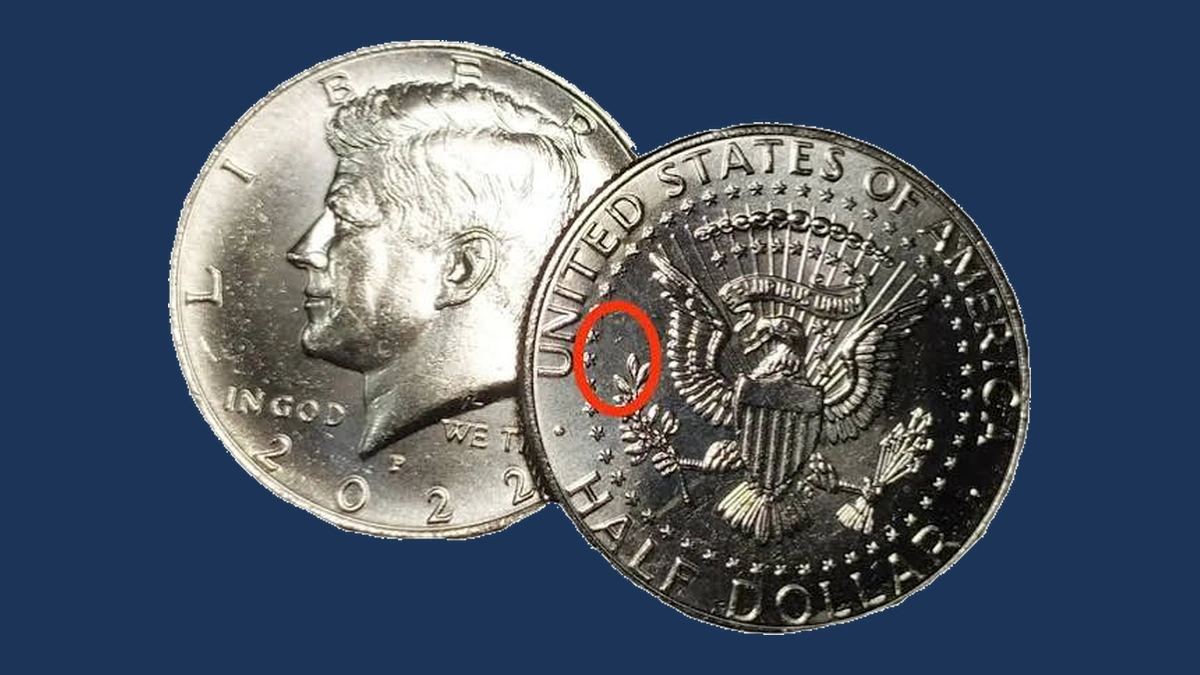
A V-shaped feature beneath the first L in DOLLAR is the focus of this 2022-D report. It is described as a break connected to the lower rim.
A true cud forms when part of the stamping tool breaks away at its edge. Metal fills that space during striking and leaves a raised patch.
The patch can replace lettering or other design and must connect to the rim. That connection distinguishes it from a raised island farther inside the coin.
A V-shaped dent or missing piece of metal is different. The position alone cannot make it a cud.
Estimated Value
The published listing had a $1,000 asking price. It was not a completed sale.
For a genuine raised break connected to the rim, estimate $150–$1,000. Smaller features belong nearer the lower end, while a clear large patch can support more interest.
The upper figure requires convincing original raised metal and correct identification. It does not value an ordinary rim dent at $1,000 or turn the advertisement into an auction record.
How to Identify
Tilt the lower back under a lamp and inspect the first L in DOLLAR with a magnifier. Determine whether the V-shaped feature rises above the surface or is pressed into it.
Follow the raised area to the rim and inspect the edge grooves for inward folding or an impact. Check the front for related weak detail too.
A scale should read near 11.34 g because the break changes metal flow rather than removing part of the coin. Calipers should give roughly 30.61 mm.
Do not decide from the V outline alone. A raised patch replacing normal detail and meeting the rim beneath that L is the first feature to verify.
9. 2022 Kennedy Half Dollar Mintmark and Silver-Planchet Candidate (Estimated Up to $8,000)
An unusual curve beside D and a silver-looking edge are two separate clues in this reported candidate. One concerns the letter’s shape; the other concerns the coin’s metal.
The report calls the mintmark D/S. Modern mintmarks are built into the design before the final stamping tools are made, so a hand-punched D-over-S explanation does not fit.
A small tool break beside D could explain an extra raised shape. It would not prove the coin is silver.
The metal claim therefore needs its own test. A normal S silver proof is another, entirely legitimate 2022 issue.
Estimated Value
A small genuine chip beside the mintmark is estimated at $5–$50. A confirmed silver wrong-blank error has a comparison-based estimate of $3,000–$8,000.
A 1977-D silver-blank example sold for $6,405 in June 2026. Its AU53 grade indicates light wear.
That coin uses forty-percent silver, unlike a normal 2022 silver proof. The sale confirms neither a 2022 silver error nor a genuine D-over-S mintmark.
How to Identify
Begin with a scale and a nondestructive metal test. Ordinary 2022 halves weigh 11.34 g; legitimate S silver proofs contain 99.9 percent silver and weigh 12.685 g.
Calipers should record about 30.61 mm. Use a magnifier to inspect the edge grooves and any extra shape around D.
Look for a small raised chip, a flat shelf, added metal, or an altered letter. Keep the tested coin’s date, mintmark, and finish in the same photographs.
A normal S silver proof or an S-like curve beside D does not prove a Denver wrong-blank error. For the first reliable test, compare the measured metal with the normal metal for that genuine date, mintmark, and finish.
Conclusion
The 2022 estimates span $3–$8,000, but the upper end requires a confirmed major silver-blank error. A small mintmark bump does not earn that price.
At the rim, distinguish missing metal from a folded strip and a raised break. Their shapes can look similar from above.
Use the edge, weight, and original design to test each explanation. Keep asking prices separate from completed sales when comparing what collectors have actually paid.