1978 Half Dollar Error List with Pictures

A 1980-P half dollar struck on a cent blank sold for $3,840 in August 2024. That different-year result offers a comparison for the reported 1978 wrong-blank error below, which involves a nickel blank instead.
These 1978 Kennedy half dollar errors span estimated $20–$4,000 values. Smaller clues include peeling metal and the missing words IN GOD.
Read the nine types below to see which measurements and visible details belong to each mistake.
1. 1978 Kennedy Half Dollar Lamination and Layer Separation Error (Estimated Up to $150)
An attached flap can reveal weakness inside the coin’s metal. Everyday half dollars have outer copper-nickel layers bonded to a copper center.
Separation can develop within a layer or along the bond between layers. It may leave peeling metal, a retained flap, or an exposed patch.
The 1978 source describes small and larger examples without tying every form to a particular mint or certified coin. Their actual thickness and boundaries matter.
A shallow flake is different from a major split. Both need to be distinguished from a scrape across a finished surface before the unusual area is called a lamination.
Estimated Value
Estimated values run from $20–$150. Small local flakes generally fall around $20–$40, while the guide places larger peels around $50–$100.
The wider upper allowance covers an especially clear retained flap or attractive example. These are estimates, not recorded sales of a selected certified 1978 coin.
Wear, cleaning, and damage around the opening can reduce its appeal. A strong natural boundary usually makes a better comparison than a rough patch with an unclear cause.
How to Identify
Follow the boundary under a 10× magnifier rather than judging the exposed color. Position the affected face and edge together to see whether the split follows a metal layer.
Leave any flap attached. Lifting it changes the relationship you need to inspect and may break it off.
Compare the surface opening with the edge grooves. Record whether it stays shallow or continues to the circumference.
When safely accessible, use a scale against 11.34 grams and calipers against 30.61 mm. Missing metal can reduce weight, but scraping or corrosion can do the same.
The useful sign is a natural layered boundary continuing beneath attached metal, not merely a light coin or a copper-colored patch.
2. 1978 Kennedy Half Dollar Clipped Planchet Error (Estimated Up to $300)
A curved missing segment can start when the blank punch overlaps a previous hole in the metal strip. The incomplete blank then receives the coin’s pictures.
The 1978 reports include Philadelphia and Denver clips. Philadelphia halves have no mint letter that year; they do not carry P.
The rim opposite a genuine gap may also be weak because of how the blank formed. Collectors call this the Blakesley effect.
That weak spot is supporting evidence. It must agree with the gap’s surfaces and strike changes, because unrelated rim weakness cannot prove that a notch formed at the Mint.
Estimated Value
Estimate $25–$300 for modest genuine clips through larger attractive examples with readable dates. Unusual shapes or several gaps need to be judged on the actual coin.
A 1993-D curved clip sold for $34.74 including fees in August 2025. It was graded MS64, meaning unworn with some marks.
That recent different-year result offers a modest-error comparison. Higher estimates require a stronger configuration or better preservation, rather than treating any damaged edge as a valuable clip.
How to Identify
Identify the mint before enlarging the gap: no letter is normal for Philadelphia in 1978, while Denver uses D. Keep the full date visible.
With a 10× magnifier, follow the missing curve into both intact rim sections. Look for original metal flow instead of burrs, saw marks, or freshly filed surfaces.
Inspect the opposite rim for weakness and compare the remaining edge grooves. Neither color nor a weak patch can prove the gap’s origin alone.
Use a scale and calipers when safely accessible against 11.34 grams and 30.61 mm across intact spans. Lost weight can come from either an original clip or later cutting.
The gap’s two boundaries should show strike changes that fit metal missing before the picture formed.
3. 1978 Kennedy Half Dollar Doubled Die Varieties (Estimated Up to $350)
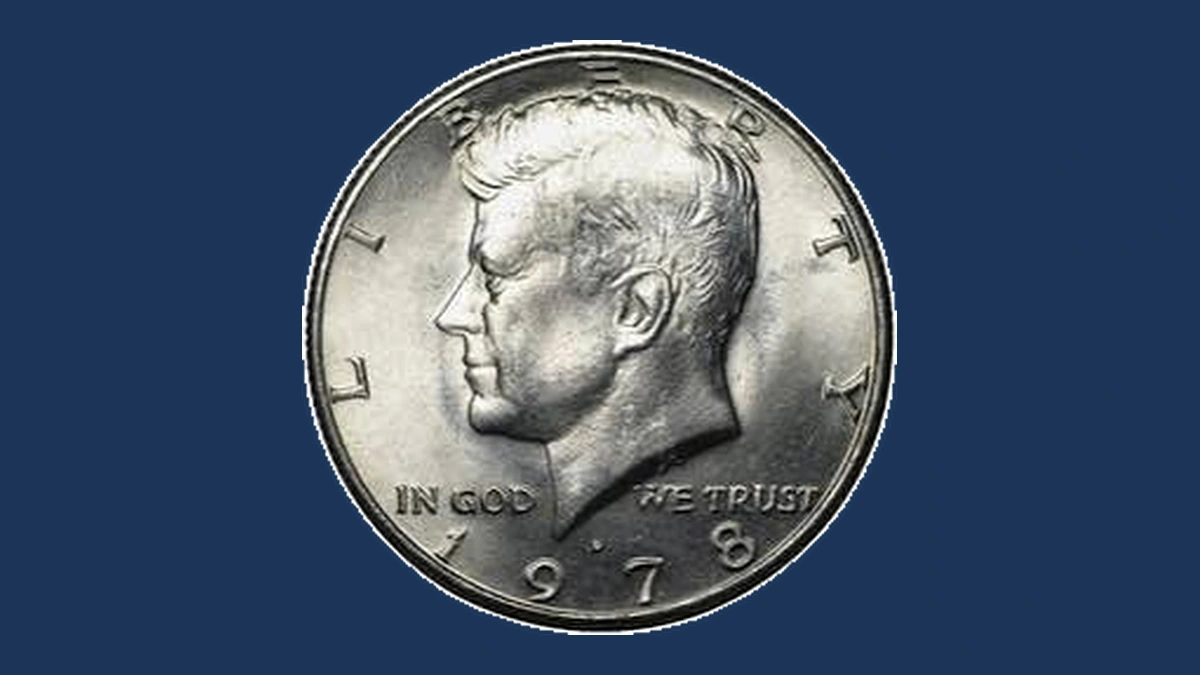
The year reports point to repeated outlines on different faces. Front reports concern lettering and portrait detail, while the Denver back claim includes E PLURIBUS UNUM, tail feathers, and nearby inscriptions.
Those features are not established together on one coin. Each reported face needs its own comparison.
A doubled die is a steel stamping tool whose design already has repeated detail before it makes coins. That differs from a flat shelf created by movement during striking.
No matched catalog number is supplied for these 1978 reports. A familiar variety number from another year should not be attached to them.
Estimated Value
For a clearly identifiable doubled die, estimate $25–$350. Visible separation and preservation affect the value, while flat doubling from movement during striking does not earn the same premium.
A cataloged 1974-D doubled die graded MS64 sold for $49 in May 2026. It provides a recent different-year comparison.
The upper estimate requires a stronger genuine pattern with collector interest. It does not make every reported extra front or back outline equally valuable or equally well established.
How to Identify
Compare a suspect rounded outline with a normal coin under a 10× magnifier. Change the light to see whether the extra shape remains physically raised.
Inspect front lettering and portrait details separately from the Denver back’s motto, tail, and inscriptions. Keep the full selected face with each enlargement.
A flat shelf that narrows the main stroke suggests movement during striking. Look instead for a matched pattern of extra relief in a verified photograph of the same tool.
Inspect the edge grooves for alteration and measure safely accessible examples against 11.34 grams and 30.61 mm with a scale and calipers.
The useful match is the same extra shape, spacing, and direction on the correct face, rather than general thickness in a letter.
4. 1978 Kennedy Half Dollar Missing FG Initials Error (Estimated Up to $400)
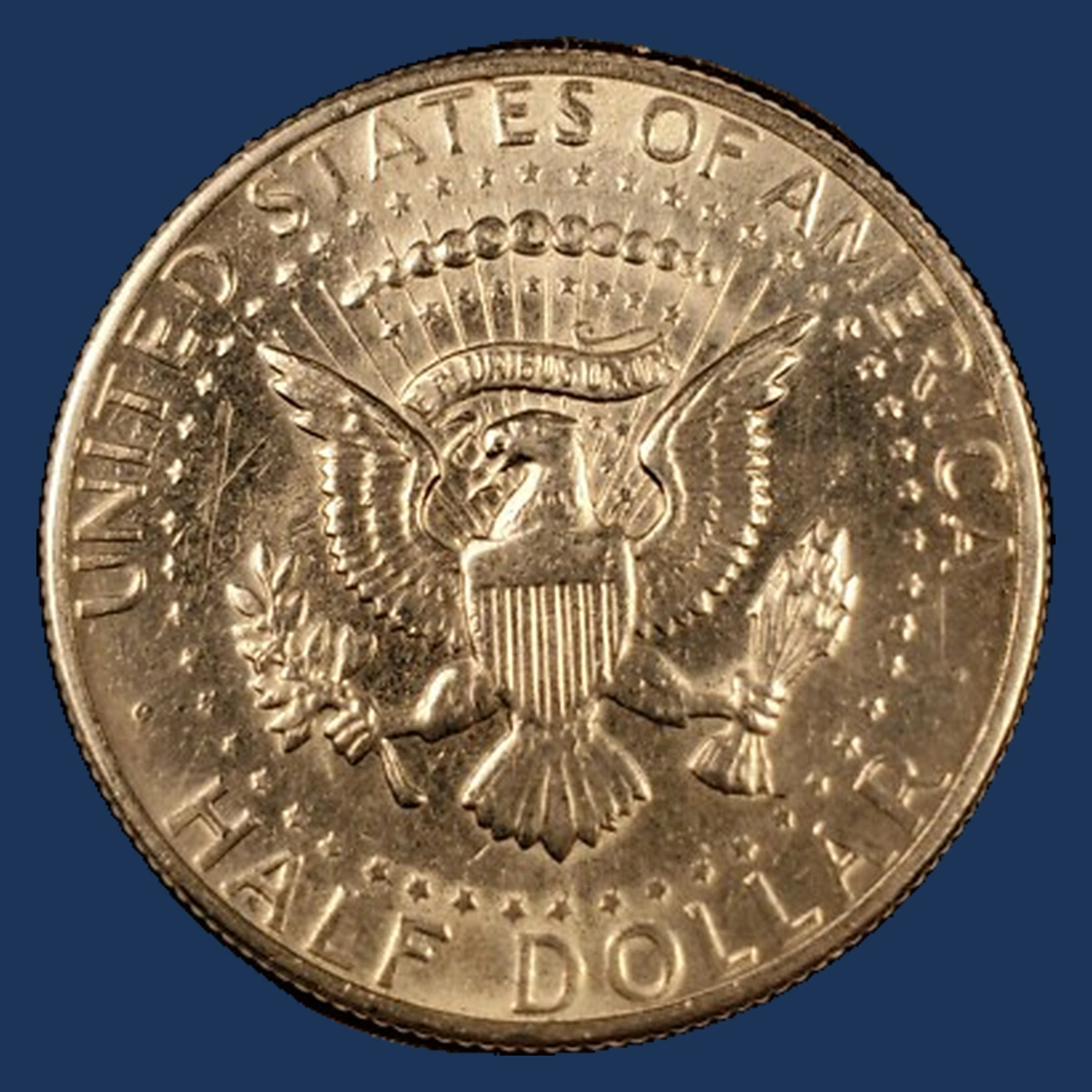
The small letters FG name designer Frank Gasparro. The Denver report describes their absence as a minor feature caused by polishing the stamping tool.
Polishing can remove the shallow detail that would normally form those letters. Later coins may then have a blank-looking area beside the eagle’s tail.
This report is not a major named certification variety. A particular coin still needs to be separated from examples with weak or worn initials.
General wear also affects nearby design. Grease during striking or rubbing after minting can hide the same letters through different causes, so apparent absence alone is not enough.
Estimated Value
Estimated values span $20–$400, with the upper end reserved for clearly identified, sharply preserved examples. Weak letters or an abraded area do not justify a complete No FG premium.
A recognized 1982-P No FG graded MS66+ sold for $384 in May 2024. That grade describes exceptional unworn condition.
Its established different-year market helps frame the upper estimate. The minor 1978-D report should not inherit the older variety’s identity or price simply because both descriptions mention missing initials.
How to Identify
Place a normal back beside the candidate and locate FG next to the tail feathers. Use a 10× magnifier with low light from more than one direction.
Look for even one surviving stroke. A trace of either letter changes complete absence into weak initials.
Compare the neighboring feathers and flat areas for wear, fine scratches, or local smoothing. Keep polishing of the tool separate from an obstruction during striking or later rubbing.
Confirm D and inspect the edge grooves. Use a scale and calipers when safely accessible against 11.34 grams and 30.61 mm.
Do not rub the spot to improve visibility. The best first check is whether any original F or G stroke survives beside otherwise intact detail.
5. 1978 Kennedy Half Dollar Broadstrike Error (Estimated Up to $500)
A retaining ring normally limits the coin’s outward spread during striking. If it fails to hold the blank, metal can spread beyond the usual outline.
Collectors call that result a broadstrike. Both complete pictures should remain within the wider shape, rather than lose part of the design beyond the edge.
The 1978 report gives neither a measured diameter nor one selected certified example. Its general description cannot supply measurements for another coin.
Later flattening can also enlarge a half dollar. The surrounding surface and original picture must therefore agree that the expansion happened while the design was being struck.
Estimated Value
Estimate $80–$500 for genuine examples, with obvious natural expansion and attractive surfaces supporting stronger values. A small spread belongs nearer modest broadstrike comparisons.
A 1990-P graded MS61 sold for $192 in March 2025. Separately, a 1983-P graded MS65 is offered at $175.
Both are different-year comparisons, and one is an asking price rather than a sale. Grade alone does not determine value; the shape, completeness of the pictures, and condition of the expanded metal also matter.
How to Identify
Measure several widths with calipers when safely accessible, comparing with the usual 30.61 mm. A scale near 11.34 grams supports an intact blank whose metal spread rather than disappeared.
Follow the outer lettering on both faces with a 10× magnifier. Complete pictures inside an enlarged outline support broadstriking.
If both pictures instead lose detail beside a bare crescent, consider an off-center strike. Missing picture and missing metal are different observations.
Inspect the edge grooves and the newly expanded areas for natural flow. Hammering can leave crushed high points, impact marks, or scraped edges.
The useful combination is original complete design on freely spread metal, with an edge that fits loss of retaining-ring control.
6. 1978 Kennedy Half Dollar Struck Through Error (Estimated Up to $600)
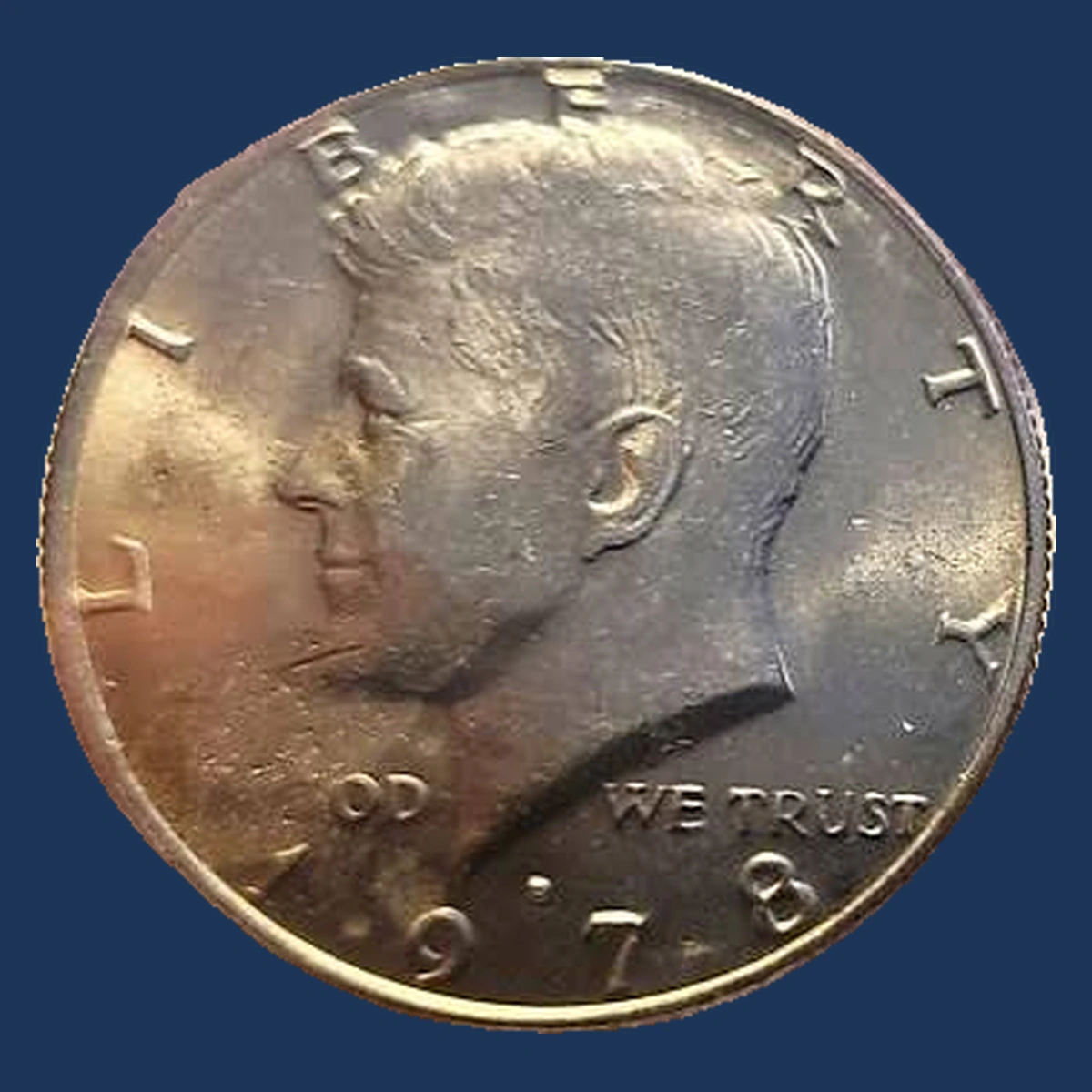
IN GOD is missing on the reported Denver example. Nearby design remains, making the interruption more local than ordinary wear across the coin.
Material between the stamping tool and blank prevented that part of the picture from forming. Collectors call this a struck-through error.
The report describes a large interruption but does not identify what caused it. Grease, cloth, wire, and solid fragments can leave different shapes.
The missing words therefore tell you where to inspect. They do not establish a particular substance or prove that anything remains embedded in the surface.
Estimated Value
Estimated values run from $25–$600, with clear loss of major lettering supporting stronger interest. Preserved surrounding detail matters more than guessing the trapped material.
A 1988-D front strike-through graded MS67 sold for $59 in July 2021. A layered-metal 1976-D struck through on both faces brought $114 in March 2025.
Those different-year results help set a scale. Their grades and prices do not belong to the reported 1978-D, whose own size and surfaces need comparison.
How to Identify
Compare IN GOD with the rest of the motto and adjacent portrait. Under a 10× magnifier, look for a local interruption surrounded by preserved detail.
A polished patch, scratch pattern, or pushed-up metal may show that existing letters were removed later. Do not choose an obstruction material before checking those surfaces.
Keep any embedded material in place and avoid cleaning. Both can preserve clues to what happened during striking.
For a safely accessible everyday coin, use a scale and calipers against 11.34 grams and 30.61 mm. Inspect the edge grooves and nearby flat areas for alteration.
The useful match is the locally missing IN GOD beside surviving original design, without signs of later scraping or rubbing.
7. 1978 Kennedy Half Dollar Off-Center Strike Error (Estimated Up to $800)
A bare crescent can make an off-center half easy to notice. The remaining date is what links the coin to 1978.
The blank sat out of position when the tools struck it. Some metal received the picture while another part remained untouched.
The reports do not identify one certified coin’s percentage or direction. Those details must come from the actual example.
Both faces should agree with the displacement. One shifted picture may instead indicate a misaligned tool, while a cut-away crescent is missing metal rather than a bare part of the original blank.
Estimated Value
Estimate $75–$800, with readable dates and stronger attractive shifts supporting higher values. General percentage examples in the guide are not measurements of one recorded 1978 coin.
A 1990-P struck ten percent off center sold for $198 in September 2025. Its MS66 grade means exceptionally well-preserved and unworn.
That later coin gives a useful moderate-error comparison. The upper range needs more dramatic appearance and suitable condition, rather than an off-center label applied to any uneven border.
How to Identify
Find the date and compare the blank area on both faces. A matching interruption links the missing pictures to one displaced blank rather than one misaligned tool.
Under a 10× magnifier, inspect the original texture where struck design meets bare metal. Grinding can remove detail but leaves different surface evidence.
A scale should be compared with the intact 11.34 grams when safely accessible. Bare metal still weighs something; a clip or later cut removes it.
Calipers record the outline against 30.61 mm. Inspect both grooved and unconstrained edge portions for cutting or abrasion.
Only after those checks should you estimate the shift from straight-on photographs, keeping the readable 1978 date and actual mint evidence visible.
8. 1978 Kennedy Half Dollar In-Collar Multiple Strike Error (Estimated Up to $1,500)
Two strikes do not always make a coin much wider. The reported 1978 example was struck twice while still held inside the retaining ring.
The ring could preserve a familiar diameter even as the coin moved enough to receive overlapping pictures. This is an in-collar double strike.
It differs from a doubled die, whose extra design was already in the tool. Here the finished coin received separate blows.
The visible remains must explain two positions of the picture within the same outline. One widened letter or doubled-looking rim cannot by itself establish that sequence or tell how the coin moved.
Estimated Value
Estimate $300–$1,500 for a clear in-collar multiple strike. The guide reports an $840 auction result for a twice-struck example, but gives no matched lot or grade.
That amount remains a reported benchmark. A separate 1983-P multistruck broadstrike sold for $552 in June 2024, graded MS63 for unworn condition with visible marks.
The later coin spread outside the ring. Its different shape and overlap should be considered before using its result to judge the reported 1978 combination.
How to Identify
Trace duplicate portraits, letters, or date details with a 10× magnifier. Try to assign them to two consistent positions rather than counting every extra line.
Both faces matter because the second blow may erase different amounts of the first picture on each side. Photograph the overlaps beside complete face views.
The retaining ring can keep dimensions close to normal. Use a scale and calipers when safely accessible against 11.34 grams and 30.61 mm.
Inspect the edge grooves for continued restraint and signs of later squeezing or machining. Normal measurements alone do not prove two strikes.
The strongest evidence is a connected set of earlier design pieces crossed by a later picture, both fitting two positions within the restrained outline.
9. 1978 Kennedy Half Dollar Wrong Nickel Planchet Error (Estimated Up to $4,000)
A nickel blank is too small for the whole half-dollar design. The 1978 source reports that smaller blank entering the half-dollar press.
Its nominal weight is five grams. Letters and other outer details can fall beyond its edge when the larger tools strike it.
The same source gives price comparisons for dime and quarter blanks, but that does not establish additional 1978 examples on those metals. The reported blank here is a nickel blank.
It was unstruck before the mistake. Calling it an overstrike on a finished Jefferson nickel would require surviving parts of that earlier nickel picture.
Estimated Value
A genuine example with recognizable year and denomination has an estimated $1,500–$4,000 range. The year source reports a $2,100 auction result without a matched original lot.
That remains a reported reference. A different-year 1980-P half on a cent blank sold for $3,840 in August 2024, graded MS64.
The latter uses a smaller copper blank, not a nickel blank. Its price offers a related wrong-blank comparison while preserving the difference in date, metal, and size.
How to Identify
Weigh the coin when safely accessible. A nickel blank starts near 5.00 grams, far below an ordinary half dollar’s 11.34 grams.
Use calipers to record the smaller body. The nickel blank starts around 21.21 mm and may spread during striking, rather than remain at exactly that diameter.
With a 10× magnifier, follow the oversized half-dollar picture to the blank’s edge and read the surviving date. Check for filing or plating; the nickel blank began with a plain edge.
A specialist can test whether the metal fits the proposed blank. Surviving Jefferson design would require a different overstrike explanation.
Nickel-like measurements and naturally cut-off half-dollar designs must agree on both faces, rather than relying on low weight alone.
Conclusion
Estimated values span $20–$4,000, from small peeling areas to the reported nickel-blank strike. The details that identify them differ: a layer boundary, missing IN GOD, or a five-gram body needs its own comparison.
Remember that Philadelphia halves have no mint letter in 1978. Keep the full date, both faces, and edge with every close-up so a dramatic crop does not hide evidence that changes the explanation.