1971 Half Dollar Error List with Pictures

A Denver half struck on a leftover silver blank sold for $6,037.50 in 2003. Later market reports link another silver example to a $13,000 sale, although its price listing does not independently confirm the metal.
Estimated values for these 1971 half dollar errors run from $20 to $15,000. They include small doubled letters, light blanks, and dramatic shifted strikes.
Read on to learn which visible details and measurements help separate them.
1. 1971 Half Dollar Missing FG Initials (Estimated Up to $100)
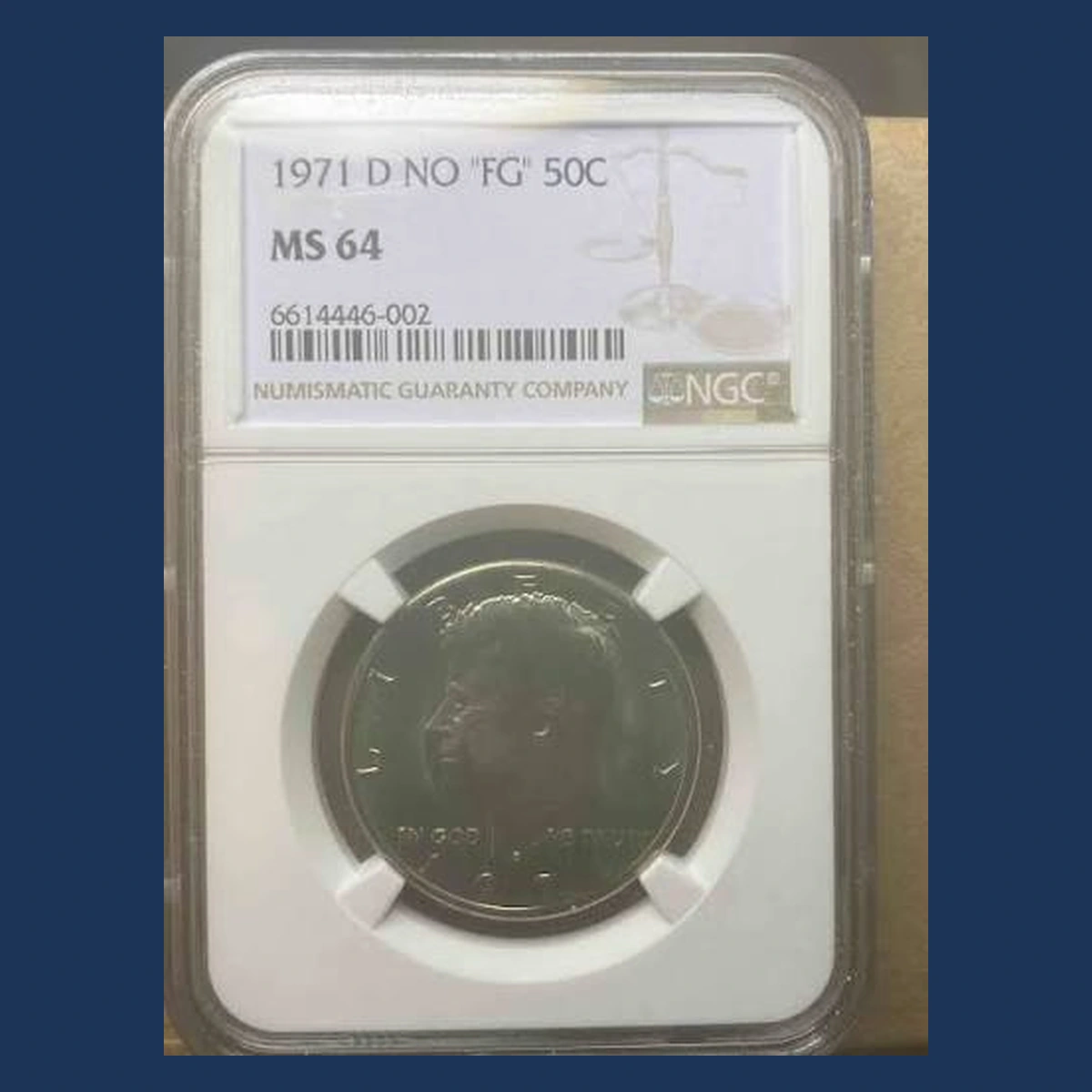
The tiny FG letters may be absent beside the eagle’s tail on a reported 1971 half dollar. They are the initials of Frank Gasparro, who designed the back.
The suggested cause is polishing of the die, the steel tool that stamps the coin. Removing shallow details from that tool can leave later coins without the letters.
The report does not identify a mint, finish, or recognized variety number. A worn coin with unreadable initials is not automatically the same error.
Nearby feathers and the smooth background help tell the difference. Later scraping or ordinary wear can also remove small letters.
Estimated Value
An original, clearly identified missing-FG example is estimated at $20–$100. This range reflects modest premiums reported for the year’s missing-initials type.
It is not a completed auction price for a named 1971 variety. The coin must show more than a blank-looking spot in one photograph.
Sharp nearby feathers and an undamaged background make the missing letters more convincing. A worn or scraped coin should not receive the same premium merely because its initials cannot be read.
How to Identify
Place a normal back beside the coin and locate FG between the eagle’s leg and tail. A 10× magnifier and low side lighting can reveal strokes that a bright photograph hides.
Inspect the nearby feathers as well. If they are worn flat too, ordinary wear may explain the missing initials.
Look for fine scratches, a smoothed patch, or a depression where the letters should be. Leave the surface untouched.
A scale and calipers check the normal 11.34 grams and 30.61 mm. The useful first view shows no surviving F or G on an original surface while nearby details remain clear.
2. 1971 Half Dollar Repunched Mintmarks (Estimated Up to $250)
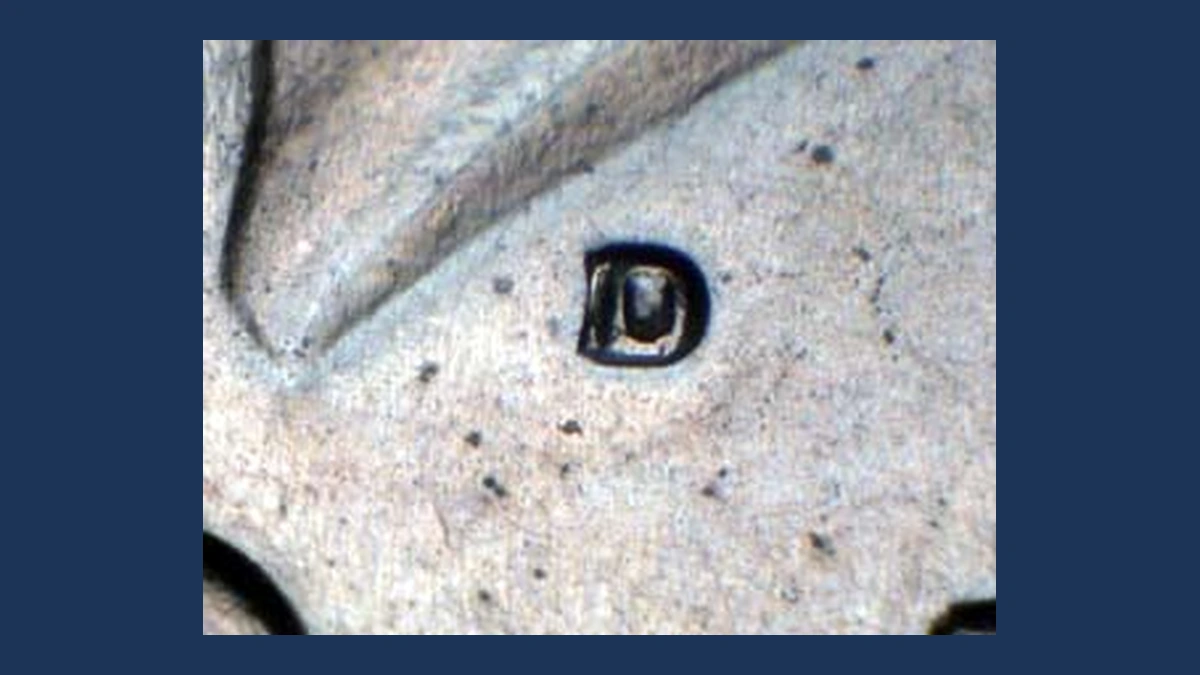
An extra curve beside a D or S can come from a mintmark punch used more than once. The earlier outline survives because the later punch did not fully cover it.
Denver examples include tilted outlines and extra detail above, below, or left of the main D. San Francisco Proof reports include an extra S toward the left.
Proofs are specially made collector coins. Their mintmark patterns need their own comparison photographs.
The extra shape belongs to the letter, not the whole portrait. Nearby scratches or small bumps can help distinguish examples only after that second letter outline matches.
Estimated Value
Estimated values range from $20–$250, covering modest Denver repunching through clear Proof examples. Strong, recognizable extra letter parts and attractive surfaces help support the price.
A reported 1969-D MS65 comparison around $40 gives a different-year market reference. It is a market report, not a claimed sale for any of these 1971 varieties.
Different catalogs may use different names for the same tool. More names do not make a faint extra outline more valuable.
How to Identify
Follow the small extra curve with a magnifier until you can see whether it forms part of another D or S. Compare its position with the correct mintmark photographs.
A tilted Denver D and a D punched again to the south need different matches. Do not borrow an S Proof’s extra curve to identify a D.
Check for flat shelves or metal pushed sideways by a hit. A genuine earlier outline should fit naturally into the original surface around the letter.
Use a scale and calipers for the usual 11.34 grams and 30.61 mm.
Begin with a recognizable second mintmark stroke in the correct position, not a nearby scratch.
3. 1971-D Half Dollar Misaligned Obverse Die (Estimated Up to $300)
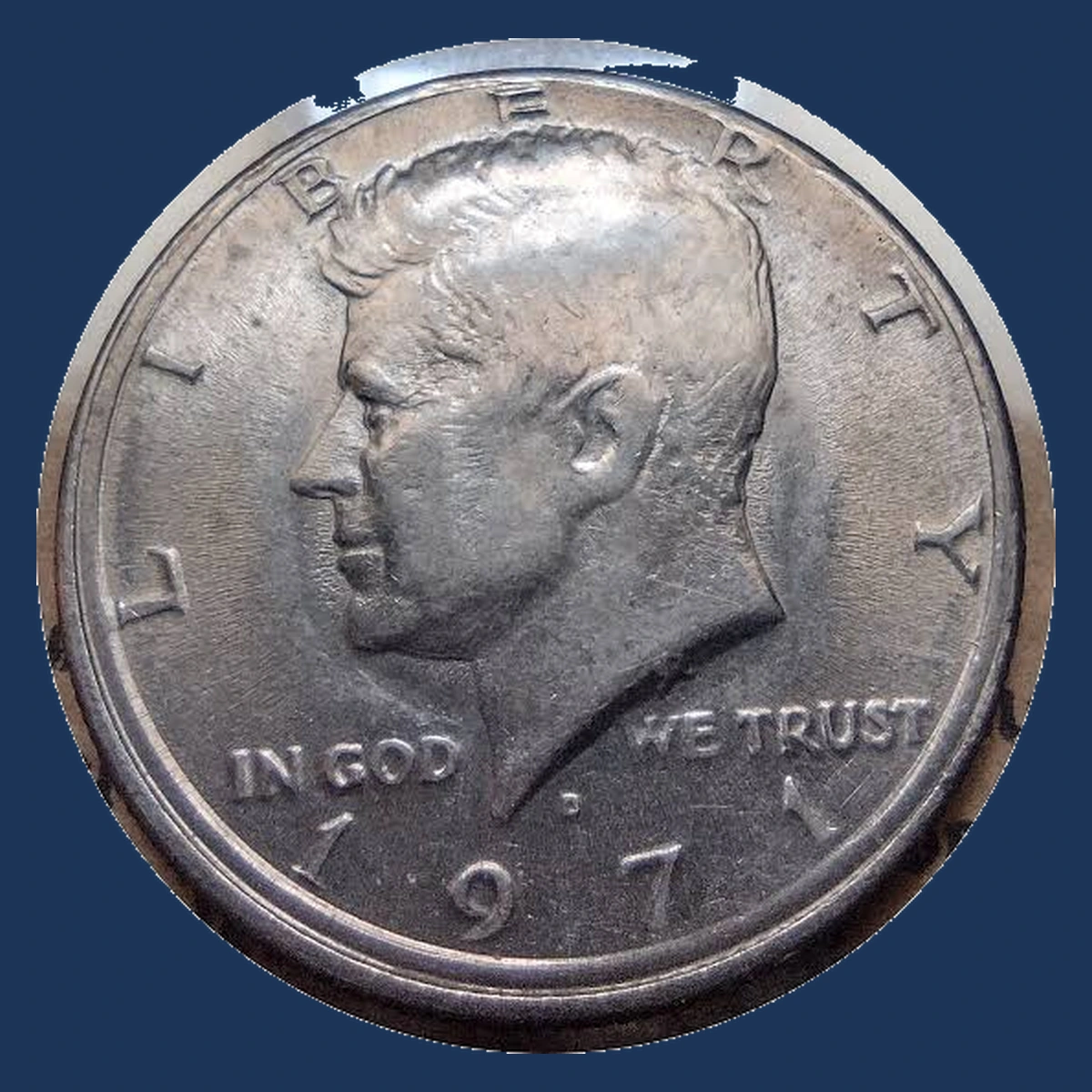
Kennedy sits unevenly within the rim on a Denver half graded NGC MS62. The front stamping tool had shifted sideways relative to the blank and the opposing tool.
MS62 describes a coin without circulation wear, though noticeable marks can remain. The grade does not describe how far the tool moved.
Compare the two faces. A shifted tool can move one design while leaving the other normally centered.
A misplaced blank usually shifts both designs instead. Weak letters, an upside-down eagle, or a filed rim are different problems and should not be used to identify this one-sided movement.
Estimated Value
Genuine one-sided misalignment has an estimated value of $20–$300. Small border differences usually belong near the lower end.
A much stronger 1971 Philadelphia strike 70% off center sold for $312 in 2023. That MS64 coin involves the blank’s position and affects both faces.
It is a nearby comparison, not a sale for the Denver MS62. The visible one-face shift and the coin’s actual condition should guide the estimate rather than a more dramatic error name.
How to Identify
Take straight-on photographs of both faces with the outline fully visible. Compare the wide and narrow front borders with the back’s centering.
A matching blank crescent on both faces points toward an off-center blank instead. For die misalignment, the two faces should differ in their alignment.
Use a magnifier along the narrow rim to look for filing or later removal. A tilted photograph can also exaggerate a border, so check the camera angle.
Calipers compare the width with 30.61 mm and a scale checks the normal 11.34 grams. Start with the simple paired view: one original design shifted sideways while the opposite design stays centered.
4. 1971 Half Dollar Rotated Dies (Estimated Up to $400)
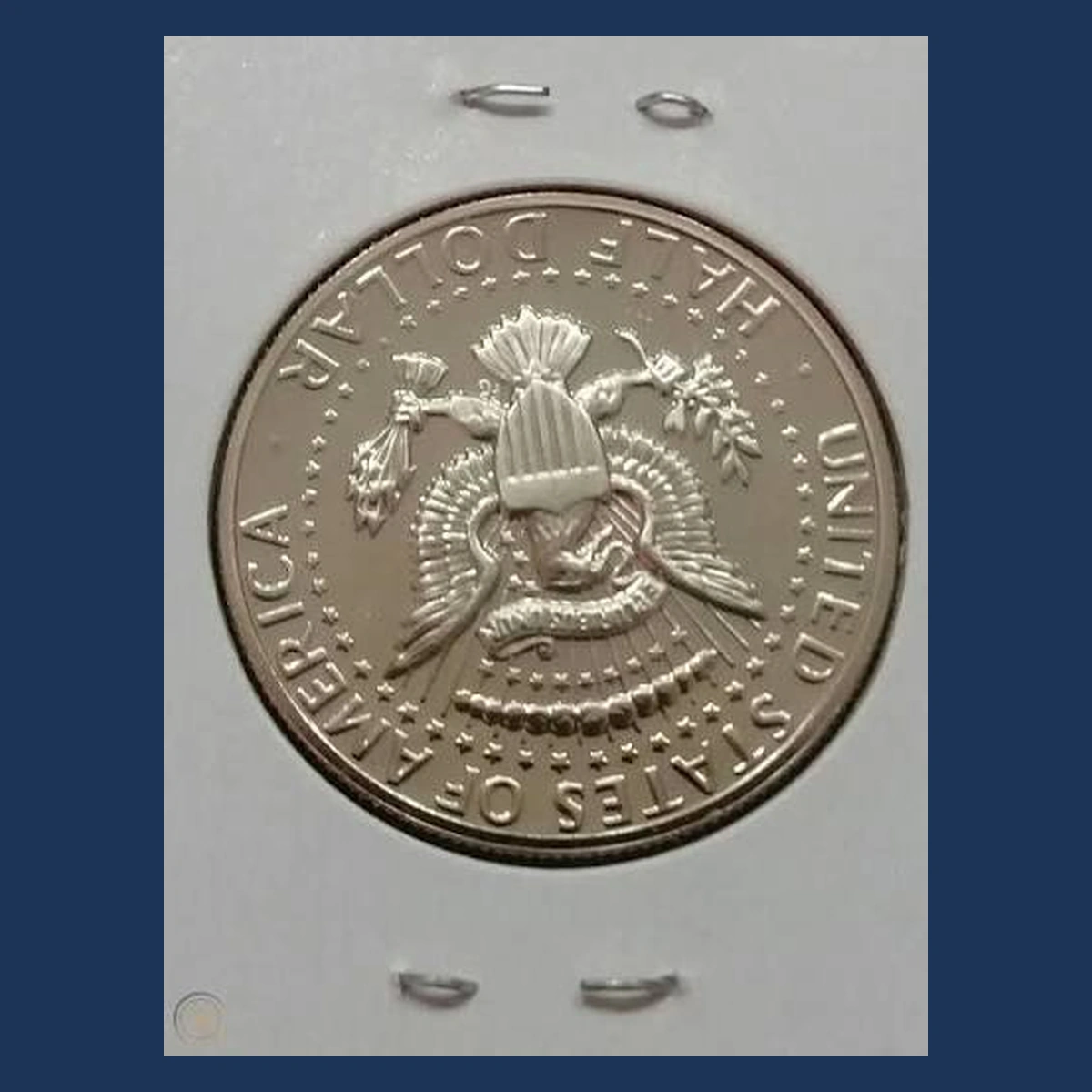
An eagle that finishes tilted after a careful flip can reveal a rotated stamping tool. Separate Denver and San Francisco reports list this error for 1971.
Neither report gives an angle or direction. The rotation must be measured on the actual coin.
A tool can turn while staying centered, so the portrait and eagle may both sit neatly inside their rims. Their relationship to each other is what changes.
Normally, flipping an upright Kennedy top to bottom leaves the eagle upright too. Letting the coin spin between your fingers can imitate a rotation that never happened at the Mint.
Estimated Value
For a clear, repeatable rotation, estimate $50–$400. A larger turn and attractive Proof surfaces may support the higher portion.
This is a type estimate, not a recorded sale for either historical 1971 listing. Neither report automatically describes a dramatic 90-degree or 180-degree example.
Small deviations can remain close to ordinary coin value. The price should follow the angle actually demonstrated and the coin’s condition, rather than an angle supplied by a different example.
How to Identify
Hold Kennedy upright and flip the coin top to bottom, keeping the movement on one vertical line. The eagle should finish upright on a normal half, so repeat the flip without letting your fingers add a sideways turn.
Record a short continuous view if the eagle repeatedly lands at an angle, then inspect the edge with a magnifier. A seam or machining marks may reveal two joined pieces rather than a genuine rotated pair of tools.
A scale and calipers compare the normal clad coin with 11.34 grams and 30.61 mm. The direct first test is the same tilted eagle appearing after every controlled top-to-bottom flip.
5. 1971-D Half Dollar Die Clash with a Retained Die Break (Estimated Up to $500)
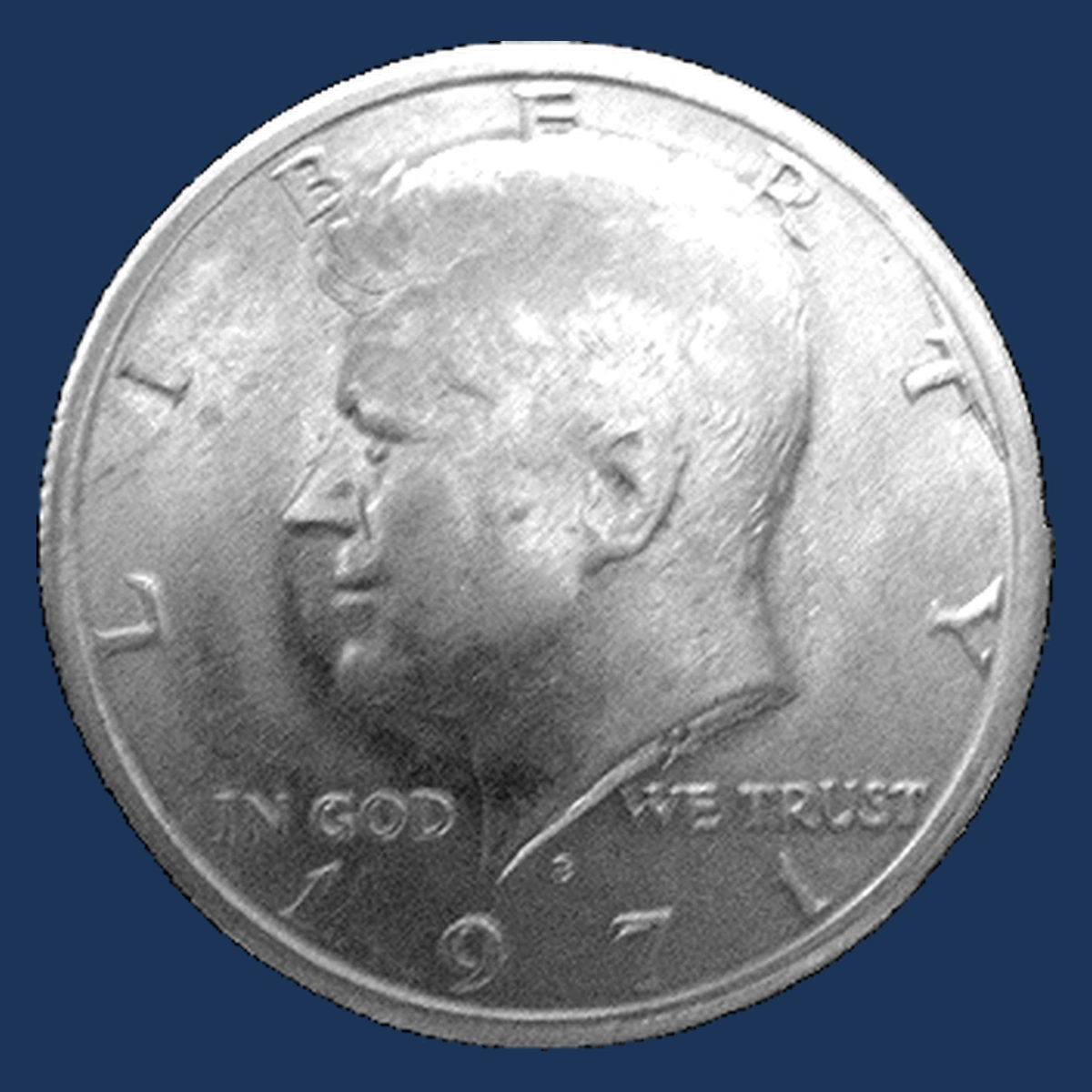
Extra design traces appear above the D in GOD and behind Kennedy’s neck on a reported Denver example. On the back, part of a head outline lies between the eagle’s left wing and the arrows.
These marks came from the stamping tools hitting each other without a blank between them. The damaged tools then transferred the extra outlines to later coins.
The same example also has a retained front die break. A cracked piece of tool steel stayed in place instead of falling out.
Its outlined area differs from the faint copied shapes. Both features need their own visual match.
Estimated Value
Estimate $50–$500 for a clear example of this combination. The clash and retained break share one coin, so their prices should not be added separately.
A 1970-S PR65 Cameo clash sold for $159 in April 2022. Cameo describes a frosted design against a reflective background.
That comparison differs in year, metal, finish, and accompanying damage. The Denver coin’s own marks and condition should determine where it falls, rather than treating the Proof sale as its exact price.
How to Identify
Begin above the D in GOD, then examine the area behind Kennedy’s neck through a magnifier. Turn to the back and compare the head-outline trace beside the eagle with the opposite design.
Those shapes should line up with recognizable parts of the other face. Random scratches will not explain the same set of transferred details.
Next inspect the separate outlined break, checking what design survives within it. It should not be confused with the faint clash marks.
A scale and calipers compare 11.34 grams and 30.61 mm. For a quick initial match, look for the combined traces above GOD’s D, behind the neck, and beside the eagle.
6. 1971 Half Dollar Single, Double, Triple, and Straight Clips (Estimated Up to $600)
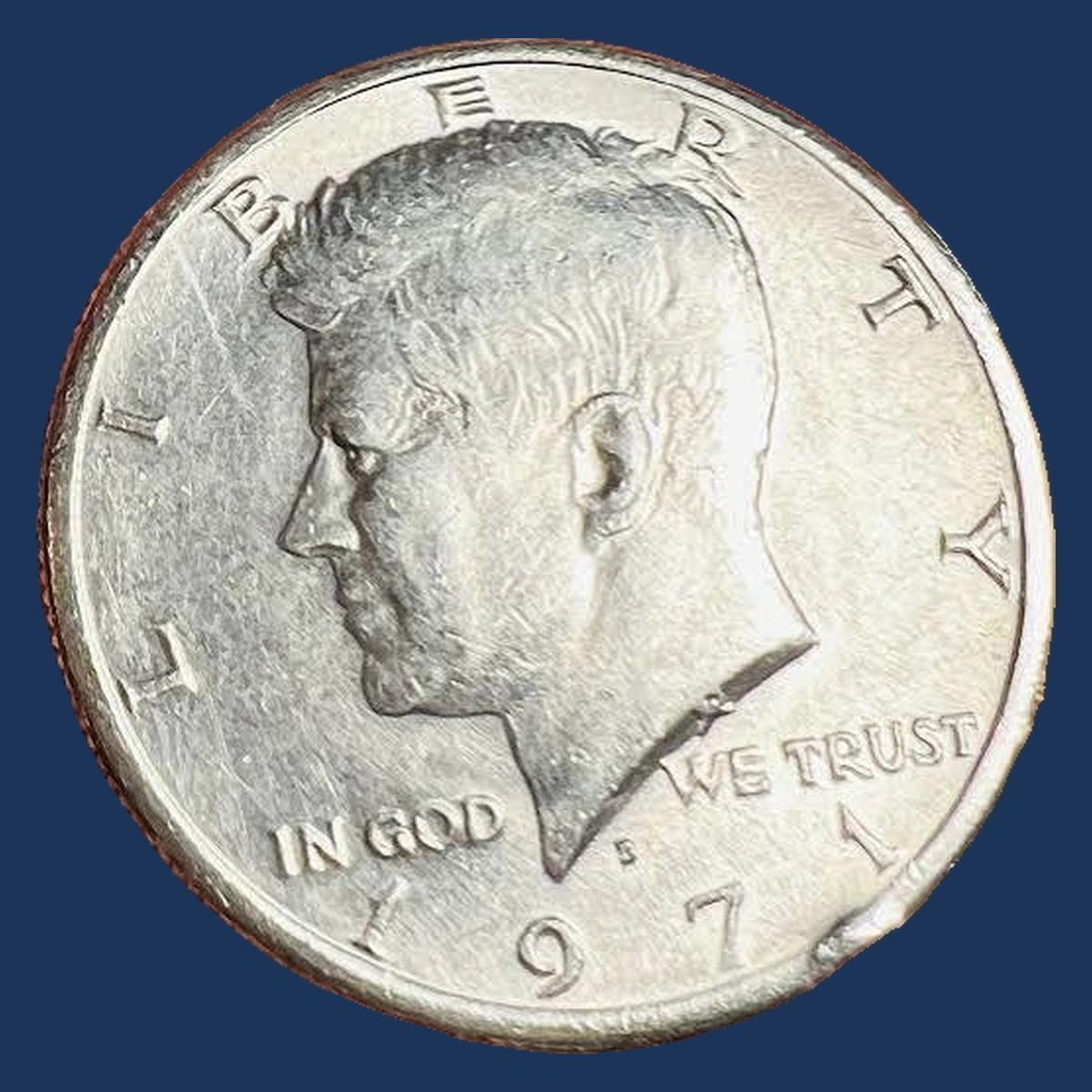
One Denver half has a small 2% curved bite, while others have two or three missing arcs. The gaps were in the blank before the normal coin design was struck.
The small example is graded PCGS MS66, the double clip NGC MS65, and the triple clip PCGS AU55. Their different outlines and grades belong to separate coins.
A further report describes a straight clip without naming a specific mint or graded example. Its shape differs from the curved gaps.
The straight boundary still needs signs that it existed before striking. Later cutting can remove metal in either shape.
Estimated Value
The NGC MS65 double clip sold for $74 in July 2021. A dealer also offered a 1971-D 10% clip graded PCGS MS64 for $90.
That $90 is an asking price. Neither figure gives a sale for the separate AU55 triple clip.
Estimated values across these clips run from $20–$600. Large or well-arranged gaps may attract more interest, but original surfaces and a clear remaining design matter more than counting the missing sections alone.
How to Identify
On a double or triple clip, inspect every gap with a magnifier. Look at how the rim and nearby lettering meet each shortage.
A natural rim may weaken or bend toward the missing section. A fresh cut can instead slice straight through completed detail and leave filing marks.
Weakness on the opposite rim can help, but its absence does not automatically make a clip false. Apply the same surface checks to a straight gap.
A scale measures the shortage from 11.34 grams, while calipers compare intact widths with 30.61 mm. Begin with original rim changes at each gap, keeping each coin’s measurements separate.
7. 1971 Half Dollar Thin Stock and Underweight Planchets (Estimated Up to $750)
A light half dollar can have more than one explanation. Three 1971 examples show why the weight should stay with its own coin.
A Philadelphia NGC AU55 weighs 9.96 grams and has narrow rims. Its original catalog did not find a matching foreign blank.
A Denver NGC MS64 weighs 10.7 grams and was identified as metal rolled to quarter-blank thickness. Its half-dollar-sized outline differs from a small quarter blank.
Another Denver coin, graded NGC MS60, is described as rolled thin and weighs 8.77 grams. These are three different blanks, not three measurements of a single error.
Estimated Value
The Philadelphia AU55 sold for $161 in January 2007. A separate Denver ANACS MS63 thin-stock example brought $228 in October 2022.
The later result is not a sale for the 10.7-gram NGC MS64. It provides a newer comparison for the same general stock problem.
Estimate $100–$750 for original thin-stock or underweight specimens. A greater shortage does not automatically mean a higher price, especially if later corrosion or scraping explains the missing metal.
How to Identify
Weigh the coin and measure its thickness together. A reading below 11.34 grams shows a shortage, but the scale cannot tell you its cause.
Calipers can compare width with 30.61 mm and reveal a thin profile. Use a magnifier to check both faces and the edge for intact layers and original surfaces.
Corrosion, filing, or a lost outer layer can also make a coin light. Those conditions need different explanations from thin starting metal.
Do not name a foreign blank from weight alone, particularly for the generally described 9.96-gram coin. For thin stock, begin with low weight plus a thin, original body whose layers have not been removed.
8. 1971-D Half Dollar Reported Obverse Cud (Estimated Up to $750)
A broad but shallow raised patch is reported near 3:15 on the front rim of a 1971-D half. A specialist catalog records it under the name Cud Book 71D-1.
A cud forms when a piece breaks away from the edge of a stamping tool. Coin metal rises into that empty space and creates a lump joined to the rim.
The record comes from an earlier book. It does not provide a grade or a specific auction coin.
The actual boundary remains the important clue. A bent rim or added lump can look similar without coming from a broken tool.
Estimated Value
The estimated range is $50–$750 for a genuine example matching this broad rim break. Size, original surfaces, and a readable date affect appeal.
A 1976-D MS62 with a back cud and a separate strikethrough sold for $264 in March 2021. That different-year combination provides a comparison, not a sale for Cud Book 71D-1.
The 1971 catalog name alone does not set a price. The coin must show the actual raised patch described by the reference.
How to Identify
Look near 3:15 on the front rim, then follow the raised area inward with a magnifier. Compare its boundary and the neighboring design with the catalog illustration.
A folded rim may lie over finished lettering instead of filling a missing part of the tool. Check the nearby edge grooves for crushing or other later damage.
The reference does not supply a grade for a newly found coin. Use a scale and calipers to record the usual 11.34-gram weight and 30.61 mm width without scraping the surface.
The quickest useful match is a broad, shallow raised patch near 3:15 that joins the original rim naturally.
9. 1971 Half Dollar Missing Cladding, Lamination, and Defective Blanks (Estimated Up to $800)
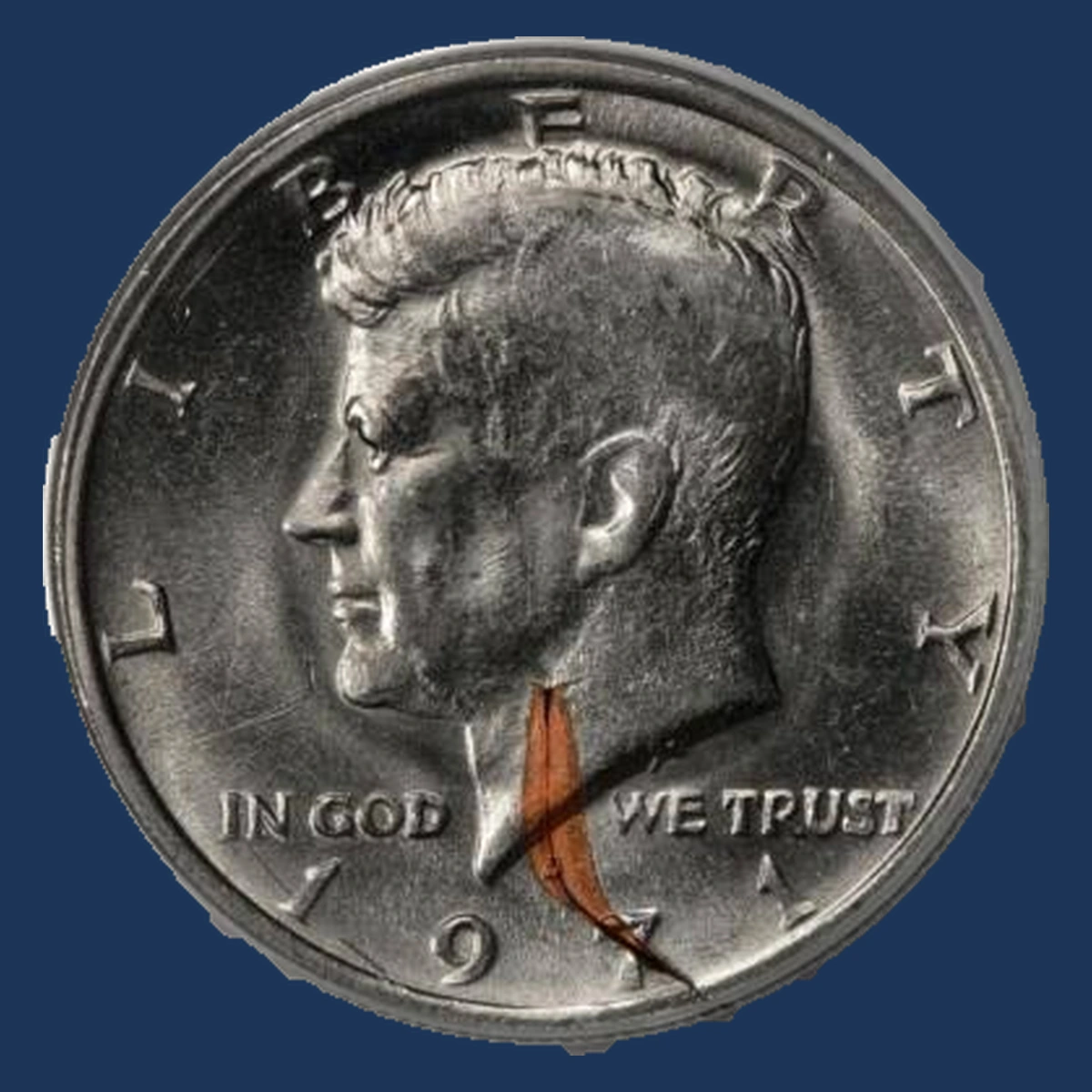
An outer layer can peel or disappear, revealing the copper center of a 1971 half dollar. The coin uses two outer layers bonded to that center.
Reports describe missing layers on Philadelphia and Denver halves, along with peeling metal and broader defective surfaces. A small lifted patch and a completely missing face are different degrees of failure.
Some metal may remain attached. Other pieces lose a layer entirely before or after receiving their design.
The reports do not give one weight, face, or grade for every example. A brown or lightweight half cannot automatically be assigned the same layer-loss explanation.
Estimated Value
Estimate $50–$800 for genuine peeling layers, defective blank surfaces, or missing-layer coins. Small flaws sit below dramatic losses with clear original boundaries.
A 1976-D front missing-layer half graded PCGS MS61 sold for $258.50 in January 2017. That different-year clad example gives a specific comparison with a known face and grade.
The range does not claim separate sales for every 1971 report. Chemical color changes, applied plating, and later scraping do not earn the same Mint-error premium.
How to Identify
If a flap remains attached, leave it in place. Opening it can destroy the boundary that explains how the layers separated.
Use a magnifier to follow that boundary into the edge. Check whether the design was pressed into already exposed metal or was cut through when a layer came away later.
A scale compares remaining weight with 11.34 grams, while calipers record thickness and width against 30.61 mm. There is no single correct weight for every amount of layer loss.
Inspect the opposite face for signs of scraping or chemicals.
Begin with a real layer boundary or lifted flap, rather than brown color on an otherwise intact surface.
10. 1971 Half Dollar Doubled Die Reverses (Estimated Up to $1,000)
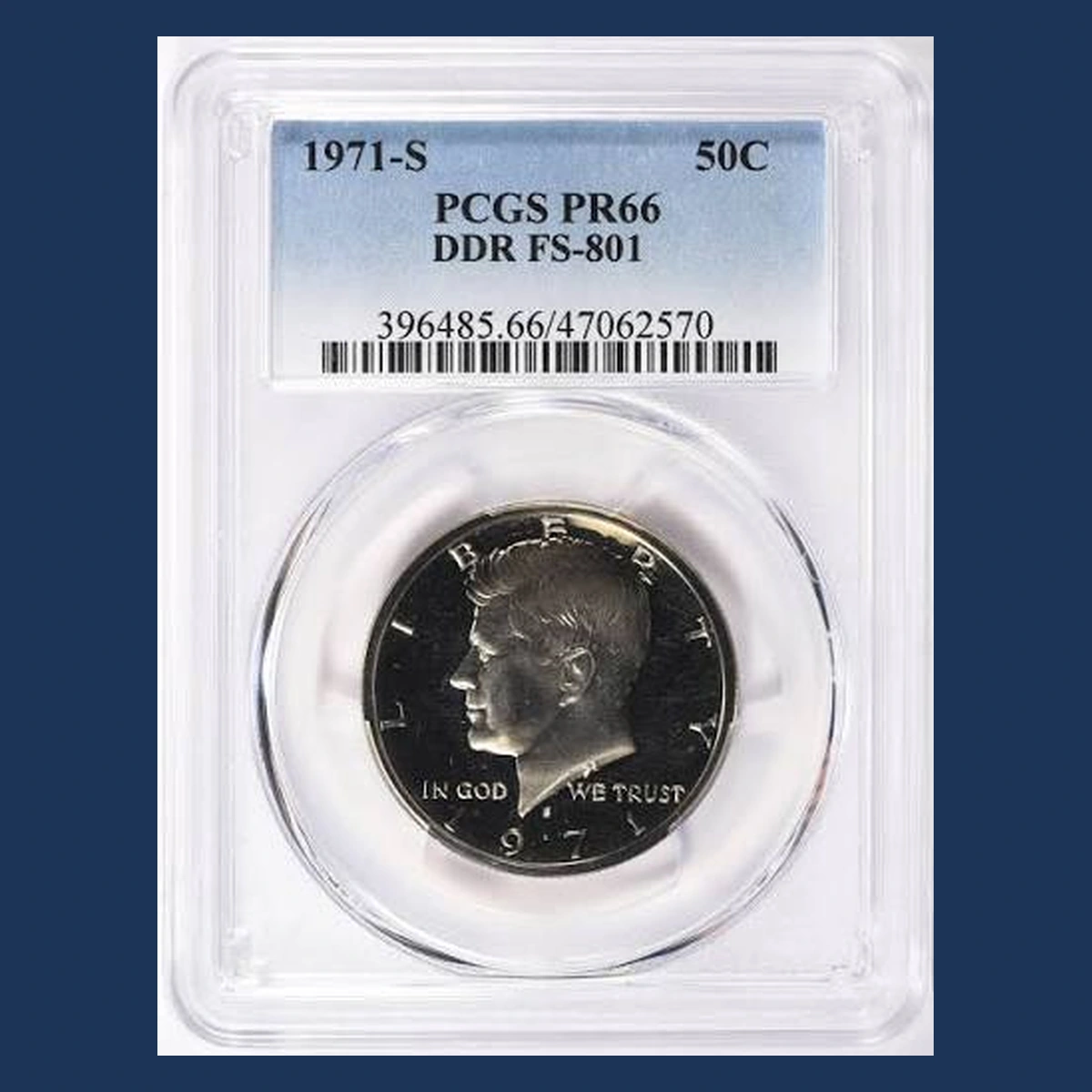
Extra outlines can appear around the back lettering and stars on 1971 halves. Philadelphia reports describe separation near the denomination and stars, while Denver examples have their own thickened and split details.
The San Francisco FS-801 Proof has doubling in feathers, arrow shafts, HALF DOLLAR, and nearby stars. The pattern came from the stamping tool, so matching coins repeat it.
Other Proofs show different patterns. One report sounds similar to FS-801 but lacks a firm connection to that name.
Similar wording is not enough. The actual extra outlines must match.
Estimated Value
Minor, clearly identified back varieties are estimated at $25–$250. Stronger named Proof examples fall around $100–$1,000.
A related 1976-S clad FS-801 graded PR66 sold for about $881 in 2016. It has a different date and a different back design, so the sale supplies only a general Proof-variety comparison.
The 1971 coin still needs the right letter and feather pattern. A famous variety name should not be applied to every doubled-looking star.
How to Identify
For a San Francisco FS-801 candidate, choose a feather or arrow shaft shown clearly in the reference photograph. A magnifier should reveal the same raised extra edge on your coin.
Then check HALF DOLLAR and the nearby stars. More than one matching feature is stronger evidence than a single bright line.
Move the lamp to rule out reflections. Denver and Philadelphia halves need their own photographs rather than the Proof’s pattern.
The ordinary clad standards are 11.34 grams and 30.61 mm, checked with a scale and calipers. Begin by matching a specific feather or arrow-shaft split, then confirm it in the denomination and stars.
11. 1971 Half Dollar Off-Center Strikes (Estimated Up to $1,500)
Most of the blank remained untouched on a Philadelphia half struck about 70% off center. A separate Denver example has a 55% shift.
The Philadelphia coin is graded PCGS MS64 and the Denver coin NGC MS66. Their different percentages and remaining designs belong to separate pieces.
An off-center strike leaves metal present but without a design. The number does not describe how much metal was cut away.
Where the tools touched, Kennedy and the eagle end beside the blank crescent. Grinding a finished coin can remove design too, but it leaves a different surface and boundary.
Estimated Value
The Philadelphia 70% off-center MS64 sold for $312 in March 2023. Estimated values for collectible 1971 examples range from $150–$1,500.
A clear date, readable mint identity, and attractive surfaces help with comparison. A larger percentage alone does not multiply the price.
The Denver MS66 is a different coin. An example with no readable date should also not receive a firm 1971 identity unless other reliable evidence supports that year.
How to Identify
Inspect the untouched crescent through a magnifier. Its original blank texture should meet the struck design without grinding marks from later removal.
Compare both faces for the same shift. Then examine the remaining date and mintmark area, keeping identification separate from your estimate of the percentage.
If the D area is missing, that absence does not prove Philadelphia. Do not fill in details that never reached the blank.
A scale compares the intact blank with 11.34 grams; calipers record its outline against 30.61 mm. Start with matching shifted designs on both faces and original untouched blank metal clearly beside them.
12. 1971 Half Dollar Doubled and Tripled Die Obverses (Estimated Up to $1,500)
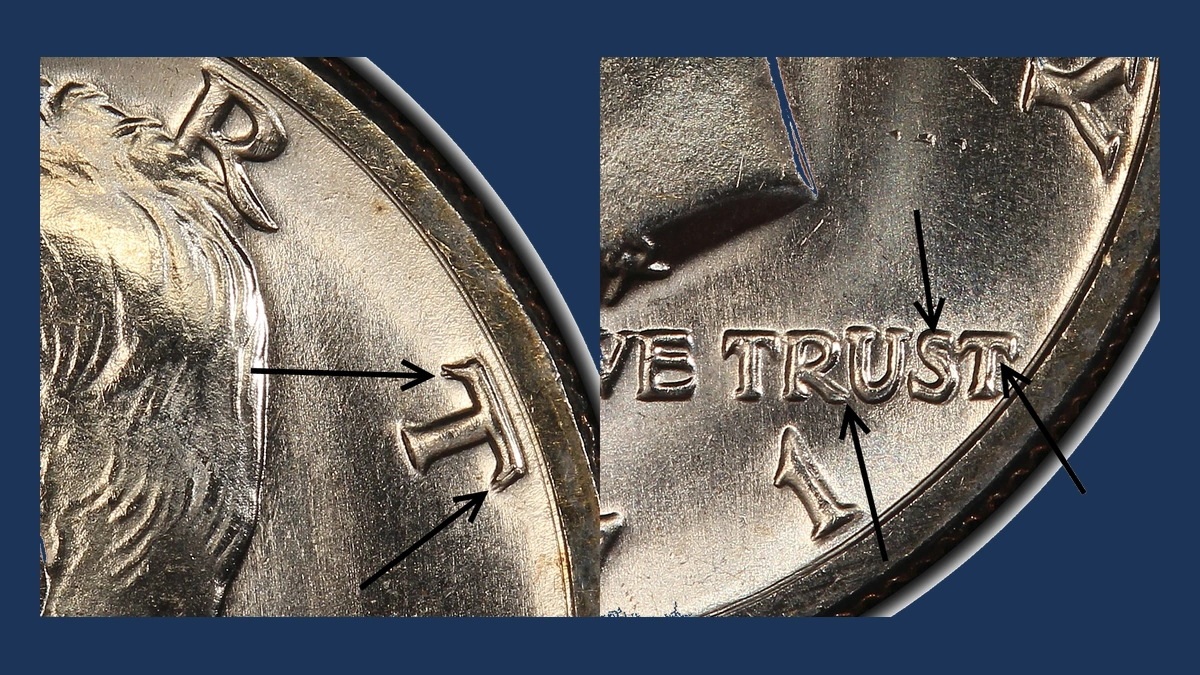
Four small tips appear at the bottom of I in IN on Denver’s FS-102. The repeated letter edges make this a useful place to begin.
Other Denver varieties involve different parts of TRUST, LIBERTY, the date, or Kennedy’s hair. Philadelphia’s example affects WE TRUST, BERTY, and the last three date digits.
San Francisco Proofs have separate patterns, including closely spaced tripling in some letters and numbers. The details are not interchangeable.
Some Denver front varieties also appear with doubled backs. Later cracks or clash marks can help identify a tool, but they do not replace the main doubled-design match.
Estimated Value
Denver FS-101 sales in the GreatCollections archive range from $18–$106. A San Francisco FS-101 PR67 brought $79 in September 2016.
Estimate $20–$250 for modest identified varieties and $75–$1,500 for stronger Proof patterns or excellent preservation. The upper amount is an estimate, not a record for every variety name.
Keep the mint, finish, and actual extra outlines together. A faint pattern does not automatically receive the price of a much stronger one.
How to Identify
On a Denver FS-102 candidate, enlarge the bottom of I in IN with a magnifier. Compare the four small tips with the reference, then check its other doubled details.
That feature does not identify every 1971 variety. Philadelphia and San Francisco coins need their own date and lettering comparisons.
For a Denver combination, match the front before turning to the doubled back. A later crack may be absent on an earlier coin from the same tools.
Normal regular strikes and Proofs weigh 11.34 grams and measure 30.61 mm, checked with a scale and calipers. Begin FS-102 identification with the four tips at the I’s base, rather than a flat shelf beside another letter.
13. 1971 Half Dollar Struck Through Wire or Other Debris (Estimated Up to $2,000)
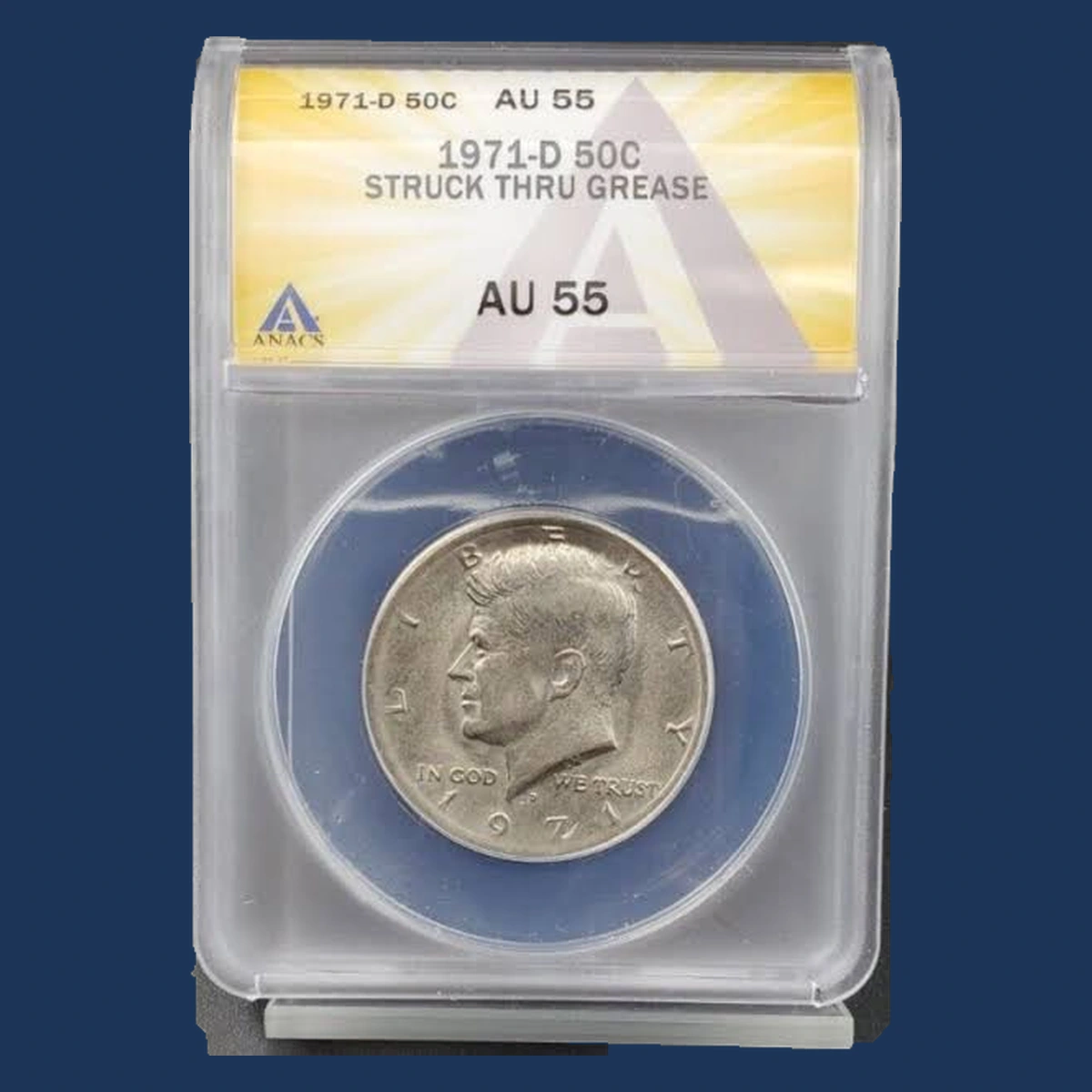
A curved wire mark can remain after the wire falls away, or the wire itself can stay trapped in the coin. Two Denver halves show these different results.
The NGC AU58 has an empty impression on the front. The separate NGC MS64 retains wire on the back.
In both cases, the wire interrupted contact between the stamping tool and the blank. The design formed around the obstruction instead of covering that area normally.
Other 1971 reports describe blocked details without naming the material. A plain depression should not automatically be called wire, cloth, or grease without a recognizable texture.
Estimated Value
The front wire-impression AU58 sold for $1,320 in December 2022. The back retained-wire MS64 brought $228 in August 2017.
These different results show that keeping the wire does not guarantee a higher price. Size, appearance, condition, and bidding interest all vary.
An estimated $50–$2,000 spans modest plain strikethroughs through striking wire errors. The specific shape and effect on the design matter more than simply whether the obstruction is still present.
How to Identify
Do not tug at attached wire. Under a magnifier, inspect where the coin’s metal and design meet it, then compare with the graded back example.
The front AU58 needs a different inspection because only the impression remains. Follow that depression and check how the normal design stops around it.
A scale compares the ordinary host with 11.34 grams; any retained material should be considered separately. Calipers compare width with 30.61 mm.
Look for glue, fresh gouges, or damage from pressing wire onto a finished coin. Begin with the wire-shaped interruption and original design formed around it, not just a loose-looking object on the surface.
14. 1971 Half Dollar Double Strikes, Including Proofs (Estimated Up to $4,000)
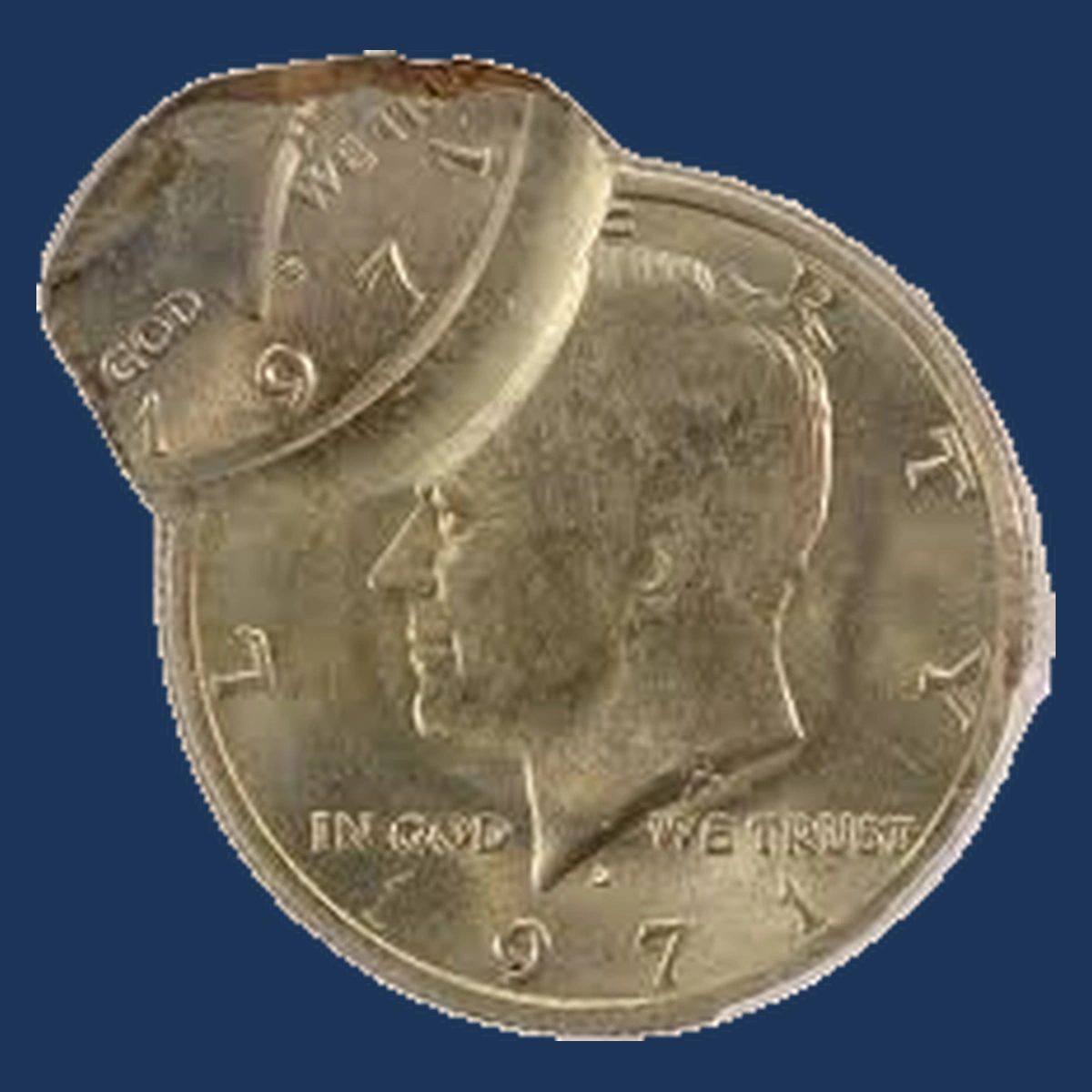
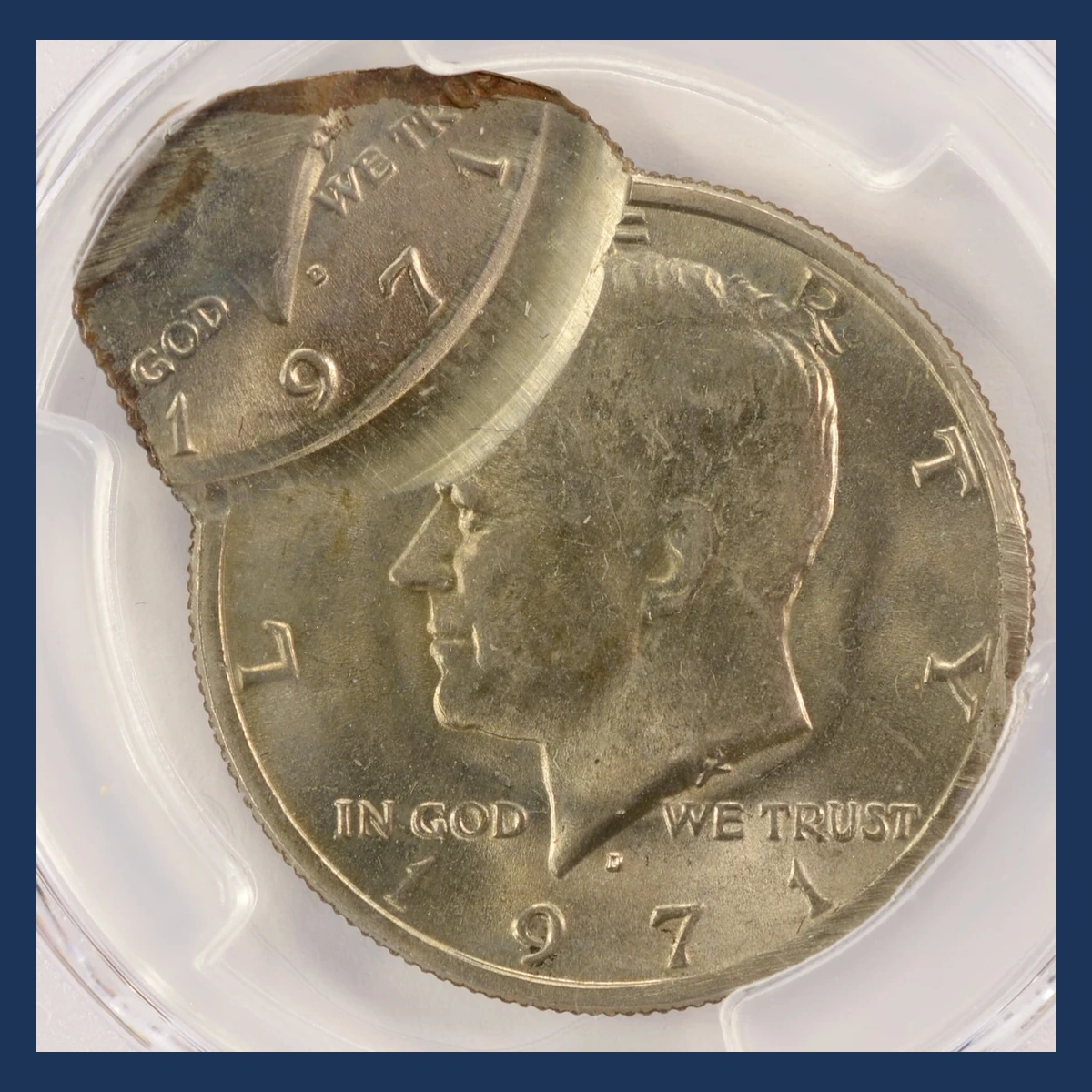
Two dates and two D mintmarks survive on a Denver half graded NGC MS62. After a first strike, the second landed 25% off center toward 10 o’clock.
Extra marks near Kennedy’s ear help show where the later design crossed the first. These are overlapping blows, not simply thick letters.
A separate San Francisco NGC PF64 received two displaced strikes. Normal Proof manufacture uses repeated blows, but they should line up.
Another historical report describes a PR66 Deep Cameo with a second strike on the back only. Its actual repeated impression is different from a doubled design already in the tool.
Estimated Value
The Denver 25% second-strike MS62 sold for $1,265 in January 2007. Another Denver MS64 double strike brought $720 in December 2024.
The San Francisco PF64 with two shifted contacts sold for $2,880 in August 2022. Estimated values across these forms are $500–$4,000.
These are distinct coins with different layouts and finishes. Clear overlapping designs and readable identity help explain their prices, while the old back-only report has no new sale assigned here.
How to Identify
Follow both date-and-D groups on the Denver MS62 with a magnifier. Look near the ear for the later design crossing or flattening details from the first strike.
The two groups should belong to one continuous piece of metal. Check the edge for seams or added pieces.
A scale compares the clad host with 11.34 grams, and calipers record spreading from the usual 30.61 mm. The Proof with two displaced strikes needs its own photographs, since its layout differs.
For the back-only report, the extra strike must appear on that face. Begin with two recognizable, overlapping impressions rather than one letter with a flat doubled edge.
15. 1971-D Half Dollar Indented by a Dime Blank (Estimated Up to $5,000)
A smaller blank left a depression in a Denver half dollar during striking. A CONECA publication illustrates the coin as a PCGS MS62 indented by a dime blank.
The half dollar is the larger receiving coin. This is different from pressing a half-dollar design onto a dime-sized blank.
The dime blank overlapped the half and blocked part of the stamping tool. Its outline became an indent while the nearby half-dollar design formed.
A later circular dent can look similar at first. The boundary and surrounding design must show that the obstruction was present during the original strike.
Estimated Value
A genuine dime-blank indent of this type is estimated at $1,000–$5,000. Clear identity and undamaged original surfaces support the price.
A related 1969-D PCGS MS64 indent was reported sold for $3,840 in 2020. It is a different year and a higher grade than the illustrated 1971 MS62.
The publication provides no completed sale for that 1971 coin. A round depression by itself cannot establish either the dime-blank identity or the upper estimate.
How to Identify
Measure the whole coin with calipers, comparing it with a normal 30.61 mm half dollar rather than a small dime. The scale should be read against the ordinary 11.34-gram clad host.
A magnifier can show how the nearby design meets the depression. Later pressing may crush a previously complete image and damage the opposite face.
Check the grooved edge as well, then compare the indent with the published MS62 photographs. Do not claim that an extra blank remains attached unless it is actually present.
The key first distinction is a full-sized half dollar with a smaller original indent, not a half-dollar design cropped onto a dime-sized body.
16. 1971-D Half Dollar Struck on a Cent Planchet (Estimated Up to $5,000)
Kennedy’s portrait nearly fills a small copper-colored blank on a PCGS MS62 Red and Brown example. The blank was intended for a cent, so much of LIBERTY and the denomination did not fit.
The D is clear, while all four date digits are faint. The portrait stands out more strongly than the center of the back.
Red and Brown describes the remaining copper color and brown toning. It is not another striking error.
The copper alloy runs through the entire small blank. A normal half with one outer layer missing would still have a much larger body.
Estimated Value
The MS62 Red and Brown sold for $3,720 in September 2019. A 1971-D cent-blank coin with the same grade and color description was also listed at $3,360 in December 2024.
The two sale appearances need not represent two different surviving coins. Estimated values for comparable identifiable examples are $2,500–$5,000.
Readable date details, attractive color, and clean surfaces help with comparison. The price reflects the half-dollar error, rather than the ordinary value of a cent blank.
How to Identify
Find the clear D and faint date with a magnifier, then compare the cropped lettering with photographs of the graded example. Copper color alone is not enough.
A cent blank of this period starts near 3.11 grams, far below the half dollar’s 11.34 grams. Weigh the actual coin and measure its smaller, possibly spread outline against 30.61 mm.
Inspect the edge for solid copper alloy rather than layers. Fresh cuts, seams, or applied copper plating suggest other explanations.
Begin with the low weight and an original unlayered edge beneath genuine half-dollar details; the clear D and faint complete date provide the specific photographic match.
17. 1971-D Half Dollar Struck on a Mexican 50-Centavos Planchet (Estimated Up to $6,000)
A Mexican 50-centavos blank received a Denver half-dollar design on the documented PCGS MS64 example. The strike also landed about 30% off center.
These features describe two parts of one event. The wrong metal blank reached the press, then sat partly outside the stamping tools.
Its foreign identity must agree with its measurements, material, and grading record. An unusual color or small size cannot name the denomination by itself.
The untouched area beside Kennedy shows the misplaced strike. It does not independently prove the Mexican blank, and the two features should not be priced as two separate objects.
Estimated Value
The documented PCGS MS64 sold for $1,880 in April 2013. Estimate $1,500–$6,000 for a comparable genuine Mexican-blank half with a readable shifted design.
A 1971-D cent-blank MS62 Red and Brown sold for $3,360 in 2024. That newer wrong-blank result uses different metal and is only a market comparison.
The cent sale cannot be presented as a foreign-blank transaction. The combined appearance and correct blank identity guide the broader estimate.
How to Identify
Record the actual weight, width, and thickness with a scale and calipers before estimating the off-center percentage. The normal 11.34-gram, 30.61 mm half is only a comparison for this foreign blank.
Use the correct grading photographs and professional metal analysis if the material is disputed. A low scale reading alone cannot identify a Mexican denomination.
Then inspect both faces under a magnifier, following the untouched metal beside the displaced design. Examine the edge for trimming or joined pieces.
The first visible match is original blank surface beside the roughly 30% shifted half-dollar strike; confirming the Mexican blank also requires matching material and measurements.
18. 1971 Half Dollar Struck on Nickel or Quarter Planchets (Estimated Up to $10,000)
The Denver nickel-blank PCGS MS63 is nearly centered, but much of the outer wording cannot fit. Only the tops of the date digits remain to support its 1971 identity.
A separate Denver PCGS MS66 was struck on a clad quarter blank. That layered metal differs from the nickel blank’s solid copper-nickel alloy.
A further report describes a half struck on a silver quarter blank without fixing its mint or finish. Its metal still needs separate proof.
The confirmed base-metal examples cannot supply that silver identity. Similar cropped designs can occur on blanks with very different compositions.
Estimated Value
The nickel-blank MS63 sold for $2,040 in August 2020. Ordinary nickel- or clad-quarter-blank examples are estimated at $1,000–$4,000; a 1976 quarter-blank MS63 sale at $1,020 in 2021 offers a different-year comparison.
The reported silver-quarter type has a conditional estimated range of $5,000–$10,000, based on related Kennedy silver-quarter guide values. That range applies only after the silver blank is verified.
It is neither a recorded sale nor confirmation of the unresolved 1971 report.
How to Identify
Check weight and edge construction together. Nickel blanks start near 5.00 grams, clad quarters near 5.67 grams, and 90% silver quarters near 6.25 grams.
A scale can narrow the possibilities, but disputed metal needs testing. Under a magnifier, compare a layered quarter edge with a nickel’s solid metal.
Calipers record the small blank’s spreading against the half dollar’s normal 30.61 mm width and 11.34-gram starting weight. Look for fresh cuts or plating that could imitate a different blank.
The nickel example needs a match to its surviving date tops. Begin with the combination of correct blank weight, original edge structure, and genuinely cropped half-dollar details.
19. 1971 Half Dollar Transitional Silver-Planchet Strikes (Estimated Up to $15,000)
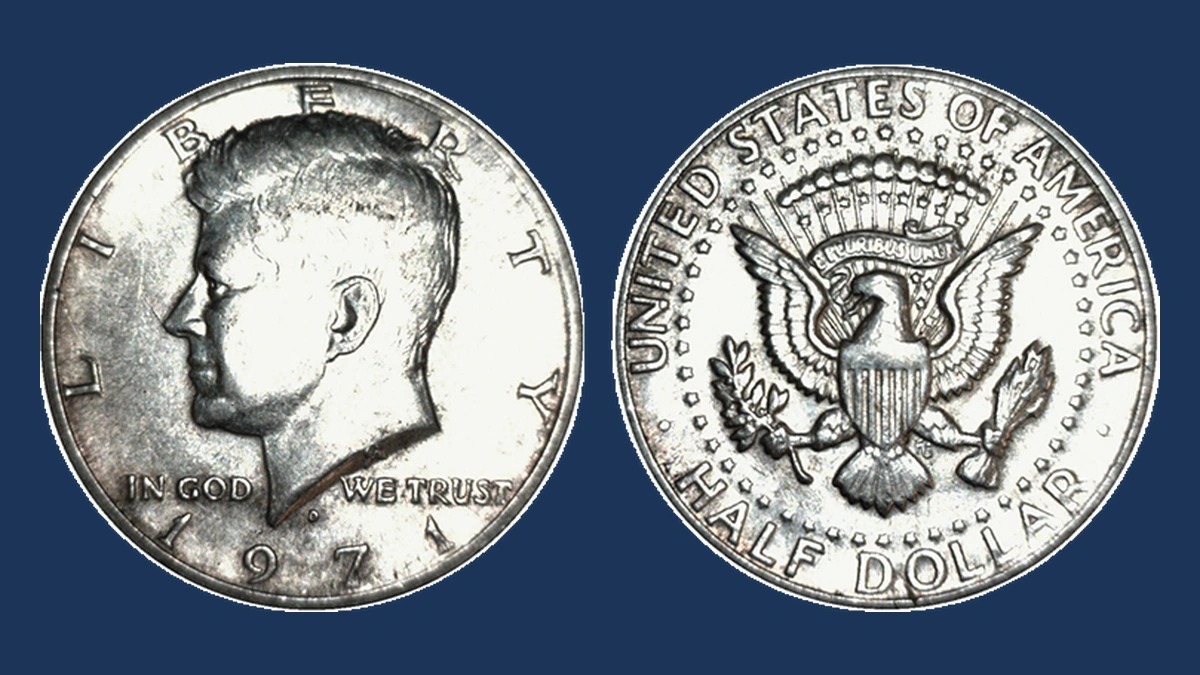
A leftover 40% silver blank could produce an unusual 1971-D half after regular production switched to copper-nickel clad metal. A PCGS AU55 auction coin documents the Denver error.
A separate Denver coin examined by ANACS reportedly weighed 11.44 grams. Its measured density was close to 9.5 times that of water, supporting silver-clad metal.
Another account claims a San Francisco silver Proof but gives a 12.50-gram figure. That is neither the normal clad standard nor the 40% silver-half standard.
The Proof report still needs its own material confirmation. It cannot borrow the Denver coin’s measurements or sale.
Estimated Value
The Denver AU55 sold for $6,037.50 at Heritage in September 2003.
Market reports describe a $13,000 MS61 silver sale in 2018. The price index lists it under ordinary Denver coins without independently confirming silver.
Estimate $4,000–$15,000 for verified transitional silver strikes. The San Francisco claim can use that range only after its own silver blank is confirmed.
That reported Proof has no confirmed auction result here.
How to Identify
The weight difference is small: normal clad halves are 11.34 grams, while 40% silver halves start at 11.50 grams. Wear and measurement variation can overlap, so a scale alone cannot decide.
Professional nondestructive metal testing is more useful. A density test can also help; the examined Denver coin’s 11.44 grams and density near 9.5 belong only to that specimen.
Calipers check the shared 30.61 mm diameter, and a magnifier can reveal plating or altered edge layers. The San Francisco Proof needs its own tests.
For a suspected silver transition, begin with accurate weighing, then confirm the metal; a silver-looking surface or the reported 12.50 grams is not enough.
Conclusion
Estimated 1971 half-dollar error values range from $20 to $15,000. Small mintmark changes and dramatic wrong-blank coins occupy very different parts of that range.
Start with what the coin shows, then choose the right test. A thin body, missing layer, and silver blank can all need weighing, but weight alone does not explain them.
Match the actual design and metal before comparing a price, especially for the reported silver Proof and silver-quarter claims.