1964 Half Dollar Error List with Pictures

A 1964 Kennedy half dollar with a large, backward image sold for $2,400 in March 2023. That striking mistake is one of many 1964 Kennedy Half Dollar errors worth learning to spot.
The examples below span an estimated $25–$8,000, from raised cracks to a half dollar struck over a quarter. Read on to see what each mistake looks like and which checks help separate it from damage.
1. 1964 Kennedy Half Dollar Die Cracks and Local Die Breaks (Estimated Up to $200)
A thin raised line can cross the picture or lettering without splitting the coin. This happens when a die, the steel tool that stamps coins, develops a crack.
Metal enters that opening during the strike and leaves a ridge on the coin. If a piece breaks off the tool, the coin can carry a larger raised patch.
Location matters. A patch touching the rim may be a cud, while one inside the design is a different local break.
The reported 1964 cracks do not all share one position or mintmark.
Estimated Value
Allow an estimated $25–$200 for a clear crack or small local break. A faint line generally adds less than a raised patch that interrupts the picture.
Original surfaces help the price, especially when the feature is easy to see. Cleaning or heavy wear can reduce that appeal.
This is a guide range, without a recorded sale for one identified example. A much larger rim break needs its own price comparison.
How to Identify
Hold the coin beneath a lamp and tilt it slowly. Use a 10× magnifier to see whether the line stands above the silver or cuts down into it.
A scratch usually forms a groove, often with disturbed metal beside it. A crack in the stamping tool leaves a raised line instead.
For a claimed cud, follow the raised patch right to the rim. An isolated lump inside the picture does not meet that test.
Use a scale and calipers to check the normal 12.50 grams and 30.6 mm diameter. Also inspect the grooves around the edge for later damage.
To make the first distinction, tilt the suspicious line and check that it rises above the coin.
2. 1964 Kennedy Half Dollar Repunched Denver Mintmark (Estimated Up to $300)
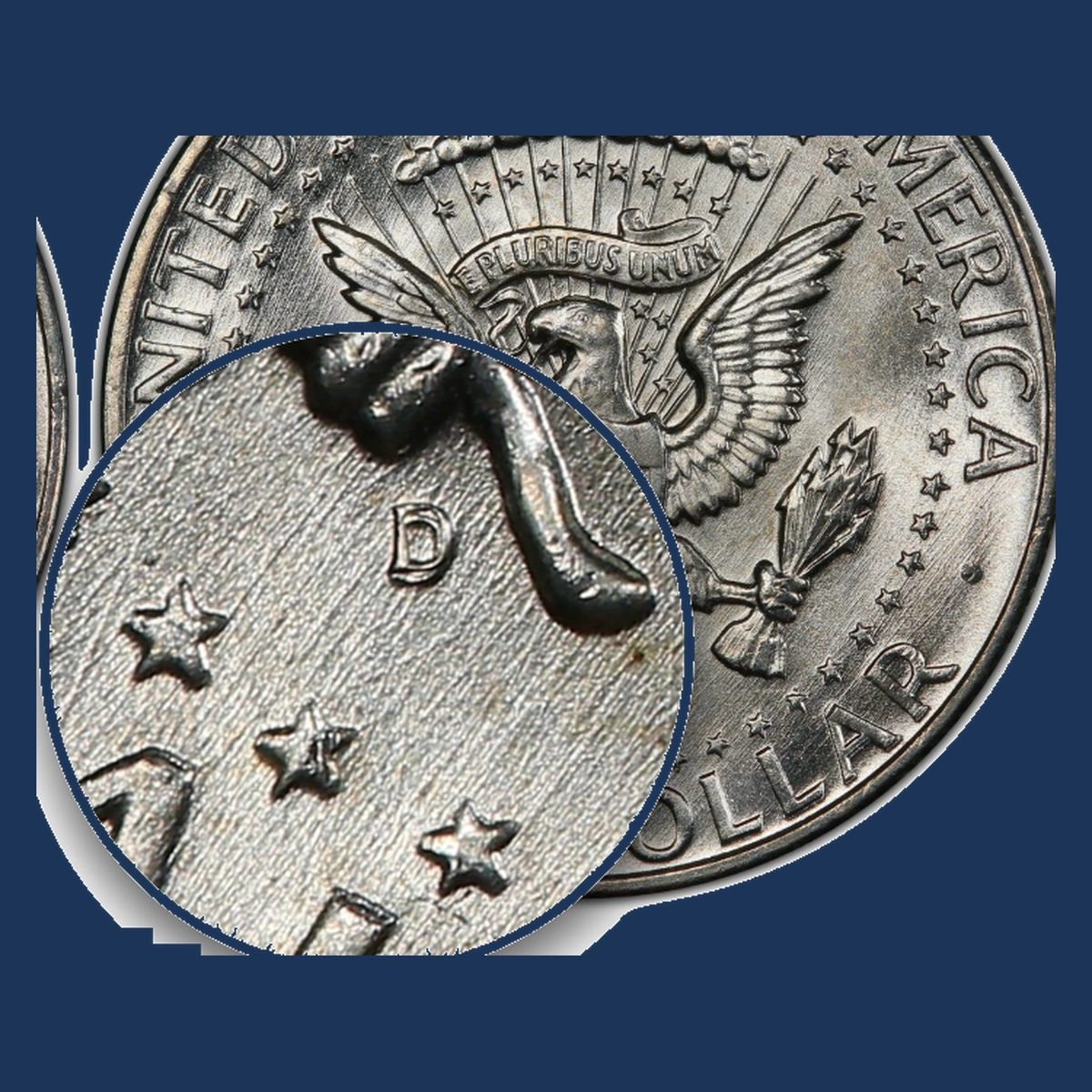
The small D can show part of another D beneath or beside it. Look on the back, below the eagle, where Denver placed its mintmark on 1964 half dollars.
At that time, workers punched the mintmark into the steel stamping tool by hand. A second punch slightly out of place could leave two overlapping shapes.
The coin received that doubled mark when it was struck. It did not need two separate blows from the press.
The extra outline can be small, so its shape matters more than simple thickness.
Estimated Value
A confirmed repunched D has an estimated value of $30–$300. The stronger end favors a clear second outline on an attractive coin with little wear.
A weak mark on a worn half dollar usually brings less. Damage beside the D does not earn the same premium.
No specific auction result supports this particular range. Treat it as a buying guide that depends on the exact mark, condition, and strength of the extra detail.
How to Identify
Find the D below the eagle before examining the date or portrait. A Philadelphia coin without a mintmark cannot have this Denver mintmark error.
Under a 10× magnifier, look for part of a second curved side or upright stroke. Compare its position with a confirmed example of the same repunched mark.
A flat shelf beside the letter may come from movement during striking. A dent can also make the D look wider without preserving a second letter.
Check 12.50 grams on a scale and about 30.6 mm with calipers. Inspect the edge grooves for filing or other damage.
For the quickest useful check, match the extra D outline to the same position on a confirmed coin.
3. 1964 Kennedy Half Dollar Undated Silver Blank (Estimated Up to $300)
A smooth silver disc may be an unstruck coin blank: the round piece of metal used to make a coin. It has no portrait, eagle, or date.
Some blanks have not yet received a raised rim. Others have passed through the machine that pushes up their edges before striking.
Neither stage supplies a year. Even a silver blank with the right half dollar weight cannot prove that it belongs to 1964.
This entry therefore covers an undated silver blank, rather than a coin with a visible 1964 date.
Estimated Value
An undated silver half dollar blank has an estimated range of $60–$300. Surface quality, metal content, and a reliable identification affect the price.
Two NGC-certified silver blanks sold together for $156 in July 2021. Their listed weights were 12.5 and 12.3 grams.
That was the total for both pieces, not a price for each blank. It also was not a sale of a visibly dated 1964 error.
How to Identify
Begin with a scale: a silver half dollar blank should be close to the usual 12.50 grams. Use calipers to compare its size with the 30.6 mm finished coin, allowing for the unfinished rim.
Turn the disc over under a magnifier. Look for faint remains of lettering, grinding lines, or uneven thinning that could reveal an ordinary coin with its design removed.
Check the edge too. An unstruck blank does not yet carry the finished grooves made during a normal half dollar strike.
A metal test can help confirm silver, but it cannot supply a missing date. First check both faces for erased design before treating a smooth disc as a genuine blank.
4. 1964 Kennedy Half Dollar Thin Planchet (Estimated Up to $350)
This half dollar looks unusually thin and weighs only 9.5 grams. A normal 1964 half dollar weighs 12.50 grams, so the difference is much larger than ordinary wear.
The metal disc used for this coin was thinner than intended. The press still struck a half dollar design onto it.
Less metal can leave weaker detail where the design needs more material to fill the stamping tools. The shape and surfaces help explain the low weight.
Weight alone does not show whether a coin began on thin stock or lost metal later.
Estimated Value
The NGC-certified 9.5-gram example sold for $144 in July 2021. An estimated $100–$350 range provides a guide for similar thin-planchet pieces.
A clear date and convincing original surfaces make the error easier to recognize. Heavy damage can reduce the price even when the coin remains underweight.
This comparison concerns a thin metal disc made for a half dollar. It should not automatically price a coin struck on another denomination’s blank.
How to Identify
Weigh the coin before judging its weak details. A reading near 9.5 grams is a useful lead, compared with the normal 12.50 grams.
Calipers can check both the roughly 30.6 mm diameter and the reduced thickness. Compare those measurements with a normal 1964 half dollar.
Use a magnifier along the edge grooves and around both faces. Filing, heavy polishing, or acid damage can remove metal after a coin leaves the Mint.
A naturally thin coin should still show surfaces and edges shaped by the original strike. Weak detail by itself is not enough.
To narrow the problem quickly, weigh the coin and then check whether its thin edge still has original strike detail.
5. 1964 Kennedy Half Dollar Cracked Planchet (Estimated Up to $400)
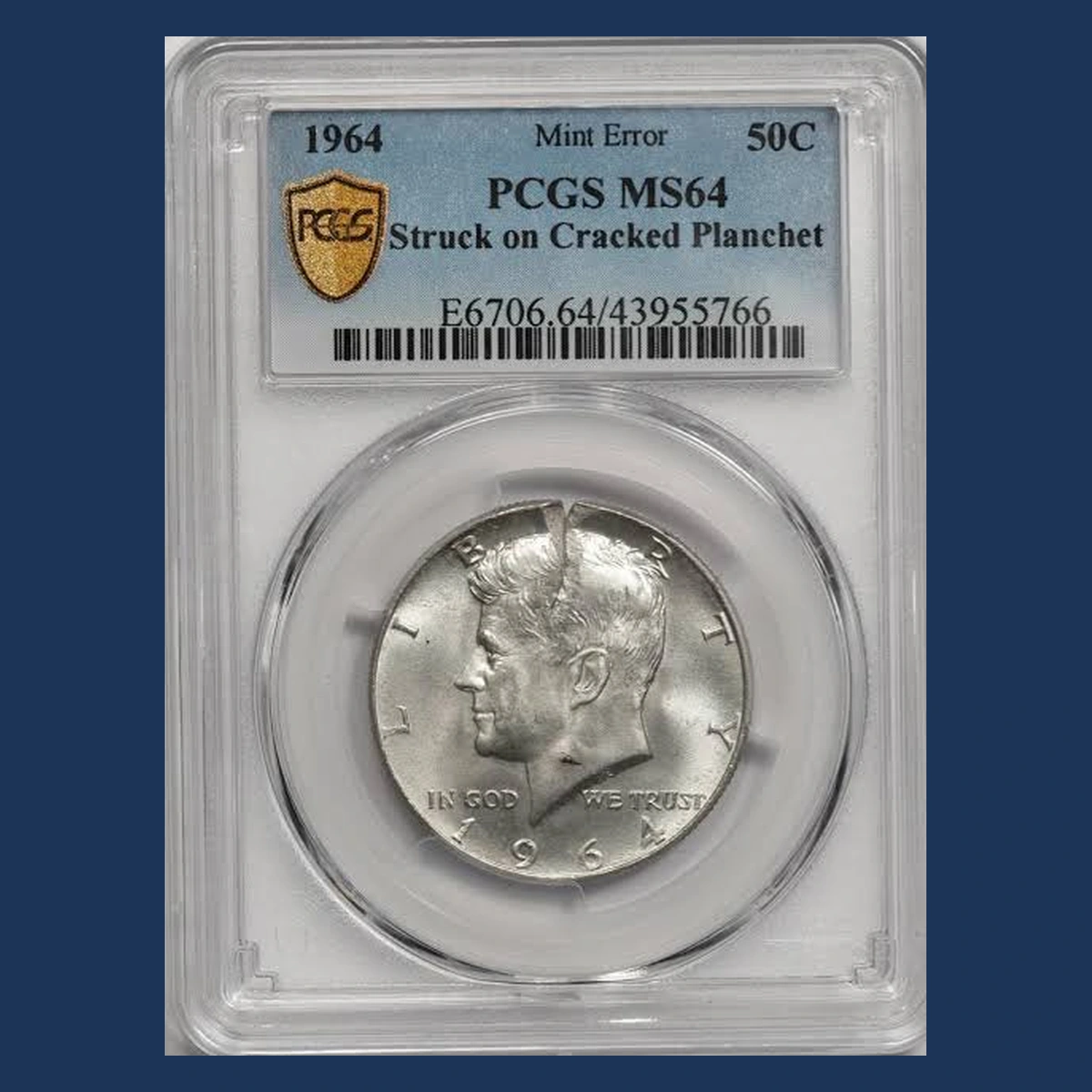
An opening in the silver runs into the coin itself. Unlike a raised die-crack line, this is a crack in the metal disc that became the half dollar.
The strike can force that split farther apart. Its edges may show how the design spread around the opening.
One reported piece has a crack about three-quarters of an inch long. Another has an opening near the lower-left edge, around the 8:30 position.
Those are separate examples. Their locations should not be combined into one coin’s identifying features.
Estimated Value
Estimate $75–$400 for a genuine cracked-planchet half dollar. A visible opening with good original detail is usually easier to sell than a faint or damaged split.
A separate PCGS MS62 example sold for $144 in October 2021. MS62 describes an unworn coin that can still have noticeable marks.
That sale offers a comparison for the error type. It is not a recorded sale of either of the two examples described above.
How to Identify
Inspect the opening without bending the coin. A crack can spread or break if you try to test it with your fingers.
Under a magnifier, study where the split meets the design and edge. Look for metal shaped during striking, rather than sharp saw marks or a fresh cut.
Follow the opening on both faces where possible. A raised line with no split belongs to a different kind of error.
The normal checks are 12.50 grams on a scale and 30.6 mm with calipers. Examine the edge grooves around the gap, remembering that a missing fragment can lower the weight.
Start by checking whether the feature is an actual opening in the coin, rather than a raised ridge.
6. 1964 Kennedy Half Dollar Silver Planchet Lamination (Estimated Up to $450)
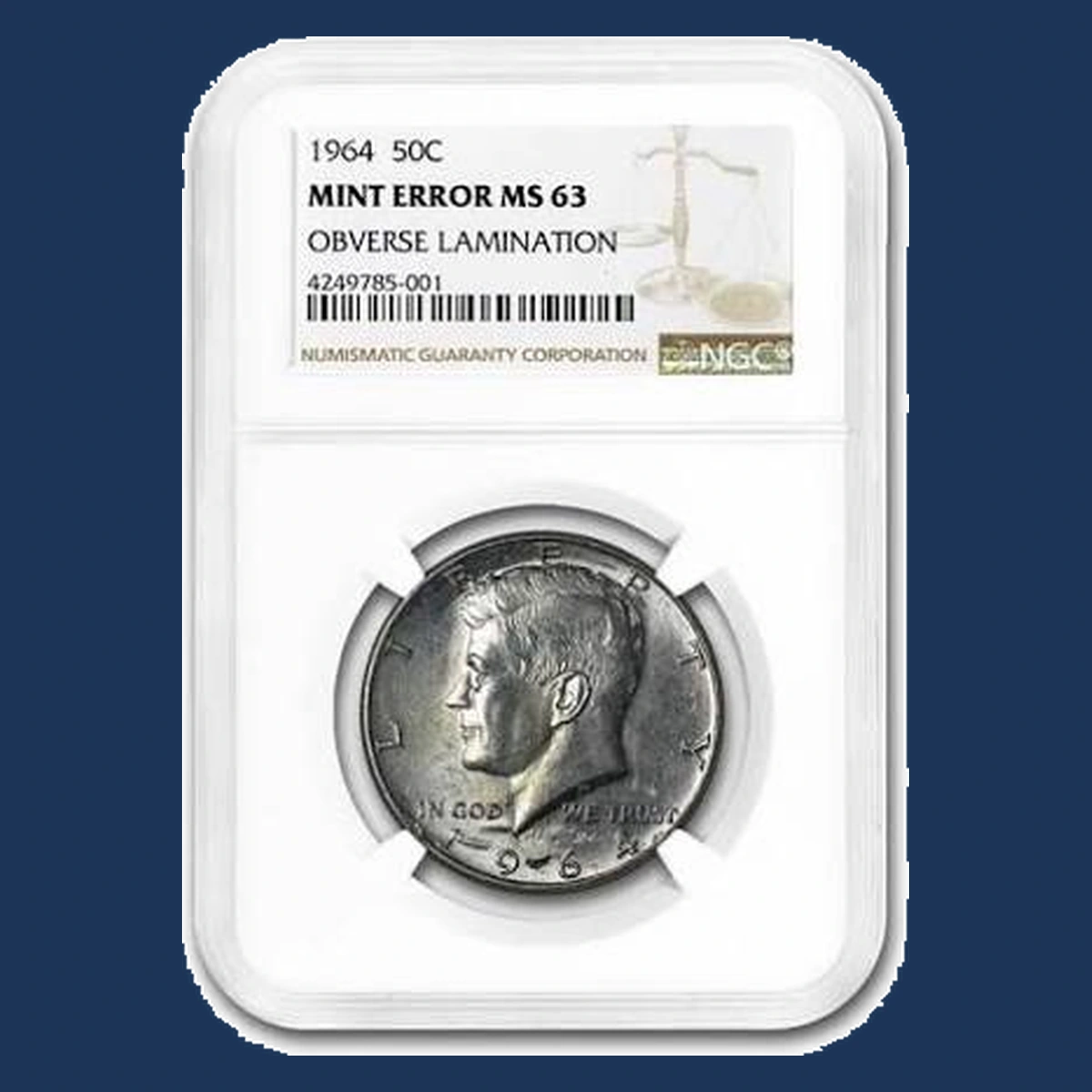
A thin strip of silver can peel away, leaving a rough patch or a shallow missing layer. This is called lamination, a separation within the metal used to make the coin.
The separation may begin before the coin is struck or open farther afterward. Loose metal can remain attached at one end.
Examples include front and back defects, plus a Denver piece graded MS61. Their damaged areas occur in different places.
A 1964 half dollar contains 90% silver throughout its alloy. It does not have the manufactured outer layers used on later clad half dollars.
Estimated Value
An estimated $50–$450 covers many genuine 1964 lamination errors. Size, remaining detail, and whether loose metal is still attached all affect the price.
An NGC MS64 piece listed as (1964) sold for $156 in July 2021. Its back had lost metal before striking.
The parentheses mean the date was assigned rather than fully visible. That sale should not be treated as the price of the separate Denver MS61 example.
How to Identify
Look closely at the boundary of the rough patch with a magnifier. A thin peeling edge or a partly attached flap can help show that the metal separated in layers.
Leave loose silver in place. Removing it changes the coin and can destroy useful evidence.
Check whether the design continues into the affected area or stops at a later break. Compare both faces, then inspect the grooves around the edge for scraping.
Use a scale and calipers against the normal 12.50 grams and 30.6 mm. Missing silver may reduce the weight, but a small peel can make little difference.
For a quick first check, find a thin peeling boundary rather than a smooth dent or scraped patch.
7. 1964 Kennedy Half Dollar Defective or Holed Planchet (Estimated Up to $500)
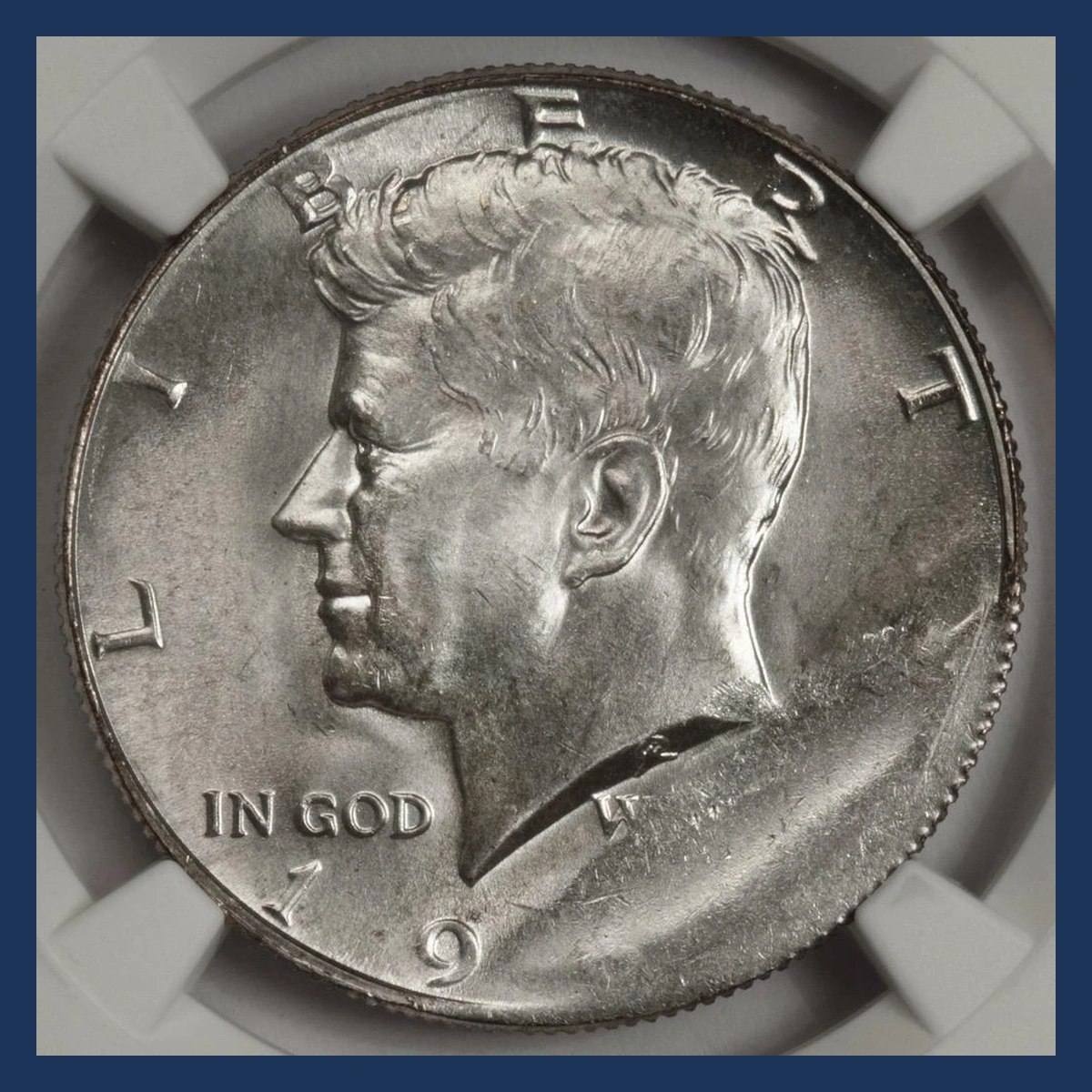
A hole or an irregular patch can begin in the metal before the coin receives its design. The press then squeezes silver around that defect while striking the half dollar.
One reported coin weighs 11.68 grams and was graded MS63 by NGC. A different holed piece weighs 11.7 grams and was graded MS65.
They are not the same coin. Similar weights do not make their holes, grades, or sale histories interchangeable.
A hole drilled after minting is ordinary damage, so the metal around the opening needs close attention.
Estimated Value
Use an estimated $75–$500 for a genuine defective or holed metal disc struck as a 1964 half dollar. Clear evidence that the defect existed during striking helps support the premium.
The 11.7-gram NGC MS65 holed coin sold for $156 in July 2021. This is an actual sale of that piece.
The amount does not belong to the separate 11.68-gram MS63 example. Each coin’s surfaces and opening must be judged separately.
How to Identify
A drilled hole often has a regular round wall, tool marks, or sharp metal pushed out at its ends. Examine those areas under a magnifier before assuming a Mint error.
On a genuine pre-strike defect, nearby metal can spread around the opening as the design is pressed into the coin. Check both sides for that relationship.
Weigh the coin and measure it with calipers. Compare it with the normal 12.50 grams and 30.6 mm diameter; a missing area may explain a lower weight.
Also inspect the edge grooves for unrelated damage. Begin the identification by looking inside the hole for drill marks, then check whether the surrounding design was struck around it.
8. 1964 Kennedy Half Dollar Clipped Planchets (Estimated Up to $650)
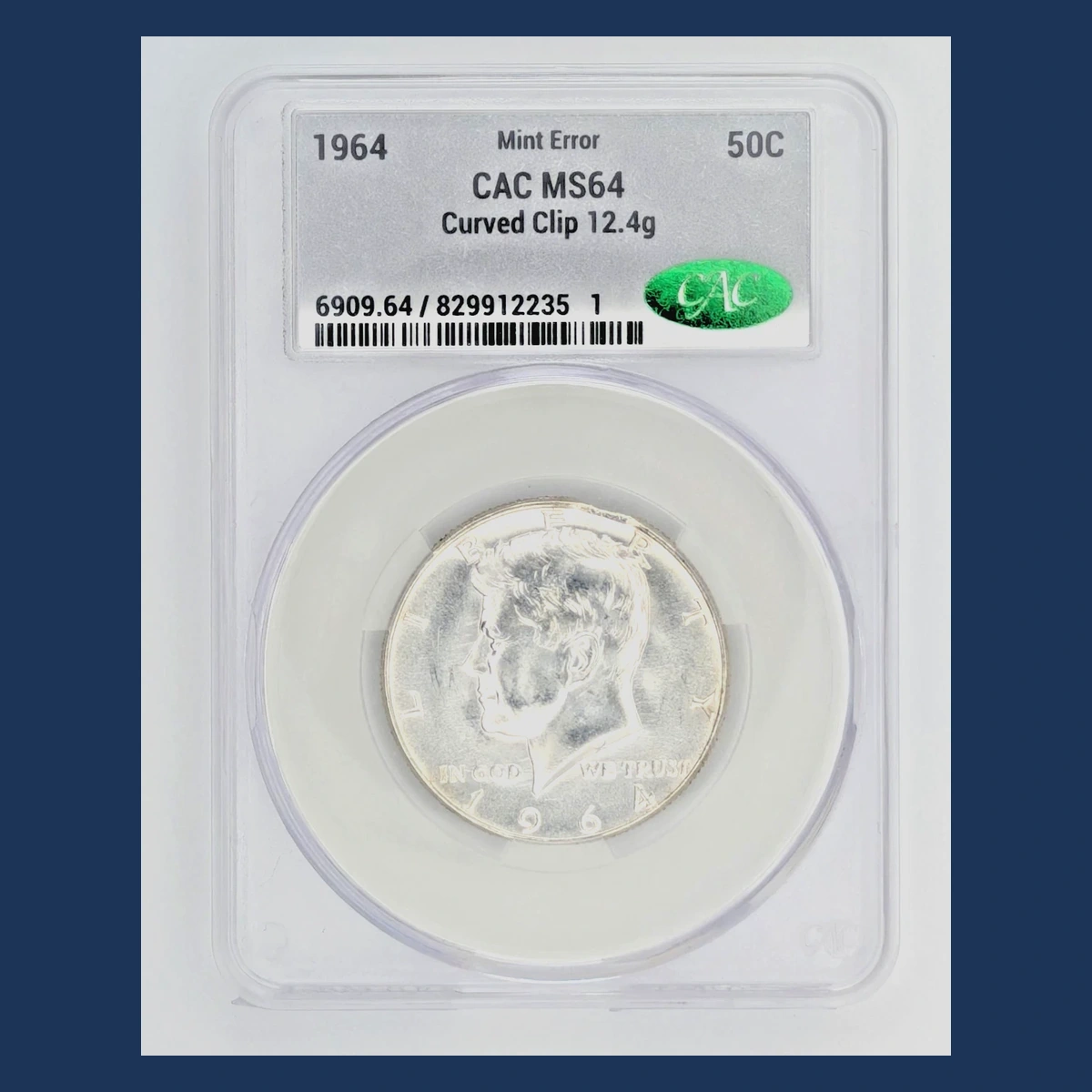
A missing bite at the edge can be curved, straight, or ragged. It forms when an incomplete metal disc reaches the press and receives the coin design.
Some 1964 pieces have more than one missing section. Double and triple clips describe the number of gaps, not extra strikes.
The gaps occur at different positions on different coins. A 12.07-gram straight clip and a 12.24-gram piece with curved and rim clips are separate examples.
The important feature is how the original strike shaped the remaining metal beside each missing area.
Estimated Value
Clipped 1964 half dollars have an estimated range of $40–$650. Larger or multiple clips can draw more interest when the date and design remain clear.
An NGC AU58 ragged clip near the bottom sold for $159 in June 2023. AU58 means only slight wear was present.
A separate ANACS MS63 ragged clip also sold for $159 around that period. Equal prices do not make all clip shapes or sizes equally valuable.
How to Identify
Compare the missing section with the rest of the rim before weighing the coin. Under a magnifier, look for a smoothly struck boundary rather than a sharp edge cut after minting.
The rim opposite a clip may be weak, though this sign is not equally clear on every example. Check each gap separately on a double or triple clip.
Use calipers across intact parts of the roughly 30.6 mm diameter. A scale should show less than the normal 12.50 grams if a meaningful amount of silver is absent.
Inspect the edge grooves where they approach the gap. For the quickest check, look for original strike detail flowing toward the missing section instead of fresh cutting marks.
9. 1964 Kennedy Half Dollar Partial Collar Strike (Estimated Up to $700)
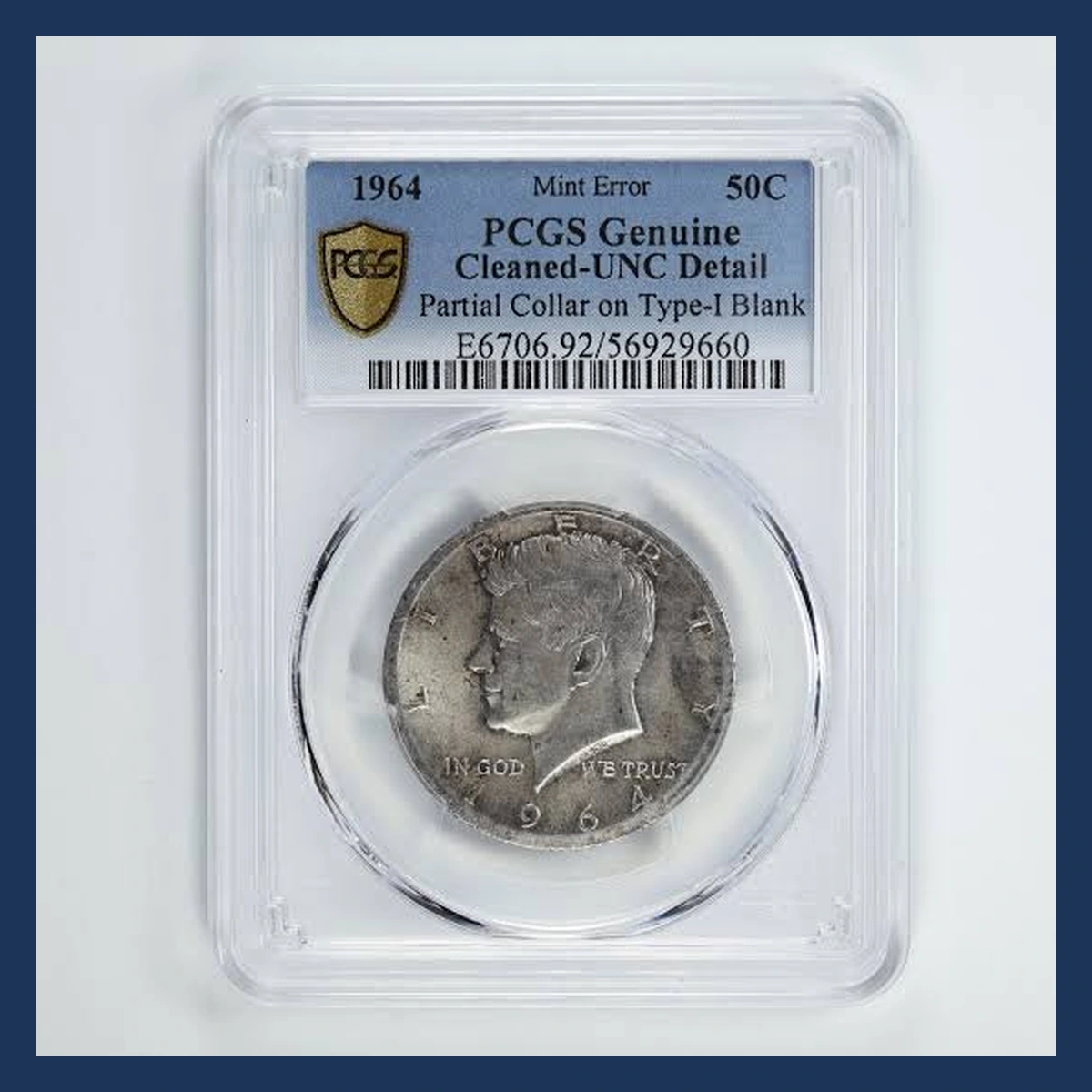
The edge can look like a step, with one part wider than the other. This happens when the coin sits only partly inside the collar, the metal ring that controls its width during striking.
The confined part receives the normal edge shape and grooves. Metal outside the ring can spread farther outward.
The picture may still be complete on both faces. An off-center design is not required for this error.
The reported NGC example has an Uncirculated Details grade with cleaning noted, rather than a numbered Mint State grade.
Estimated Value
A 1964 partial collar strike has an estimated range of $100–$700. A strong edge step and well-preserved surfaces help make the error more desirable.
The reported cleaned example has no recorded sale used here. Cleaning can lower its price compared with an otherwise similar coin with original surfaces.
Do not read Uncirculated Details as a numbered grade. It describes a coin without circulation wear but with a condition problem that still affects its value.
How to Identify
View the edge at eye level while rotating the coin. A magnifier should help you see the step between the confined section and the part that spread outward.
Check where the grooves stop or change. A coin squeezed after minting may instead show flattened grooves and damage along the rim.
Use calipers to measure more than one part of the edge. Compare the readings with the usual 30.6 mm diameter, since the expanded section may be wider.
A scale should remain close to 12.50 grams if no silver is missing. To identify the likely error quickly, find the edge step and trace its relationship to the original grooves.
10. 1964 Kennedy Half Dollar Broadstrike (Estimated Up to $800)
The coin is wider than usual, but the whole picture can still be present. Without the collar ring holding the edge in place, silver spreads outward during striking.
That extra width is the main sign of a broadstrike. The edge may lack the normal complete set of grooves.
A reported PCGS MS62 example shows this basic error. It does not need a second strike or a backward image to qualify.
Other errors can occur with a broadstrike, but those added features belong only to coins that actually show them.
Estimated Value
Estimate $100–$800 for a straightforward 1964 broadstrike. A clearly expanded shape, complete date, and attractive surfaces can support the higher part of the range.
A separate PCGS MS64 on a Type 1 blank, before its rim was raised, sold for $161 in May 2006. That is an older comparison.
It is not the sale price of the MS62 coin. Pieces with added striking errors need comparisons that also account for those extra features.
How to Identify
Use calipers first to check whether the coin exceeds the normal 30.6 mm diameter. Measure in more than one direction if its outline is uneven.
Then weigh it: a broadstrike usually keeps close to the normal 12.50 grams because the silver spreads rather than disappears. A low weight needs a separate explanation.
With a magnifier, follow the outer picture into the expanded area and inspect the edge. Look for original striking detail, not flattened grooves and hammer damage.
Check that the design remains complete enough to separate it from a simple off-center strike. Start by matching an enlarged diameter with a naturally struck, spread-out rim.
11. 1964 Kennedy Half Dollar Doubled and Multiple Dies (Estimated Up to $1,000)
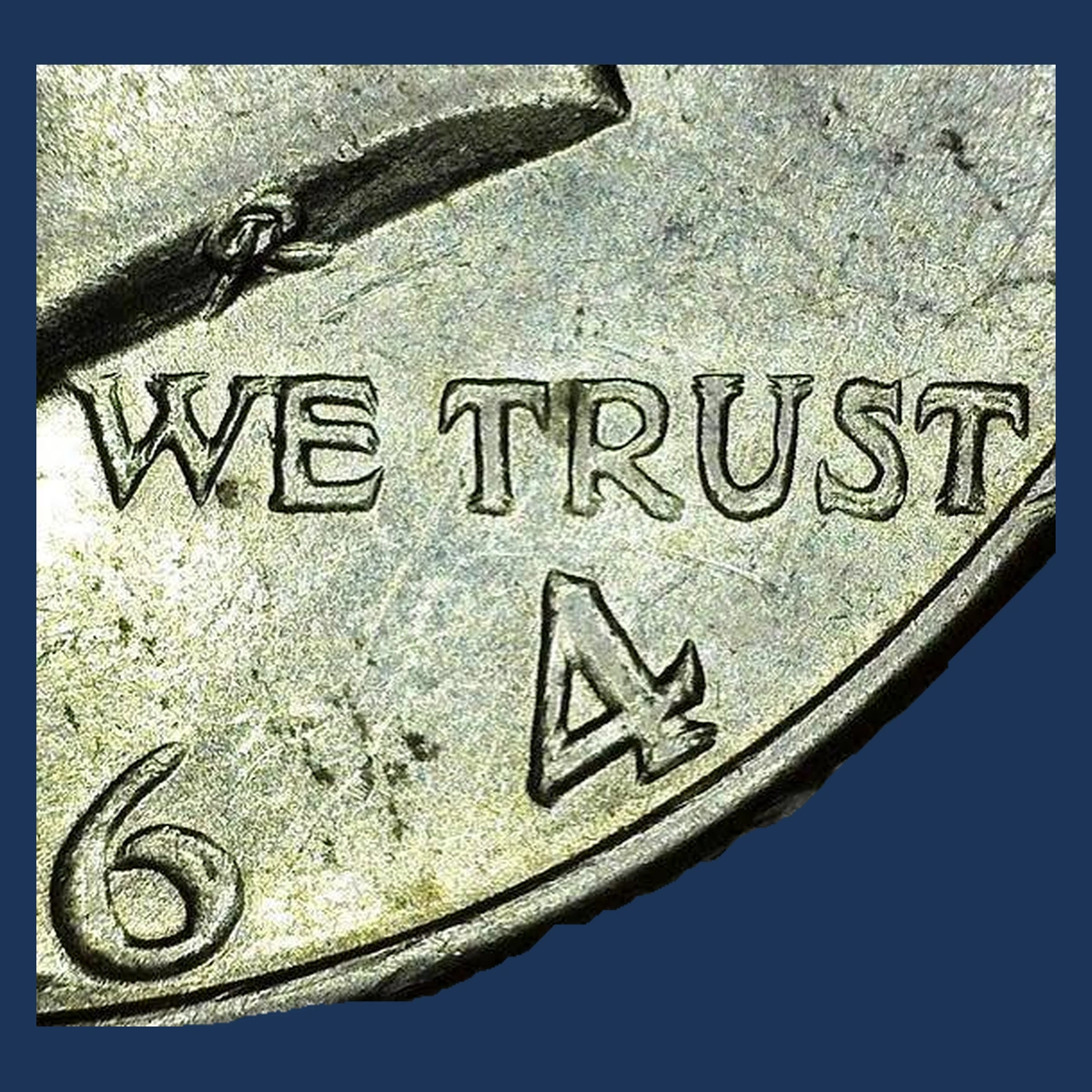
Letters, numbers, or parts of the picture can have an extra raised outline. That extra detail was already on the steel stamping tool before it touched the coin.
This is called a doubled die. Three or four overlapping images can also occur, depending on how the tool was made.
The 1964 examples include Denver and Philadelphia coins, along with Proof coins made specially for collectors. A back-side example shows extra detail around STATES and the upper stars.
The Accented Hair Proof design is different. Its intended hair detail alone is not a doubling error.
Estimated Value
An estimated $40–$1,000 covers the doubled and multiple-image varieties discussed here. The exact variety, strength of the extra detail, and condition matter more than the label alone.
A PCGS MS65 1964-D doubled-die front sold for $130 in July 2021. That gives one actual comparison for an unworn Denver coin.
It does not establish the price of every Proof, Philadelphia, or multiple-image example. Stronger varieties need their own comparisons before purchase.
How to Identify
Decide which coin you have before comparing tiny details. Denver coins carry a D below the eagle; Philadelphia coins have no mintmark.
Use a 10× magnifier to examine the exact letters or picture shown on a confirmed example. A rounded second outline differs from the flat shelf that movement during striking can leave.
For the back-side variety, begin around STATES and the upper stars. For Proof coins, compare with the correct Proof variety instead of an ordinary circulation coin.
Check 12.50 grams with a scale, 30.6 mm with calipers, and the grooves around the edge. All 1964 half dollars use the 90% silver alloy.
Match the doubled features in the same places on a confirmed coin, rather than judging from thickness alone.
12. 1964 Kennedy Half Dollar Struck-Through Material (Estimated Up to $1,000)
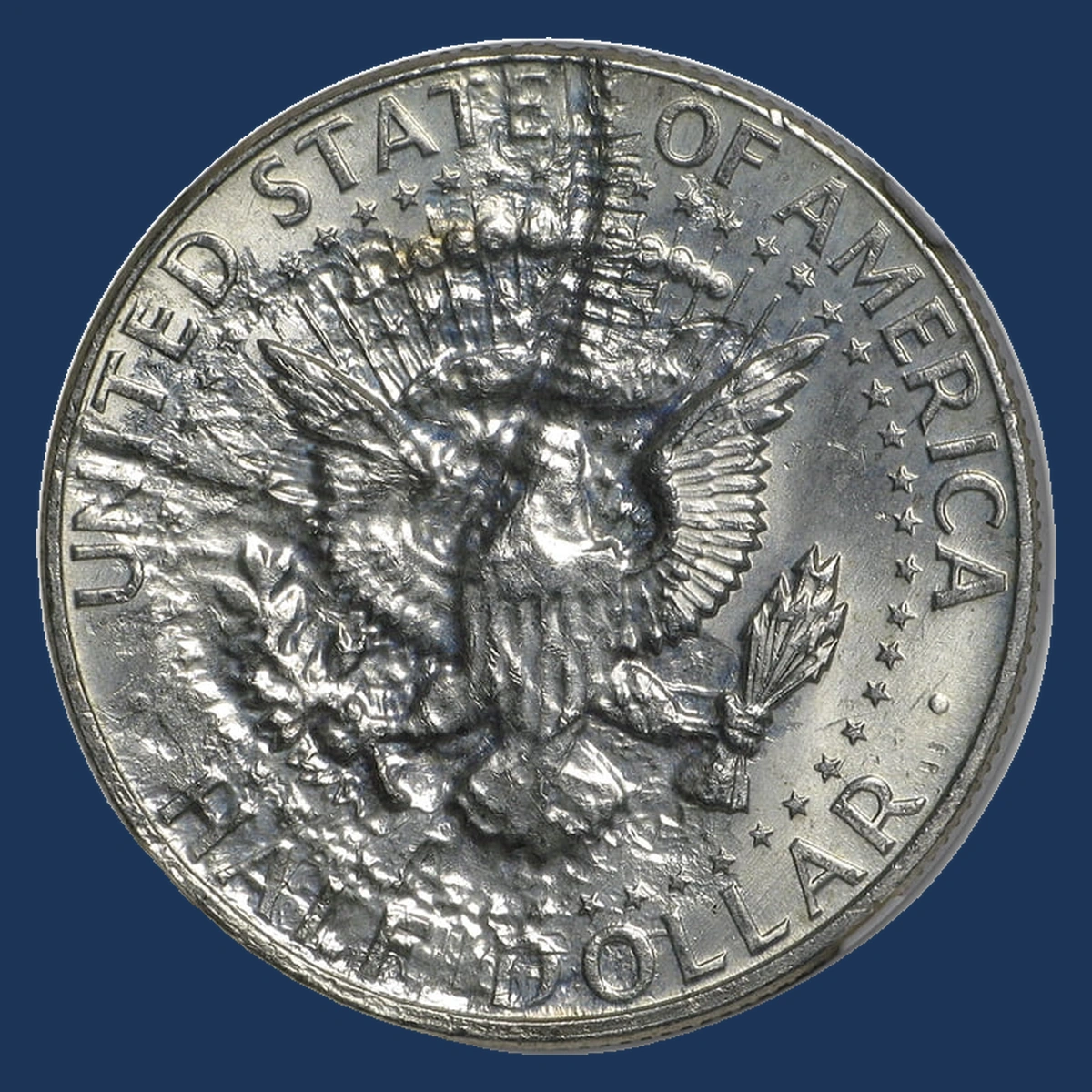
A patch of the picture may be missing, or an unusual shape may be pressed into the surface. Material between the coin and the stamping tool can block part of the design.
This is a strike-through. Depending on the material, it can leave a smooth hollow, rough texture, or a recognizable outline.
Reported 1964 pieces include front, back, and two-sided examples. A Denver coin has the impression of a detached piece of edge grooving.
An impression does not mean the object remains attached. The object may have fallen away after the strike.
Estimated Value
Allow an estimated $50–$1,000, depending on the size and clarity of the impression. A recognizable object shape can attract more interest than a small indistinct patch.
A 1992-D coin with an edge-groove impression sold for $336 in July 2021, graded NGC MS64. This is a comparison from another year.
That later coin uses a clad alloy rather than 1964 silver. Its price is not a recorded sale of the Denver AU58 example.
How to Identify
Examine the floor of the hollow with a magnifier. Look for a surface formed during striking rather than sharp scraping, displaced metal, or a cut through the finished picture.
A repeated groove pattern may suggest a piece of coin edge. Do not name an object when its shape is too weak to recognize.
Check both faces, since some examples have more than one affected area. Use a scale and calipers against the normal 12.50 grams and 30.6 mm diameter.
Inspect the edge grooves for later damage, and leave any attached material untouched. To start the comparison, match the hollow’s shape and interrupted design to a confirmed strike-through of the same kind.
13. 1964 Kennedy Half Dollar Low-Pressure Strike (Estimated Up to $1,200)
Much of the picture looks shallow, even though the coin may have little wear. A weak blow from the press can fail to push the silver fully into the stamping tools.
The result can affect broad areas on both faces. It differs from a small blocked patch where grease or another object prevented local detail.
The reported NGC piece is described as a die-adjustment strike. That name is commonly used for this kind of weakly struck coin.
Its appearance alone does not show why the operator used that pressure.
Estimated Value
A genuine low-pressure 1964 strike has an estimated value of $150–$1,200. A clear difference from ordinary wear is important to its appeal.
The reported example has no specific numerical grade or sale price used here. This range is an estimate for the error type.
A coin that keeps original surfaces despite its shallow picture can be more convincing. Heavy wear or cleaning makes the cause harder to establish and can reduce the price.
How to Identify
Compare the highest parts of the portrait with the flatter background under a magnifier. Wear usually rubs the high points first, while low pressure can leave weak detail more broadly.
Check the back as well. A single blank patch may have another cause, so do not judge from one missing letter.
Weigh the coin on a scale and measure it with calipers. The usual figures are 12.50 grams and 30.6 mm.
Inspect the rim and edge grooves for wear, filing, or an uneven strike. A normal weight does not settle the cause by itself.
For the first useful check, compare weakness on both faces with the amount of rubbing on the high points.
14. 1964 Kennedy Half Dollar Uniface Strike (Estimated Up to $1,500)
The eagle appears on one side, while the other side has no normal front picture. A metal disc blocking one stamping tool can prevent that side from receiving its design.
This is a uniface strike: a coin with a struck picture on only one face. It does not require a backward image.
The reported NGC MS66 piece is listed as (1964). Its date is assigned because the usual dated face is blank.
That matters when identifying the coin. A fully visible 1964 date should not be claimed for this example.
Estimated Value
Estimate $250–$1,500 for a genuine example of this kind. A well-preserved struck face and a convincing original blank face help support its value.
No actual sale price is used here for the reported NGC MS66 coin. MS66 describes a highly preserved, unworn piece, but grade alone does not set the price.
The blank face must be part of the minting mistake. A normal half dollar ground smooth afterward has a different value.
How to Identify
Start with the apparently blank face. Under a magnifier, search for sanding lines, shallow remains of the portrait, or a rim thinned by grinding.
Inspect the eagle side for normal original detail. A mirror-image design pressed below the surface would point toward a brockage instead of a simply blank face.
Use a scale to compare the weight with 12.50 grams. Calipers can check the roughly 30.6 mm width and reveal uneven thinning.
Turn the coin on edge and inspect the grooves and both rims. Remember that its hidden date cannot be read from the blank surface.
Turn the coin on edge and inspect the grooves and both rims. Its assigned date cannot be read from the blank surface.
15. 1964 Kennedy Half Dollar Off-Center Strike (Estimated Up to $1,800)
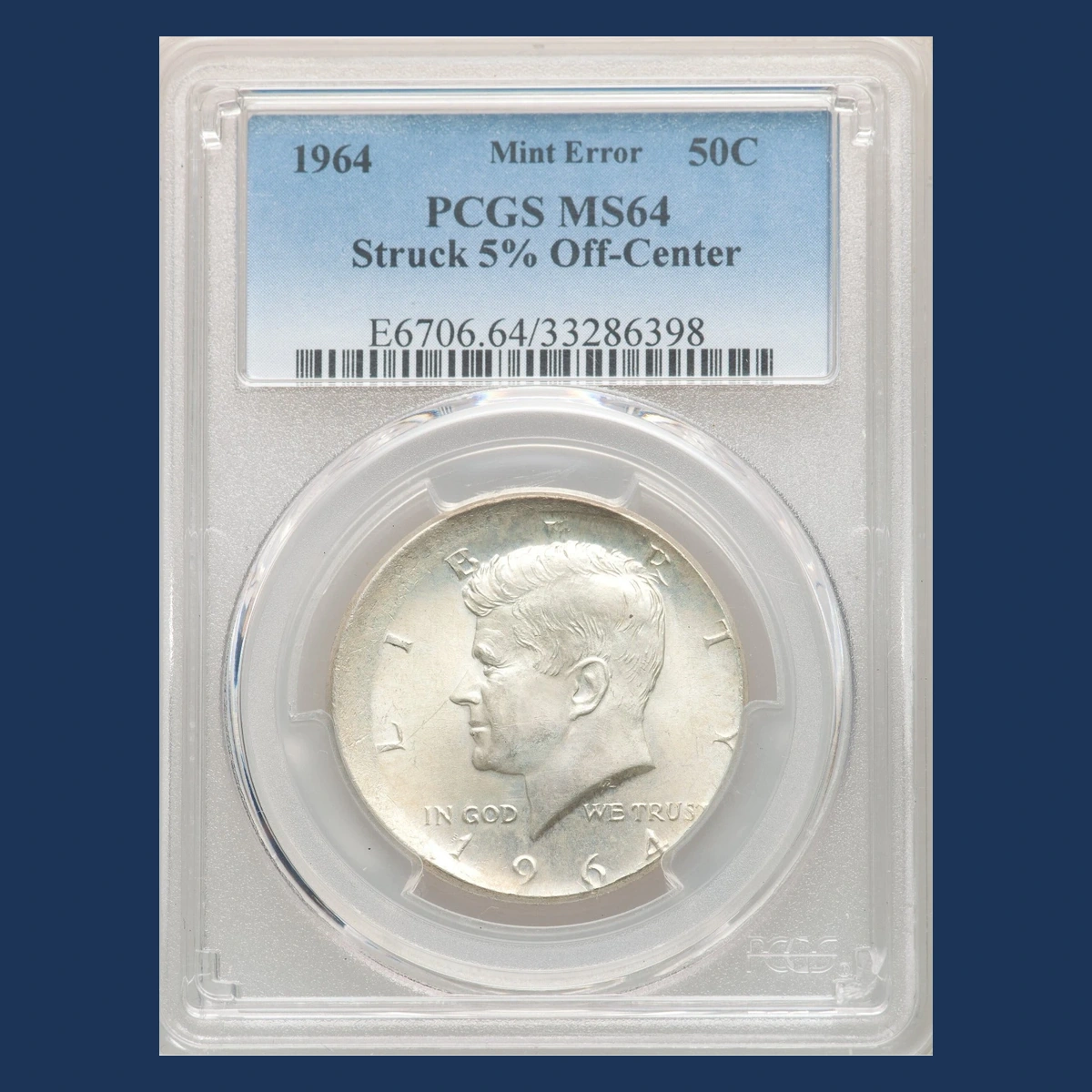
Part of the portrait or eagle is missing, with an unstruck area beside it. The metal disc sat away from the center of the stamping tools when the press came down.
A Philadelphia example is about 35% off-center and has a cupped shape. A separate Denver example is about 15% off-center.
The percentages describe how far the design misses the coin, not how much silver is missing. The unstruck area is still part of the original disc.
A cupped shape alone does not prove that the coin became a die cap.
Estimated Value
Use an estimated $150–$1,800 for these 1964 off-center errors. A readable date, larger shift, and attractive condition generally add interest.
No actual sale price is used here for the 35% Philadelphia or 15% Denver examples. The Philadelphia piece is graded PCGS MS65.
For comparison, a 1999-D half dollar struck 65% off-center sold for $552 in March 2023, graded NGC MS66. That later clad coin differs in both alloy and offset.
How to Identify
Find the plain area, then compare the missing design on both faces. A genuine off-center strike should show how the stamping tools crossed only part of the original disc.
Use a magnifier along that boundary. Look for natural metal flow rather than a finished coin with its edge cut away.
A scale should stay near the normal 12.50 grams unless another error or damage removed metal. With calipers, compare the surviving disc outline with the normal 30.6 mm diameter.
Inspect the edge grooves and any cupping without trying to straighten the coin. Begin by checking that both faces show the same displaced strike beside an original unstruck area.
16. 1964 Kennedy Half Dollar Double and Compound Strikes (Estimated Up to $2,500)
Two displaced pictures can show that the coin received another blow before it left the press. The second strike may partly cover the first or land mostly beyond it.
One PCGS MS61 example has a second strike about 30% off-center. A different piece, cataloged as (1964) and graded MS66, has a second strike about 95% off-center.
That second example also has a blank area on the back. A separate NGC MS65 coin combines two strikes with spreading, a backward impression, and an indentation.
Each combination belongs to its own coin.
Estimated Value
An estimated $200–$2,500 covers these double and combined striking errors. Clear separation between the two strikes often helps collectors understand what happened.
No individual sale result is assigned here to the three examples described above. Their extra features differ, so they should not all receive the same price.
A separate 1964 full-brockage broadstrike sold for $2,400 in March 2023. That supports a comparison with dramatic striking errors, not an exact price for every double strike.
How to Identify
Follow one part of the picture, such as the date or portrait, until you find where the second strike crosses it. Use a magnifier to compare the two sets of detail.
Note any area left plain when another disc blocked the tool. A plain area is different from a backward image pressed below the surface.
Weigh the coin against the normal 12.50 grams. Use calipers to compare its changed outline with a normal 30.6 mm half dollar, and inspect the edge grooves.
A badly shifted second blow can alter the shape without removing silver. To recognize two strikes quickly, locate a clear overlap where one displaced picture cuts across the other.
17. 1964 Kennedy Half Dollar Broadstrike with Full Brockage (Estimated Up to $3,500)
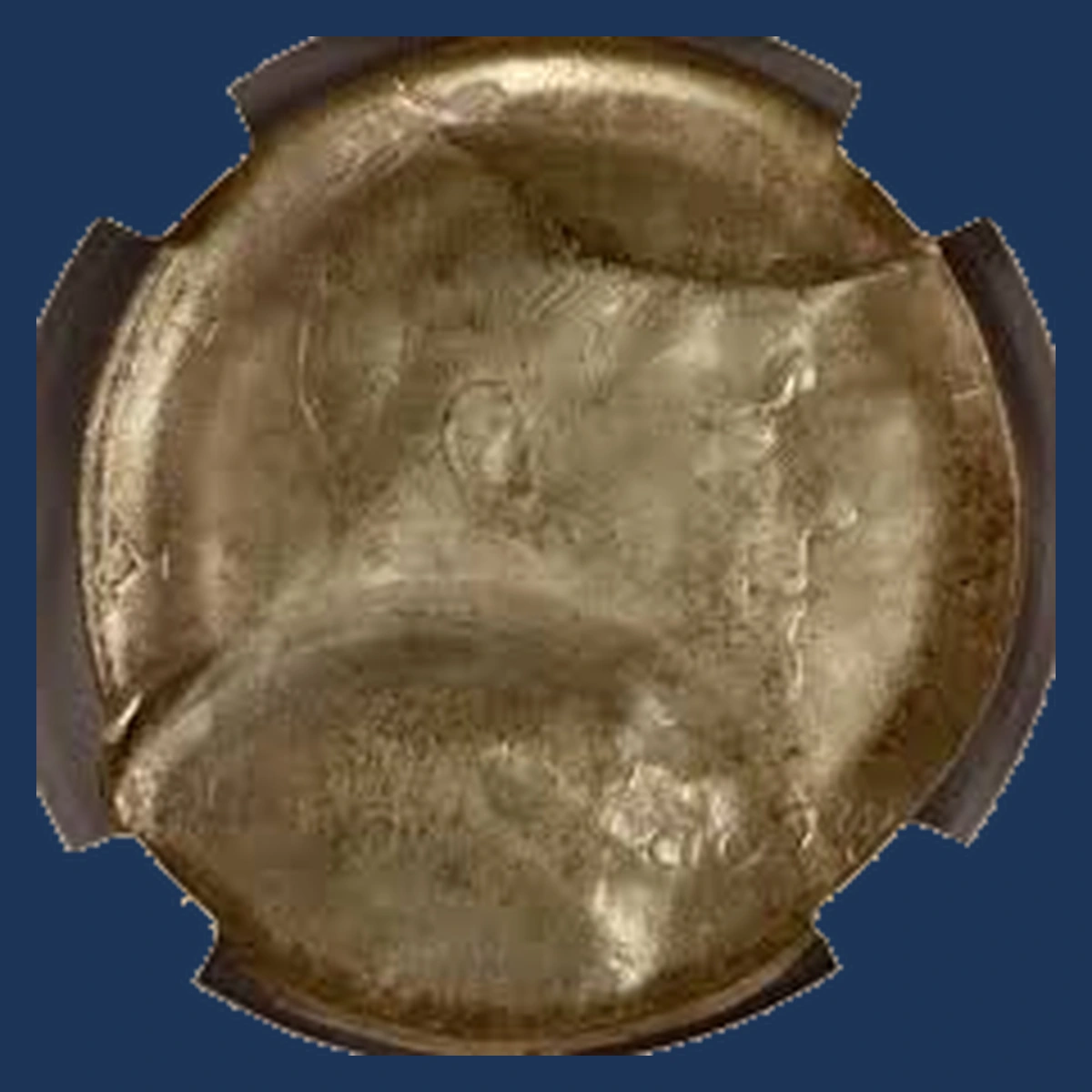
The back carries a large backward image pressed into the silver. A previously struck coin blocked the normal stamping tool and pushed its own raised picture into this coin.
That sunken mirror image is called a brockage. The half dollar also spread outward because the retaining ring did not hold its edge in place.
A PCGS MS65 example combines this full back-side impression with a broadstrike. Another reported example is about 36 mm across.
That larger measurement belongs to the coin on which it was recorded, not automatically to every example.
Estimated Value
The 1964-dated PCGS MS65 coin sold for $2,400 in March 2023 at Heritage Auctions. It provides an actual sale for this dramatic combination.
An estimated $800–$3,500 allows for differences in condition, spreading, and image strength. A complete backward picture is usually easier to appreciate than a small, unclear impression.
The range is for genuine minting errors. A coin pressed against another coin after minting does not share the same history or value.
How to Identify
Read the lettering in the sunken image under a magnifier. It should run backward, while the design sits below the surrounding surface rather than above it.
Compare the edge and expanded silver with a confirmed broadstrike. Two ordinary coins squeezed together later can leave impressions, but often also show crushing and damaged original rims.
Use calipers to record the actual width rather than assuming 36 mm. A normal half dollar measures about 30.6 mm.
Check the weight against 12.50 grams on a scale, then inspect the remaining edge grooves. Start by finding both features together: reversed lettering and an image pressed down into the silver.
18. 1964 Kennedy Half Dollar Die Cap and Mated Cap Pair (Estimated Up to $6,000)
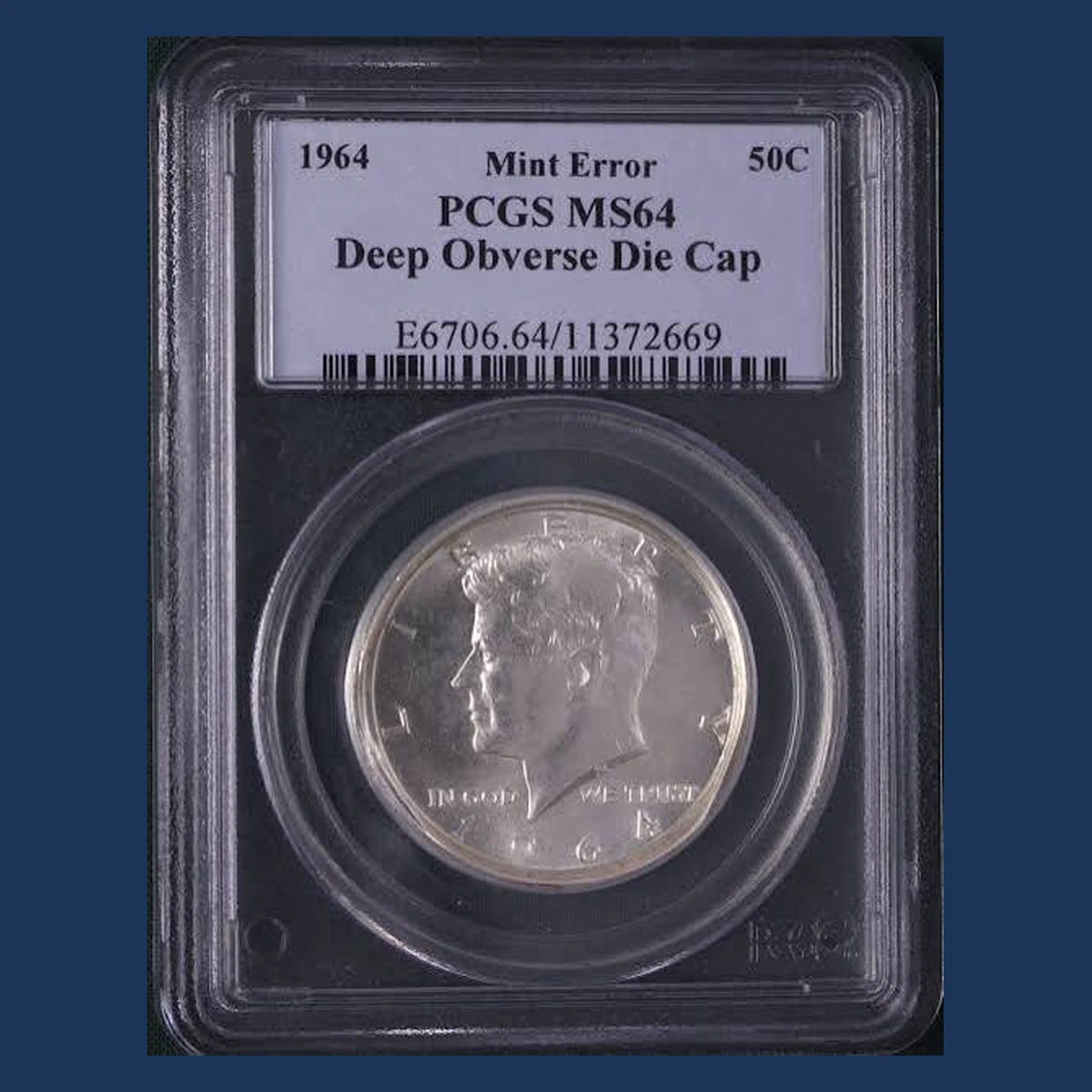
The rim rises into a wall, giving the coin a cap-like shape. A coin that sticks to a stamping tool can wrap around it as the press keeps striking.
On a front-side cap, Kennedy’s portrait may remain clear inside the cup. The back can become rounded and lose detail through repeated contact.
A separate example involves two coins that worked together in the press. They form a mated pair.
The single cap and the pair are different pieces. A bent ordinary half dollar does not become a genuine cap error.
Estimated Value
Estimate $700–$2,500 for a single genuine cap and $2,000–$6,000 for a documented mated pair. The pair range is for both coins together.
No specific realized price is used here for either example. Their shape, remaining design, condition, and clear relationship affect the estimate.
A pair needs evidence that the two pieces actually worked together. Two unrelated damaged coins placed side by side do not support the same value.
How to Identify
Do not flatten the cup or force two pieces together. Photograph the walls and both faces before handling the coin further.
With a magnifier, follow how the picture and silver extend into the rising rim. Sharp folds, tool marks, and crushed grooves can point to bending after minting.
Check a single coin on a scale against the normal 12.50 grams. Calipers can record the opening and height, though a cap no longer keeps the normal 30.6 mm flat shape.
Inspect any surviving edge grooves. For a claimed pair, compare matching contact marks without pressing the coins together.
The quickest first check is to trace the struck picture into a naturally raised wall, rather than across a sharp bend.
19. 1964 Kennedy Half Dollar Wrong-Denomination Planchets (Estimated Up to $6,500)
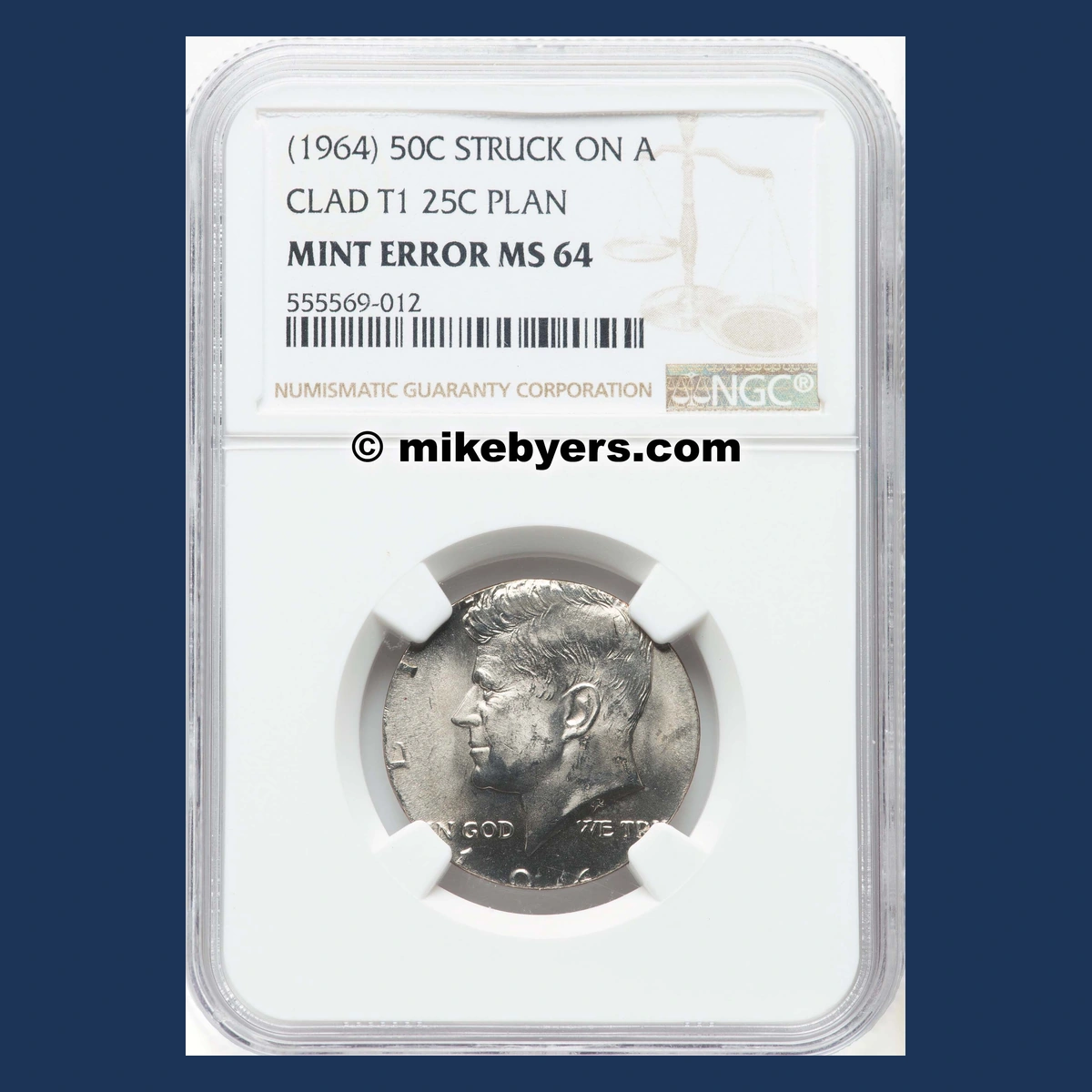
The half dollar picture can look too large for the small piece of metal beneath it. Part of the lettering may run off the edge when a blank for another denomination enters the press.
Reported pieces involve silver quarters, silver dimes, nickels, and clad quarters. These metals and weights differ.
Some coins also have another error, such as peeling metal or a backward impression. Those extra features belong only to the example that shows them.
An older quarter-blank description does not always state the alloy, so its metal should not be guessed.
Estimated Value
Wrong-denomination 1964 half dollars have an estimated range of $500–$6,500. The smaller coin’s metal, remaining date, condition, and added errors can change the price greatly.
No single recorded 1964 sale prices every combination here. The range is an estimate across distinct kinds of wrong blanks.
A 1965 half dollar on a clad quarter blank sold for $1,560 in January 2018, graded PCGS MS65. That comparison applies most closely to the clad-quarter type.
How to Identify
Put the coin on a scale before comparing cropped letters. Normal 1964 halves weigh 12.50 grams; silver quarter blanks are about 6.25 grams and silver dimes about 2.50 grams.
A nickel blank is about 5.00 grams, while a clad quarter blank is about 5.67 grams. Actual error coins may vary slightly.
Use calipers to compare the size with the normal 30.6 mm half dollar. With a magnifier, inspect the cropped design, edge grooves, and visible metal layers.
Check the D below the eagle if Denver is claimed. Do not supply a fully visible date when only part survives.
First match the measured weight to a possible blank, then check that its metal and naturally struck edge fit that choice.
20. 1964 Kennedy Half Dollar Overstrike on a 1965 Quarter (Estimated Up to $8,000)
Parts of a quarter’s picture survive beneath the Kennedy half dollar design. This coin was struck over an already finished quarter, rather than on an unused metal disc.
The host quarter is dated 1965, while the half dollar design carries 1964. The host date shows that the event could not have happened before 1965.
The reported NGC MS66 piece preserves this unusual combination of two denominations. Surviving quarter details are central to its identity.
Without an older struck picture underneath, a small half dollar would instead suggest a wrong-blank error.
Estimated Value
This overstrike has an estimated value of $2,000–$8,000. Its two denominations, unusual date relationship, and preserved older design support a higher range than many minor errors.
No actual sale price is assigned here to the NGC MS66 example. The amount remains an estimate for this particular kind of coin.
A 1977 half dollar struck over a 1976 nickel sold for $6,168.75 in January 2016. That is a different host and year, used only for comparison.
How to Identify
Look for quarter lettering or picture details beneath the half dollar design with a magnifier. A visible second design is the key difference from an unused wrong-size blank.
Compare both faces with normal examples of each denomination. Follow surviving details in more than one place so a stray line is not mistaken for an older picture.
The original clad quarter weighed about 5.67 grams and measured 24.3 mm. Use a scale and calipers, allowing for spreading during the later strike.
Check the edge for clad layers and altered grooves. A normal 1964 silver half is 12.50 grams and 30.6 mm.
Begin by matching recognizable quarter details beneath the Kennedy design, then check the surviving dates.
Conclusion
The 1964 Kennedy Half Dollar errors here range from about $25 to $8,000. Small raised cracks sit near the lower end, while unusual wrong-metal and overstruck pieces can reach much higher estimates.
Start with the feature you can see, then use weight, size, and a close comparison to test it. Keep loose metal attached and leave damaged-looking coins unaltered; original surfaces make their history easier to judge.