1834 Half Dollar Error List with Pictures

An unworn 1834 half dollar sold for $1,560 in January 2025. That ordinary coin provides a condition comparison; a worn example with a genuine rim clip sold for $263.25 in February 2026.
Other 1834 half dollar errors show extra words around the edge, peeling silver, or parts of a second strike. Estimated prices below run from $100 to $3,500, depending on the error and condition.
Keep reading to see which marks matter and why a damaged coin can look similar.
1. 1834 Capped Bust Half Dollar Rim Clip (Estimated Up to $450)
A piece of the rim is missing. On a genuine clip, the metal disc was already incomplete when the coin was stamped.
Pristine Auction sold an 1834 example described as a rim clip and graded ANACS XF40. That grade indicates a worn coin with much of its detail remaining.
The listing does not state the gap’s shape or position. Another coin with a notch therefore needs its own close examination.
Watch how the design meets the missing area. Silver pressed toward an old gap should look different from a sharp cut made after the finished coin left the mint.
Estimated Value
The February 2026 auction result was $263.25. This included the $225 winning bid and a $38.25 buyer’s fee.
Estimate $200–$450 for a modest genuine clip in VF to XF grades, meaning worn but still detailed. This range includes the whole coin.
The size of the missing piece and the remaining surfaces affect its appeal. A notch cut after minting does not qualify for this error price.
How to Identify
Begin with a scale and calipers when the coin is safely accessible. An intact 1834 half started at about 13.48 grams and measured about 32.5 millimeters across.
It contains 89.24% silver and has words around the edge. There is no mintmark on this Philadelphia issue.
Use a 10× magnifier beside the gap, looking at the small tooth-shaped marks around the border. Check for fresh cuts or sharp burrs pushed up by a tool.
Weakness opposite the gap can help, but its absence does not rule out an early silver clip. Compare the gap with the undamaged border beside it, looking for silver that spread into the missing area during stamping.
2. 1834 Capped Bust Half Dollar Reverse Lamination (Estimated Up to $500)
A thin piece of silver can lift from the back of a coin. Collectors call this a lamination: a layer separates within the metal itself.
The March 2009 Coin Galleries catalog described a small example on an 1834 Large Date, Large Letters half. Its variety number is O-103.
Impurities or weak bonds in the silver strip can cause the separation. A layer may stay attached or fall away, leaving a shallow hollow.
Dark staining alone is different. Look for an actual layer lifting from the metal, rather than a patch that only changes color under the light.
Estimated Value
Estimate $150–$500 for a small lamination on a collectible coin with moderate wear. This is not a recorded sale price for the 2009 O-103.
The XF40 clipped 1834 half above brought $263.25 in 2026. It offers a same-year comparison, but the two errors formed differently.
A clearly lifted layer can interest collectors. Rough metal loss across the eagle may be less appealing, even when it happened at the mint.
How to Identify
Do not lift a loose flap. Touching it can break away original silver and damage the coin.
Move a low light across the back while looking through a 5× to 10× magnifier. A flat stain changes color; a separated layer has a visible edge or casts a shadow.
Compare the large date and large back letters with photographs of variety O-103. Check the words around the edge as well.
A scale and calipers can help reveal major metal loss when the coin is safely accessible. The original standard was 13.48 grams, about 32.5 millimeters, and 89.24% silver; look for a thin layered boundary rather than relying on a dark patch.
3. 1834 Capped Bust Half Dollar Reported Die Clash (Estimated Up to $650)
A wing-like shape in front of Liberty’s chin has attracted attention on an 1834 half dollar. Collectors disagree about what caused it.
One explanation is a clash between the dies, the steel tools that stamp coins. Without a blank between them, the tools can hit and copy parts of each other’s pictures.
Later coins carry those extra outlines. Pressure-related distortion can also make a faint shape resembling the opposite design.
A year guide reports clashes without naming an exact location. The chin-area mark needs comparison with the eagle’s design before calling it a true clash.
Estimated Value
A clear clash on a moderately worn 1834 half is estimated at $150–$650. A vague wing-like shape does not justify the same added value.
The XF40 clipped coin sold for $263.25 in 2026. It helps compare a minor error on this date, but it is not a clash sale.
If the mark cannot be explained, use the coin’s wear and surfaces to judge its price. Do not add money simply for an unusual outline.
How to Identify
Take photographs of both faces at the same size. Compare the suspected mark with a mirrored outline of the design on the opposite face.
The shapes must fit in the correct place. Looking vaguely like a wing is not enough.
Through a 10× magnifier, check whether the mark is a narrow raised outline or a broad change in the surface. Scratches and pressure distortion can mislead the eye.
The lettered edge belongs to an 89.24% silver coin originally weighing 13.48 grams and measuring about 32.5 millimeters. Check with a scale and calipers when practical; then see whether the extra outline actually follows the matching part of the opposite picture.
4. 1834 Capped Bust Half Dollar Rotated Dies (Estimated Up to $900)
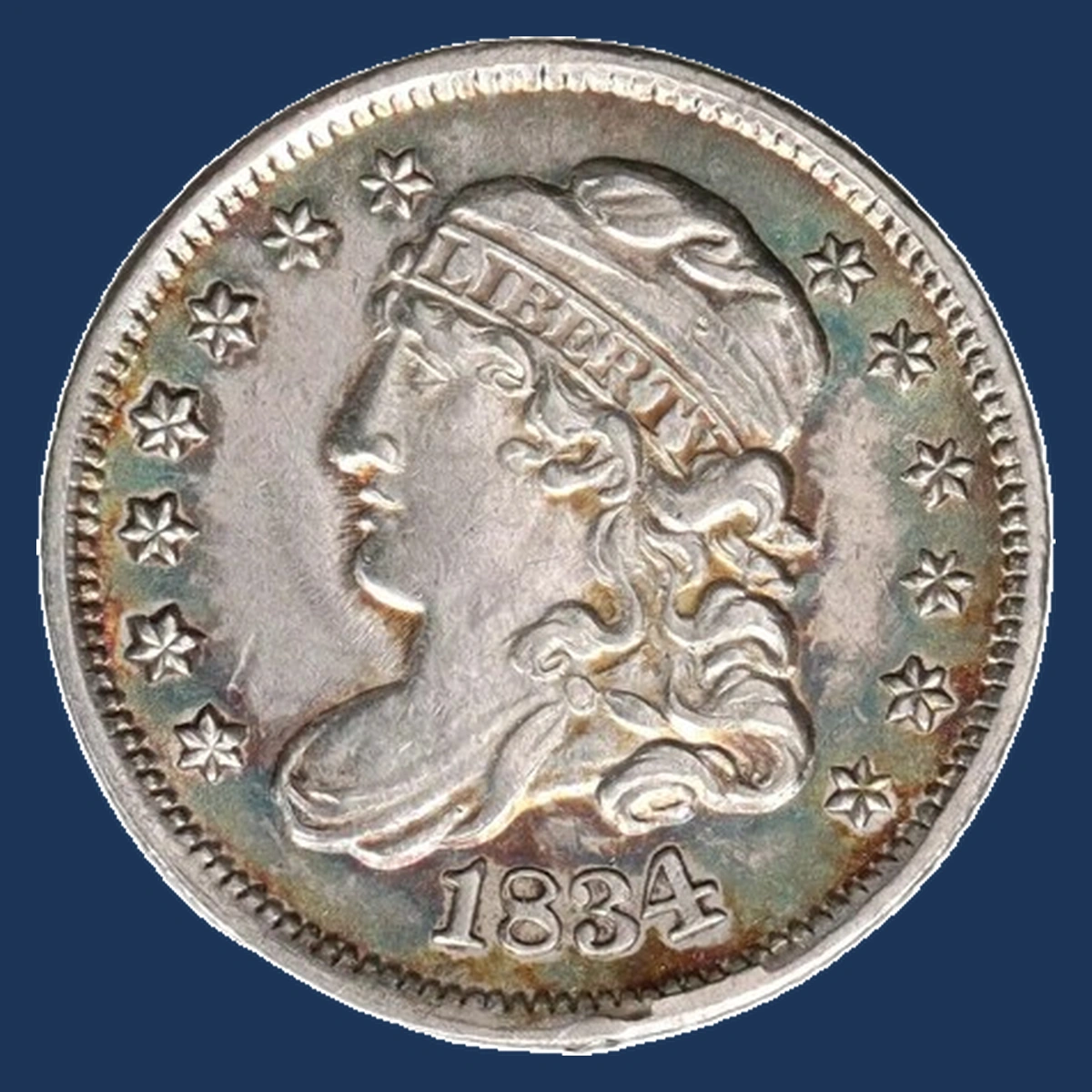
The eagle may look tilted when you turn the coin over correctly. Rotation means the front and back pictures do not line up at their normal angle.
Heritage described a Small Date, Small Letters O-121 with some rotation. It was graded ANACS AU Details: nearly unworn, but with a surface problem.
The description gives no angle or direction. Both pictures can still be centered on the coin.
Be careful with separate sales photographs. A seller can straighten each picture, hiding the real angle between Liberty and the eagle.
Estimated Value
Estimate $300–$900 for a modest rotation on a coin near the reported AU Details condition. Both the measured angle and the surface problem affect its price.
A different 1834 variety, O-109, brought $1,560 at Heritage in January 2025. PCGS graded that coin MS63, an unworn grade.
That sale was not for this rotation error. A slightly tilted eagle on a worn or impaired coin does not automatically earn the unworn coin’s price.
How to Identify
Hold Liberty upright, keeping track of the top and bottom. Turn the coin over from top to bottom, like lifting a calendar page; the eagle should finish upright.
Repeat the movement carefully. Twisting your fingers during the turn can create a false tilt.
For this reported example, compare the small date and small back letters with clear O-121 photographs under magnification. Check the edge lettering, too.
Use a scale and calipers when safely accessible: the original coin was 13.48 grams, about 32.5 millimeters, and 89.24% silver. Photograph the eagle after several controlled turns; a real rotation leaves it tilted by the same amount each time.
5. 1834 Capped Bust Half Dollar Overlapping Edge Lettering (Estimated Up to $1,000)
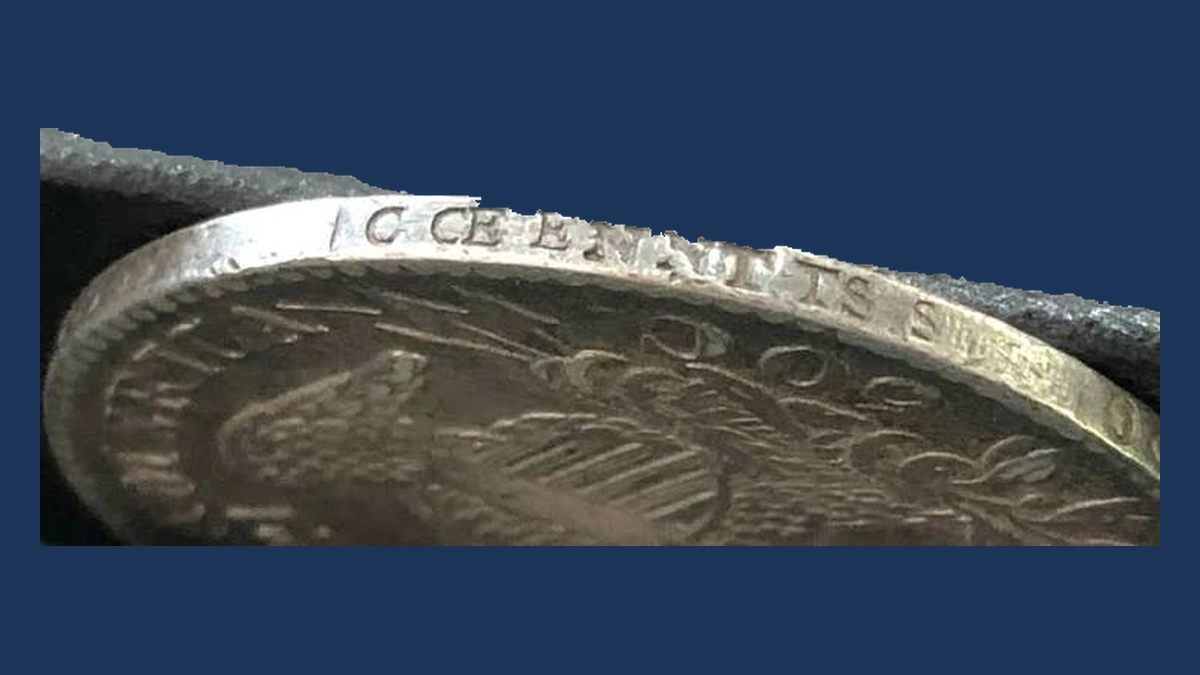
Two sets of words can overlap around the coin’s edge. The blank went through the lettering equipment twice before its front and back were stamped.
An 1834 coin in the Logan collection had repeated words around its circumference. A separate O-116 example showed upside-down letters from DOLLAR crossing CENTS.
The second pattern means the blank changed direction before another pass. It is different from two inscriptions facing the same way.
Overlapping strokes can be hard to read. An odd fragment such as OALF does not prove that the entire word HALF was missing from the original inscription.
Estimated Value
An 1834 O-121 with doubled edge words sold for $220 at Heritage in July 2026. ANACS graded it Fine Details and noted cleaning.
Estimate $200–$1,000 for worn examples with readable overlapping words. More complete repetition can support a higher price than one confusing letter.
The edge should be clearly photographed before paying extra. The $220 sale was not for the separate Logan or O-116 examples described above.
How to Identify
Photograph the edge in small overlapping sections so you can follow each word all the way around. Keep the front facing the same direction throughout.
A small mirror may reveal areas behind a holder without opening it. Use a 10× magnifier to follow strokes through places where letters cross.
Normal edge words can face either direction. The error requires an extra inscription, not just upside-down words.
This Philadelphia coin has no mintmark and contains 89.24% silver. When safely accessible, compare scale and caliper readings with the original 13.48 grams and 32.5 millimeters; then trace two separate sequences of letters through the same section of edge.
6. 1834 Capped Bust Half Dollar Incomplete Edge Preparation Candidate (Estimated Up to $1,200)
Two opposite sections of the border look weak and spread outward on a reported 1834 half dollar. A collector suggested that its edge had not been fully prepared before stamping.
The informal name Guido has been used for this proposed explanation. The suggested check was simple: look for missing edge words beside the weak areas.
The discussion asked for edge photographs but did not establish that match. The explanation therefore remains a reported possibility.
This early coin was made differently from modern coins. It should not be called a modern broadstrike merely because two border areas look wider.
Estimated Value
Estimate $200–$1,200 for a moderately worn coin if its edge supports this explanation. The upper end needs clear missing lettering beside the unusual borders.
The XF40 rim clip sold for $263.25 in 2026 offers a same-date error comparison. Clipping, however, is a different process.
Two weak patches alone do not establish this price range. If someone squeezed the finished coin and flattened its sides, the proposed mint-error estimate does not apply.
How to Identify
Look at the weak areas from the side before inspecting the words. Squeezing a finished coin can flatten opposite edges and push metal outward.
Use calipers across several directions and a digital scale when safely accessible. The original coin was about 32.5 millimeters across and 13.48 grams, with 89.24% silver and a lettered edge.
Compare each weak patch with the undamaged border between them. Under a 10× magnifier, check whether the edge words stop beside the spreading metal.
Complete words through both areas would argue against the proposed explanation. Line up each weak tooth-shaped border section with its own edge, checking for missing letters in that exact spot.
7. 1834 Capped Bust Half Dollar Die Cracks (Estimated Up to $2,200)
A curved raised line runs through several parts of the back on an illustrated O-110 example. It starts near the tail feathers and passes through the left wing and UNITED.
The reported path continues above the scroll and toward the right wing. Following that route is more useful than noticing a single dark line.
The steel stamping tool cracked. Silver entered the opening under pressure, leaving a ridge on each coin it struck.
Wear can soften the ridge along with the eagle. Cracks described on other dates need not follow this route on an 1834 half dollar.
Estimated Value
Estimate $100–$700 for worn coins with a readable crack. Attractive unworn examples in lower Mint State grades may bring $1,200–$2,200.
A PCGS MS63 O-109 sold for $1,560 in January 2025. This was a different variety, not a sale of the O-110 crack described here.
The comparison shows how much condition can matter. These are whole-coin estimates; the raised line does not account for all of the value.
How to Identify
Turn to the eagle rather than the stars around Liberty. The collector’s O-110 photographs show where to follow the reported crack.
Use a low lamp and a 10× magnifier. A dark line in a photograph is not enough: check that silver stands above the surface.
Check the date, back letters, and lettered edge against the same variety. When practical, use a scale and calipers against the original 13.48 grams and about 32.5 millimeters; the alloy contains 89.24% silver.
A scratch usually cuts down into the coin. Follow the raised path from the tail area through the left wing and nearby words toward the right wing.
8. 1834 Capped Bust Half Dollar Reported Double Strike (Estimated Up to $2,500)
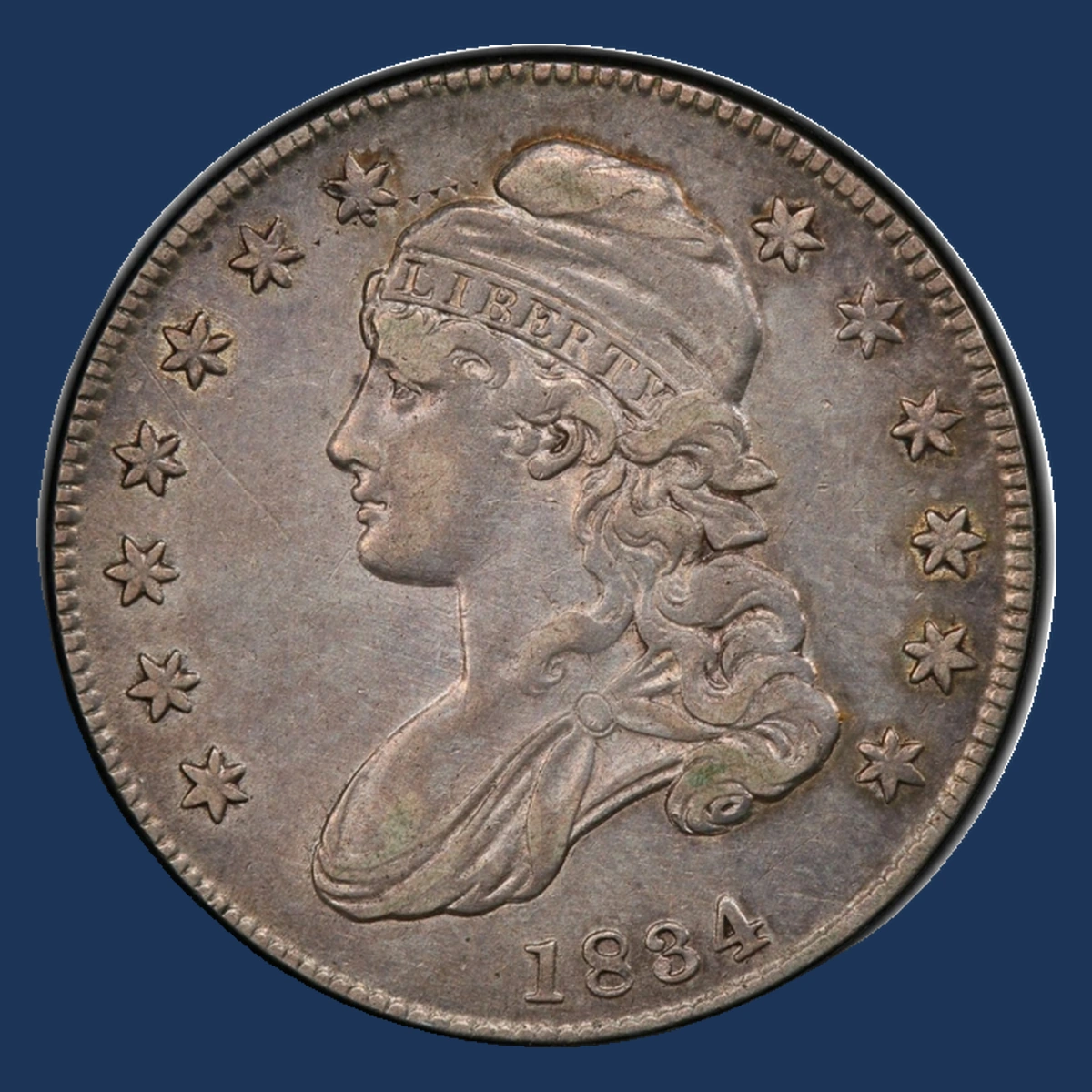
Pieces of a first picture can survive when a coin is stamped a second time. If the coin moves between blows, the later picture lands in a different place.
Eye Appealing Coins offered an 1834 O-111 Small Date, Small Letters half as double struck. Its PCGS XF Details grade describes a worn coin with a surface problem.
The dealer’s two offers concern the same coin. The description does not state where the earlier picture remains or which way it moved.
Names punched onto a finished coin are different. An added name does not show another strike from the Mint’s tools.
Estimated Value
The dealer’s website asked $1,475. Its marketplace offer asked $1,625 for the same XF Details coin.
Neither amount is a completed sale. Estimate $1,000–$2,500 for a worn 1834 double strike with clear surviving parts of both impressions.
The surface problem and the visibility of the earlier picture affect the price. Two asking prices for one specimen do not show what a buyer actually paid.
How to Identify
Find more than one surviving piece of the first picture. In enlarged photographs, check whether all those pieces fit the same movement before the second blow.
A thin shelf beside Liberty’s outline can come from movement during one strike. A privately added name affects only a small area and does not repeat the mint’s original picture.
Compare the date and back lettering with O-111 photographs under a magnifier. Check the lettered edge and, when practical, use a scale and calipers against 13.48 grams and about 32.5 millimeters.
The original alloy was 89.24% silver. Look for several repeated design parts that shifted together, rather than one doubled-looking line.
9. 1834 Capped Bust Half Dollar Missing Edge Lettering Candidate (Estimated Up to $3,500)
An owner reported a PCGS-graded unworn 1834 half dollar with no obvious words around its edge. A coin could miss the lettering equipment, but a holder can also hide the inscription.
There is another possibility on this date. Rare Proof coins, specially made for collectors, can have flattened edge words and need specialist identification.
Those are called Crushed Lettered Edge Proofs. They are different from ordinary coins that accidentally missed the lettering step.
The owner’s complete edge was not shown. Missing, hidden, worn, or deliberately removed words remain different explanations for the reported appearance.
Estimated Value
A confirmed ordinary coin with an originally unlettered edge is estimated at $800–$3,500. That covers attractive worn examples through lower unworn grades.
This is an estimate for the error, not a sale of the owner’s coin. The ordinary PCGS MS63 O-109 sold for $1,560 in January 2025 helps compare an unworn example.
Specially made Crushed Lettered Edge Proofs need separate pricing. Coins with lettering ground away do not belong in this range.
How to Identify
Keep a valuable sealed holder closed. A magnifier, small mirror, and light from different angles can reveal words through accessible gaps.
Photograph every visible edge section, noting where holder supports hide the metal. One smooth-looking patch does not show that the whole edge is blank.
For a safely accessible coin, compare scale and caliper readings with the original 13.48 grams and about 32.5 millimeters. It contains 89.24% silver; grinding can reduce both its size and weight.
Look for tool lines and the remaining bases of letters, and have a specialist rule out the special Proof issue. Check the full edge for original metal without hidden or surviving words.
Conclusion
An 1834 half dollar can hide its most useful clue around the edge. Extra words, missing words, and a true gap each point to a different cause.
The estimates here run from $100 to $3,500. Before comparing prices, check how much detail remains and whether the odd feature began at the mint; leave loose silver and sealed holders untouched while you examine the coin.