1820 Half Dollar Error List with Pictures

Look inside the final 0 on some 1820 half dollars: part of an older 9 is still there. One exceptionally well-preserved coin with this altered date sold for $47,000 in September 2015.
The five 1820 half dollar errors below also include raised lines, doubled leaves, peeling metal, and a reported second strike. Estimated ranges for worn or damaged examples run from $250 to $3,000; the $47,000 sale sits in a much higher condition tier.
Read on to see which small details separate these features.
1. 1820 Capped Bust Half Dollar Die Crack (Estimated Up to $900)
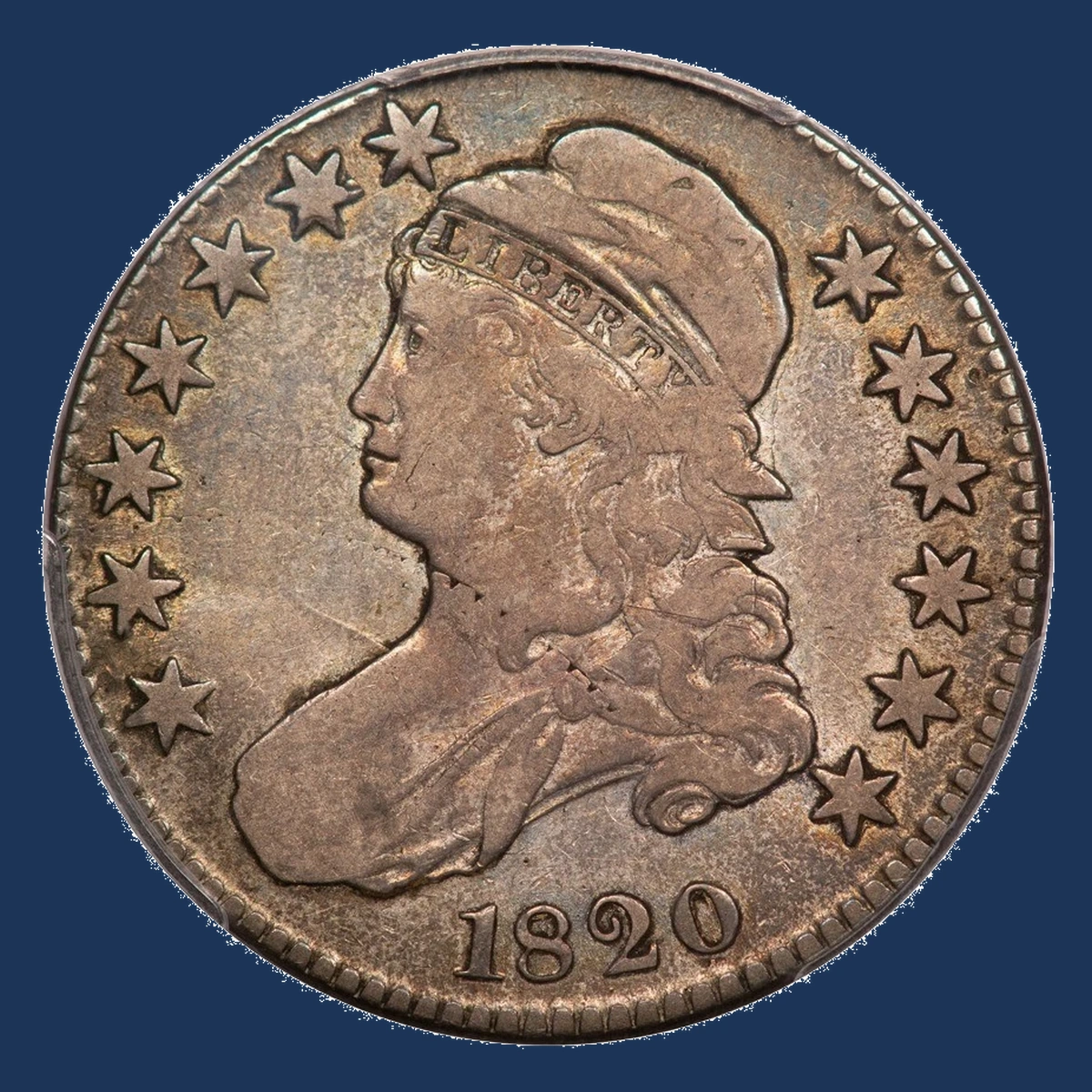
Follow the line beside Liberty’s hair curl. On the illustrated 1820 coin, it starts near the eleventh star, reaches the top of the first date digit, and continues toward the rim.
This is a die crack. The die, a steel tool that stamps coins, split and allowed silver to fill the gap during stamping.
That left a raised line on the coin. It was not a strand of hair added to the design.
An illustrated collector discussion shows it on an example with a small date and a curved base on the 2.
Estimated Value
An estimated $250–$900 suits worn examples with a visible crack and much of the design still clear. Original surfaces and condition matter more than a small raised line alone.
For context, other 1820 varieties sold for $382 in VF30 and $824 in XF40 in July 2026. Those grades describe moderately to lightly worn coins; they are same-year price comparisons, not recorded sales of this particular crack.
How to Identify
Count the stars from the left side of the portrait to locate star eleven. Keep the full date and surrounding stars in your photograph so the line’s route is easy to follow.
Under a 10× magnifier, trace it beside the curl and toward the top of the 1. Tilt the coin beneath a lamp to see whether the line rises above the surface.
A scratch usually cuts down into the metal and may push up narrow edges on either side. That differs from one raised ridge following the documented route.
For a safely accessible coin, use a digital scale and calipers to compare with 13.48 grams and about 32.5 millimeters. Also inspect the lettering around the edge.
For the quickest match, follow the raised line from star eleven past the curl to the date.
2. 1820 Capped Bust Half Dollar Doubled Die Reverse (Estimated Up to $2,000)
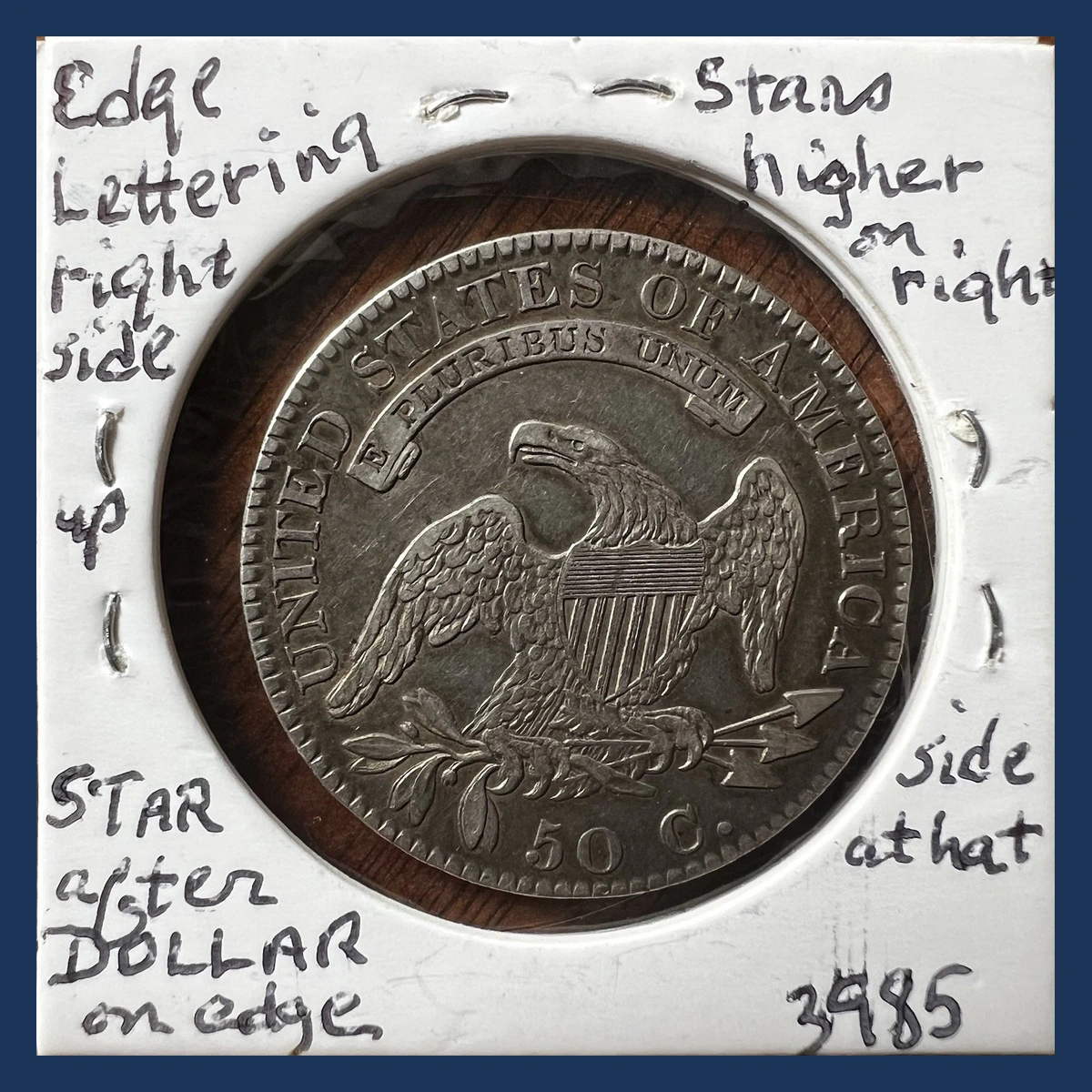
The olive branch is worth a close look. Some 1820 half dollars show two outlines around its lower leaves, berries, and stems.
Smaller doubled details also appear at the eagle’s wingtip, claws, and arrowheads. These shapes were duplicated while the back die was being made, so a single strike could stamp both outlines onto a coin.
Collectors call this a doubled die reverse; reverse means the back. The same extra shapes should appear together on matching examples.
One flat edge beside a leaf is not enough. Movement during stamping can create a different kind of doubling.
Estimated Value
Use an estimated $400–$2,000 for confirmed examples ranging from moderately worn to almost unworn. Clear doubled shapes and pleasing surfaces support the stronger prices.
Other 1820 auction records include $824 for an XF40 and $2,440 for an AU58 in July 2026. Those coins have a small knob on the 2, unlike this variety; their prices provide general condition comparisons, not direct sales of the doubled olive branch.
How to Identify
Start with the lower leaves rather than the whole eagle. The specialist photographs show where their outlines, berries, and stems separate most clearly.
A 10× magnifier should help you follow those shapes. Then compare the wingtip, claws, and lower arrowheads to see whether the extra outlines agree across several features.
A scratch cuts into the silver; flat doubling from stamping movement often looks like a low shelf. Neither should replace the full pattern shown by a matching reference coin.
Photograph the date with the back design. An accessible example can be checked with a digital scale and calipers against 13.48 grams and about 32.5 millimeters, with lettering on the edge.
The fastest useful check is matching the repeated outlines around the lower leaves, berries, and stems.
3. 1820 Capped Bust Half Dollar Obverse Lamination (Estimated Up to $2,500)
Silver can separate in thin layers. When part of the surface lifts or flakes away, the result is called a lamination error.
GreatCollections lists an 1820 example with this flaw on the front. Its large date has a square-based 2 with a small knob, useful details when comparing the listed coin.
The label says Genuine Unc Details. That means the coin is genuine and keeps unworn design detail, but a problem prevents a normal numerical grade.
The peeling boundary is the feature to examine. Sharp design alone does not tell you how much the surface problem affects its value.
Estimated Value
An estimated $500–$2,500 covers confirmed examples with substantial design remaining. A small flake and extensive surface damage can lead to very different offers.
The GreatCollections listing confirms the described coin, but no sale price from it is used here. An ordinary 1820 Knob 2 graded AU58 sold for $2,440 in July 2026; that nearly unworn coin supplies context, while a problem noted on the label can reduce what buyers pay.
How to Identify
Check the front against the listed PCGS example, especially where the surface layer ends. Other 1820 laminations need not appear in exactly the same place.
Use a 10× magnifier to look for thin, layered metal or a natural peeling edge. A gouge pushes metal aside, while corrosion often leaves rough, grainy areas rather than a distinct separated layer.
Weigh an accessible coin with a digital scale and measure it with calipers. Compare with the original 13.48 grams and roughly 32.5 millimeters, then inspect the lettered edge.
A lost flake may lower the weight. The important visual clue remains a layer separating from the surrounding silver, rather than a cut through solid metal.
4. 1820 Capped Bust Half Dollar Reported Double Strike (Estimated Up to $3,000)
A coin struck twice may keep parts of both design positions. The second blow can shift lettering or portrait details away from the first impression.
A double strike is reported for 1820, but that report does not identify a certified specimen or state how it moved. A particular direction or angle cannot be assigned from that information.
Look for related pieces of a second design. Several features moving together are stronger evidence than a single extra curve.
This differs from the doubled olive branch. There, the extra shapes were already in the die before the coin was struck.
Estimated Value
The estimated range is $1,500–$3,000 for a worn, authenticated example with a clear second impression. It is a comparison range, not a set of recorded 1820 sales.
An 1819/8 double strike graded PCGS XF45 sold for $2,280 in July 2025. That lightly worn coin provides a recent, different-year comparison; a second design that is large and easy to recognize may attract more interest than a faint overlap.
How to Identify
Choose one possible doubled feature and look beside it. Nearby letters or design parts should support the same movement instead of appearing at unrelated angles.
Inspect both sides under a 10× magnifier. One side can remain comparatively normal, as on the 1819/8 comparison coin, where a stamping tool moved.
Keep the complete 1820 date visible in photographs. A later object pressed into a coin can leave a sunken copy, which differs from surviving raised design from two strikes.
When safely accessible, check weight with a digital scale and width with calipers against 13.48 grams and about 32.5 millimeters. Examine the lettered edge for damage that may explain an unusual surface mark.
Start with neighboring design parts that repeat in the same direction.
5. 1820/19 Capped Bust Half Dollar Overdate (Auction Record $47,000)
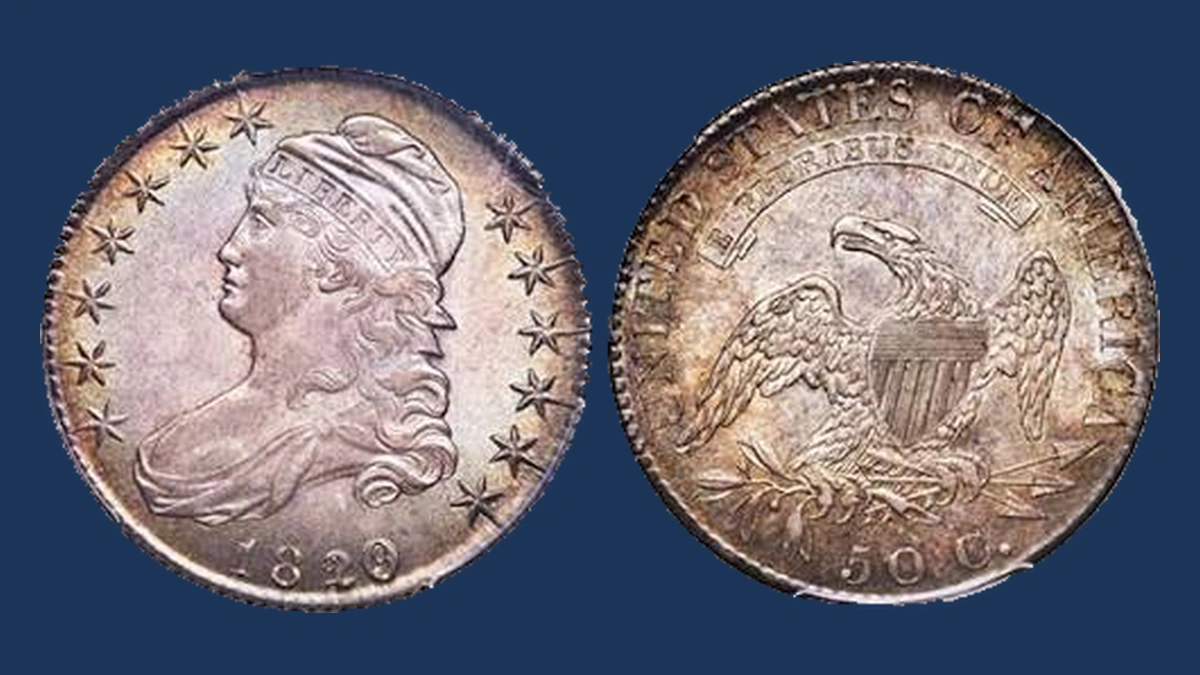
The date was changed from 1819 to 1820 on the stamping tool. Parts of the old 19 remained, so later coins show pieces of those digits beneath the new 20.
This is called an overdate. Two familiar forms have different bases on the 2: one is square, and the other curls.
The shape of the 2 helps sort them, but it does not prove that an old date lies underneath. Look for the earlier digits as well, including a trace of the 9 inside the final 0.
Wear can soften these small details. The whole date still provides useful clues.
Estimated Value
Ordinary worn examples have an estimated $250–$2,000 range. Curled-base coins sold for $360 in VF30 in October 2025 and $946 in XF45 in July 2026.
An exceptional square-base example graded MS65+ reached $47,000 in the September 2015 auction record. That coin was unworn and unusually well preserved; finding part of the old 19 on a worn coin does not place it in the same price tier.
How to Identify
Inspect the last two digits together with a 10× magnifier. First note whether the 2 has a square or curled base, then compare with a confirmed example of that same form.
Inside the final 0, look near the lower left for a trace of the earlier 9. Change the lighting to check that it is raised metal connected to the date, not a scratch crossing it.
Other remnants beneath the 20 should fit the reference too. The base of the 2 alone cannot settle the question.
A digital scale and calipers can check an accessible coin against the original 13.48 grams and approximately 32.5 millimeters. Its lettered edge should also match an early Capped Bust half dollar.
The key is an older digit beneath the 20, matching the correct square- or curled-base example.
Conclusion
An old digit inside the 0 and doubled leaves both began in the stamping tools, but peeling silver belongs to the coin’s metal. Keeping those causes separate makes the photographs easier to read.
Worn or damaged examples discussed here have estimated ranges from $250 to $3,000. The $47,000 overdate record is a separate, exceptional condition level; small details deserve careful inspection, but they do not erase the effects of wear and surface damage.