1813 Half Dollar Error List with Pictures

Look beneath 50C on one 1813 half dollar and parts of UNI remain from a corrected lettering mistake. A PCGS XF45+ example sold for $1,967.62 in July 2025.
This guide to 1813 half dollar errors covers seven features, including a missing leaf, an edge flaw, and a ten-percent off-center strike. Estimated ranges run from $200 to $3,500 for the conditions described.
Use the following close-up checks to separate a changed stamping tool from a problem with the blank or strike.
1. 1813 Capped Bust Half Dollar Edge Planchet Flaw (Estimated Up to $600)
A collector reports a flaw at the edge of an 1813 O-102 half dollar. The report calls it a planchet problem, meaning an issue in the metal blank used to make the coin.
It does not identify a curved clip or a peeling layer. Those names need more specific evidence.
A missing section, a split through the edge, and a thin sheet peeling away describe different problems. An irregular outline alone cannot distinguish them.
The key question is whether the flaw was present before striking. Its boundary and connection to the coin’s faces must be separated from later edge damage.
Estimated Value
Estimate $200–$600 for a circulated example with moderate to light wear and an identified modest edge flaw. An 1832 ANACS XF45 with a minor rim defect sold for $263.25 including fees in July 2025.
That later coin provides a related manufacturing-defect comparison. It is not a sale of the reported 1813 O-102.
Clear original surfaces help make the comparison useful. A rim notch with no established cause should not automatically receive the same estimate.
How to Identify
Turn the coin so the flaw can be viewed from both faces and the side. With a 10× magnifier, follow its boundary into nearby edge letters and struck detail.
Look for saw lines, crushed metal, or solder. An irregular edge should not be called a curved clip without the evidence for that specific shape.
Photograph the full date and back together with the edge. Use a scale and calipers against the original 13.48 grams and roughly 32.5 millimeters, allowing for wear.
A flaw that meets the original struck surfaces naturally, without cutting marks or pushed-up damage, is the most useful first observation.
2. 1813 Capped Bust Half Dollar Reverse Die Crack (Estimated Up to $1,600)
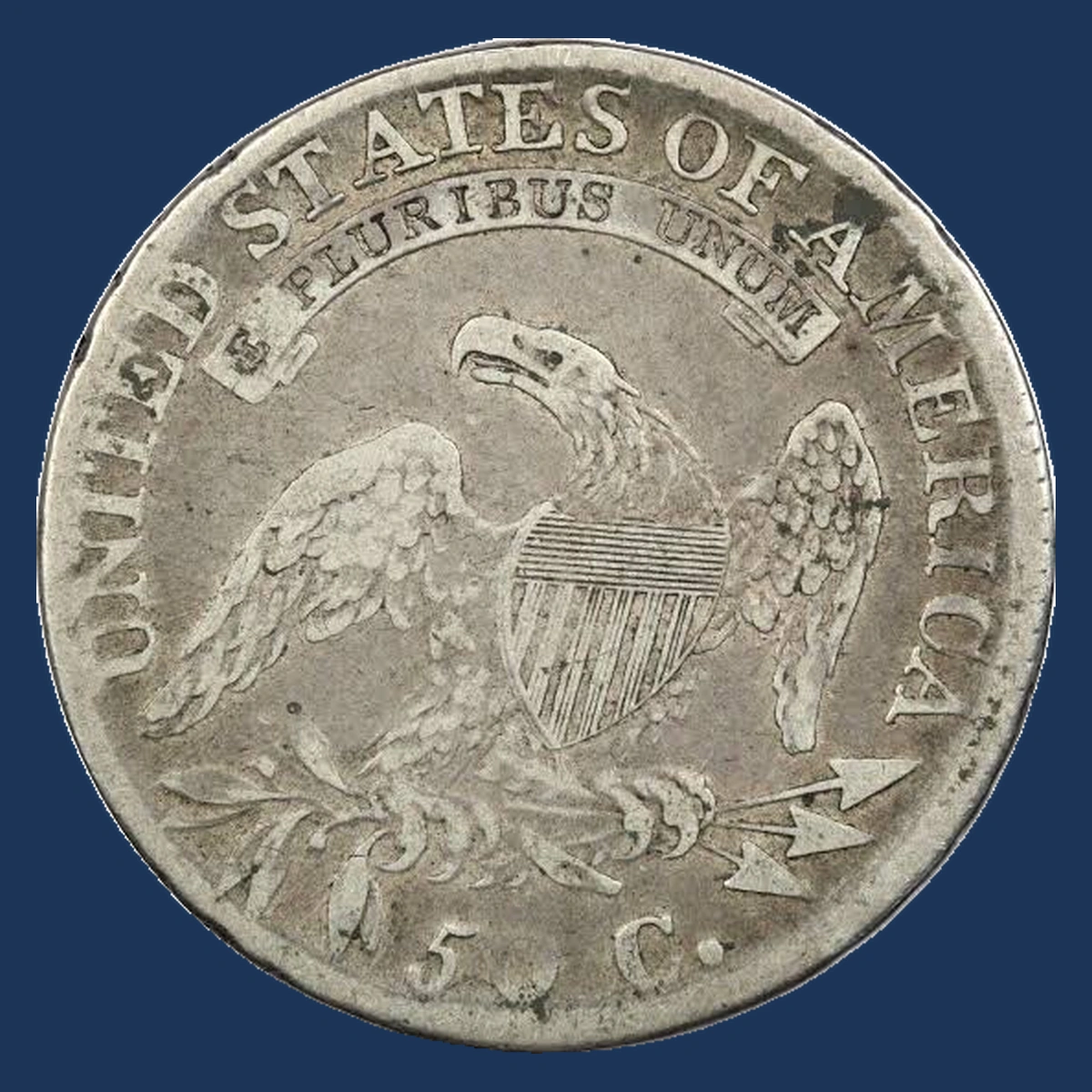
A horizontal raised line lies above the upper end of the scroll on the back. Heritage specifically describes it on an 1813 O-107a graded PCGS MS64.
The die, or steel stamping tool, had cracked in that position. Silver entered the narrow opening during striking and left a ridge on the coin.
Other coins struck after the crack formed can repeat the line. It records the tool’s condition rather than an individual coin being scratched later.
Do not follow the scroll’s ordinary border by mistake. The extra line above it is the feature identified in the catalog.
Estimated Value
An estimated $250–$1,600 covers examples from moderate Very Fine wear through attractive About Uncirculated condition. Greysheet records $1,260 for an NGC AU55 CAC O-107a in Heritage’s January 2025 sale.
That result prices the complete variety coin, not the raised line separately. AU55 means only light circulation wear.
The earlier MS64 description establishes the crack’s location. Its unworn grade should not be transferred to every circulated example showing the same line.
How to Identify
Locate the scroll before enlarging the back photograph. Inspect the smooth area above its upper end, keeping the normal ribbon border visible for comparison.
A 10× magnifier and low side light should reveal a ridge. A scratch has a recessed center and may push up rough edges; dark toning alone cannot decide which it is.
Compare both faces with the O-107a reference and inspect the lettered edge. A scale and calipers provide checks against 13.48 grams before wear and about 32.5 millimeters.
A continuous raised line above the specified scroll end is the direct match to the documented tool crack.
3. 1813 Capped Bust Half Dollar Clashed Dies (Estimated Up to $1,800)
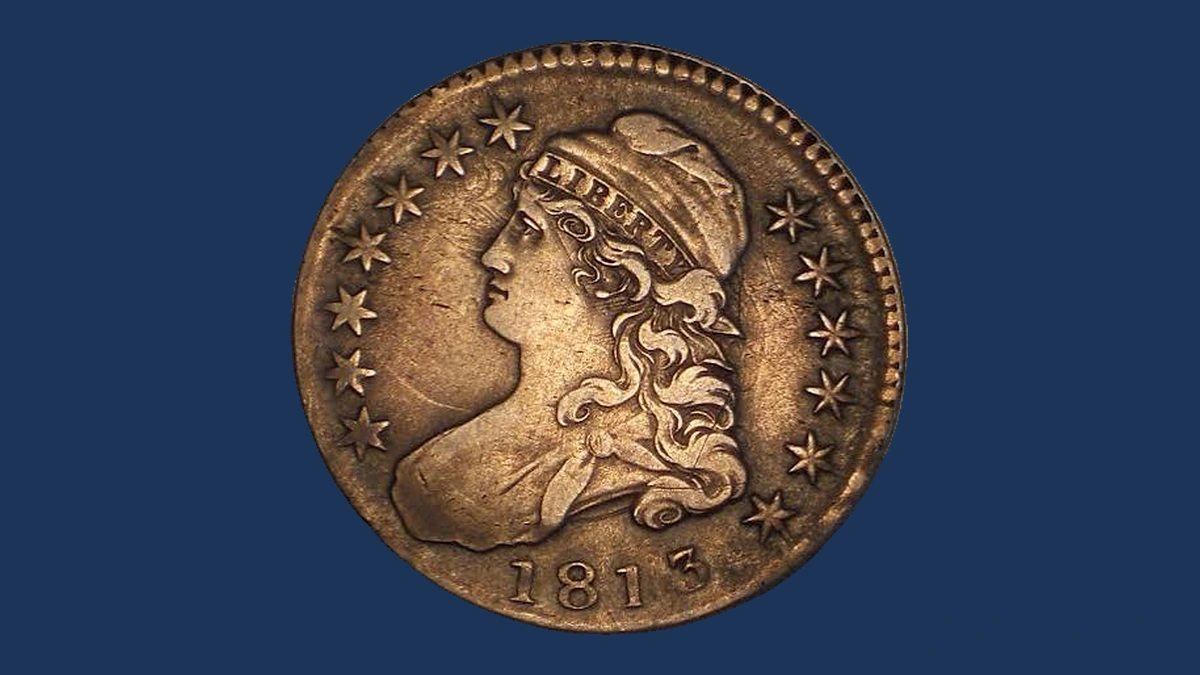
Straight lines around and below Liberty’s ear do not belong to her curved hair. A collector’s illustrated O-102 identifies them as traces of the shield normally found on the back.
The two stamping tools had touched without a blank between them. That clash transferred parts of the shield to the front tool.
Later coins copied the unwanted lines beside Liberty’s portrait. Their spacing and position should fit the opposite design.
Downey describes extensive clashing on a separate O-105a too. The ear-area location belongs to the O-102 reference, so it should not be assigned automatically to the other example.
Estimated Value
Estimate $300–$1,800 across circulated examples with readable clash detail, from moderate to slight wear. A Downey AU53 with extensive clashing brought $1,430 including fees in Mail Bid Sale 45.
An O-105a PCGS AU55 later sold for $1,560 at Heritage in January 2025. That offers a more recent condition comparison.
Both are whole-coin prices. Neither establishes the separate value of one shield line, and the correct variety still matters when choosing a comparison.
How to Identify
Place a photograph of the back shield beside a close-up of Liberty’s ear. Compare the spacing of its lines with the straight extra marks around and below the ear.
A 10× magnifier should help separate those traces from normal curved hair. Keep the whole portrait in another photograph so the close-up’s location is clear.
Check the edge inscription, then weigh against 13.48 grams before wear and measure near 32.5 millimeters with calipers. These confirm basic identity, not the cause of the lines.
A shield-shaped group in the documented ear area is the focused first check for O-102, rather than a random row of scratches.
4. 1813 Capped Bust Half Dollar Single Leaf from Die Polishing (Estimated Up to $2,000)
Only one leaf remains clear in the cluster to the left of the eagle’s leg. Polishing removed the shallow shape of the second leaf from the back stamping tool.
Later coins copied that altered design. Collectors call the developed variety Single Leaf.
The Pogue catalog describes an intermediate example where a faint second leaf still survives. That is not the same as the fully developed missing-leaf stage.
Wear can hide a leaf too. To identify this variety, compare the nearby detail and the correct tool pattern rather than assuming any coin with one faint leaf shows the polishing effect.
Estimated Value
A PCGS AU55 Single Leaf sold for $1,586 at Heritage in January 2026. Estimate $500–$2,000 for collectible examples from moderate to light wear, with clear identification and original surfaces.
The range concerns the developed Single Leaf variety. A coin retaining part of the second leaf belongs to the intermediate comparison.
General wear or local damage can also conceal that detail. The appearance alone should not receive the same value without matching the variety.
How to Identify
Compare the leaf cluster with both a normal two-leaf back and an identified Single Leaf coin. Similar wear levels help prevent a faint leaf from being mistaken for a missing one.
Move the lamp while using a 10× magnifier to search for a surviving second outline. Scratches or a smooth scraped patch can explain disappearance after striking.
Check nearby design for enough preservation to support the comparison. A scale and calipers should agree with the original 13.48 grams and about 32.5 millimeters, with a lettered edge.
The missing second leaf within the correct variety pattern, rather than overall weakness of the branch, is the decisive visual match.
5. 1813 Capped Bust Half Dollar 50C over UNI Corrected Denomination (Estimated Up to $2,500)
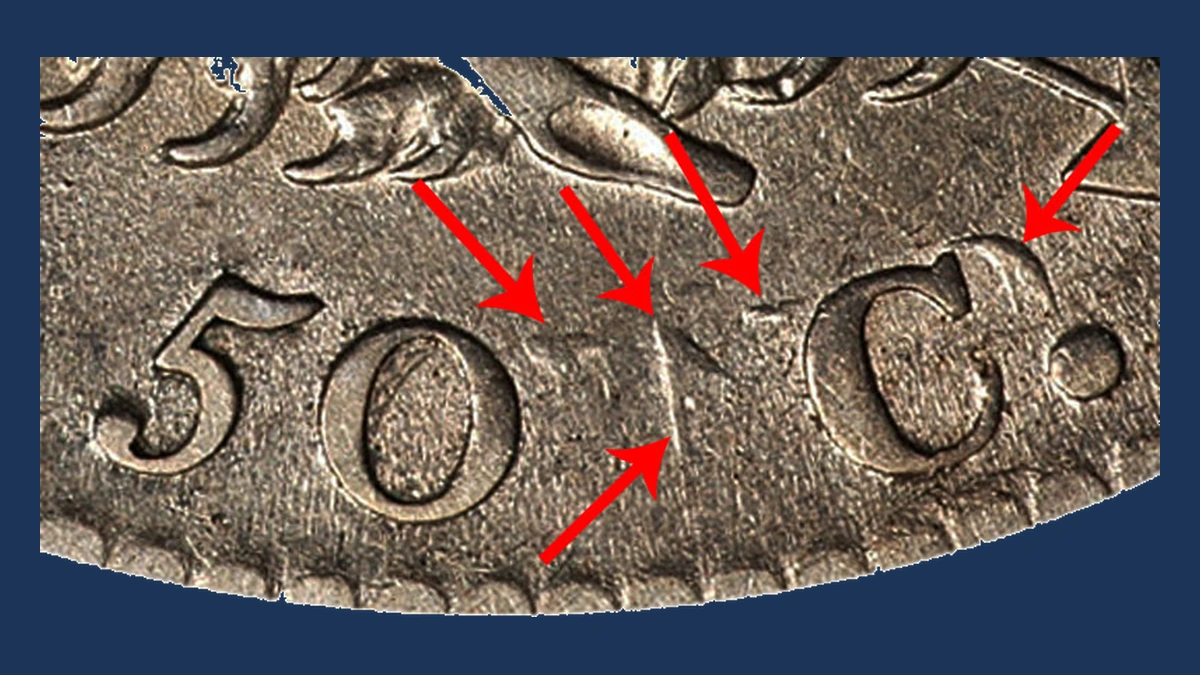
Parts of UNI survive underneath 50C on this back design. The letters should have started UNITED, but they were first placed where the coin’s value belonged.
The engraver corrected the tool by adding 50C. Some earlier letter shapes remained and appeared on coins struck from it.
Collectors call the variety 50C/UNI or 50 over UNI. Traces can be seen beneath the denomination, between 0 and C, and to the right of C.
The correction happened in the stamping tool. It does not mean a finished half dollar received another coin’s design, even if a grading label omits the variety name.
Estimated Value
GreatCollections records $1,967.62 for PCGS XF45+ CAC in July 2025. Estimate $400–$2,500 for circulated examples from moderate wear through attractive About Uncirculated condition.
The sold coin combined readable letter remnants with appealing surfaces. Its grade is not a universal price for the variety.
Heavier wear and damaged surfaces need lower comparisons. An ordinary 1813 without the corrected letters cannot gain the same premium simply by sharing the year.
How to Identify
Keep the entire 50C visible under a 10× magnifier. Look below the main characters, between 0 and C, and beyond C for parts of the earlier letters.
Compare their shapes and spacing with a known O-101-family back. One scratch can resemble a letter stroke, but it should not reproduce the complete corrected arrangement.
Confirm the date on the front and inspect the edge lettering for alteration. A scale and calipers check about 13.48 grams before wear and a diameter near 32.5 millimeters.
Several UNI remnants that fit together beneath the denomination provide stronger confirmation than the wording on a holder alone.
6. 1813 Capped Bust Half Dollar Reported Double Strike (Estimated Up to $3,000)
A seller described an 1813 O-110 using both double-struck and clash terms. The listing gives no clear path of shifted date or border detail proving a second strike.
Those terms describe different events. A double strike hits the same coin again, while a clash transfers design between tools that touch without a blank.
Movement between two strikes can leave parts of the first design in a different position. Several surviving details should explain one consistent change.
The seller’s claim needs that evidence. Shield fragments transferred onto the portrait cannot alone prove that this particular coin received two blows.
Estimated Value
Estimate $900–$3,000 for a circulated 1813 with authenticated second-strike remnants. The range uses related Capped Bust errors from other years.
An 1812 PCGS VF30 front double strike sold for $1,200 in 2018. An 1819/8 PCGS XF45 double strike brought $2,280 in July 2025.
The latter also has an overdate, a date punched over an earlier digit. Neither result is a sale of the seller’s O-110 or proof that its claimed double strike is genuine.
How to Identify
Find more than one shifted detail on the same face. A border arc, date remnant, or portrait piece should fit the same movement as the other surviving marks.
Compare that pattern with a clash, which brings in parts of the opposite design instead. A 10× magnifier also helps separate flat ledges and contact dents.
O-110 identifies the variety, not an error by itself. Confirm both faces and the lettered edge, with a scale and calipers against about 13.48 grams and 32.5 millimeters.
The first convincing test is a recognizable earlier impression of the same face, clearly distinguishable from shield fragments transferred by clashing.
7. 1813 Capped Bust Half Dollar Ten-Percent Off-Center Strike (Estimated Up to $3,500)
The design sits off-center on the 1813 listed by GreatCollections as a ten-percent displaced strike. PCGS graded the coin VF30, showing moderate circulation wear.
The blank was not fully positioned between the stamping tools. Some metal stayed untouched while part of the intended design missed the available surface.
That combination distinguishes an off-center strike from an uneven rim alone. Both faces should help explain the same displacement.
The catalog title does not give a clock direction. Use the actual photographs for that detail, and keep the stated ten-percent shift rather than describing a larger missing-design area.
Estimated Value
The estimated circulated range is $800–$3,500 for the documented ten-percent pattern. The listed 1813 VF30 provides a physical example, without a sale price in this comparison.
For comparison, an 1809 struck fifteen percent off-center brought $3,300 including fees in Downey’s Mail Bid Sale 57. PCGS labeled it Good Details with scratches.
That coin has a larger shift and heavier wear with damage. It supplies context, not an exact match or a price calculated from displacement percentage alone.
How to Identify
Use uncropped photographs of both faces to locate the design against the metal outline. Look for unstamped surface opposite the edge where design is missing.
If only one face has an uneven rim, one stamping tool may have been out of line. A filed patch also needs checking before it is called untouched blank metal.
Inspect the boundary with a 10× magnifier. Record weight with a scale against the original 13.48 grams and the outline with calipers against about 32.5 millimeters; inspect surviving edge letters too.
Matching the dated VF30 coin’s two-sided displacement with its PCGS reference is the strongest initial test for this ten-percent example.
Conclusion
The estimated $200–$3,500 ranges cover very different 1813 features and conditions. A corrected inscription, missing leaf, raised line, and extra shield marks each tell a different story about the stamping tools.
Edge flaws and displaced strikes instead require checks of the blank and its position. Keep the seller’s double-strike claim separate from proven clash marks, and match the whole coin before using another example’s price.