1805 Half Dollar Error List with Pictures

A raised lump covering star points helped one 1805 half dollar sell for $6,750 in July 2008. The same coin brought $5,500 when it returned to auction in 2022.
Prices can change. The 1805 half dollar errors below have estimated values from $1,200 to $7,000 for the examples discussed.
Some show a curved line or an extra date digit instead of a large lump. Follow the pictures and checks below to learn what each feature means.
1. 1805 Draped Bust Half Dollar Die Crack Error (Up to $1,605)
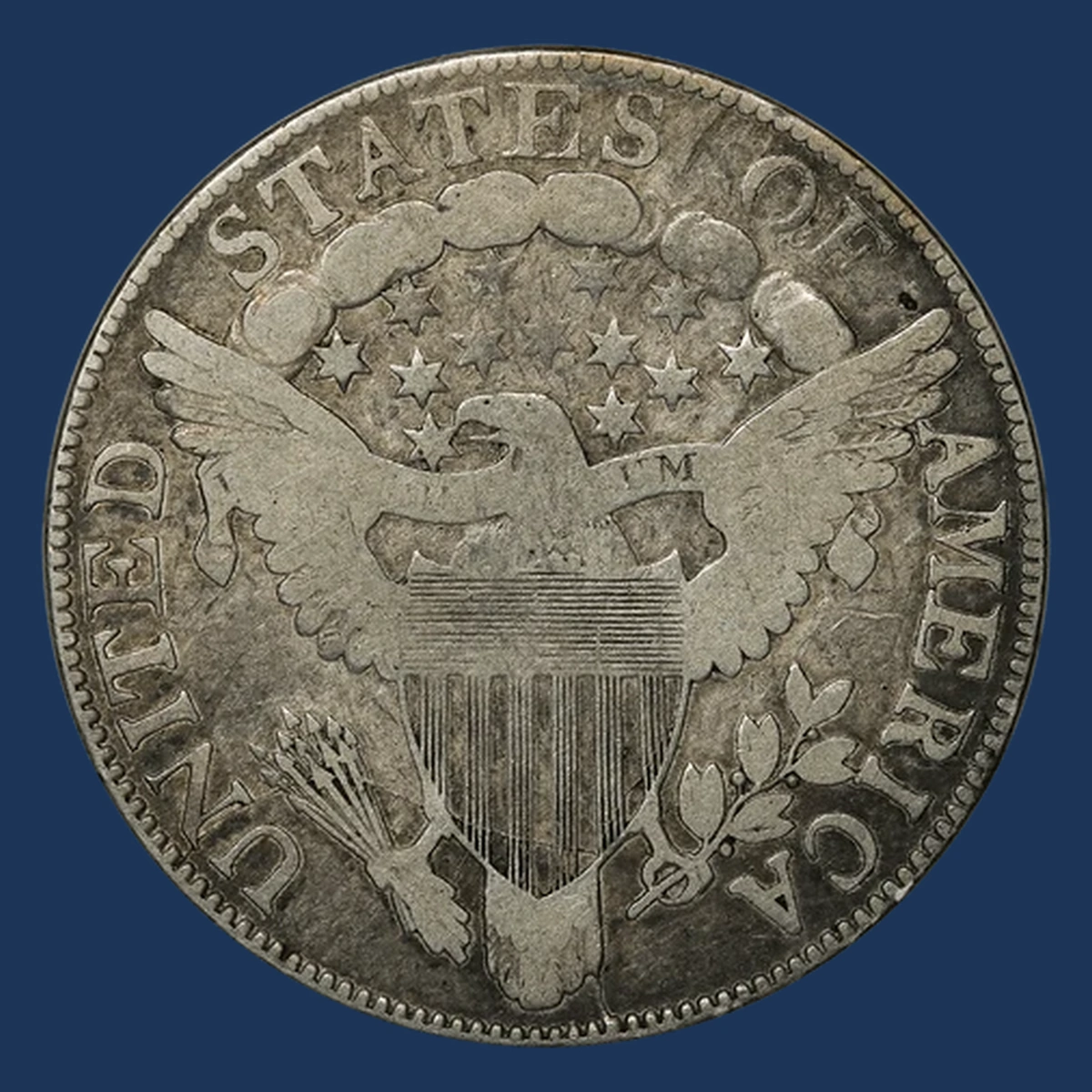
A curved raised line runs through STATES and the clouds on the back of this coin. It starts at the first S, crosses the clouds, and returns through the E and final S.
The cause was a cracked die, the steel tool that stamped the design. Silver entered the crack and left a ridge on the coin.
The auction description also calls it a retained cud. That means the cracked piece of steel stayed in place rather than falling out.
The connected path helps identify this example. A random scratch elsewhere would not show the same feature.
Estimated Value
A PCGS VF20 O-112a sold for $1,605 at David Lawrence in August 2017. Its catalog described the curved line across the back.
The estimated range is $1,200–$2,000 for similar Very Fine coins, which have noticeable wear but readable detail. Cleaning or other damage can reduce their appeal.
O-112a identifies this particular variety. A different 1805 coin with a crack may need a different price comparison.
How to Identify
Can you follow one line from the first S to the last S in STATES? Use a 10× magnifier to trace it across the clouds, then take a photograph of the whole back.
The line should stand above the surface. A scratch sinks into it, while corrosion often leaves rough patches.
Look for any change in height beside the line too. A cracked piece that shifted in the stamping tool could change nearby detail.
For a loose coin, check the lettered edge and use a scale and calipers. Normal unworn measurements are 13.48 grams and about 32.5 millimeters.
Matching the complete curve through the letters and clouds gives a clearer answer than matching one short line.
2. 1805 Draped Bust Half Dollar 1805/4 Overdate Error (Up to $1,900)
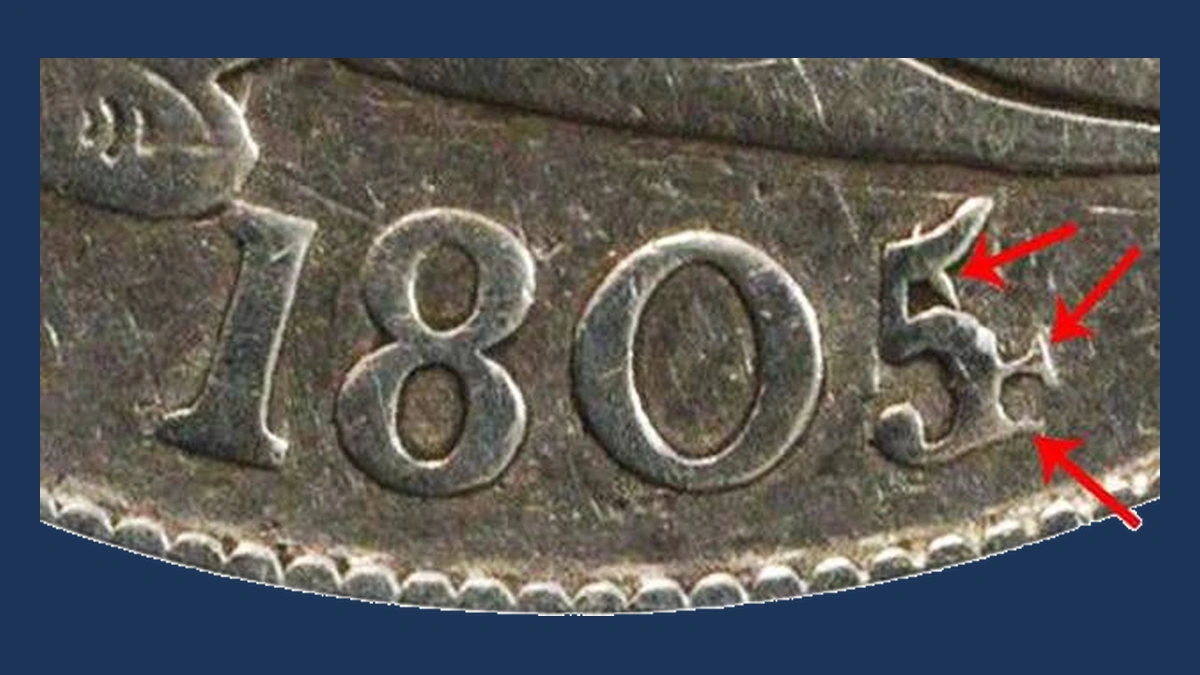
The final 5 hides part of an earlier 4. Collectors write the date as 1805/4 to show that one digit was punched over another.
The change happened in the stamping tool before the coin was made. Surviving parts of the old 4 then appeared on coins struck with that tool.
This is called an overdate. It does not mean someone stamped another date onto a finished coin.
The specialist reference includes an example called O-103a. Some examples also have cracks, but those are separate features; the visible old digit is what identifies the overdate itself.
Estimated Value
Clear parts of the old 4 help make this variety attractive to collectors. A PCGS F12 CAC example brought $1,900 at David Lawrence in February 2022.
For comparable coins around the Fine grade, estimate $1,500–$2,500. Fine means the coin has substantial wear but still shows important detail.
The price applies to the overdate, not a specific crack pattern. A damaged surface or a hard-to-see old digit can make a coin less appealing.
How to Identify
Find the 5 first, then look for raised strokes that do not belong to its normal shape. A sharp photograph and a 10× magnifier help you separate the two digits.
Compare those strokes with a known 1805/4 example. Shadows can suggest an extra line that disappears when you turn the light.
A cut through the 5 is damage, not an old digit. Genuine traces of the 4 rise from the coin’s surface.
The full coin has Liberty’s draped portrait, a large eagle on the back, and a lettered edge. A scale and calipers check its original 13.48-gram weight and roughly 32.5-millimeter diameter, allowing for wear.
Match the surviving 4 beneath the 5 for the clearest confirmation.
3. 1805 Draped Bust Half Dollar Cud Error (Up to $6,750)
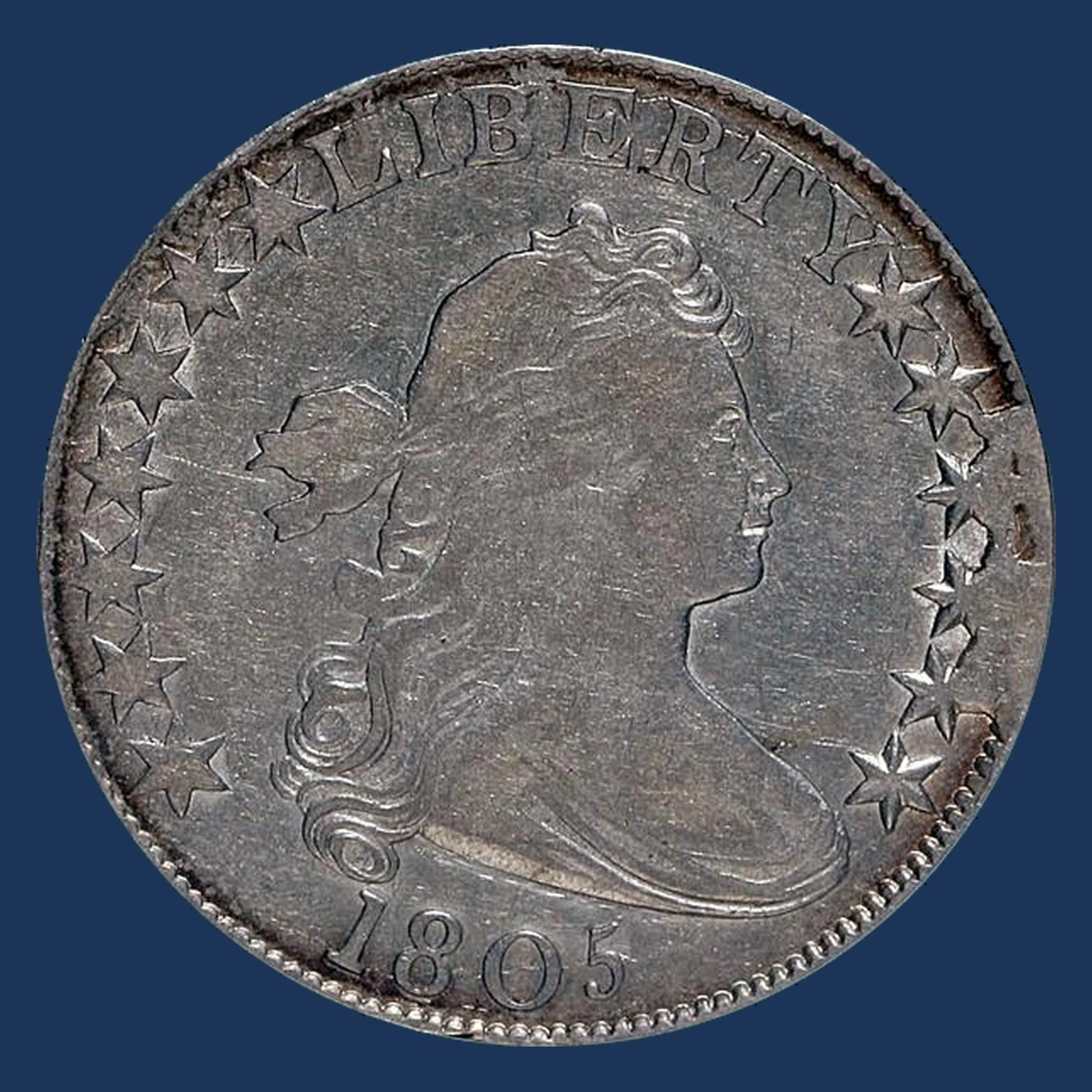
Several outer star points disappear into a raised patch on the dramatic 1805 example discussed here. The patch reaches the rim because a piece at the edge of the stamping tool broke.
A missing piece leaves room for silver to spread upward, producing a mostly smooth lump called a cud. If the broken piece remains in place, some distorted design can survive.
The John Reich Collectors Society shows examples near stars 9–12 and others near letters on the back. These are different examples, so their patches should not all look alike.
Estimated Value
The same rare cud coin has two useful sale results. Sheridan Downey recorded $6,750 in July 2008 and $5,500 in January 2022 for the PCGS VF30 O-104a.
Estimate $5,000–$7,000 for a similarly clear example with moderate wear. The large patch around the star points is central to this comparison.
A small rim bump is not enough. Buyers must also match the variety and judge the remaining detail and surface condition.
How to Identify
Compare the affected stars or letters with an undamaged example. Under a 10× magnifier, note where normal detail disappears and where the raised patch meets the rim.
A dent can also move metal near the edge. Look for a crushed surface or impact mark before calling the lump a mint error.
Turn the coin over and check for weak detail opposite the patch, although every example need not show it. The edge should carry lettering, not ridges.
On a loose coin, calipers should read about 32.5 millimeters and a scale about 13.48 grams before wear. Confirm the feature by matching the patch’s outline and any surviving detail to a photographed cud example.
Conclusion
For the examples covered here, estimated values run from $1,200 to $7,000. A raised curve across the clouds, part of a 4 beneath the 5, and a broad rim patch are three different clues.
The rare cud’s two auction results also show that prices do not stand still. Match the feature and condition before using a past sale to judge your own coin.