1803 Half Dollar Error List with Pictures

The lower part of the date missed the strike, but enough survived to identify this 1803 half dollar. It sold for $5,405 at Heritage in September 2016.
A broad blank crescent makes that error easy to see. Other 1803 half dollar errors leave smaller clues, including unexpected shield lines and raised breaks near STATES.
Estimated ranges run from $500–$6,500 for the worn examples discussed here. Explore the four features below, including two that share one auction coin.
1. 1803 Draped Bust Half Dollar Cud Error (Estimated Up to $2,500)
A small raised break above the first T in STATES appears on the O-102a variety. O-102a is a catalog name for a particular pair of dies, the steel tools that stamp coins.
When a piece breaks from a die’s edge, metal fills the gap and forms a raised area. Collectors call that feature a cud.
A different variety, O-104, shows a fractured section near STATES that stayed in the die. This retained cud can leave some lettering visible.
The two examples have different outlines. A thin crack alone is not the same as a whole section of die failing.
Estimated Value
An O-102a in PCGS XF45 sold for $2,280 in November 2024. A more worn PCGS VF30 brought $1,380 in January 2025.
The estimated whole-coin range is $500–$2,500 for broadly comparable worn examples. Detail, marks, and surface quality affect the price alongside the break.
These figures concern O-102a. The separate retained-cud O-104 needs a comparison of its own condition and variety, rather than an automatic extra charge for a larger raised area.
How to Identify
Above the first T in STATES, find the boundary of the raised area where it meets the rim. Compare that shape with the O-102a photograph in the JRCS examples.
The O-104 retained cud needs a different picture. Some surviving letters are possible because the broken section stayed in place.
Use a 10× magnifier to distinguish a larger bounded area from a narrow crack or a dent at the edge. Do not combine the shapes from two different reference coins.
This early half has lettering around its edge, a normal weight of 13.48 grams, and a diameter near 32.5 millimeters. Scale and caliper checks when safely accessible support the matching break outline.
2. 1803 Draped Bust Half Dollar Off-Center Strike Error (Up to $5,405)
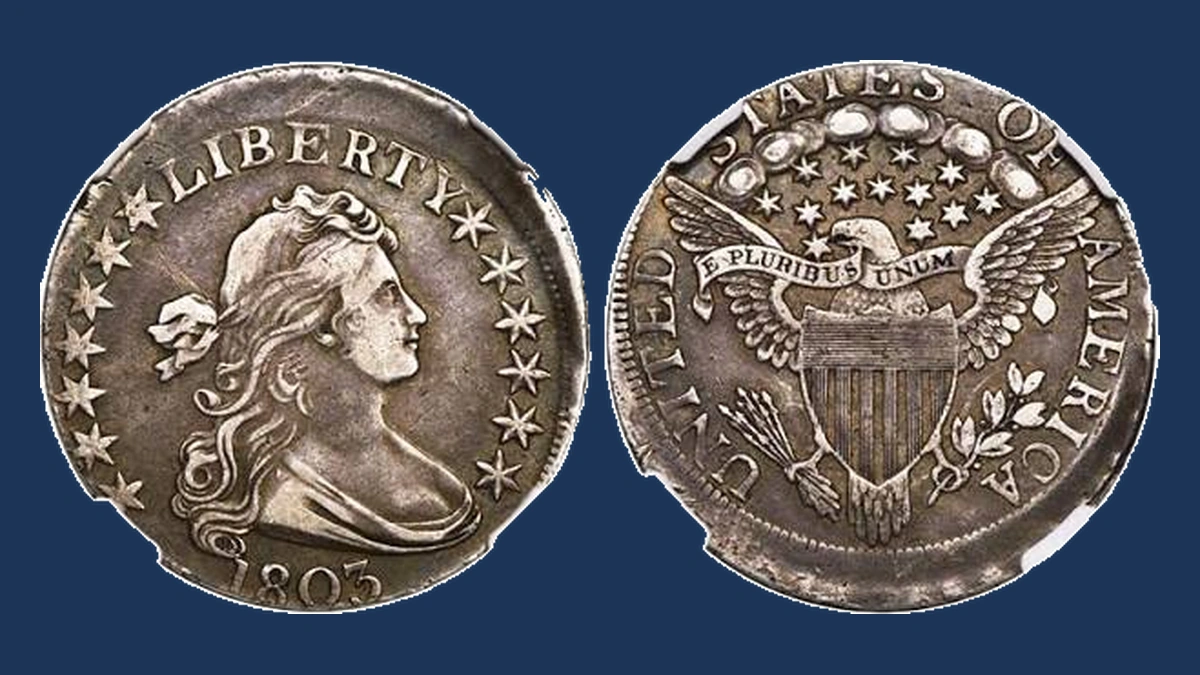
The design on this 1803 half shifted toward seven o’clock on the front. A wide area of untouched metal remains opposite it, near one o’clock.
The lower portions of the date missed the strike. Part of STATES on the back is also missing, but enough design remains to identify the coin.
NGC graded it VF35, a worn grade with useful detail. The catalog describes the strike as ten percent off center.
A blank margin is the key clue. An uneven rim on only one side may instead come from a misaligned die, without the blank being in the wrong position.
Estimated Value
The NGC VF35 sold for $5,405 in September 2016, as reported by Coin World. A comparable clear ten-percent off-center coin has an estimated $4,000–$6,000 range.
That is a historical sale, not a current offer. The readable year, broad blank area, and surfaces make this example useful for comparison.
A slightly uneven early half is not automatically equivalent. The estimate assumes a similarly obvious missed strike and similar remaining detail.
How to Identify
Locate the surviving 1803 date before measuring the shift. On this example, its lower edges and the top of STATES meet the edge of the struck area.
The wide crescent opposite them should show original blank metal. Inspect it with a 10× magnifier for later filing or grinding.
Compare both sides. A broad border on one face alone cannot prove the same error.
Confirm the Draped Bust portrait and the eagle with a shield on the back. The coin must be a half dollar, not a same-year dollar or half cent.
A safely accessible scale and caliper check can use 13.48 grams and about 32.5 millimeters, with a lettered edge. Missing design paired with an original blank crescent on both faces supplies the clearest match.
3. 1803 Draped Bust Half Dollar Die Clash Error (Recorded $5,500 Hammer Price)
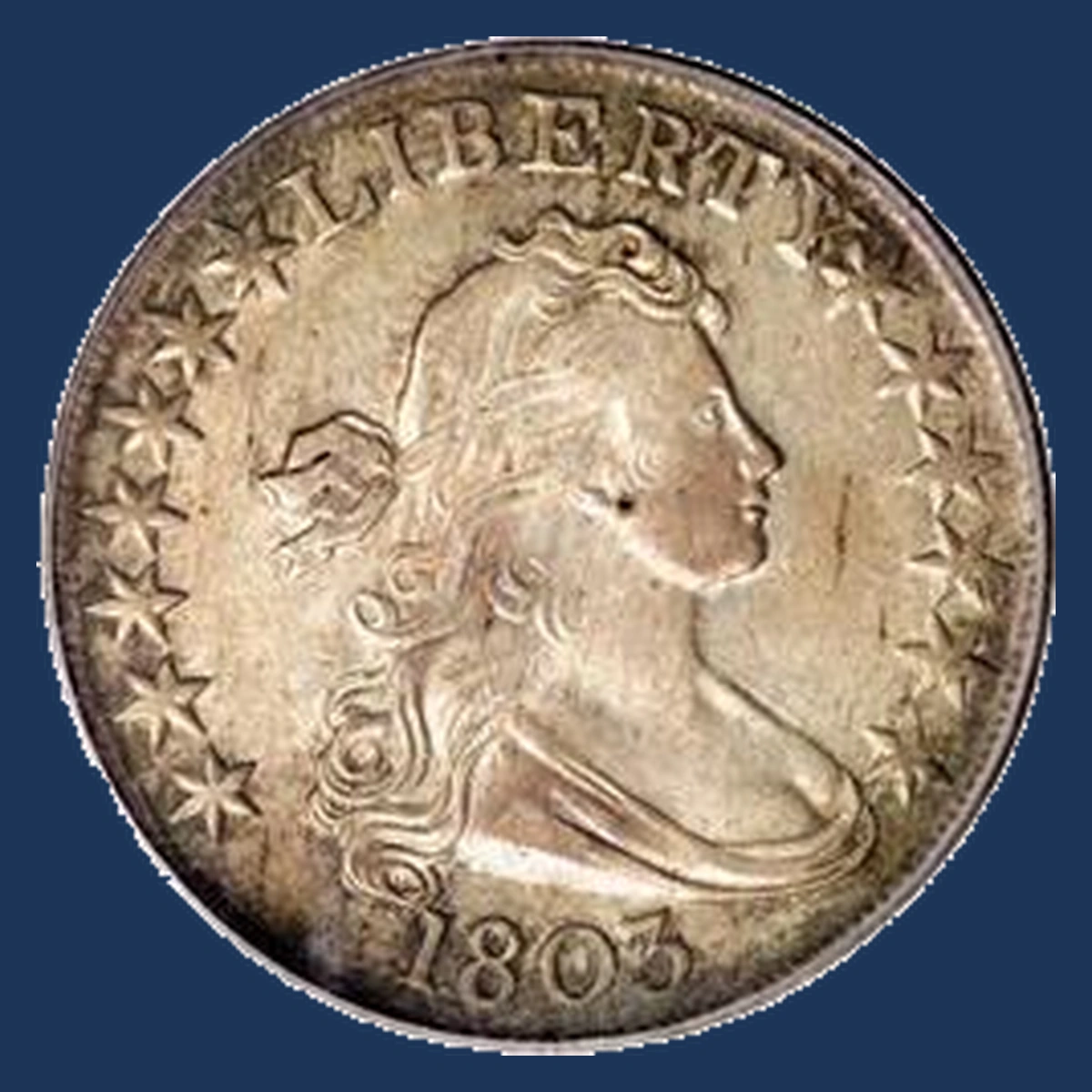
Shield lines should not appear beside Liberty’s ear, yet Heritage described them there on an 1803 half. They came from the design on the opposite die.
The two dies struck each other without a blank between them. That contact marked their surfaces, and later coins picked up the misplaced lines.
This is called a die clash. It does not require the affected coin to be struck twice.
Another O-103 example shows faint traces between the bust and date. These are separate coins, so each needs its own close-up rather than one picture combining every reported mark.
Estimated Value
A PCGS AU53 O-103 with clash marks sold for a $5,500 hammer price in January 2008. That is the winning bid before the buyer’s fee.
For comparable worn coins through lightly worn AU condition, estimate $1,000–$6,500. Remaining detail and clean surfaces matter.
The auction coin also has die cracks. Both features belong to one sale, so the price cannot be assigned to the clash alone or added again when discussing the cracks.
How to Identify
Study the normal shield on the back before looking beside Liberty’s ear. Its lines give you a pattern to compare with the unexpected marks on the front.
Use a 10× magnifier and light from the side. Scratches cut into the coin, while ordinary hair should follow the intended portrait design.
For the second example, inspect the gap between the bust and date using that coin’s own photograph. A mark from another coin pressed against it later does not establish a mint-made clash.
The normal half weighs 13.48 grams and measures about 32.5 millimeters, with a lettered edge. When safely accessible, use a scale and calipers; matching the transferred lines to the opposite design explains the unusual location.
4. 1803 Draped Bust Half Dollar Die Crack Error (Recorded $5,500 Hammer Price)
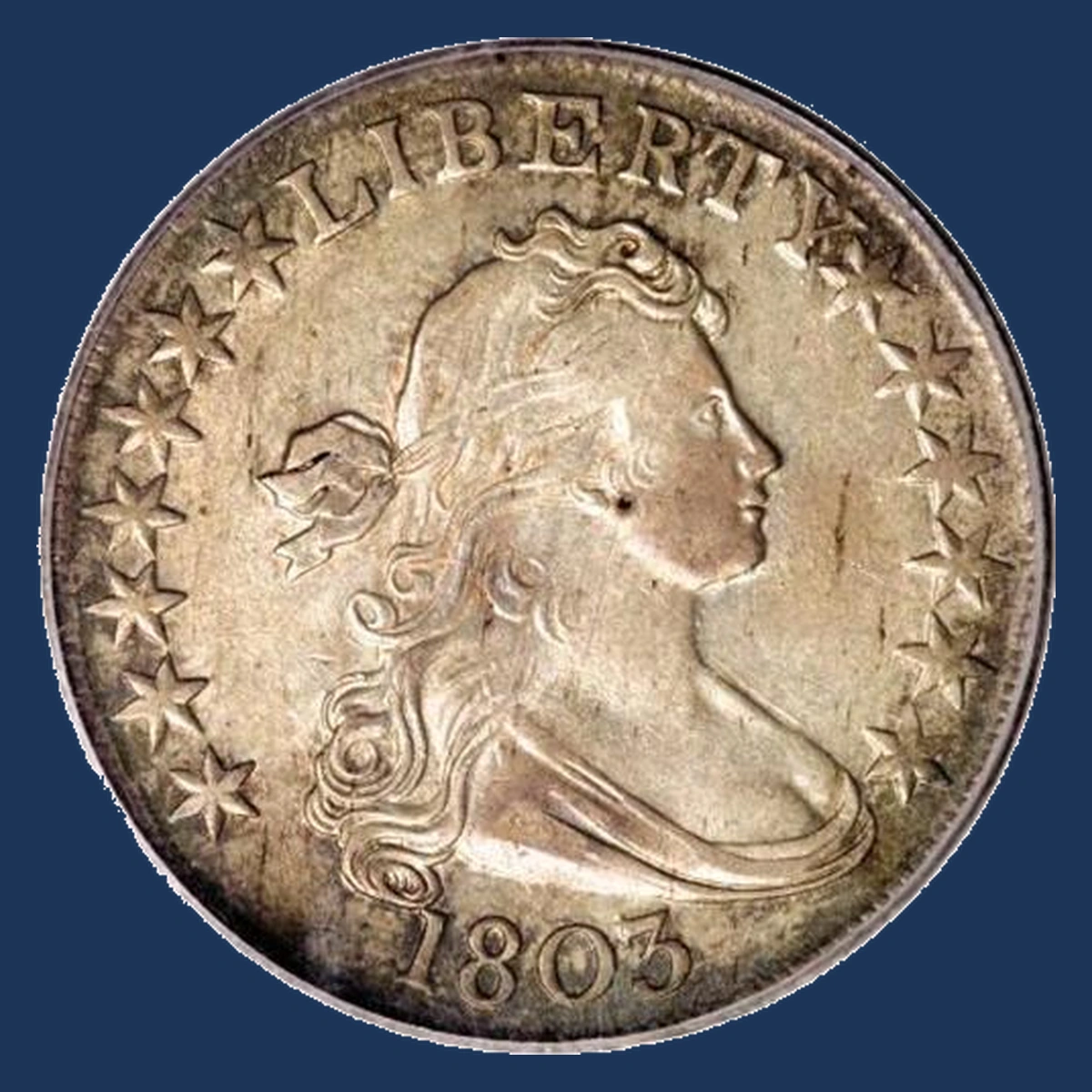
Raised lines pass through LIBERTY on the Large 3 auction coin. It lacks the crack through the clouds below STATES that appears on some related examples.
Large 3 describes the size of the final date number. A separate Small 3 O-104 has an arc near STATES and a stronger line reaching T in LIBERTY.
These paths belong to different coins. A die crack forms when metal enters a fracture in the tool during striking.
The finished coin carries a raised ridge. Finding the correct route matters more than the number of lines, because not every die developed the same cracks.
Estimated Value
The Large 3 PCGS AU53 sold for $5,500 before fees in January 2008. It is the same coin used for the clash comparison.
An estimated $1,000–$6,500 covers comparable worn examples across a broad range of remaining detail. It does not represent a second independent sale.
A strong crack can attract attention, but damage or heavy wear can matter more to value. Small 3 examples also need their own variety and condition comparisons.
How to Identify
Check the size of the 3 first. A Large 3 reference may show a different crack pattern from a Small 3 coin.
With a 10× magnifier, follow LIBERTY and then examine the area near STATES. Compare each side with the same reference example.
A missing back-side crack does not erase a genuine line on the front. The photographed Large 3 coin specifically lacks one of those expected lines.
Do not scrape the marks. Raised ridges differ from scratches cut below the surface, and a larger break at the rim may be a cud instead.
Use a scale and calipers when safely accessible against 13.48 grams and roughly 32.5 millimeters, and inspect the lettered edge. The correct date form and matching crack paths make the identification useful.
Conclusion
Try tracing a feature before naming it: follow the edge of a raised break, the border of blank metal, or the lines borrowed from the opposite design. Their shapes reveal different causes.
Estimated comparisons span $500–$6,500 for these worn coins. The AU53 clash and crack share one $5,500 winning bid, with fees extra, while the off-center coin’s $5,405 is a separately reported sale total.