2012 Presidential Dollar Error List with Pictures

Grover Cleveland appears twice in the 2012 dollar lineup, but the first-term coin supplies a notable missing-edge example. One graded NGC MS66 sold for $1,294 in August 2018.
This 2012 Presidential dollar error list covers edge mistakes, doubled designs, and material caught during striking. Estimated values span $15–$3,000.
The president, mint, and finish matter when comparing these coins. Read on to separate shallow letters from missing ones and to find the small extra design details.
1. 2012 Presidential Dollar Weak Edge Lettering
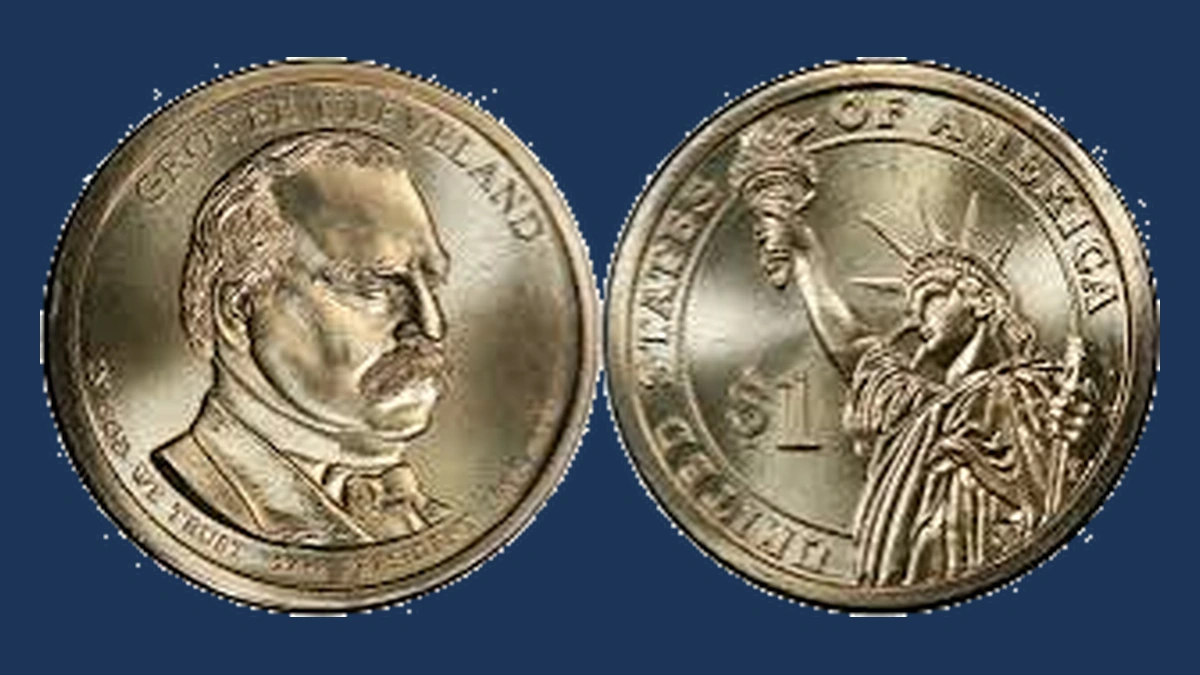
A weak inscription leaves shallow strokes around the edge instead of a clean, deeply pressed letter. Some parts may remain easier to read than others.
Examples and catalog listings cover Philadelphia and Denver Benjamin Harrison dollars. They also cover Philadelphia Cleveland first-term dollars and both mints for Cleveland’s second term.
The two Cleveland issues show different portraits and presidency numbers: twenty-second and twenty-fourth. Their shared name should not replace checking which design is present.
Position A or B describes the normal reading direction of the text. The error is its shallow impression, not the way a single inscription faces.
Estimated Value
An estimated $15–$200 is reasonable for properly identified weak-edge examples. Strongly preserved faces and visible changes in the edge lettering help make an individual coin easier to compare.
A Philadelphia Harrison example graded PCGS MS67 and a Denver second-term Cleveland graded MS64 appear in auction records. Those grades describe unworn coins, with fewer marks at the higher number.
The estimate is not a claimed sale price for either specimen. Edge wear and rubbing must be separated from genuine shallow stamping.
How to Identify
Check the president and, for Cleveland, the presidency number before comparing the edge with an ordinary example. The twenty-second and twenty-fourth presidencies have different portraits, even though both coins carry the same president’s name.
Use a magnifier to follow a readable letter into the weak portion, moving the light to reveal shallow strokes. Check for a readable P or D, then examine adjacent metal for wear, rounding, or signs of scraping.
A weak letter may retain its bottom even where the upper outline almost disappears into the surrounding surface. Trace those recessed strokes through the affected area before choosing between shallow lettering and a genuinely blank section of edge.
2. 2012 Presidential Dollar Doubled Designs on Harrison and Cleveland Coins
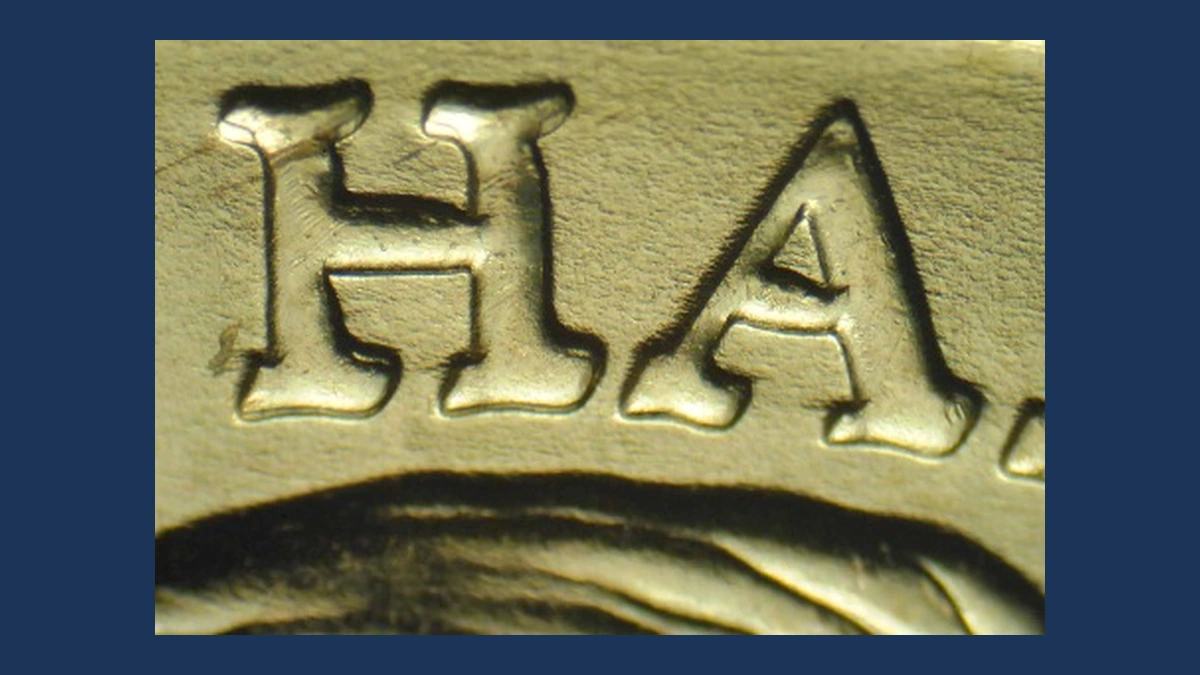
Extra thickness or a repeated outline can be copied from a stamping tool whose design was doubled during manufacture. Collectors call that tool a doubled die.
On Philadelphia Benjamin Harrison dollars, the reported front pattern strongly thickens the outer design, especially toward the right. Parts of Harrison’s portrait are thickened too.
Back varieties on Philadelphia Harrison and Cleveland dollars involve Liberty’s raised right arm near a crown ray and sleeve. The Cleveland report does not identify which of his two terms is represented.
These are face-design features. Doubled edge lettering comes from a separate operation and needs a different comparison.
Estimated Value
For matched examples of these doubled designs, estimate $25–$300. A clear repeated outline at the arm or obvious patterned thickening can attract more interest than indistinct extra width.
The range is an estimate for the cataloged face features, rather than a specific auction result. Better surfaces make the tiny details easier to inspect.
A flat shelf caused during striking does not deserve the same comparison. Match the actual pattern before judging how much the condition adds to its appeal.
How to Identify
On the back, find where Liberty’s raised right arm approaches the second crown ray clockwise from the top of her head. Check the junction and the area above the sleeve under a magnifier.
Compare the extra outline with Wexler’s Harrison photographs, rather than treating every nearby fold as doubling.
For the Harrison front variety, compare the right-side outer design and several portrait details with a normal coin. The thickening should form a matching pattern across those areas.
A low, flat ledge beside one letter suggests a different cause. Look at height and shape as well as apparent width.
Keep Cleveland’s portrait visible when comparing its back variety. The repeated arm-and-crown detail does not by itself identify his first or second term.
3. 2012 Presidential Dollar Partly Missing Edge Lettering
One stretch of edge may carry lettering while another stretch stays blank. This partial omission differs from faint text that continues around the coin.
A Denver Chester Arthur dollar graded NGC MS65 is described as missing ninety-five percent of its edge lettering. Some text therefore remains, even though most is absent.
Other reports cover Philadelphia Arthur and Cleveland first-term coins, with Harrison combinations also appearing in catalogs. They should be compared separately by president and mint.
The missing fraction does not reveal which particular letters survived. The coin’s own edge must show that information.
Estimated Value
Partial-edge examples have an estimated range of $75–$1,000. A clear transition from retained text to a large untouched blank area is more informative than lettering hidden by glare.
The ninety-five-percent Arthur example provides a particularly extensive omission to compare. Its MS65 grade describes an unworn coin with relatively few marks, rather than the amount of missing lettering.
These estimates allow for different presidents, amounts of omission, and condition. They are not a quoted sale price for that Arthur coin.
How to Identify
Begin at a surviving letter and follow the edge until the inscription stops. Photograph that transition before inspecting the rest of the circumference.
Continue all the way around under a magnifier to find any other remaining characters. Search supposedly blank stretches under low light for shallow letter bottoms that glare may have hidden.
For a loose coin, use a scale and calipers to compare with about 8.1 grams and 26.49 millimeters. A small surviving section of original text rules out a completely missing inscription, even if the coin has normal measurements.
Check the blank area for scratches and flattening from a file. The useful partial-omission clue is a change from original lettering to original blank metal without that alteration.
4. 2012 Presidential Dollar Harrison Doubled Edge Lettering
An edge that receives lettering twice can carry two overlapping sets of sunken characters. Both sets may face the same way, or one may be upside down relative to the other.
Catalog reports list these patterns for Philadelphia and Denver Benjamin Harrison dollars. They do not establish the same error on every 2012 president.
The terms overlap and inverted describe the relationship between the two inscriptions. Either differs from the normal single inscription in Position A or Position B.
An extra dent resembling one letter is not enough. The repeated markings should belong to a recognizable second inscription.
Estimated Value
An authenticated Harrison double-edge dollar has an estimated value of $100–$1,500. Readable duplicated words and dates make the result more compelling than a few indistinct overlapping marks.
The range covers the reported same-direction and opposite-direction patterns without assigning a completed sale to a particular catalog combination. Condition and the clarity of the second impression affect the comparison.
Normal Position A and Position B coins do not earn this error premium. Each of those has only one edge inscription.
How to Identify
Choose several edge letters and try to read each inscription separately through their overlap. Use a magnifier to follow the recessed strokes rather than relying on the shadow beside one mark.
An inverted example has one set facing opposite the other. Turn the coin to read that second set and see whether its letters continue in a sensible sequence.
For a same-direction overlap, compare repeated parts of several neighboring characters. A random impact may resemble one letter but will not create a consistent second phrase.
Confirm Harrison on the face and read the surviving date and mint letter before comparing the cataloged varieties. The decisive feature is two recessed inscriptions; one set facing either direction is normal.
5. 2012 Presidential Dollar Arthur Proof Struck Through Material
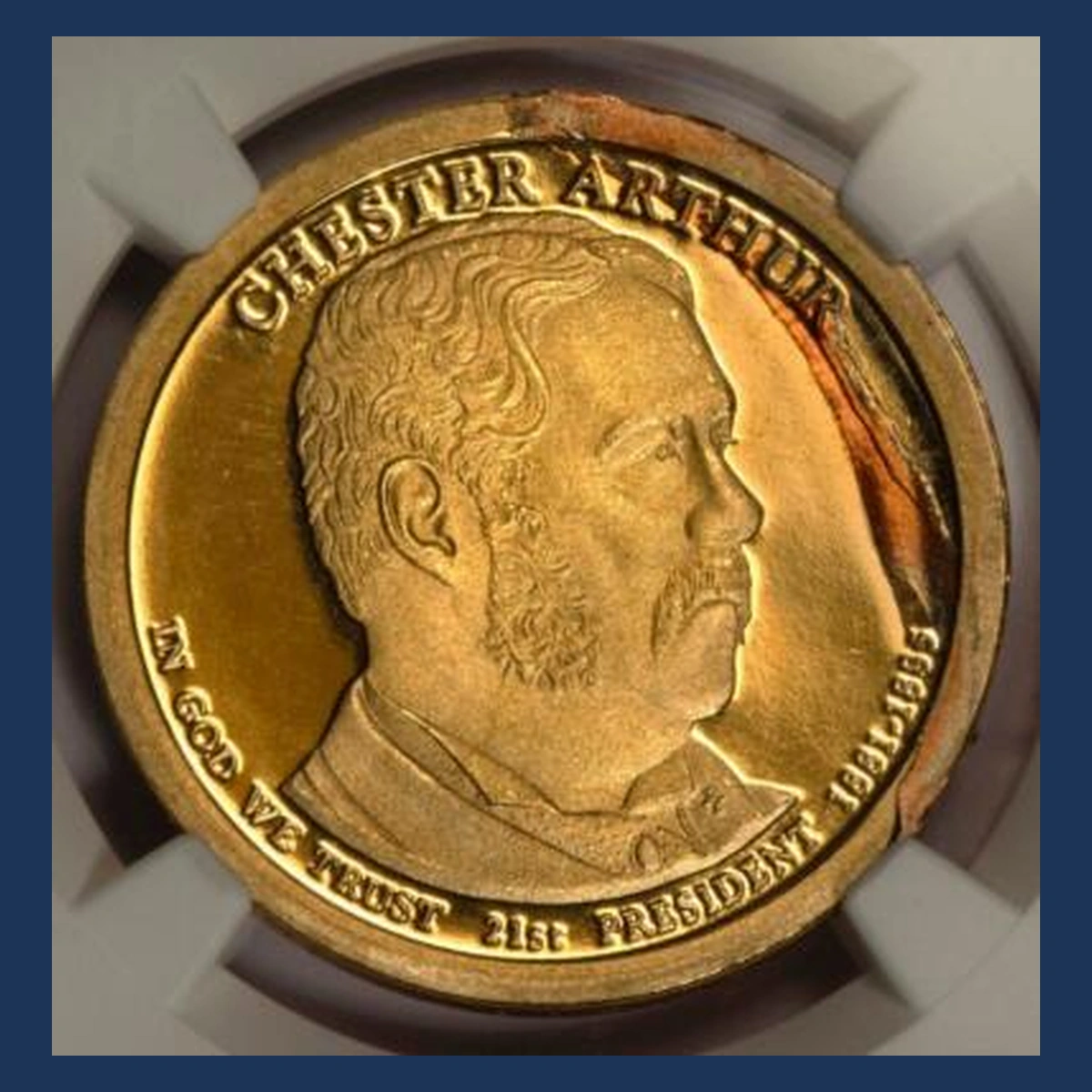
Material trapped between a dollar and its stamping tool can block part of the design. The resulting impression is called a struck-through error.
Two San Francisco Arthur Proofs illustrate different outcomes. A PCGS PR68 Deep Cameo example was struck through scrap, while an NGC PR68 Ultra Cameo example retains trapped material and weighs 8.3 grams.
Proofs are specially made collector coins, and those grades indicate well-preserved surfaces with strong contrast between design and background. The two examples should not be assumed to be one coin.
Struck through scrap also differs from being struck on a scrap blank.
Estimated Value
For comparable Arthur Proof errors, allow an estimated $100–$2,000. The impression’s size, its effect on the portrait, and the survival of trapped material can all influence collector interest.
The PCGS PR68 scrap example sold at GreatCollections in February 2024, but the public page hides the price. Its grade and appearance support comparison without supplying a realized amount.
An intact retained piece can help explain how the error formed. Cleaning or trying to remove it can damage that evidence.
How to Identify
Leave any attached material in place and examine its boundary under a magnifier without probing or trying to lift it. If the material is gone, compare the depression with nearby portrait details to see where the intended picture was blocked.
Scratches, gouges, or corrosion can also remove detail, so examine the surrounding surface for signs of later damage. The retained-material coin’s recorded 8.3 grams differs from the normal 8.1-gram dollar standard, but weight alone cannot establish the cause.
Keep the Arthur portrait and original Proof surfaces visible while studying the affected area, using angled light to show its boundary. A blocked design surrounded by an otherwise continuous struck surface provides a better clue than shininess or an unexplained weight difference.
6. 2012 Presidential Dollar Completely Missing Edge Lettering
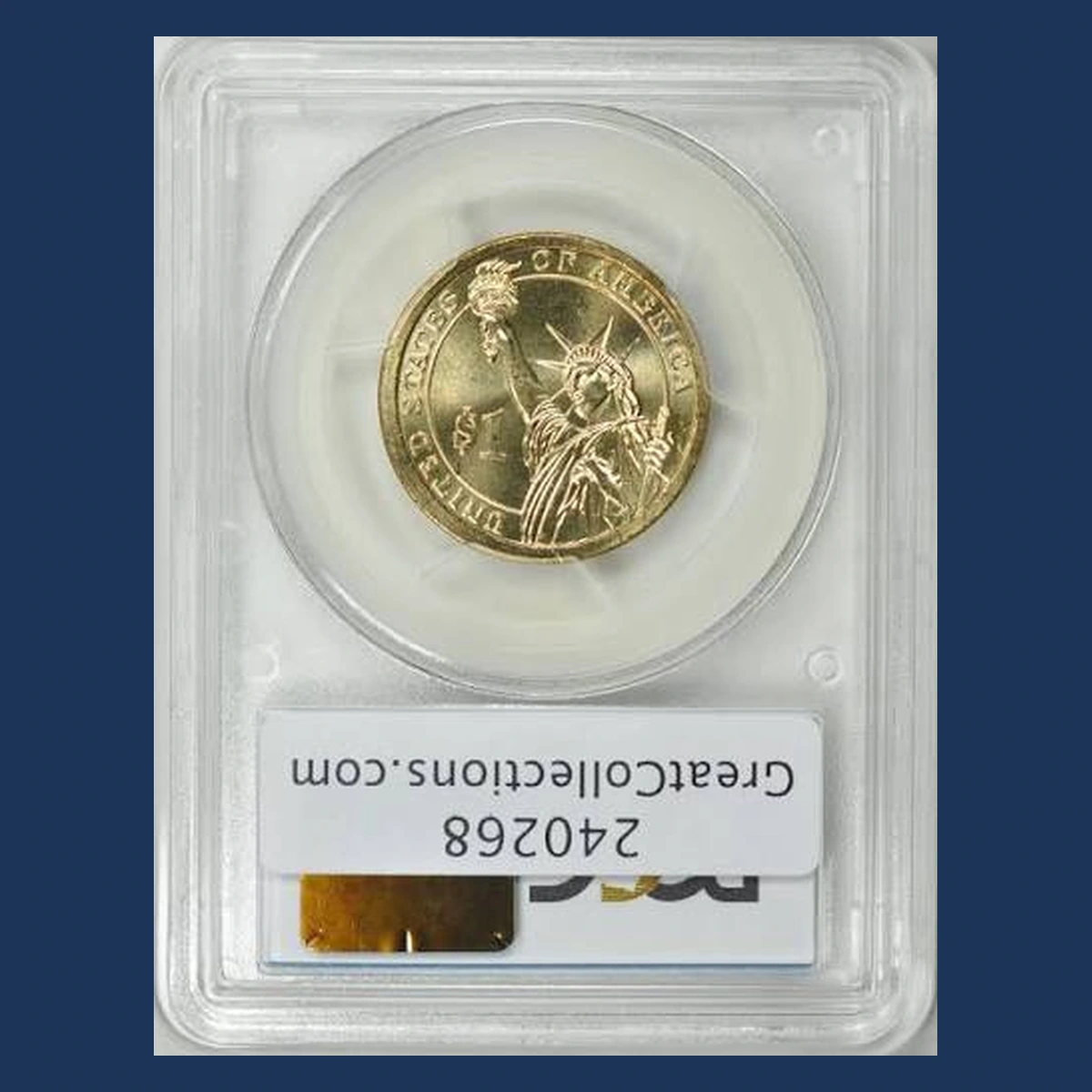
A completely plain edge removes the year and mint letter as well as E PLURIBUS UNUM. The portrait and presidency number still identify the issue.
Cleveland’s twenty-second-presidency dollar, honoring his first term, has documented missing-edge discoveries from Philadelphia products. That history does not supply a mintmark on every later loose example.
PCGS also lists an Arthur missing-edge category. It should remain distinct from Arthur coins that retain a small part of their text.
IN GOD WE TRUST stays on the face of these dollars. The absent edge text therefore does not mean that motto is missing from the coin.
Estimated Value
A first-term Cleveland graded NGC MS66 brought $1,294 at GreatCollections in August 2018. Its archive also records a PCGS MS64 example at $1,125 in August 2022.
Estimate $300–$3,000 for an authenticated missing-edge example, with president, condition, and demand affecting the result. The Arthur category does not automatically inherit a Cleveland specimen’s price.
A worn or altered edge is a different comparison. Original metal around the entire circumference is essential to identifying the valuable omission.
How to Identify
Read the president’s name and number before checking the edge. Cleveland’s first-term design carries twenty-second-presidency identification, while his second-term dollar represents the twenty-fourth.
Then inspect a full circuit under low lighting, rotating the coin slowly beneath a magnifier. Search for any surviving date, mint letter, or part of the motto.
Check the width and shape of the edge for grinding or a flattened band. A digital scale and calipers can test a loose coin against the normal 8.1 grams and 26.49 millimeters.
Normal size cannot prove the edge escaped lettering. A specialist should inspect its surface before authentication.
If even a small original letter survives, describe it as partial or weak lettering instead of complete omission.
Conclusion
A little surviving edge text separates a partial omission from a completely unlettered dollar. Extra face details and a Proof struck through material need different checks again.
Across these types, estimated values range from $15–$3,000. Keep Cleveland’s first and second terms distinct, and compare each dollar with the correct president and finish.
Clear views of both faces and the entire edge make those differences easier to see.