1904 Dollar Coin Error List with Pictures

A fragment of G beside Liberty’s neck belongs on the other side of a Morgan dollar. On the 1904-O “Trigger” variety, contact between the stamping tools left that misplaced shape.
A highly preserved, mirror-like example sold for $2,820 in April 2017. The 1904 Morgan dollar errors below span an estimated $75 to $6,000, covering smaller tool marks through substantial manufacturing mistakes.
Look through the examples to connect each unusual feature with the right test.
1. 1904 Morgan Dollar Threadlike Surface Marks
A thin line across the front may resemble a piece of thread. Two New Orleans catalog entries use the description “threadlike impression,” but the name alone does not identify its cause.
Such a mark needs to be compared with the same cataloged coin before it can receive a stronger explanation. A line made by foreign material and a line copied from a marked tool are different possibilities.
Neither description proves that a real thread remains attached. Treat the visible shape as the starting point, rather than turning a nickname into a story about the object that made it.
Estimated Value
For matching cataloged examples, estimate $75 to $1,000 in circulated to moderately unworn condition. This is a whole-coin comparison range, rather than a price assigned to any thin line.
The better-known 1904-O Fishhook sold for $999 in July 2023, showing the market for another identifiable small feature. It is a different variety, so the comparison supports careful matching rather than an automatic premium for a threadlike appearance.
How to Identify
Begin with a full photograph of the front so the line can be placed relative to letters and portrait details. A tightly cropped line without that context is difficult to compare.
Change the lighting and determine whether the mark rises above the surface or sinks into it. Record where it starts, turns, and ends without tracing over it with a tool.
If the same path appears on another identified example, that repeated shape can help establish a match. A lone scratch that cuts across the design may instead be later damage.
Confirm the O above the back’s DO in DOLLAR. Then compare the complete shape with the appropriate threadlike-mark photographs; the catalog name does not establish its precise location or material by itself.
2. 1904 Morgan Dollar Doubled Portrait Outline
Liberty’s face can show a faint second raised outline instead of one clean edge. The Philadelphia variety described as a doubled profile records this small difference in the portrait.
A doubled die is a steel stamping tool that received overlapping versions of the design during preparation. Coins made from that tool repeat the affected outline in the same place.
This is a close change in the portrait, not two widely separated pictures from a second blow. Reflections and flattened edges can imitate it, especially when the coin is photographed under a single bright light.
Estimated Value
Estimate $100 to $1,200 for identified examples in circulated to moderately unworn condition. A subtle profile variety needs a clear photograph to attract a buyer interested in the doubling.
On the lower end, wear or marks can obscure the second outline. Cleaner original surfaces and a rounded, readable extra edge make the feature easier to enjoy.
The estimate concerns the complete dollar, including the preservation of its face and background.
How to Identify
Compare a normally lit photograph with a second view lit from the opposite side. A shadow may seem to double the portrait in one view, while an actual raised edge keeps its place.
Use a magnifier to follow the boundary where Liberty’s face meets the open background. The Philadelphia variety shows a close additional outline rather than a broadly shifted second portrait.
Check whether that extra edge is rounded and raised. A low flat shelf can come from movement during striking instead of a doubled tool.
Confirm that the back has no mintmark before using a Philadelphia comparison.
New Orleans dollars have their own profile patterns, sometimes paired with different date or edge features. Match the full shape to the appropriate mint’s example rather than relying on a single doubled-looking point.
3. 1904 Morgan Dollar Diagonal Surface Separation
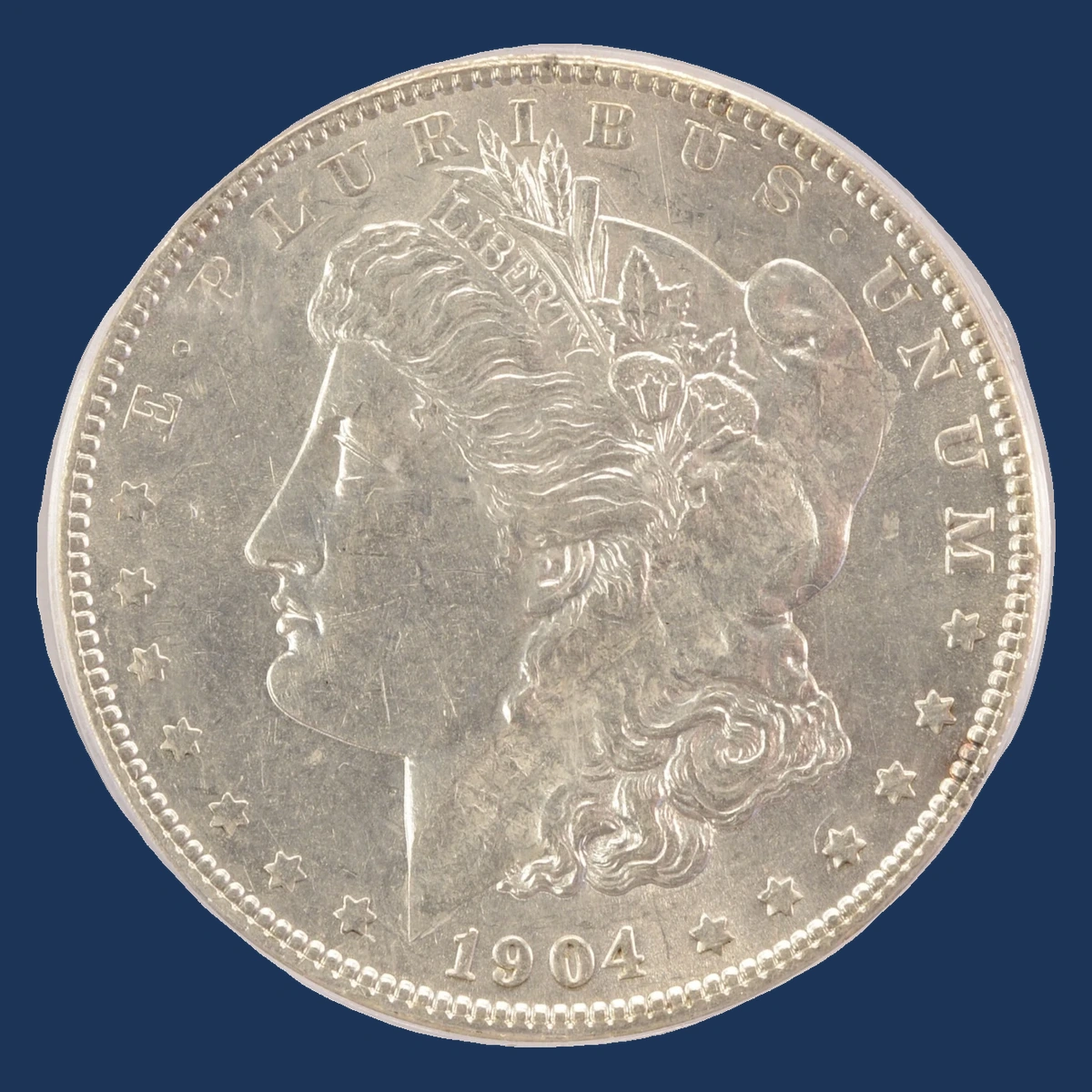
A long break in the surface can cross several parts of Liberty’s portrait. On the documented Philadelphia example, it runs diagonally from the bust tip toward the cap near the N in UNUM.
This separation is called a lamination. A weakness within the metal allows a thin layer to lift or separate from the rest of the coin.
The Morgan dollar is a solid mixture of 90% silver and 10% copper. It does not have a silver outer coating over a copper center, so this peeling should not be explained as exposing a copper core.
Estimated Value
The PCGS AU58 example sold for $180 on September 10, 2019. AU58 describes a coin with only slight wear, and the original auction notes a large diagonal separation.
Estimate $100 to $1,500 for comparable authenticated laminations, depending on size and preservation. A visible strip crossing recognizable details can attract more interest than a tiny rough patch, while cleaning or later scraping can lower the value of the surrounding dollar.
How to Identify
The auctioned coin offers a specific route to follow: start at the pointed bust tip and move diagonally toward the cap near UNUM. Photograph the entire path before enlarging the places where the surface separates.
Low angled light can reveal a lifted edge, rough layers, or stamped detail carried on a remaining flap. Leave that metal untouched, since a probe can remove the very feature you are trying to examine.
Compare the boundary with a scrape, which often leaves directional scratches and displaced metal along its sides. If the identity of a loose dollar is in doubt, check its 26.73-gram standard weight and 38.1-millimeter width without using color as proof of composition.
4. 1904 Morgan Dollar Repeated Date Digits
Extra pieces of a date digit can remain when its placement on the stamping tool is repeated. The date was added separately, so doubling there must be examined differently from a doubled portrait.
Philadelphia patterns affect 1 and 4, or 9 and 4. Another has a downward spur at the lower right of 1 together with doubling beneath 4.
New Orleans entries include repeated 9 and 4, plus a farther-right date with extra edges on 1 and 9. That latter coin also has a doubled portrait and a high, left-tilted O mintmark.
Estimated Value
An estimated $75 to $2,000 covers identified repeated-date examples in ordinary collectible grades. A readable original digit beside its earlier remnant is more convincing than thick numbers with no clear separation.
The exact mint and condition should guide the comparison. A small repeated edge on a worn coin sits in a different market from sharp extra digits on an attractive unworn dollar, even though both record a repeated date punch.
How to Identify
The downward spur at the lower right foot of 1 offers a clear starting point for one Philadelphia pattern. Check beneath 4 as well, since the pair of features is more useful than the spur alone.
Other examples repeat different digits: select a 1-and-4, 9-and-4, or 1-and-9 photograph before comparing the entire date. The farther-right New Orleans date shows extra edges below 1’s top bar and outside the lower-left part of 9’s upper loop.
Trace raised pieces belonging to the digits rather than scratches crossing them, then compare the date’s placement with a normal coin. A high, left-tilted O supports the particular New Orleans match but does not by itself prove a second mintmark punch.
5. 1904 Morgan Dollar Foreign Material Impressions
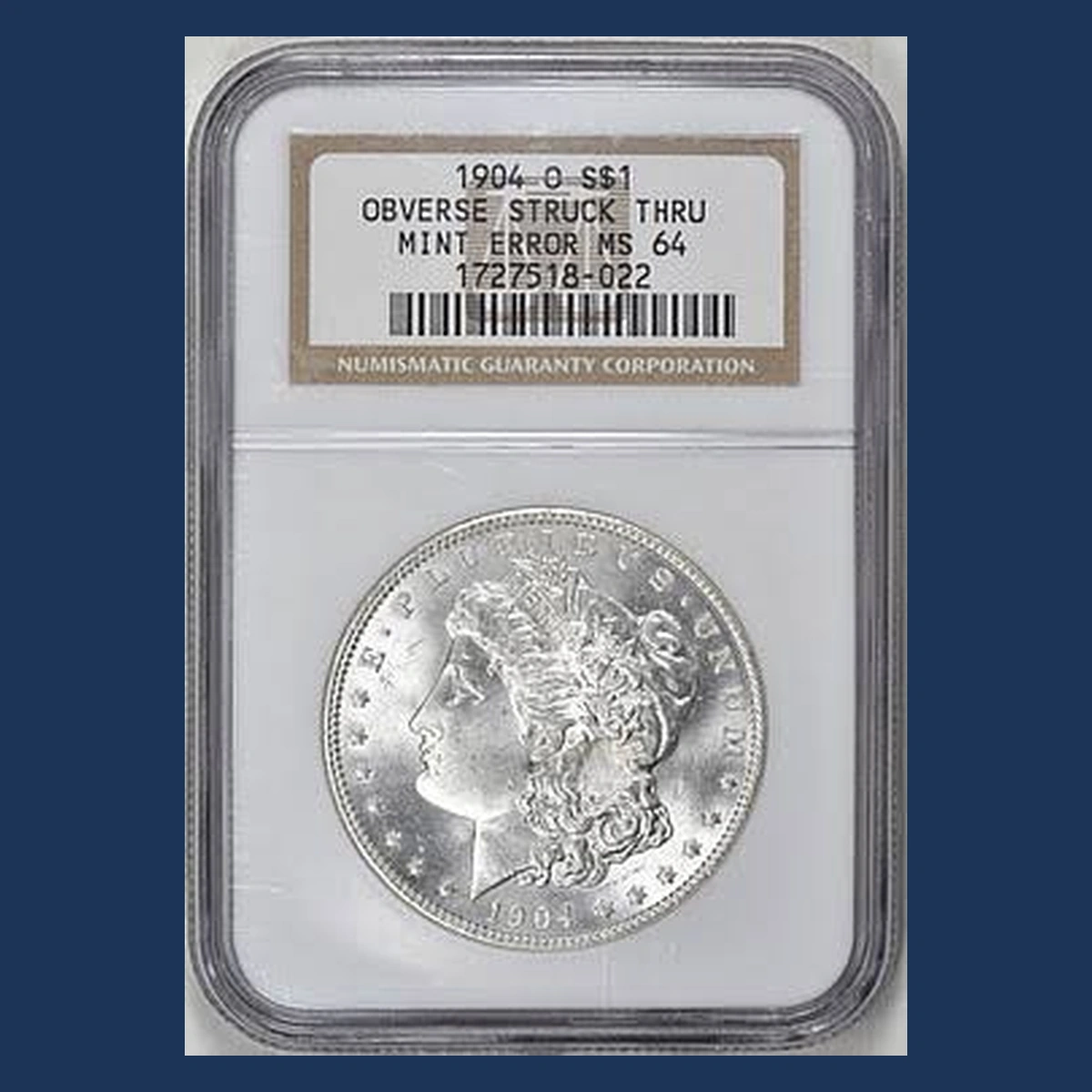
A small object between the blank and the stamping tool can block part of the design. Its outline may be pressed into the surface while nearby details form normally.
This is called a struck-through error. The year guide reports 1904 examples, but does not identify a particular mint or a single location that applies to them all.
The impression may be more informative than its color. A hollow does not automatically identify wire, cloth, or grease, and those common explanations should not be treated as separate confirmed 1904 specimens without matching physical features.
Estimated Value
Estimate $100 to $2,500 for authenticated 1904 examples, depending on the impression’s size, clarity, and the coin’s condition. A well-defined interruption is generally more appealing than an indistinct rough area.
As a later silver-dollar comparison, a 1923 Peace dollar with a front strike-through sold for $134 in March 2023. That ordinary unworn example illustrates the modest end of the market, while larger and more distinctive impressions need different comparisons.
How to Identify
Find where the normal design stops at the unusual area and photograph that boundary. The shape should help explain what the material blocked during the strike.
Inspect the interior under low light for a pattern or texture. A smooth depression can show that something intervened without revealing exactly what it was.
Look along nearby letters for crushing or metal pushed aside by a later blow. Compare these with intact struck details around a documented impression.
Identify the mint from the back before selecting a priced comparison.
The general 1904 report does not establish a face, clock position, or retained object. Use the actual coin’s photographs and certification to narrow those points rather than borrowing details from a different date or denomination.
6. 1904 Morgan Dollar Marks Copied from Damaged Tools
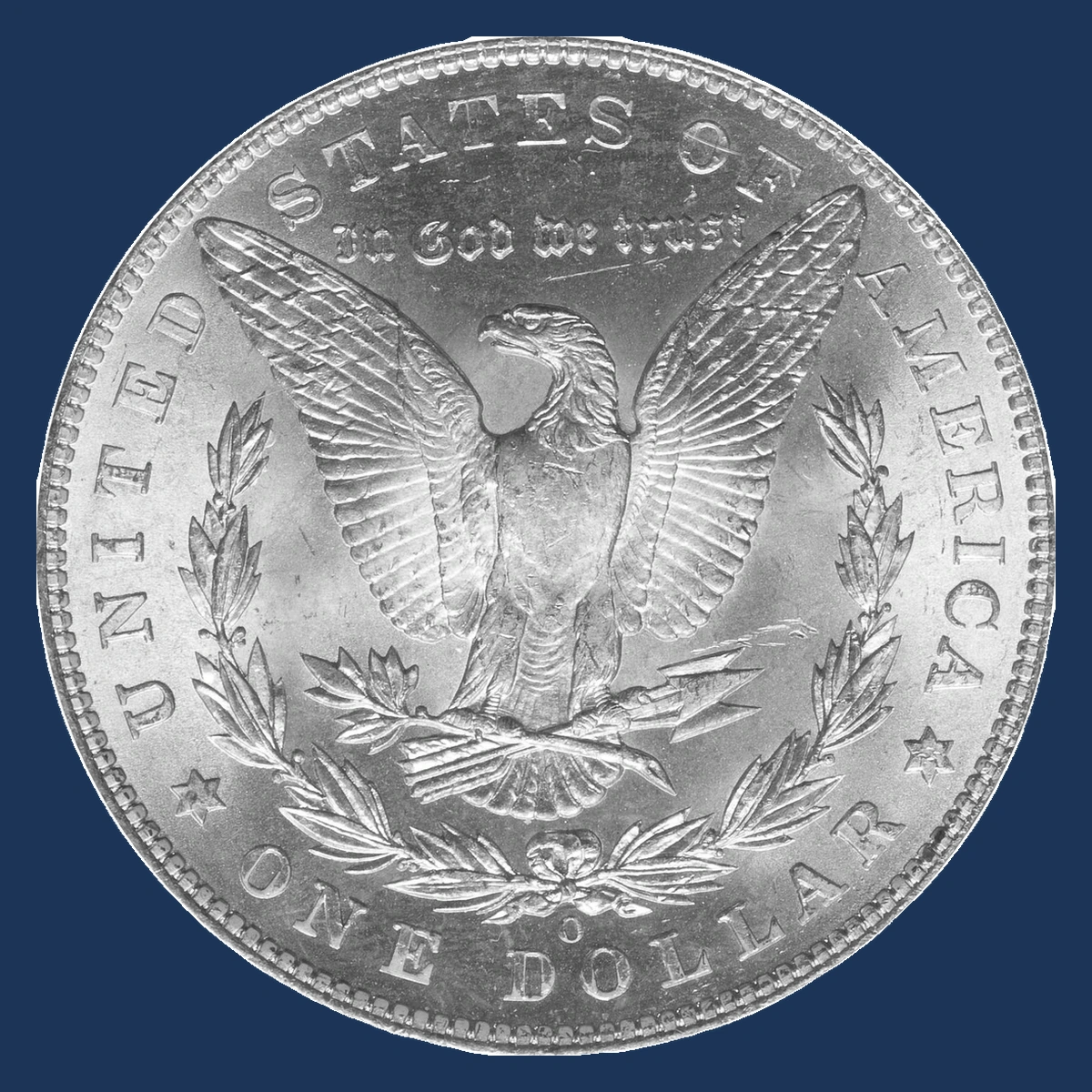
A pit or small impression in a stamping tool can leave extra raised metal on the coin. The Philadelphia example has a localized feature at the D of DOLLAR on the back.
New Orleans varieties carry small border-tooth impressions below the eagle’s wing. Related examples also show tiny tool marks, a doubled profile, or overlapping edge grooves.
Those features must be checked on the matching specimen. Changes in one shared back tool explain several catalog entries, but do not mean that every coin has the same strength of mark or the same companion front design.
Estimated Value
An isolated bump is less appealing than a complete match to a recognized tool pattern. Estimate $75 to $3,000 for these identified examples in ordinary collectible grades.
The faint wing impression may need good photographs to show its shape. Clear companion details, such as the listed edge-groove pattern, help explain the coin to a buyer.
Original surfaces and preservation also matter; the upper estimate prices an attractive whole dollar, not the small mark alone.
How to Identify
For the Philadelphia feature, enlarge the D of DOLLAR and check whether the roughness stands above the letter. Corrosion generally eats into the finished surface rather than copying a pit in a tool.
The New Orleans wing mark needs a different comparison. The cataloged related examples show how that small border-tooth impression becomes weaker as the tool is polished.
Where overlapping edge grooves are listed, include edge photographs as well as both faces. Their presence on some related coins is supporting evidence, not permission to add them to every example.
Compare the doubled profile and nearby tool lines with the same pictured variety. These companion details help distinguish a genuine matching mark from a random dent below the wing.
7. 1904 Morgan Dollar Clashed and Counterclashed Designs
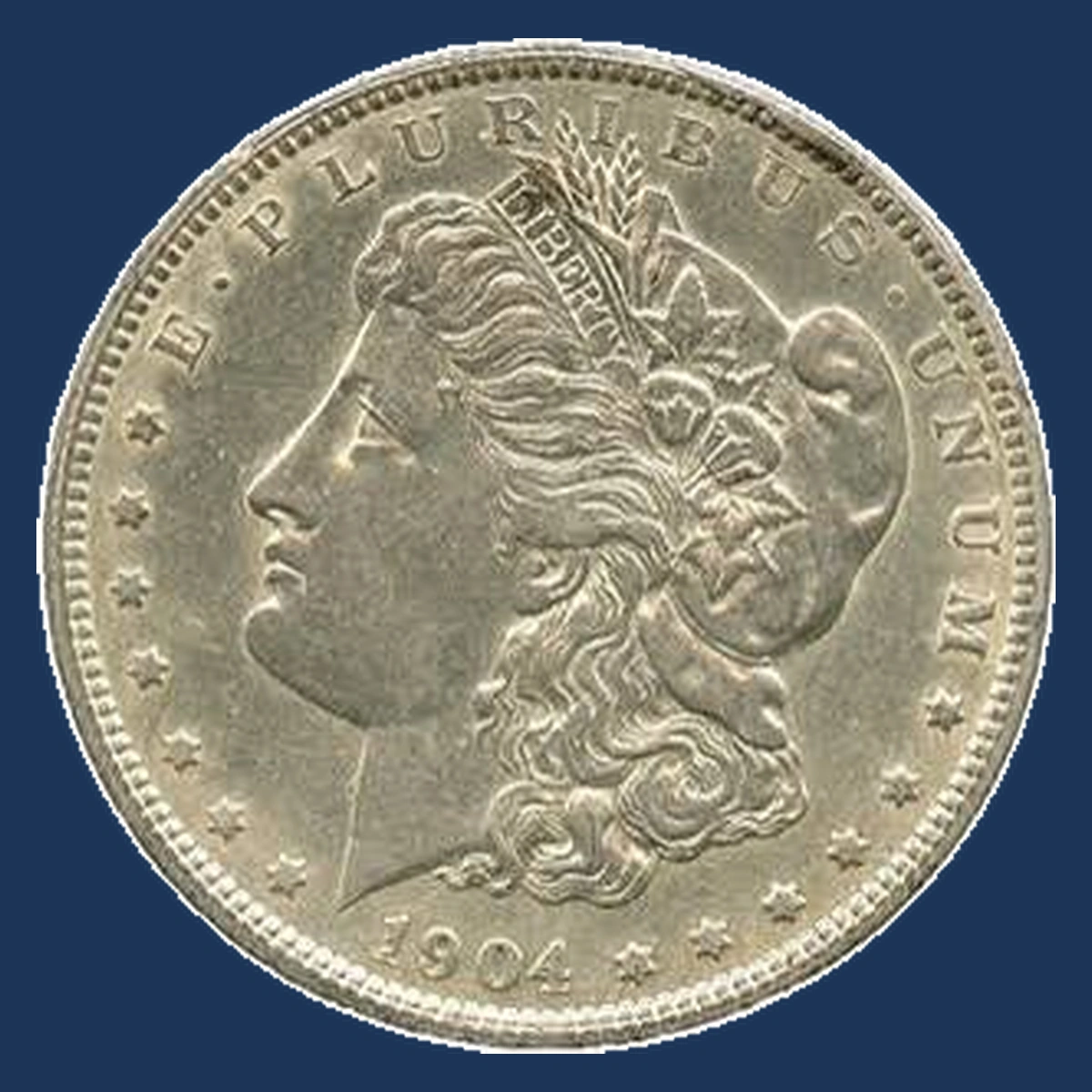
When the stamping tools meet without a blank between them, they can pick up parts of the opposite design. Later coins then carry faint extra shapes called clash marks.
New Orleans examples include the Fishhook combination, marks around the lips, and a transferred G on the front. In the Trigger variety, part of GOD’s G appears in front of Liberty’s neck.
A counterclash involves a design transferred back through further tool contact. These marks do not mean another finished coin stamped the dollar, and different lip or neck patterns still need their own comparisons.
Estimated Value
A Trigger example graded MS67 Prooflike sold for $2,820 in April 2017. Its grade means exceptionally well-preserved and unworn, with mirror-like surfaces on an ordinary strike.
Use an estimated $75 to $5,000 across authenticated clash varieties. PCGS also records a Fishhook at $999 in July 2023; the different patterns and condition explain why one small transferred mark cannot carry a single fixed price.
How to Identify
On a Trigger candidate, start in front of Liberty’s neck and compare the transferred G with the auction photograph. Its shape connects to GOD on the back rather than to a random scratch on the front.
For Fishhook, inspect the lip area together with the date and the OL of DOLLAR. That combination provides a better check than the nickname alone.
The counterclashed lip pattern requires its own enlarged photograph. Follow the extra contour beside the normal lip without assuming it shares the Trigger’s position.
Use angled light to keep faint transferred shapes separate from strong original lettering. A contact mark added after striking may cut or flatten existing design instead of reproducing the documented clash pattern.
8. 1904 Morgan Dollar Rotated Design Alignment
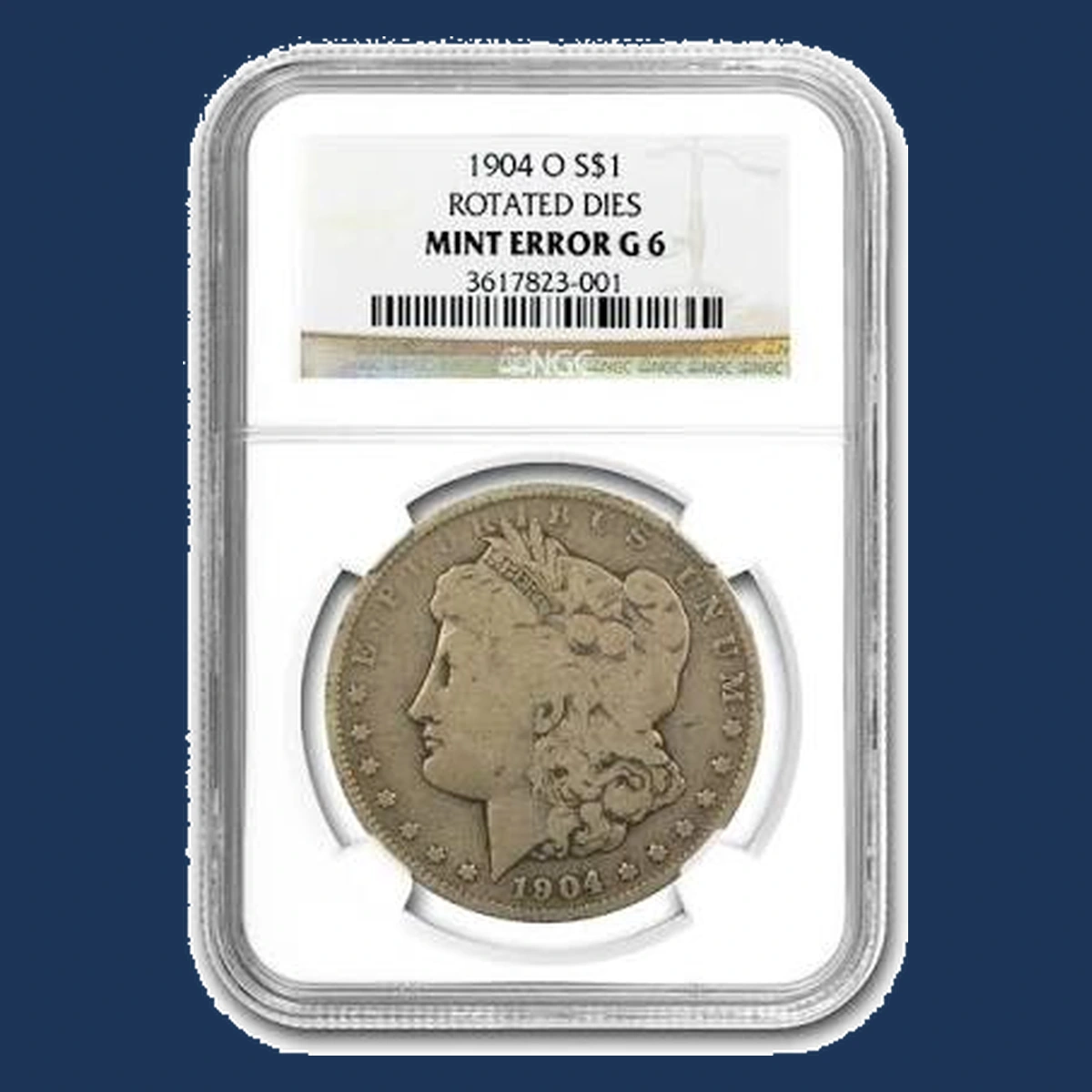
The portrait and eagle should both finish upright when an upright Morgan dollar is flipped from top to bottom. A rotated stamping tool changes where the back design ends up.
A year guide reports this error on a 1904-O dollar. It does not give the measured angle, so a particular quarter-turn or half-turn should not be assumed for that example.
The coin can have a complete portrait, date, and eagle despite the misalignment. This differs from a second strike that places another picture across the first on the same face.
Estimated Value
The year guide reports a 1904-O sale at $215, without an identified auction date or measured angle. For authenticated examples, use an estimated $150 to $6,000, depending on rotation and condition.
A large clearly demonstrated turn generally carries more appeal than a slight tilt. Original shine, sharp details, and undamaged surfaces still affect the complete dollar’s value, so the angle should not be priced independently of the coin carrying it.
How to Identify
Hold the portrait upright with the date at the bottom, then flip the coin directly over its top edge. Practice on a normal American coin until you can keep that motion free of sideways twisting.
Observe where the eagle finishes rather than straightening it before looking. Its departure from upright is the feature you need to record.
Take a short video showing the turn or use paired photographs with the orientation preserved. A seller’s separately aligned front and back images cannot prove the angle.
If the coin slips inside its holder, account for that movement before drawing a conclusion. Confirm the O mintmark and measure the specimen in front of you; the reported 1904-O example does not provide a default angle for other coins.
Conclusion
Check the entire feature before naming it: a raised date edge, a loose silver flap, and a faint transferred letter have different causes. A tiny line alone may tell very little.
The estimated range here is $75 to $6,000 for the conditions described. The $2,820 Trigger result includes unusually strong preservation and reflective surfaces.
Keep the mintmark visible in your comparisons, and photograph fragile or faint details without cleaning the coin.