1928 Dollar Coin Error List with Pictures

A 1928-S dollar with a doubled motto brought $1,170 in September 2022. The extra letter outlines came from the stamping tool, not a second full strike.
This 1928 Peace dollar error list also covers an obstructed front design and peeling metal. Estimated whole-coin values run from $100–$2,500 for the examples and conditions discussed here.
The mint letter and condition still matter. Read the three checks below to separate extra outlines, missing detail, and a lifting surface.
1. 1928 Peace Dollar Peeling Metal from a Faulty Blank
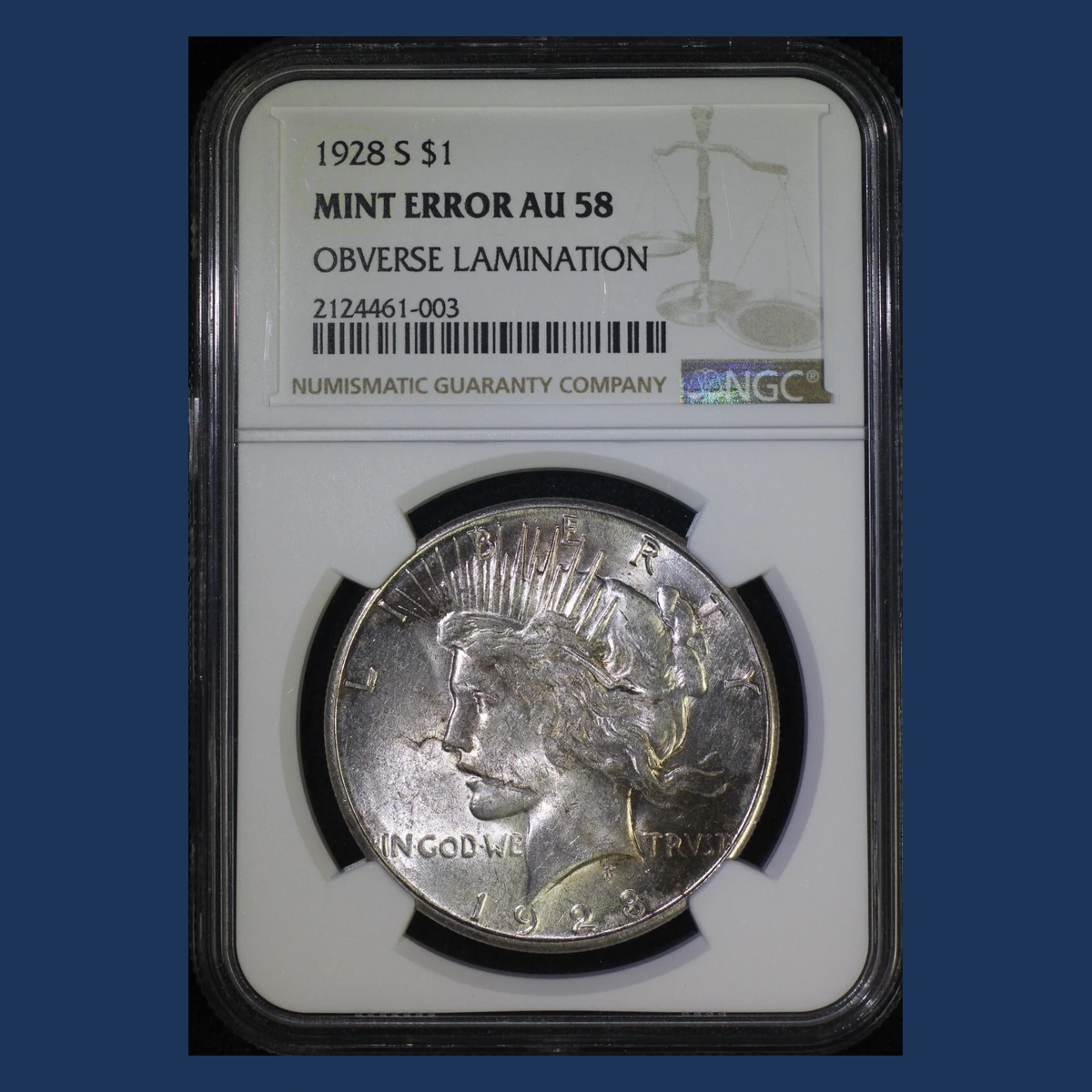
A thin flap or shallow peeling patch can begin inside the coin’s metal. Collectors call this a lamination when a weak area in the blank separates.
The year guide lists this type for 1928 Peace dollars without identifying a particular mint or certified specimen. Its visible form should be a metal separation, not simply a change in color.
Peace dollars contain a silver-copper alloy throughout. They do not have the bonded outer layers used on later copper-nickel-clad dollars.
A loose surface flake is therefore part of the alloy itself. Do not lift it to see what lies underneath.
Estimated Value
A genuine 1928 lamination has an estimated whole-coin value of $100–$1,500, depending on mint, wear, and the visible separation. The scarcer Philadelphia date can contribute substantially to that total.
For a different-year comparison, a 1922 Peace dollar with a back lamination graded NGC AU58 brought $134 in December 2025. AU58 indicates only light circulation wear.
An attached flake can help explain the defect. Corrosion, harsh cleaning, or later scraping can reduce appeal even on a scarce date.
How to Identify
Keep any flap in place and examine its edge under a magnifier. A genuine split may follow a thin seam within the metal, while a gouge usually shows metal pushed aside by an impact.
Tilt a lamp across the patch to see whether a lip stands above the surrounding surface. Struck details crossing or ending at the separation can help show how it developed.
A loose coin normally weighs about 26.73 grams and measures 38.1 mm, which a scale and calipers can check. A tiny lamination may remove too little metal to produce a meaningful weight change.
There is no need to pry the metal apart. The untouched seam and its relationship to the picture are the features an expert needs to inspect.
2. 1928 Peace Dollar Obstructed Front Design
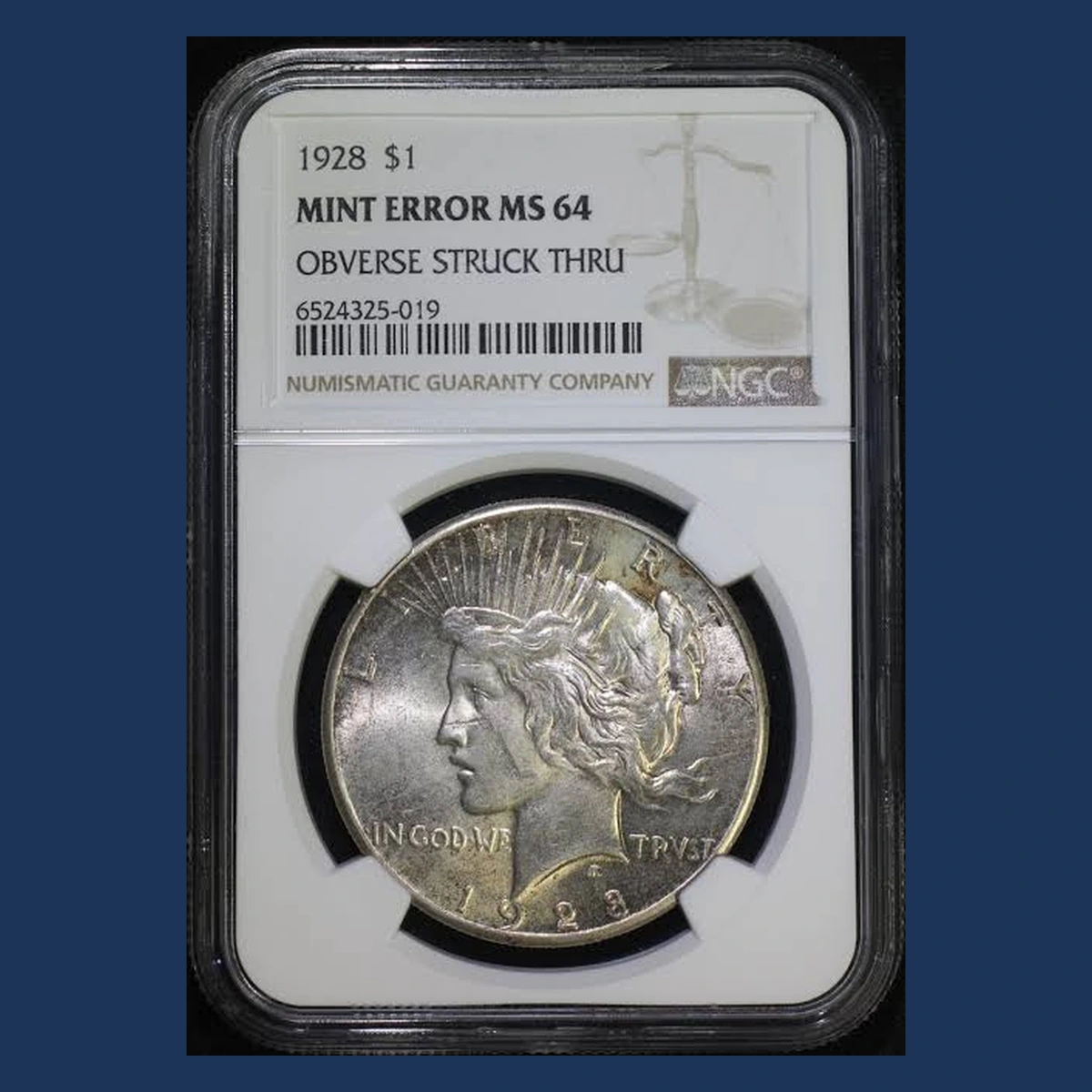
Part of the date’s 1 drew attention on a collector’s 1928-S dollar. The owner reported that PCGS returned it as MS63 with a front struck-through error.
Struck through means something came between the blank and the stamping tool. It blocked the design locally or left its own impression in the surface.
The material responsible for this example was not identified. Its shape should not automatically be called cloth, wire, or grease.
The owner also noticed doubled details around the portrait and crown. Those observations do not establish a second full strike or a second certified error by themselves.
Estimated Value
Estimate $250–$2,000 for an authenticated 1928-S example with a clear front obstruction and comparable preservation. The owner’s MS63 report describes an unworn coin with noticeable marks, not a publicly recorded sale.
A 1923 front struck-through Peace dollar graded NGC MS64 sold for $192 in December 2025. That different-year coin provides a mechanism comparison rather than a price for the 1928-S.
A large, recognizable interruption usually displays better than a faint patch. The underlying date’s scarcity also affects the whole-coin estimate.
How to Identify
Begin at the 1 in 1928 and compare it with the neighboring 9. An obstruction may interrupt one small area while nearby letters and numbers remain normally struck.
Use a magnifier to inspect the edge of the affected patch. A later hit can leave a dent with pushed-up metal, scratches, or an abrupt cut through finished detail.
Check the crown and portrait separately for the reported doubling. Extra outlines there need their own explanation and should not be used to identify the material that blocked the date.
The owner’s discussion provides context for this specific coin. For a similar find, clear photographs of the interrupted 1 and its undisturbed surroundings are the most useful starting evidence.
3. 1928 Peace Dollar Doubled Motto on the Front
Look beside the words IN GOD WE TRVST on Liberty’s side of the coin. The 1928-S doubled-motto variety has extra outlines around parts of those letters.
The design uses V in TRVST intentionally. That spelling is normal and has nothing to do with the doubling.
The repeated picture came from a doubled die, meaning a stamping tool made with a doubled design. Related extra outlines are reported around the hair bun and rear crown rays.
This is a front-side feature. It should not be confused with a doubled back merely because the eagle side carries the mintmark.
Estimated Value
A 1928-S Doubled Motto VAM-3 graded NGC MS64 sold for $1,170 in September 2022. MS64 describes an unworn coin with some marks and relatively attractive surfaces.
For circulated through comparable unworn examples, estimate $100–$2,500 for the whole coin. This includes the value of the date and condition as well as collector interest in the doubled motto.
Sharper letter separation makes identification easier. Heavy wear can hide the pattern, while unusually high-grade coins require individual comparison beyond this range.
How to Identify
Confirm the S on the eagle side before inspecting the front. PCGS lists the doubled-motto variety among the 1928-S Peace dollars.
Now place a 10× magnifier over the motto and follow the lower-right edges of its letters. Look for repeated outlines that stay visible as you change the light.
Move upward to the hair bun and rear crown rays for supporting details. Matching more than one area is stronger evidence than a single thick letter.
A flat ledge beside a letter may be ordinary strike-related doubling. Compare the outline with photographs of an identified doubled-motto coin rather than relying on thickness alone.
Keep the V in TRVST out of that decision. The extra letter edges, not the normal spelling, identify the feature.
Conclusion
The three features leave different clues: a doubled outline, an interrupted design, or a thin metal separation. Estimated whole-coin values of $100–$2,500 cover the ordinary conditions discussed here, with mint and grade affecting the total.
Check the motto on Liberty’s side, study the date’s 1 for an obstruction, and leave any lifting flake untouched. Those simple observations help you choose the right comparison before assigning a price.