1921 Morgan Dollar Error List with Pictures

A nearly missing mint mark and an extra set of edge grooves tell very different stories. Both appear among 1921 Morgan dollar errors.
One dollar struck twice sold for $8,050 in July 2002, while smaller defects can cost far less. The estimated ranges below extend from $63–$20,000, depending on the feature and the coin’s condition.
Use the matching checks to separate a striking mistake from wear, damage, or a normal design difference.
1. 1921 Morgan Dollar Peeling Surface Metal
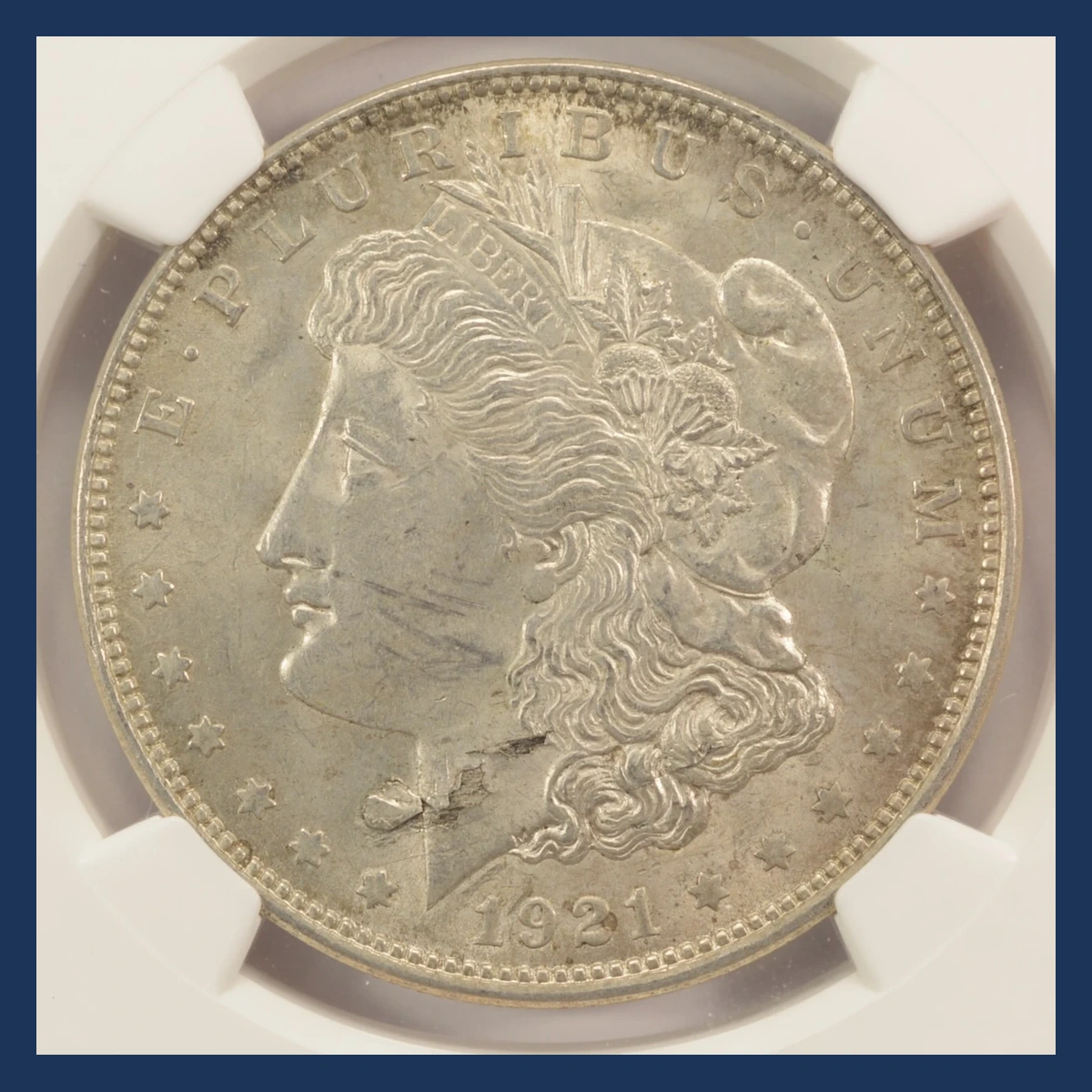
A thin flap or shallow missing patch can expose a weakness inside the silver alloy. Collectors call this peeling a lamination.
Reports include a small Philadelphia front defect near one o’clock and a separate NGC MS62 back example. MS62 means an unworn coin with noticeable marks.
A collector also reports back peeling on a San Francisco dollar. These are different coins, so one photograph cannot show all their features.
The normal alloy contains ninety percent silver and ten percent copper. It does not have the separate copper core and outer layers used for modern clad coins.
Estimated Value
Estimate $80–$500 for typical authenticated laminations, from worn coins to attractive unworn examples. The size and visibility of the peeled area help determine the premium.
A 1921 dollar with laminations on both faces, graded AU55, sold for $104 in March 2024 at Heritage. AU55 indicates light circulation wear.
That is one whole-coin price for two affected faces. An intact flap can be interesting, but deep cleaning marks or later loss of metal may reduce appeal.
How to Identify
Do not lift a flap to see underneath it. Its position, thin edge, and surviving design are part of the evidence.
Light the patch from the side and photograph its boundary against the intact surface. Look for a sheet-like separation rather than a dent surrounded by pushed-up metal.
The Philadelphia front and back reports describe separate examples. Read the mint mark on each coin before choosing a comparison photograph.
A stain alone does not create a missing layer, and a fresh scrape often leaves parallel tool marks. If the surface has already peeled away, an examiner needs the exposed texture and the way the struck design meets the missing area.
2. 1921 Morgan Dollar Clipped Blank
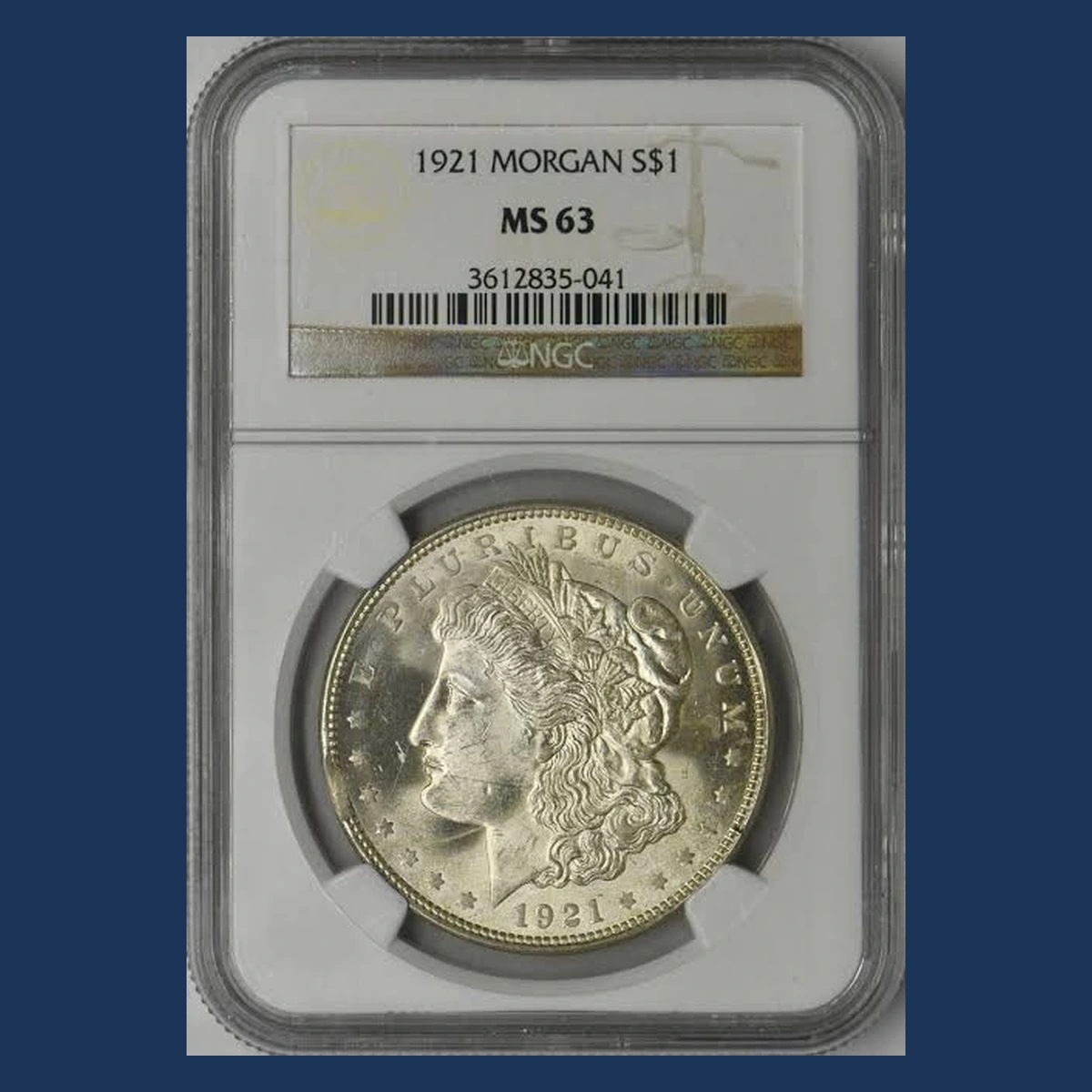
An incomplete blank can leave a gap in the outline after the coin receives its design. A curved gap may result when the blank cutter overlaps an earlier hole in the metal strip.
Philadelphia and San Francisco examples appear in auction catalogs. One Philadelphia dollar has a shallow clip near one o’clock together with a separate edge-forming problem.
Other reported clips occur on different coins and need their own photographs. A dent, filed edge, or saw cut made after minting can resemble a missing piece in a small face-only picture.
Estimated Value
A curved-clip 1921 dollar graded NGC AU58 sold for $84 in March 2024 at Heritage. That grade describes a coin with only slight wear.
Estimate $80–$700 for authenticated small to more noticeable clips in ordinary conditions. Larger gaps usually offer stronger visual interest when the remaining dollar retains clear details.
A clip combined with a partial collar is priced as one coin. Its extra edge feature does not justify adding two separate full-dollar estimates.
How to Identify
For a loose coin, use a scale as an initial check against the normal 26.73 grams. Both an original clip and later metal removal can lower the weight, so the result needs visual support.
Photograph the exposed boundary edge-on. Saw grooves, filing marks, or fresh sharp surfaces can reveal damage hidden in a front view.
Next follow the rim into both ends of the gap and inspect the design nearby. A blank clipped before striking can show interrupted metal flow, sometimes with weakness on the opposite rim.
On the one-o’clock Philadelphia example, also inspect the edge step separately. The step and the missing piece represent two features of the same dollar.
3. 1921 Morgan Dollar One-Sided Design Shift
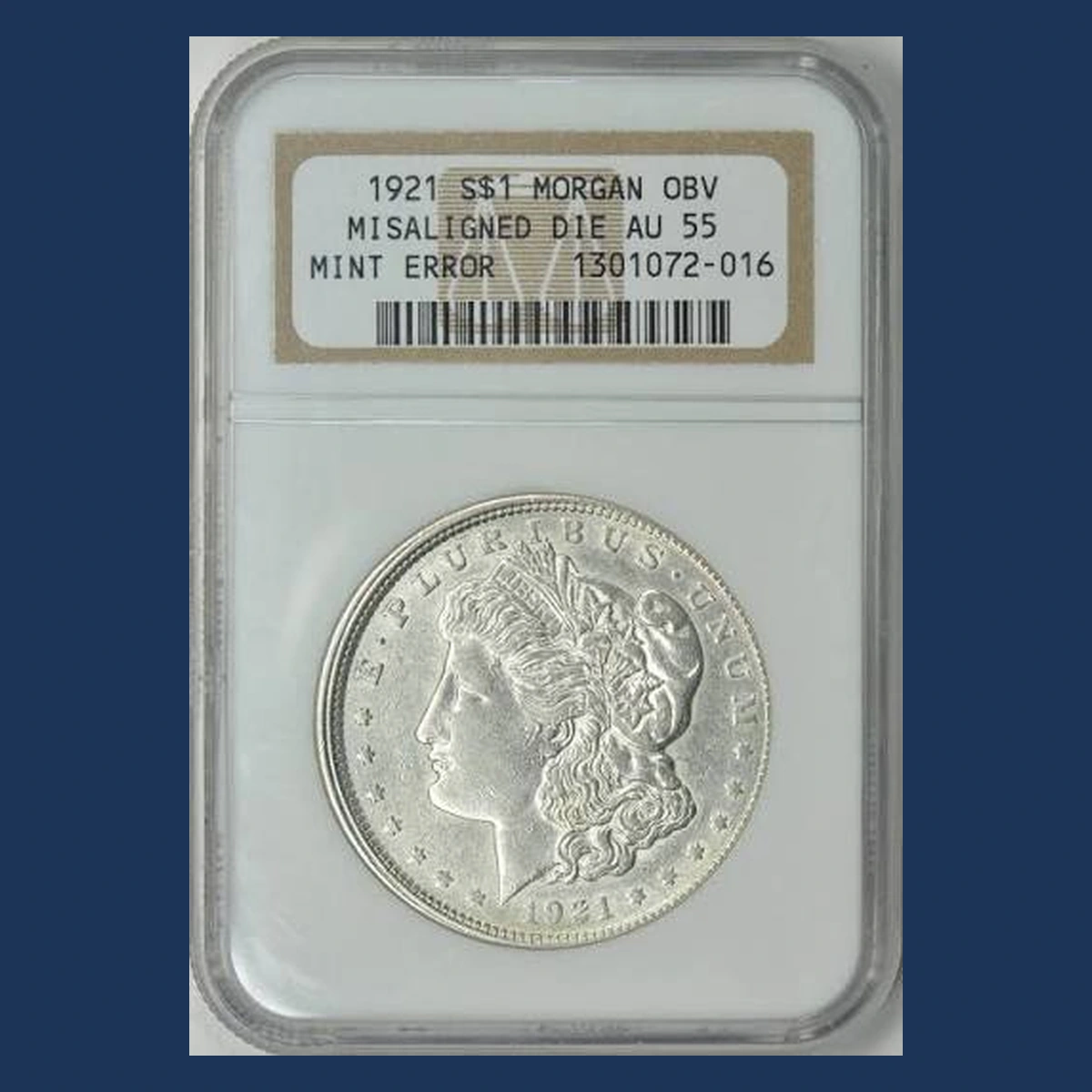
A stamping tool can sit out of alignment while the opposite tool remains centered. This produces a shifted design on one face without the matching shift expected from an off-center blank.
CoinHub illustrates a 1921-S example in an NGC XF40 holder. XF40 means a circulated coin with considerable detail still visible.
The front design is displaced, while the back stays normally centered. A narrow rim on one side is only the first clue.
The complete pair of faces distinguishes this mistake from an uneven photograph, a damaged edge, or a coin struck off center.
Estimated Value
For an authenticated 1921-S one-sided shift, estimate $100–$1,000 across worn and moderately marked unworn conditions. The clearer the contrast between the two faces, the easier the mistake is to recognize.
A very slight rim imbalance may bring little extra value. Strong displacement with a readable date and original surfaces can attract more interest.
This estimate is separate from prices for dollars struck off center on both faces. The illustrated XF40 grade describes wear, not the amount of tool movement.
How to Identify
Put photographs of both faces beside each other at the same size. Center the coin’s outline in each picture rather than centering the portrait or eagle.
Compare the distance from the design to the rim all around each face. The reported San Francisco dollar has a displaced front but a centered back.
If both designs shift with a common blank crescent, investigate an off-center strike instead. If only one photograph looks tilted, repeat it with the camera directly above the coin.
Inspect the narrow rim for impact marks that might have squeezed its shape after minting. Keep the S mint mark visible in the back photograph, because this illustrated example does not establish the same pattern for Philadelphia.
4. 1921 Morgan Dollar Denticle Clash Marks
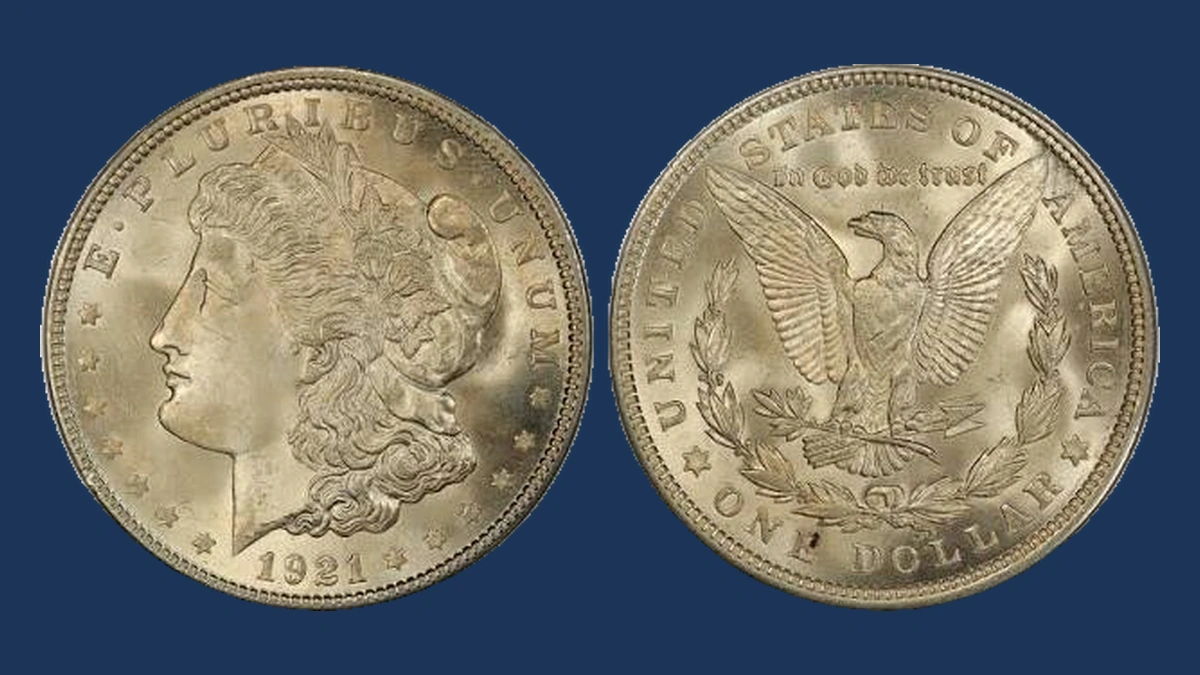
Small tooth-like marks beneath the eagle can resemble an extra piece of border in the wrong place. The cataloged Philadelphia variety is called a denticle clash; denticles are the small teeth around the inner rim.
Its raised impressions appear below the eagle rather than around the normal border. The name describes marks associated with contact involving the stamping tools, also called dies.
The same variety can have repeated outlines on the front’s right-hand stars. Those stars are a companion feature, not a second set of border teeth.
Cuts and random bumps need a different explanation.
Estimated Value
For a correctly matched denticle-clash dollar, estimate $80–$1,200, with condition accounting for much of the spread. Worn examples and marked unworn coins generally sit below unusually clean, sharply detailed pieces.
The repeated tooth shapes should be recognizable in a photograph. A few unexplained bumps under the eagle do not warrant the same comparison.
When the front also shows repeated star outlines, consider the complete variety together. Both features belong to one dollar and do not create two independent sale prices.
How to Identify
Start beneath the eagle’s tail, away from the normal border teeth. Compare the extra shapes with a clear photograph of the cataloged Philadelphia denticle-clash variety.
Use light from opposite sides to see whether the small shapes rise above the surface. Random dents and cuts will interrupt the coin differently from repeated raised impressions.
Now turn to the stars on the right of Liberty. The paired variety may show several closely spaced outlines there, which can strengthen a full-coin match.
Do not identify the dollar from the stars alone. Photograph the complete back and its enlarged tooth-like marks together so their spacing, position, and relationship to the eagle remain clear.
5. 1921 Morgan Dollar Cracked Blank
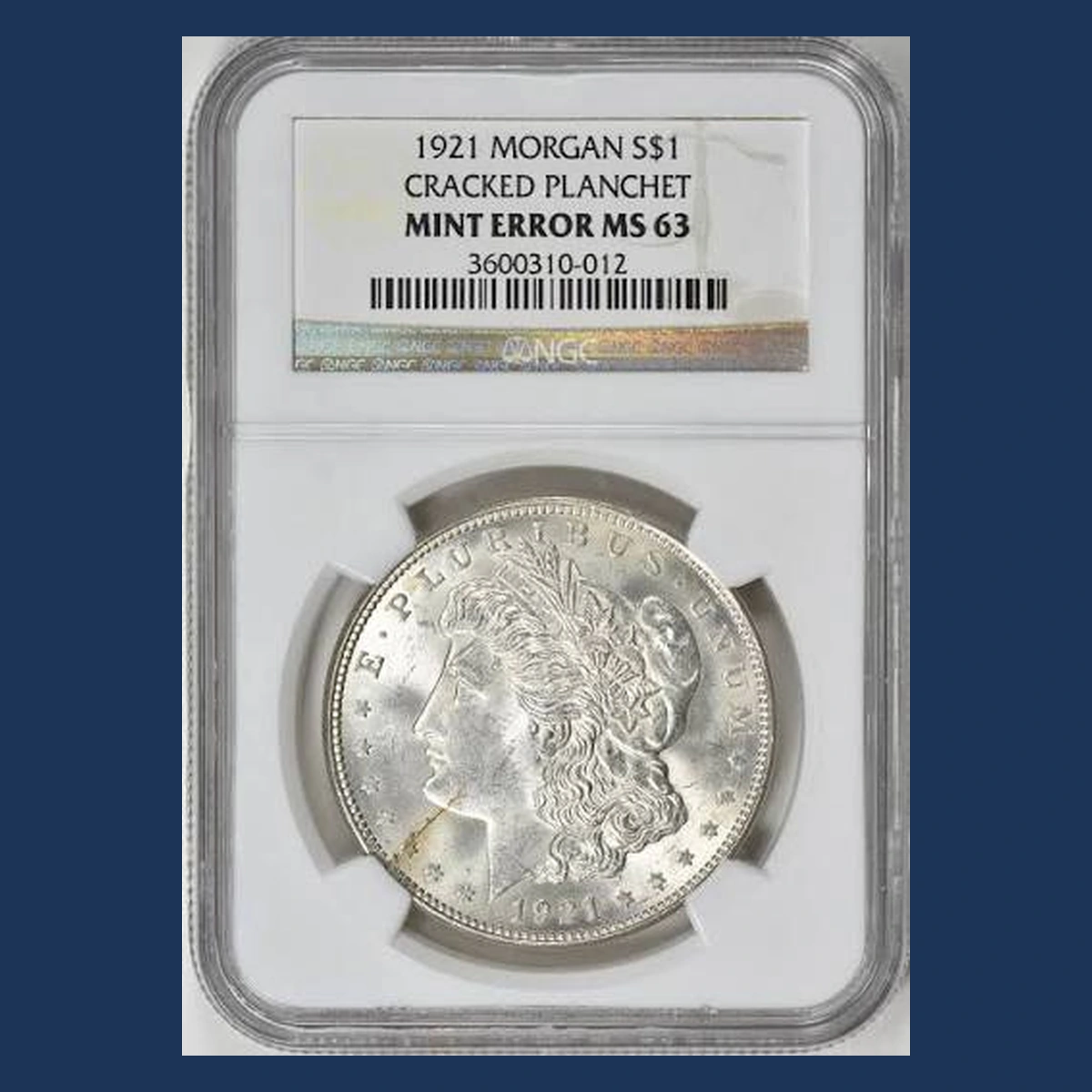
A crack in the dollar itself is different from a raised line made by a cracked stamping tool. The metal blank has opened along a weakness instead of receiving an extra ridge.
Error-Ref illustrates a 1921-S cracked blank, and an auction catalog records a Philadelphia example. A CONECA report describes a Denver dollar with a front crack and a ten-percent off-center strike.
The Denver coin combines two mistakes. Its shifted design does not explain away the physical split.
The crack’s boundary and nearby metal help an examiner distinguish a minting failure from later cutting or bending.
Estimated Value
For a confirmed cracked blank without another major error, estimate $150–$1,500. An obvious original split with a readable design can be more appealing than a short, difficult-to-see crack.
The Denver coin reported with a ten-percent off-center strike needs comparison with other compound errors. Its total can exceed the simple cracked-blank range.
Avoid treating every open line as valuable: a saw cut or later bend is damage. Stability, original surfaces, and the amount of design surviving affect collector interest.
How to Identify
Protect the split before handling the dollar further. Do not bend the coin or push a blade into the opening to find out how deep it goes.
Examine where the crack reaches the rim and whether it continues through the thickness. Side photographs can show that relationship more clearly than an enlarged front picture alone.
A raised line with intact metal underneath points toward a damaged stamping tool instead. Parallel grooves inside an opening may indicate a later cut.
Compare any displaced design separately from the split.
For the reported Denver compound example, preserve both faces in the photographs. An examiner needs the ten-percent shift and the crack boundary to judge their relationship during striking.
6. 1921 Morgan Dollar Partial or Tilted Collar
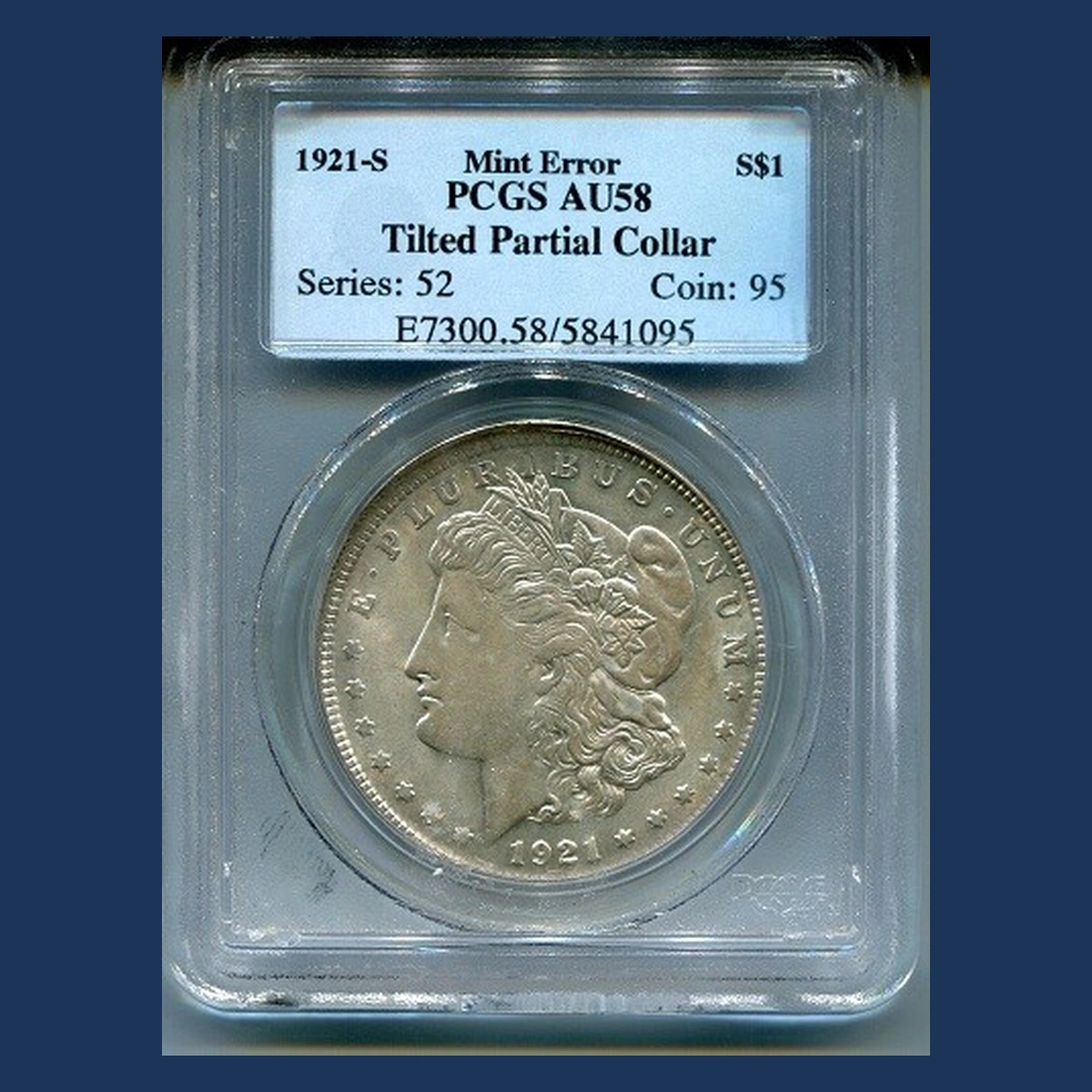
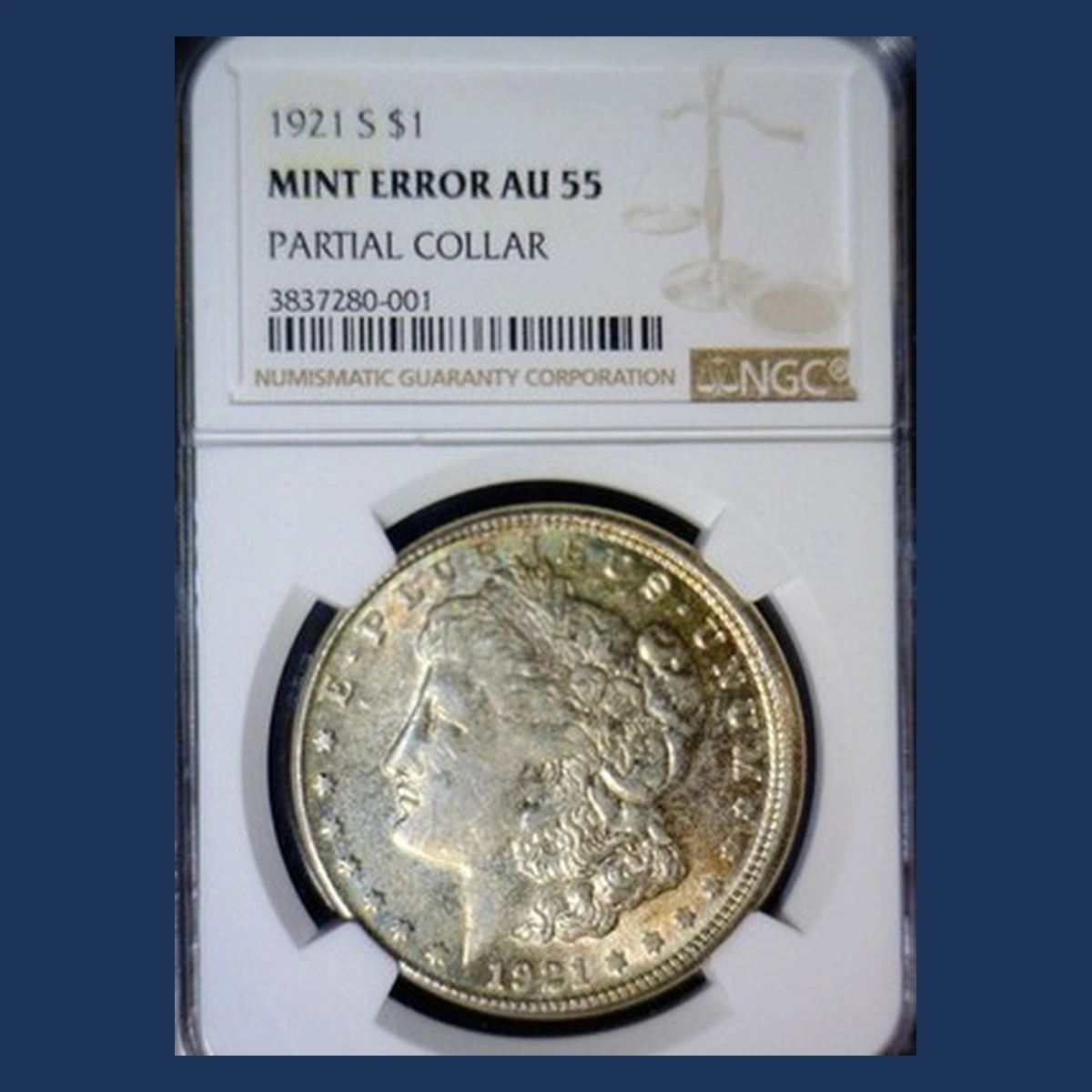
The collar is the metal ring that contains the blank and forms its edge grooves during striking. When only part of the blank sits properly inside it, the edge can develop a step.
A tilted fit can make that step change around the coin. A cataloged San Francisco XF45 example has a narrow front rim near seven o’clock and a wider one near one o’clock.
A Philadelphia partial-collar dollar also has a shallow clip. A separate Denver auction report describes an uncertified example.
Rim width alone is not enough to identify the collar problem.
Estimated Value
Estimate $125–$1,500 for authenticated partial-collar dollars across worn and ordinary unworn conditions. A distinct edge step is usually more useful to collectors than a barely uneven rim.
The local auction’s uncertified Denver example recorded a $125 winning bid, before any applicable fees. That result is not a certified-grade price benchmark.
Coins with a clip or another visible striking error need a whole-coin comparison. Preserve the distinction between their separate features without adding complete prices together.
How to Identify
A front photograph cannot establish a partial collar by itself. Ask for an edge view showing the change between the grooved section and metal that expanded beyond the ring.
Turn a loose coin slowly under a light and follow that boundary. A tilted collar can produce a changing step rather than an identical ledge all the way around.
On the reported San Francisco example, compare the narrow rim at seven o’clock with the wider rim at one o’clock. Those clock positions belong to that coin, not every partial-collar dollar.
Keep a certified coin in its holder. If the plastic hides the edge, use existing certification photographs or have an examiner assess the accessible evidence.
7. 1921 Morgan Dollar Doubled Designs
More than one raised outline can be built into the tool that stamps a coin. Every dollar made from that tool can then repeat the same small design differences.
One Philadelphia variety has four outlines on the right-hand stars. Other Philadelphia descriptions include repeated back detail such as the N in IN.
General year listings also report doubling for Denver and San Francisco, but do not provide one shared pattern. Their exact locations must be matched separately.
A second strike to the entire coin creates a different kind of doubling, often involving borders and edge details as well.
Estimated Value
Identified doubled-design varieties are estimated at $80–$2,000 from worn to attractive unworn coins. The value depends on the pattern, mint, and condition rather than the word doubled alone.
Fine repetition visible only under strong enlargement may add little. A clear repeated star or letter pattern can attract stronger specialist interest.
Do not transfer a premium from a Philadelphia variety to an unverified Denver or San Francisco lookalike. A second blow to the whole coin also needs its own price comparison.
How to Identify
Choose a comparison by mint before enlarging a letter. Philadelphia has no mint letter, while D and S identify Denver and San Francisco.
For the Philadelphia right-star variety, trace several star points with a 10× magnifier. Repeated raised outlines should follow the shapes rather than appear as unrelated chips.
Back doubling needs its own close-up, including the N in IN where appropriate. A report of doubling in another mint does not establish that same letter as its identifying mark.
Check whether the extra edge looks rounded and copied or like a low flat shelf. Then inspect the broader design and border: a whole-coin second strike should not be diagnosed from one tiny doubled letter alone.
8. 1921 Morgan Dollar Wide Edge Grooves
The edge deserves a look even when both faces seem ordinary. Some Philadelphia dollars were made with a collar containing fewer grooves.
This wide-reeding variety has 157 edge grooves rather than the commonly cited 189. Reeding is simply the series of grooves around the edge.
The wider spacing runs around the circumference rather than appearing as one missing section. It is a collar variety, not proof that the dollar escaped the ring during striking.
A worn, filed, or damaged edge can also look less finely grooved. Its appearance must be separated from a consistently different original groove pattern.
Estimated Value
A wide-reeding NGC MS63 dollar sold for $240 in December 2023 at Heritage, as recorded by PCGS. That is an unworn coin with noticeable marks.
Estimate $80–$4,000 across identified examples and stronger condition or variety combinations. Most ordinary examples belong much nearer the lower end.
PCGS also lists a $3,499 June 2022 eBay result for a Genuine-labeled coin. That listing is marketplace price context, not evidence that every wide-edge dollar approaches that amount.
How to Identify
The grooves must be counted around the entire edge, not estimated from a small segment. Photograph a loose coin’s edge in overlapping sections without marking the metal.
Choose a visible starting feature in the photographs, then count once around the circle. Overlapping pictures help prevent skipping or counting the same section twice.
Compare the spacing at equal magnification with an ordinary 1921 Philadelphia dollar. The wide-edge variety has 157 grooves against the usual 189, with the difference distributed around the edge.
A filed patch or a missing run of grooves does not produce that complete pattern. Leave a holder intact if it blocks the view and ask for reliable edge photographs or a professional variety examination.
9. 1921 Morgan Dollar Design Blocked by Grease or Other Material
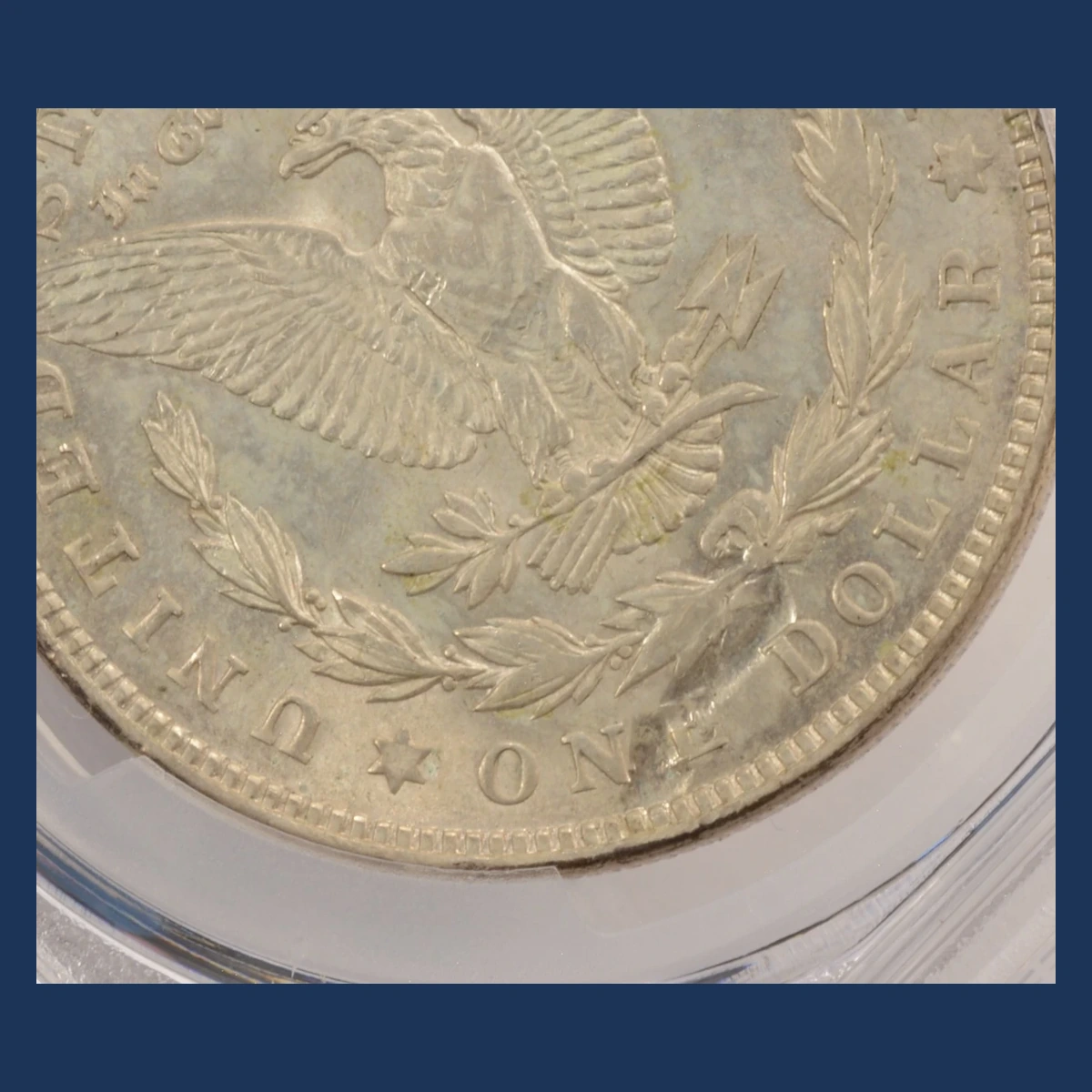
An obstruction can prevent a stamping tool from transferring part of its design. Grease may fill a letter-shaped recess, while larger debris can leave a depression.
Philadelphia reports include a weak front and a separate broad impression across the upper back. The back object’s material is not identified.
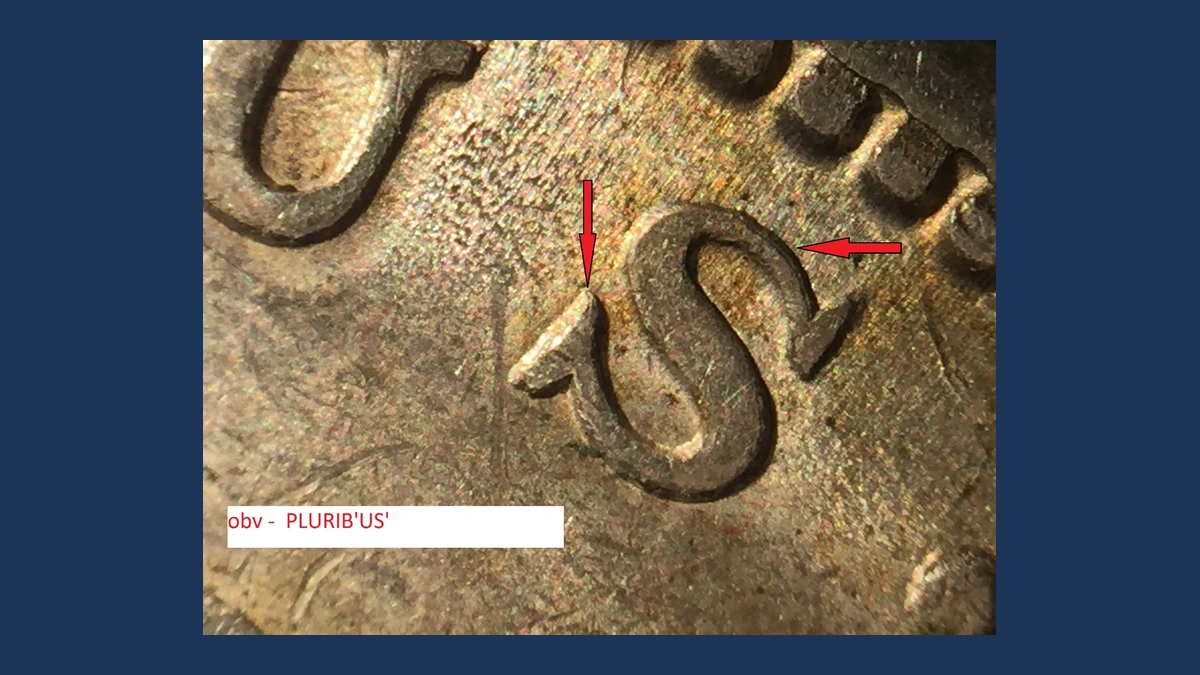
A special San Francisco variety has an almost invisible S because grease blocked that part of the tool. NGC identifies it with the faint letter and a raised front line between B and U in PLURIBUS.
An ordinary Philadelphia dollar naturally has no mint letter and is not this error.
Estimated Value
Ordinary grease or debris effects are estimated at $63–$700. Heritage recorded $63 for an AU55 back obstruction and $84 for an AU58 grease example in March 2024.
For the correctly matched nearly missing-S variety, use a separate estimate of $1,000–$5,000. NGC’s account described its discovered example as worth upwards of $1,000, not as an auction sale.
The matched front line and remaining S shape matter far more than a seller simply calling a dollar unmarked.
How to Identify
A dollar with no obvious mint letter should first be compared with a normal Philadelphia coin. Absence alone proves nothing unusual.
For the San Francisco variety, examine the mint-mark position under a 10× magnifier for a faint S outline. Then look between B and U in PLURIBUS for the raised companion line shown in NGC’s illustrated explanation.
For broad weak areas, compare the affected face with its sharper opposite face and with nearby details. General wear smooths exposed high points rather than copying a particular obstruction’s boundary.
A deep back impression requires inspection for scraped metal and later impact damage. Do not label it cloth or another material without a recognizable texture.
10. 1921 Morgan Dollar Broadstrike Outside the Collar
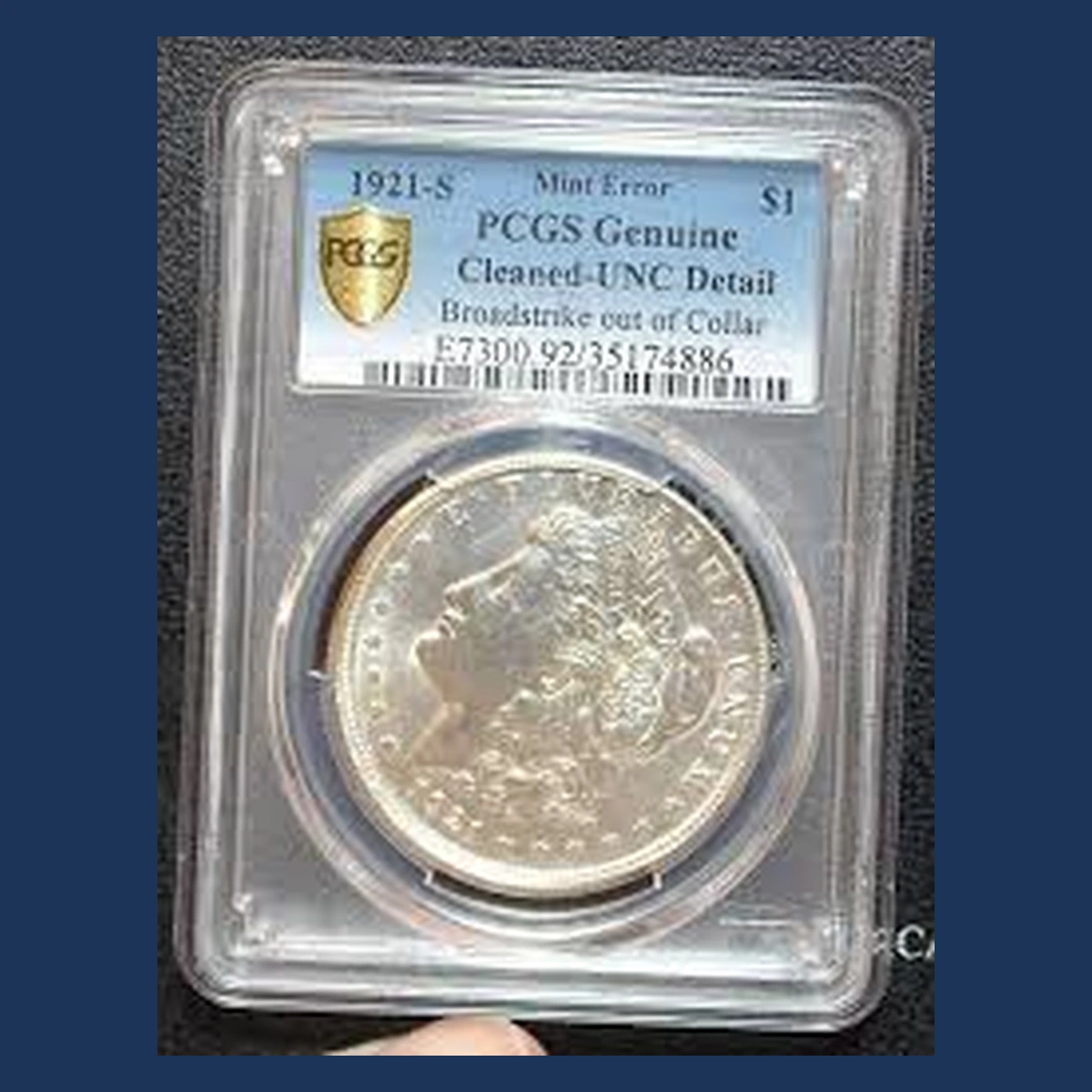
Without the collar ring holding its edge, a blank can spread outward as the tools strike it. The resulting broadstrike can retain the complete design inside an enlarged border.
A Philadelphia PCGS MS64+ example has an expanded rim from nine to two o’clock and no edge grooves. San Francisco and Denver examples are also reported.
An off-center broadstrike may have an uneven border while retaining the whole design. That differs from a true off-center strike that leaves part of the design outside the blank.
A smooth edge alone does not establish this error.
Estimated Value
The Philadelphia MS64+ example sold for $1,020 in July 2021 at Heritage. Its grade describes an unworn coin with better appearance than a typical MS64.
Estimate $600–$6,000 across authenticated broadstrikes, allowing for differences in mint, expansion, and preservation. A bold complete design inside a clearly enlarged border can be especially attractive.
A filed-down edge does not deserve a broadstrike premium. The metal must show how it spread during the strike rather than being removed afterward.
How to Identify
Measure a loose dollar across several directions with non-scratching calipers. The normal diameter is 38.1 millimeters; spreading can enlarge the outline unevenly.
Now inspect the edge and the outer border together. A broadstrike should show expansion consistent with missing collar support, not only a smooth strip where grooves were filed away.
Follow the complete design around both faces.
If the design remains present within the expanded border, an uneven outline can still be a broadstrike. If a blank crescent accompanies missing design on both faces, compare an off-center strike instead.
For the Philadelphia cataloged example, examine the enlarged arc from nine to two o’clock. Do not apply that orientation to a different mint’s coin.
11. 1921 Morgan Dollar Off-Center Strike
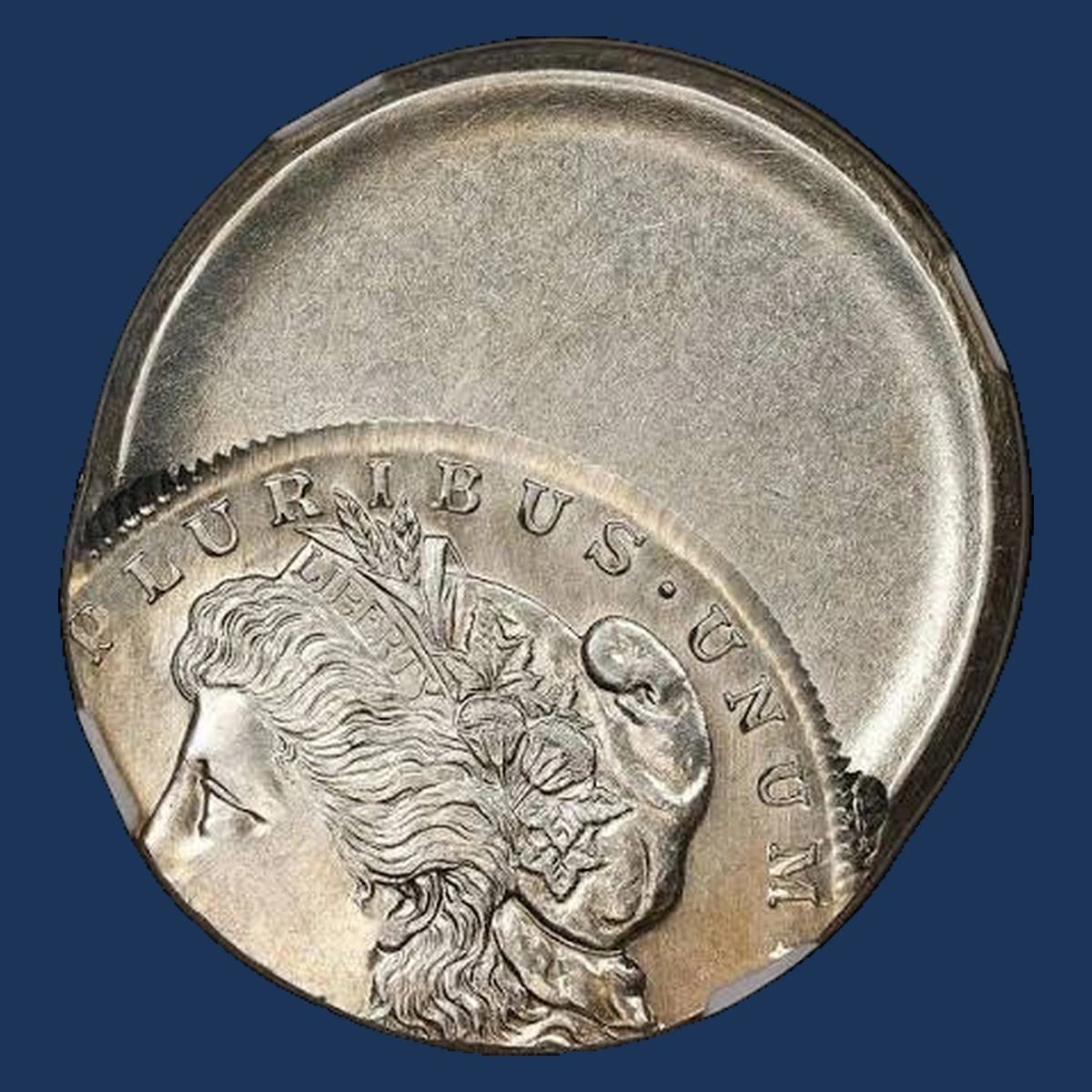
A blank that sits partly outside the striking position can receive only part of the design. The remaining surface forms an unstruck crescent.
The Smithsonian holds a Denver example, while a Stack’s Bowers catalog describes a San Francisco dollar struck twenty percent off center. Its date lies outside the blank, so the catalog gives the year in parentheses.
That San Francisco date is identified from the design rather than read on the coin. Philadelphia examples are also reported.
An uneven border with the complete design still present may instead be a broadstrike or a one-sided tool shift.
Estimated Value
A Denver dollar struck five percent off center, graded PCGS AU55, sold for $2,760 in March 2024 at Heritage. Its date and much of its design remained clear.
Estimate $1,000–$16,000 across authenticated off-center examples, depending on mint, displacement, condition, and visible details. A larger blank crescent can increase visual appeal, but the percentage is not a price formula.
An attributed date hidden beyond the edge needs a different comparison from an equally dramatic coin with a readable date.
How to Identify
Locate the blank crescent and the design that disappears on the opposite side. Photograph the same coin’s other face to check whether it shows the matching displacement.
A narrow rim on only one face is not enough. The amount of design lost and the unstruck area should fit one misplaced blank.
Read the mint mark separately from the date. For the cataloged San Francisco twenty-percent example, do not claim that 1921 is visible: the catalog assigns that year from its design.
A cut-down dollar can lose design too, so inspect its boundary for cutting marks and compare its weight when loose. Normal weight is 26.73 grams; striking off center does not itself remove a piece of the blank.
12. 1921 Morgan Dollar Double Strike Inside the Collar
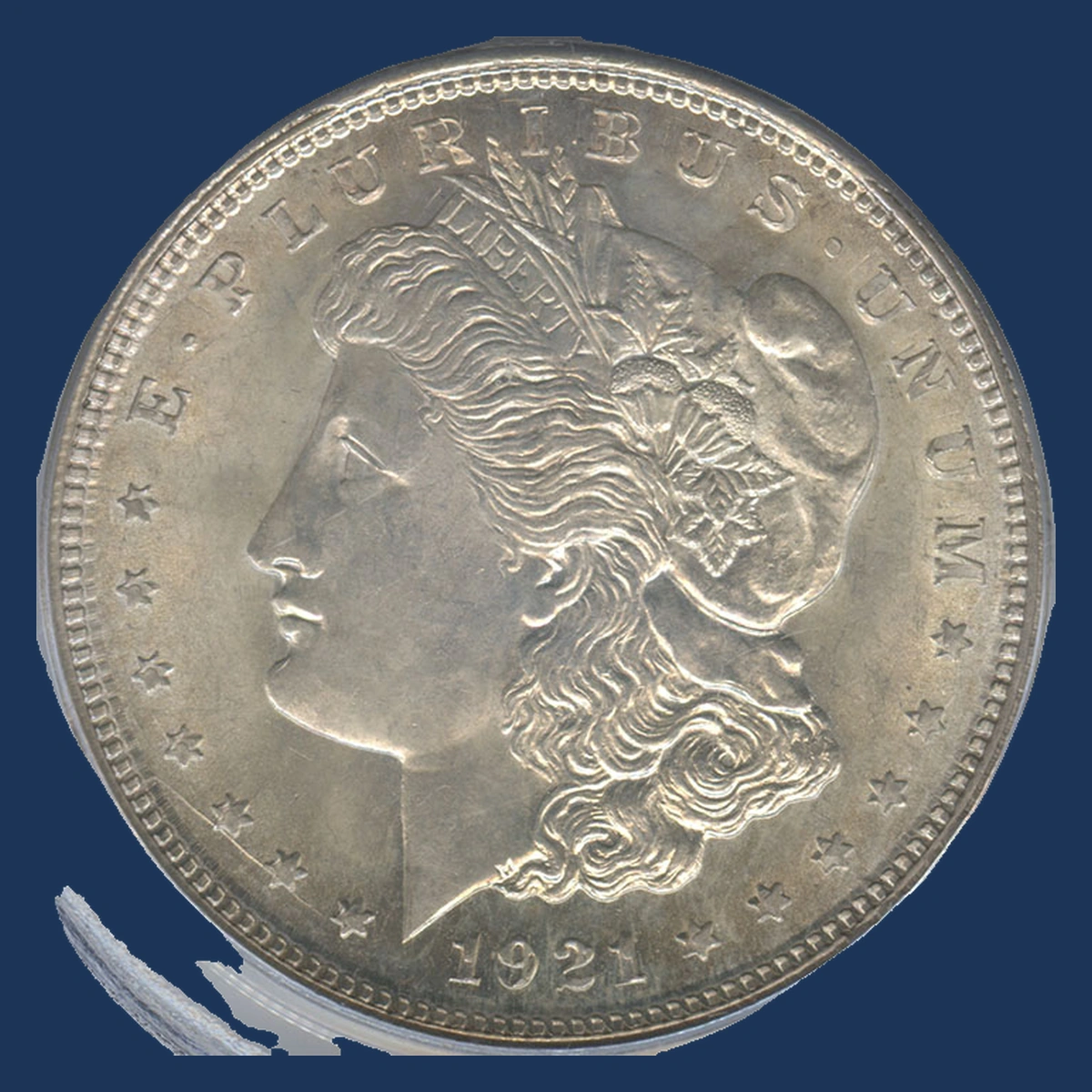
A dollar can remain in the press and receive another blow before it leaves. If it turns slightly between blows, the second design lands at a different angle.
Heritage described a Philadelphia ANACS MS64 example that rotated several degrees counterclockwise between strikes. Its account also records two sets of edge grooves, supported by a photograph supplied with the coin.
The collar still contained the dollar, so a dramatic blank crescent was not required. Another dealer example is graded PCGS AU58.
This whole-coin event differs from small copied details already built into one stamping tool.
Estimated Value
The ANACS MS64 dollar brought $8,050 in July 2002 at Heritage’s auction. MS64 describes an unworn coin with some marks.
For authenticated in-collar double strikes, estimate $5,000–$20,000, depending on separation, condition, and the clarity of the complete event. The older sale is an actual example rather than a guarantee of today’s price.
Strong evidence across the design and edge matters more than a single doubled letter. Cleaning or heavy surface damage can weaken appeal.
How to Identify
Look for a small rotation shared by many parts of the design. The first and second impressions should form a consistent relationship across the portrait, lettering, and border.
Trace a few widely separated details rather than concentrating on one letter. A stamping-tool variety can repeat a small design feature without showing another strike across the whole coin.
The Heritage example also has two sets of edge grooves documented by a separate photograph. Its holder hid that feature from a normal viewing angle.
Do not open a holder just to check it.
Ask for the original edge image and compare it with the visible face separation. This ties the hidden evidence to the actual dollar rather than assuming every doubled-looking coin has a second groove pattern.
Conclusion
Estimated values for these 1921 Morgan dollar features span $63–$20,000. Small grease effects occupy a very different market from the double strike that sold for $8,050.
Inspect the part that explains the event: a split needs an edge view, a shifted design needs both faces, and wide grooves need a complete count.
Keep Philadelphia, Denver, and San Francisco examples distinct, especially when a nearly missing S could be mistaken for an ordinary unmarked dollar.