1883 Morgan Dollar Error List with Pictures

What looks like a wider border can tell two very different stories. An 1883-O with part of its design missing brought $2,520 in May 2024, according to Coin World’s Heritage auction report.
This 1883 Morgan Dollar error list also covers extra letter traces, repeated stars, and a tilted eagle. Estimated whole-coin values range from $60–$6,500.
The comparisons below explain which small details separate these errors and varieties.
1. 1883 Morgan Dollar Faint Letters Transferred to the Wrong Face (1883-O)
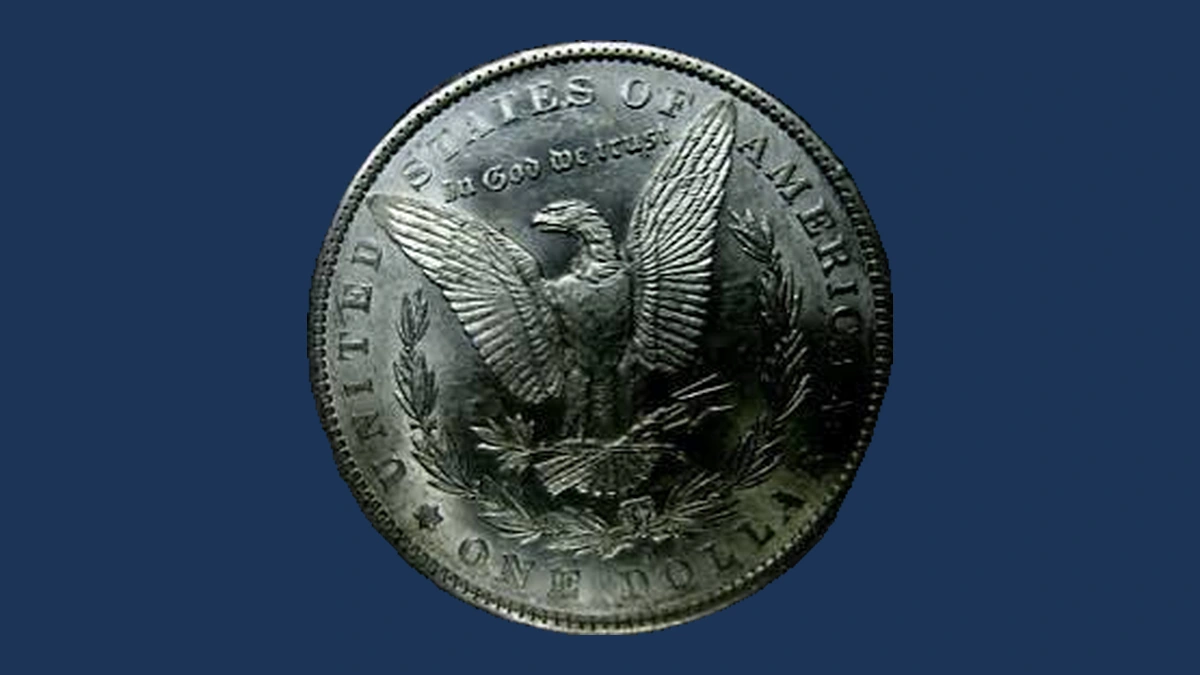
A faint part of an E can appear on the eagle side where that letter does not belong. The front and back dies, the steel stamping tools, collided without a blank between them.
The tools picked up traces of each other’s designs. Those traces could then appear on later dollars struck from them.
New Orleans varieties VAM-22A and VAM-36A show separate E-transfer patterns. VAM-22A also has reported D and O traces on the front.
VAM numbers name particular tool patterns. They help distinguish a recognizable transferred letter from an unrelated line or scratch.
Estimated Value
For matching 1883-O letter-transfer varieties, estimate $60–$500 across worn through modest unworn examples. A clear fragment with recognizable corners is easier to collect than a vague line among scratches.
The stronger pattern does not automatically belong to the higher grade. Compare surface wear and marks separately from the transferred letter, and use the correct variety photographs when deciding whether an apparent E deserves an added premium.
How to Identify
Choose photographs labeled VAM-22A or VAM-36A before trying to interpret an isolated line. The E traces come from different tools, so the same close-up cannot identify both patterns.
Use a magnifier to compare the whole letter fragment and the nearby eagle-side design. Look for connected strokes that retain the shape of an E, rather than a single short bar.
For VAM-22A, also compare the reported front-side D and O traces. Matching more than one feature is helpful when one transfer is faint.
Alter the light angle to expose scratches crossing the area. The useful clue is the same letter shape in the same surroundings as the identified variety.
2. 1883 Morgan Dollar Rippled Back from a Distorted Tool (1883-O)
The background around the eagle can look uneven or gently rippled instead of flat. On the variety called VAM-1C1, the pattern is linked to a problem with the back stamping tool.
The catalog calls it improper annealing, meaning faulty heat treatment of that tool. A tool left too soft can change shape as it works.
The coin copies that uneven surface during striking. This explanation concerns the tool rather than a dollar that was heated after leaving the Mint.
Color alone is not the feature; the important change is the shape of the silver surface.
Estimated Value
Use an estimated $75–$600 for recognizable VAM-1C1 dollars from circulated condition through attractive lower unworn grades. Broad, visible ripples that match the variety offer more interest than a surface that merely looks dull.
A bent or heat-damaged dollar needs a different assessment. Original silver surfaces and a readable eagle help the collector judge the pattern, while heavy cleaning can hide its shape beneath distracting lines and reflections.
How to Identify
View the coin edge-on before studying its reflections: a bent disc can make an ordinary surface look wavy. Do not press the dollar flat or try to straighten it.
With the back under low-angle light, slowly move the lamp and watch the broad surface waves. Compare their location and shape with a clear VAM-1C1 photograph rather than treating every uneven patch as the cataloged pattern.
Use magnification to examine the nearby design for crushing, scraping, or heat damage. Ripples matching those on other coins from the same stamping tool, while the dollar retains its normal overall shape, support the identification.
3. 1883 Morgan Dollar An Extra O inside the Mintmark (1883-O)
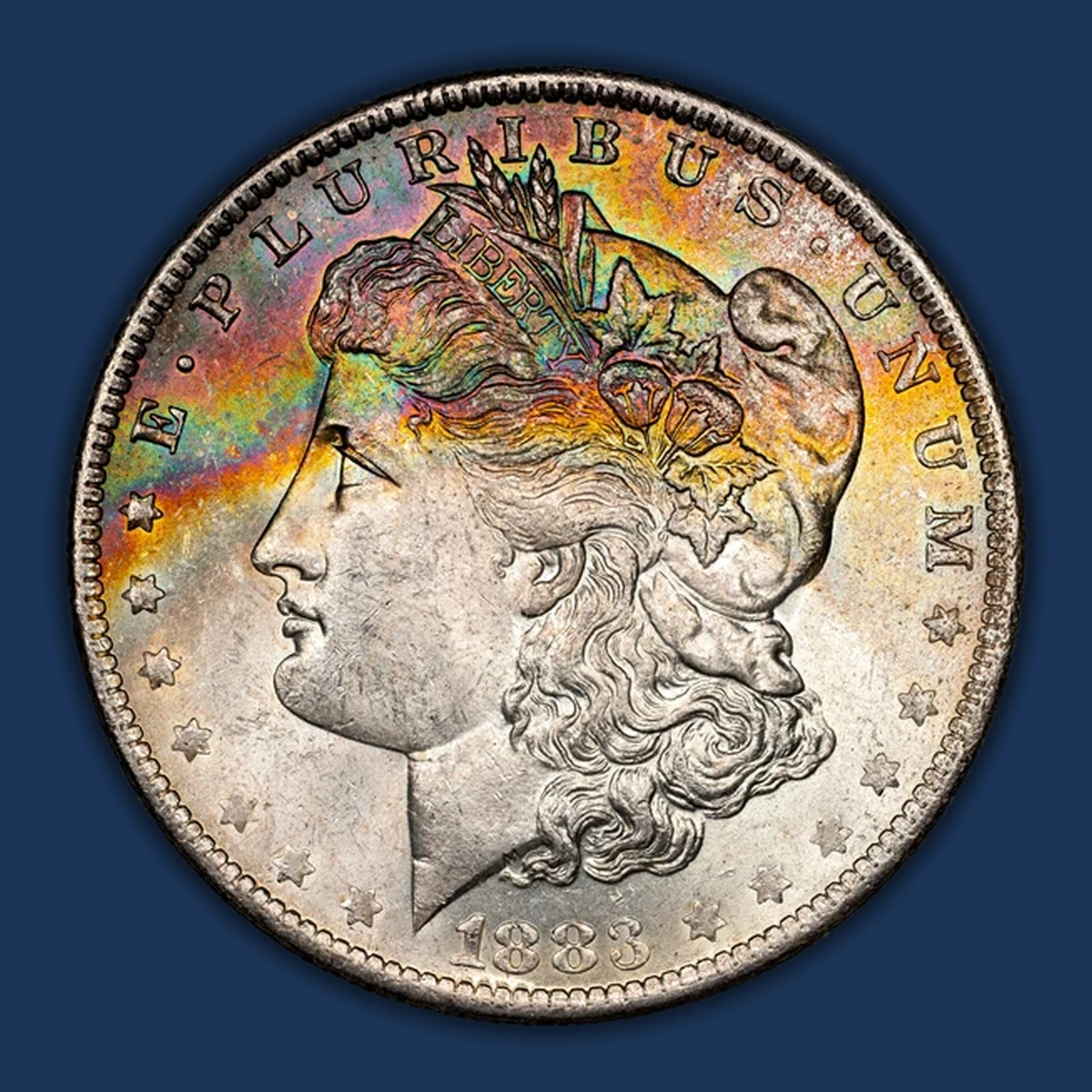
Look inside the O below the back wreath: an extra curved line can survive beside the main mintmark. Another trace lies below the letter on the VAM-4 variety.
The O was punched into the stamping tool more than once, with a small change in position. Parts of the earlier impression remained and were copied onto the dollar.
This is an O/O repunched mintmark. The same variety also has repeated details on the 1, first 8, and 3 of the date.
Those date marks help identify the coin carrying the extra O.
Estimated Value
An estimated $75–$750 covers worn through modest unworn 1883-O VAM-4 examples. A distinct inner curve and lower remnant give a buyer more to examine than a simply thick mintmark.
The date and O features belong to the same dollar, so their estimated premiums should not be added separately. Better preservation can increase the total value, while a weak or damaged mintmark makes an otherwise promising example less convincing.
How to Identify
Center a magnifier on the small O between the wreath bow and ONE DOLLAR. Focus on the opening first: the older curved remnant should be separate from the final letter’s normal inner wall.
Then inspect the lower outside edge for the other reported trace. A dark ring made by toning will change appearance with the light, while the shape of raised silver remains.
Turn to the date and compare the repeated details on 1, the first 8, and 3 with a VAM-4 image. Both faces should support the same identification, rather than combining an O photograph from one variety with date marks from another.
4. 1883 Morgan Dollar Eagle Turned Relative to Liberty (1883-O)
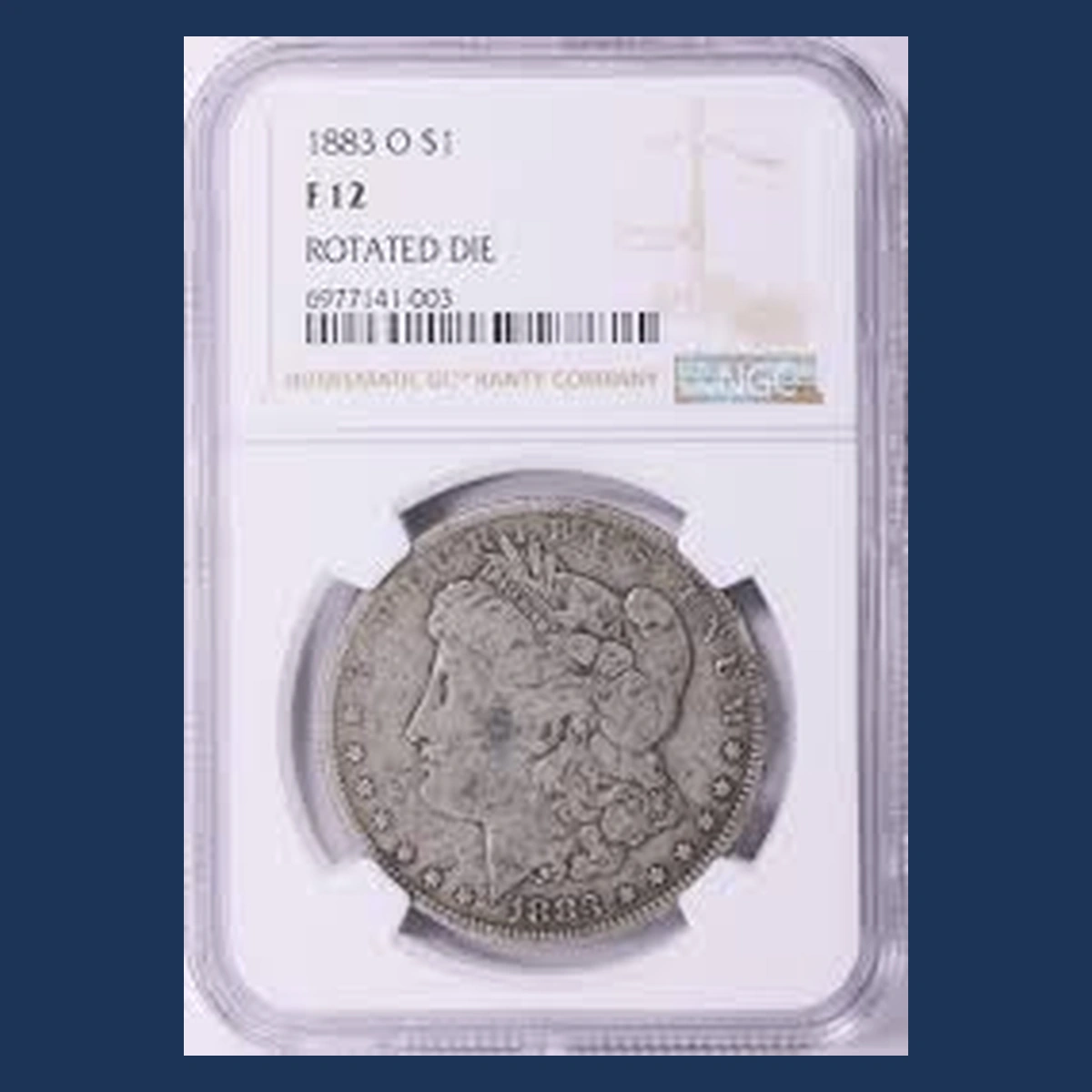
Liberty may stand upright while the eagle leans after a straight top-to-bottom flip. One stamping tool was turned away from its normal position relative to the other.
The 1883-O variety VAM-52 is reported with counterclockwise rotations reaching 77 degrees. Individual examples need measuring; the largest reported angle is not a setting shared by every coin.
The whole eagle side turns together, including its words and wreath. A small shift in one letter is a different kind of feature.
Loose photographs rotated independently can make an ordinary dollar appear to have this error.
Estimated Value
Estimate $100–$1,000 for identifiable 1883-O rotations, depending on angle, preservation, and how clearly the turn is displayed. A strong lean generally attracts more notice than a slight departure from upright.
As a different-date comparison, an 1886-O rotation graded VG8 brought $408 in September 2025 at Heritage. That heavily worn dollar does not establish the price of an unworn VAM-52 or prove that the two coins share an angle.
How to Identify
Put the dollar in a clear holder and align Liberty upright against a vertical line. Mark the holder’s top so you can keep track of its position.
Flip it from top to bottom without twisting sideways. A normally aligned Morgan dollar should now have an upright eagle.
If the eagle leans, repeat the movement before taking measurements.
Place a protractor or angle overlay over the photograph and measure from normal upright. For the reported VAM-52 pattern, note the counterclockwise direction as well as the number of degrees.
Keep both photographs tied to the same marked holder. The wreath and surrounding words should turn with the eagle, confirming a complete back-design rotation.
5. 1883 Morgan Dollar Partly Grooved Edge and Expanded Border (1883-O)
A narrow band of grooves survives near the back rim between one and three o’clock on this 1883-O. The opposite side spread outward because the collar did not restrain the entire blank.
The collar is the ring that controls diameter and forms the edge grooves. A blank only partly inside it can emerge with an uneven, stepped edge.
Heritage titled this MS62 coin a broadstrike but explained that partial collar was more accurate. MS62 describes an unworn coin with noticeable marks.
The border is especially wide near nine o’clock on each face.
Estimated Value
The NGC MS62 example sold for $411.25 on June 7, 2013 in Heritage’s auction. Its surviving edge grooves are an important part of the description.
For comparable 1883-O partial-collar dollars, estimate $200–$1,000. The extent of the edge step, clear original striking, and condition influence where a coin falls.
The broadstrike wording on the old listing should not erase the physical evidence that part of this blank entered the collar.
How to Identify
Ask for an edge view if the dollar is already in a grading holder. The narrow grooved band is more informative than a face photograph showing only a broad rim.
With the back upright, examine the reported one-to-three-o’clock section under magnification. Follow the grooves to the point where the silver begins to spread beyond their level.
Now compare the wide border near nine o’clock on both faces. The center can remain sharply struck even though the collar failed to hold the entire edge.
On a loose coin, calipers can compare its widths with the normal 38.1-millimeter diameter. The remaining struck grooves beside expanded silver are the key distinction from complete collar failure.
6. 1883 Morgan Dollar Repeated Date Strokes and Associated Tool Marks
Extra strokes beside the date can accompany other small marks from the same stamping tools. They should be compared as a complete pattern.
Carson City VAM-5 has repeated date and CC details, a dash below the second 8, and an associated mark at the eagle’s mouth.
San Francisco VAM-14 shows repeated 18-3 and a small raised chip left of the first 8, between its loops. Its S sits relatively high and left.
Another San Francisco pattern, VAM-4A, combines repeated 18-3 with a cataloged thread impression. It was formerly numbered VAM-16.
Estimated Value
Use estimated whole-coin ranges of $250–$1,500 for Carson City VAM-5 and $75–$2,500 for the San Francisco patterns. These cover circulated through modest unworn examples, not exceptional high-grade rarities.
Mint and preservation can matter more than a tiny extra date stroke. A raised chip or associated line helps identify its particular pattern, but does not create a separate price to add to the dollar’s total.
How to Identify
Read the mintmark before comparing the date. A CC dollar needs the Carson City pattern, while an S dollar belongs to a different group of tools.
For VAM-5, compare the second 8 and CC together, then use the reported eagle-mouth mark as supporting evidence. A random crack elsewhere does not identify this variety.
For VAM-14, use a magnifier to inspect the left side between the first 8’s two loops. Check its small raised chip alongside the repeated date details.
For VAM-4A, compare the date and thread-impression image bearing that number. Its earlier VAM-16 name is an alias, and the line’s actual position must match the photographed variety.
7. 1883 Morgan Dollar Repeated Stars and Date Details (Philadelphia)
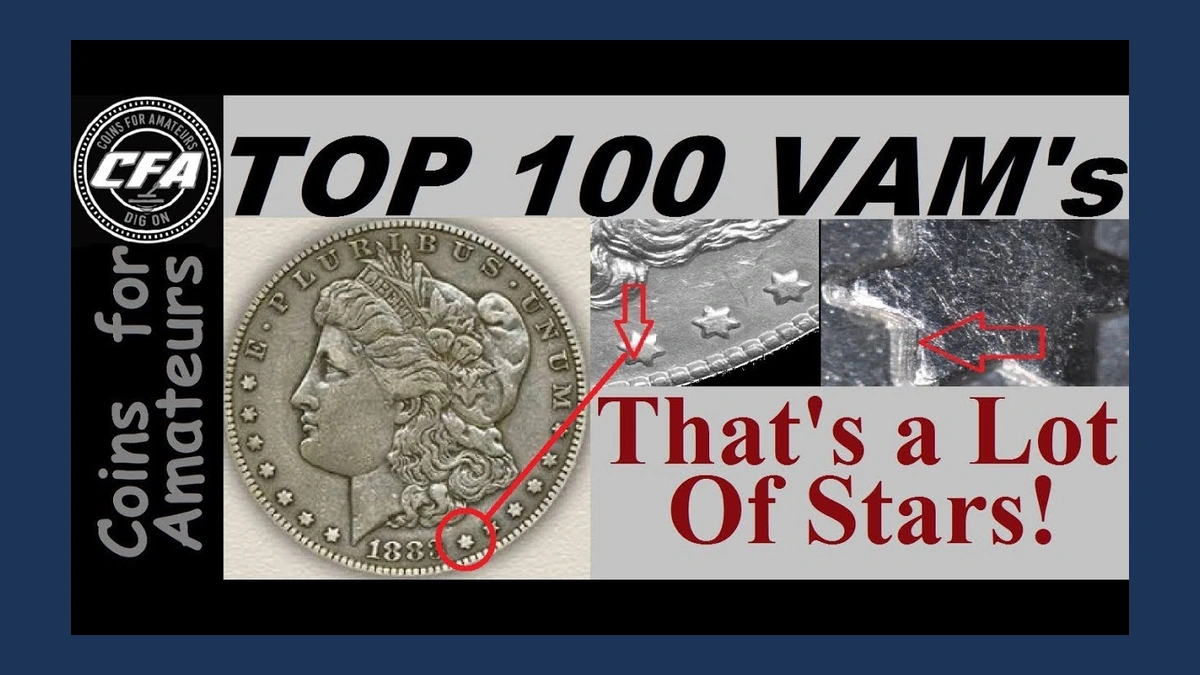
Some stars show several nested outlines instead of one clean set of points. The stamping tool carried a repeated design before it struck the dollar.
Philadelphia VAM-10 is known for as many as six outlines on the right-side stars. Its date also has extra traces, including a short dash below the second 8.
VAM-9 can look similar but shows stars and motto letters doubled outward toward the rim. Its 1 has extra traces at the base and top, with lighter repetition on the first 8.
The two patterns require separate comparisons.
Estimated Value
PCGS records a $2,500 VAM-10 sale in February 2023 on eBay, graded XF Details. That means wear plus a condition problem, not an unworn dollar.
For the two Philadelphia patterns, estimate $75–$3,000, with clear VAM-10 examples generally drawing stronger interest. PCGS also records an MS62 VAM-9 at $85 in June 2021.
These individual sales show why a similar-looking star should not be priced before its pattern is identified.
How to Identify
Use a ten-power magnifier and keep several adjacent stars in the same view. Multiple repeated points are easier to distinguish from reflected light when their shapes continue across more than one star.
On VAM-10, examine the right-side stars and then look for the short dash below the second 8. The number of visible outlines can depend on wear and lighting.
On VAM-9, compare the outward repetition in the stars and motto, followed by the extra strokes at the 1 and first 8.
A flat shaved-looking shelf beside a single star may come from movement during striking. Match the full star-and-date combination instead of counting every bright edge as another outline.
8. 1883 Morgan Dollar Full Design inside an Expanded Blank (1883-O)
This dollar keeps its entire picture despite the extra silver outside the normal border. The blank spread without the collar ring holding it to the usual width.
The 1883-O graded PCGS MS64 has most of its unstruck outer area above and left of Liberty. MS64 means an unworn coin with relatively few distracting marks.
Unlike an off-center error, this uncentered broadstrike has not lost part of the intended design. Some outer details stretch as the silver moves outward.
It is also separate from the MS62 partial-collar example that retains a narrow grooved edge band.
Estimated Value
Coin World reported $2,300 for the PCGS MS64 broadstrike at an October 2008 Heritage auction. That result belongs to the complete-design example with expansion mainly above and left of Liberty.
An estimated $600–$4,500 covers recognizable 1883-O broadstrikes across different conditions and degrees of expansion. A clear uneven border can make a strong display, while later dents, scraping, or heavy cleaning can reduce the appeal of the original striking error.
How to Identify
Trace the entire outer design on each face before measuring anything. The date, stars, and outer words should remain on the blank, even where the border is uneven.
For this MS64 comparison, look above and left of Liberty for the extra unstruck silver. Inspect the nearby border teeth and lettering for stretching caused by outward metal flow.
If loose, measure several widths gently with calipers and compare them with the normal 38.1 millimeters. Expansion alone is not enough: hammering can also widen a dollar while crushing its picture.
Turn to the edge and check for surviving collar-made grooves. Complete design, expanded silver, and an edge consistent with no collar restraint support the broadstrike identification.
9. 1883 Morgan Dollar Design Extending beyond the Blank (1883-O)
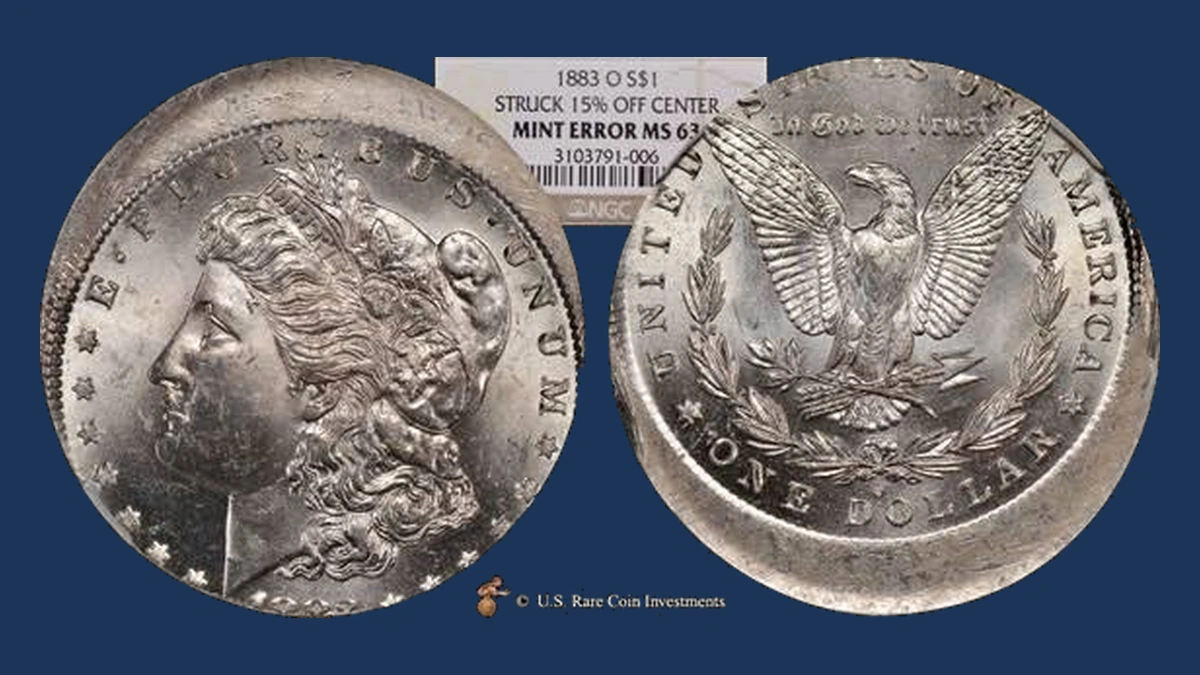
Part of the picture is absent because the blank did not sit fully beneath the tools. The side opposite the missing design has an unstruck area.
One New Orleans example graded NGC MS63 is described as 15% off center. That grade indicates an unworn dollar with visible marks.
Other circulated examples show smaller shifts. The exact amount needs checking on each coin rather than assuming every 1883-O matches the 15% example.
This missing-design feature separates off-center strikes from broadstrikes that retain their complete pictures. A crooked position inside a plastic holder is not the same thing.
Estimated Value
Coin World reported $2,520 for an 1883-O graded PCGS XF40 at Heritage in May 2024. XF40 describes a circulated dollar with substantial remaining detail.
Estimate $1,500–$6,500 for genuine 1883-O off-center dollars, with condition, displacement, and date visibility affecting the total. A listed opening bid for another coin is not a completed sale.
The NGC MS63 15% example needs its own comparison rather than inheriting the worn dollar’s price.
How to Identify
Locate the missing section of the design and the unstruck silver opposite it. Photograph the front and back with the same physical edge marked so you can compare their shifts.
Check whether both faces are displaced. If only one face is off-center while the other is normally positioned, a shifted stamping tool may be the better explanation.
A magnifier helps reveal grinding marks along a cut-down edge. On a loose dollar, weighing it against the normal 26.73-gram standard can support further checks, allowing for wear.
Keep the date and O mintmark visible in the photographs.
The decisive observation is original design running beyond the blank on both faces, paired with a genuine unstruck area.
Conclusion
Estimated values for the 1883 Morgan dollars covered here span $60–$6,500. The complete coin’s condition matters alongside the size and clarity of its unusual feature.
Check whether a wide dollar retains its complete design, then examine the edge. For smaller varieties, match the specific stars, date strokes, or mintmark curves.
Keep photographs labeled by mint and variety so a nearby-looking pattern does not become the wrong identification.