1898 Dollar Coin Error List with Pictures

An 1898-O dollar survived with its detached metal flake, and the two pieces brought $6,710 in January 2026. The flake is part of the story, not a second complete dollar.
The 1898 Morgan dollar error list below spans estimated values of $150–$20,000. A different-year double-strike comparison reached $8,050; that is a 1921 sale, not an 1898 result.
Follow the visible features to distinguish weak striking, damaged blanks, and repeated impressions.
1. 1898 Morgan Dollar Heavy Roller Marks in the Blank
Lines left in the blank can survive when the strike does not fully smooth them away. Heritage describes an 1898-S dollar struck on a heavily adjusted blank with extensive roller marks.
Its upper, lower, and left outer areas failed to form completely. The date remains readable, while the main back design is clear despite light wear.
The coin is graded NGC AU50, meaning it has some circulation wear but retains substantial detail. The rolling marks belong to the blank’s preparation.
They should not be confused with filing or abrasive cleaning performed on the finished dollar.
Estimated Value
The NGC AU50 San Francisco example sold for $172.50 in September 2002 at Heritage. That older result is a real sale, not a current asking price.
Estimate $150–$1,000 for authenticated examples with comparable to stronger visible effects and ordinary collector condition. The amount of original detail and surface quality both influence interest.
Marks that clearly pass through weakly formed areas are more useful than unexplained scratches. Later cleaning or filing can reduce value even when the underlying coin is genuine.
How to Identify
Look at the weak outer areas and the lines crossing them together. The reported San Francisco dollar has extensive roller marks where the design did not fully form.
Trace the marks toward clearer design instead of judging one isolated line. Marks already in the blank should fit the way the strike compressed the metal.
Then inspect for later abrasions that cut through finished details. Fresh grooves and disturbed surface beside them can indicate work done after minting.
Keep the S mint mark, readable date, and sharp back features in the photograph set. Their contrast with the weak border areas helps separate this particular blank-preparation problem from a dollar that is simply worn all over.
2. 1898 Morgan Dollar Rectangular Back Impression
A roughly rectangular patch interrupts the upper-left back of one Philadelphia dollar. It begins near IT in UNITED and crosses the motto, wreath, part of the eagle’s left-facing wing, eye, and beak.
Material between the blank and the stamping tool blocked those details. The result is called a struck-through error.
The consignor suggested a slender wood chip, but the material was not established by that description. The visible shape is the stronger identifying clue.
The coin is graded NGC AU58, which means slight circulation wear. An empty impression does not mean the original object is still present.
Estimated Value
The illustrated AU58 example sold for $228 in June 2023 at Heritage. Its broad, recognizable interruption makes it a useful comparison for this type.
Use an estimated $150–$1,500 for authenticated impressions of similar or greater visibility across ordinary worn and unworn conditions. Size, shape, remaining detail, and surface quality influence the price.
A seller’s wood-chip description does not add a separate premium without convincing evidence of the material. Later scraping that removes the same letters requires a damage assessment instead.
How to Identify
Follow the affected strip from IT in UNITED toward the eagle’s eye and beak. Note how its boundary crosses several separate parts of the design.
Compare the letters immediately inside and outside that boundary. A local interruption can leave strong nearby details, unlike general wear that gradually smooths exposed high points.
Use light from the side to inspect for gouging or metal pushed along a later scrape. The whole affected area should fit one object blocking the strike rather than several unrelated scratches.
Do not name the object solely from the rectangular outline. Photograph the complete back and the depression’s texture; the wood-chip explanation remains the consignor’s suggestion, not a confirmed surviving piece of wood.
3. 1898 Morgan Dollar Repunched Date
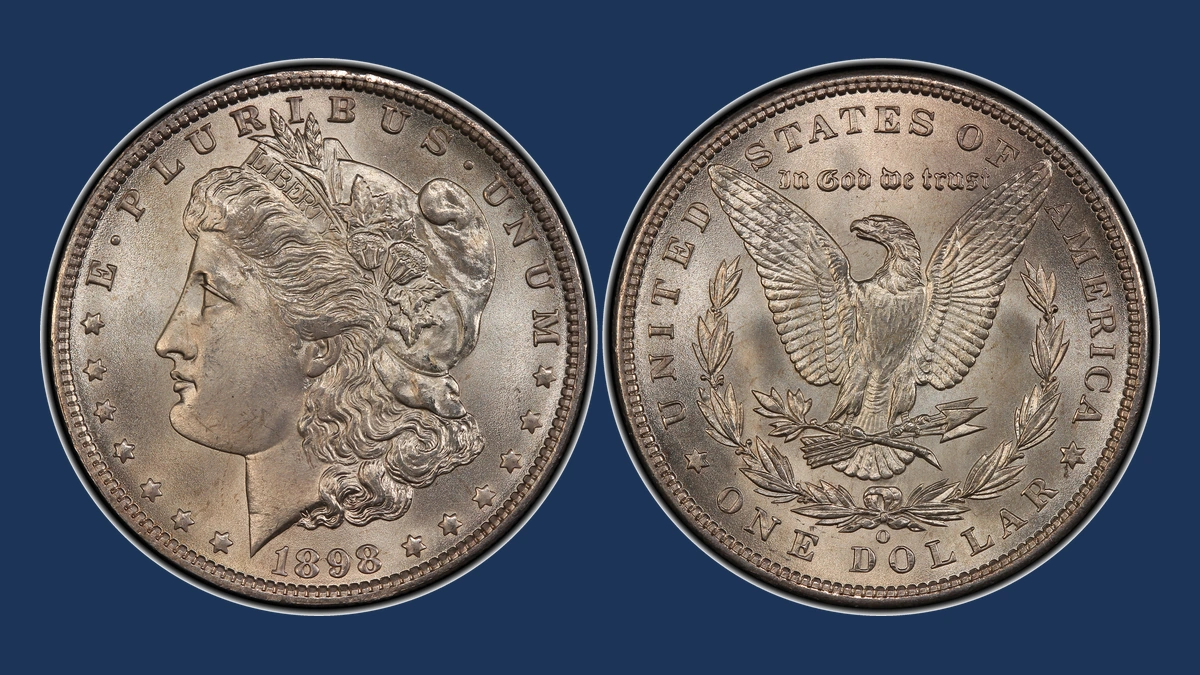
An earlier date-punch impression can remain in a stamping tool after the date is punched again. The dollar then receives the main digits along with small raised traces of their earlier positions.
PCGS catalogs this New Orleans variety as FS-301, also known as VAM-20. Those are reference names for matching the particular date pattern.
The feature must be checked on an 1898-O Morgan dollar. A similar catalog number used for an 1898 nickel does not describe this coin.
The secondary strokes follow the digits; they are not simply a low date or a scratch beneath it.
Estimated Value
PCGS records a $1,550 sale in February 2022 through David Lawrence for a VF25 example. VF25 describes a circulated coin with moderate wear and readable details.
Estimate $200–$3,000 for correctly identified repunched-date examples from worn grades through attractive unworn condition. The strength of the surviving date traces affects how easily the variety can be recognized.
A bright or higher-grade dollar is not automatically the variety. Apply the premium only after matching the complete numeral pattern and New Orleans identity.
How to Identify
Find the O below the wreath on the back before enlarging the date. This establishes the New Orleans issue associated with the cataloged variety.
Take one photograph of all four digits, then closer views under a 10× magnifier. Compare them with PCGS’s FS-301 examples rather than a different denomination’s date.
The extra strokes should make sense as parts of numerals. A flat shelf beside a digit, or a scratch through it, is not enough by itself.
Keep the surrounding original surface visible when checking for added or engraved metal. Have the complete pattern matched before assigning a precise repunch direction from a small ambiguous curve.
4. 1898 Morgan Dollar Broadstrike Candidate
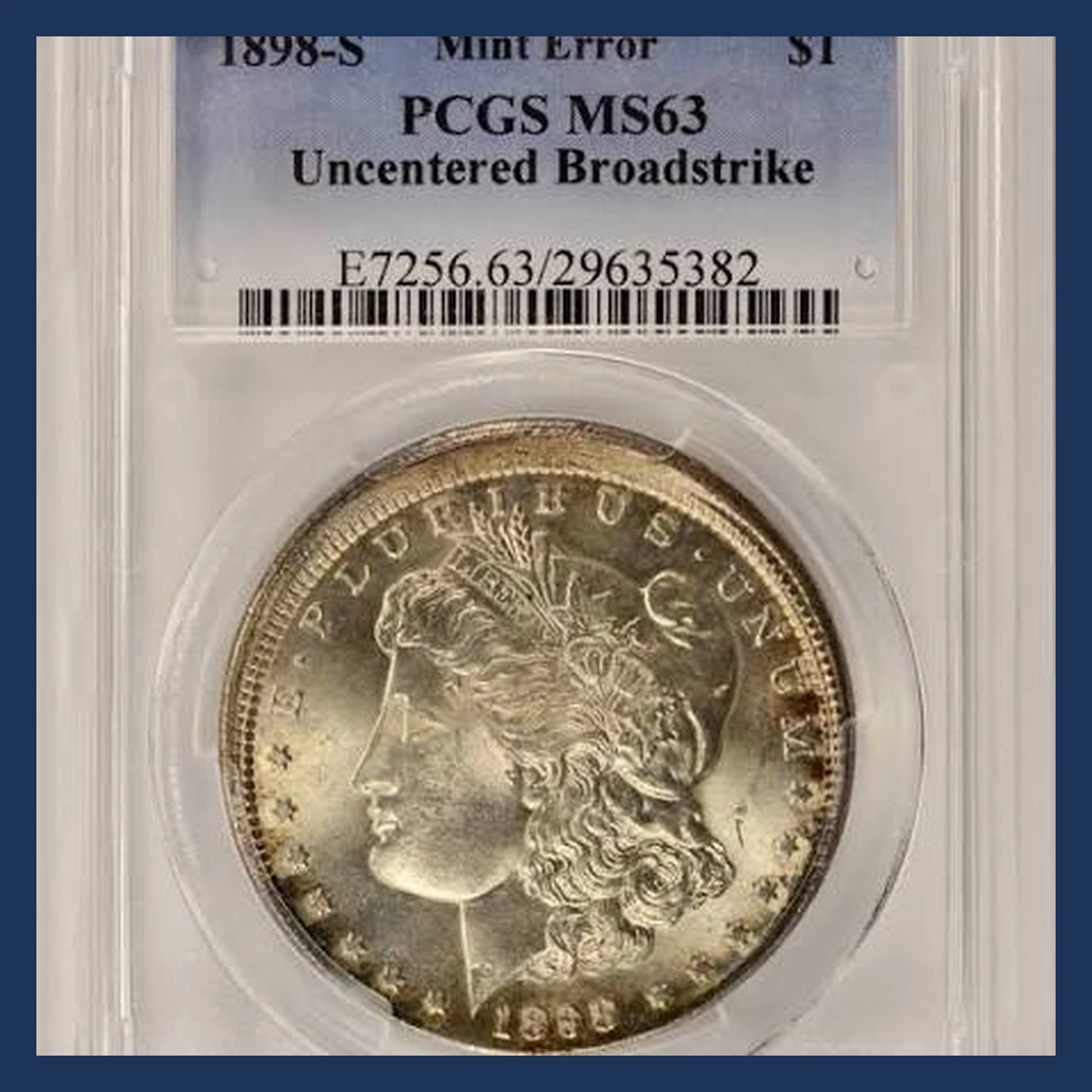
A dollar can spread beyond its usual outline if the collar ring fails to contain the blank during striking. A complete design inside an expanded border is the central broadstrike feature.
Year guides discuss broadstrikes for 1898, but the available reports do not identify a definite specimen or mint. A candidate needs examination before being described as an established 1898 example.
The distinction matters because a slightly off-center strike or a damaged edge can look similar. The coin’s expansion, design coverage, and edge must agree with the proposed event.
A wide-looking rim alone does not settle it.
Estimated Value
For an authenticated ordinary-strike 1898 broadstrike, use a conditional estimate of $600–$6,000. Mint, expansion, and preservation would determine the appropriate comparison within that range.
A 1921 Philadelphia Morgan broadstrike graded MS64+ sold for $1,020 in July 2021. It is a different-year example of the mechanism, not evidence of an 1898 sale.
An enlarged outline with a complete, sharp design would be more compelling than a slight rim imbalance. A filed edge should not be valued using this error range.
How to Identify
Measure a loose candidate across several directions with non-scratching calipers. Compare it with the normal 38.1-millimeter diameter, allowing for uneven expansion rather than relying on one reading.
Next check the entire design on both faces. A broadstrike should retain the design within the spread metal, even when the border is not equally wide everywhere.
Look at the edge for the relationship between expansion and its grooves. Filing can remove grooves without creating the outward metal flow of a broadstrike.
Weigh the loose coin against the normal 26.73 grams as another check for removed metal. Submit a plausible candidate for examination with both faces and the edge documented, rather than choosing a mint or grade from a generic year guide.
5. 1898 Morgan Dollar Very Weak Adjustment Strike
A press setting can leave too little contact to bring up the whole design. Heritage describes a Philadelphia dollar made while the spacing between the stamping tools was being adjusted.
The date and left-side stars are visible, while S UNUM is almost absent. On the back, ONE and UNITED STATES O remain readable.
The catalog also notes that the tools were slightly out of parallel, producing unequal strength across the faces. This is a reported adjustment strike, not simply a low-grade coin.
Its PCGS AU50 grade describes circulation wear separately from the original weakness of the strike.
Estimated Value
The PCGS AU50 adjustment-strike dollar sold for $5,750 in April 2010 at Heritage. The contrast between readable and almost absent design made the striking problem conspicuous.
Estimate $3,000–$9,000 for an authenticated example of comparable importance, depending on preservation and the weak-strike pattern. This range does not apply to ordinary worn dollars with faint lettering.
The surviving date and readable parts of both faces help establish identity. Damage or corrosion that erases details would belong in a different price category.
How to Identify
Map the surviving details before thinking about grade. On this reported example, the date and left stars remain visible while S UNUM is essentially missing.
Turn to the back and locate ONE and UNITED STATES O. The two faces need to fit the same uneven contact during striking, rather than unrelated worn spots.
Look for remaining original surface in the weak areas. Heavy abrasion often leaves disturbed metal or smoothing that follows the exposed design differently.
A small grease-filled letter does not explain the broad pattern automatically.
Compare the entire dollar with the documented adjustment strike and have the manufacture examined. A mostly blank-looking face, considered on its own, cannot establish that the press was being adjusted.
6. 1898 Morgan Dollar Seven-Percent Off-Center Strike
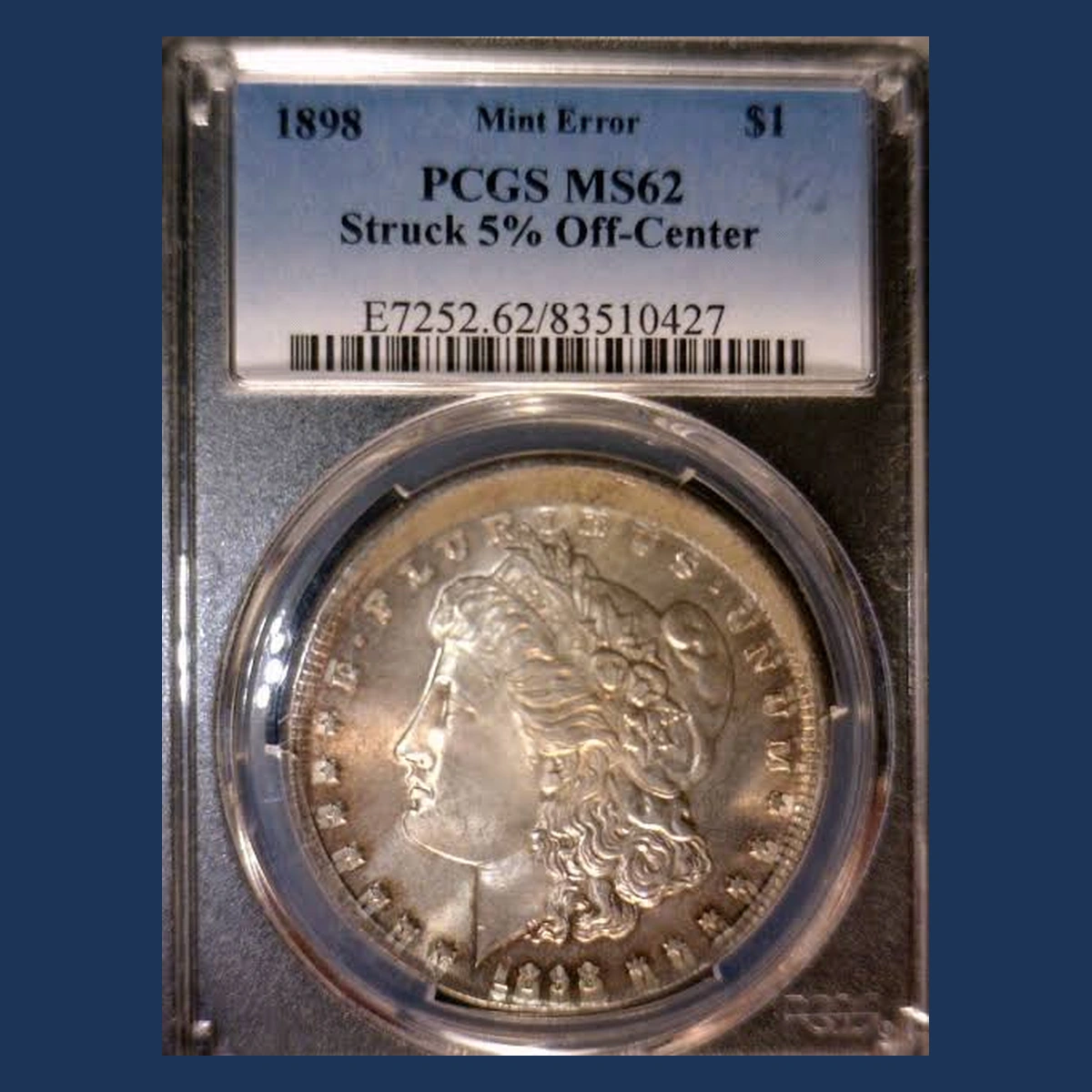
The Philadelphia example recorded by Heritage received its design about seven percent off center. The blank was not correctly positioned when the tools came together.
Part of the design therefore missed the metal, while another area remained unstruck. Both faces help show the relationship between the misplaced blank and the designs.
The coin is graded PCGS MS64, meaning unworn with some surface marks. Its cataloged percentage is not a clock direction, and the description does not supply one.
A broad border on one face alone can have another cause, so this error needs more than a single cropped photograph.
Estimated Value
Estimate $1,000–$10,000 for authenticated 1898 off-center dollars, with displacement, readable date, mint, and preservation affecting price. The documented Philadelphia example is an unworn MS64.
For comparison, a 1921-D Morgan struck five percent off center sold for $2,760 in March 2024. That is a different year and mint, so it is context rather than a sale of the 1898 coin.
A modest percentage can still be collectible. It should not be priced solely by multiplying a percentage by a fixed amount.
How to Identify
Start with the boundary between struck and unstruck metal. Follow it across the outline and see what part of the design lies beyond the blank.
Photograph the other face without losing track of the physical edge. Its displacement should make sense as the opposite face of the same misplaced blank.
If one face is centered while only the other shifts, investigate a misaligned stamping tool. If the entire design survives inside an expanded border, compare a broadstrike instead.
Keep the date in the full-face image and inspect the edge for later cutting. Use the actual coin photographs to describe direction; the seven-percent catalog label does not tell you where the blank crescent sits.
7. 1898 Morgan Dollar Lamination with the Detached Flake Preserved
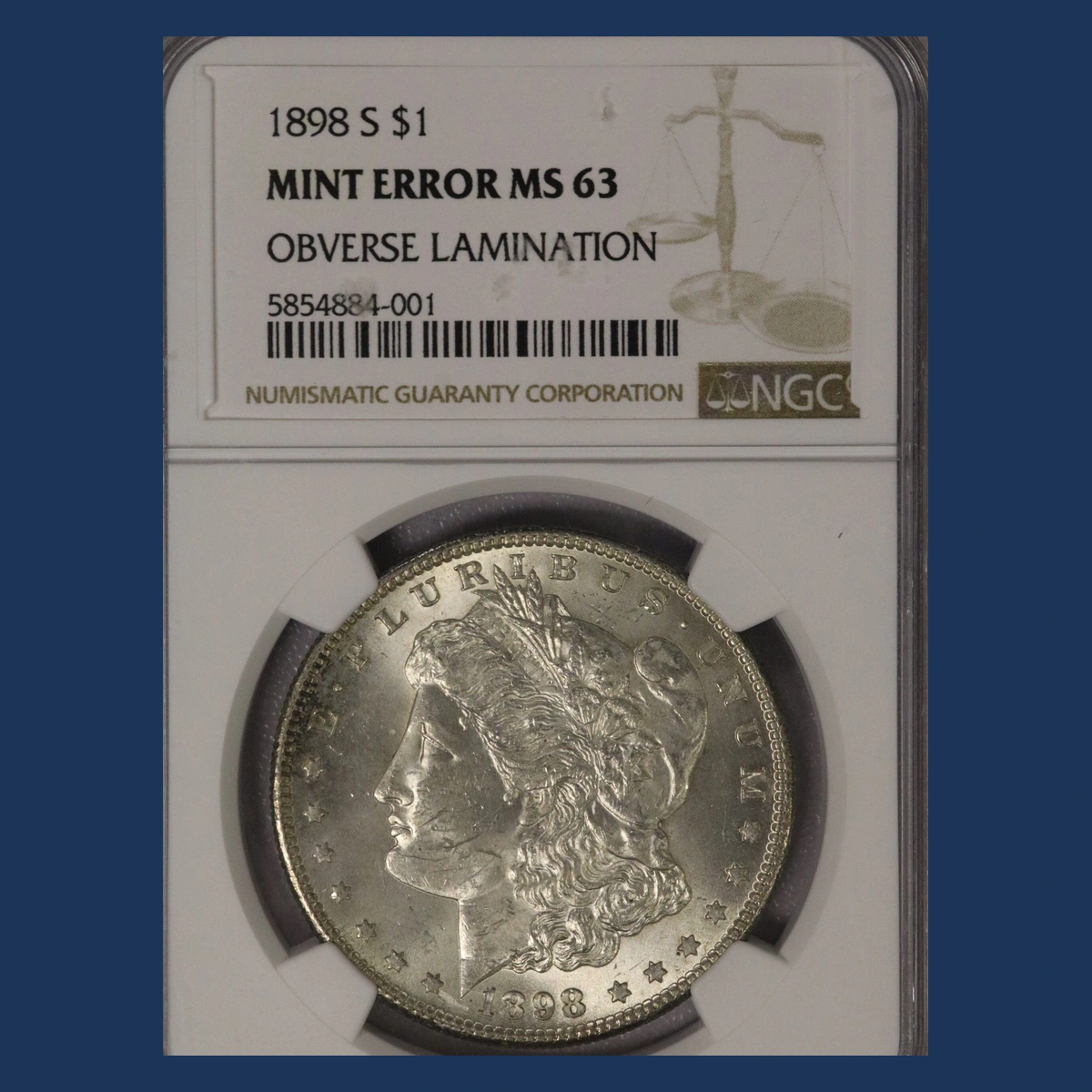
A thin, boomerang-shaped piece separated from the front of this New Orleans dollar after it was struck. Remarkably, the detached metal was saved with the coin.
Heritage offered both pieces together, each in its own PCGS holder with consecutive certification numbers. The original dollar and the flake were both labeled MS63.
This is a lamination: a weak layer within the alloy separated from the rest of the blank. It is not two complete dollars or a dollar neatly split into equal halves.
The preserved fragment helps show what was once part of the coin’s struck surface.
Estimated Value
The dollar and its detached flake sold together for $6,710 in January 2026 at Heritage. That price covers the complete paired lot, not either piece separately.
Estimate $3,000–$12,000 for a comparable authenticated pair with the original fragment preserved. A normal small lamination without its detached piece needs a much lower comparison.
The matching shape, surviving design, and secure connection between the pieces support interest. Cleaning or breaking the fragment would reduce both its appeal and the evidence it preserves.
How to Identify
Leave the two pieces in their separate holders. They do not need to be physically pressed together to compare their shapes.
Place the photographs at matching scale and trace the boomerang-shaped flake against the missing front area. Compare any surviving design on the fragment with the design beside the gap.
Check that the labels identify the paired dollar and fragment, rather than assuming two holders contain two independent errors. The auction describes a piece that detached after striking.
The surface of the gap and the fragment’s underside are useful to an examiner when already photographed. Do not remove a coin from its holder or disturb the fragile metal merely to obtain those extra views.
8. 1898 Morgan Dollar Double-Strike Candidate
A second blow can leave another portrait, date, or border at a different position. It happens when a coin remains in the striking area or returns to it after its first strike.
An older 1898 year page lists double striking, but the available evidence does not identify a definite Morgan dollar specimen. The mechanism can still be checked on a candidate without claiming that an illustrated coin has already been authenticated.
Small doubled details built into a stamping tool are a different cause. Pressing two finished coins together can also create misleading copied marks.
Estimated Value
Use a conditional estimate of $5,000–$20,000 for an authenticated 1898 Morgan double strike of substantial visibility. The amount of movement, preserved date, and condition would influence value.
As a mechanism comparison, a 1921 in-collar double strike graded ANACS MS64 sold for $8,050 in July 2002. That is not an 1898 transaction.
A broad second impression can be more persuasive than a single doubled letter. Do not apply this range to flat shelf-like doubling or marks pressed into a finished coin.
How to Identify
Track several widely separated parts of the proposed first and second designs. Their positions must agree with one coin shifting or rotating between blows.
A second portrait near a second date should not require a different direction of movement for each feature. Examine the back too, allowing for what the second blow may have flattened.
Copied marks made by squeezing finished coins together can appear sunken and reversed. Those marks need careful separation from the raised designs of a genuine double strike.
Photograph the edge as well as both faces, without opening a holder. A specialist can assess the whole event; a familiar-looking doubled letter alone cannot establish an authenticated 1898 Morgan example.
Conclusion
The estimated ranges run from $150–$20,000, covering different striking errors and the conditional candidates described above. The preserved 1898-O dollar-and-flake pair sold for $6,710 as one lot.
A faint design, a peeling patch, and a second impression call for different checks. Compare both faces and protect any loose or retained material.
Keep same-year auction records separate from the 1921 comparisons when choosing a price for an actual coin.