1897 Dollar Coin Error List with Pictures

A stepped edge helped an 1882-CC Morgan dollar bring $480 in September 2025. That different-year sale offers context for the partial-collar error also documented on an 1897-S dollar.
This 1897 Morgan Dollar error list covers estimated whole-coin values of $50–$4,000. Look beyond the portrait: some clues lie in peeling silver, rough raised patches, or the edge.
Use the checks below to separate these Mint-made features from ordinary damage.
1. 1897 Morgan Dollar Raised Cracks from a Damaged Tool
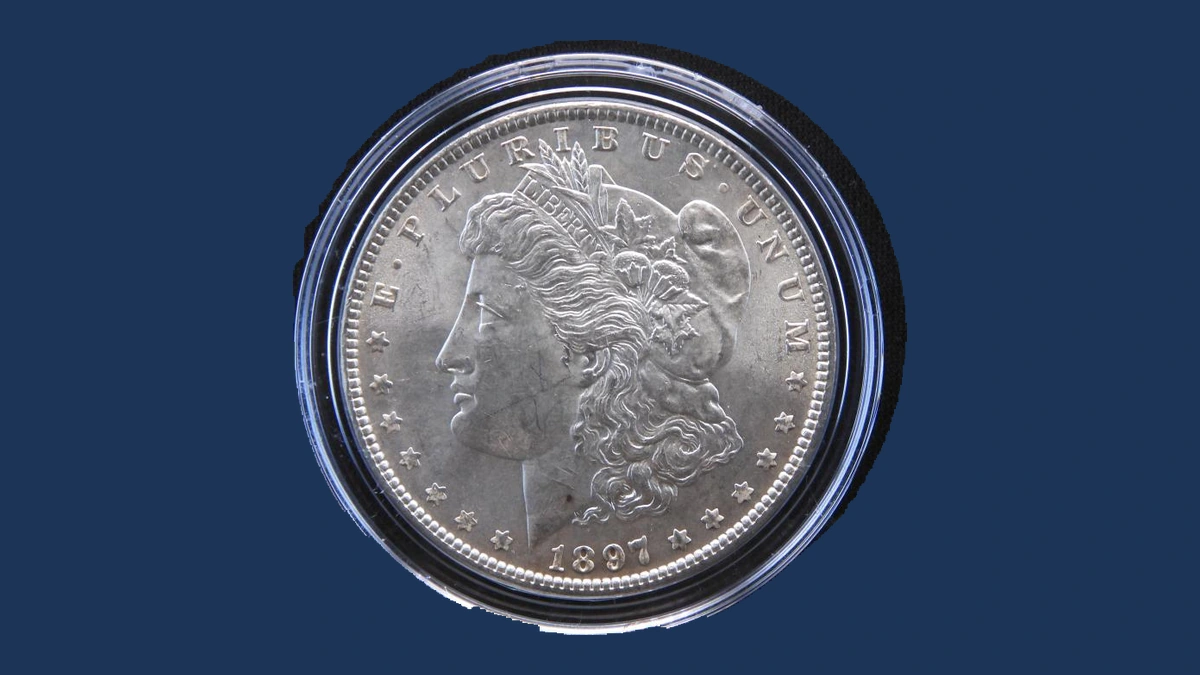
A thin raised line can cross the date area, the eagle’s wings, or the outer border. A crack in the steel stamping tool allowed silver to enter the opening.
That tool is called a die. Its crack becomes a raised line on the dollar, while a scratch made afterward cuts into the silver.
Year reports describe these locations without assigning every line to one mint or tool. Different coins may show different paths.
A fine crack need not spoil the rest of the design. It can remain a small feature on an otherwise normal-looking dollar.
Estimated Value
For clearly identifiable fine cracks, estimate $50–$250 on ordinary worn through modestly unworn 1897 dollars. Much of that amount can be the value of the coin itself.
A long, visible line is easier to display than a tiny trace hidden among feathers. Yet a thin crack does not command the same attention as a large lump from a missing piece of tool.
Mint, wear, and overall surface quality remain important when comparing offers.
How to Identify
Follow the line across the coin before zooming in. Photograph its path and note whether it runs through letters, picture details, or the smooth background.
With a magnifier, tilt a light across one section of the line. A crack copied from the tool should stand above the neighboring silver rather than form a cut.
Look closely where the line meets an eagle feather or date digit. A later scratch may cut through finished detail and leave small ridges of displaced metal beside the cut.
Also inspect the area for an impact hollow. A raised line without an accompanying cut, following a continuous path through the struck design, supports a tool crack.
2. 1897 Morgan Dollar Raised Roughness from a Pitted Tool
A patch of tiny raised dots can look rough even when the coin has not corroded. Small pits in a stamping tool can fill with silver and leave that texture.
This differs from corrosion that eats holes into a finished dollar. One produces raised bumps; the other removes metal.
The Calkins variety listing places this feature on Philadelphia VAM-6A, a named tool pattern. It lies below the tail feathers and in the lower-left wreath.
A dark photograph alone is not enough to identify it. Match the raised texture and its position together.
Estimated Value
If the roughness is confirmed as a repeated tool feature, estimate $50–$300 for common circulated or modestly unworn examples. Clearly visible texture and attractive surrounding silver help make the feature collectible.
A dark stain without raised detail does not justify that error allowance. Neither does corrosion that has eaten into the dollar.
The range is a whole-coin estimate for the reported feature, with the mint and condition checked before making a closer comparison.
How to Identify
Raised grains and sunken holes tell different stories, so begin by changing the direction of your lamp. Under a magnifier, inspect the area below the tail feathers toward the lower-left wreath for bumps rising above the background.
Leave loose crust or dark residue alone, since scraping can ruin the surface without establishing its cause. Photograph several neighboring grains together with enough of the wreath to locate the patch on the complete coin.
Check that the dollar has no mint letter beneath the wreath, then compare the texture with an identified VAM-6A. Matching raised grains support marks copied from a pitted tool, while holes and eaten edges point toward damage to the coin itself.
3. 1897 Morgan Dollar Possible Metal or Struck-Through Streak
A narrow streak can run across the silver without looking like a round dent. On a reported 1897-S example, the explanation may involve the original metal or material present during striking.
A streak within the blank can reflect an uneven mixture or an impurity. Grease or other material between the blank and tool can instead weaken the design along a path.
Those causes are different. A scratch, stain, or later cleaning can also create a line.
The streak therefore needs examination of its depth and the surrounding picture before it receives a specific error name.
Estimated Value
Allow an estimated $50–$350 for a confirmed original metal streak or modest struck-through streak on an 1897-S dollar. This range does not apply automatically to a discoloration of unknown origin.
A visible interruption in the design may draw more interest than a faint color line alone. Surface preservation and the ordinary value of the San Francisco coin also matter.
Where the cause is unresolved, judge the physical feature before assigning an error premium.
How to Identify
Look along the streak from one end to the other with a magnifier. Note whether letters disappear along its path or remain complete beneath a change in color.
A clean incised line crossing finished detail suggests a scratch.
A shallow path with weakened design can fit material blocking the strike. A color streak within otherwise complete detail may instead involve the original metal, and needs a different comparison.
Compare light from two directions to see whether any part is raised, sunken, or lifting. Do not use solvent or a metal probe to expose it.
For a valuable candidate, ask an error specialist to inspect the surface. First distinguish a cut through existing detail from a streak formed with the design.
4. 1897 Morgan Dollar Peeling or Detached Silver Layer
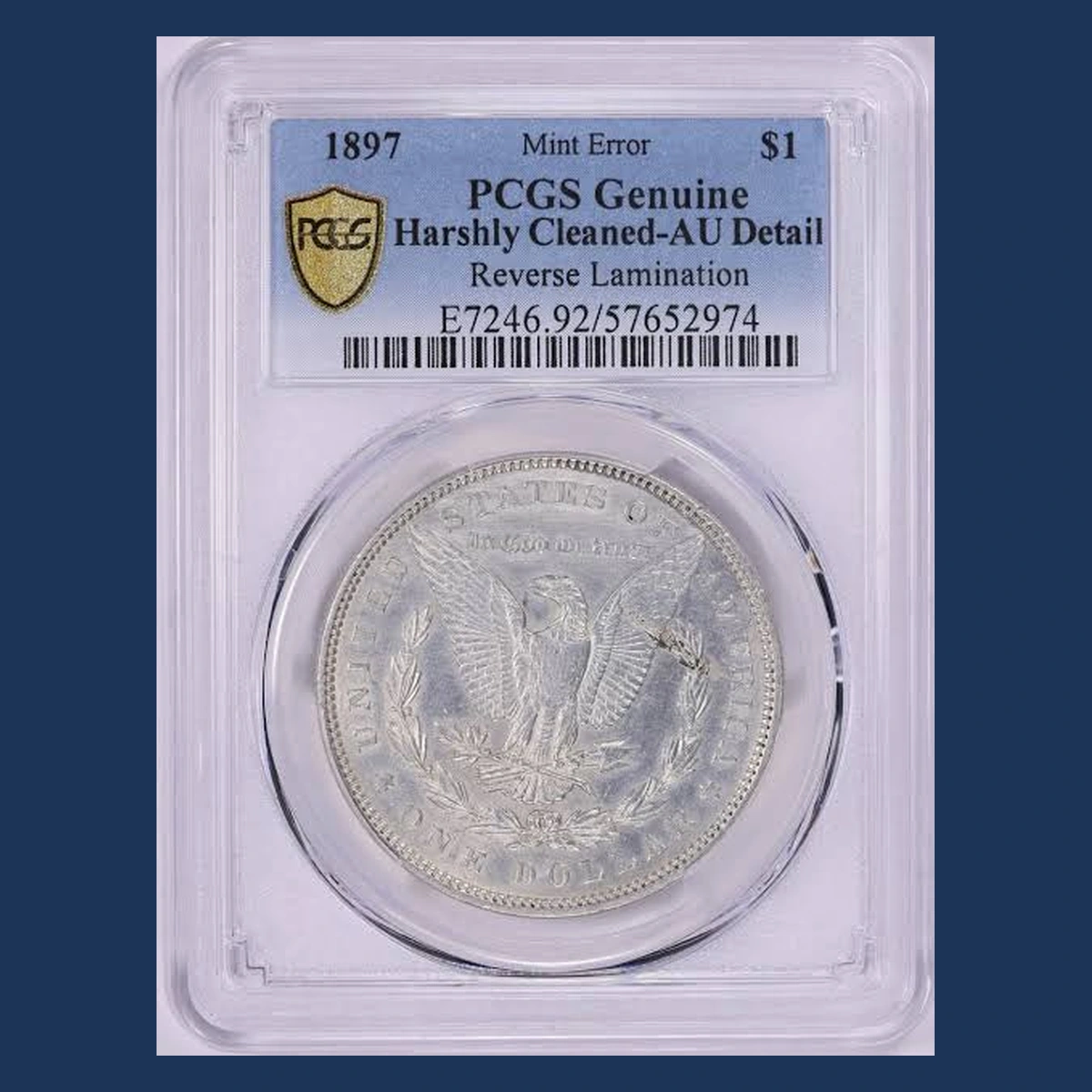
A thin layer of silver can separate from the rest of the coin when the original blank contains a weak seam. Collectors call this peeling a lamination.
The missing piece may leave an uneven shallow patch, while another example may retain a small flap. This is a local separation rather than the dollar splitting into two full discs.
Stack’s Bowers listed an 1897 detached lamination graded ANACS MS60 Details in a 2014 group of nine error dollars. The coin was also described as cleaned.
Cleaning affects its condition, but does not erase an original metal flaw.
Estimated Value
Estimate $75–$600 for 1897 laminations, depending on visibility, condition, and whether an attached piece survives. A large clear peel on otherwise attractive silver can make a better display than a tiny rough spot.
The 2014 example was part of a nine-coin lot, so a group price would not be its individual value. Its cleaning also prevents a direct comparison with an undamaged coin of similar remaining detail.
Value the complete dollar, including both the flaw and its condition.
How to Identify
Leave any attached flap exactly where it is. Pulling it can enlarge the opening and destroy evidence of how the layer separated.
View the boundary with a magnifier and a light held low beside the coin. Look for a thin ledge, an irregular exposed layer, or picture detail carried onto the lifted metal.
Check the rest of the affected area for cutting, filing, or a scoop made by a tool. Several parallel cuts are different from a natural weakness opening within the blank.
A loose coin can be weighed on a scale against the normal 26.73-gram standard, but a small peel may barely change that figure. The visible layered boundary provides the more direct check.
5. 1897 Morgan Dollar Small Depressions on Liberty’s Cheek
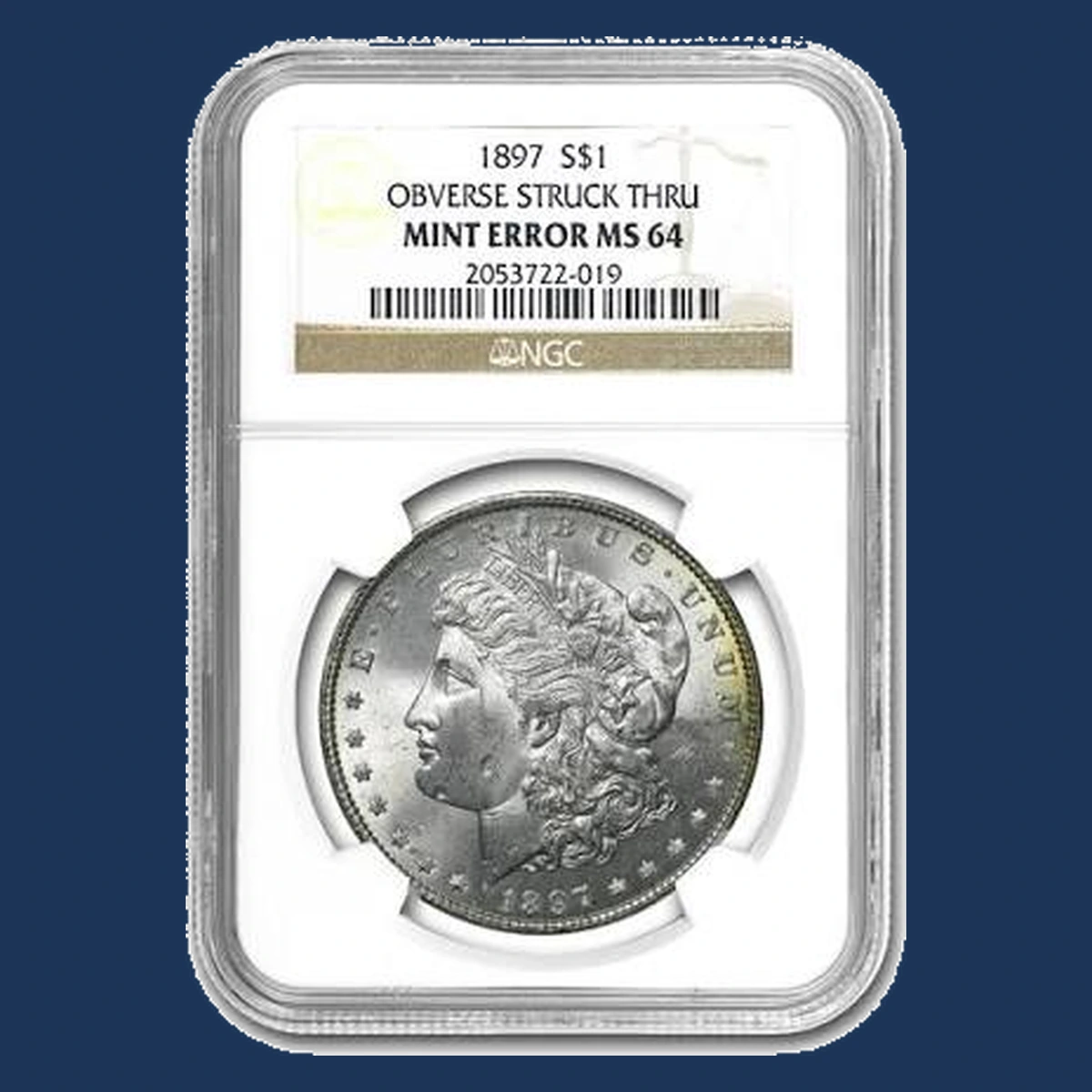
Two small hollows on Liberty’s cheek appear on an NGC MS64 dollar offered by APMEX. MS64 describes a coin without circulation wear but with some noticeable marks.
The dealer identifies the hollows as struck-through errors. Material between the silver blank and the stamping tool blocked contact in those places.
The material left impressions as the coin received its normal picture. It is not identified as a particular object merely because the hollows look like small craters.
This Philadelphia example has no mint letter. A later dent on another dollar’s cheek needs its own examination.
Estimated Value
For a genuine 1897 struck-through dollar with small cheek depressions, estimate $100–$750. A sharply defined pair on an attractive unworn coin has a clearer display than shallow hollows among heavy contact marks.
The APMEX NGC MS64 example supports the physical type, rather than a disclosed auction result. The estimate reflects the complete coin and the visibility of the error.
Cleaning or scratches around the cheek can reduce interest even when the impressions are original.
How to Identify
Compare the whole cheek with the certified example before enlarging the two hollows, since Liberty’s face often received hits during storage. Note each depression’s outline and any disturbed silver extending beyond it into the surrounding portrait.
Under a magnifier, a pushed-up border beside a hollow can suggest a later impact rather than material blocking the strike. Look for scraping or crushing nearby, and change the lamp angle to reveal the shape without touching the surface.
Photograph each hollow and the cheek together so its depth and surroundings remain clear. Similar positions alone do not prove the error; the depression’s boundary should fit an impression formed while the dollar received its design.
6. 1897 Morgan Dollar Partly Grooved, Stepped Edge
The edge can show two different levels when only part of the blank sits inside the collar during striking. The collar is the surrounding metal ring that controls width and forms the grooves.
The contained portion receives the usual edge pattern. Metal above the ring can spread outward, leaving a step beside that patterned band.
A September 2013 Stack’s Bowers catalog includes an 1897-S partial-collar dollar graded NGC MS61. That grade indicates an unworn coin with substantial marks.
The error is easiest to judge from the side. A normal front photograph may hide its clearest feature.
Estimated Value
An 1882-CC partial collar graded MS65 sold for $480 in September 2025. Its date, mint, and grade differ from the documented 1897-S MS61.
For 1897-S partial collars, estimate $150–$1,000. The size and visibility of the edge step, remaining original surface, and overall condition shape the comparison.
A high grade on a different Morgan dollar does not set a fixed price for this example. An unobstructed edge view helps buyers assess the actual error.
How to Identify
Place a loose dollar upright on a soft surface and examine the side under magnification. Turn it carefully to follow where the grooved band meets the expanded portion.
Compare that step around the circumference instead of judging only one damaged spot. A partial collar can leave a changing band, while an isolated edge hit often has crushed metal nearby.
Calipers can compare the expanded section with the normal 38.1-millimeter diameter. Avoid forcing them against the edge, and keep a certified coin inside its holder.
Check both faces for hammering or heavy rim damage.
The key evidence is a struck grooved band beside an original expanded portion, with the transition visible from the side.
7. 1897 Morgan Dollar Very Weak Strike (Die Adjustment Label)
Liberty and the eagle can look unusually shallow when the tools do not press the blank firmly enough. Large areas may retain only faint traces of the intended picture.
An NGC-certified 1897 example appeared at GreatCollections with a Die Adjustment Strike label. That label describes the recognized weak strike, but does not prove why the press produced it.
The design need not be displaced toward one edge. Weak pressure is different from an off-center strike.
Heavy wear can also remove detail, while grease can block a smaller area. The surfaces and overall pattern help separate these possibilities.
Estimated Value
A certified 1897 weak strike of this kind has an estimated range of $500–$4,000. The strongest interest goes to dramatic weakness with enough surviving design to identify the dollar clearly.
The GreatCollections example sold in June 2021, but its public page hides the realized price. This range is therefore an estimate, not that transaction’s amount.
Ordinary wear or later abrasion does not earn the same allowance as an authenticated weak strike.
How to Identify
Compare the whole front and back before concentrating on one missing feather or hair curl. Look for broad weakness that agrees across the coin rather than a single rubbed high point.
Under a magnifier, inspect protected areas for original surface and compare them with the shallow central design. Wear tends to affect exposed parts through use, while sanding may leave directional scratches.
If the coin is loose, a scale and calipers can check its normal 26.73-gram weight and 38.1-millimeter width. Those measurements help identify the blank; they do not prove low striking pressure.
For a dramatic candidate, compare both faces with a certified weak-strike example. Broad shallow detail on otherwise original surfaces is the useful first clue.
Conclusion
Estimated values for these 1897 Morgan dollar errors run from $50 to $4,000 for complete coins. The size of the feature and the dollar’s condition both matter.
Check whether a mark rises above the surface, cuts into it, or follows a peeling layer. Examine the edge when a partial collar is suspected.
Keep possible streaks and rust marks separate from confirmed causes until their visible features support the identification.