1896 Dollar Coin Error List with Pictures

A tiny piece of an 8 can hide below the date on an 1896 silver dollar. One exceptionally well-preserved example sold for $3,360 at Heritage in December 2022.
Other 1896 Morgan dollar errors show extra star points, an overlapping S, or a stepped edge. Estimated prices across the examples below run from $60 to $15,000, depending on the feature and the coin’s condition.
Keep reading to learn where each mark appears and how to separate it from everyday damage.
1. 1896 Morgan Dollar Doubled Stars
The stars beside the date can have extra points or a second raised outline. On this Philadelphia variety, the doubling belongs to the design itself.
A die is the steel tool that stamps a coin. When that tool received slightly offset design impressions during preparation, it could copy the doubled stars onto many dollars.
Collectors call this variety VAM-4, a catalog name for this particular tool combination. It does not mean the dollar was struck four times.
Look near both sides of the date rather than searching only the portrait.
Estimated Value
An estimated $60–$1,500 covers worn through nicely preserved examples of the doubled-star variety. A year guide reports prices of $53 for an almost unworn coin and $349 for an unworn MS63 example.
Those reports provide useful lower-priced comparisons. Clear star points, original surfaces, and fewer marks can move a coin higher.
The estimate is for the whole dollar; the doubling does not add that amount to another price.
How to Identify
Place an ordinary 1896 Philadelphia dollar beside the suspected variety, or use clear photos at the same size. Neither should have a mint letter beneath the back wreath.
With a 10× magnifier, follow several star points to the left and right of the date. Look for extra raised tips or split outlines that repeat the cataloged pattern.
A flattened shelf beside a star can come from movement during striking. It lacks the rounded, separate detail expected from a doubled design.
Turn the light slightly to see the shape without glare. If wear has blended the points together, compare the least worn stars instead of treating every thick edge as doubling.
2. 1896 Morgan Dollar Repunched S Mintmark
The S beneath the back wreath identifies a San Francisco dollar. A small second trace of that letter is the feature to examine here.
At the time, workers added mint letters to individual dies with a hand punch. If the punch shifted between blows, part of the earlier S could remain beside the final letter.
The coin then received both traces together during striking. This is called a repunched mintmark.
The reported 1896-S example is cataloged as VAM-5. A scratch near the S does not make the same variety.
Estimated Value
Budget an estimated $75–$2,000 for worn to modestly graded unworn examples with a confirmed repunched S. Much of the price can come from the underlying 1896-S dollar itself.
A distinct extra letter trace is more appealing than a heavily worn blur. Original shine and an unmarked cheek also help.
Exceptionally high-grade San Francisco dollars need separate comparisons; this working range does not set a ceiling for the entire date and mint.
How to Identify
Find DOLLAR on the back and move upward to the small S below the wreath. Photograph that letter with the camera square to the coin.
Compare its inner curves and outer edges with an attributed 1896-S VAM-5 photo. The extra trace must fit the same letter shape and position, not merely sit somewhere near it.
Now change the light. A scratch will usually sink into the surface, while a surviving punch trace forms part of the raised mintmark.
Check for rough corrosion around the letter, too. If the apparent second S disappears into pits or dents, have the coin examined before paying for a repunched-mintmark label.
3. 1896 Morgan Dollar Bar Inside the 6
The last digit can contain a small bar that makes the 6 look unusual. This Philadelphia variety is known as Bar 6.
The recorded feature comes from a gouge in the die, which left raised metal on the coin. A vertical bar appears inside the right side of the lower loop.
A shorter tip also appears inside the upper part of the digit. These marks do not establish a 4 beneath the 6.
Examples can have ordinary or mirror-like surfaces. A shiny background alone does not turn one into a specially made Proof coin.
Estimated Value
For ordinary examples, use an estimated $60–$2,500 range. Wear, marks, and the strength of the bar matter more than how strange the digit looks at first glance.
The same-year doubled-star reports of $53 and $349 show the lower market for small, collectible tool differences. They are comparisons, not Bar 6 sales.
A sharply preserved Bar 6 dollar with attractive reflective surfaces belongs toward the higher end.
How to Identify
Ignore any “1896 over 4” label and compare the actual 6 with a clear photograph of the Bar 6 variety. Under a 10× magnifier, locate the raised vertical bar inside the right side of its lower loop.
The shorter tip inside the upper portion offers a second place to match the photographed example. Check how each feature meets the surrounding digit, rather than accepting any stray line inside the number.
A later cut can leave a trench or a pushed-up lip that differs from the raised tool marks. On a reflective coin, tilt the light gently until you can see the bar without glare.
4. 1896 Morgan Dollar Wire Strike-Through
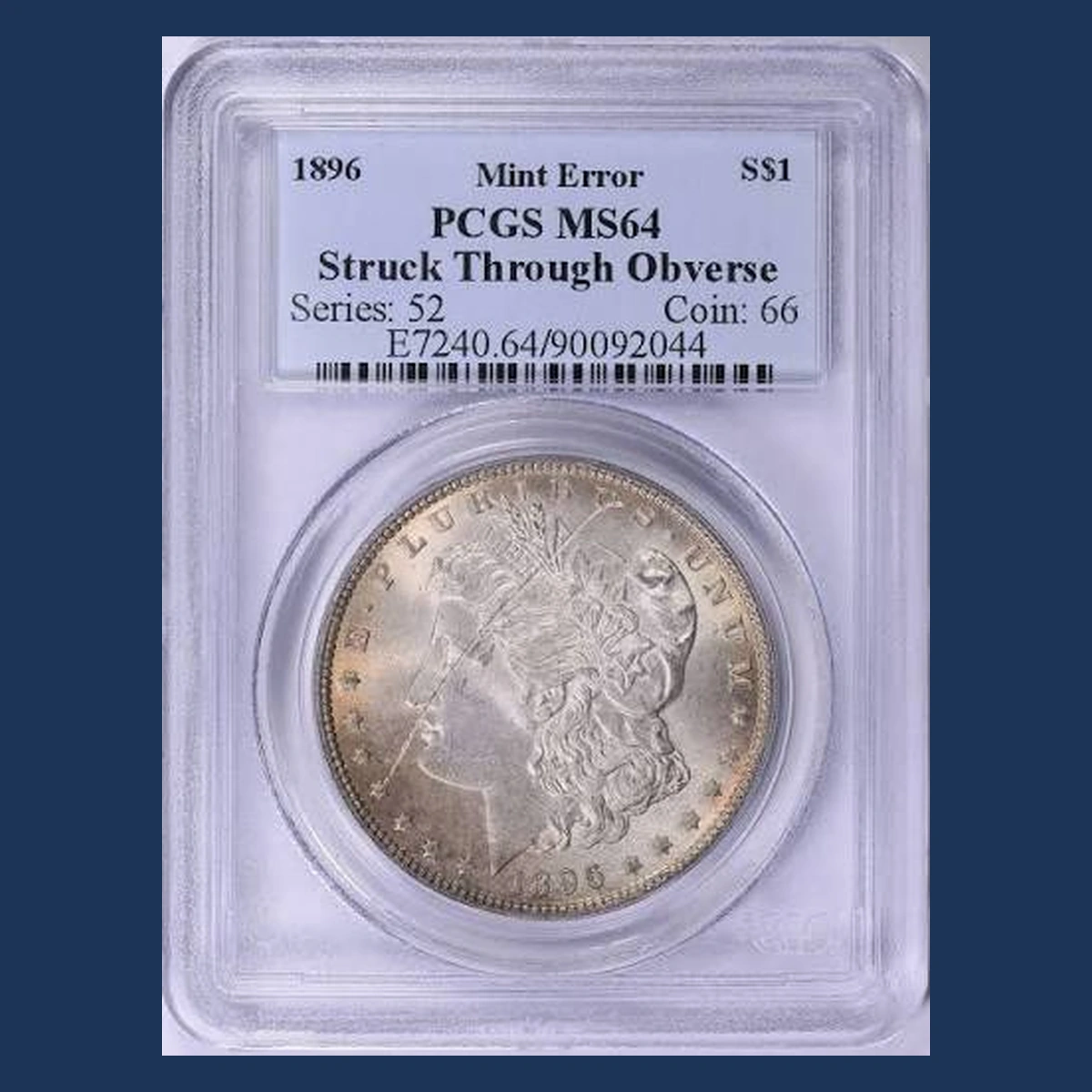
A narrow sunken line can form when a piece of wire sits between the dollar blank and a die. The wire blocks that strip of the design during the strike.
After the wire falls away, its impression remains. Collectors call this a wire strike-through.
A published 1896 Philadelphia example is described as unworn and carrying such a mark. The report does not establish that the wire stayed inside the dollar.
This distinction matters because an empty impression and a coin containing the original object are different things to examine and value.
Estimated Value
An estimated $100–$3,000 covers a small clear impression through a much stronger wire strike-through on an otherwise attractive dollar. The reported unworn 1896 example was offered at $172.45.
That figure is an asking price, not a confirmed auction result. It supports the lower part of the working range.
Longer impressions, a distinctive wire shape, and clearly interrupted lettering can draw more interest than a faint line in an empty field.
How to Identify
Do not drag a pin along the line or try to remove anything from it.
A close photograph under angled light is safer and shows the boundaries clearly.
Follow the impression across any letters or portrait detail it touches. A wire present during striking should have prevented the design from forming normally in that path.
A later scratch often cuts already formed detail and may pile metal along its sides. Look for those scraped edges before assuming the line came from the press.
Photograph the whole front and back as well as the mark. For a purchase, ask an error specialist to confirm the impression’s origin; a wire-like shape by itself is not enough.
5. 1896 Morgan Dollar Partial Collar
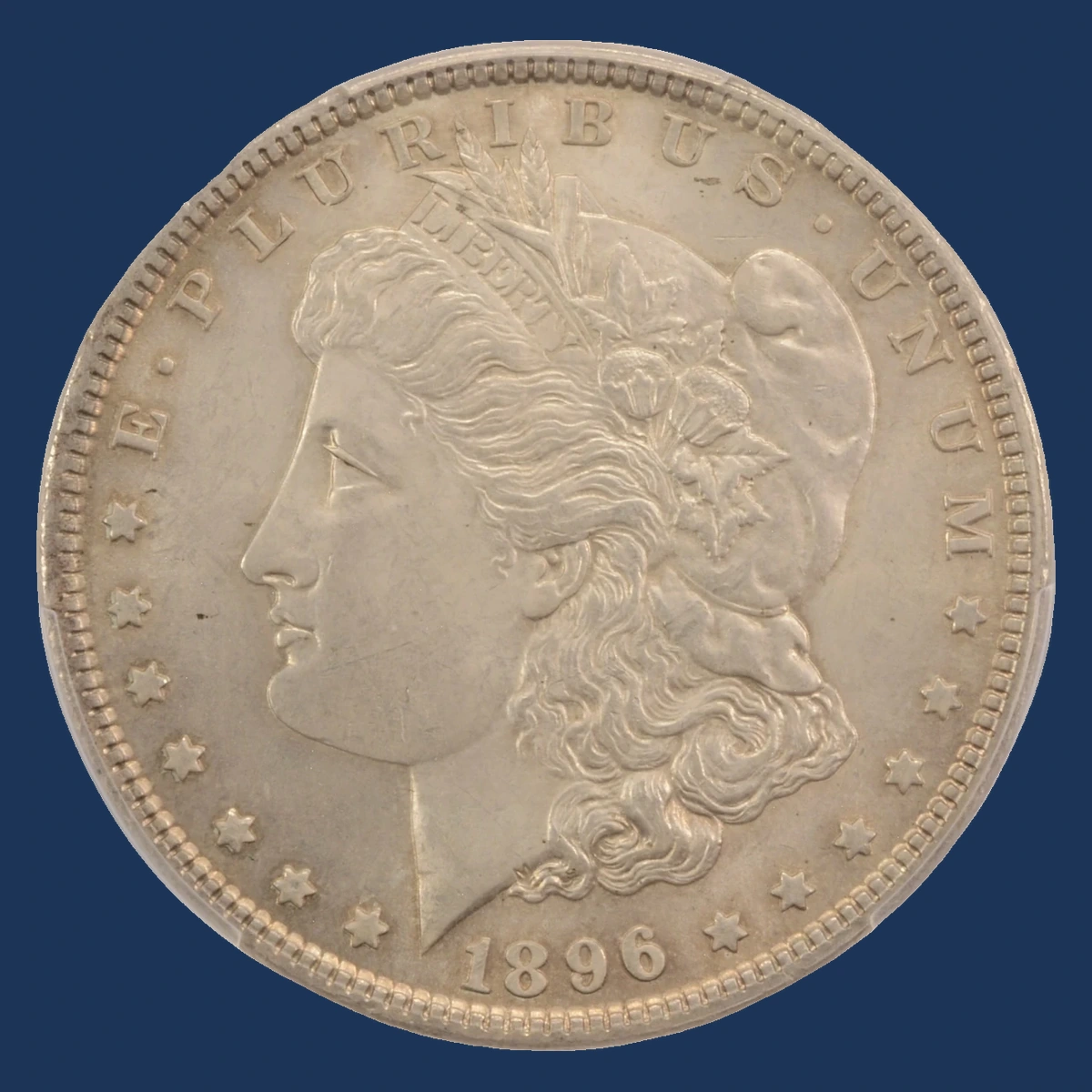
The edge may look as though it has two levels. One section carries normal grooves, while another sits wider or smoother beside it.
During striking, a metal ring called the collar holds the dollar to its intended width and forms those grooves. A blank only partly inside that ring can expand unevenly.
This produces a partial-collar error, sometimes called a railroad rim. It is an edge feature, so a front-only photograph can easily miss it.
The reported Philadelphia example is described as MS61, meaning unworn but with noticeable marks.
Estimated Value
Estimate $150–$4,000 for a confirmed partial-collar dollar, depending on how plainly the stepped edge shows. An 1896 example described as MS61 was offered for about $333.
That is a reported asking price. A modest step and many surface marks fit the lower part of the range.
A broad, undamaged step on an attractive coin can bring more, especially when photographs show the edge clearly all around.
How to Identify
A normal Morgan dollar is about 38.1 mm across, but metal outside the collar can spread beyond that width. For a loose coin, use calipers gently in several directions, then follow the edge above a soft surface.
Look for a step separating normal grooves from expanded metal, and check how far it continues around the coin. Grinding instead leaves cut marks, while later squeezing can crush the grooves and distort nearby lettering.
A scale can flag heavy metal removal because a normal unworn dollar weighs 26.73 g. If yours is sealed in a holder, request photographs of the edge from several angles rather than opening it for measurements.
6. 1896 Morgan Dollar Misplaced and Repunched Dates
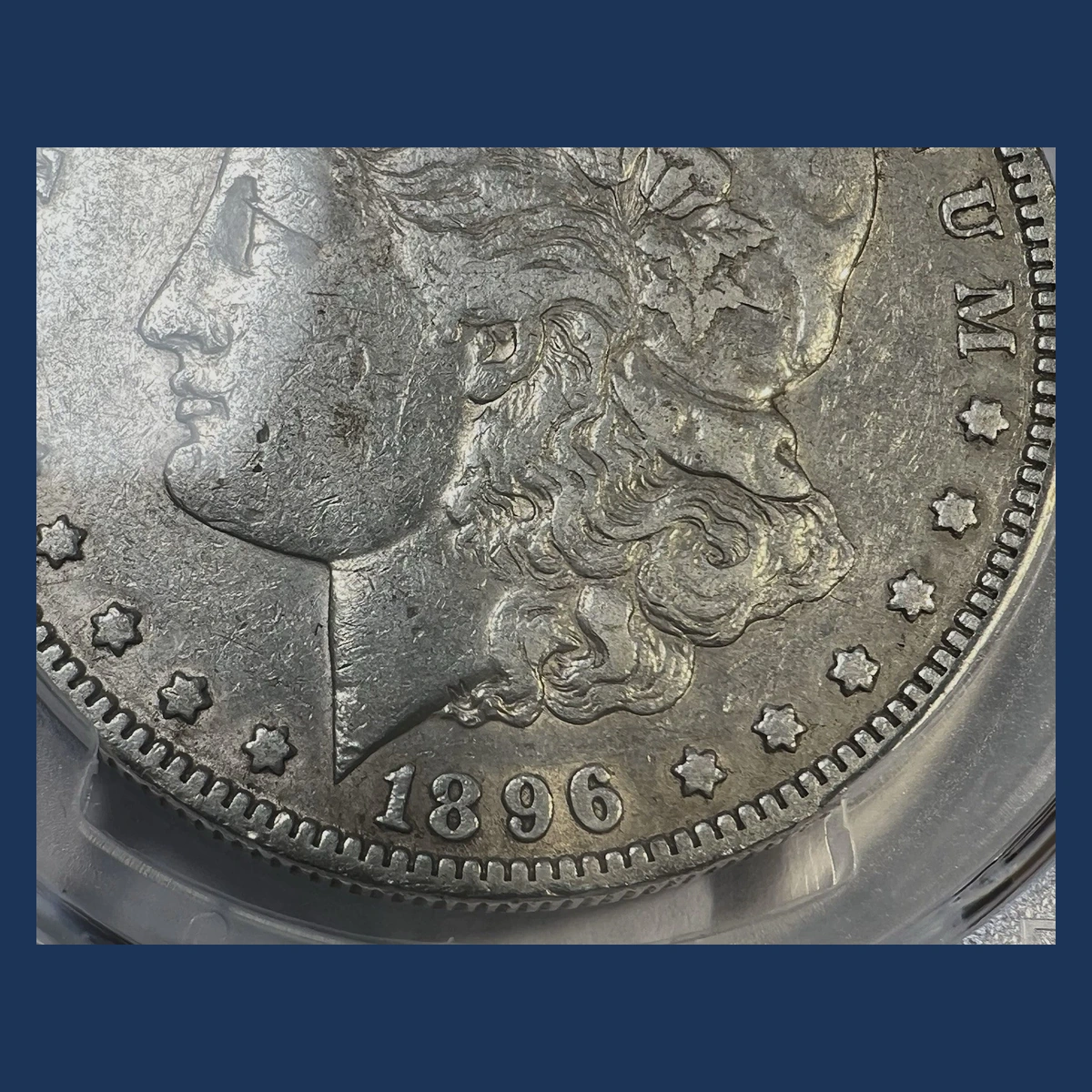
On one Philadelphia variety, the top of an extra 8 appears in the small border teeth below the date. The number was punched into the die too low before the proper date was added.
Coins struck from that tool carry the misplaced fragment as raised detail. Collectors call the feature “8 in denticle,” meaning an 8 in a border tooth.
A separate New Orleans variety has a shifted, overlapping date instead. Its back carries an O mintmark.
Both involve date punching, but the Philadelphia fragment and New Orleans shifted digits belong to different coins.
Estimated Value
Estimated prices run from $75–$5,000, with the coin’s condition and exact date feature controlling the comparison. A Philadelphia 8-in-border dollar graded MS67 sold for $3,360 in December 2022, as recorded by PCGS.
MS67 means an exceptionally well-preserved unworn coin. Ordinary worn examples should not inherit that price.
The New Orleans shifted-date coin needs its own condition comparison; the Philadelphia auction does not price every overlapping 1896 date.
How to Identify
First decide which mint’s dollar you have. An O beneath the back wreath points to New Orleans; Philadelphia used no mint letter.
On the Philadelphia coin, enlarge the border immediately below the date’s 8. Look for the curved top of another 8 among the border teeth, rather than an isolated rounded bump.
For the New Orleans coin, study the date digits themselves against an attributed shifted-date photo. Do not search only for the Philadelphia border fragment.
Raised, shaped remnants support a punching feature. A dent can push metal across a border tooth, so inspect nearby damage and compare the surrounding teeth before accepting an extra curve as part of a number.
7. 1896 Morgan Dollar Off-Center Strike
Part of the blank can remain bare when it enters the press off center. The dies strike only the area caught between them, leaving the designs pushed toward one side.
The result combines missing design with a smooth, unstruck crescent. Both sides should fit the same misplaced blank.
Off-center striking is reported for the 1896 dollar, without a specific mint assigned to the example. An O or S should only be named when it can actually be read.
A slightly uneven border alone is not enough to establish this error.
Estimated Value
Use an estimated $500–$15,000 for a confirmed 1896 off-center dollar, from modest displacement to a dramatic, attractive example. The year guide describes small shifts as bringing premiums of a few hundred dollars, with much larger shifts reaching thousands.
Those are general market estimates rather than a documented sale of one identified 1896 coin. A complete date, broad blank crescent, and original surfaces support the stronger end of the range.
How to Identify
Compare the two sides before estimating the percentage off center. A genuine shifted blank leaves corresponding missing design and unused metal; one uneven border can instead reflect a misaligned die.
Make sure the date reads 1896. If the mintmark area was never struck, a blank patch there cannot prove Philadelphia.
The unstruck crescent should still be metal, not a piece missing from the coin. A cut or clip changes the outline and needs a different explanation.
A loose dollar normally weighs about 26.73 g and is 90% silver. Use a scale to check for major metal loss, then examine the join between the struck design and blank area for filing or added material.
Conclusion
For these 1896 Morgan dollars, estimated prices extend from $60 to $15,000. Small star or date details can be affordable, while a large off-center strike can reach much higher.
The $3,360 misplaced-date sale also shows how much excellent condition matters. Examine the actual feature before comparing prices.
A bar inside the 6, an extra 8 below the date, and an overlapping S each tell a different story.