1891 Dollar Coin Error List with Pictures

The eagle appears to spit, Liberty can grow a silver moustache, and misplaced letters can cross the design. These small clues make 1891 Morgan Dollar errors worth learning.
A superb 1891-CC Spitting Eagle graded MS66+ brought $40,800 in August 2019. The whole-coin estimates below span $75–$45,000, with ordinary worn varieties far below that exceptional result.
Follow the visible marks, then check the mint and mechanism behind each one.
1. 1891 Morgan Dollar Rotated Back
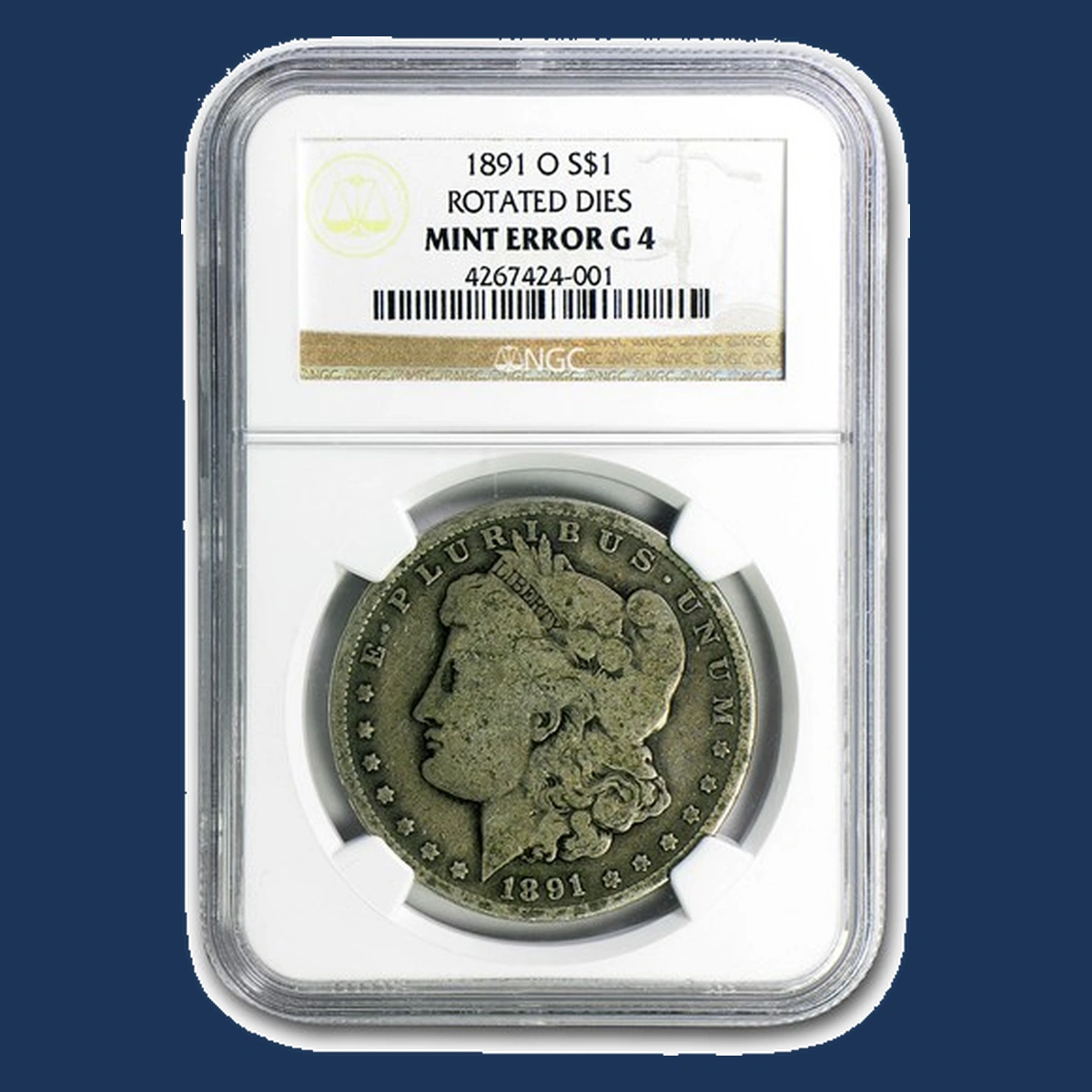
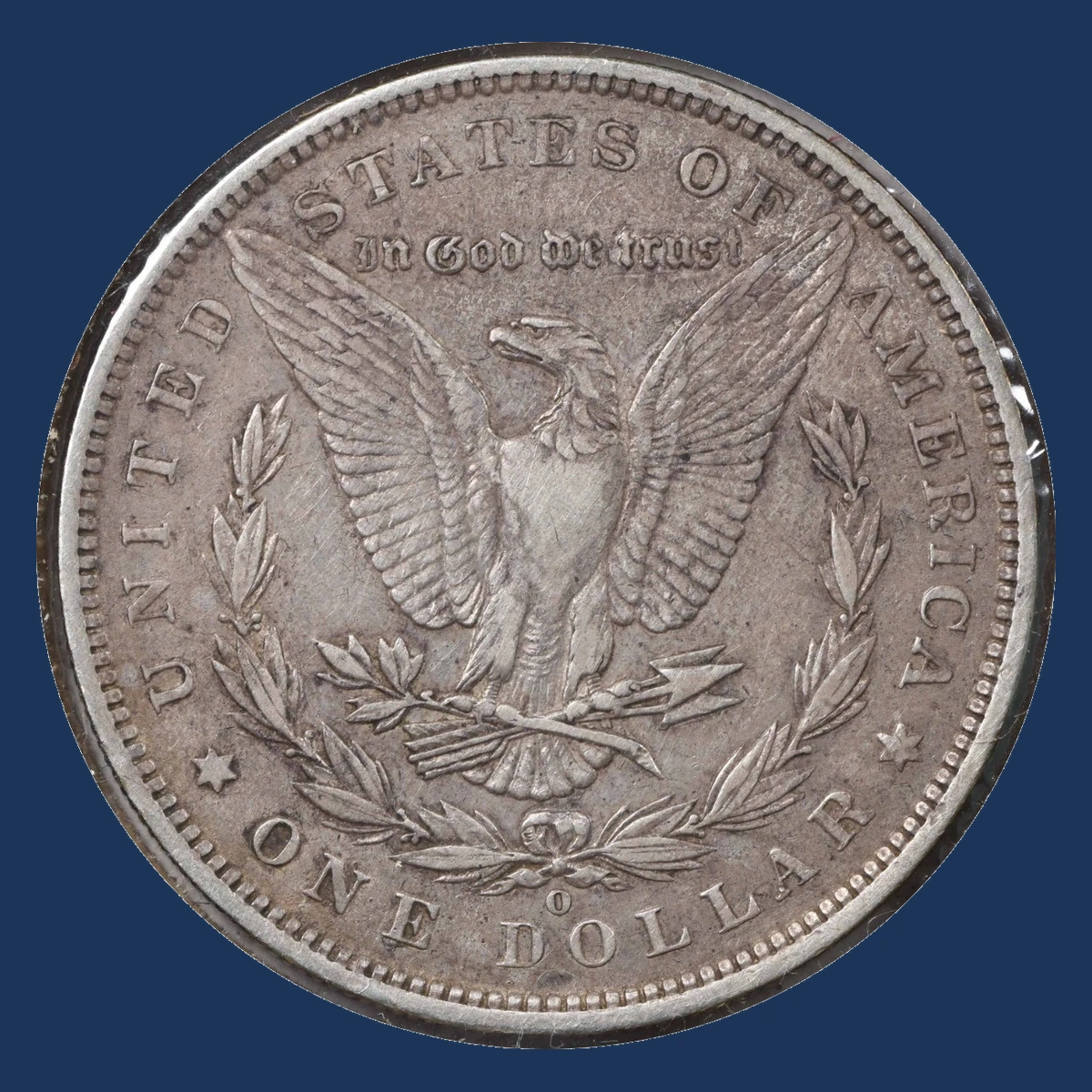
The back appears turned about 60 degrees counterclockwise on a reported 1891-O example. The coin is described as AG3, a heavily worn grade with only limited detail remaining.
This rotation concerns the relationship between the two faces, not the position of a mintmark. A stamping tool was turned away from its normal alignment.
Even a worn eagle can show the tilt if enough of its outline survives. Two independently straightened photographs hide that relationship, so the useful view shows the coin being flipped from an upright front to its back.
Estimated Value
The estimated range is $75–$800 for an authenticated 1891-O rotated-back dollar. The reported heavily worn example belongs toward the modest end, rather than being priced like an unworn rarity.
A clear, substantial turn is easier to sell than a slight tilt. Better surfaces and readable details can raise the total.
These values assume the angle is real and repeatable; a photograph rotated on a screen cannot establish an error premium.
How to Identify
Place the front upright and turn the coin top to bottom, as though turning a page over its horizontal edge. The eagle should stand upright on a normally aligned dollar.
For the reported coin, the back instead leans counterclockwise by roughly 60 degrees. Use the eagle’s body and the wreath as guides if heavy wear has weakened the fine details.
Repeat the flip without changing your grip, keeping the camera in the same position. A short video is more useful than two photographs separately rotated upright.
In a grading holder, turn the whole holder rather than opening it. Check that the same counterclockwise tilt returns every time you repeat the top-to-bottom flip.
2. 1891 Morgan Dollar Raised Texture from a Pitted Die
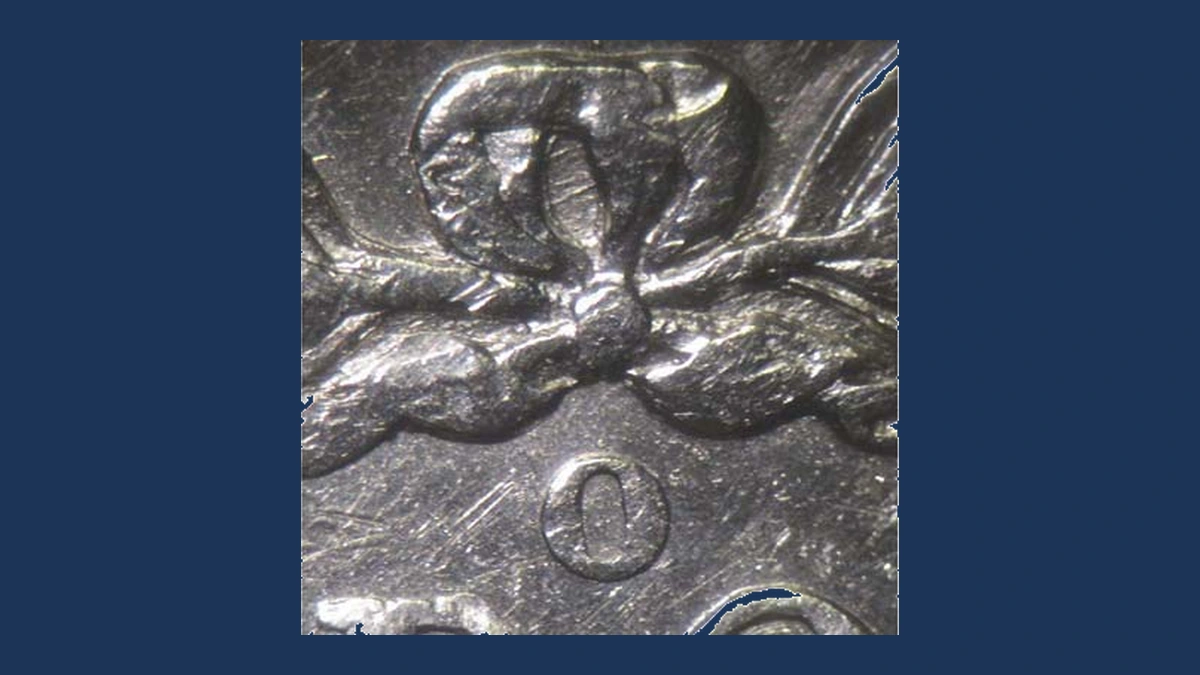
Tiny raised spots on the back can come from small hollows in the tool that stamped the coin. Silver fills those hollows during striking and forms bumps instead of pits.
The 1891-O VAM-1B is known as Pitted Reverse. Here, reverse means the coin’s back, while the pitting belongs to the tool rather than to damage eaten into the finished dollar.
This distinction separates the variety from corrosion. Random holes in a coin’s silver do not identify VAM-1B, and a generally rough surface needs more than a resemblance to the nickname.
Estimated Value
Use an estimated $100–$1,000 for a correctly matched VAM-1B across ordinary worn through modest unworn grades. PCGS records an AU53 example at $775 in an August 2019 eBay sale.
That amount is for the whole coin and its recognized variety. It is not a standard value for any rough-looking 1891-O dollar.
Clear raised texture and original surfaces help the comparison, while corrosion or cleaning can make both identification and resale harder.
How to Identify
Are the small rough points raised or sunken? Move a lamp across the back and watch the shadows before trying to match a variety photograph.
Pits in a stamping tool leave raised spots on its coins. Holes eaten into the silver by corrosion point to a different cause.
Use a 10× magnifier on a small group of raised spots. Compare their arrangement and nearby lettering with an authenticated VAM-1B image, rather than judging the whole surface as simply rough.
Look for disturbed silver or added material around any suspicious bump. Those signs can defeat an otherwise tempting comparison.
Confirm the O and 1891 date, then match the raised cluster in its exact location on the back.
3. 1891 Morgan Dollar Repunched Date with Other Tool Marks
The upper loop of the 8 shows the clearest extra date outline on 1891-O VAM-20. All four numerals have signs that the date punch entered the tool in slightly different positions.
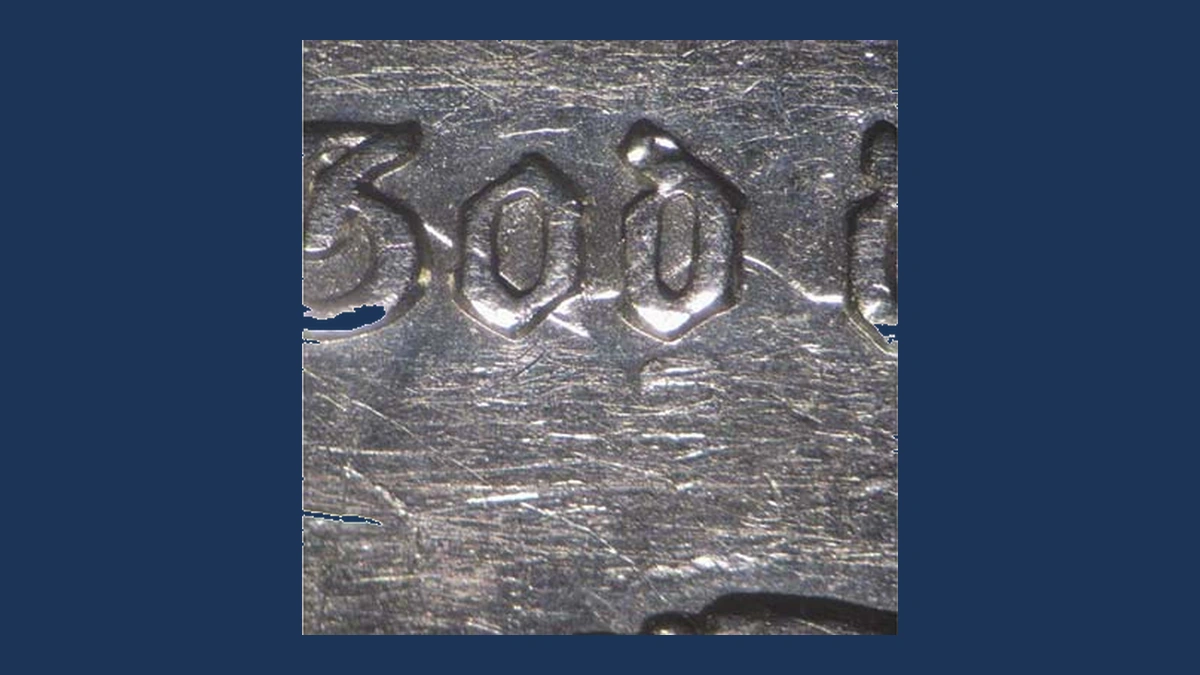
The same variety also has small doubled detail inside the top of the wreath bow. A separate collision between the tools transferred portrait outlines across IN GOD WE TRUST.
Morgan’s initial M appears below the D in GOD from that collision. These features share one coin, but the repeated date, doubled bow, and transferred portrait were produced by different events.
Estimated Value
An estimated $100–$1,200 covers VAM-20 across ordinary worn and modest unworn examples. Its price reflects the full combination of features on one coin, not separate amounts added for each mark.
A same-year comparison is the 1891-O Clashed E variety: an AU53 example sold for $780 in November 2020. That is another tool combination, not a VAM-20 transaction.
The date’s clarity, surface quality, and correct identification will shape the final value.
How to Identify
The back alone cannot settle this identification because its stamping tool also served the earlier VAM-14A combination. Begin with the date on the front, using a 10× magnifier inside the upper loop of the 8.
Compare that extra punched outline with the other three numerals, then turn to the back. Check the top of the wreath bow for slight doubling before tracing the transferred portrait through IN GOD WE TRUST.
Find the separate M below the D in GOD and compare both faces with a confirmed VAM-20. The repeated date, especially the upper loop of the 8, separates this combination from a coin that merely shares its back-side marks.
4. 1891 Morgan Dollar Clashed Letters and Portrait Outlines
A letter from one face can appear faintly on the other. This happens when the two stamping tools strike each other without a metal disc between them.
The damaged tools carry parts of the opposite design onto later coins. Collectors call these marks die clashes.
On 1891-O VAM-1A, an E from LIBERTY appears below the eagle’s tail; VAM-3A has a separate weak-E pattern. VAM-14A instead shares the unusual portrait outline across the motto seen on VAM-20, so these marks must be matched to their own tool combinations.
Estimated Value
Allow an estimated $100–$1,500 for these identified New Orleans clash varieties in ordinary worn through modest unworn grades. Strong, readable transferred details attract more interest than faint, unexplained lines.
An AU53 VAM-1A Clashed E sold for $780 in November 2020, according to PCGS. That is a useful same-year example, not a price for every clash pattern.
The grade, original surfaces, and exact variety all matter when choosing a comparable coin.
How to Identify
Choose the right comparison before tracing a letter. VAM-1A and VAM-3A concern different E patterns, while VAM-14A involves portrait marks around the back motto.
A 10× magnifier helps reveal the faint marks below the tail or across IN GOD WE TRUST. Follow recognizable pieces of a letter or portrait instead of treating every stray line as transferred design.
Now compare both faces with the selected variety photograph. The same back tool can pair with another front, so a matching back alone may leave the number unresolved.
For a quick first check, locate the transferred shape in its proper area and compare its outline with the opposite face’s original design.
5. 1891 Morgan Dollar Moustache from a Damaged Die
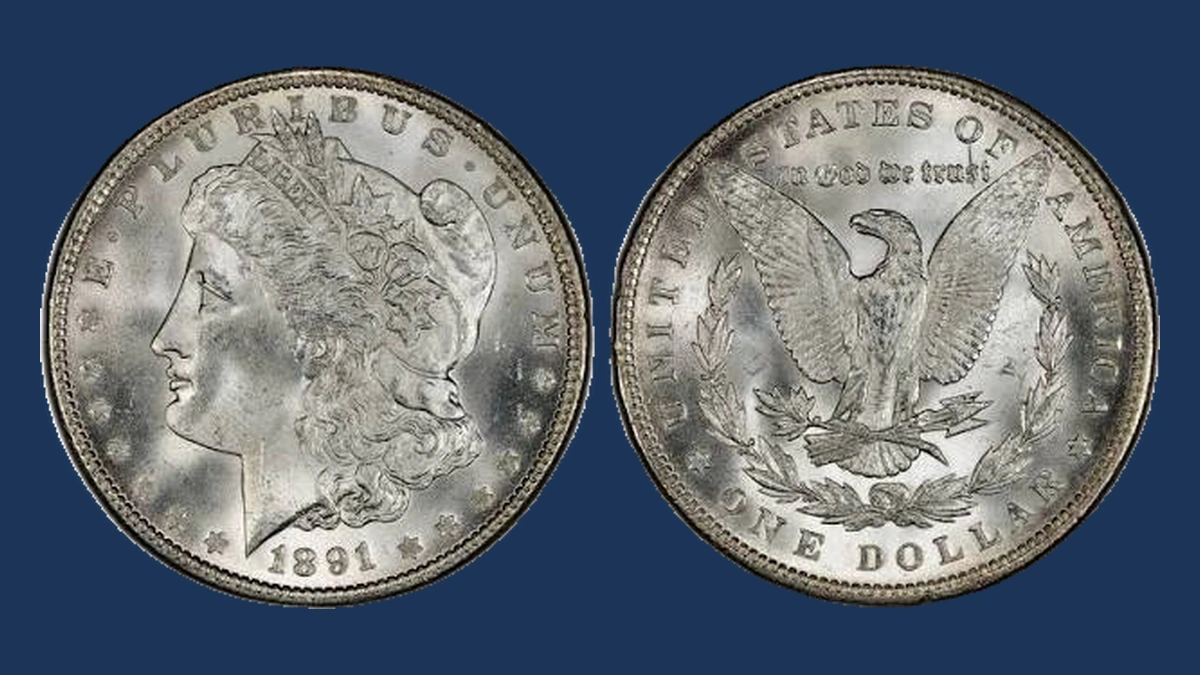
A raised patch beside Liberty’s upper lip can resemble a small moustache. On the Philadelphia VAM-2A, it comes from damage that developed in the steel stamping tool.
The coin also has a doubled ear, but the two features have different causes. The ear’s extra outline was already part of the tool’s design; the lip feature reflects later tool damage.
This is not a double-struck mouth. A plain doubled-ear VAM-2 does not need the moustache, while the separate VAM-2B is recognized for a transferred N near the neck.
Estimated Value
Estimate $150–$2,500 for an authenticated Moustache VAM-2A across worn through modest unworn grades. Clear lip detail and a secure variety match support the premium.
For a related same-year comparison, a VAM-2B doubled-ear and clashed-N coin graded MS64 sold for $780 in February 2026. That is a different tool state, not a Moustache sale.
A blurred bump, dirt, or a contact mark on Liberty’s lip should not receive this variety estimate.
How to Identify
Look closely at the upper lip on the front under angled light before enlarging the ear. The moustache feature must rise from the struck silver, rather than lie on top as grime or cut across it as damage.
Under a 10× magnifier, compare its shape with an authenticated VAM-2A photograph. Then check the doubled outline beneath the earlobe and along the hair immediately above the ear.
A bump in the right general area is not enough if the ear and surrounding design fail to match. Confirm the raised lip feature together with the doubled-ear pattern, keeping it separate from VAM-2B’s clashed N.
6. 1891 Morgan Dollar Doubled Ear or Stars
Two outlines beneath Liberty’s earlobe mark Philadelphia’s doubled-ear variety. The lower edge of the hair above the ear also shows the repeated detail.
This doubling existed on the stamping tool before the coin was struck. A single strike could therefore produce both outlines.
Philadelphia VAM-2 and VAM-2B share the ear feature, with VAM-2B also showing a clashed N near the neck. San Francisco VAM-3 instead has doubled stars on the front, so it belongs to the same broad mechanism but has a different pattern to examine.
Estimated Value
The estimated whole-coin range is $100–$7,000, depending on the exact variety, finish, and grade. Most worn examples are far below the upper end.
A Philadelphia VAM-2 graded MS65 sold for $2,760 in January 2019; a VAM-2B graded MS64 brought $780 in February 2026. These separate results do not set the price of San Francisco’s doubled stars.
Exceptionally preserved or strongly reflective pieces need closer grade-based comparison than an ordinary circulated example.
How to Identify
Which mint made the coin? A Philadelphia dollar has no mintmark beneath the wreath, while the San Francisco piece has an S.
On Philadelphia examples, magnify the bottom of the earlobe and the hair above it. The repeated outline should follow those design shapes, rather than look like a flat shaving from their edges.
Check the neck area separately if VAM-2B is claimed; its transferred N is an additional feature. Do not mistake it for another part of the ear doubling.
For an S-mint coin, inspect several corresponding star points instead. Match their separated outlines with a confirmed VAM-3 image, rather than applying the Philadelphia ear test.
7. 1891 Morgan Dollar Partial Collar
The rim spreads broadly at the upper front and lower back on a recorded 1891-CC dollar. Its edge has only part of the normal grooved pattern.
The retaining ring, called the collar, held some of the metal but left another part free to spread. That produces a partial-collar strike rather than a fully unconstrained broadstrike.
The recorded coin was graded PCGS MS64 and came from Leroy Van Allen’s collection. Its altered edge belongs to the original strike, so the wide rim should be read together with the incomplete grooves.
Estimated Value
Heritage sold the PCGS MS64 example for $2,013 on January 15, 2026. An estimated $1,000–$8,000 covers genuine 1891-CC partial-collar dollars across a useful range of preservation and visibility.
The Carson City mintmark already contributes substantial collector demand. A clear edge error adds interest, but the whole coin’s grade and surfaces remain important.
Later rim flattening or filing harms that value and should not be mistaken for stronger expansion during striking.
How to Identify
The face-on rim is the first clue, but request an edge view before deciding. On the documented coin, expansion appears at the upper front and lower back.
Follow the grooves around the edge to see where the retaining ring formed them and where silver spread beyond its normal reach. A 10× magnifier helps expose file marks or later scraping across that boundary.
A loose normal Morgan measures 38.1 millimeters and weighs 26.73 grams, but those reference figures cannot establish this error by themselves. A holdered coin can be checked through angled photographs without removing it.
Confirm the partially formed edge together with the matching broad rim, rather than judging the wide border alone.
8. 1891 Morgan Dollar Off-Center Strike
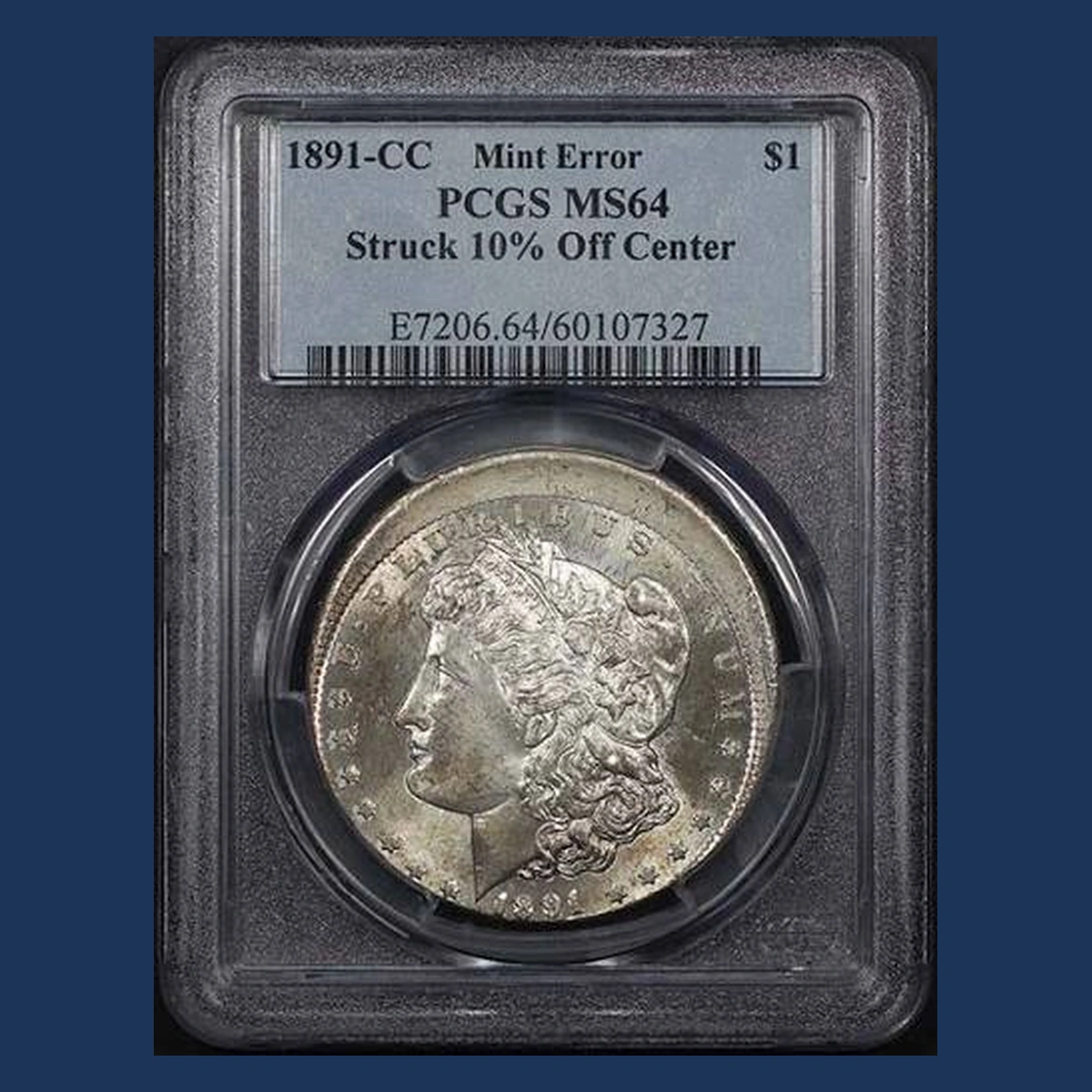
The right-side letters and stars nearly meet the edge on a recorded Philadelphia 1891 dollar. Unstruck silver remains beside the left border because the disc sat too far toward 3 o’clock.
Heritage listed this PCGS XF40 coin as 5% off center. A separate report describes an 1891-CC about 10% off center without giving its direction.
The Philadelphia photograph cannot establish the Carson City coin’s appearance. Both claims concern a misplaced disc during striking, rather than a mintmark placed incorrectly or a coin trimmed down after it left the Mint.
Estimated Value
The Philadelphia XF40 example sold for $1,920 on September 29, 2025. Estimate $1,500–$20,000 for genuine 1891 off-center dollars, with mint, displacement, and preservation affecting the total.
The upper portion allows for a clearly authenticated Carson City example with a larger shift. It is not a recorded sale of the reported CC coin.
A readable date, unaltered edge, and recognizable design help buyers compare the error with similar pieces.
How to Identify
Find the date and mintmark before measuring the displaced design. No mark means Philadelphia; two Cs beneath the wreath identify Carson City.
For the photographed Philadelphia coin, check the near-edge right lettering against the blank left crescent. Inspect the back and edge too, since a one-sided shift or uncentered broadstrike can require a different explanation.
The reported CC coin does not have an established clock direction here. Compare its actual photographs instead of expecting the Philadelphia pattern.
Do not use portrait scratches to prove an off-center strike. Identify the displacement from the relationship between the design, unstruck silver, and original outer edge.
9. 1891 Morgan Dollar Spitting Eagle
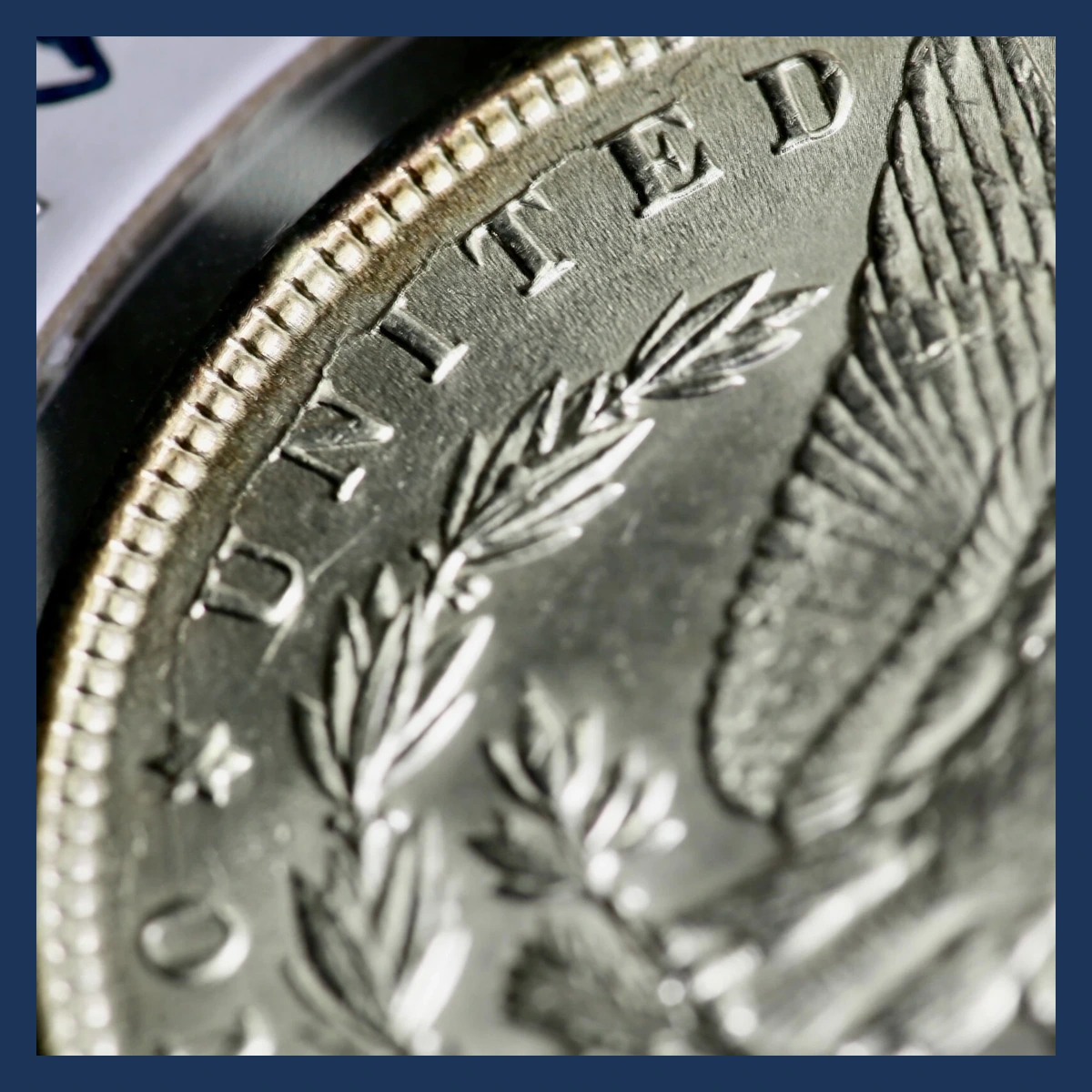
A small raised mark in front of the eagle’s beak gives this variety its memorable Spitting Eagle name. It looks as though the bird is sending a tiny shape into the open background.
The mark came from a gouge in the stamping tool. Silver filled that cut during striking, making a raised feature on the dollar.
Both VAM-3 and VAM-7 carry the Spitting Eagle name, but they are separate tool combinations. The visible mark should be checked with the rest of the coin before choosing between those two variety numbers.
Estimated Value
Estimated whole-coin values span $150–$45,000, from worn examples to exceptionally preserved Carson City dollars. The upper end reflects far more than the small mark itself.
A VAM-3 graded MS66+ sold for $40,800 in August 2019. By contrast, PCGS records a VAM-7 MS63 eBay sale at $1,825 in March 2019.
The examples have different grades and tool combinations, so neither figure is a standard surcharge to add to a normal 1891-CC dollar.
How to Identify
Locate the raised feature in front of the beak, then look beyond it. Dirt, a small impact, or added metal can imitate the nickname without matching the real variety.
Use a 10× magnifier and light from opposite sides to check that the mark is raised and continuous with the original silver. A cut scratched into a finished coin usually lies below the surface or pushes metal aside.
Compare both faces with authenticated VAM-3 and VAM-7 images because their shared nickname does not make them interchangeable. Confirm the CC mintmark and match the whole tool combination before selecting the variety number.
Conclusion
A nickname is only the beginning. Match the Spitting Eagle’s raised mark, the doubled ear’s separate outline, or the partial collar’s altered edge to the correct mint.
Estimated whole-coin values range from $75–$45,000 across these 1891 errors and varieties. Wear and surface quality make a large difference, especially on Carson City dollars, so compare similar grades instead of pricing every unusual mark from the highest auction result.