1882 Morgan Dollar Error List with Pictures

An S hiding inside an O can matter more than the size of a visible flaw. A superb 1882-O/S Morgan graded MS65+ brought $84,000 at auction in August 2022.
The 1882 Morgan Dollar errors below also include misplaced digits, lost metal, and two very different Carson City striking mistakes. Estimated whole-coin values span $75–$100,000.
Use the close-up feature and mintmark together as you work through the list.
1. 1882 Morgan Dollar Detached Metal Layer
A shallow, uneven patch can remain after a thin layer of silver separates from the coin. This is detached lamination, caused by a weakness within the original metal rather than normal wear.
An 1882-S example appeared in a Stack’s Bowers catalog as AU55 Details, Cleaned. AU55 indicates slight wear, while Details warns that its cleaned surfaces prevent a normal numerical grade.
The lost layer is a separate issue from the cleaning. Its shape and boundary must be examined directly, since a scraped or corroded patch can look similar in an unclear photograph.
Estimated Value
Estimate $75–$1,000 for genuine 1882-S detached laminations, with condition and the size of the missing layer affecting the result. The recorded cleaned coin belongs in comparisons with other problem surfaces.
An 1887 Philadelphia lamination graded NGC MS65+ sold for $162 in July 2020. That different-year, unworn coin shows that a real metal flaw need not bring a large premium.
A dramatic natural separation generally attracts more interest than a small, barely visible patch.
How to Identify
Look at the edge of the missing patch under low-angle light. A layered break may show silver separating along a shallow internal boundary rather than a tool cutting across the design.
With a 10× magnifier, inspect the exposed area and the surrounding surface for scraping grooves or metal pushed into a lip. Cleaning marks may be present on the recorded coin, but they do not describe the layer’s original cause.
If enough metal is absent, weighing a loose coin against the normal 26.73 grams can provide supporting information. It cannot distinguish a genuine flaw from later metal removal by itself.
Trace the natural layered boundary instead of identifying lamination from discoloration alone.
2. 1882 Morgan Dollar Misplaced Digits Below the Date
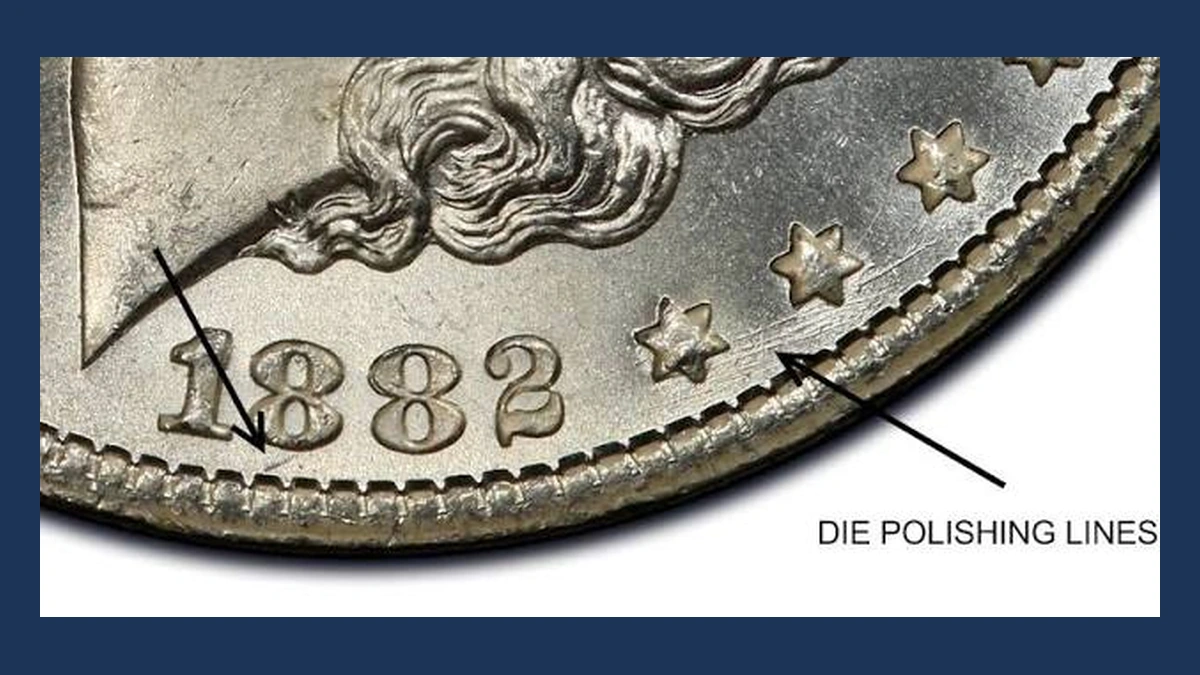
Tiny parts of a numeral can appear where the border should be clear. A date punch touched the stamping tool in the wrong place before the intended date was completed.
The 1882-CC VAM-2 has a misplaced 1 remnant below the first 8. Philadelphia’s VAM-24 instead has two misplaced 1 remnants at the border teeth below that area.
The Philadelphia remnants can become faint as the tool changes with use. Raised texture near the upper ear and a diagonal tool line above the eagle’s inner claw help identify that same Philadelphia variety.
Estimated Value
Estimated prices run from $75–$5,000 across these misplaced-date varieties, from ordinary Philadelphia examples to well-preserved Carson City coins. The mint and grade account for much of that spread.
PCGS records an 1882-CC VAM-2 MS66 sale at $1,695 in August 2018. That high-grade result is not a price for every small mark beneath an 8.
Faint remnants still need a convincing match, while cleaning or heavy wear can limit the premium.
How to Identify
First establish which mint’s photograph to use: CC appears below the wreath on Carson City dollars, while Philadelphia has no mintmark. Their misplaced digits are not interchangeable.
Under a 10× magnifier, inspect below the first 8 and along the small border teeth. Look for a recognizable piece of a 1 rather than treating every raised speck as a digit.
On Philadelphia VAM-24, the two remnants may be faint. Compare the upper-ear texture and diagonal line above the inner eagle claw with the published variety photographs.
For the CC coin, use its own misplaced-1 image. Match the numeral remnant and supporting details on the correct mint’s dollar.
3. 1882 Morgan Dollar Clash Marks from Contacting Tools
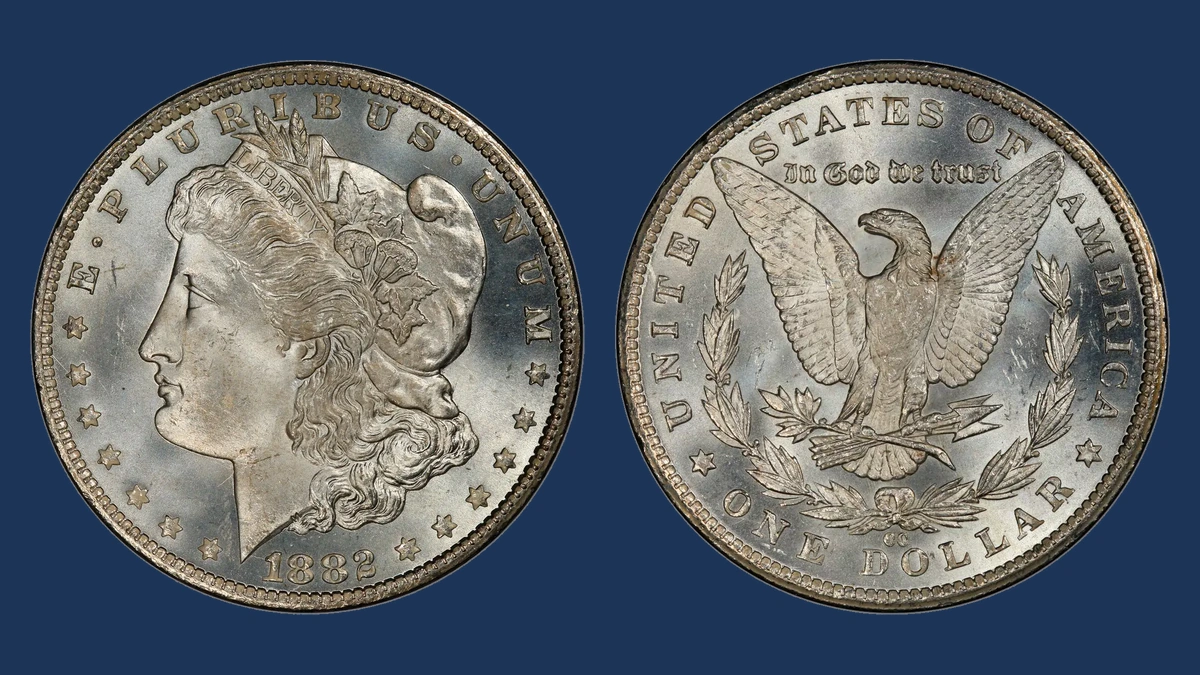
A faint line near Liberty’s neck may belong to a design normally found on the other face. This can happen when the two steel stamping tools, called dies, hit each other without a coin between them.
The damaged tools pass their new marks onto later dollars. This is a die clash, not a second complete strike on the coin.
Carson City varieties VAM-2A, 2B, and 2C show different stages of this tool history. They retain the misplaced-date connection, but their clash details must be matched separately rather than combined into one pattern.
Estimated Value
An estimated $150–$6,000 covers these 1882-CC clash varieties through ordinary worn and better unworn examples. Strong preservation and a correctly matched stage can make a large difference.
A VAM-2A graded MS66 brought $999 at Heritage in February 2017, as recorded by PCGS. That sale concerns one stage and grade, not a fixed price for all three varieties.
The underlying Carson City value remains part of the total, even when the clash marks are subtle.
How to Identify
Use two views of the same dollar. A line near the neck should make sense beside the other marks on that coin, not just resemble one attractive close-up.
Compare it with an authenticated example of the named stage under similar lighting. VAM-2A, 2B, and 2C describe different appearances, so a match to the misplaced date alone is insufficient.
Follow the suspect line with a 10× magnifier. A later scratch cutting across the surface is not evidence that the stamping tools collided.
Check the corresponding back-side details as well.
Choose the stage whose neck-area marks and surrounding features agree with both faces of your coin, rather than joining clues from three different photographs.
4. 1882 Morgan Dollar Struck-Through Impression and Metal Flaw
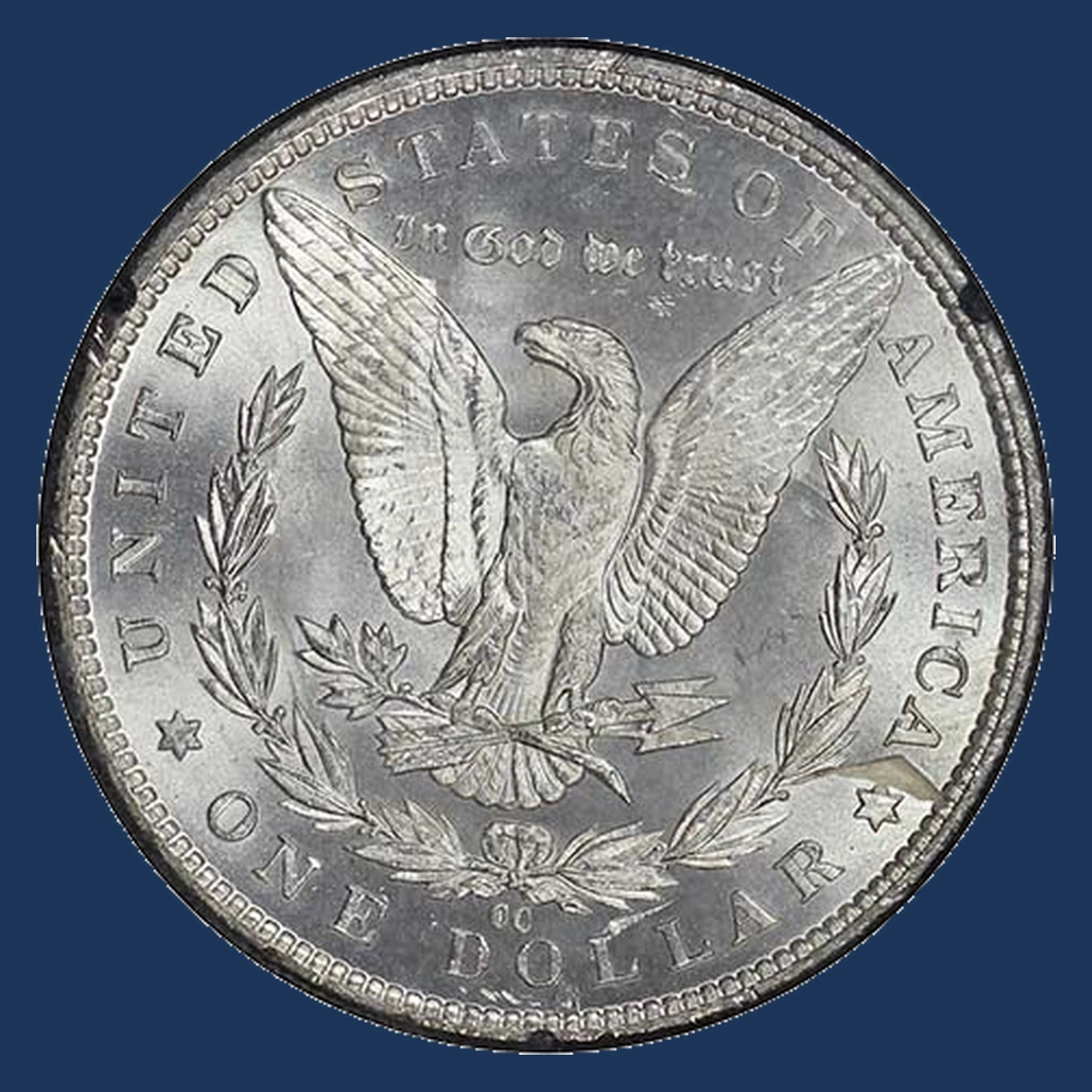
One 1882-CC dollar carries two different kinds of irregularity. Its front has an impression left when something blocked contact with the stamping tool, while its back has a flaw in the original metal.
Mint Error News pictures the same NGC MS64 coin in its GSA government holder. The two faces belong together, but they do not necessarily share one cause.
The blocking object should not be named from the hollow alone. Likewise, the back-side flaw needs its own surface examination rather than being treated as another view of the front impression.
Estimated Value
For an authenticated 1882-CC dollar with these combined features, estimate $400–$7,500 for the whole coin. Size, visibility, and the dollar’s surface condition matter more than counting two labels.
As a different-year comparison, an 1899-O Morgan retaining a piece of wood sold for $504 in October 2022. A retained object and an empty impression can appeal differently.
Carson City identity can add demand, but the two flaws should not receive separate prices that are then added together.
How to Identify
Label photographs front and back before comparing details. Start with the front depression and follow any normal design line into the area where the obstruction interrupted it.
Look for a struck boundary rather than sharp cuts or dragged silver. A 10× magnifier and angled light can show whether later scraping offers a better explanation.
Now examine the back independently for the original metal flaw. Do not assume it is a second struck-through hollow simply because the front has one.
Leave any loose metal or attached material undisturbed, and keep both views tied to the same holder. Match the front impression and back flaw together with photographs of the documented MS64 dollar.
5. 1882 Morgan Dollar Double Strike with an Earlier Off-Center Design
Traces of an earlier design lie below the later, centered impression on this 1882-CC dollar. Its first strike landed about 5% toward 6 o’clock, leaving the border teeth beneath the date off the metal.
The coin stayed in the press and received a second strike after moving into a better position. The designs shifted without a clear rotation between them.
NGC graded this GSA-holder example MS62. It is a different dollar from the 15% off-center Grand Snake, and its hidden edge does not establish an additional partial-collar error.
Estimated Value
This MS62 double strike sold for $29,900 at Heritage on August 14, 2006. An estimated $15,000–$60,000 suits major authenticated 1882-CC double strikes with comparable visible detail and preservation.
The price reflects two impressions on one dollar, along with its Carson City identity and original government holder. It should not be divided into separate payments for each strike.
Clear surviving first-strike detail makes comparison easier than vague doubling on a few letters.
How to Identify
Use the date as the starting landmark, then trace the surrounding border and any earlier outlines beneath the centered design. The first impression should fit a downward displacement rather than an arbitrary collection of doubled edges.
Compare several distant details on both faces with the auction photographs. In this example, the second design sits farther north without an obvious turn relative to the first.
The GSA holder hides the edge, so do not infer its exact shape from the visible rim alone. A 10× magnifier helps locate the surviving earlier detail, but the full-face relationship is what identifies two strikes rather than minor tool doubling.
6. 1882 Morgan Dollar Repunched Mintmarks: O/O and O/S
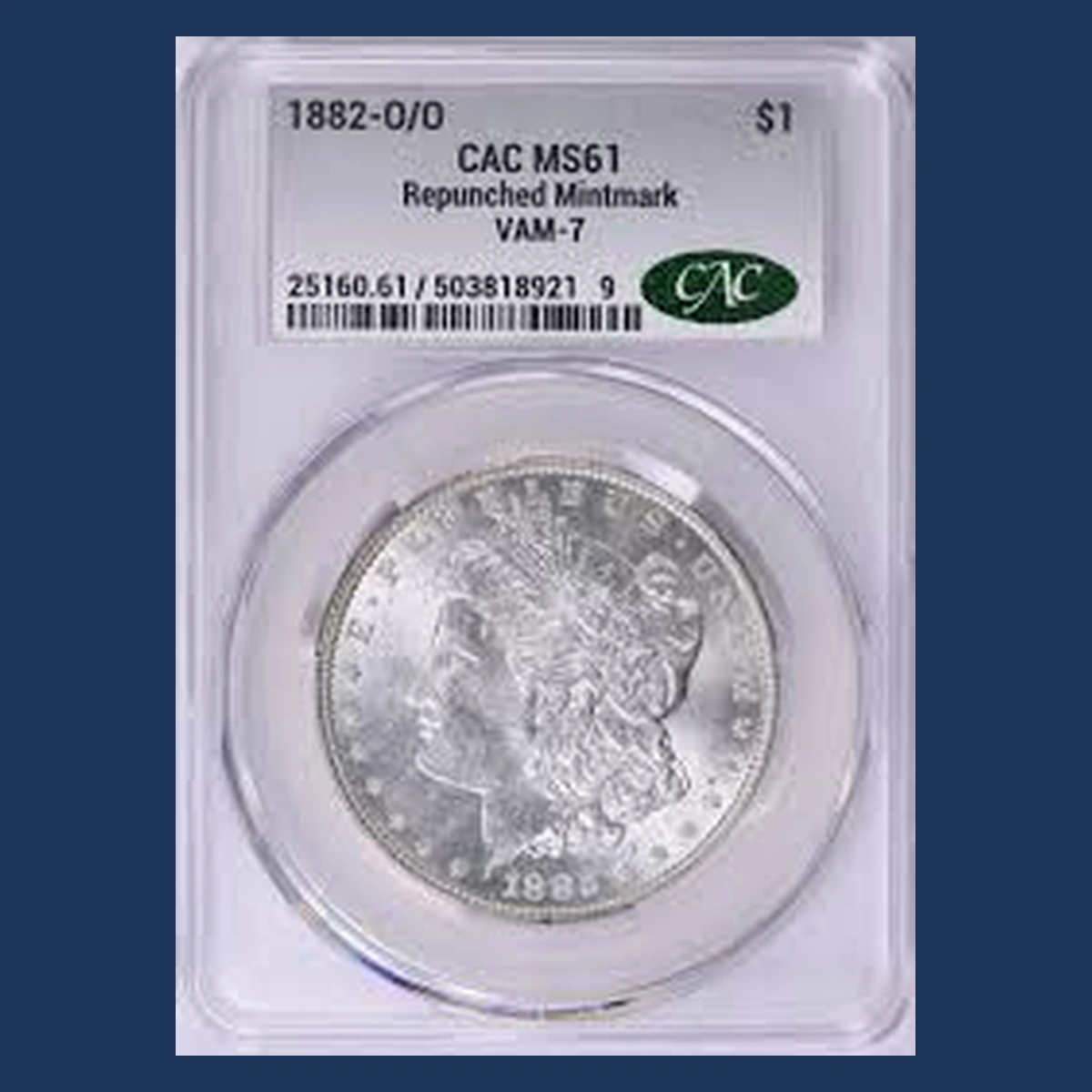
A small extra line inside the O may reveal an earlier letter punched into the same stamping tool. On VAM-7, the earlier letter was another O.
The O/S varieties instead show remnants of an S beneath the New Orleans O. VAM-3, VAM-4, and VAM-5 have different surviving S shapes, often described as flush, recessed, and broken.
Those names describe the remaining detail, not damage inflicted on the finished coin. Earlier and later stages can look different, so a clear O/S photograph should not be used as a universal pattern for every variety.
Estimated Value
Across O/O and O/S varieties, estimated whole-coin values span $75–$90,000. The top end belongs to exceptional O/S preservation, while ordinary examples can be far more affordable.
PCGS records a strong O/S graded MS65+ at $84,000 in August 2022. A worn VAM-3 graded AU55 sold for $104 at Heritage in August 2025.
The contrast shows why both the letter pattern and the condition must match before an auction price becomes useful.
How to Identify
Focus on the shape of the earlier letter, not simply whether the O looks thick. A repeated O curve points toward O/O, while recognizable S remnants require the separate O/S comparison.
Light the mintmark from different angles under a 10× magnifier. A flat ledge, reflection, or patch of dirt can create a misleading extra line.
For an O/S candidate, compare with the appropriate flush, recessed, or broken-S photograph. The early and later tool stages also need their own images.
Leave dirt in place rather than digging around the letter. Identify the surviving letter shape and its exact position within the O before assigning a variety name.
7. 1882 Morgan Dollar Grand Snake Off-Center Strike
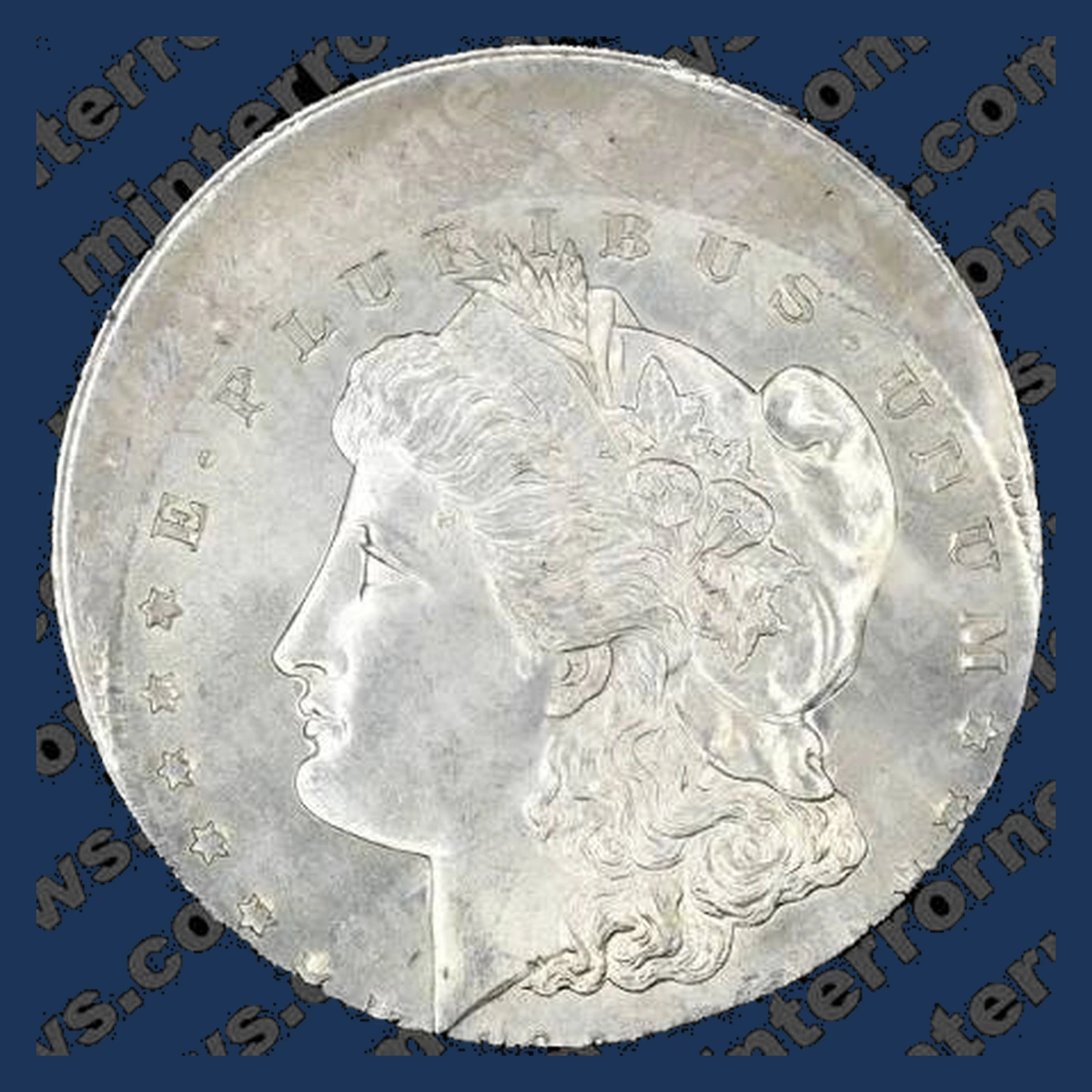
A broad unstruck area borders the displaced design on the Carson City dollar known as the Grand Snake. NGC identified it as 15% off center and graded it MS65, a high unworn grade.
The metal disc was not fully beneath the stamping tools when they closed. Both faces therefore carry an incomplete design beside untouched metal.
This dollar survives in its original GSA government holder and became publicly documented again in 2022. It is a single off-center example, distinct from the MS62 dollar that received a second strike after its initial 5% displacement.
Estimated Value
Estimate $25,000–$100,000 for the authenticated Grand Snake or a genuinely comparable major 1882-CC off-center dollar. Its condition, Carson City origin, and government-sale history contribute to the estimate.
A different-year Philadelphia Morgan struck 30% off center, with cleaning, sold for $18,300 in January 2026. That comparison lacks this coin’s mint and historical identity.
The Grand Snake’s original $30 government purchase in 1973 is a historical fact, not a measure of its later collector value.
How to Identify
Begin with the whole holder and both faces. The Grand Snake has a specific documented appearance; a generic 1882-CC dollar beside a blank-looking holder edge is not enough.
Compare the surviving portrait, lettering, and unstruck area with NGC’s published photographs. A holder can conceal part of the rim, so distinguish exposed coin metal from the surrounding black plastic.
The normal Morgan standard is 26.73 grams of 90% silver, but do not remove this dollar from its original holder to weigh it. Its full design layout, original packaging, and NGC identification should match the recorded 15% specimen, rather than the separate 5% double strike.
Conclusion
Small details carry much of the story on 1882 dollars, from an extra numeral below the date to an S beneath an O. Larger mistakes need both faces checked together.
The estimated $75–$100,000 range covers very different coins and condition levels. Match the mint, exact feature, and surface quality before comparing a price, and keep the Grand Snake separate from the double-struck GSA example.