1873 Trade Dollar Error List with Pictures

A misplaced date can hide among the border teeth, while a major striking error can replace the eagle with backward Liberty. Both appear among 1873 Trade Dollar errors.
A same-series comparison, an 1877-S expanded strike, sold for $6,300 in November 2018. An 1873-CC misplaced-date example brought $5,280 in April 2025.
Estimated ranges below span $200–$200,000, including a rare museum error whose figure is an estimate, not a sale. Read on to separate the small markers from that exceptional coin.
1. 1873 Trade Dollar Reported Arm Worm Tool Feature
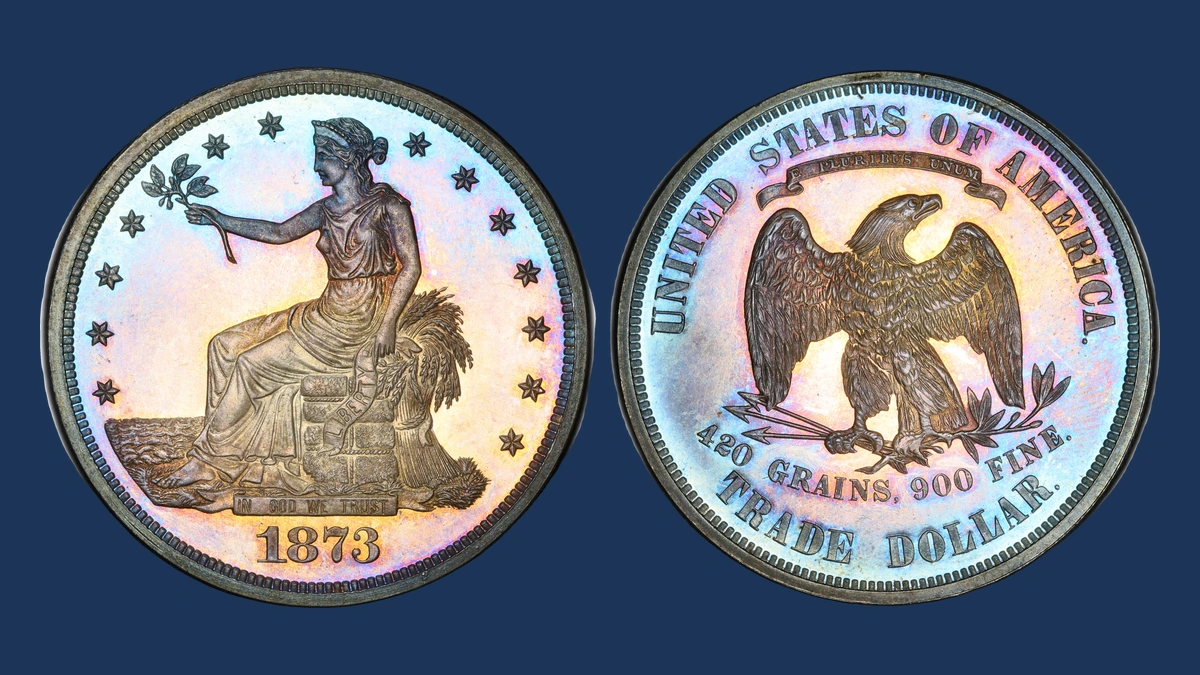
Arm Worm is a collector’s name for a feature on Liberty’s arm. PCGS lists it as a Philadelphia 1873 Trade dollar variety.
The name alone does not tell you the line’s exact shape or how it formed. It should not be read as evidence of an insect trapped in the coin.
A feature copied from the stamping tool can appear on several dollars made with that tool. A later scratch can instead alter just one finished coin.
The reported variety needs comparison with an identified example. Calling every curved arm mark an Arm Worm would combine unrelated surface features.
Estimated Value
Estimate $200–$6,000 for identified Philadelphia examples across worn through ordinary unworn condition. Much of that value belongs to the Trade dollar itself rather than a separately measured premium for the arm feature.
A close match and original surfaces are more useful than a nickname. Marks from cleaning or scratches across the portrait may reduce appeal.
An exceptional high-grade coin can exceed this general range for reasons unrelated to the arm. Compare the complete coin’s preservation before applying a variety price.
How to Identify
Begin with a photograph of a dollar specifically identified as the Arm Worm variety. A plain 1873 date or a seller’s unexplained nickname is not enough to select the right close-up.
Place its arm detail beside your candidate at the same magnification. Compare the position relative to the surrounding arm and clothing, without inventing a shape from the word worm.
Use angled light to distinguish a raised feature from a cut and its displaced edges. Record the whole front so the location stays connected to the actual dated coin.
If the shape does not match, describe what you see rather than assigning the name. Other lines on the arm may have completely different causes.
2. 1873 Trade Dollar Misplaced Digit Tops below the Date
Extra digit tops can appear in the border teeth below 1873. They come from an early date-punch impression placed too low in the stamping tool.
A Carson City auction example shows the tops of 87 beneath the final date. Another documented pattern has a deeply misplaced 7 near the normal 7.
Those are separate patterns, not a universal group of hidden digits. The surrounding border provides the best way to compare their exact positions.
The auction coin also has a tool line through D in DOLLAR. That companion detail belongs to the same dollar rather than a second collectible specimen.
Estimated Value
The Carson City example with misplaced 87 sold for $5,280 in April 2025 at Heritage. Its PCGS AU55 grade indicates slight wear with substantial detail remaining.
Estimate $1,000–$15,000 for matched misplaced-date examples across circulated and ordinary unworn conditions. The range values the complete coin, including its Carson City rarity.
A clear remnant can help identification even on a worn dollar. The single-7 pattern needs its own comparison and should not automatically inherit the auction coin’s exact price.
How to Identify
Follow the border teeth directly below the date with a magnifier. Look for curves or corners that belong to digit tops rather than the normal repeating teeth.
For the misplaced-87 example, compare both remnants and their spacing with the final 1873 above them. Keep the intervening metal in the picture so their location is unambiguous.
The separate deeply placed 7 should be checked beside the normal 7. Do not join its photograph to the 87 example as if both showed one coin.
Inspect for recent cuts or tool marks in this vulnerable border area. A genuine date-punch remnant should match the documented pattern, not merely resemble a number after the image is turned.
3. 1873 Trade Dollar Greatly Expanded Strike with a Backward Portrait
The museum dollar combines two striking effects on one coin. Its metal spread far beyond the normal border, and its back received a sunken mirror image of Liberty.
Expansion without normal support from the surrounding ring is called a broadstrike. A backward impression made by contact with an already struck coin is called a brockage.
The reported specimen is graded PCGS AU55, indicating slight wear. Its Carson City attribution comes from the documented history and professional assessment because the usual mint area is covered.
Solder at the top belongs to later damage. It does not explain the expanded, mirror-image strike.
Estimated Value
Use an estimated $50,000–$200,000 for a comparable authenticated major Trade dollar broadstrike with a full backward portrait. This is not a recorded sale or official appraisal of the museum coin.
For scale, a simpler 1877-S broadstrike brought $6,300 in November 2018 at Heritage. That different-year coin did not have this full brockage.
The museum example’s combined appearance, rarity, history, and condition demand a separate valuation. Its two effects should not be priced as two complete coins.
How to Identify
Read the back’s lettering before judging the unusually wide border. The recorded specimen has a sunken, reversed version of the front design where the eagle would normally appear.
Compare the entire outline with the way the design spreads across the metal. A normal dollar flattened later can become wider without producing this original combination of features.
Do not search for a visible CC as the deciding test on this particular coin. The brockage covers the normal mint area, making its documented identification especially important.
Keep the later solder at twelve o’clock separate from the strike evidence. Neither scraping that material nor pressing another dollar against a candidate is an appropriate way to test the mint-made features.
Conclusion
The three features require different evidence: a matching arm detail, extra digit tops, or an expanded coin with a backward portrait. The museum error’s hidden mint area also makes its documented history important.
Estimated whole-coin values range from $200–$200,000. The $5,280 misplaced-date auction result is a real transaction, while the museum coin’s larger figure remains an estimated comparison.
Preserve each coin’s identity when comparing close-ups.