1851 Dollar Coin Error List with Pictures

An O beneath the eagle creates an unusual puzzle on a dollar dated 1851. New Orleans made no silver dollars that year, yet a later collector piece retains a flattened O.
PCGS’s ownership history records that rare piece at $373,750 in June 2008. Ordinary original dollars have different clues, including fine back cracks and traces from tools striking one another.
This 1851 Liberty Seated dollar error guide keeps those coins separate. Read on for estimated whole-coin values from $10,000–$500,000 and practical comparisons.
1. 1851 Liberty Seated Dollar Raised Cracks beside ONE and UNITED
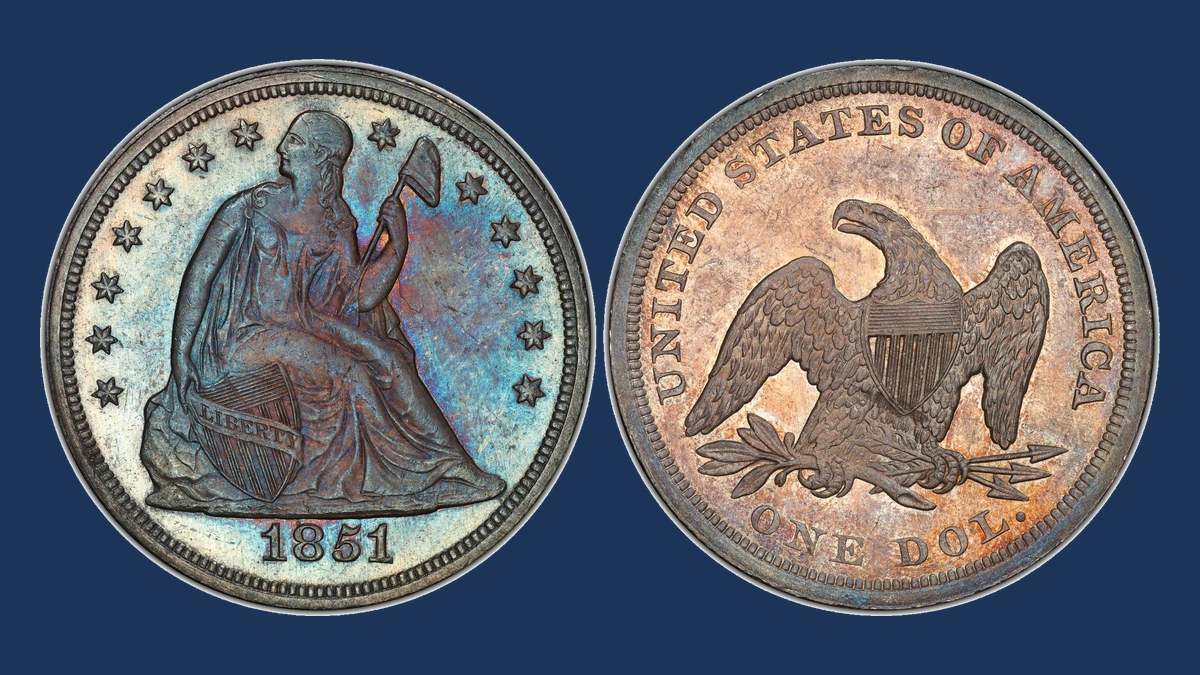
Two fine raised lines were described on an original dollar in the American Numismatic Society collection. One runs from the border below the N in ONE toward the bottom of the O.
The other begins near eight o’clock and reaches the upper-left tip of the U in UNITED. These lines copied cracks in the back stamping tool.
The original issue is called High Date because its date sits close to Liberty’s rock. That position is normal for this issue.
Its back tool had been used earlier, and polishing reduced some crack detail. Not every example shows equally strong lines.
Estimated Value
Estimate $10,000–$100,000 for genuine original 1851 dollars across worn and desirable unworn conditions. Most of the value comes from the scarce date and preservation, rather than the cracks alone.
An original MS63 dollar brought $76,375 in July 2022. That unworn-coin result is a same-year condition comparison, not a sale of the museum’s example.
A clear crack can aid identification. It does not make a cleaned or heavily worn coin equal to a better-preserved auction piece.
How to Identify
Use the word ONE to begin the first check. Look below its N at the border, then trace any raised line toward the bottom of the O.
For the second route, keep the eagle upright and locate the lower-left border near eight o’clock. Follow the line toward the upper-left end of UNITED’s U.
A magnifier and low light help distinguish a raised thread from a scratch cut into the silver. Matching the starting point and path is stronger evidence than finding any line near a letter.
Compare both routes with an identified original dollar. Polishing of the stamping tool can weaken them, so faintness alone does not establish a different type of coin.
2. 1851 Liberty Seated Dollar Traces from Clashed Stamping Tools
A faint part of the back design can appear among the normal details on the front. This happens when the two stamping tools hit each other without a metal blank between them.
The tools, called dies, can then copy those transferred shapes onto later coins. Collectors call the effect a die clash.
Original 1851 dollars were later made with polished tools that had lost their earlier clash marks. Some coins may therefore have visible traces while others lack them.
A shiny surface alone does not identify a collector Proof. Ordinary dollars also came from those polished tools.
Estimated Value
For original dollars with identifiable clash traces, estimate $10,000–$100,000 across worn and attractive unworn examples. The range prices the complete rare-date coin, not a separately valued outline.
The $76,375 original-dollar sale offers a preservation comparison. It does not establish that its buyer paid a fixed clash premium.
A faint mark may interest specialists, but scratches or cleaning can still lower appeal. Reflective surfaces alone neither prove a Proof nor guarantee the upper end of the range.
How to Identify
Tilt the coin under a low lamp and inspect the open areas around Liberty. Keep a full-front photograph beside any close-up so the neighboring design remains visible.
An isolated line is easy to misread.
Compare the shape with the design on the back, looking for a part that could have transferred between the stamping tools. A random scratch or polishing line should not be named as a feather without that match.
Next compare an original dollar made before the tools were polished. Later reflective examples may lack the earlier traces and are poor matches for this particular check.
Ask a specialist to examine faint marks that remain hard to distinguish. The useful evidence is a transferred shape that fits the opposing picture, not shine alone.
3. 1851 Liberty Seated Dollar Later Collector Strike with a Flattened O
The O is recognizable but flattened on this unusual collector dollar made at Philadelphia after the date it carries. Such later production is called a restrike.
The O normally identifies New Orleans, which made no silver dollar dated 1851. Its presence therefore needs more explanation than an ordinary mintmark.
One explanation is that an older New Orleans dollar received the later 1851 designs. Another proposes an O-bearing back tool paired with the 1851 front.
These explanations remain debated, so the O does not reveal a definite older date underneath. Compare the whole coin before deciding how the letter got there.
Estimated Value
For the recognized later O-bearing piece, use an estimated $200,000–$500,000. Its unusual identity and ownership history put it in a different market from original ordinary dollars.
The PCGS ownership history records $373,750 in June 2008 for the PR62 example. PR62 describes a collector Proof with noticeable surface imperfections.
This is a whole-coin comparison. An O added to another dollar, or an unexplained flattened mark, does not establish the same valuable identity.
How to Identify
Compare the full front, date placement, and back with photographs of the recognized collector piece. An original dollar and a later restrike can share the same date while differing in how they were made.
Then magnify the flattened O beneath the eagle, keeping the surrounding silver in view. Fresh cuts or disturbed metal beside the letter may suggest later engraving or an added mark.
Leave that area untouched.
If an older coin is proposed underneath, look for actual surviving design rather than choosing a possible year from a list. The faint O by itself cannot supply a hidden date.
Have a specialist compare both faces and the letter’s surface together. Matching the recognized piece requires more than finding an O on a dollar dated 1851.
Conclusion
The original High Date dollar and the later O-bearing collector piece need different identifications. A fine crack or a faint transferred outline does not turn an ordinary original into the exceptional O example.
Estimated whole-coin values span $10,000–$500,000. The higher range belongs to the rare later piece, while preservation drives much of the price for original dollars.
Compare both faces and the entire coin’s history before using a small mark to assign its identity.