1843 Dollar Coin Error List with Pictures

The 4 deserves a closer look on an 1843 silver dollar. Part of an earlier punch can survive alongside that digit, even though the date still reads 1843.
An attractive unworn example of the OC-1 variety brought $13,200 in August 2025. That price reflects the complete dollar’s rarity and preservation, not just the extra stroke.
This 1843 Liberty Seated dollar error guide explains the repeated 4. Read on for identification steps and estimated whole-coin values of $400–$15,000.
1843 Liberty Seated Dollar Repunched 4 in the Date
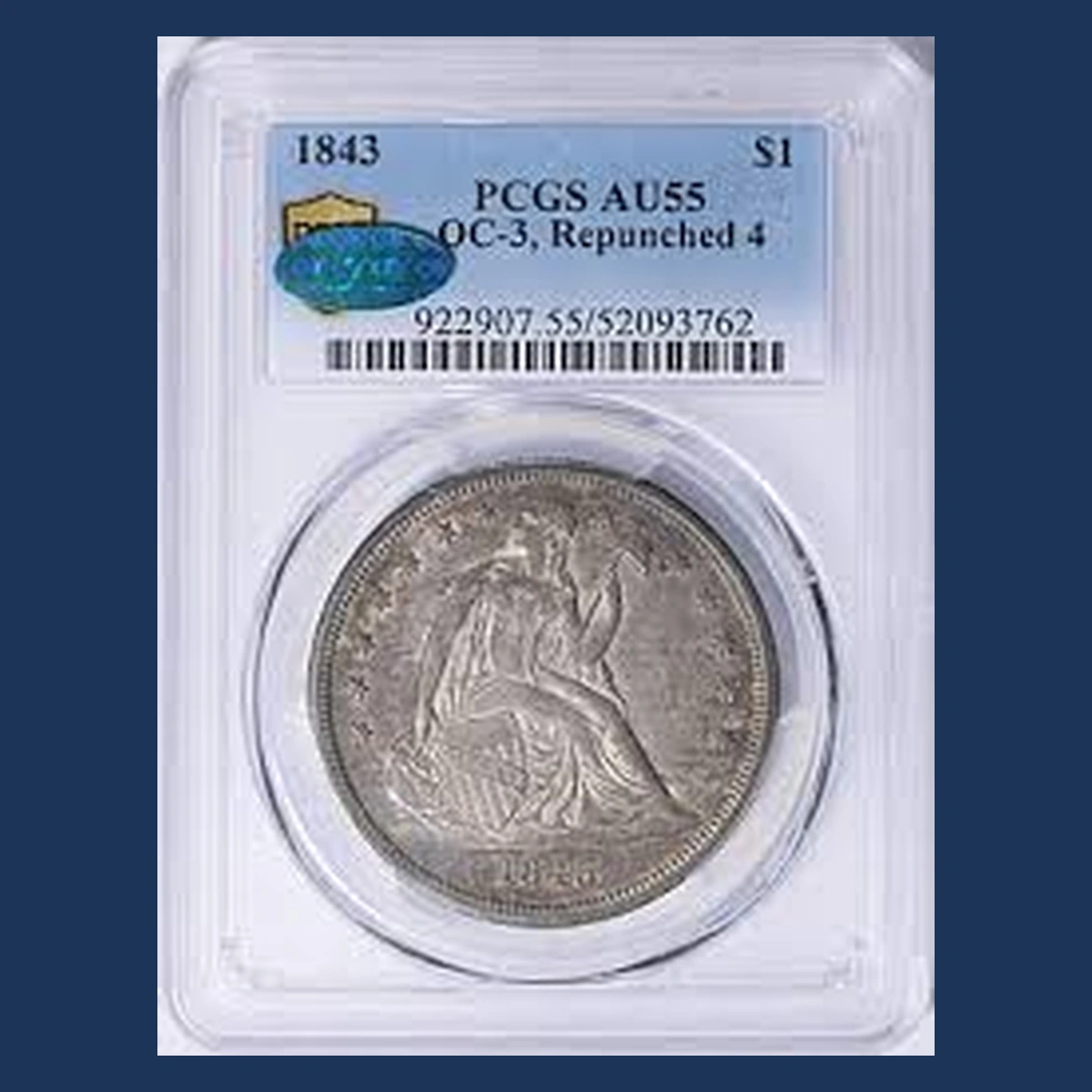
A second edge beside part of the 4 can record more than one use of the date punch. The earlier impression remained in the steel tool that later stamped the dollar.
This is a repunched date, rather than a new year struck over a finished coin. The extra marks repeat the same digit.
PCGS lists the feature with OC-1, OC-2, and OC-3, names for different pairings of front and back stamping tools. Each pairing needs its own photographic comparison.
A mark from another pairing may not match. Follow the surviving 4 outlines rather than assuming every repeated digit looks identical.
Estimated Value
A PCGS MS64 OC-1 example sold for $13,200 in August 2025, recorded by PCGS CoinFacts. MS64 means an unworn coin with relatively few marks.
Estimate $400–$15,000 across worn and attractive unworn examples with a matching repeated 4. Rarity and surface preservation account for much of the range.
The OC-1 sale does not set a fixed price for the other tool pairings. A worn or cleaned coin can be worth much less despite retaining the repeated digit.
How to Identify
Keep all four date digits in view while centering a 10× magnifier over the 4. A close crop showing only a tiny line can make an ordinary digit edge look unusual.
Follow the 4’s main strokes and their short end projections, then compare any extra outline with an identified example. Use the reference for the same OC pairing instead of borrowing a clearer detail from another.
Change the light to see whether the suspected earlier stroke remains part of the raised metal. A reflection shifts, while a scratch cuts across the surface.
Finally inspect the surrounding date for later engraving or damage. A genuine repeated digit should fit the original strike and the coin’s wear.
Conclusion
The 1843 dollar’s repeated 4 began while a stamping tool was prepared. It is a small date feature, not proof of a second strike on the finished dollar.
Estimated whole-coin values span $400–$15,000. The $13,200 OC-1 example illustrates the importance of attractive unworn condition, so a worn coin should not inherit that price from one extra line.
Compare the complete digit and preserve the surrounding surface.