1802 Dollar Coin Error List with Pictures

The last digit on an 1802 dollar may hide part of an older date. An 1802/1 graded AU58 brought $26,400 in April 2020.
This 1802 Draped Bust Dollar error list follows the old numeral, raised cracks, a faint transferred line, and two different kinds of design movement. Estimated whole-coin values for the circulated examples covered here span $1,200–$50,000.
Use the comparisons below to tell a second strike from a slightly turned back design.
1. 1802 Draped Bust Dollar Slightly Turned Back Design
A dollar can have one clear impression on each face, yet the back does not sit quite upright after flipping it. The two stamping tools were set at slightly different angles.
Stack’s Bowers described an 1802 Narrow Date BB-241 dollar with the back rotated about ten to fifteen degrees counterclockwise. It was graded PCGS AU58, meaning only slight wear remained.
This is a small alignment difference rather than a second strike. The cataloged tilt does not guarantee that a grading service will place an error designation on the holder.
Estimated Value
Estimate $1,500–$20,000 for circulated Narrow Date dollars with a comparable modest tilt. A ten-to-fifteen-degree turn generally leaves the coin’s condition and ordinary variety value as the main price drivers.
The cataloged AU58 example had attractive surfaces and sharp detail. Those qualities should be assessed separately from its small change in orientation.
A large error premium would need more support than this angle alone. Scratches, cleaning, and worn hair detail can outweigh the tilt.
How to Identify
Place Liberty upright, then flip the coin from top to bottom without turning it sideways. The eagle should normally appear upright after this motion.
Keep the holder square if the dollar is certified. A tilted holder can make an ordinary photograph look like evidence of rotation.
Compare the eagle’s vertical centerline with a straight guide, using a protractor overlay on photographs if helpful. Repeat the flip to see whether the same small counterclockwise lean remains.
A double strike shows extra design impressions; this test concerns the angle between two single faces. Match the reported approximate ten-to-fifteen-degree lean without turning a small alignment difference into a dramatic rotated-strike claim.
2. 1802 Draped Bust Dollar Raised Cracks through the Date and Stars
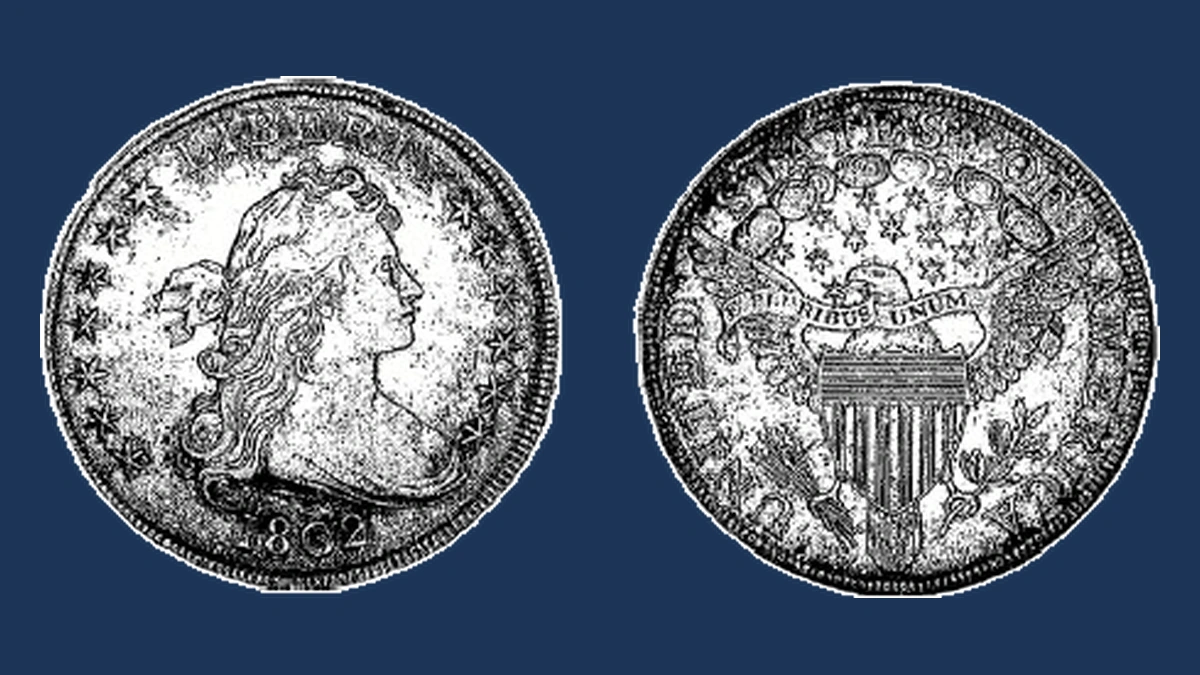
On some BB-235 overdates, a raised line starts near five o’clock and enters Liberty’s drapery. Another path crosses the right-hand stars from the border toward the open area beside the portrait.
Later examples add a line through 02 in the date toward the space above the 8. A small back crack lies between the arrows and the eagle’s leg.
The steel stamping tool cracked, allowing silver to fill the narrow openings during striking. The result is a ridge on the coin, not a split that necessarily passes through the dollar itself.
Estimated Value
For identifiable circulated BB-235 examples, allow an estimated whole-coin range of $1,500–$30,000. Scarcity of the tool variety and remaining detail matter alongside the visibility of the cracks.
An NGC VF25 BB-235 sold for $2,760 in July 2022. That same-variety result is a condition comparison, without assigning every later crack to the auctioned coin.
A clear overdate and natural surfaces improve appeal. Several crack branches on one dollar do not create several separate premiums.
How to Identify
Start at the date and determine whether the coin is an 1802/1. BB-235 belongs to that overdate group, so an unrelated plain-date crack needs a different comparison.
Under a magnifier, trace the front line from the lower-right border into the drapery. Then inspect the paths near the right stars and through the last two digits.
An early example need not show all the later branches.
Turn to the arrows on the back and look toward the eagle’s leg for the small ridge. Side lighting helps distinguish raised silver from a scratch cut into the surface.
The connected routes across several landmarks are more useful than the apparent length of one bright line.
3. 1802 Draped Bust Dollar Faint Line above the Eagle’s Clouds
Above the eagle, a faint unwanted line can run from the fifth cloud toward the border above O. The early-dollar reference describes this clash mark on some BB-234 overdates.
A clash happens when the front and back stamping tools strike each other without a blank between them. The contact leaves an extra mark that later coins copy.
This line belongs to a particular tool combination, not every 1802/1 dollar. It should also be separated from a crack, even though both features can look like thin raised lines at first glance.
Estimated Value
Circulated BB-234 dollars with the identified clash have an estimated whole-coin range of $1,500–$30,000. A clear date and attractive surfaces usually carry more weight than a faint line above the clouds.
A PCGS VF30 BB-234 brought $4,200 in January 2021. This offers a same-variety comparison, not a confirmed sale price for the particular clash shown here.
Cleaning may brighten the line while reducing the coin’s appeal. Preserve the original surface instead of trying to sharpen the feature.
How to Identify
Enlarge the entire cloud row above the eagle, keeping O and the border visible. Compare the view with a documented BB-234 clash example so the correct cloud is not lost in a tight crop.
The reported line runs between cloud five and the border above O. Changing the lamp angle can reveal a faint trace that disappears under flat lighting.
Use a magnifier to compare its route with the known example. A random scratch or ordinary edge of a cloud will follow a different path.
Finally, check that the front has the matching overdate and tool variety. The cloud-to-border connection only becomes useful when those identifying details agree.
4. 1802 Draped Bust Dollar 1802/1 Overdate
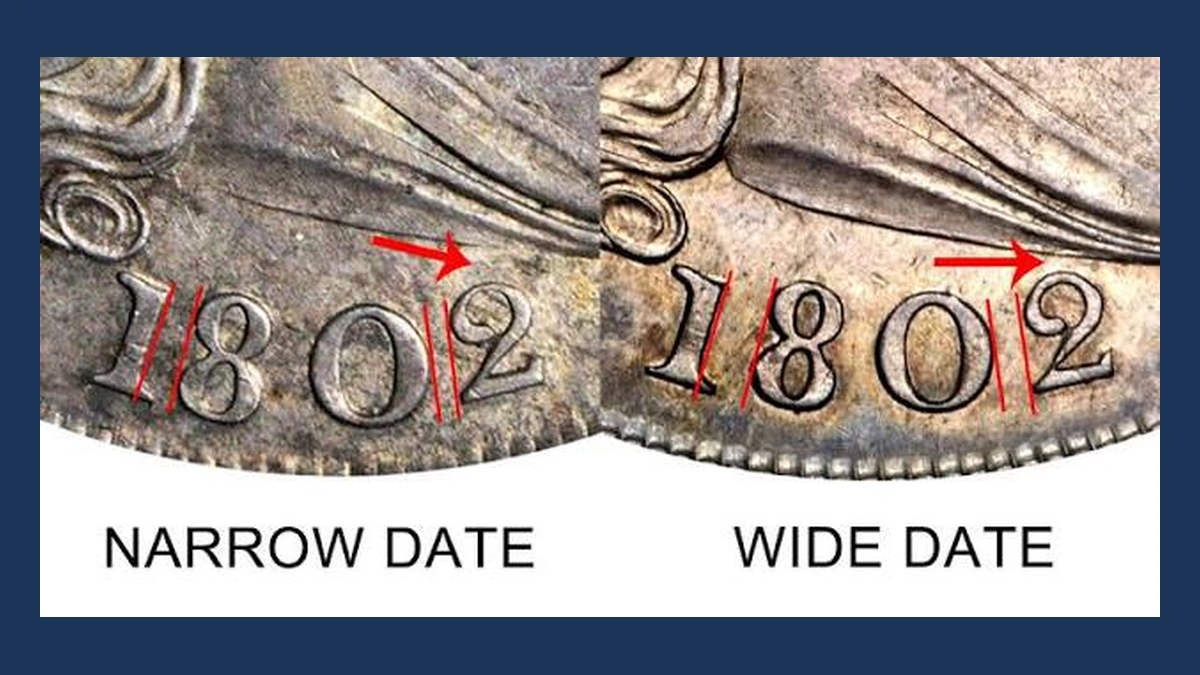
The final 2 can share its space with traces of a 1. A worker changed the date on the steel stamping tool from 1801 to 1802, without completely removing the earlier digit.
Collectors write this as 1802/1. Every coin from the altered tool could repeat those same old numeral fragments.
Several tool combinations exist, with different spacing between the date digits. On BB-235, the old 1’s upper-left end lines up with the left side of the 2.
This is a changed tool date, not a complete 1801 coin struck again in 1802.
Estimated Value
PCGS records an AU58 overdate at $26,400 in April 2020. AU58 describes a coin with only slight wear, and that result is for the whole dollar.
For circulated overdates, an estimated range is $1,200–$40,000, depending on the particular variety and preservation. The different date spacings should be compared within their own groups.
A damaged low-grade example may be far less valuable than a sharp, naturally toned dollar with the same overdate.
How to Identify
Focus a magnifier on the last digit without letting glare cover its base. Look for the old 1’s remaining strokes at the top and bottom of the 2.
A scratch can cross the date, but it will not reproduce the same raised numeral shape seen on matching examples. Compare the full 1802 date as well as the close-up.
Check whether the digits are closely or widely spaced before using a variety photograph. BB-235 offers a specific comparison for the old 1’s upper-left trace.
The coin should have the shield-bearing eagle design and lettered edge of an early silver dollar.
Matching an old 1 beneath the 2 is more convincing than one unexplained bump beside the date.
5. 1802 Draped Bust Dollar Double Strike with an Off-Center Second Blow
A second blow can leave part of the original design visible beside the newer impression. If the coin has moved sideways, the later strike may also fall partly off center.
A dealer recorded an 1802 Narrow Date BB-241 dollar graded PCGS VF25 with this combination. VF25 indicates noticeable circulation wear with much of the main design still readable.
The double strike and the off-center second impression describe one coin’s striking history. They are not evidence of two separate dollars.
This example differs from the small back-angle difference described earlier, which does not require a repeated design.
Estimated Value
An estimated $5,000–$50,000 covers identified circulated examples with a clear second strike. Separation of the impressions, readable date, and absence of repairs influence the value.
For an older comparison, a damaged and countermarked 1795 Flowing Hair dollar brought $6,037.50 in January 2007. Its two strikes were clear despite heavy wear.
That different-year sale is not a price for the listed 1802 VF25. A better-preserved or more dramatic 1802 coin would need its own assessment.
How to Identify
Follow the outline of the second impression around the whole coin before measuring how far it moved. Both the original strike and the displaced design must be explained by the same piece of metal.
Compare the portrait, date, stars, and back lettering with a magnifier. Surviving details in separated areas can help establish which impression came first.
A flat shelf beside one letter is not enough to demonstrate two blows. Nor does a photograph cropped at the edge show the full extent of the second strike.
Keep both faces and the complete border in the comparison. Have a specialist check the repeated designs and displaced boundary before assigning a percentage or direction to this example.
Conclusion
A remnant beneath the 2 records a changed date tool, while raised crack paths and the cloud-side clash reveal later tool marks. A repeated design tells a different story from a slightly tilted back.
Estimated whole-coin values range from $1,200–$50,000 for the circulated examples covered here. Compare the correct variety and condition before using a sale price.
The double strike and its off-center second blow remain one coin with one total value.