1794 Dollar Coin Error List with Pictures

Tiny blank flaws did not stop one 1794 dollar from bringing $4.5 million in November 2025. That price bought an exceptional early dollar, including its original manufacturing marks.
This 1794 Flowing Hair Dollar error list explains transferred designs, uneven striking, and small areas of flawed silver. Estimated whole-coin values span $50,000–$5 million, depending heavily on preservation.
Follow the visible clues below to separate these features from ordinary wear and later damage.
1. 1794 Flowing Hair Dollar Uneven Strike from Tilted Tools
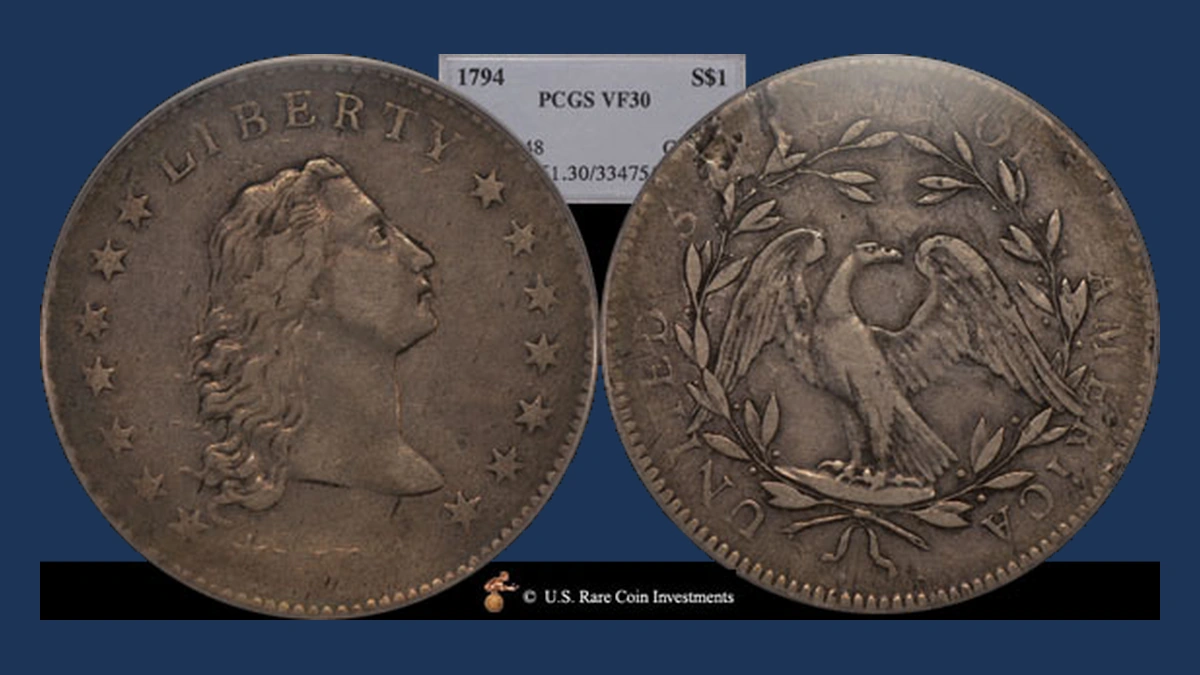
The left-side stars and parts of the date can look soft while other details remain much sharper. Auction descriptions connect this uneven strike with tools that were not properly aligned in the press.
A tilted tool does not press equally across the blank. Some areas fill with the design more fully than others.
This weakness appears to different degrees on surviving ordinary 1794 dollars. It should not be treated as proof that every coin, including specially made examples, has identical tool alignment.
Wear, adjustment filing, and flaws inside the blank can also reduce local detail.
Estimated Value
For circulated dollars with this reported uneven strike, estimate $50,000–$750,000 for the complete coin. This is not an extra premium to add to the value of an ordinary 1794 dollar.
A PCGS VF30 example sold for $161,000 on May 28, 2008 at Heritage. VF30 means visible wear with substantial design detail.
That coin also had blank defects, illustrating why one weak area should not determine the entire valuation.
How to Identify
Compare the left stars and date with the sharper right-hand design before deciding the coin is simply worn. Wear usually affects exposed high points, whereas uneven striking can leave neighboring low details weak.
Turn the dollar over and compare UNITED STATES with the stronger back details. Use clear, straight-on photographs under the same light.
If the coin is loose, a specialist can inspect the edge for thickness differences. Do not remove a certified coin from its holder for this test.
A magnifier helps separate fine adjustment lines from areas that never received a full impression. Compare both faces before calling the weak left border a tilted-tool effect.
2. 1794 Flowing Hair Dollar Eagle and Portrait Traces on the Wrong Face
Faint parts of the eagle can appear beside Liberty’s face and behind her hair. On the back, an extra outline from the portrait may surround the eagle.
These are clash marks. They formed after the two stamping tools struck each other with no blank between them, transferring pieces of their designs.
Later dollars copied those unwanted shapes. Workers then smoothed the tools, reducing some marks while also weakening the ends of certain hair curls.
The result is a faint borrowed design, not a complete second strike on the coin itself.
Estimated Value
The Boyd-Cardinal dollar, graded PCGS MS63+, sold for $4.5 million in November 2025. Its catalog describes clash marks on both faces; MS63+ indicates an unworn coin with visible imperfections.
Estimated whole-coin values of $60,000–$5 million cover worn examples through exceptional unworn survivors. The upper end reflects extreme rarity and preservation, not the price of the clash alone.
A faint transfer on a damaged dollar should not be compared directly with that celebrated specimen.
How to Identify
Picture the two coin designs facing each other. A genuine clash fragment should fit part of the opposite design, even if only a short curve survives.
With a magnifier, inspect the space before Liberty’s face and behind her hair. Then look around the eagle for fragments that fit the portrait outline.
Rotate the light rather than rubbing the surface to make a faint trace appear. Polishing of the original tool can leave some parts much weaker than others.
Straight, parallel filing lines do not have the same design-shaped path. Those may be original weight-adjustment marks rather than clash traces.
The recognizable eagle or portrait shape provides a better match than an isolated line.
3. 1794 Flowing Hair Dollar Small Flakes and Flaws in the Silver Blank
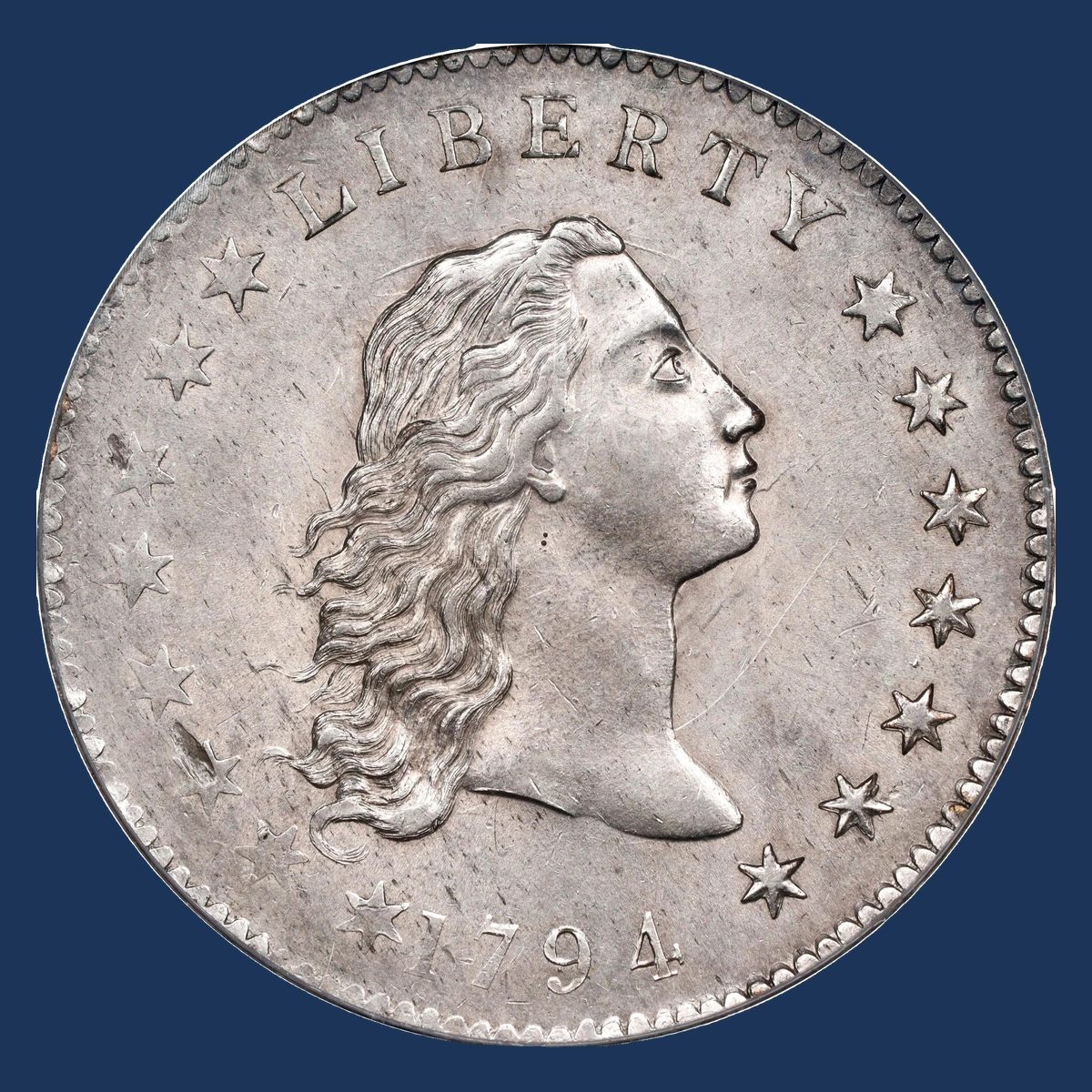
A shallow hollow near star three and a smaller flake at star six appear on the Boyd-Cardinal dollar. Its back also shows faint streaks near AM in AMERICA.
These features were described as defects in the silver blank, the plain piece of metal used before striking. A weak area can open or lose a small piece as the coin is made.
They differ from cuts made after the dollar entered circulation. They also differ from deliberate filing or an inserted silver plug used by the Mint to adjust a blank’s weight.
Estimated Value
The recorded $4.5 million sale belongs to the same MS63+ dollar discussed above. Its clash marks and small blank flaws do not represent separate purchases.
For genuine examples across worn to exceptional unworn condition, use a whole-coin estimate of $50,000–$5 million. A small original flaw may be tolerated on an otherwise outstanding early rarity.
Deep damage, repairs, or heavy corrosion can have a very different effect on appeal and price.
How to Identify
Begin with the edges of the affected area. A shallow missing flake should have a physical boundary, unlike a dark stain lying on an otherwise level surface.
On the pictured MS63+ example, use star three and star six as separate landmarks. Check the faint back streaks near AM without assuming each streak is a detached layer.
A magnifier and low-angle light can reveal depth without touching the silver. Leave any attached metal in place; lifting it would permanently change the coin.
An early-dollar specialist should also check for corrosion, smoothing, and repaired holes. A round filled area may be a deliberate silver plug, so shape and surrounding surface must be examined together.
Conclusion
Clash marks borrow shapes from the opposite face, tilted tools leave uneven detail, and flawed silver can leave small hollows or flakes. These clues can occur together on one 1794 dollar.
Estimated whole-coin values range from $50,000–$5 million. The celebrated MS63+ sale reflects far more than its small manufacturing flaws.
Keep original adjustment marks separate from accidental defects, and compare both faces before judging an unusual patch.