2017 Dime Error List with Pictures

A 2018-P dime missing its front outer layer sold for $384 in July 2021. That different-year sale gives a useful comparison for the missing-layer errors reported in 2017.
Other 2017 dime errors need a closer look: an unexpected leaf near Roosevelt’s face, extra letter strokes, or a raised edge break. Estimated prices across the seven types below range from $5–$600.
Keep reading to learn which visible clues matter and how to separate them from damage.
1. 2017 Roosevelt Dime Lamination (Estimated Up to $150)
The surface may begin to peel like a thin flake. This is called a lamination, a separation within the metal.
Ordinary 2017 dimes are clad coins, with pale outer layers bonded around a copper center. Weak metal can split or lift in a small area.
A loose piece may stay attached or fall away. The remaining opening deserves a close look.
This reported 2017 error has no single established position or mintmark. A scraped patch can look similar from above, so view its side to check how the metal separated.
Estimated Value
Small genuine flakes may bring an estimated $10–$30; larger, clearly visible separations can reach $30–$150. An attractive attached flap usually draws more interest than a faint rough patch.
The full range of $10–$150 is an estimate for collectible examples, not a recorded sale of one particular 2017 coin. Size is only part of the price.
Heavy scratches, corrosion, or later attempts to lift the metal can reduce both appeal and value.
How to Identify
Do not press on a loose flake. Its thin connection can break easily, taking part of the coin with it.
Use a 10× magnifier from the side to follow the opening. Does a thin layer continue into the surrounding metal, or does it end at a sharp cut?
Inspect the other face for impact marks and the edge grooves for a related split. Scraping and corrosion can remove metal without creating this mint error.
Compare an undamaged diameter with 17.91 mm using calipers. A scale may still read near 2.268 g if the flake remains attached.
Find a layer lifting from within the coin, without a fresh tool cut explaining the opening.
2. 2017 Roosevelt Dime Struck-Through (Estimated Up to $200)
A shallow plain patch can interrupt letters or nearby details. Material caught between the coin and a die, the steel stamping tool, can block the design.
This is called a struck-through error. Grease may leave a faint area, while a harder object can make a clearer impression.
One 2017-P finder reported marks below the date and near the M of UNUM on the back. The coin also had marks from the stamping tools hitting each other.
Those marks have different causes. A sunken patch is not automatically part of the other error.
Estimated Value
Use an estimated $15–$200 for genuine 2017 struck-through pieces. Small faint letters sit toward the low end.
A strong impression on a clean coin can bring more. The finder’s example has no stated completed sale.
That coin also has clash marks, so consider all its features when pricing it. Do not add two complete error estimates together as though they were separate coins.
Clear detail and attractive surfaces matter more than the number of error labels.
How to Identify
On the finder’s example, compare the area below the date with the area beside UNUM’s M. A 10× magnifier helps show where weak detail meets the normal design.
Other 2017 coins need their own checks. They need not have marks in those same two places.
Look for sharp cuts or metal pushed to one side, which suggest scratches. A blocked design can leave smooth weakness beside clear letters without those cuts.
Check the edge grooves for squeezing and compare both faces. A scale and calipers should show ordinary measurements near 2.268 g and 17.91 mm.
Compare the weak patch with its sharp neighbors and check that scraping does not explain the missing detail.
3. 2017 Roosevelt Dime Die Clash (Estimated Up to $250)
Leaves or lettering beside Roosevelt’s face can be faint traces of the back design. They can form after the two stamping tools hit each other without a coin between them.
This accident is called a die clash. Marks left on the tools can appear on coins made afterward.
A 2017-P finder described a branch tip near the forehead and PLU near the mouth. The report also places flame detail near the neck and a head outline on the back.
Denver clash examples are reported too. Their marks need not match the Philadelphia coin exactly.
Estimated Value
An estimated $20–$250 covers faint through clearly recognizable 2017 clashes. Readable transferred letters can draw more interest than a few vague lines.
The detailed Philadelphia find has no stated sale price. Its value depends on how easily someone can recognize the opposite design.
More marks do not automatically mean more value. Scratches and lines left by polishing the stamping tool should not earn a clash premium just because they appear nearby.
How to Identify
Keep a normal dime nearby as a map of both designs. Compare unexpected shapes near Roosevelt with the branches, lettering, and flame on the back.
The finder’s photographs show the reported Philadelphia marks. Use a 10× magnifier to follow the head outline near ONE’s N toward UNUM’s M.
Move the light to separate actual shapes from reflections. Random scratches rarely form a recognizable part of the opposite design.
Inspect the edge grooves, and compare scale and caliper readings with 2.268 g and 17.91 mm. Clashing does not require a different metal disc.
Match the unexpected line to a specific part of the design on the opposite face.
4. 2017 Roosevelt Dime Die Cracks, Chips, and Cuds (Estimated Up to $300)
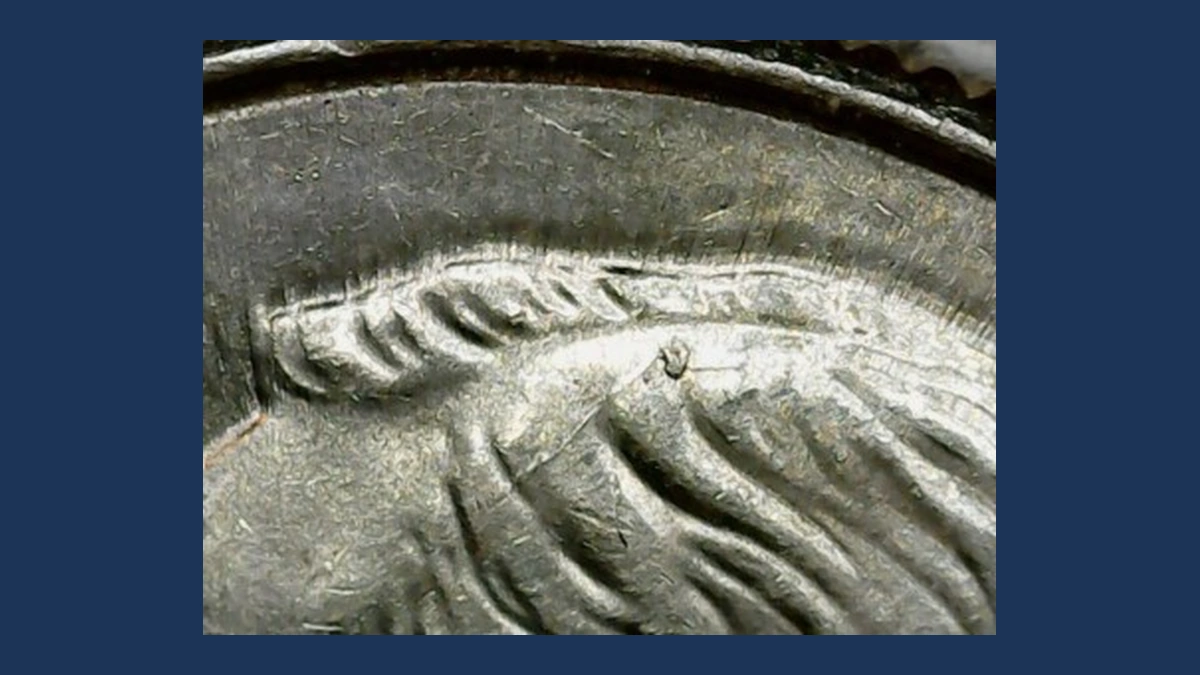
A raised line and a raised lump can both come from damage to the stamping tool. Metal enters the damaged area when the coin is made.
A crack leaves a ridge. A small broken piece inside the design produces a bump called a die chip.
When the broken area reaches the rim, the larger blob is called a cud. Reports for 2017-P include a rim cud and a separate coin with chips on both faces.
That second coin also has uneven borders from a shifted tool. The shift does not cause the raised bumps.
Estimated Value
Estimated values range from $5–$300. Fine cracks and small chips usually sit at the lower end.
A large blob connected to the rim can attract more money. It must be a real mint error, not a dent with metal pushed up beside it.
The reported coin with chips and uneven borders is still one coin. The added alignment error does not automatically multiply its value.
Size, clarity, and condition guide this estimate.
How to Identify
First compare the raised feature with the rim. A broad blob joined to the rim is a different form of break from a small bump inside the design.
Trace its outline with a 10× magnifier. Look for a ridge or lump made from the coin’s own metal, rather than dirt or a dent’s raised lip.
For the coin with chips and uneven borders, inspect the borders separately. One face can shift without changing the other’s position.
Check for impact marks around the edge grooves. Compare the normal 2.268 g and 17.91 mm with a scale and calipers.
Follow the raised metal to see whether it forms a thin crack, an isolated chip, or a rim-connected cud.
5. 2017 Roosevelt Dime Doubled Die (Estimated Up to $300)
Look near E PLURIBUS UNUM on the back of the reported 2017-P variety. Small extra strokes can show doubling built into the stamping tool itself.
This is called a doubled die. Coins made with that tool can repeat the same extra detail.
CONECA’s Errorscope lists a 2017-P doubled back design. A separate Denver report describes doubling on both faces of one coin.
The Philadelphia example does not identify the Denver coin’s exact pattern. Flat shelves caused by movement during stamping are also different from doubled detail in the tool.
Estimated Value
An estimated $20–$300 applies to genuine 2017 doubled dies with visible detail. Small features with limited demand belong near the lower end.
The reported Denver coin has doubling on both faces, but no confirmed auction result is used here. Its two faces should be priced as one coin.
A match to a known variety helps buyers understand the feature. Flat, shelf-like doubling from movement during stamping usually adds little value.
How to Identify
Locate the mintmark before choosing a comparison. For Philadelphia, inspect E PLURIBUS UNUM on the back with a 10× magnifier.
A Denver coin needs a separate comparison for each face. The Philadelphia pattern does not prove that its front or back is doubled.
Look for distinct extra strokes or small notches where lines separate. A low, flat shelf is more consistent with movement during stamping.
Turn the light to rule out reflections. Check the edge grooves for alteration and use a scale and calipers to compare with 2.268 g and 17.91 mm.
The extra stroke must match the same shape and position on a known example from the correct mint.
6. 2017 Roosevelt Dime Uncentered Broadstrike (Estimated Up to $400)
An enlarged dime can have much more plain border on one side than the other. If both designs remain complete, this can be an uncentered broadstrike.
The collar is a ring that normally holds the disc’s edge and forms its grooves. Without that restraint, metal spreads outward during stamping.
The reported 2017-P example has both spreading and uneven centering. A wider border does not necessarily mean part of the design was lost.
Check that distinction carefully. A true off-center strike loses design at the edge, while this broadstrike keeps it inside an uneven outline.
Estimated Value
For genuine 2017-P broadstrikes, use an estimated $50–$400. Clear expansion, complete designs, and attractive surfaces make stronger examples more appealing.
A 2000-P dime that spread and was stamped several times sold for $159 in September 2025. NGC graded that unworn coin MS65.
That different-year comparison has more than one error. Its price helps show the market but does not directly price a simple 2017 broadstrike.
An uneven border alone adds little value.
How to Identify
Measure the outline in several directions with calipers and compare it with the normal 17.91 mm. The reported error need not be perfectly round.
Then check both designs with a 10× magnifier. Make sure weak lettering is still present, rather than cut off where the design missed the disc.
A scale reading near 2.268 g fits an intact ordinary dime. Inspect the edge for missing or interrupted grooves where the holding ring failed to contain the metal.
Later flattening can also enlarge a coin, but it usually crushes details already stamped into it. Examine those details closely.
Look for complete designs inside a naturally expanded outline, without flattened surfaces explaining the larger size.
7. 2017 Roosevelt Dime Missing Clad Layer (Estimated Up to $600)
A normally pale dime can have a copper-colored face when an outer layer is absent. The copper center lies beneath two pale copper-nickel layers.
Reports for 2017 include Philadelphia and Denver coins. A Philadelphia seller described one ungraded example as missing its outer layer.
That description needs more than color to support it. Heating, staining, acid, and added coatings can change a normal coin’s appearance.
Compare the unusual face with the other side and the edge. A missing section changes the metal layers, while a stain may only change their color.
Estimated Value
The ungraded 2017-P listing shows a $29.95 sale on June 26, 2026. The seller’s error description was not professionally confirmed.
Use an estimated $30–$600 for genuine examples, depending on condition and the missing area. A 2018-P dime missing its front layer brought $384 in July 2021.
PCGS graded that different-year coin MS64, meaning unworn. Its sale helps price a stronger example; brown color alone earns no missing-layer premium.
How to Identify
Examine the edge first with a 10× magnifier. Compare the visible layers beside the unusual face with those beside the other side.
A partially missing layer may leave a clear boundary. If the entire layer is gone, examine the exposed design and edge together.
Watch for grinding marks or rough areas left by chemicals. Acid can make a coin lighter as well as change its color.
Compare a scale reading with 2.268 g and caliper measurements with 17.91 mm. Inspect the remaining edge grooves for damage.
Check that an outer metal layer is actually absent, then compare the exposed design with a confirmed missing-layer coin.
Conclusion
A faint leaf near Roosevelt or an extra letter stroke may tell you more than a dramatic color change. Start with the visible feature and use the matching check.
Estimated values run from $5 for small tool defects to $600 for stronger missing-layer errors. Compare confirmed examples before paying extra, and price several defects on one coin as a single purchase.