1994 Dime Error List with Pictures

A 1994 dime can carry Lincoln’s portrait and even a later date after passing through a cent press. Another unusual piece carries a dime design on a broken feeding-machine tip; Heritage’s archive reports $1,750 in November 2016 for that type.
These 1994 dime errors sit alongside simpler missing layers, clips, and raised cracks. Estimated values span $5–$3,000, depending on the actual error and condition.
The examples below explain what to look for, with separate treatment of different coins that share a mechanism.
1. 1994 Roosevelt Dime Reported Doubled Dies
The reported front doubling concerns the date, LIBERTY, and IN GOD WE TRUST. These are places to inspect, rather than a promise that every thick letter is valuable.
A doubled die is a steel stamping tool with repeated design detail. It transfers that repeated shape to coins made from it.
The back-side report is less specific and does not establish a separate photographed example. Torch and back lettering comparisons therefore need their own evidence; front doubling cannot prove that the other face is also a doubled die.
Estimated Value
Estimate $15–$100 for a genuine minor doubled-die example. Fine but recognizable extra detail on an attractive coin belongs above an indistinct feature on a worn piece.
The estimate assumes a match to doubling in the stamping tool. Flat ledges from movement during striking should not receive the same premium.
An extra letter shape must be visible enough for another collector to check. A broad claim of doubling on both faces does not double the coin’s price.
How to Identify
Inspect the reported front areas under a 10× magnifier. Compare the date, LIBERTY, and motto with a normal 1994 dime using the same lighting.
For a loose clad piece, record about 2.268 grams and 17.91 mm with a scale and calipers. Check the edge grooves before concentrating on the lettering.
Look for a repeated design shape rather than a flat shelf beside the main letter. Glare can make an ordinary edge seem doubled.
Photograph any suspected back feature separately. The front report gives no exact back-side location or mint to borrow.
If another identified example is available, match the complete feature and nearby design. Do not identify the coin from a single thick stroke that changes appearance as the light moves.
2. 1994 Roosevelt Dime Improper Annealing
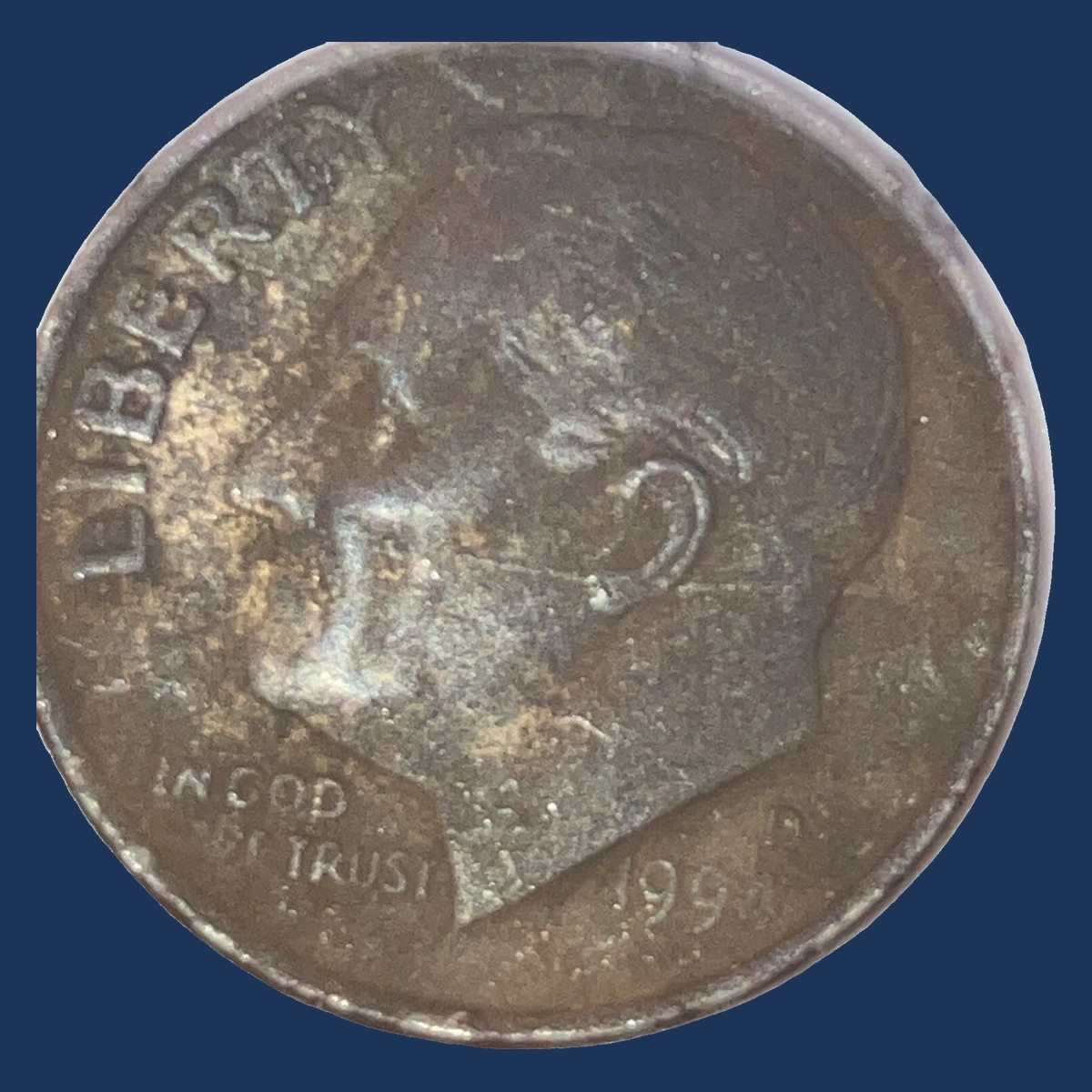
Coin blanks are heated during preparation to make the metal easier to strike. Problems during this treatment can change a blank’s surface before it reaches the press.
The 1994-P report calls this improper annealing, also using the term sintered. It does not identify one particular color or patch that every example should have.
That matters because a brown or dark dime can have many causes. Ordinary environmental staining, added coatings, and missing outer metal can all alter its appearance without proving that the mint’s heating process caused the change.
Estimated Value
For a professionally identified heat-treatment error, estimate $20–$200. A clearly established mint-made surface change on an attractive coin can bring more than a dull, heavily worn piece.
The premium depends on the cause, not simply on how dark the dime looks. Ordinary tarnish does not enter this error range.
The Philadelphia report supplies no measured metal change or verified sale for a particular specimen. The estimate applies only after the unusual surface is identified as mint-made.
How to Identify
Check a loose coin’s weight against the normal clad 2.268 grams and its diameter against 17.91 mm using a scale and calipers. Inspect the edge grooves and metal layers before interpreting the color.
Under a 10× magnifier, examine whether the changed surface follows the struck detail or looks like material added later. Photograph both faces in neutral light without cleaning the coin or heating it to test the appearance.
Compare missing-layer and environmental-damage examples as well as known heat-treatment errors. A copper face with reduced weight needs a layer-loss check, while a matching diagnosis of improper annealing requires more than darkness alone; a grading specialist can examine that difference.
3. 1994 Roosevelt Dime Die Cracks, Chips, and Cuds
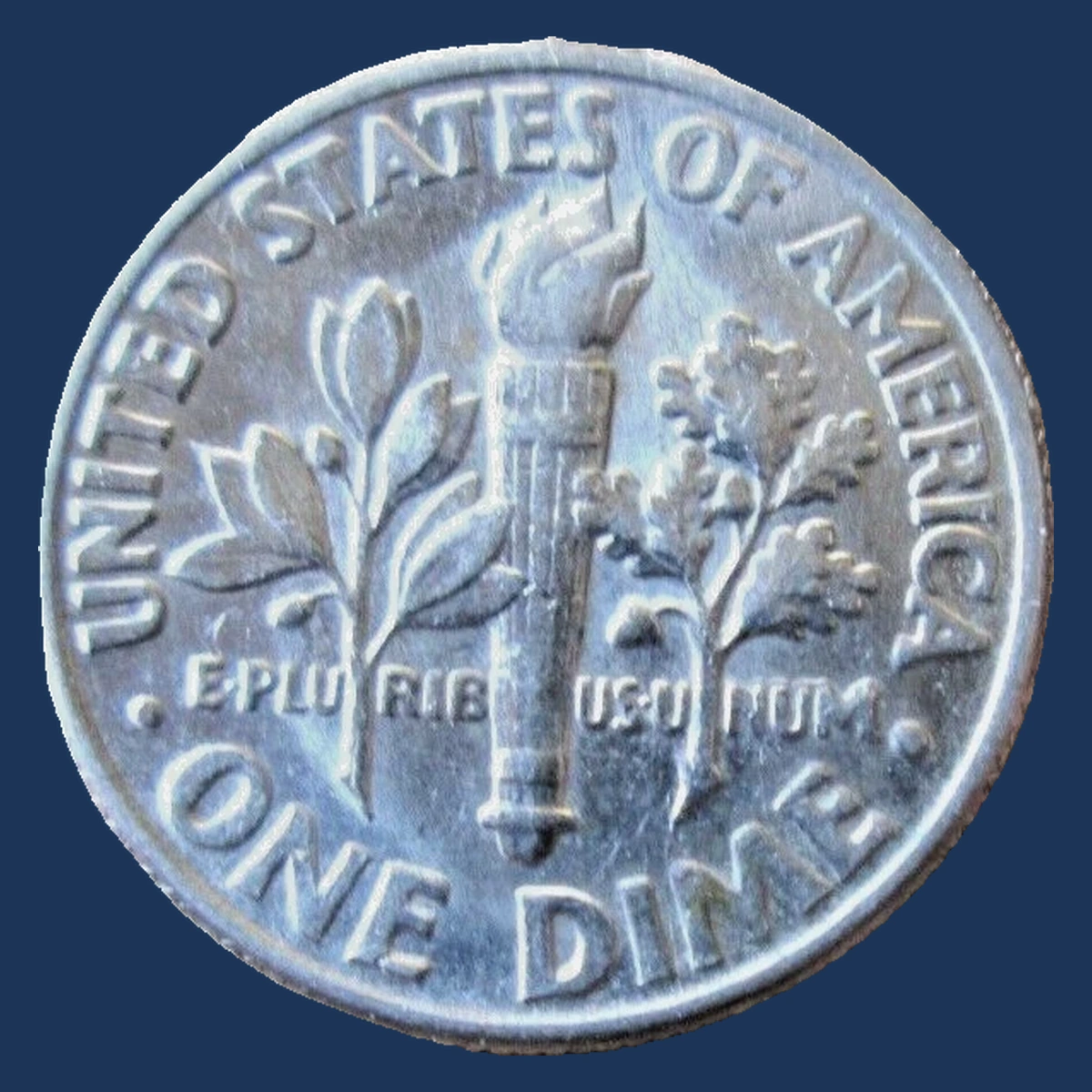
A broken stamping tool can change a dime’s surface in several ways. A narrow crack leaves a raised line, while a missing piece can leave a larger raised area.
A small interior lump is often called a chip. A larger break connected to the rim is called a cud, and it can replace part of the normal design.
The 1994 reports include these damaged-tool appearances without fixing one location or mint letter. Their shared cause matters more than a nickname, but each suspected coin still needs its own surface examination.
Estimated Value
Genuine damaged-tool features have an estimated range of $5–$200. A fine crack is usually much cheaper than a strong rim-connected break that interrupts the design.
Sharp detail around the raised area makes it easier to understand and photograph. Heavy wear or corrosion can hide the very feature a buyer wants to see.
These amounts value the complete coin. A crack leading into a lump should not receive separate prices for each part of the same damaged tool.
How to Identify
Trace a raised line with a 10× magnifier to see whether it branches or enters a larger raised area. A scratch normally cuts down into the surface instead.
For a loose clad dime, compare weight and width with 2.268 grams and 17.91 mm using a scale and calipers. Check the edge grooves, especially where a suspected cud meets the rim.
At that junction, look for design replaced by raised metal. A lump sitting on top with a separate boundary may be foreign material rather than part of the struck coin.
Photograph the opposite face as well, since a large break can affect the detail there. Use the visible relationship between the two faces instead of assigning an unsupported portrait or torch position.
4. 1994 Roosevelt Dime Broadstrike
A broadstruck dime spreads beyond its normal outline because the metal ring around the blank failed to restrain it. The design can remain complete inside that wider shape.
A GreatCollections listing identifies a 1994-P broadstrike graded PCGS AU58. That means the coin has only slight wear.
Its wider border is not the same as the missing design beside an off-center strike. The broadstrike also needs to be separated from a finished coin flattened later, which can gain width while losing the original detail along its faces and edge.
Estimated Value
Estimate $30–$250 for a genuine broadstrike, allowing for the amount of spread and the coin’s condition. Slight wear does not erase the error itself.
As a comparison, a 2000-P dime with multiple strikes and broadstriking sold for $159 in September 2025. Its extra strike makes it different from the listed 1994-P coin.
A clear expanded border is more useful than a seller’s claim that a dime looks oversized. The whole design and edge should support that description.
How to Identify
For a loose candidate, measure several widths with calipers against the normal 17.91 mm. Weigh it against the clad standard of 2.268 grams.
Look around the entire design, not just the widest border. The lettering should remain complete where broadstriking alone explains the spread.
Use a 10× magnifier on the outer metal and surviving edge grooves. Hammering or pressing a finished dime can crush details that had already formed.
Compare the front and back for that damage. A wide outline by itself cannot distinguish the two causes.
If a blank crescent sits beside missing design, investigate an off-center strike instead. If two edge levels remain, photograph the side for a partial-collar comparison.
5. 1994 Roosevelt Dime Clipped Planchets, Including a Broadstruck Example
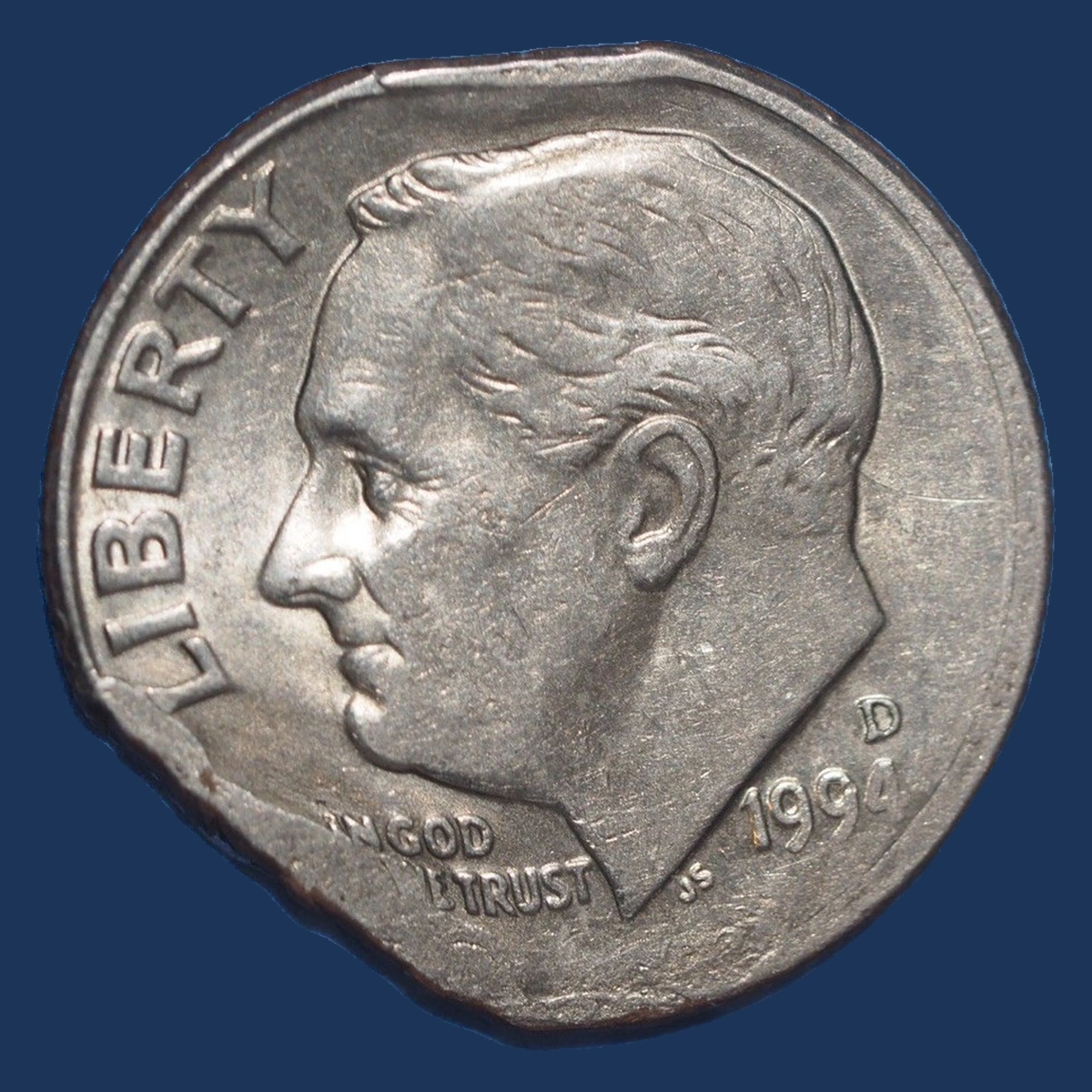
Two missing sections interrupt the outline of the Philadelphia example. GreatCollections lists that double-clipped coin at 2.08 grams with an ANACS AU55 grade, meaning light wear.
A separate Denver dime combines a 12% clipped blank with broadstriking. Its PCGS description also records later machine damage, which should not be mistaken for another mint error.
Both belong to the clipped-blank group because metal was already missing before the design was struck. Their shapes and other features differ, so the Philadelphia weight and the Denver percentage must remain attached to the right coins.
Estimated Value
The Denver clipped broadstrike also has later machine damage, so an attractive error shape does not tell the whole pricing story. Allow for that condition problem when comparing it with cleaner coins.
Across genuine clipped examples, estimate $20–$300, depending on the shortage and remaining detail.
The Denver piece appeared in a four-coin lot with other years. A price for that entire lot would not be a standalone result for the 1994-D dime.
How to Identify
The 2.08-gram Philadelphia example offers a useful weight comparison, but weight alone cannot date a missing piece. A later cut also removes metal.
Use a 10× magnifier at both ends of each gap to examine the struck design and any tool marks. The listing description does not establish that both Philadelphia gaps are curved.
For a loose clad coin, compare weight with 2.268 grams and intact spans with 17.91 mm using a scale and calipers. Check the remaining edge grooves separately from scratches or crushed metal.
On the Denver example, follow the expanded border as well as the clipped area. Keep the later machine damage separate when judging how the original shortage affected the design.
6. 1994 Roosevelt Dime Missing Front or Back Clad Layer
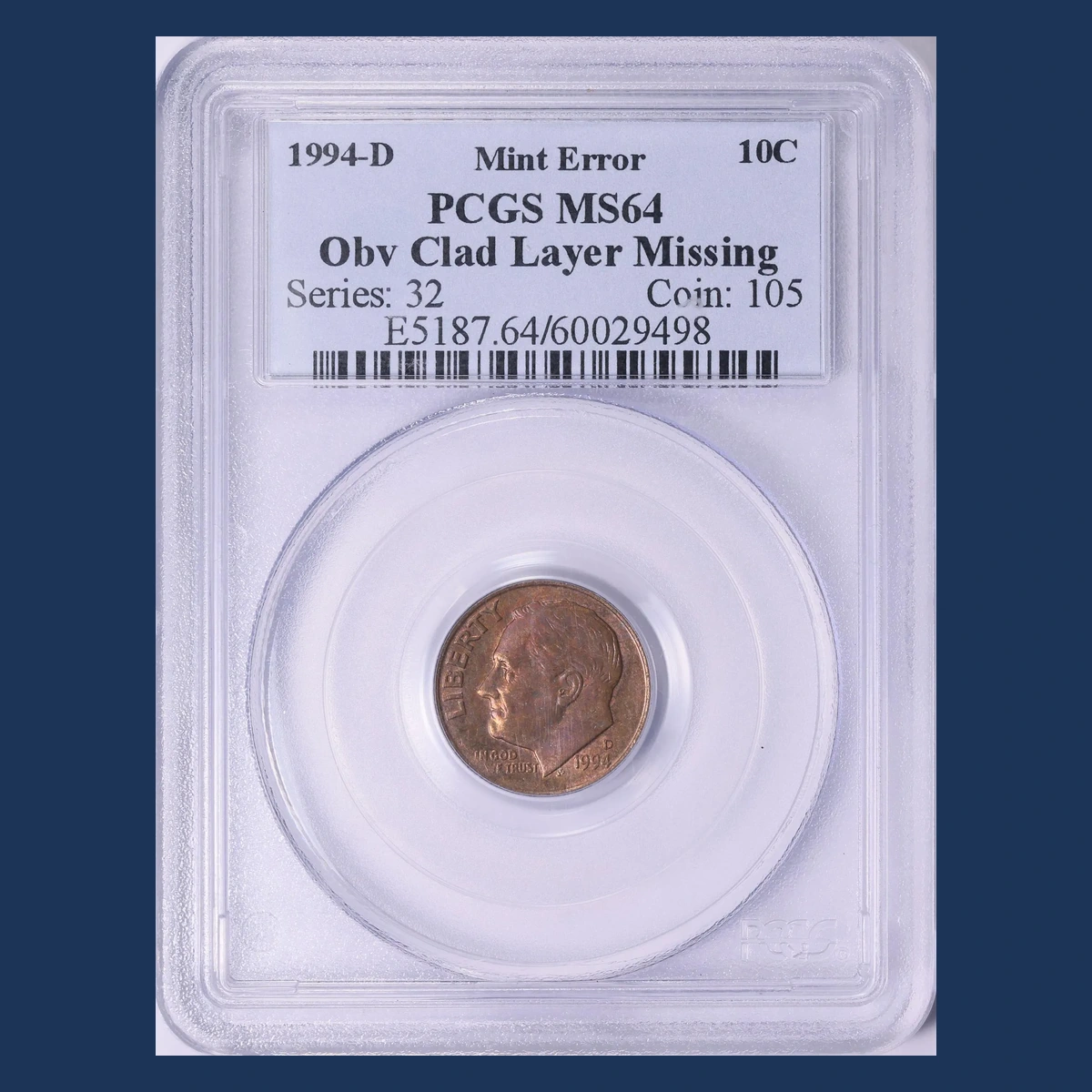
These two Denver dimes lost an outer metal layer on different faces. One exposes the copper front; the other exposes the copper back.
The front-loss example was graded PCGS MS64. A separate NGC MS64 back-loss record gives a weight of 1.9 grams; both grades describe unworn coins with visible marks.
The normal pale outer layers should not be confused with a coating painted onto a finished coin. Losing one during manufacture changes the metal structure as well as the color, while the unaffected face can retain its ordinary appearance.
Estimated Value
A single missing-layer dime has an estimated range of $50–$400. The Denver front-loss example sold for $79 on August 18, 2015.
That price and the 1.9-gram back-loss weight belong to different coins. Neither should be copied onto the other as though they describe one specimen.
Clean exposed copper and readable detail can improve appeal. Pitted surfaces or evidence of chemical removal need a different explanation before the coin receives a mint-error premium.
How to Identify
First identify the ordinary clad version: its normal weight is 2.268 grams, while a 1994-S silver Proof collector coin weighs 2.50 grams. Use a scale on a loose candidate and calipers against the normal 17.91 mm diameter.
Photograph both faces under equal light, then inspect the layer boundary and edge grooves with a 10× magnifier. Match the copper face to the correct example; the recorded 1.9 grams belongs to the back-loss coin only.
Check whether the design remains struck into the exposed metal. Added plating and chemical stripping can change a finished dime’s color, so reduced weight plus a copper appearance must be assessed with the actual surface texture and surviving layers.
7. 1994 Roosevelt Dime Struck Through Foreign Material
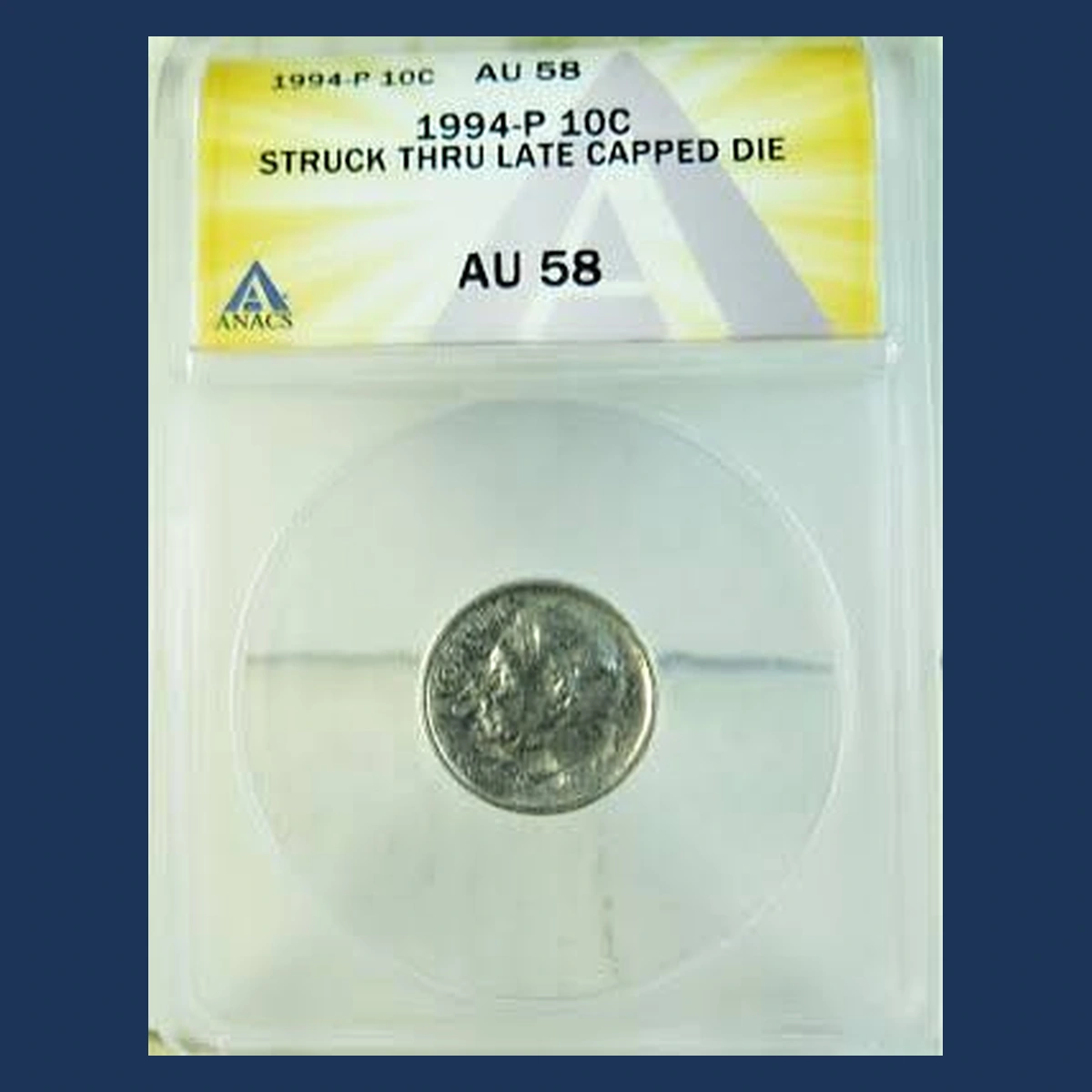
A foreign object can prevent part of the design from reaching a dime. When it lies between the stamping tool and the blank, it can leave a depression or an incomplete patch.
This is called a struck-through error. The 1994 report lists the type without naming the object or identifying a particular mint or location.
A thread, grease, or a hard scrap can leave different results, but those possibilities are not separate documented 1994 examples. The mark on the actual coin must show what was blocked and whether the object’s shape survived.
Estimated Value
Estimate $15–$500 for genuine standalone struck-through examples. A minor weak patch usually brings less than a clear object-shaped impression.
A distinct texture or outline helps collectors understand the accident. The date and surrounding design should remain clear enough to establish the coin’s identity.
The estimate does not assign a particular cloth, wire, or scrap premium to an unnamed obstruction. A mark caused by damage after striking belongs outside this mint-error range, even if its outline looks unusual.
How to Identify
Find where normal design ends at the suspect area. Use a 10× magnifier to see whether the interruption follows a clear object outline or merely reflects wear.
Photograph that boundary from two light angles. A struck-through depression can hide in a flat image.
For a loose clad coin, check 2.268 grams and 17.91 mm with a scale and calipers, including an edge-groove inspection. Those normal measurements do not identify the material involved.
Compare the highest nearby details for wear and check for scratches cutting across the finished design. Do not clean the mark to make it easier to see.
Name an object only when the impression supports it. A smooth weak patch cannot establish that cloth or wire caused the obstruction.
8. 1994 Roosevelt Dime Reported Edge Strike
A blank that stands or tilts into the striking area can receive pressure in an unusual place. An edge strike can leave a distorted edge and partial design on the affected metal.
The 1994 year report includes this category without a specific photographed specimen. It does not establish an exact bend, mint letter, or position around the edge.
A dented rim alone is not enough to identify the error. A genuine example needs evidence that the unusual pressure and any visible design were created during minting, rather than by an impact on a finished coin.
Estimated Value
For an authenticated edge-strike example, estimate $100–$600. Clear struck detail in the distorted area is more persuasive than a bent outline without recognizable design.
The extent of the deformation, readable date, and surface condition affect the range. Heavy later damage can make the original accident harder to understand.
This estimate applies to a mint-made strike in an abnormal position. Ordinary rim dents, vise marks, and coins bent after circulation do not receive the same premium.
How to Identify
Inspect the edge with a 10× magnifier before deciding what the bend means. Search for struck design on the displaced metal and compare it with the nearby faces.
Photograph the coin from the side and straight on. A later rim impact can distort a small area without creating any new struck design there.
For a loose clad candidate, use a scale against 2.268 grams and record dimensions gently with calipers against 17.91 mm. Do not straighten it to obtain a normal width.
Follow the surviving edge grooves through the affected area and check for jaws, filing, or crushing. If only a dent is visible, the year report alone does not establish that the coin stood on edge inside the press.
9. 1994 Roosevelt Dime Off-Center Strikes
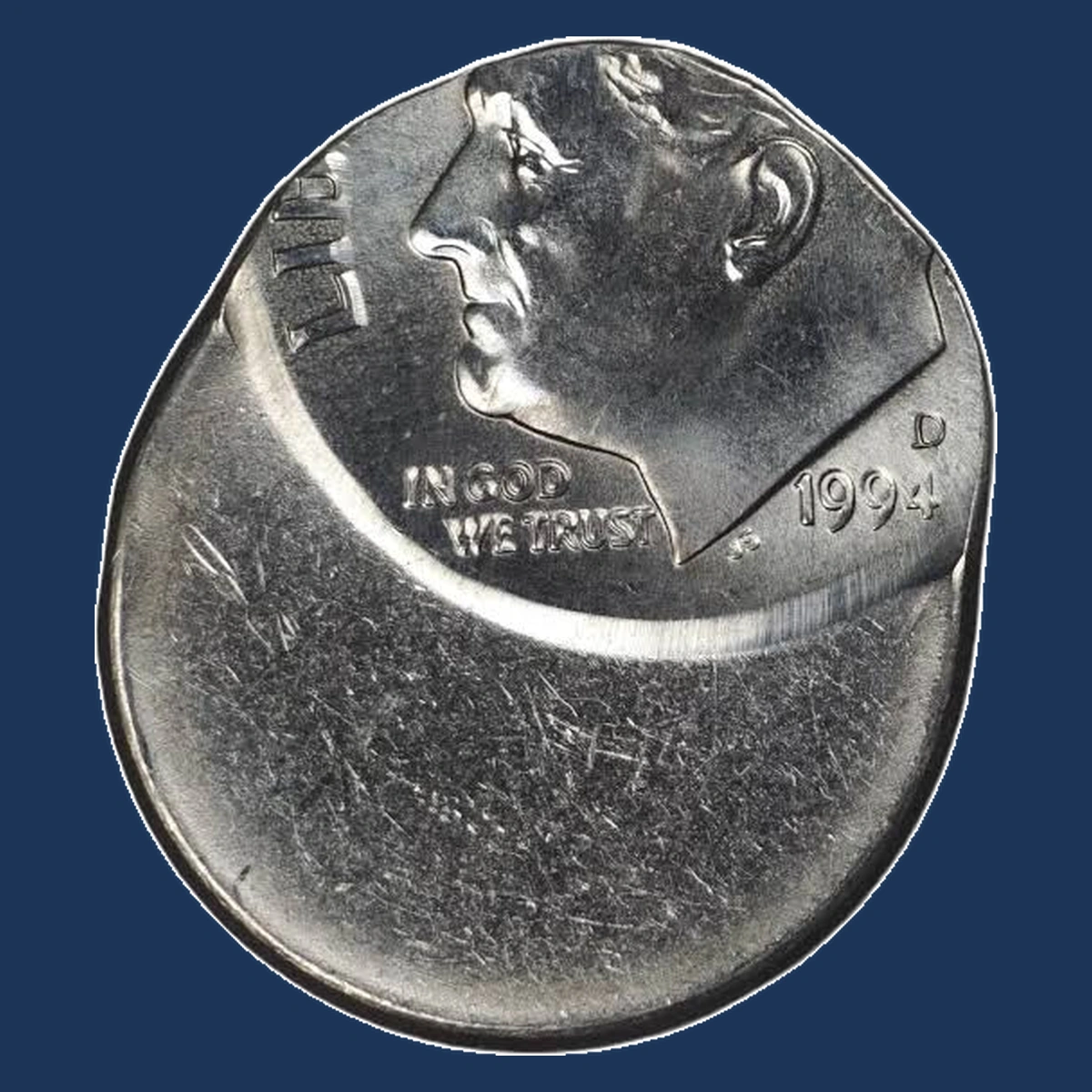
An unstruck crescent remains when the blank sits partly outside the striking area. The design is displaced, and some of it never reaches the coin.
A Philadelphia example is described as 45% off center and graded NGC MS65, meaning unworn with some marks. Its auction description does not specify a clock direction.
Denver off-center pieces are also reported for 1994. Their percentage and direction need their own photographs; they should not inherit the Philadelphia description, or a position described for a different coin in a price table.
Estimated Value
Estimate $40–$600 for a genuine off-center coin with a readable date. Small shifts usually cost less than a dramatic displacement that still leaves the year clear.
The documented Philadelphia example is 45% off center. For a smaller-shift comparison, a different 1977 dime, about 10% off center, sold for $109 in June 2026.
Use that later result as a modest-error comparison. The Denver report still needs its own condition and displacement assessment.
How to Identify
Compare both faces of the coin before naming a direction or percentage. A blank positioned off center affects both designs, whereas one displaced face with a centered opposite face can indicate a shifted tool.
For a loose clad dime, a scale checks the normal 2.268 grams and calipers compare the original blank with 17.91 mm. Inspect the boundary of the unstruck arc and surviving edge grooves through a 10× magnifier for later scraping.
Keep the date, mint letter, and blank arc together in photographs. Orient the front upright before describing direction, and do not copy an angle from another example simply because both coins are listed as 45% off center.
10. 1994 Roosevelt Dime Double Strike
A coin can fail to leave the press after the first strike and receive another. If it moves between blows, parts of the design can appear in two positions.
The Philadelphia 1994 report describes a minor double strike. It supplies no exact angle or identified repeated letter, so a candidate needs more than thick-looking text.
This differs from a doubled die, where repeated detail is already in the stamping tool. Two blows affect the individual coin and can change its design alignment, border, or outline in ways that require examination together.
Estimated Value
For a genuine minor double strike, estimate $100–$700. A small displacement with readable details is generally less dramatic than widely separated complete impressions.
Condition and the amount of each strike that survives affect the price. A faint feature should be clear enough to distinguish from ordinary flat mechanical doubling.
The estimate is for a coin whose two strikes can be established. A thick date or a single shelf beside a letter does not, on its own, justify that premium.
How to Identify
Look at the border as well as the date. A second strike may leave displaced parts of the rim or portrait that help explain repeated lettering.
For a loose clad coin, check weight near 2.268 grams and dimensions against 17.91 mm with a scale and calipers. Inspect the edge grooves for later damage.
Use a 10× magnifier to trace two separate design positions. Work from enlarged photographs if the overlap is difficult to follow.
Compare the back for related displacement rather than assuming every visible shelf belongs to another strike. The report gives no angle to impose on the images.
A convincing explanation should connect more than one repeated feature. One thick stroke with no other supporting detail needs further examination before it is called a double strike.
11. 1994 Roosevelt Dime Indent with a Broadstrike
An extra blank can overlap another coin in the press and block part of its design. The pressure leaves a depression called an indent.
A 1994-P example combines a 40% indent with broadstriking, which spread its border outside the usual restraint. Stack’s Bowers listed it as PCGS MS64, an unworn grade with visible marks.
The auction also listed a different 1994-P brockage immediately nearby. Those are separate coins: an indent need not contain a mirror design, while a brockage does, and the brockage coin’s higher grade should not be transferred here.
Estimated Value
Estimate $150–$900 for a comparable indent and broadstrike combination. The depression’s size and clear relationship to the remaining design can make it more interesting than a simple broadstrike.
The recorded 40% example has substantial coverage, but the quality of the depression’s boundary also matters. Its MS64 grade describes condition rather than the percentage of the indentation.
The estimate values the whole coin. Adding separate indent and broadstrike premiums would not establish a sound price for this combined accident.
How to Identify
Compare the depressed area with the design that remains outside it. Use a 10× magnifier to look for a smooth blocked region rather than a sunken mirror of another coin’s design.
For a loose clad coin, record weight against 2.268 grams and width against 17.91 mm with a scale and calipers. The broadstrike can increase the outline without requiring missing metal.
Inspect the edge grooves and the boundary of the depression for later squeezing or grinding. The reported 40% figure does not tell you which face or clock position is affected.
Photograph both faces before comparing the coin with the auction description. A mirror image within the depression would require a brockage comparison rather than borrowing the plain-indent identification.
12. 1994 Roosevelt Dime Struck Through a Split Die Cap
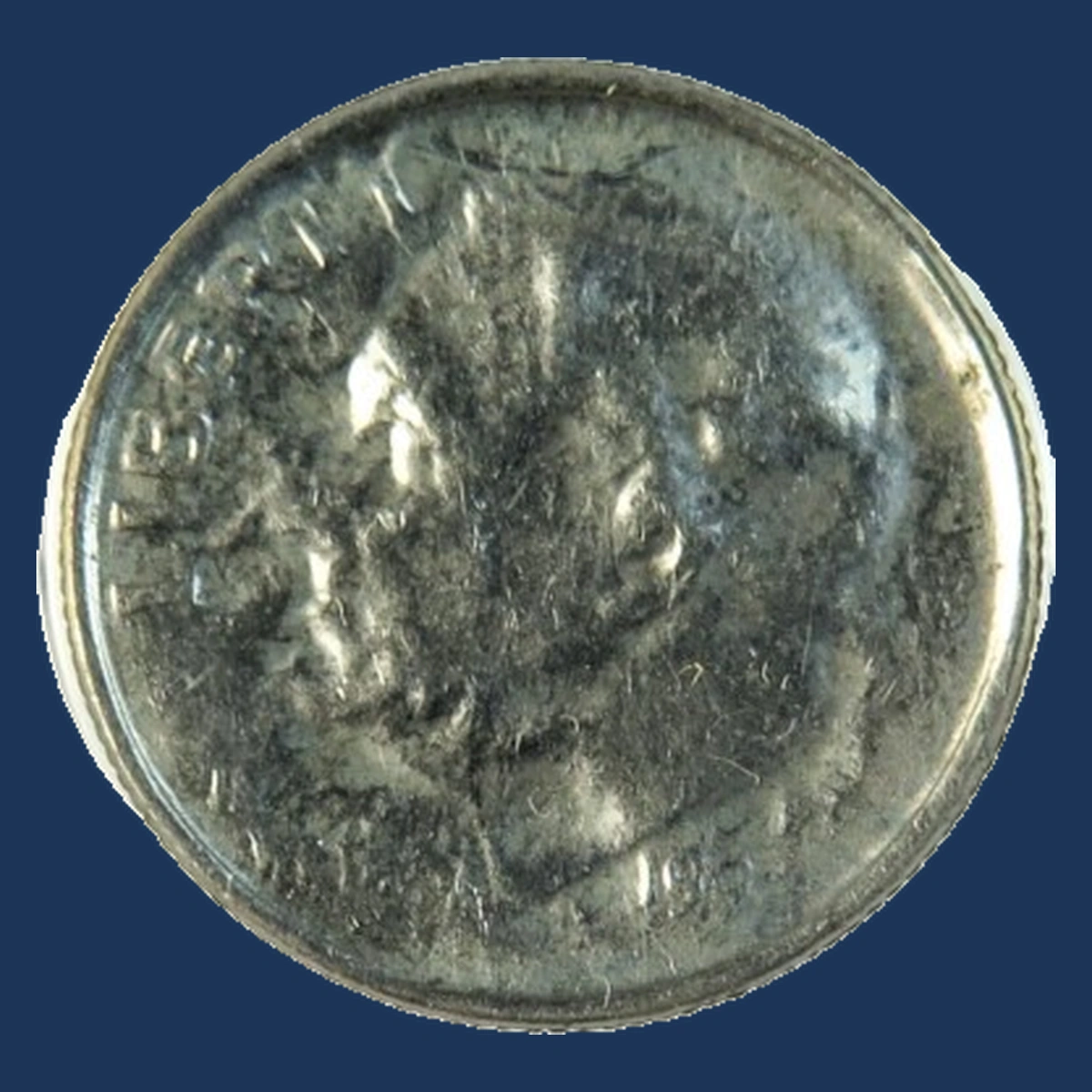
A coin stuck to a stamping tool can act as a cap over it. Later blanks then receive softened detail through that cap instead of a normal direct impression.
A collector’s 1994-P example is described as struck through a cap that split in the middle. The front is blurred but its date and mint remain readable, while the back is clear.
The displayed grade is NGC MS65, an unworn grade with some marks. A small back crack near one o’clock is an additional feature of that coin, not evidence that the receiving dime itself became the cap.
Estimated Value
Estimate $150–$900 for a genuine split-cap strike with a visible central effect. Strong contrast between the affected front and clearer back makes the accident easier to understand.
The amount depends on how much detail survives and whether the date remains readable. A uniformly weak ordinary strike is a different comparison.
The collector’s displayed example supplies no sale price. The small back crack belongs to the same coin and should not be priced separately from its more prominent cap-related strike.
How to Identify
Compare the two faces first: the reported coin has a blurred but identifiable front and a much clearer back. Inspect the central front area with a 10× magnifier for the effect of the split covering cap.
For a loose clad dime, use a scale against 2.268 grams and calipers against 17.91 mm, checking the edge grooves too. This is the coin struck through the cap, so a tall cup-shaped wall is not required.
Check the collector’s photographs before assigning a particular central shape to another coin. Keep the readable date and P in view, and use the small back crack only as supporting detail; an ordinary weak strike alone does not establish a split cap.
13. 1994 Roosevelt Dime Partial Brockage with a Broadstrike
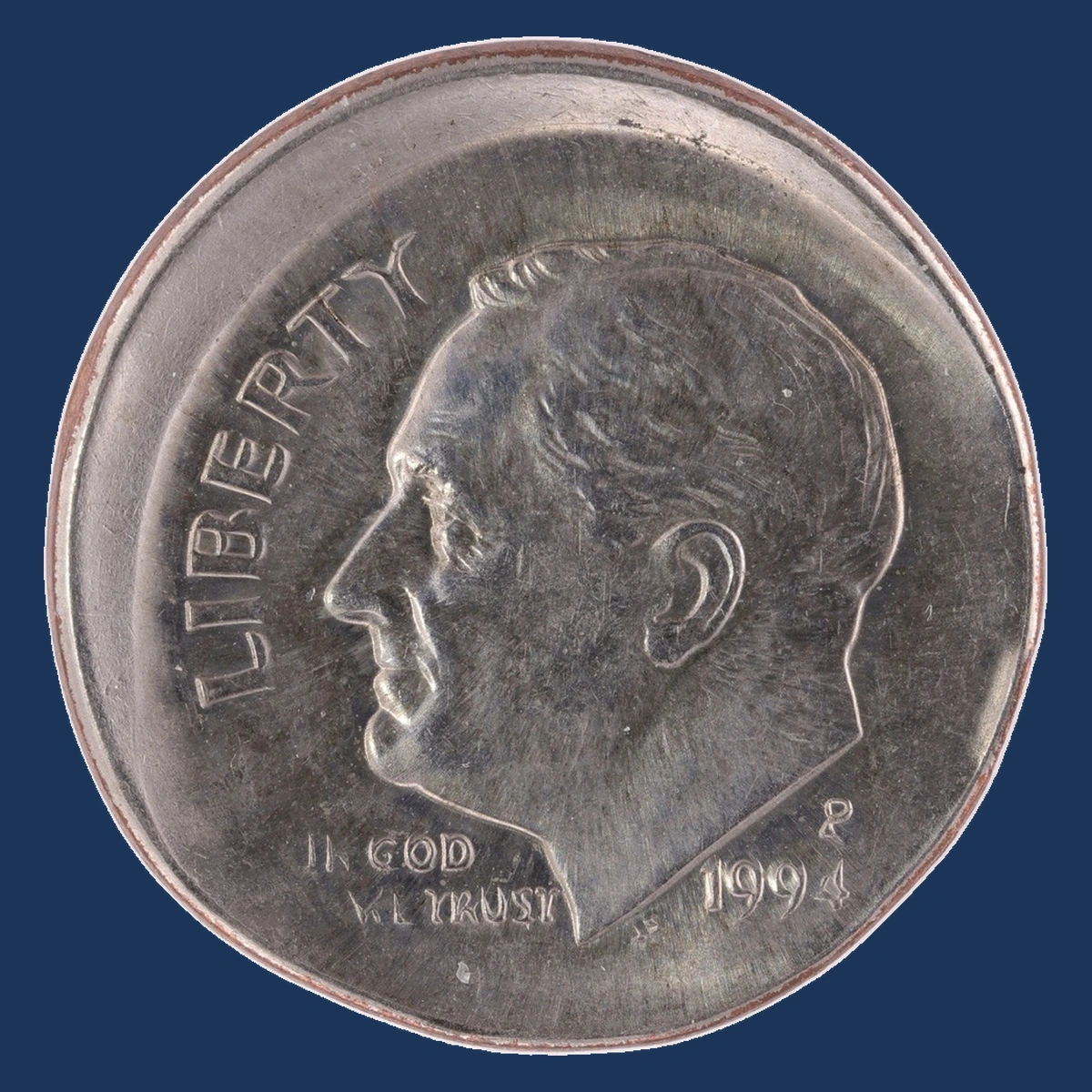
Part of this dime carries a reversed image pressed into the surface. A struck coin trapped in the press can create that mirror impression on the next coin, producing a brockage.
The Philadelphia example combines a 40% brockage with broadstriking. Stack’s Bowers listed it as PCGS MS65, meaning unworn with some marks.
The catalog does not say which face carries the mirror image. It is also a different object from the neighboring MS64 indent coin, so neither the side nor the grade should be filled in from that adjacent listing.
Estimated Value
Estimate $200–$1,200 for a comparable partial brockage and broadstrike. The size and clarity of the mirror image influence value more than a wide border by itself.
Readable reversed letters help make the error understandable. A vague impression with heavy marks offers a weaker comparison than a clear, attractive example.
This range covers one coin with both features together. The neighboring auction’s indent example has its own grade and identity and does not supply a sale price for this brockage.
How to Identify
Reverse a photograph of the suspect design to see whether it reads as part of a coin image. The actual impression should be sunken rather than a normal raised design.
Inspect it with a 10× magnifier, tracing the boundary between mirror detail and the unaffected surface. Photograph both faces because the catalog does not specify the affected side.
Weigh a loose clad piece against 2.268 grams and measure its width against 17.91 mm with calipers. The expanded outline belongs to the broadstrike portion of the accident.
Examine surviving edge grooves for later pressure damage. Squeezing finished coins together can imitate mirror detail.
A plain depression without a readable reversed design needs an indent comparison. Do not identify it as a brockage solely because its coverage seems near 40%.
14. 1994 Roosevelt Dime Overstruck with a Cent Design
The dime was made first in these accidents. It later entered a cent press and received Lincoln’s design over Roosevelt’s remaining details.
One reported combination is a 1994 cent over a 1994-P dime. Another is a 1995-D cent over a 1994-D dime, so the two dates do not have to match.
This is called a double-denomination error because designs from two coin values share one piece. It is not a dime design struck onto a cent blank, and the different certified examples should be compared separately rather than combined into one imagined coin.
Estimated Value
On August 28, 2022, an NGC MS66 1994 cent over a 1994-P dime sold for $1,050. A separate MS66 1995-D cent over a 1994-D dime brought $1,740 in that auction.
MS66 means unworn with relatively few marks. Estimate $900–$2,500 for comparable overstrikes with readable parts of both designs.
These prices are for individual coins. The older ANACS MS64 Philadelphia example is a separate record and should not inherit either price automatically.
How to Identify
Find Lincoln’s cent design first, then search for surviving parts of Roosevelt’s portrait, dime lettering, and the earlier date. Use a 10× magnifier to follow which design lies over which.
On the Denver combination, distinguish 1994-D from the later 1995-D. Do not relabel the earlier dime as a 1995 host.
For a loose piece, compare weight with the clad dime standard of 2.268 grams, not the 2.50-gram cent standard. Record its dimensions with calipers against the dime’s original 17.91 mm size.
Inspect any surviving edge grooves and enlarged outline after the cent strike. The second press can alter its shape.
Photograph enough of each design to show the order. Two random portrait-like marks do not establish a double-denomination coin.
15. 1994 Roosevelt Dime Struck on a Feeder-Finger Tip
A feeder finger is part of the machinery that moves blanks into the press. The end can break off and enter the striking area itself.
The recorded 1994-D fragment weighs 0.31 grams and carries about 80% of a dime design. Its date and D are complete, while the ragged left edge cuts through some lettering.
Mint Error News identifies the material as aluminum. The Heritage description also notes clash traces ahead of the portrait, but the main error is the dime design struck into a machinery fragment rather than a normal coin blank.
Estimated Value
The NGC MS65 feeder-finger example brought $1,725 on May 11, 2007. Heritage’s archive also reports a $1,750 result on November 3, 2016.
The complete date and D help identify the irregular scrap. For a comparable authenticated fragment, estimate $1,500–$3,000.
These figures concern machinery metal that received a dime design. A normal dime merely touched by a feeder finger is a different error with a different price comparison.
How to Identify
Begin with the object’s material and unusually low weight. The recorded fragment is 0.31 grams, far below the normal clad dime’s 2.268 grams; a scale reading should support the particular object being examined.
Use a 10× magnifier to compare the complete 1994 date and D with the ragged left border. Follow the remaining design to distinguish struck detail from marks added to scrap later.
Calipers can record the fragment’s actual dimensions against the normal dime diameter of 17.91 mm. Inspect its broken boundary without expecting a complete grooved coin edge.
Professional metal testing should support the reported aluminum identity. Keep the clash traces ahead of the portrait as a separate observation, rather than mistaking them for the cause of the irregular blank.
Conclusion
Estimated 1994 dime error values range from $5 to $3,000, from modest raised cracks to a struck machinery fragment. The most useful comparison is a coin with the same mechanism and clearly preserved details.
Keep front and back layer losses separate, and read both dates on a cent-over-dime piece. A combined error still has one whole-coin price, while later machine damage can reduce value even when the original mint error is real.