1982 Dime Error List with Pictures

A 1982 dime without its P mintmark reached $2,185 at Heritage in May 2004. That exceptional coin had an MS68 grade, meaning almost no visible flaws.
However, a faint or absent P can have more than one cause. This guide to 1982 dime errors separates the missing-letter variety from blocked designs, odd edges, and missing metal layers.
Estimated values range from $5–$2,200. Read on to see which features deserve a closer look and which price comparisons fit them.
1. 1982 Roosevelt Dime Grease-Filled Die Error (Estimated Up to $75)
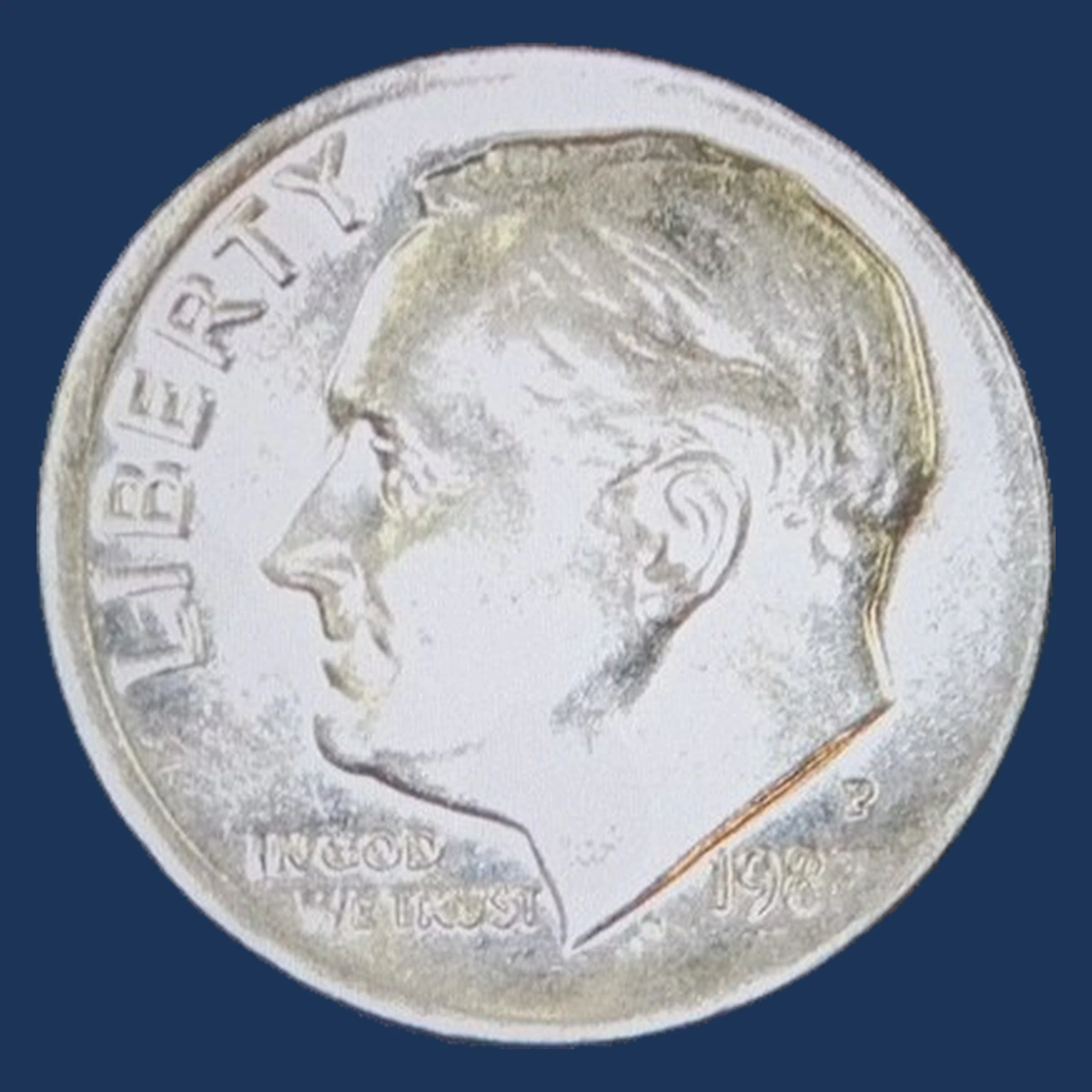
A P that nearly disappears does not automatically make a valuable No P dime. Grease and debris can block the small recess that should form the letter.
The recess is in a die, the steel tool that stamps the design. A blockage stops metal from filling that part of the tool.
The result can be a weak letter beside clearer details. Reports for 1982 also include other areas affected by grease.
This is a temporary obstruction, rather than a mintmark never cut into the tool. The two causes can look similar, but they have different collecting values.
Estimated Value
Small, genuine areas of grease-related weakness have an estimated $5–$25 range. A larger, clearly visible interruption can fit approximately $25–$75.
These estimates follow minor blocked-design errors on other modern Roosevelt dimes. They are not recorded sales of a particular 1982 specimen.
An ordinary worn or weakly struck P does not receive a No P variety price. Clear neighboring details help show what was blocked and make the error easier to appreciate.
How to Identify
Compare the P area with the date and portrait. Wear usually affects exposed high points too, while a blockage may weaken one area beside sharp details.
Use a 10× magnifier without rubbing or cleaning the surface. Scratches or a small hollow where the P belongs suggest someone may have removed it.
The normal layered-metal dime weighs 2.268 g and measures 17.9 mm across. Check with a scale and calipers when safely accessible, and examine the edge grooves.
Those measurements do not identify the cause of a missing letter. For a possible No P purchase, compare a recognized example and its grading description.
A faint remnant of the P points toward weakness rather than a completely omitted mintmark.
2. 1982-P Roosevelt Dime Tilted Partial Collar (Estimated Up to $200)
Look at this dime from the side rather than straight down. Its unusual feature is a step around the edge that changes height.
The collar is the metal ring that surrounds a blank during striking. It limits the width and forms the edge grooves.
When a tilted blank sits only partly inside the collar, some metal stays confined while the rest spreads. The edge can acquire both a grooved strip and a broader smooth section.
Heritage listed a 1982-P example graded ANACS MS64. That means an unworn coin with visible marks, rather than a perfect specimen.
Estimated Value
Estimate $30–$200 for a genuine tilted partial-collar dime with a visible step. A bold edge change on an attractive coin belongs toward the upper end.
The Heritage listing confirms a 1982-P example, but no completed sale amount is used here. Similar modern Roosevelt edge errors provide the comparison.
Side photographs matter when judging the price. A nearly invisible ledge may attract less interest than a clear transition visible around much of the edge.
How to Identify
Rotate the coin slowly while viewing the edge. A tilted partial collar should change the height of the step as you follow it around.
Inspect that transition through a 10× magnifier. Later rolling or squeezing can damage an edge, but often leaves crushed detail or irregular dents.
Use calipers to record the narrower and wider parts where safely accessible. Compare them with the normal 17.9 mm diameter.
A scale reading near 2.268 g supports a normal blank, though it does not prove the error. Keep sealed coins in their holders and use recorded measurements.
The most useful view shows the grooved band meeting the expanded section, with the step rising or falling around the coin.
3. 1982 Roosevelt Dime Broadstrike (Estimated Up to $300)
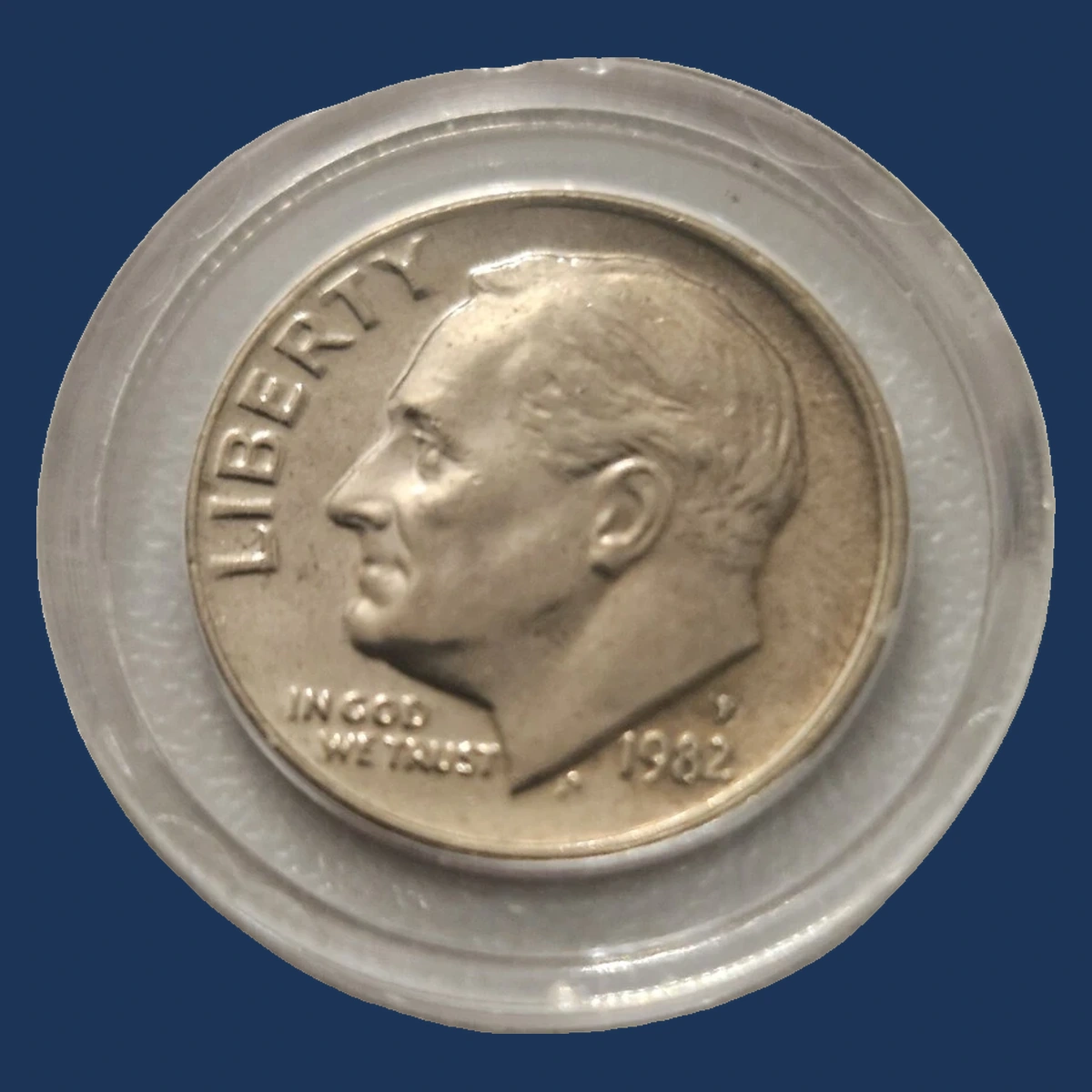
The outside letters can still be complete even when the coin looks too wide. That combination is the starting point for a broadstrike.
The collar failed to contain the blank as the tools pressed together. Metal spread farther outward than it should have.
The reported 1982 examples cover Philadelphia and Denver circulation coins. No single direction of spreading applies to all of them.
A broadstrike differs from a partial collar, where part of the edge remained confined. It also differs from an off-center strike, which loses part of the design beyond the blank.
Estimated Value
A useful estimated range is $50–$300, from modest spreading to obvious expansion on clean, unworn examples. Prices concern the complete coin.
A 2000-P dime sold for $159 in September 2025. It was graded NGC MS65, meaning well-preserved and unworn.
That coin was also struck more than once. Its different year and added error make it a limited comparison, rather than proof of a 1982 broadstrike price.
Crushed or flattened coins do not qualify simply because they are wider.
How to Identify
Trace the outside lettering on both faces before measuring the coin. Missing design can point toward an off-center strike instead.
A broadstrike should retain the full picture inside its expanded outline. Compare this with a normal dime rather than judging width from a photograph alone.
Calipers can record several spans against the usual 17.9 mm. Check safely accessible coins on a scale against 2.268 g, since spreading need not remove metal.
Then inspect the edge under a 10× magnifier. The normal grooves may be incomplete or absent.
A later blow can flatten the portrait and letters along with the edge. Look for complete, naturally stamped designs surrounded by original outward-spreading metal.
4. 1982 Roosevelt Dime Rim Cud (Estimated Up to $400)
A patch rising into the border can be more than a dent. A rim cud forms when part of the stamping tool breaks away at its edge.
Metal flows into that open space during the next strike. The coin receives a raised patch where clear detail should have appeared.
The 1982 listings include this error for regular Philadelphia and Denver dimes. They do not establish one clock position that every example must share.
Look at the patch’s connection to the rim. A tiny bump surrounded by intact design, or metal pushed up by a blow, needs a different explanation.
Estimated Value
Smaller clear cuds can fit an estimated $40–$150 range. Larger patches that replace visible design on attractive coins can reach approximately $150–$400.
These estimates use comparable rim breaks on modern Roosevelt dimes. They are not claimed auction results for a specific 1982 coin.
Collectors can see the error more easily when the raised area has a clear border. Added solder and dents do not earn this premium, even when they create a similar-looking lump.
How to Identify
Keep the rim in view when photographing the raised patch. Cropping it out removes one of the main clues.
With a 10× magnifier, follow nearby letters or portrait detail toward the patch. The broken tool cannot stamp its missing design there.
Check the opposite face for weak detail and the edge for dents or crushed grooves. Those views help distinguish striking effects from later blows.
The normal weight is 2.268 g and the diameter 17.9 mm. Use a scale and calipers where the coin is safely accessible.
Extra solder may change weight or cover otherwise intact letters. A true rim cud replaces normal detail with original raised metal connected directly to the coin’s border.
5. 1982 Roosevelt Dime Off-Center Strike (Estimated Up to $500)
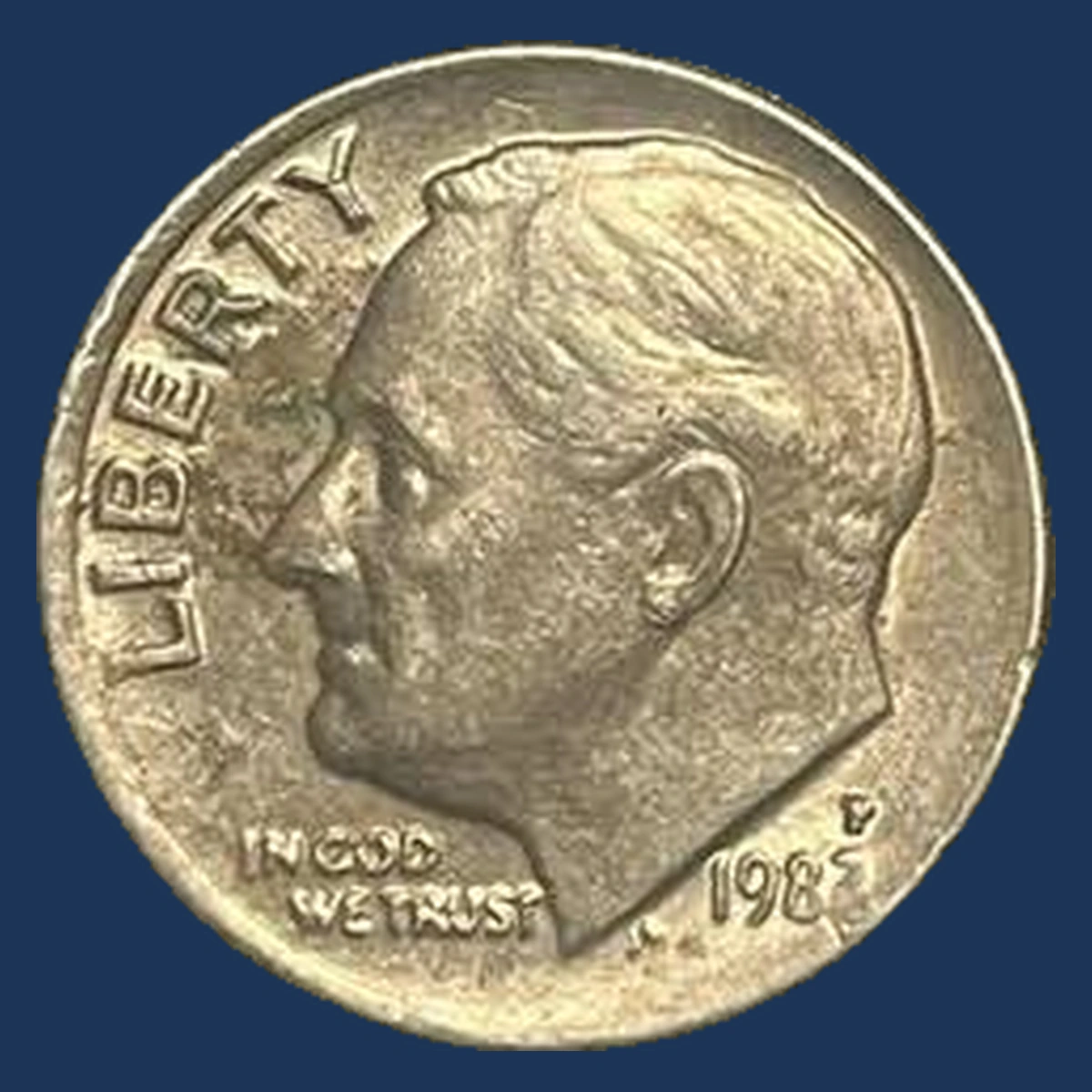
A crescent of plain metal shows where the blank missed the stamping tools. On an off-center strike, some of the intended design lands beyond the coin.
This is reported for 1982 Philadelphia and Denver circulation dimes. Each example needs its own check for the amount and direction of the shift.
The date may survive even when much of the portrait does not. That makes it easier to identify the year.
An uneven rim alone is not enough. If one face remains centered while the other moves, a misplaced tool can explain the difference without an off-center blank.
Estimated Value
Use an estimated $30–$150 for smaller readable-date offsets. Larger, attractive examples can fit approximately $150–$500.
A 1977 dime struck ten percent off center sold for $109 in June 2026. NGC graded it MS64 Full Bands: unworn with some marks and separated bands across the torch.
That recent result is a different-year comparison. It does not mean that every ten-percent shift has the same price, or that doubling the shift doubles the value.
How to Identify
Find the entire 1982 date first. Part of a missing date cannot be filled in just because the rest of the coin looks familiar.
Compare front and back photographs with the full outline visible. Both designs should be affected by the misplaced blank.
Use a 10× magnifier where the stamped design meets the plain area. Grinding removes finished detail and leaves a different surface from metal never touched by the tools.
A normal blank starts at 2.268 g and 17.9 mm. A scale and calipers can check safely accessible examples, allowing for spreading during striking.
Inspect the edge grooves for cuts too. The useful combination is original blank metal beside incomplete designs on both sides.
6. 1982 Roosevelt Dime Missing Clad Layer (Estimated Up to $600)
The pale surface of a regular 1982 dime covers a copper center. This layered construction is called clad metal.
If an outer layer separates, the copper beneath can show across part or all of one face. The remaining metal may still carry the design.
Year-specific lists report missing-layer errors for Philadelphia and Denver dimes. Those reports do not identify one universal face or patch shape.
Brown color alone does not establish the error. Staining, heating, or removing the surface after minting can change a normal dime’s appearance without creating an original missing-layer coin.
Estimated Value
Estimate $75–$600 for genuine missing-layer examples, depending on the exposed area and condition. This covers partial losses as well as a whole missing face layer.
A 2019-P dime missing eighty percent of its front layer sold for $139 in September 2024. PCGS graded it MS61 Full Bands, meaning unworn with marks and separated torch bands.
The amount missing, grade, and year differ. That sale is a comparison, not a recorded result for the reported 1982 coins.
How to Identify
Start at the edge, where a normal dime shows its copper center between paler outer layers. Compare both faces to see whether one layer is physically absent.
A scale is useful because missing metal should reduce the normal 2.268 g weight. Record safely accessible coins without removing sealed holders.
Calipers can compare intact spans with 17.9 mm. Under a 10× magnifier, examine any boundary between exposed copper and surviving outer metal.
Acid, grinding, and heat can alter the surface after minting. They may leave roughness or damaged design inconsistent with a naturally struck exposed layer.
Look for an absent layer at the edge together with reduced weight and original design on the exposed copper.
7. 1982-D Roosevelt Dime and Clad Shell Struck Together (Estimated Up to $1,500)
This error involves two surviving pieces from the same event. An old specialist catalog describes a broadstruck 1982-D dime and a clad shell struck together.
A clad shell is a separated piece of the dime’s thin outer metal. Here it was present with the coin when the tools came down.
The catalog offered both pieces as a matched set. Their relationship is the feature that makes the pair interesting.
A random metal disc placed beside a damaged dime cannot show that history. The contact shapes and stamped details must support the claim that these pieces met during striking.
Estimated Value
The 1983 catalog reproduced in Mint Error News offered this pair for $95. That is an old dealer asking price, not a completed sale.
For an authenticated complete pair today, use an estimated $300–$1,500 range. This allows for condition, clear matching features, and the added interest of both pieces surviving.
The estimate combines comparisons with missing-layer and multiple-piece striking errors. It prices the pair once, without adding separate full values for its two parts.
How to Identify
Keep both pieces together and photograph each face. Do not force them into contact to test the fit.
Under a 10× magnifier, compare their outlines and the areas that touched. Stamped detail and displaced metal should make sense as parts of the same event.
Weigh each safely accessible piece separately. A normal intact dime is 2.268 g, but the catalog does not give a required total for this pair.
Use calipers to record both outlines against the normal 17.9 mm dime diameter. The broadstruck piece may be wider, and its edge grooves may be incomplete.
A thin shell alone cannot establish the 1982-D pairing. Matching contact boundaries on both pieces are the feature to demonstrate.
8. 1982 Roosevelt Dime Missing P Mintmark (Historical Auction Level Up to $2,200)
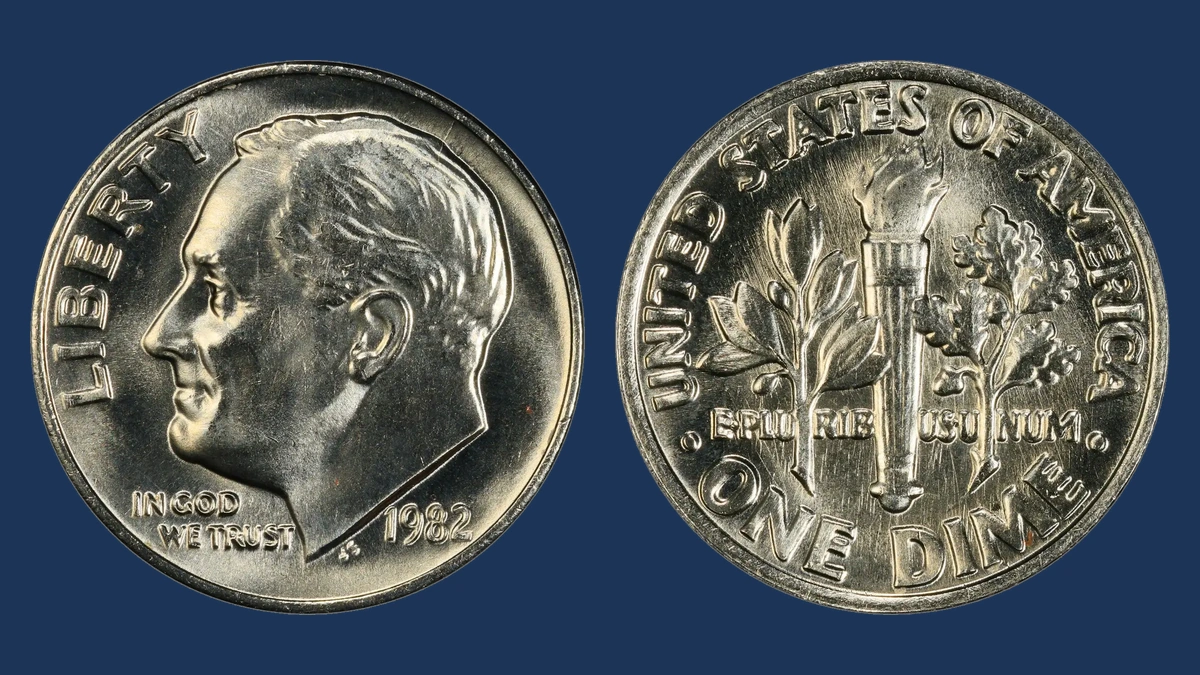
There should be a P above the date, beside the lower right of Roosevelt’s neck. On the genuine 1982 No P variety, that space was blank from the start.
The mintmark had been left off the stamping tool. Every coin made from it could therefore lack the letter.
Collectors separate strong and weak strikes by how fully the design formed. Those descriptions concern the overall detail, not two different kinds of missing letter.
This variety belongs to regular Philadelphia coins. It is separate from No S Proof errors, which involve specially made collector coins from San Francisco in other years.
Estimated Value
PCGS lists $2,185 for a strong-strike MS68 sold at Heritage in May 2004. That unusually clean coin defines a historical $2,000–$2,200 level.
More ordinary genuine examples have an estimated $50–$500 range. Strong or weak detail and surface condition affect the price.
For a newer comparison, an ANACS MS64 strong strike sold for $192 in June 2024. It was unworn with visible marks, showing how far routine examples can sit below the old high.
How to Identify
Compare the space above the date with an ordinary 1982-P dime. Look through a 10× magnifier for scratches, a shallow hollow, or a remaining piece of the P.
A missing letter by itself does not settle the cause. Grease can weaken the design, while alteration can remove metal after minting.
The strong strike has fuller detail; weak examples have flatter outer details, including the outer part of the 2. Compare recognized photographs of the appropriate version.
Both normally weigh 2.268 g and measure 17.9 mm, with edge grooves. Use a scale and calipers when safely accessible.
An undisturbed mintmark space with the matching full-coin features deserves the closest comparison with an authenticated No P example.
Conclusion
The empty mintmark space is worth examining, but it is only one part of this year’s error list. Edge steps, exposed copper, and untouched blank areas each tell a different story.
Estimated prices span $5 for minor blocked detail to about $2,200 at the historical No P auction level. Start with the visible feature, then choose a comparison with the same cause.
For the two-piece Denver set, judge the matching pair together.