1977 Dime Error List with Pictures

A dime that sticks to a stamping tool can curl around it like a little cap. One exceptionally well-preserved 1977-D example sold for $1,725, despite its unusual shape.
This guide covers 1977 Roosevelt Dime errors with estimated ranges from $5–$3,000. Some expose copper, some lose design details, and others receive extra impressions.
Continue below to see what each type looks like and which simple checks help separate it from damage.
1. 1977 Roosevelt Dime Blocked Design and Weak D Mint Mark
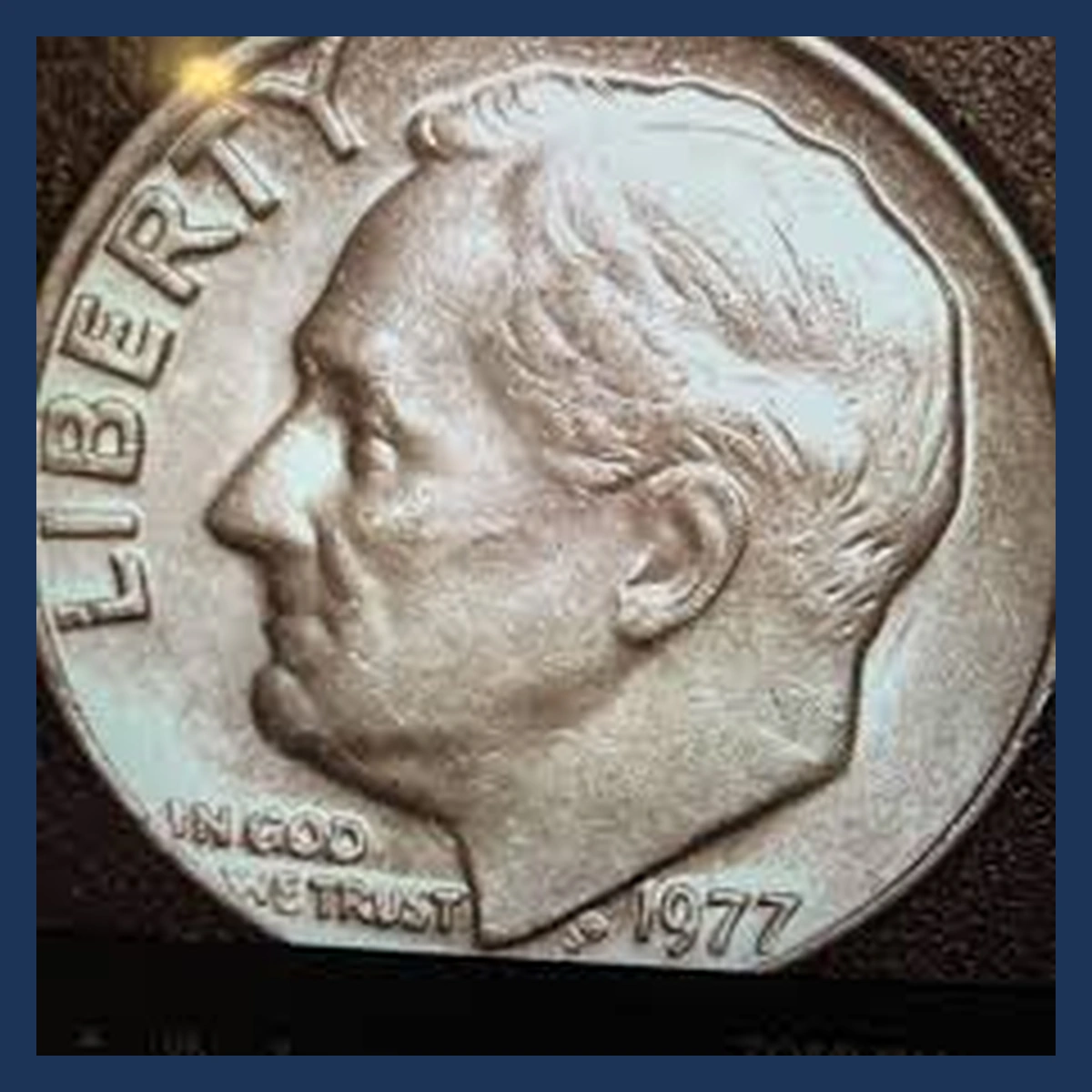
A letter can look faint or a patch of design can fail to form when material blocks the stamping tool. Reports for 1977 describe both struck-through areas and a clogged Denver mint mark.
The D normally sits above the date near Roosevelt’s neck. Material filling its shape in the tool can weaken the letter on a later coin.
A missing letter needs care, however. Philadelphia dimes were normally made without a mint mark in 1977.
A plain space therefore does not prove that a D disappeared. Other matching details must first establish that the coin came from a Denver tool.
Estimated Value
Use an estimated range of $5–$200 for genuine blocked-design errors, depending on the size and clarity of the affected area. The range covers Mint-caused interruption, not normal Philadelphia coins without a letter.
These are comparisons with minor modern dime striking errors rather than a verified sale for the reported clogged D. An identified depression can be more distinctive than a barely weakened mark.
Wear or later scraping that removes a letter falls outside the error estimate.
How to Identify
Before examining a supposed missing D, remember that a 1977 Philadelphia dime normally has no mint letter. Find surviving D detail or other matching tool features before assigning a Denver origin.
Use a 10× magnifier above the date to inspect the weak letter and nearby undamaged detail. For a separate struck-through patch, examine its boundary without assuming the blocking substance was grease.
A scale and calipers can compare a loose dime with 2.268 grams and 17.91 millimeters. Inspect the grooves around the edge for damage accompanying a scraped surface.
The useful clue is interrupted design within otherwise preserved detail; an ordinary empty mint-mark position is not enough.
2. 1977 Roosevelt Dime Local Peeling Metal
A flap or peeled patch can expose the metal beneath part of a dime’s surface. Reports for 1977 distinguish local peeling from loss of an entire outer layer.
The ordinary coin is made from bonded metal layers around a copper center. Poor attachment or weakness within the metal can allow a piece to separate.
The reported examples are not assigned one location or stage of separation. The remaining surface must show whether peeling occurred before or after the design was struck.
An artificial scrape can resemble a peeled area. An attached flap should not be pulled back to investigate it.
Estimated Value
Local original peeling is estimated at $10–$250, with the amount influenced by area, visibility, and preservation. A small flake should not automatically receive the price of a dramatic missing-layer error.
For context, the separate 1977-D dime missing its whole front layer sold for $45 in April 2020. That coin provides a same-year metal-separation comparison, but its size and form of loss are different.
The estimate excludes a surface deliberately scraped or peeled after the coin left the Mint.
How to Identify
Leave any attached flap in place and examine its boundary under a 10× magnifier. Check whether nearby struck detail continues onto the layer or ends at an exposed broken surface.
That relationship can help establish when separation happened; a rough patch alone does not give the sequence. Look for gouges or a pried edge that would suggest later removal.
Use a scale on a loose coin against 2.268 grams and calipers against 17.91 millimeters, checking the remaining edge grooves too. A tiny flake may produce little measurable weight change, so judge the original layer boundary rather than requiring the loss of a whole face.
3. 1977 Roosevelt Dime Reported Doubled Front and Back Designs
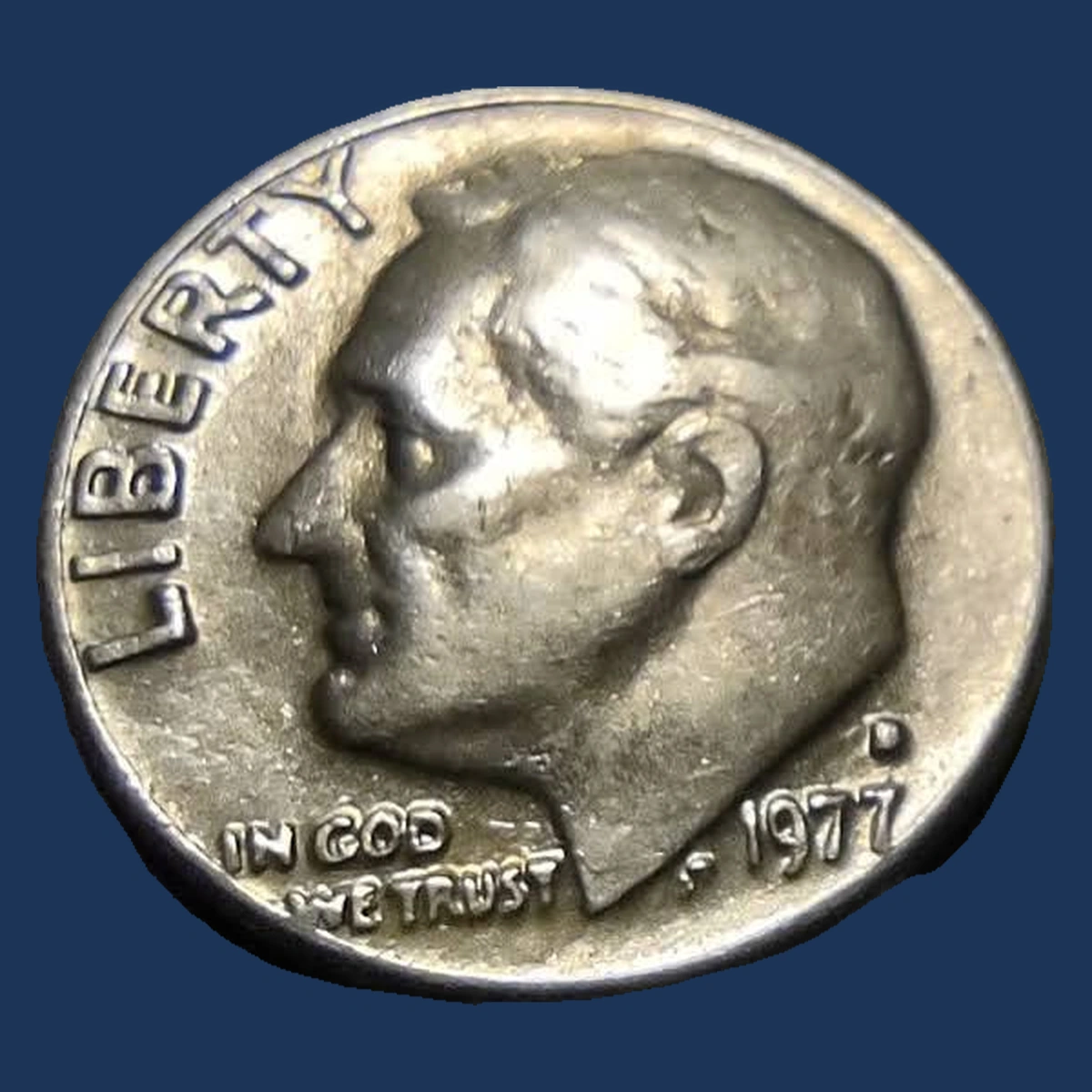
An extra outline can appear beside letters when the stamping tool carries doubled detail. A single blow can then place both outlines on the coin.
This is called a doubled die, with die meaning the steel stamping tool. The coin does not need to pass through the press twice.
Front reports concern LIBERTY, the motto, and date; back reports concern E PLURIBUS UNUM, ONE DIME, and the country name. No particular mint or catalog pattern is established for these reports.
Flat shelves and worn lettering can imitate doubling. Each pattern needs a matching example before it receives a variety name.
Estimated Value
A genuine identifiable doubled design has an estimated range of $15–$300 here, depending on separation and condition. This is a comparison with minor modern Roosevelt varieties, not a recorded sale for a confirmed 1977 catalog number.
The reported front and back patterns should be valued individually on their actual features. They are not presumed to occur together on one coin.
Mechanical shelves or vague thick letters do not automatically earn the same premium as a recognized doubled stamping tool.
How to Identify
Choose the face with the suspected extra detail and place a normal 1977 dime beside it. Use a 10× magnifier to compare letter corners, date contours, and the shape of any second outline.
A flat shelf that reduces the main letter can reflect movement during striking rather than a doubled tool.
Check nearby details for a consistent pattern instead of relying on one thick-looking stroke. The front and back reports do not establish a named variety or a fixed direction to copy.
A loose dime should measure near 2.268 grams and 17.91 millimeters on a scale and calipers, with edge grooves. Those checks do not identify doubling.
Match repeated, formed outlines to an identified tool pattern before assigning the variety premium.
4. 1977 Roosevelt Dime Missing Sections of the Blank
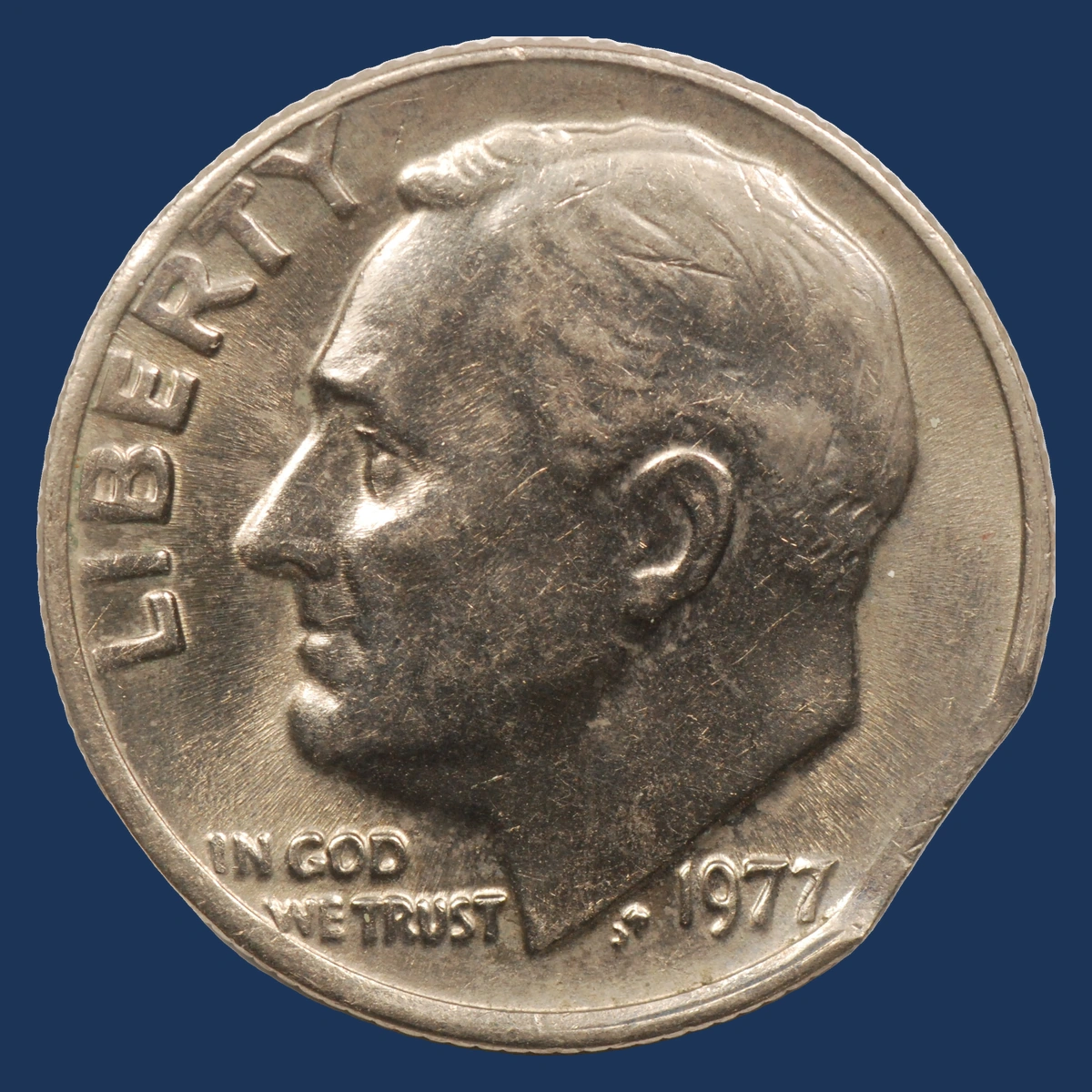
A section of the outline can be absent because the metal disk was incomplete before striking. Collectors call that unfinished disk a blank and the resulting shortage a clip.
The rim and design form around the missing area. That sequence differs from cutting part of a finished dime away.
Reports include both Philadelphia and Denver coins from 1977. They do not assign one required gap size or clock position to every specimen.
More than one missing section can occur, but the number alone does not prove authenticity. The struck metal around each opening must support an original blanking mistake.
Estimated Value
Genuine 1977 clips are estimated at $20–$350, allowing for size, shape, readable identification, and condition. A small shortage and several dramatic gaps need different comparisons.
A 1997-P nickel with a twenty-percent clip sold for $124 in March 2025. This different-year and different-denomination sale provides broad context for a visible incomplete blank.
An artificially cut coin does not share that error value. The remaining rim and surface should establish that the shortage existed when the design was stamped.
How to Identify
Weigh a loose example against a normal dime’s 2.268 grams, then compare intact spans with 17.91 millimeters using calipers. A gap should remove metal, but low weight alone cannot tell when it disappeared.
Inspect each end of the opening with a 10× magnifier. Look for a rim formed around the shortage instead of finished letters abruptly sliced through.
Check the surviving edge grooves for grinding or file marks.
Weakness opposite a genuine clip can be helpful, though not every coin shows it equally. The more direct clue is natural struck metal at the gap’s ends, with no later cutting marks to explain the missing area.
5. 1977 Roosevelt Dime Expanded Strike
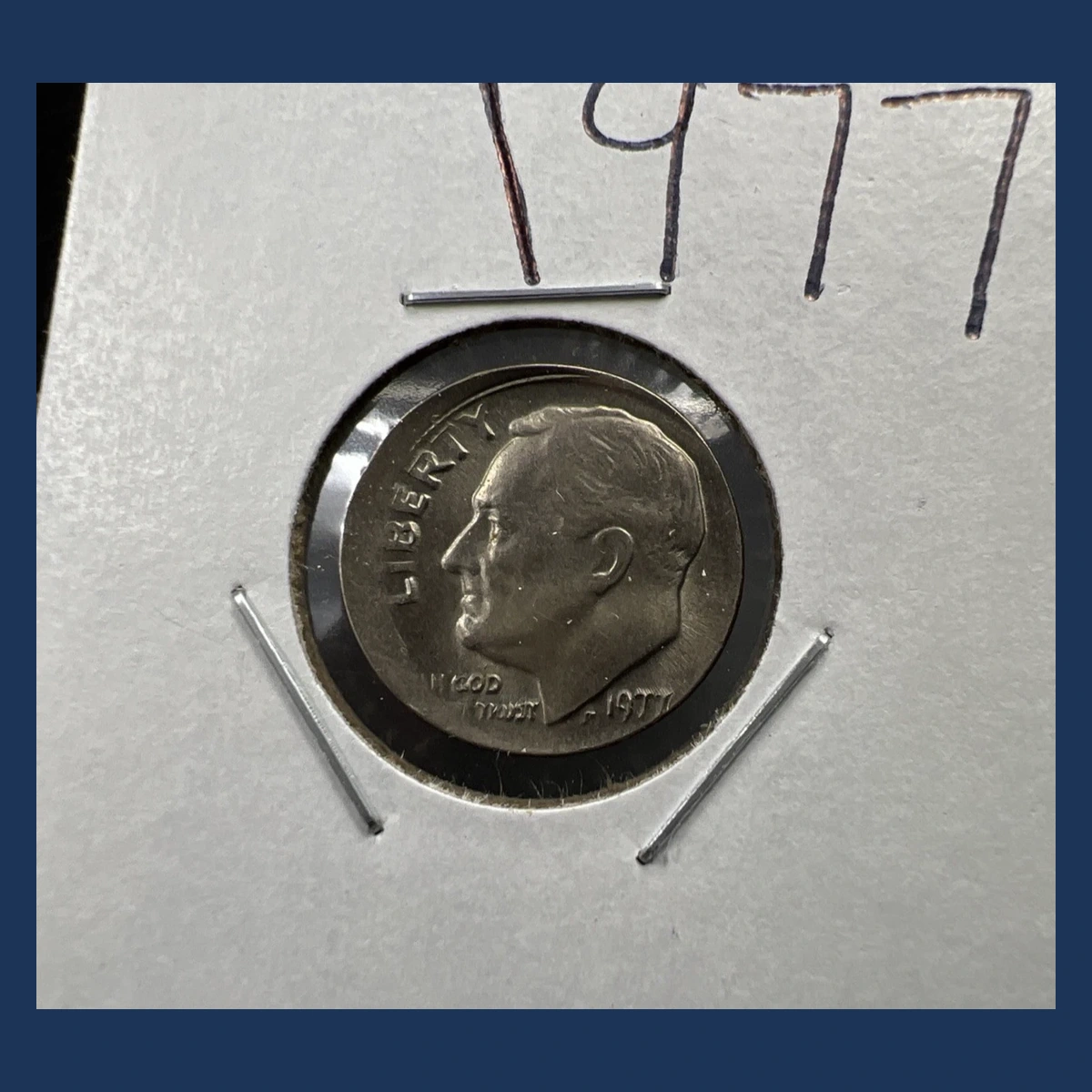
Extra metal can spread beyond the normal outline when the surrounding restraining ring fails to contain a strike. The result is a broadstrike if the design remains complete.
The ring, called a collar, normally controls width and creates the grooves around the edge. Metal outside it can expand more freely.
A 1977 report lists this error without identifying a mint or measured diameter. Those details belong to the specimen, not the general type.
A broad border can also result from other problems. Missing portions of the design suggest an off-center strike, while later hammering can flatten and widen a coin.
Estimated Value
For a genuine 1977 broadstrike, estimate $25–$400 according to expansion, condition, and how clearly the design remains intact. This is a comparison-based range, not an auction result for the unnamed example.
A 1988-P dime with close overlapping strikes sold for $80.50 in May 2005; its second strike was also broadstruck. That different-year coin combined two effects.
A plain expanded strike should not automatically share a combined error’s price. Its own shape and preservation should guide the comparison.
How to Identify
Check the complete outer lettering before deciding that a wide coin is broadstruck. A broadstrike keeps the design on the metal, whereas an off-center strike can leave a blank crescent and lose letters.
Measure several directions with calipers against 17.91 millimeters, since expansion may be uneven. A scale should compare a loose coin with 2.268 grams; spreading does not itself require metal loss.
Inspect the widened border and reduced edge grooves through a 10× magnifier, looking for original metal flow rather than later flattening. Retained design and real outward expansion must agree; a smooth edge on a normal-width dime does not establish the error.
6. 1977 Roosevelt Dime Fifteen-Percent Off-Center Strike
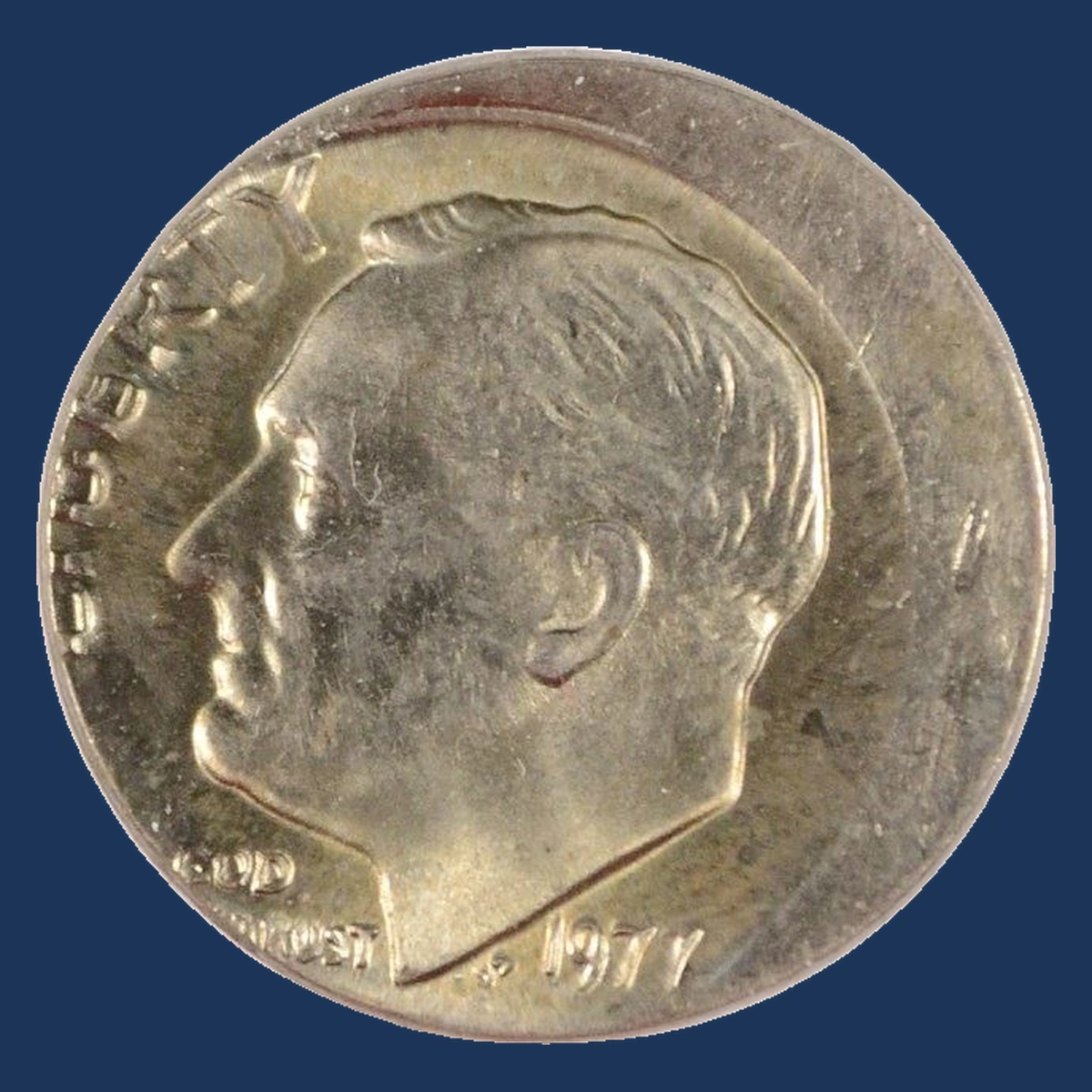
An unstruck crescent borders the design on a documented 1977 Philadelphia dime. Its metal disk entered the press off-center, leaving part of it outside the area reached by the tools.
The recorded displacement is fifteen percent toward one o’clock. ANACS graded the coin MS63, an unworn grade with noticeable marks allowed.
The absent mint letter is normal for Philadelphia that year. It is not a second missing-P error.
Both faces should agree with the same displaced disk. A front-only shift can instead come from a misplaced stamping tool and should not be identified from one rim photograph.
Estimated Value
Estimate $25–$500 across genuine dated 1977 off-center dimes, allowing for different displacement and preservation. A readable date helps collectors identify even a strongly displaced example.
A separate 1977 dime struck ten percent off-center, graded NGC MS64 Full Bands, sold for $109 in June 2026. Full Bands describes clear torch detail, not another error.
That result is a same-year comparison from a different coin. Its grade and ten-percent displacement should not be transferred to the fifteen-percent specimen.
How to Identify
Orient the dated face upright and compare the documented displacement toward one o’clock. Keep the fifteen-percent ANACS MS63 specimen separate from the ten-percent NGC comparison used for price.
Now turn the coin over to see whether the same disk displacement explains the back.
A 10× magnifier should show a natural boundary between struck and unstruck metal. Scraping that removes an earlier design can imitate a blank-looking area.
For a loose coin, check weight against 2.268 grams and width against 17.91 millimeters with a scale and calipers. Inspect the remaining edge grooves for cutting or crushing.
Identify both displaced designs on an intact disk; the lack of a Philadelphia mint mark is normal.
7. 1977 Roosevelt Dime Missing Front Outer Layer
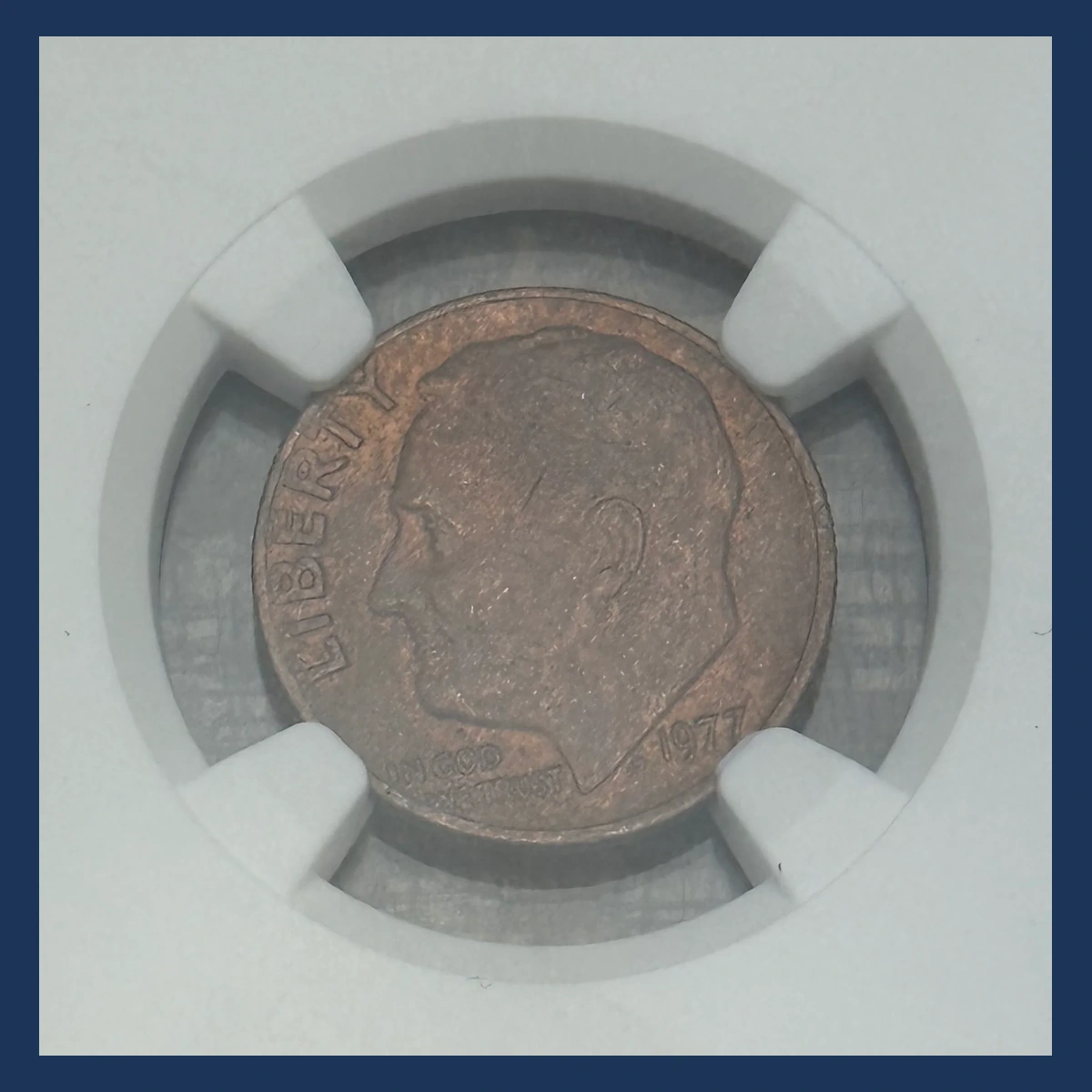
Copper shows beneath Roosevelt when the front silver-colored outer layer is missing. The normal dime has bonded copper-nickel layers around a copper center, a construction known as clad metal.
A recorded 1977-D example weighs 1.9 grams and was graded NGC MS64. Its weight is lower than the ordinary 2.268 grams because metal is absent.
Philadelphia missing-layer reports also exist, but they do not inherit this Denver coin’s weight or grade. Each specimen needs its own examination.
Staining or copper plating can produce color without the same loss. The front surface and layered edge must agree with the missing metal.
Estimated Value
The NGC MS64 Denver example sold for $45 in April 2020. Comparable genuine 1977 missing-front-layer dimes have an estimated range of $40–$750, reflecting condition and the clarity of the exposed surface.
A later-year 1988-D example of the same basic error brought $360 in June 2024 at NGC MS65. That is a different coin, not a new sale of the 1977 specimen.
The range concerns actual missing metal. A reddish surface without physical layer loss does not receive the same comparison.
How to Identify
Compare the exposed front with the normally layered back, using a 10× magnifier to inspect the boundary near the edge. The documented Denver error concerns the front specifically.
A loose specimen can be weighed against the recorded 1.9 grams and the normal 2.268-gram standard. Do not remove a graded coin from its holder just to obtain a measurement.
Calipers should check the outline against 17.91 millimeters, while the remaining grooves help reveal edge damage. Look for later stripping, chemical attack, or an added film over the design.
Physical absence of the outer layer, together with suitable weight loss, distinguishes the error from a coin that only changed color.
8. 1977 Roosevelt Dime Repeated Strikes
Two design positions can remain when a coin receives another strike before leaving the press. The later blow can overwrite parts of the first impression and spread the outline.
A 1977 year report lists repeated striking without fixing a mint, angle, or second-strike percentage. A specific coin’s photographs must supply those details.
This differs from doubling already present on a stamping tool. That kind of doubled detail can reach a coin in only one strike.
A broad extra impression is more useful than one thick letter. Its relationship with the earlier design should explain how the metal moved between blows.
Estimated Value
Genuine 1977 repeated strikes are estimated at $60–$800, depending on visible separation and preservation. Readable earlier lettering can make the extra impression easier to appreciate.
For a later-year comparison, a documented 1997-P double-struck dime graded NGC MS64 sold for $138 in December 2020. Its second impression was off-center, but that does not establish the 1977 coin’s direction.
Clear overlapping design can demonstrate the accident. Later vise impressions or a small mechanical shelf should not receive a double-strike premium.
How to Identify
Look across the entire design for an earlier position of lettering or portrait detail, not just one doubled-looking stroke. Follow the overlap under a 10× magnifier to see which impression covered the other.
Check the opposite face for evidence consistent with the extra blow. Do not assume a flip or rotation when the coin does not show one.
A scale and calipers can compare a loose dime with 2.268 grams and 17.91 millimeters, allowing for an altered outline. Examine its grooved edge for joins, crushing, or later squeezing.
Two traceable struck positions support the repeated-strike description. A narrow shelf alongside otherwise normal lettering is a different clue.
9. 1977 Roosevelt Dime Reported Strike on a Cent Blank
A dime design on a cent blank would combine Roosevelt’s image with the wrong metal disk. The reported 1977 claim needs that direction of mismatch.
A normal 1977 cent blank was copper alloy, weighed 3.11 grams, and measured 19.05 millimeters before striking. It was heavier and wider than a dime blank.
The proposed error therefore cannot be identified using a later zinc cent’s lighter weight. Copper color alone would not prove the larger blank entered the dime press.
A cent design struck on a dime blank is the reverse situation. Its Lincoln design would make it a different error entirely.
Estimated Value
For a genuinely identified 1977 dime struck on a contemporary cent blank, use a conditional estimate of $500–$2,500. This is a wrong-blank comparison, not a documented sale for the year-list claim.
The value would depend on original metal, readable dime identity, preservation, and reliable identification of the starting blank. A copper-colored dime does not meet those conditions.
The larger cent disk also requires a credible explanation of how it entered the striking position. Color and an error label are insufficient.
How to Identify
Start with the design: this claim requires Roosevelt, not Lincoln. A Lincoln cent struck on dime metal is the opposite error and cannot serve as its identifying photograph.
For a loose candidate, a scale and calipers should compare the starting cent standards of 3.11 grams and 19.05 millimeters. The ordinary dime standards are 2.268 grams and 17.91 millimeters.
Striking can alter the outline, so those measurements need interpretation.
Use a 10× magnifier on the surface and edge to check for plating, trimming, and how the disk met the grooved collar. The larger blank’s entry into the press needs expert examination.
Confirm the original copper alloy and wrong disk beneath a genuine dime design before accepting this claim.
10. 1977 Roosevelt Dime Coin Curled Around the Front Tool
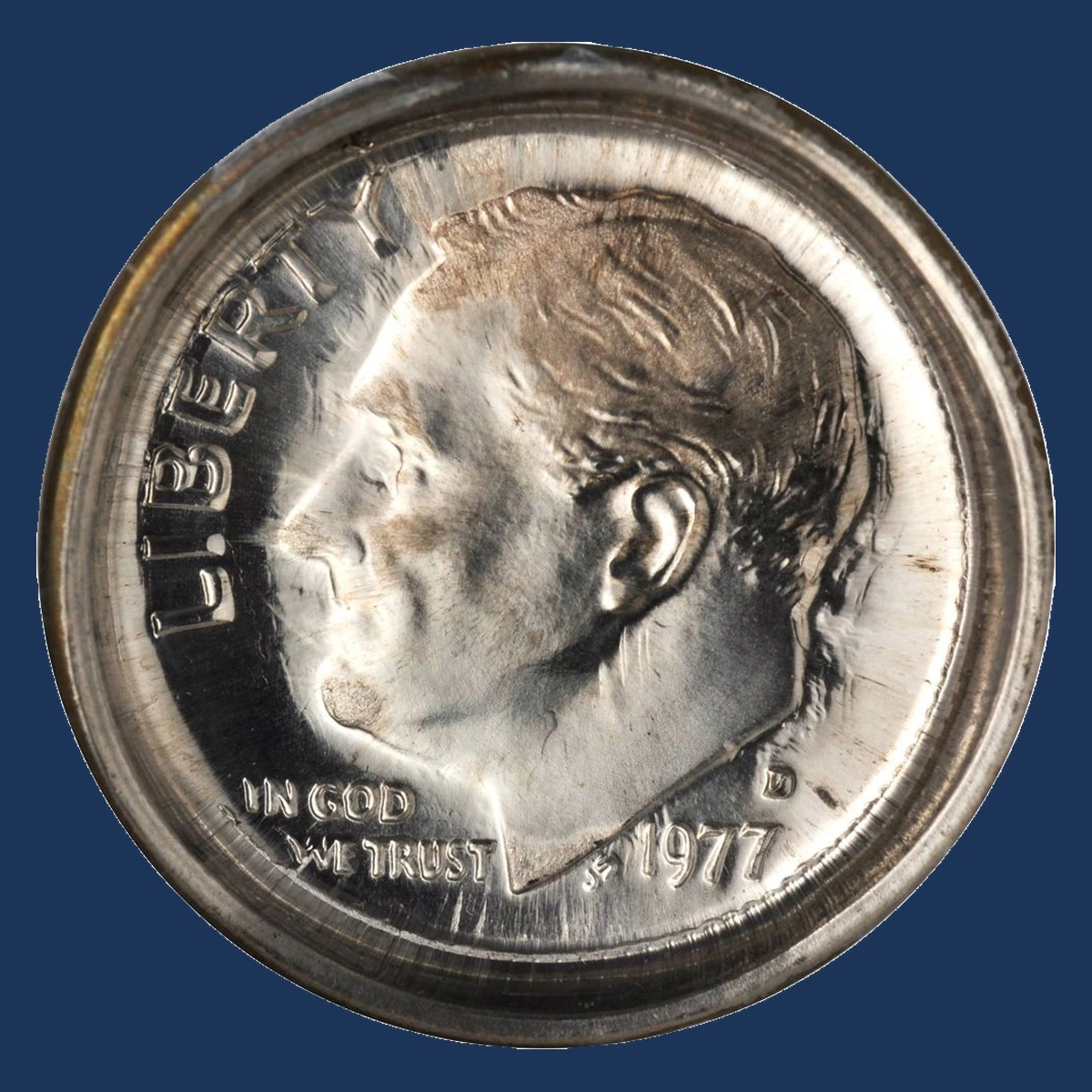
The edge of a stuck dime can rise around a stamping tool like the wall of a tiny cup. Instead of being ejected, the coin remains attached while the press continues working.
This object is called a die cap. It is different from another coin struck beneath that covering.
The 1977-D cap was graded NGC MS69, indicating few visible marks. Its surfaces were bright pale gray with light golden color in Roosevelt’s hair.
The unusual shape does not automatically mean the back is blank. Both faces and the raised wall need to show how the coin formed around the tool.
Estimated Value
The NGC MS69 front cap sold for $1,725 in April 2006. Estimate $500–$3,000 for genuine 1977-D caps, with shape and preservation strongly affecting comparison.
This example combined a dramatic press error with unusually clean surfaces. A bent ordinary dime does not share its value simply because it resembles a cup.
The range prices the cap itself. A receiving coin struck through a stuck cap belongs to a different comparison.
How to Identify
View the coin from the side to follow the wall rising around the original struck center. Do not press it flat or try to reshape it for a photograph.
Examine the wall and both faces with a 10× magnifier, looking for metal movement consistent with remaining on the front tool. The back need not be completely blank.
A scale can compare a loose cap with the original dime’s 2.268 grams; calipers can record its altered shape against 17.91 millimeters. Inspect surviving edge grooves and the wall for scratches from later bending.
The important match is natural metal wrapped around a stamping tool, not merely a curved dime or a weak image struck through another coin.
Conclusion
The estimated ranges for these 1977 Roosevelt Dime errors extend from $5 to $3,000. The $1,725 cap shows how unusual shape and strong preservation can work together, while smaller blocked details may add only modest value.
Check the original design, both faces, and the edge before relying on color or weight. Remember that Philadelphia dimes normally lacked a mint mark, and a 1977 cent blank was larger and heavier than a dime blank.