1973 Dime Error List with Pictures

Proofs are collector coins made with specially prepared tools. A 1973-S Proof struck twice and spread beyond its normal border brought $1,800 in September 2020.
The 1973 dime errors below range from small surface defects to foreign blanks and flipped strikes. Estimated values run from $5 to $3,000.
Keep reading to compare their visible features, including several effects that appear together on one coin.
1. 1973 Roosevelt Dime Abnormal Blank Heating
An unusually dark or mottled dime may have changed color while its blank was being heated. This heating step, called annealing, softens the metal before striking.
An abnormal heating environment can affect the surface, but color alone cannot show when the change happened. Storage, chemicals, and later exposure to heat can also darken a coin.
A no-mint-mark 1973 example has been offered with a seller’s suggested annealing explanation. That is a report of a possible cause, not a grading service’s confirmation that the coin left the Mint with this color.
Estimated Value
For a genuine abnormal-heating error, an estimated $10–$100 is reasonable. The important difference is whether its original mint surface remains beneath the unusual color.
A strongly mottled but undamaged coin can be more interesting than one with ordinary dark tarnish. A convincing explanation of the surface also matters more than dramatic color alone.
Seller descriptions such as “likely annealing” do not establish that premium. A normally toned dime should be valued for its condition and appearance instead.
How to Identify
Leave the unusual surface untouched while assessing it. Cleaning or polishing could remove the texture that helps distinguish a heating effect from later discoloration.
Inspect that texture with a 10× magnifier. Pitting, bubbling, and a separate coating call for a different explanation than intact struck metal with an unusual shade.
For a loose coin, use a scale and calipers to compare 2.268 grams and 17.91 mm. Examine the copper core and outer layers along the grooved edge.
If an outer layer is physically absent, investigate layer loss instead of explaining the color through heating. When all layers remain, photograph both faces in neutral light so a specialist can examine the original surface and its color together.
2. 1973 Roosevelt Dime Doubled Dies
Extra rounded outlines beside letters can come from a doubled design in the stamping tool. That tool is called a die, and it can pass the same extra detail to many coins.
The 1973 reports describe minor front doubling and also list back doubling. LIBERTY, IN GOD WE TRUST, the date, and the back design are areas to examine, rather than a promise that every one is doubled.
No single direction or strong pattern defines all these reports. They should not be confused with the much larger displaced impressions caused by striking the same coin twice.
Estimated Value
Minor genuine doubled dies are estimated at $10–$125. A crisp extra outline that a buyer can compare in photographs is more useful than general thickness.
The lower end fits small effects on worn coins. Better preservation can support more, especially when several related details agree.
Front and back doubling must each be established on the actual dime. A broad claim that both sides are doubled does not double its value, and flat mechanical shelves usually add little.
How to Identify
Photograph one suspected letter beside the same letter on a normal 1973 dime. Similar lighting and magnification make the comparison more useful than an extremely enlarged image alone.
With a 10× magnifier, look for rounded separation or divided corners. A flat shelf lower than the main letter points toward movement during striking instead.
Check a loose dime with a scale and calipers against 2.268 grams and 17.91 mm. Its grooved edge helps establish the normal coin but does not confirm doubling.
Examine a back claim on its own merits. A pattern photographed on a 1973 half dollar, or on a different dime year, cannot establish the same variety on this coin.
3. 1973 Roosevelt Dime Clipped Blank
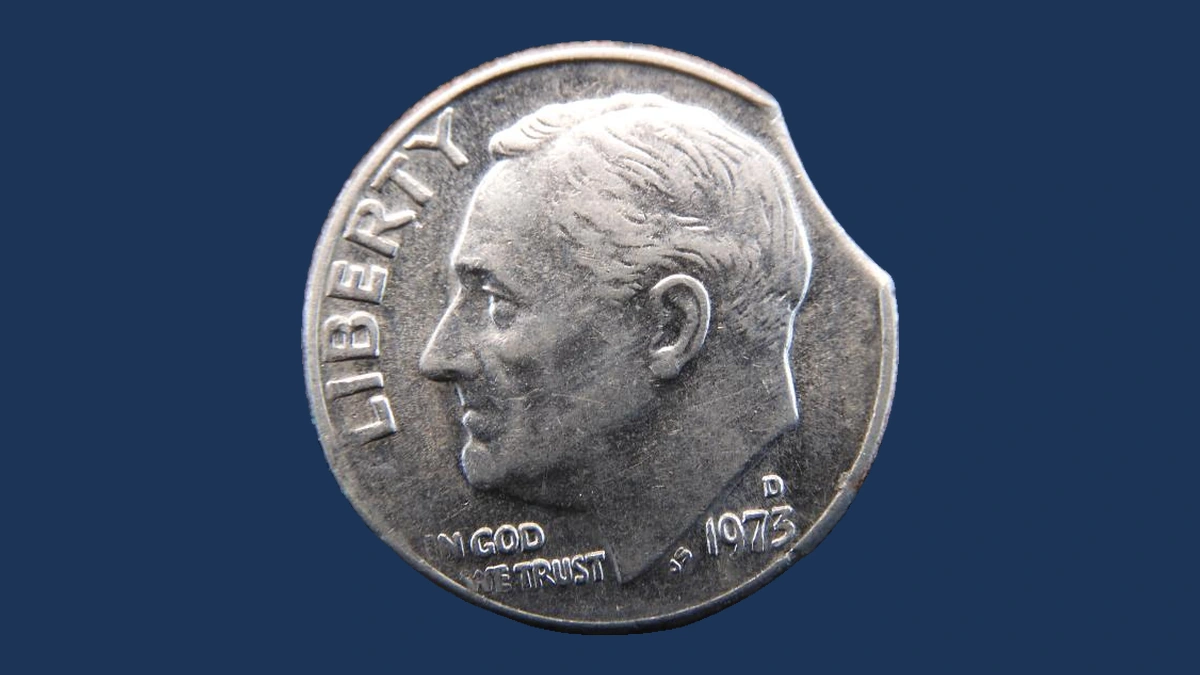
A clipped blank starts with a piece already missing before the design is stamped. The blank-cutting machine may have overlapped an earlier hole in the metal strip.
This leaves a curved opening after the dime is struck. The rim opposite that opening can be weak because the incomplete blank did not form a normal raised border during preparation.
Clips are reported for 1973 dimes, including a small Denver example discussed by collectors. No fixed clock position or percentage defines that report, so a photographed gap must be judged by its own shape and surface.
Estimated Value
An estimated $15–$150 covers genuine modest clips on ordinary 1973 dimes. Small missing sections on worn pieces sit toward the lower end.
A larger clean opening with an intact date can attract more interest. A sharply visible difference from a normal dime also makes the error easier to show.
The estimate concerns missing metal from the original blank. A bite cut into a finished coin, or metal lost through corrosion, does not earn the same mint-error premium.
How to Identify
A scale reading gives the first useful check on a loose suspected clip. Compare it with the full dime’s 2.268 grams, and use calipers to measure an intact span against 17.91 mm.
Now inspect both ends of the opening through a 10× magnifier. Metal shaped toward the gap during striking differs from a sharp cutting burr or a run of saw marks.
Follow the surviving edge grooves into that opening. A side photograph can show whether the missing section belongs to the original blank or was removed from a finished dime.
Finally, examine the rim opposite the gap for weakness. It is a useful supporting sign when present, but an otherwise convincing clip should not be rejected solely because that rim looks normal.
4. 1973 Roosevelt Dime Peeling or Split Surface Metal
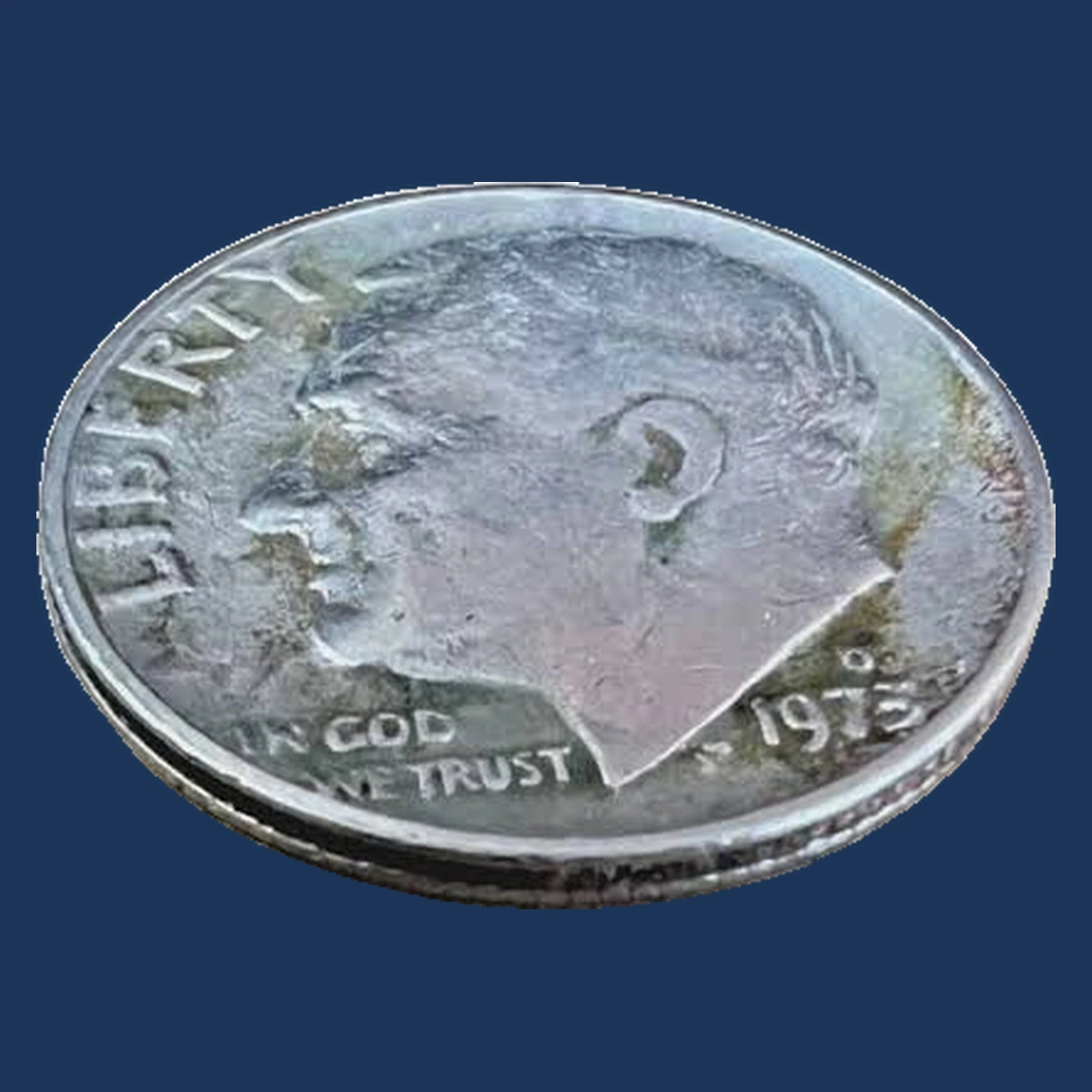
A thin strip can split from the coin’s surface while remaining partly attached. This is called a lamination, caused by a weakness within the metal rather than ordinary wear.
A Denver seller describes a defect near the upper back of one 1973 dime. Another, much clearer example appears on a Proof, a collector coin made with specially prepared tools.
That Proof was struck on a Liberian ten-cent blank. Its back has two long, mostly attached splits, so its unusual metal and peeling surface belong to the same coin rather than separate valuable specimens.
Estimated Value
For an ordinary dime with a genuine small lamination, allow an estimated $5–$150. Larger attached strips with clear surrounding detail can be more collectible.
The Denver coin was offered at $3.50, with several seller-described defects and no grading-service confirmation. That is an asking price for the whole coin.
The foreign-blank Proof sold for $1,380 in January 2009, but that price includes its rare blank. It cannot be treated as the value of its peeling metal alone.
How to Identify
Do not lift an attached strip. A small movement can break away the feature and remove clues about how it formed.
Examine the split under a 10× magnifier, looking for a thin layer separating within the metal. Scratches cut across the surface instead of leaving an attached flap.
The foreign-blank Proof has one long back split between about 4:30 and 7:30. Another runs from about 10:30 toward the oak branch.
Its recorded weight is 1.8 grams, not the normal American dime’s 2.268 grams. For a loose ordinary example, use a scale and calipers against 2.268 grams and 17.91 mm, then inspect the grooved edge.
Keep those different blanks separate when judging how much metal has been lost.
5. 1973 Roosevelt Dime Blocked Design and Struck-Through Marks
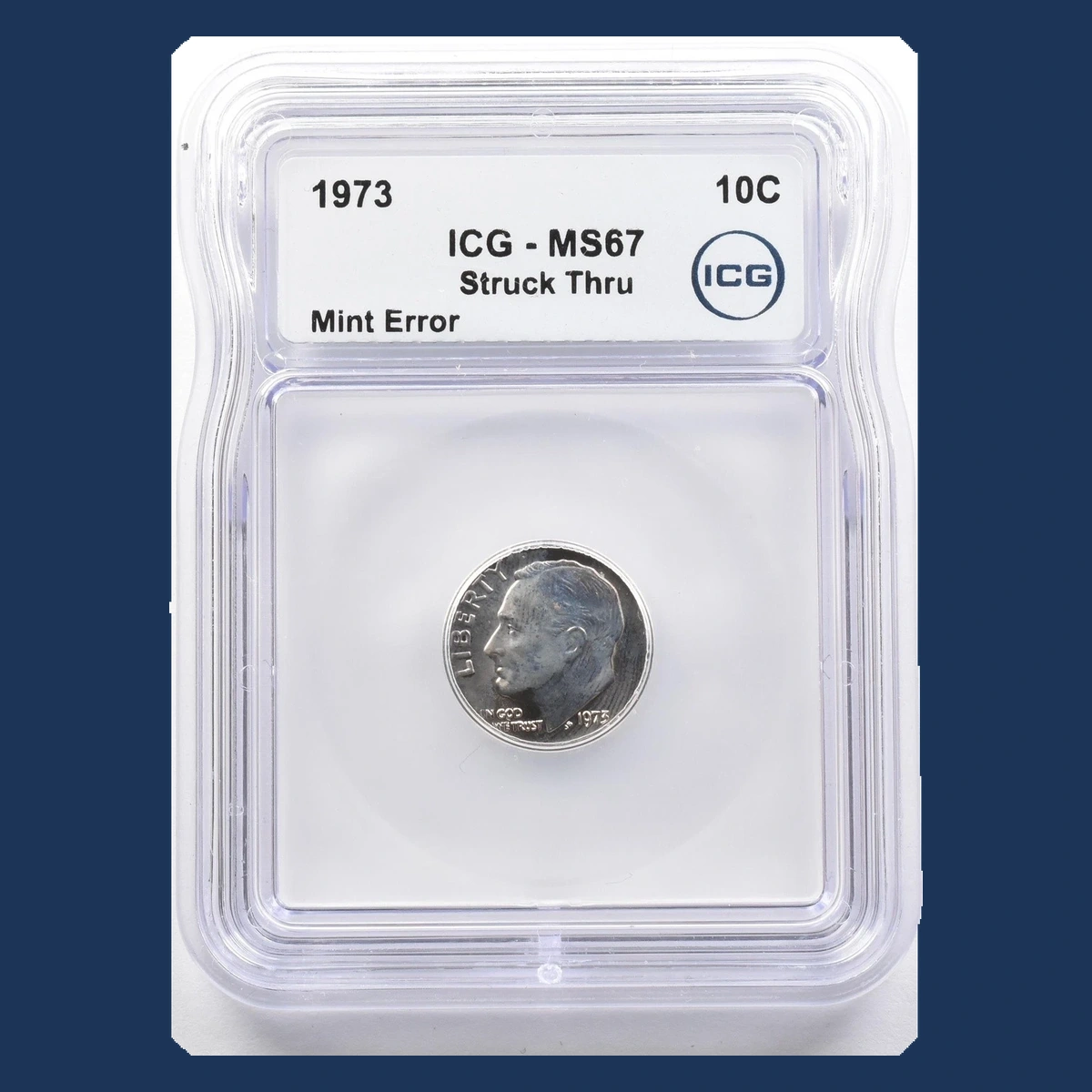
Part of a design can fail to appear when something blocks the stamping tool. The 1973 year report describes missing IM in DIME, attributed to material filling the tool’s recessed letters.
A Denver seller separately describes a blocked area around the back torch. Grease is the seller’s explanation, rather than a material proven by the description alone.
The Liberian ten-cent-blank Proof has a different mark: several fine lint threads impressed near 4:30 on the back. That small mark shares its coin with the foreign blank and attached surface splits.
Estimated Value
Simple filled-letter or small struck-through errors are estimated at $5–$200. A clear missing letter surrounded by strong detail is easier to appreciate than broad weakness from wear.
The Denver seller’s $3.50 asking price includes several claimed features on one coin. It is not a separate price for the blocked torch.
The $1,380 foreign-blank Proof sale likewise covers the entire coin. Its thread mark does not independently command that amount; unusual blank type drives a different market.
How to Identify
The supposed missing IM needs a comparison with the surviving D and E. A local gap beside strong letters differs from a word weakened evenly by wear.
Inspect the area with a 10× magnifier for scratches where someone might have removed the letters. Follow the surrounding design through the affected space.
A loose ordinary dime can be checked with a scale and calipers against 2.268 grams and 17.91 mm. Its edge grooves should be examined for unrelated damage.
The foreign-blank Proof is a separate 1.8-gram coin. Locate its fine thread impressions near 4:30 on the back rather than looking for the ordinary dime’s missing IM.
Several thread-like lines support lint; a broad smooth depression alone does not establish a woven cloth impression.
6. 1973 Roosevelt Dime Missing Outer Layer
A normal 1973 dime has silver-colored outer layers around a copper core. If a layer is absent when striking occurs, the exposed core can carry the design in a copper-colored surface.
An ordinary no-mint-mark example was graded ANACS MS62, meaning unworn with noticeable marks. Its auction record identifies a missing layer without establishing the affected face here.
A separate Denver seller describes a small copper patch near Roosevelt’s ear as partial layer loss. That reported patch should not be promoted into a certified full-face missing layer merely because the color looks similar.
Estimated Value
The no-mint-mark ANACS MS62 example sold for $63 in February 2006. An estimated $40–$300 covers confirmed layer losses with differences in extent and preservation.
A complete exposed copper face generally makes a clearer display than a small patch. Clean detail also helps separate original striking from later damage.
The seller-reported Denver patch belongs to a $3.50 whole-coin offer. That unconfirmed partial loss is not directly comparable to a certified full-layer error.
How to Identify
Use weight to test what the color suggests. For a loose coin, compare a scale reading with the standard 2.268 grams; a whole missing outer layer should cause a meaningful reduction.
A small patch does not imply the same weight loss as an entire face. Inspect the ear area separately on the reported Denver example.
Under a 10× magnifier, look for a struck design on exposed copper and examine where the remaining outer layer ends. Coatings, pitting, and scratches can suggest a later cause.
Calipers can compare width with 17.91 mm, while the grooved edge shows the surviving layers. Record both faces and the edge so the extent of any actual missing metal is visible.
7. 1973 Roosevelt Dime Off-Center Strike
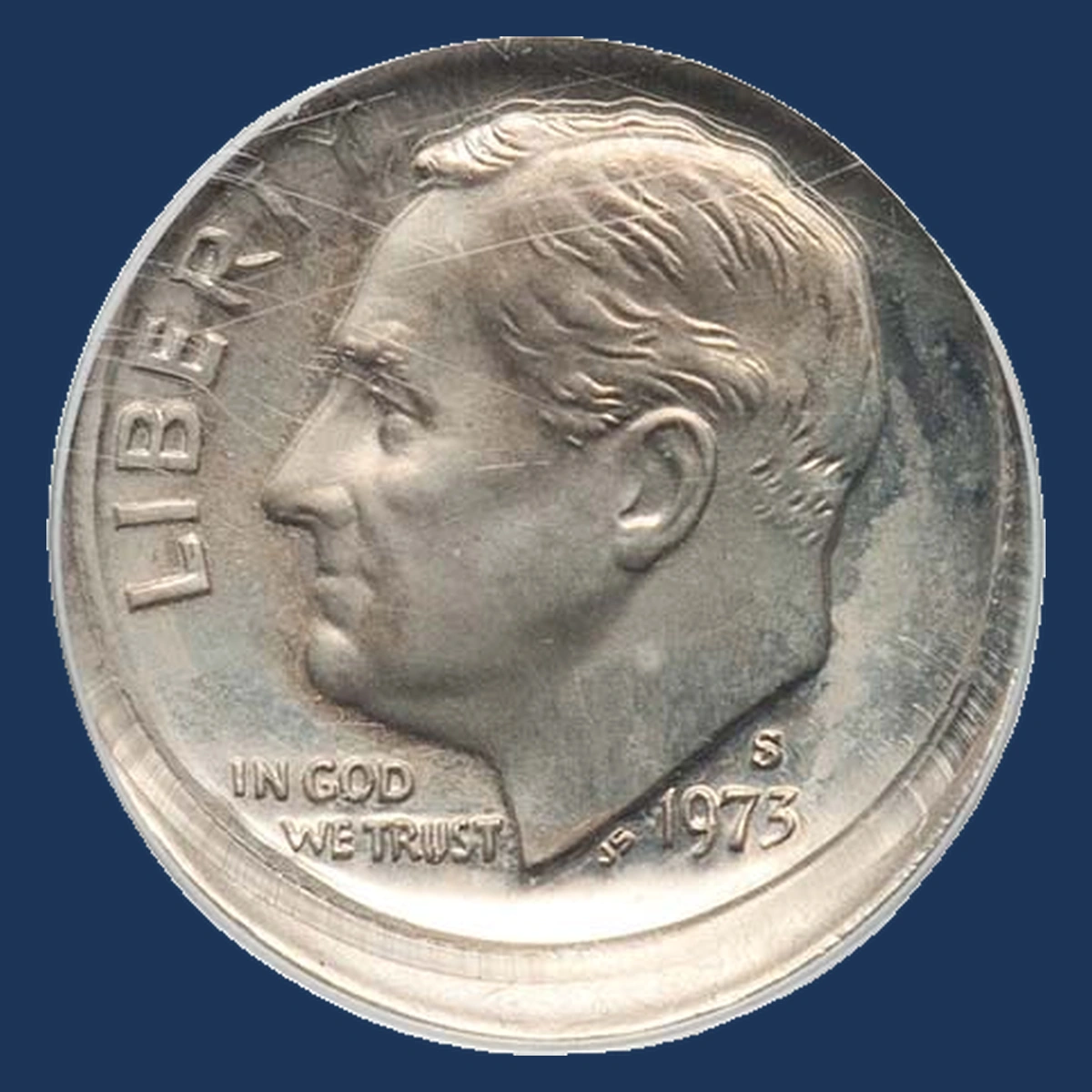
A coin can leave the press with its design shifted toward one side and a blank crescent on the other. The whole blank sat away from its proper position when the tools came down.
The no-mint-mark 1973 example is about 10% off center toward 11:30. A separate Denver report describes a 65% displacement toward 9 o’clock.
These show the same mechanism at different strengths. The ordinary no-mint-mark coin is normal in that respect, and neither displacement should be confused with a Proof that moved between two separate strikes.
Estimated Value
Ordinary 1973 off-center dimes are estimated at $30–$350. Slight shifts with complete dates often fit near the lower end, while larger attractive errors can sell higher.
As a different-year comparison, a 1979-D dime struck 70% off center sold for $92 in May 2005. A large blank crescent therefore does not guarantee a four-figure price.
Date visibility, marks on the unstruck area, and remaining detail all matter. Compare ordinary coins separately from special Proof striking combinations.
How to Identify
Compare both faces before measuring the displacement. The same shifted blank should explain where each design stops and where the untouched metal begins.
Use a 10× magnifier to inspect that transition. A later cut removes metal; an unstruck crescent remains part of the original blank.
For a loose dime, check weight against 2.268 grams and record its outline with calipers. The usual 17.91 mm circular shape may change, and edge grooves may not cover the untouched portion.
Identify the date and any D before choosing a comparison photograph. The 10% no-mint-mark piece toward 11:30 is distinct from the 65% Denver coin toward 9 o’clock; do not combine their measurements.
8. 1973 Roosevelt Dime Clashed Dies
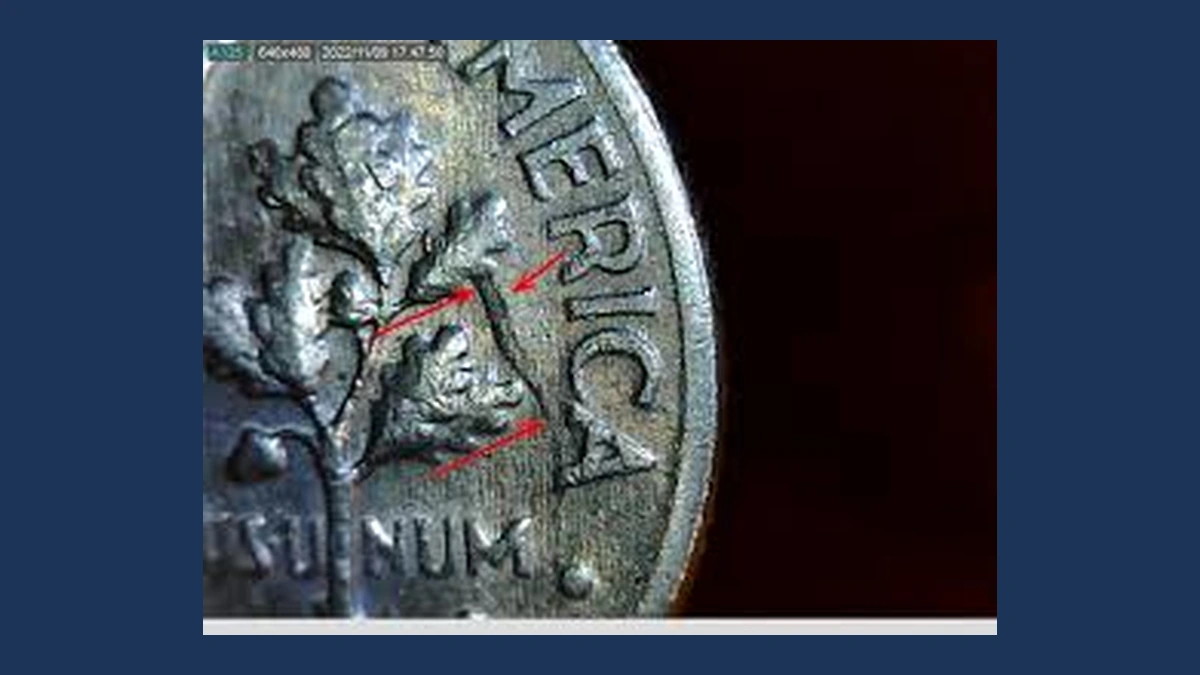
Faint parts of the opposite design can appear in unexpected places. They arise when the two stamping tools hit each other with no blank between them and then strike more coins.
On the reported 1973-S Proof, olive-leaf outlines appear near Roosevelt’s nose and forehead. The back carries stronger traces of the portrait.
The example is recorded in a PCGS holder from the Neal Burnett collection. The extra marks come from transferred damage to the tools; they are not another complete coin design stamped over the Proof in a second displaced strike.
Estimated Value
For a genuine Proof clash of this general strength, estimate $75–$500. Clear opposite-design outlines on clean reflective surfaces provide the main attraction.
Fine scratches can obscure these faint features and lower demand. Stronger marks are more useful when their shapes can actually be matched to the opposite design.
The estimate concerns the visible clash and the coin’s preservation. A holder by itself does not justify the top of the range when the extra outlines are difficult to distinguish.
How to Identify
The S Proof uses the same ordinary clad construction as other 1973 dimes. For a loose coin, a scale and calipers should give roughly 2.268 grams and 17.91 mm; a reflective finish does not imply silver.
Use the olive leaves on a normal dime’s back as a shape guide. Under a 10× magnifier, compare them with the extra outlines near Roosevelt’s nose and forehead on the suspect.
Turn it over and search for the stronger portrait traces among the back design. Change the light angle to separate faint transferred shapes from reflections.
Inspect the edge grooves and surfaces without rubbing them. Lines that wander across unrelated details like scratches do not provide the same evidence as a recognizable opposite-design outline.
9. 1973 Roosevelt Dime Front Die Cap
This Denver dime curled upward around the front stamping tool and remained attached. Further blows stretched it into a cap, with the wall especially high near 1 o’clock.
The back became flattened as the trapped coin continued to take pressure. A faint inward, reversed portrait also appeared as the metal grew thin.
The NGC MS66 grade describes a well-preserved unworn coin. Its faint transferred portrait is part of this cap’s history, so it does not establish a separate second coin with an ordinary mirror-image error.
Estimated Value
The cap brought $546.25 in August 2009, according to the published auction results. An estimated $400–$1,200 covers similarly clear caps from this date.
Wall height, recognizable date, and preservation influence appeal. A cap that still shows how it wrapped around the tool can be more desirable than a flattened example.
The high wall and faint reversed portrait belong to one piece. Their values should not be added separately, and later bending can reduce the coin’s usefulness and price.
How to Identify
Support the thin parts of a cap and never try to flatten it. Side photographs should reveal the high wall, especially its rise near 1 o’clock.
For a loose example, a scale checks the remaining metal against a normal 2.268-gram dime. Calipers can record the changed width relative to 17.91 mm, without clamping the cup walls.
With a 10× magnifier, follow the design as it stretches upward around the tool-shaped cup. Later bending may leave sharp folds or damage that interrupt that shape.
Look across the flattened back under low-angle light. The faint reversed portrait belongs to the cap’s repeated contact and thinning; its presence does not mean you are holding a separate flat brockage coin.
10. 1973 Roosevelt Dime Chain Strike with a Second Impression
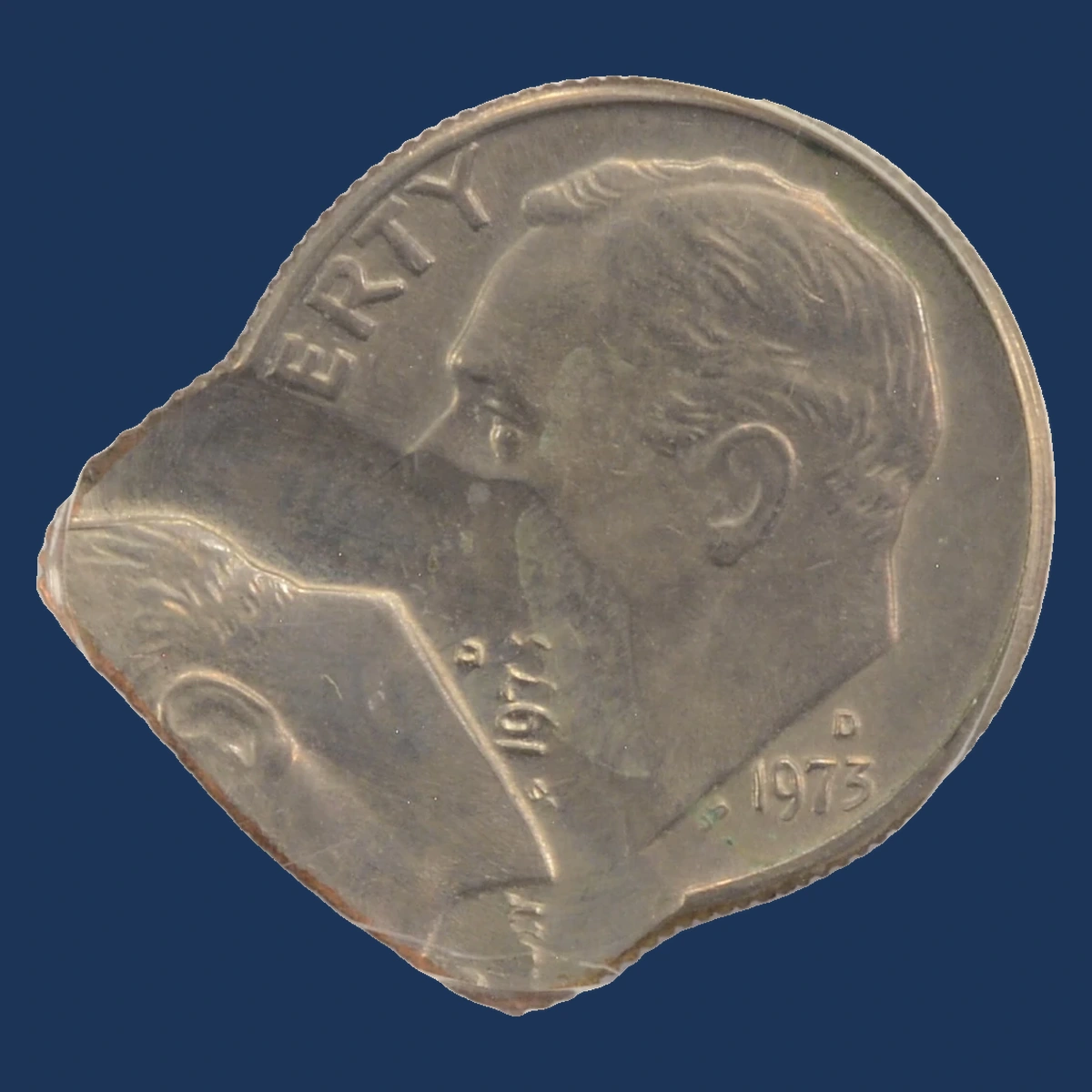
A chain strike records contact with another coin beside it during striking. The neighboring piece limits how metal spreads along their meeting edge.
The reported 1973-D example was also struck twice, with its second blow 60% off center. Both sides received designs, and two full dates and D marks survived.
The dealer describes it as PCGS MS62, an unworn grade with noticeable marks. Its back has a light counting-wheel mark, which is later surface damage; that mark should not be mistaken for the boundary created by the neighboring coin.
Estimated Value
The dealer listed this coin at $600. That is an asking price for the complete double-struck chain-strike example, rather than a reported auction result.
An estimated $350–$1,200 allows for comparable pieces with different clarity and condition. Two complete dates make the minting sequence easier to follow.
A well-defined contact boundary adds interest beyond an ordinary double strike. Later counting marks and other damage still affect the price, even when the neighboring-coin contact is genuine.
How to Identify
Two dates establish repeated striking, but they do not establish a chain strike by themselves. Locate the boundary where a neighboring coin restricted the metal during the second blow.
Use a 10× magnifier to compare that boundary with the expanded parts of the coin. The report does not give a specific clock position, so do not substitute a random flat edge.
Check a loose piece with a scale against 2.268 grams. Calipers and edge photographs document its altered outline relative to the ordinary 17.91 mm diameter and grooved edge.
Trace the two dates and D marks on both faces, then separate the back counting-wheel mark. That later mark should not be used to explain the neighboring coin’s contact.
11. 1973 Roosevelt Dime Flip-Over Triple Strike
This Denver coin carries three strikes, including a flip between blows. Parts of the front and back designs therefore appear together instead of remaining on their usual sides.
The example was listed in a PCGS Genuine holder. That establishes the service’s authenticity conclusion, but it is not a normal numerical condition grade.
The exact order of the three impressions is not fully described in the published listing. The coin still shows the triple-strike and flip combination, without needing to borrow a particular percentage or sequence from another dated example.
Estimated Value
Published August 2009 auction results give $1,035 for this coin. An estimated range of $750–$2,000 suits comparable genuine triple strikes that include a flip.
Clear separation of the impressions makes the unusual history easier to appreciate. A readable date is another practical advantage.
The Genuine label should not be treated as a high numerical grade. Surface problems and weak detail can lower the value, even when the striking sequence is more complicated than on an ordinary double strike.
How to Identify
Read the holder as well as the coin: Genuine is not a numerical condition grade. Do not infer a particular damage problem that the published description has not identified.
For a loose example, compare weight with 2.268 grams on a scale and record its outline with calipers. The ordinary 17.91 mm circle and edge grooves can be distorted by repeated blows.
Now work through photographs of both faces with a 10× magnifier. Separate Roosevelt fragments from back-design fragments and trace the borders of three distinct strike areas.
The opposite designs together support a flip between blows. If the overlap hides part of the order, describe what remains visible instead of borrowing a percentage or sequence from another triple-struck dime.
12. 1973 Roosevelt Dime Double Strikes and Broadstruck Proofs
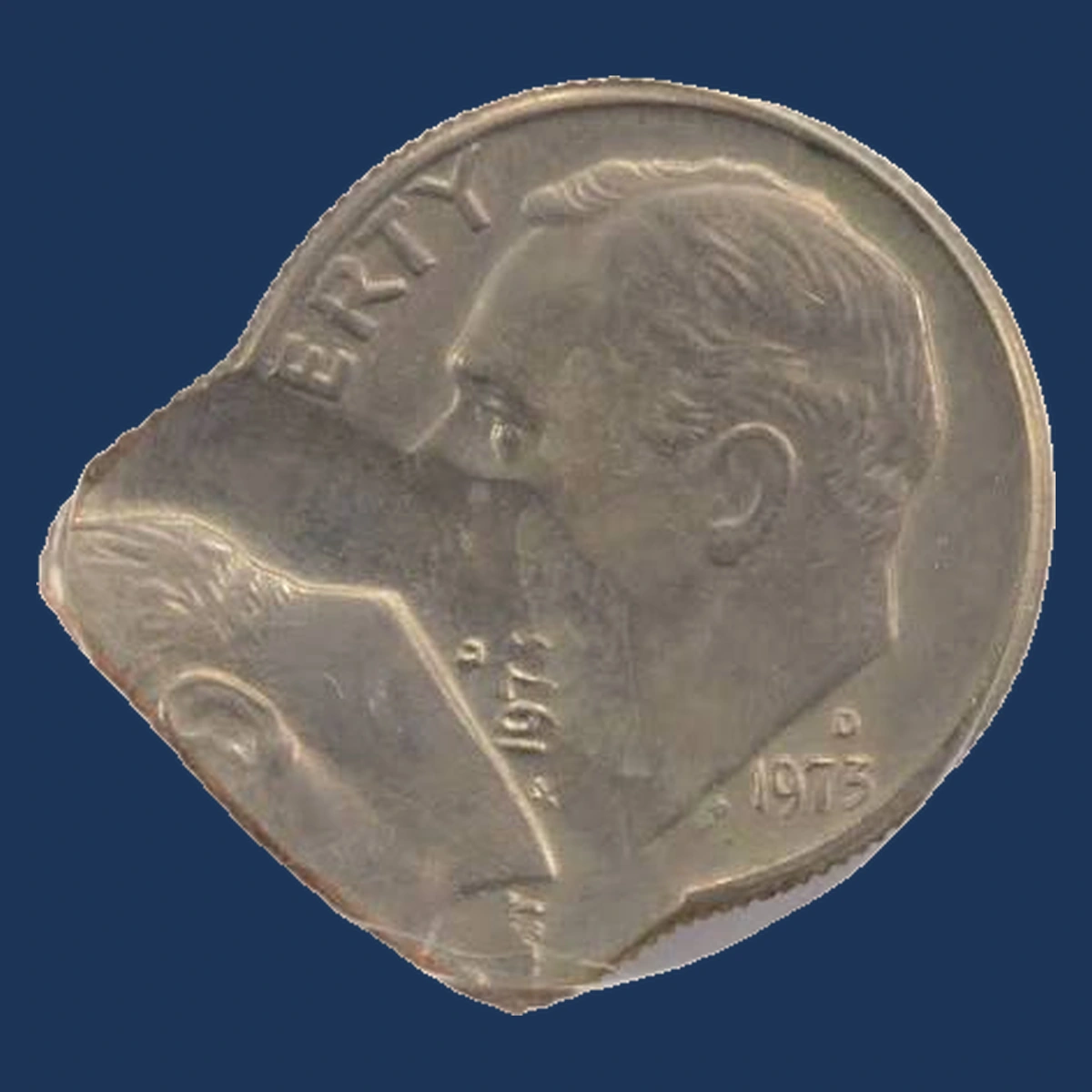
The Denver example received a second strike 40% off center. It retains overlapping designs but was later cleaned, which affects condition rather than causing the repeated impression.
San Francisco Proofs show other combinations. One has two displaced strikes, while another was struck twice without normal support from the surrounding collar ring.
That unsupported Proof expanded around its complete designs, a result called broadstriking. Its NGC PR67 grade describes a well-preserved Proof; the broad border and repeated designs belong to the same coin, not two different specimens with separate prices.
Estimated Value
The cleaned Denver coin sold for $216 in April 2020. For ordinary double strikes, an estimated $150–$600 allows for cleaner surfaces and clearer separation.
The double-struck, broadstruck Proof brought $1,800 in September 2020. Comparable Proof striking combinations are estimated at $1,000–$3,000.
The special finish and unusual displacement or expansion explain the higher category. A normal Proof’s repeated blows at the same position are part of its manufacture and do not earn this error premium.
How to Identify
Determine whether the coin is an ordinary issue or a specially prepared S Proof before choosing a comparison. Both normally start at 2.268 grams and 17.91 mm, despite their different finishes.
Use a scale and calipers for a loose example, and inspect its edge grooves. Expansion around complete designs supports broadstriking, while a missing design area beside blank metal shows displacement.
Under a 10× magnifier, follow the two distinct impressions into their overlap. The Denver coin’s second strike is 40% off center; the Proof examples need their own comparisons.
Look for genuine separation between strikes, not merely polished surfaces or unusually sharp detail. Normal Proof production can include repeated blows without moving the blank, which is not this error.
13. 1973 Roosevelt Dime Struck on Foreign Coin Blanks
Three different foreign blanks appear in the 1973 records. Their weights and intended coins must stay separate even though all received the Roosevelt dime design.
A copper-colored S Proof uses a 2.5-gram Liberian cent blank. Another S Proof uses a much lighter 1.8-gram Liberian ten-cent blank and also has thread impressions and attached surface splits.
A Denver example uses a 2.0-gram Philippine ten-sentimos blank. It was graded AU58, meaning slight wear; that ordinary coin should not inherit the reflective finish or weight of either San Francisco Proof.
Estimated Value
The Liberian cent-blank Proof sold for $1,560 in November 2020. The different Liberian ten-cent-blank Proof brought $1,380 in January 2009.
Estimate $1,000–$3,000 for comparable authenticated foreign-blank examples, with the intended blank, finish, and condition affecting the price. The Philippine-blank example falls within this estimated category, not either Liberian sale.
The ten-cent-blank Proof’s splits and thread marks share its whole-coin price. Adding separate error estimates to that $1,380 would overstate what the buyer actually paid.
How to Identify
Use the documented weight and blank identity before drawing conclusions from color. The records distinguish 2.5 grams for the Liberian cent, 1.8 for its ten-cent coin, and 2.0 for the Philippine blank.
Those differ from the normal clad dime’s 2.268 grams. For a loose example, record weight and width with a scale and calipers, using 17.91 mm as the ordinary dime comparison.
Inspect the edge, layers, and date under a 10× magnifier. Color alone cannot establish a country or metal composition.
The lighter Liberian Proof can look ordinary at first glance. Its certified blank identification matters more than appearance, while the copper-colored Proof must be distinguished from an American dime merely missing an outer layer.
Conclusion
A small 1973 dime defect may fall near $5, while exceptional Proof striking errors and foreign blanks reach an estimated $3,000. Their different materials and finishes make direct comparisons important.
Preserve attached metal, and photograph both faces before deciding what happened. The same coin can show several effects, but its auction price still pays for one complete piece.
Check the actual blank, strike, and condition rather than counting impressive labels.