1972 Dime Error List with Pictures

Two crisp design positions can reveal a mistake even on a carefully made collector coin. A 1972-S Proof dime struck twice with front-tool rotation sold for $2,160.
The 1972 Roosevelt Dime errors below have estimated ranges from $10–$5,000. Ordinary circulating coins add their own clues, including a straight clip, damaged outer metal, and a detached thin layer.
Read on to compare each feature with the correct coin and striking sequence.
1. 1972 Roosevelt Dime Repunched S Mint Marks
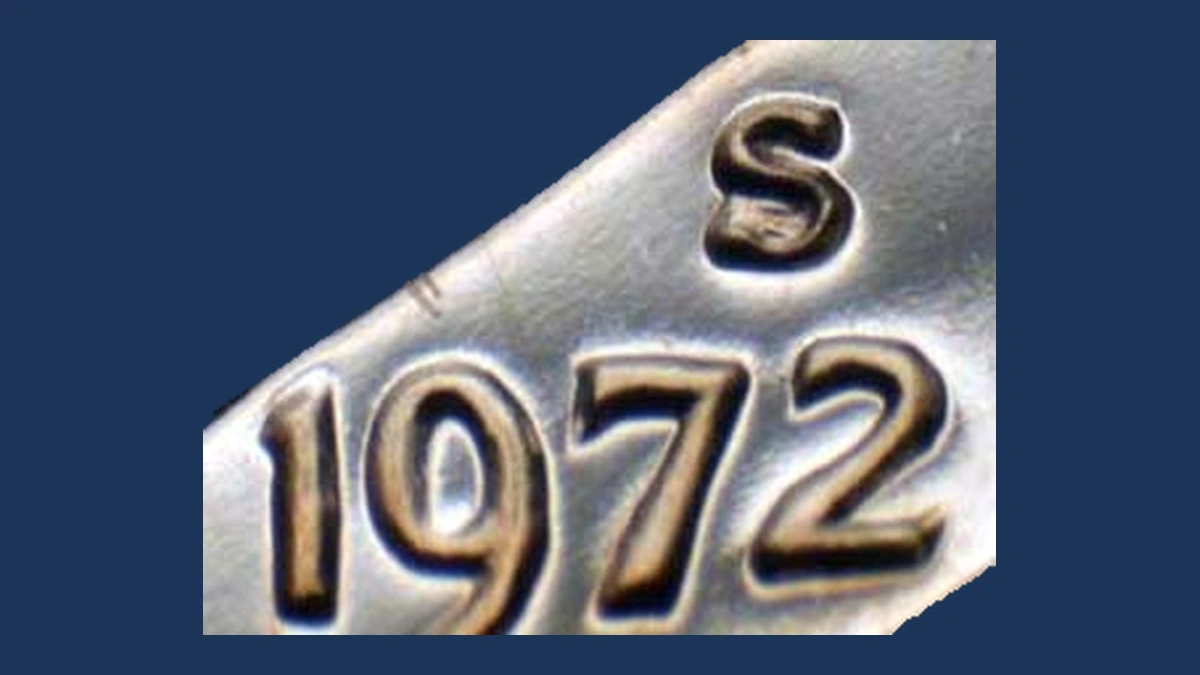
An extra curve above or beside the S can come from punching the letter into the stamping tool more than once. The coin receives both surviving outlines when struck.
Three cataloged 1972-S patterns occur on Proof dimes, collector coins made with specially prepared tools. One has an earlier S above the main letter.
Two others show the extra S toward the right, but they belong to different tools. Direction alone cannot tell those two patterns apart.
The repeated mark is on the front above the date. A scratch, reflection, or small flat shelf beside the S can imitate its appearance.
Estimated Value
Recognizable repunched S varieties are estimated at $15–$250, depending on the pattern’s clarity and the Proof’s preservation. This uses comparable minor modern mint-mark varieties rather than an assigned sale for each 1972 catalog entry.
A clear extra curved portion is more useful than a vague shadow near the letter. Damage or cleaning can reduce the underlying collector coin’s appeal.
The two rightward patterns require separate comparisons. Sharing a direction does not mean they share the same tool or exact value.
How to Identify
Find the S above the date, then inspect it with a 10× magnifier under changing light. For the first pattern, look above the main letter; the other two require comparison toward its right.
Match the complete earlier curve, not direction alone. The two rightward patterns come from different tools and need their own catalog photographs.
Keep an intact Proof set closed while examining it. For a loose dime, a scale and calipers should show about 2.268 grams and 17.91 millimeters, with grooves around the edge.
A rounded surviving S outline in the correct position is more convincing than glare or a flat shelf beside the finished mark.
2. 1972 Roosevelt Dime Doubled Front Details
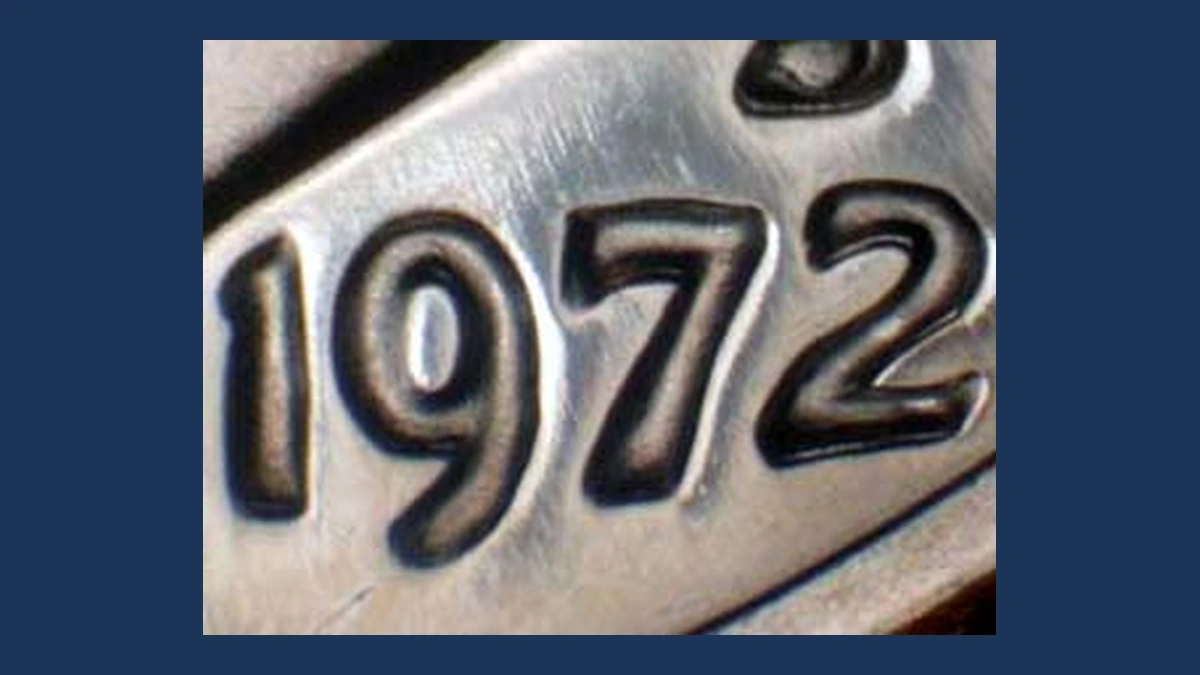
The date, TRUST, and the small JS initials can show an extra outline on two 1972-S Proof varieties. JS identifies the designer, not a mint.
The stamping tool carried the repeated design before striking the coin. Collectors call this a doubled die; it does not mean that the coin received two separate blows.
One cataloged pattern has slight doubling toward the center, while the other has more noticeable doubling in those same areas. They are different tools despite their shared locations.
An older general 1972 report also mentions front doubling. It should not automatically be assigned to either Proof pattern.
Estimated Value
Estimate $15–$300 for identifiable 1972 doubled-front varieties in collectible condition. The amount depends on the exact pattern, strength of separation, and preservation of the underlying Proof or ordinary coin.
These are comparison-based values for minor modern doubled designs. No individual auction price is assigned to the two cataloged Proof patterns here.
A flat shelf from movement during striking is not the same as a duplicated tool design. Match the actual extra contours before applying a named-variety premium.
How to Identify
Choose a 1972-S Proof comparison before studying the date, TRUST, or JS. The two cataloged front patterns differ in strength, even though they affect the same areas.
Use a 10× magnifier to follow the inward extra contours and compare their shape with the correct photographs. Thick-looking letters alone can result from wear or reflections.
JS is the designer’s initials and should not be confused with the S above the date.
A loose coin normally weighs 2.268 grams and measures 17.91 millimeters on a scale and calipers. Inspect the grooved edge for damage without opening an intact collector set.
Confirm matching repeated outlines across several details rather than naming a variety from one doubled-looking digit.
3. 1972 Roosevelt Dime Raised Front Tool Break
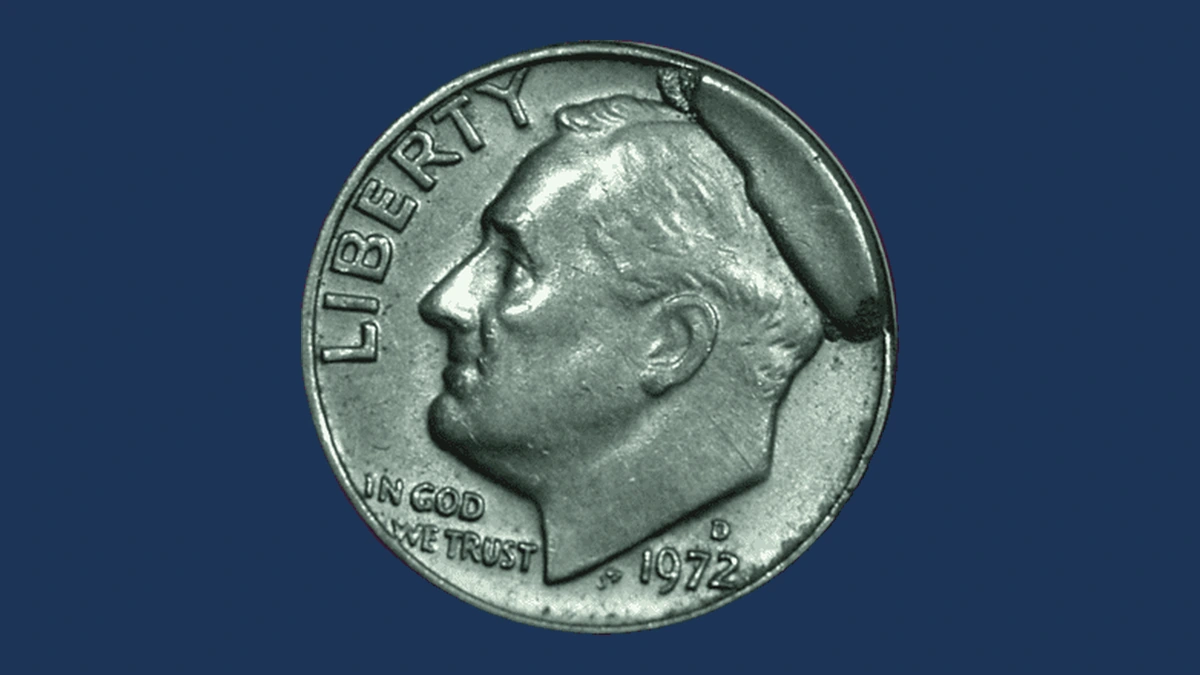
A raised patch on the front can record a piece missing from the stamping tool. Coin metal enters that opening under pressure instead of receiving the normal surface detail.
A 1972-D example was cataloged with this front die break and graded NGC MS64. That grade describes an unworn coin with marks allowed.
The auction description does not establish a clock position, width, or specific variety number. Those details should come from the actual specimen.
A later rim blow can also push metal upward, and an attached lump can resemble a tool break. The surrounding struck surface helps distinguish the causes.
Estimated Value
For a genuine 1972-D front tool break, estimate $10–$400, allowing for the raised area’s size and the coin’s preservation. This is a comparison-based range, not a quoted result for the NGC MS64 example.
A 1970-D nickel with two front breaks sold for $63 in October 2022. That different date and denomination offers general context for modest tool-break premiums.
A larger original patch can be more visible, but a similar-looking impact or added metal does not receive the same valuation.
How to Identify
Examine the surface around the raised area before trying to match a clock position. The recorded description specifies the front, but does not provide an exact path or named variety.
Under a 10× magnifier and low light, check whether the patch belongs to the original struck metal. A seam, glue, or displaced metal beside a deep impact suggests something different.
Use a scale and calipers on a loose dime against 2.268 grams and 17.91 millimeters, then inspect the edge grooves beside the feature. The useful comparison is a raised area formed with the surrounding design, not simply any bump near Roosevelt.
4. 1972 Roosevelt Dime Expanded Strike
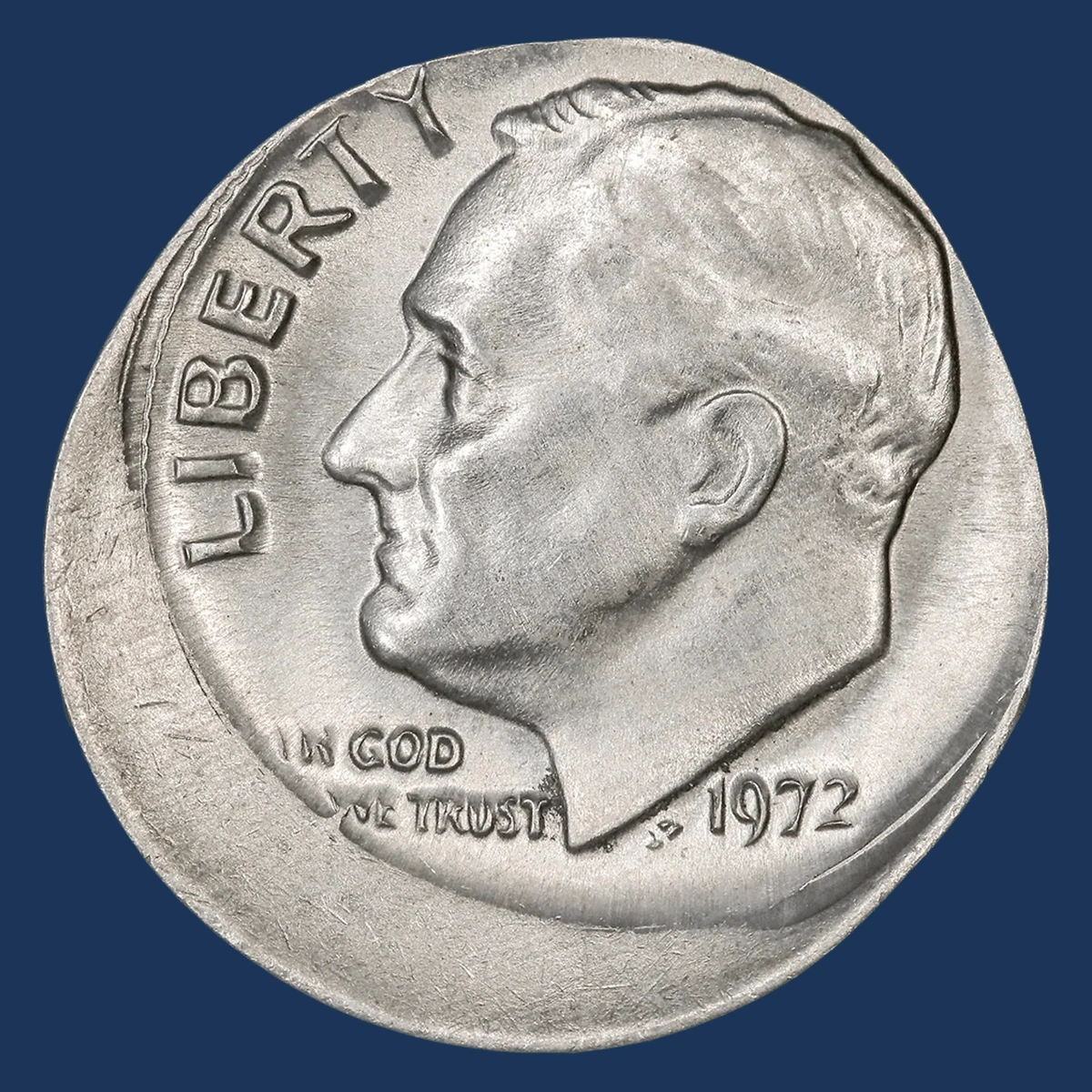
The design remains on an expanded disk when a dime spreads beyond its normal restraining ring. This error is called a broadstrike.
The ring normally controls width and forms the edge grooves. Without that restraint, the struck metal can move farther outward.
A Philadelphia 1972 example was graded NGC MS63 Full Bands. Full Bands describes clear separation in the torch’s bands, not an additional error.
The coin appeared in a lot containing a multiply struck 1999 cent. The cent’s extra impressions do not belong to the dime.
An enlarged outline must be judged with the complete design and edge.
Estimated Value
Genuine 1972 broadstrikes are estimated at $25–$450, depending on expansion and condition. The NGC MS63 Full Bands example supplies a clear identity, but its shared lot is not used as a standalone dime sale.
A separate 1988-P dime with a broadstruck second impression sold for $80.50 in May 2005. That later-year coin also had overlapping double strikes.
Use that comparison cautiously when judging a plain broadstrike. A larger border alone does not equal a dramatic repeated-strike combination.
How to Identify
Use calipers to compare several widths with the normal 17.91 millimeters, then inspect whether the lettering still fits on struck metal. An off-center coin can instead have a blank crescent and missing design.
Check a loose example’s weight against 2.268 grams on a scale. Extra width by itself need not mean missing metal.
A 10× magnifier can show outward flow at the border and reduced grooves around the expanded edge. Look for flattened letters or battered surfaces that could reveal later hammering.
Keep the actual dime separate from other coins photographed in its auction lot.
The broadstrike is identified by retained design on a naturally expanded disk, not the Full Bands label.
5. 1972 Roosevelt Dime Off-Center Strike with a Detached Layer
A thin piece can preserve the design from an error coin even after separating from it. This 1972 Philadelphia example was first struck eighty-five percent off-center.
An outer metal layer then split away after the strike. The surviving piece weighs 0.36 gram and was graded ANACS MS63.
That is the detached layer’s weight, not the weight of a complete dime. Its original outside face and exposed inner surface record different parts of the sequence.
The off-center strike and later separation belong to one combined example. Cutting or peeling metal from an ordinary finished coin can imitate part of its appearance.
Estimated Value
An estimated $50–$500 applies to genuine off-center dimes with a clearly identified separated layer. Readable identity, surviving struck detail, and an original fracture surface guide the comparison.
The 0.36-gram piece is not assigned an auction amount here. As broader metal-error context, the separate 1972 two-gram dime with a defective front layer sold for $168 in November 2020.
That coin remained a different object with a different defect. Its price is not a measured value per gram of separated metal.
How to Identify
Place the thin piece where both faces can be viewed without bending it. Use a 10× magnifier to distinguish the original struck outside from the exposed inner surface.
The sequence should show that the design existed before the layer separated.
A scale can compare a loose layer with the recorded 0.36 gram, rather than demanding the normal whole-dime weight of 2.268 grams. Use calipers gently to compare its surviving outline with the normal 17.91-millimeter starting diameter.
Check the broken edge and any surviving grooves for tool marks from cutting. The retained off-center design and natural separation surface together identify this piece more usefully than low weight alone.
6. 1972 Roosevelt Dime Defective and Missing Outer Layers
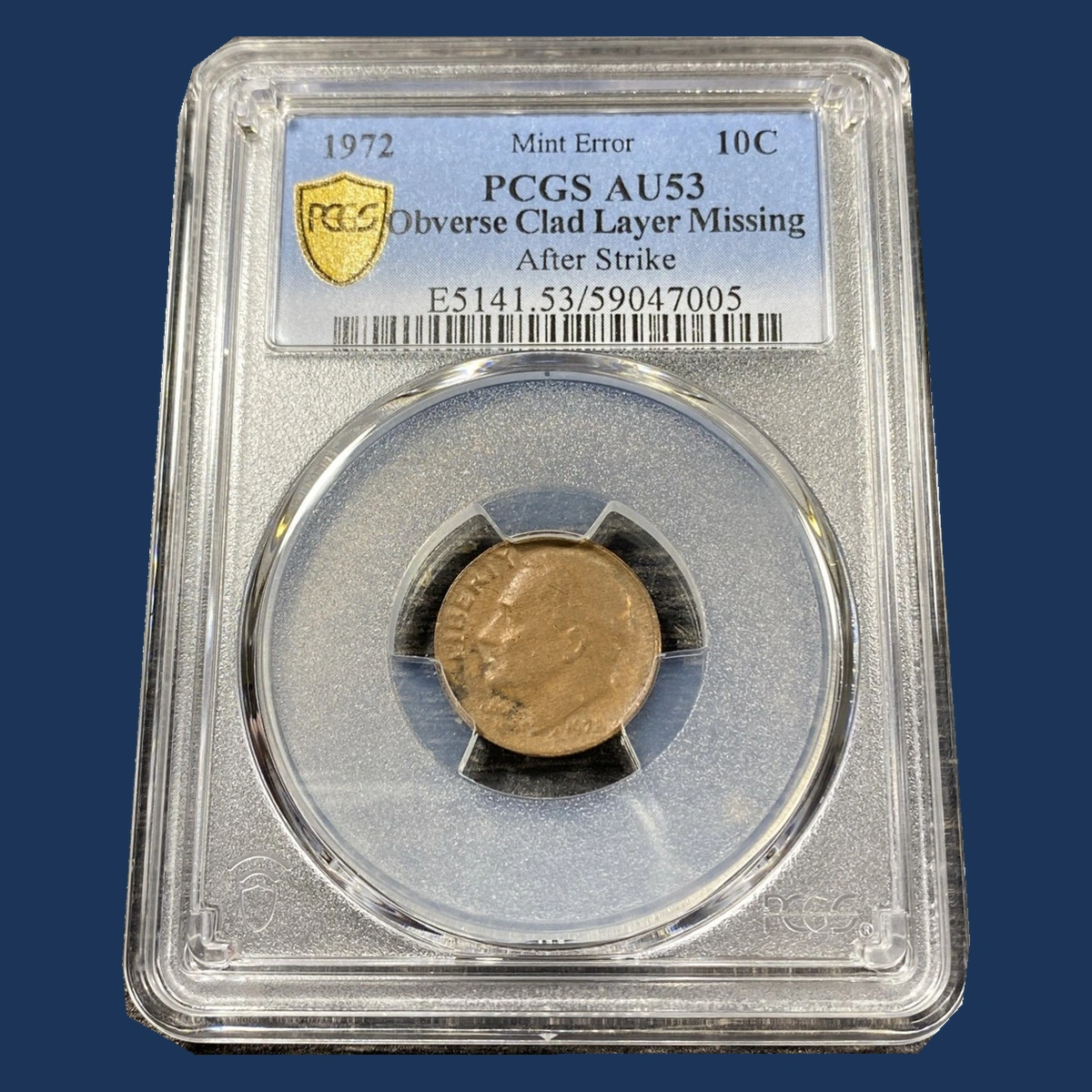
Copper can show where a silver-colored outer layer is defective or absent. A normal dime has bonded metal layers, called clad construction, around a copper center.
A 1972 Philadelphia coin graded NGC AU58 has a defective front layer and weighs two grams. It should not be described as completely missing that face’s layer.
Another seller reports partial loss on the back of an AU58 example. The two coins do not share the same weight.
Denver and Philadelphia whole-face missing-layer reports remain separate. Color, extent, and affected face must be checked on each coin rather than borrowed from the two-gram specimen.
Estimated Value
The two-gram front-layer coin sold for $168 in November 2020. Estimate $50–$750 across genuine partial defects and full single-face layer loss, depending on condition and the area affected.
The reported back defect and Denver example are not assigned that same result or weight. A whole-face loss can also differ from a local defective patch.
This range applies to original metal-layer problems. Copper plating, chemical staining, and deliberate stripping do not acquire the same value merely by exposing a reddish surface.
How to Identify
Choose the actual affected face first: the measured two-gram example concerns the front, while the separately offered partial-loss coin concerns the back. Do not turn either into proof of a whole missing layer.
Use a 10× magnifier to follow the boundary between exposed copper and remaining outer metal. An added coating or acid damage can create a misleading surface.
A scale should compare a loose dime with the normal 2.268 grams; the recorded two grams applies only to its identified specimen. Calipers can check the usual 17.91 millimeters.
Inspect the edge grooves and layered structure for agreement with the face. Match physically missing or defective metal and its boundary, rather than accepting color as identification.
7. 1972 Roosevelt Dime Straight Clip with a Large Off-Center Strike
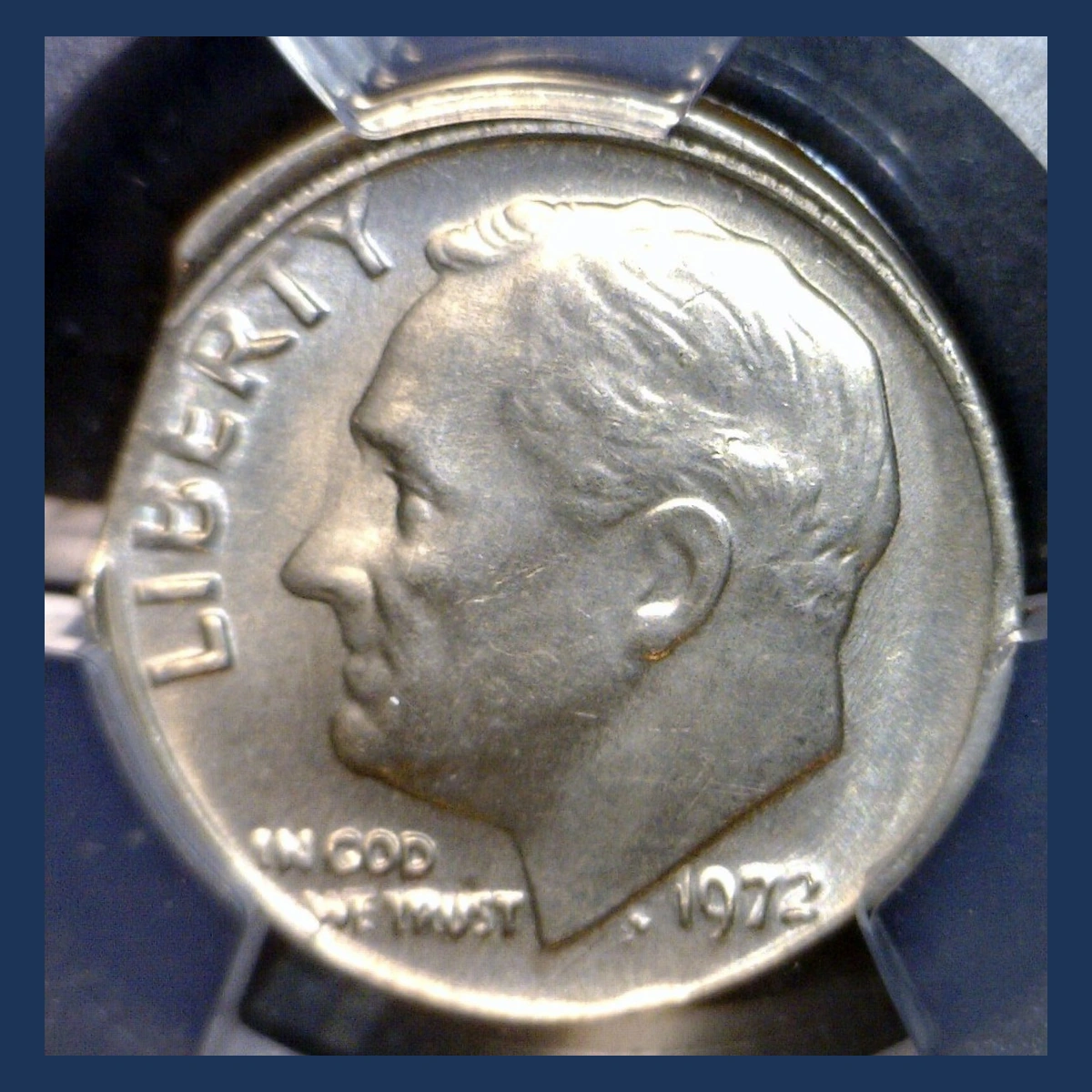
This Denver dime combines a straight shortage with a tiny struck portion of the remaining disk. The blank was incomplete before it entered the press far off-center.
The recorded coin has a twenty-five-percent straight clip and a ninety-percent off-center strike. PCGS graded it MS62, an unworn grade that allows substantial marks.
The straight gap represents absent metal, while the unstruck area still contains metal. They show different stages of the same coin’s manufacture.
These percentages should not be treated as two separate coins. Nor do they establish curved or ragged clips for 1972 without another actual example.
Estimated Value
For a genuine combination like this, estimate $100–$900, depending on readable identity and preservation. The recorded PCGS MS62 coin appeared at GreatCollections in June 2025, but no final amount is used here.
A separate 1997-P nickel with a twenty-percent clip sold for $124 in March 2025. It provides context for missing blank metal, while lacking this dime’s extreme off-center strike.
The two features should be valued together. Adding separate maximum prices for clipping and displacement can overstate one coin’s worth.
How to Identify
Distinguish the empty straight-sided gap from the broad area of unstruck metal before judging the two percentages. The first is missing material; the second survived but missed the design.
Examine the gap’s ends and the tiny struck area with a 10× magnifier. The rim should show formation around an incomplete blank rather than a later cut through finished detail.
Weigh a loose specimen against the original 2.268-gram standard and use calipers on intact spans against 17.91 millimeters. Inspect any remaining edge grooves for grinding.
Keep the date, mint, and whole outline together in photographs. A natural straight shortage beside a separate unstruck area confirms the combination more directly than either percentage alone.
8. 1972 Roosevelt Dime Sunken Backward Design
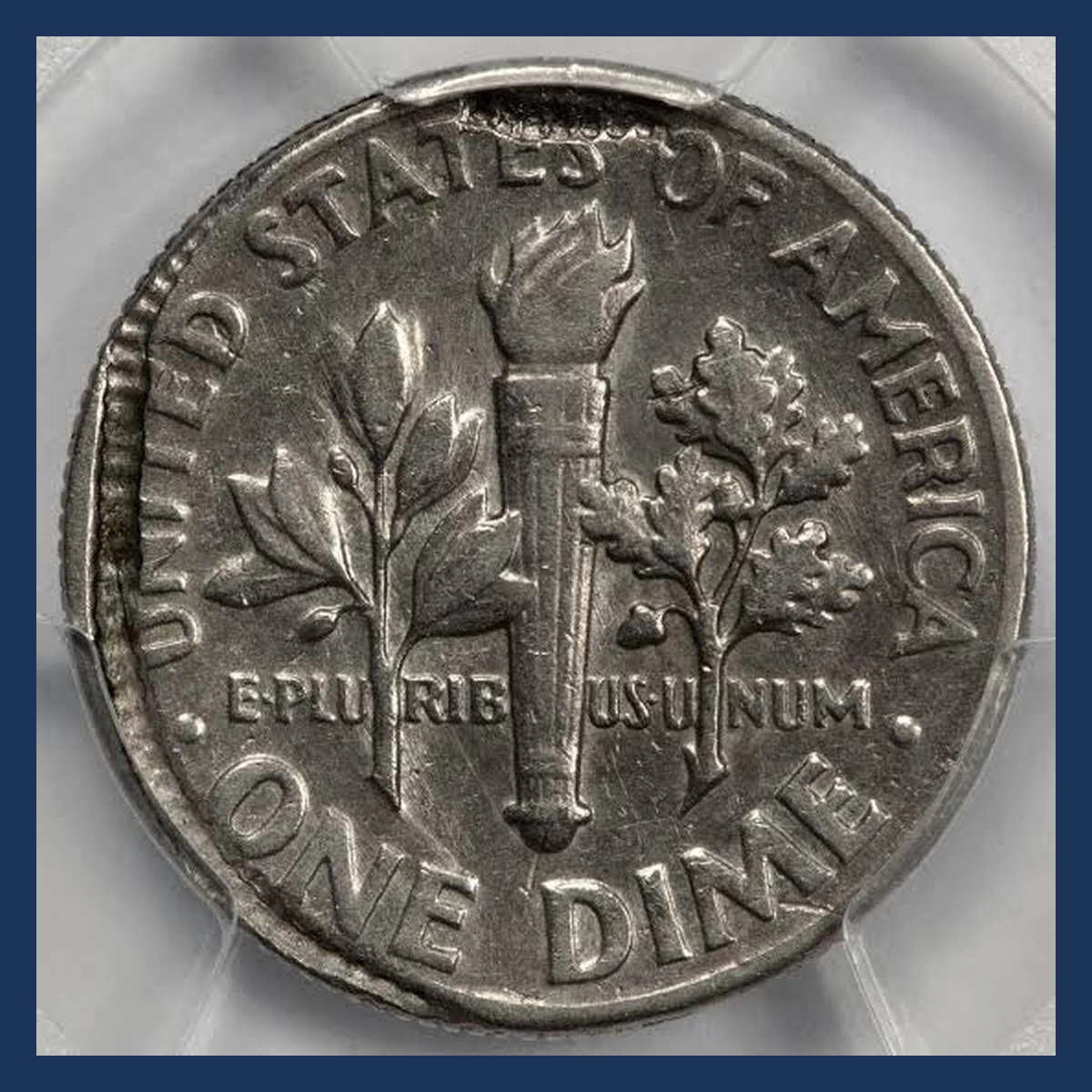
Backward lettering pressed into a coin can come from contact with a struck coin inside the press. The raised design of that other coin acts like a temporary stamp.
The receiving coin gets a sunken mirror image called a brockage. Its other face can still carry a normal impression from the regular tool.
A 1972 report lists this error without establishing a mint, affected face, or percentage of coverage. Those details need their own specimen.
A pair of coins squeezed together later can produce an image. Original struck surfaces are essential when deciding whether the transfer occurred at the Mint.
Estimated Value
Use an estimated range of $100–$1,000 for a genuine 1972 brockage, allowing for coverage, readability, and preservation. This is a comparison with modern dime brockages rather than an auction result for the general report.
A 2001-P dime combining a partial brockage with strong clash marks sold for $79 in November 2014. That different-year combination is useful context, not a direct match.
A strong backward image can require a different comparison from faint traces. Later pressure damage is outside this estimate.
How to Identify
Check whether the extra design reads backward before deciding how deep the impression is. A 10× magnifier should show recognizable lettering or design that sinks below the surface.
Then inspect the opposite face for an ordinary struck design or crushing from later pressure. A faint raised transferred outline would suggest a different mechanism from a deep mirror image.
On a loose ordinary dime, compare 2.268 grams and 17.91 millimeters with a scale and calipers. Inspect the grooved edge for joins or pressure damage, keeping the whole coin visible in photographs.
The specific identifying feature is an original sunken mirror image, not merely weak lettering or a crowded design.
9. 1972 Roosevelt Dime Reported Copper-Alloy Blank
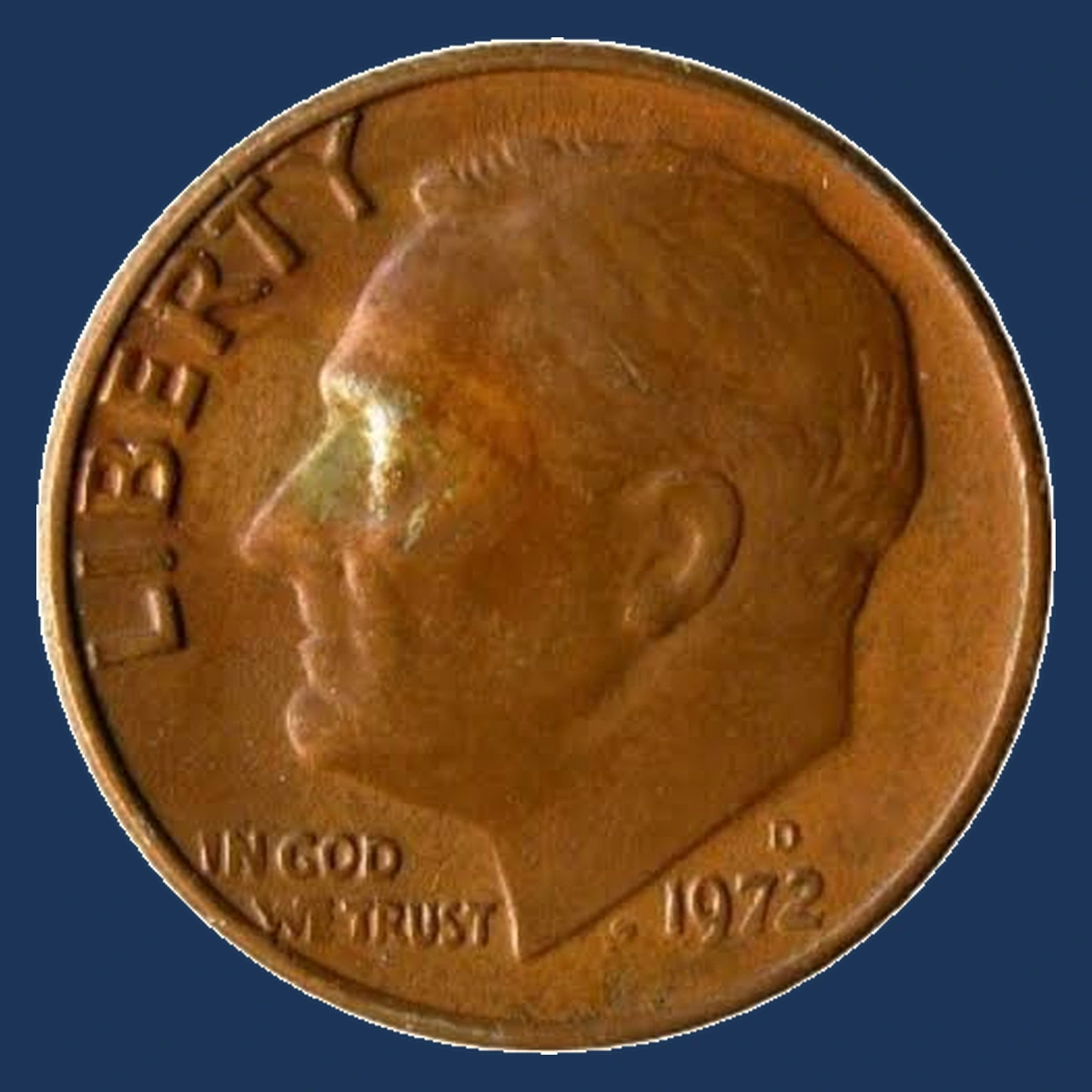
A Roosevelt design on the wrong metal disk would look different from an ordinary layered-metal dime. The 1972 reports describe copper-alloy material associated with cent production.
Two possibilities need separating. A complete cent blank normally starts at 3.11 grams and 19.05 millimeters, larger than a dime.
A dime-sized disk punched from cent metal would have a different weight and diameter from that complete cent blank. The two descriptions cannot share an assumed measured weight.
Neither claim is established merely by copper color. The actual design, original alloy, dimensions, and edge must show what blank entered the press.
Estimated Value
For an identified 1972 dime struck on an incorrect copper-alloy blank, use a conditional estimate of $500–$2,500. The range reflects comparable modern wrong-blank errors, not a recorded sale for the general claim.
A complete cent blank and a dime-sized disk from cent metal would require separate physical and price comparisons. Neither inherits a three-gram measurement without being weighed.
Preservation and readable identification also matter. An ordinary dime that has been plated or stained copper-colored does not qualify for this range.
How to Identify
Measure a loose candidate before choosing between a complete cent blank and a dime-sized disk made from cent metal. Use a scale and calipers against the cent’s 3.11 grams and 19.05 millimeters, and the dime’s 2.268 grams and 17.91 millimeters.
Those are standard figures, not measurements of the reported error.
Check that Roosevelt’s design is on the coin, rather than Lincoln’s design struck on dime metal. The direction of the mismatch matters.
A 10× magnifier can expose plating, trimming, and how the edge met the collar that normally creates grooves. Have the original alloy and blank size identified together before naming the error; copper color alone cannot decide either possibility.
10. 1972 Roosevelt Dime Coin Stuck Around a Stamping Tool
A coin that sticks to a stamping tool can spread around it as the press continues to operate. Its rising edge can give it a cup-like shape.
This stuck coin is a die cap. It differs from a later coin receiving a weak image through that covering.
The general 1972 cap report does not identify a mint or certified specimen. A separate San Francisco double-struck Proof looks cup-shaped, but that shape alone does not prove it stayed attached to a tool.
The complete metal flow and both faces need examination. Bending a coin afterward can also create a convincing-looking cup.
Estimated Value
A genuine 1972 die cap is estimated at $500–$3,000, depending on shape, preservation, and reliable identification. This is a comparison-based range for the reported type.
A documented 1977-D front cap graded NGC MS69 sold for $1,725 in April 2006. That later-year specimen combined pronounced deformation with unusually clean surfaces.
The cup-shaped 1972-S double strike belongs to its own comparison unless attachment to a tool is established. Its shape should not automatically earn an additional cap premium.
How to Identify
Examine the raised wall from the side and compare how it joins the struck center. A cap should show metal spreading around a tool, not simply a bend across an otherwise ordinary dime.
Do not flatten the coin to inspect it.
Use a 10× magnifier on both faces and the edge wall for original design and signs of later bending. The back should not be assumed blank without looking.
A scale can compare a loose piece with the original 2.268 grams, while calipers record the altered outline against 17.91 millimeters. Inspect any surviving grooves without forcing the fragile wall.
The required distinction is metal shaped by remaining on a tool, rather than cup shape alone.
11. 1972 Roosevelt Dime Double Strikes on Ordinary and Proof Coins
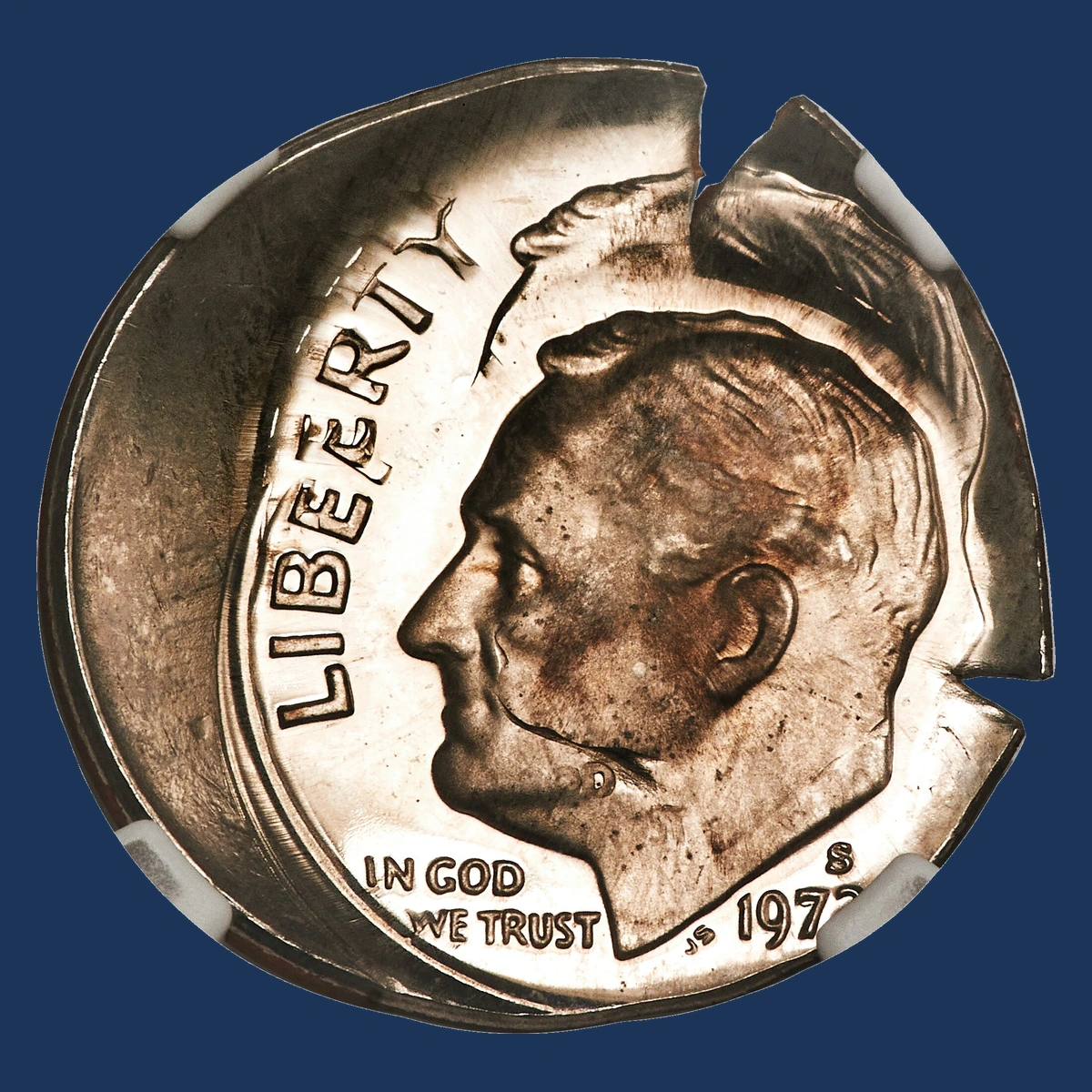
The Denver coin has two dates and D marks: a normal first strike and a second about eighty-five percent off-center. Another blank blocked its back during that second blow.
Three San Francisco Proof examples differ. One has front-tool rotation, another rotated between strikes inside the restraining ring, and a third received two off-center impressions.
The last example expanded into a cup-like shape and was graded NGC PF67 Star. The front-rotation coin is NGC PR67 Cameo; the in-ring example is PCGS PR65.
These collector coins were made with specially prepared tools. Their individual patterns should not be combined into one specimen.
Estimated Value
The NGC PR67 Cameo front-rotation coin sold for $2,160 in January 2018. Estimate $50–$1,000 for ordinary double strikes and $1,000–$5,000 for comparable major Proof examples.
The Denver coin has a separate back wheel mark, which is damage and can reduce appeal. It is not another Mint error.
The cup-shaped Proof’s dealer page says sold without a price. Its amount is not inferred from the different front-rotation example.
How to Identify
For Denver, locate both dates and D marks with a 10× magnifier, then inspect the back area blocked during the second blow. The separate wheel mark is later damage.
Choose the correct Proof comparison: front-tool rotation, rotation within the collar, or two off-center impressions. No fixed rotation angle is supplied.
The cup-shaped NGC PF67 Star coin has two off-center strikes; its shape does not independently prove a die cap. The other Proofs have different design relationships.
Keep Proofs in their holders when possible. A loose dime can be checked with a scale and calipers against 2.268 grams and 17.91 millimeters, with grooves around its edge.
Trace two genuine struck positions on the same coin and match their sequence to the specific example.
Conclusion
The estimated $10–$5,000 range covers very different 1972 Roosevelt Dime errors. Small tool varieties, a detached metal layer, and a major Proof double strike should each be compared with their own kind.
The $2,160 Proof result belongs to the front-rotation specimen. Read the date and mint, inspect both faces, and keep measurements tied to the actual object—especially when a listed weight describes a separated layer rather than a whole dime.