1937 Dime Error List with Pictures

A 1937-S doubled-front dime sold for $1,500 in August 2022. Its MS67FB grade described excellent preservation and sharply separated bands around the bundle on the back.
These 1937 dime errors span estimates of $30–$6,000. The upper range includes a reported wrong-blank candidate that still needs authentication.
Read on to compare the small repeated details, unusual edges, and metal changes without confusing a strong strike with an error.
1. Reported 1937-D Mercury Dime Repunched Mintmark (Estimated Up to $300)
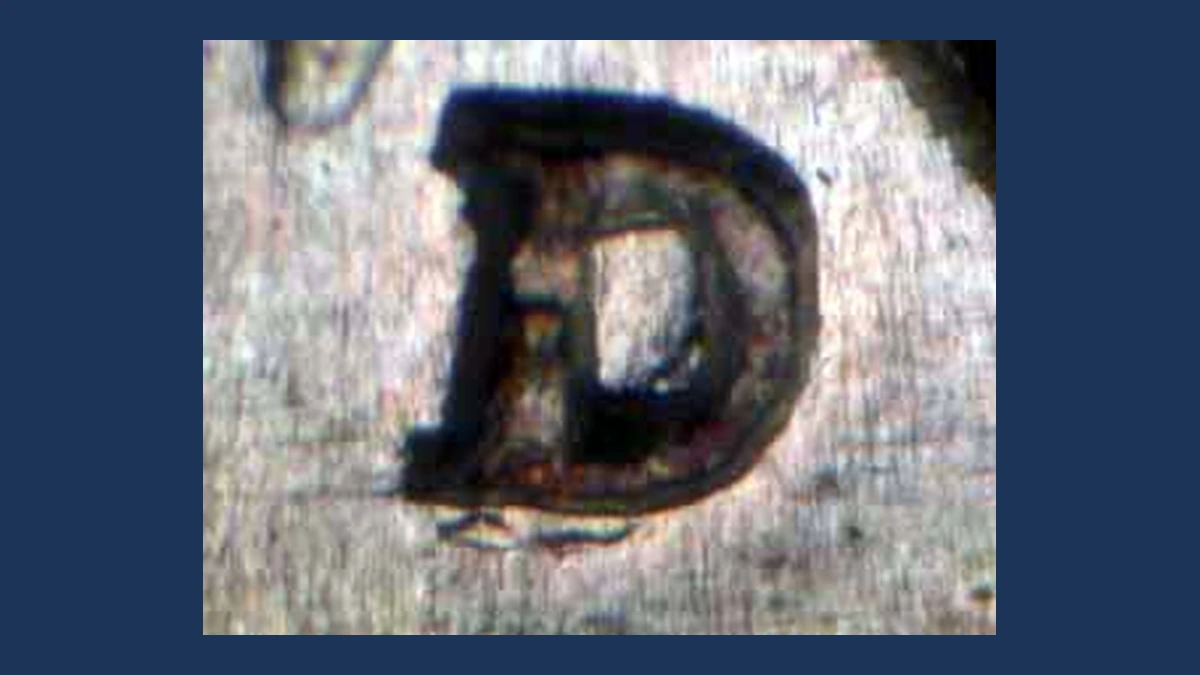
A small extra shape below D is the clue described in the Denver mintmark report. The suggested cause is a repeated D punch.
A worker added the mint letter to a die, the steel tool used to stamp coins. If the punch moved between blows, part of an earlier letter could remain.
The finished coin would copy both letter pieces in one strike. Nearby design need not be doubled.
The lower remnant is a reported clue, not a confirmed pattern to apply to every dime. Compare a clear photograph before identifying the earlier letter.
Estimated Value
Use an estimated $30–$100 for matching circulated examples and $100–$300 for sharper coins without circulation wear. These are comparisons based on minor Mercury dime mintmark varieties.
No recorded sale of this reported 1937-D variety is established here. A clear extra letter and attractive surfaces matter more than a seller’s label.
A thick-looking D does not establish a repeated punch. A flat shelf caused during striking should not receive the same premium as a genuine earlier letter.
How to Identify
Find D below the olive branch and left of the bundle on the back. With a 10× magnifier, inspect beneath the letter for a curved piece of another D.
An isolated lump may be damage rather than part of another D. Compare its complete curve with a confirmed variety photograph before deciding.
Do not combine upper and lower remnants from different coins. A normal dime weighs 2.50 g and measures 17.9 mm, with a grooved edge.
Use a scale and calipers for a loose example, or recorded measurements for a sealed one. The useful starting point is a lower curve that follows the shape of an earlier D.
2. 1937 Mercury Dime Lamination (Estimated Up to $350)
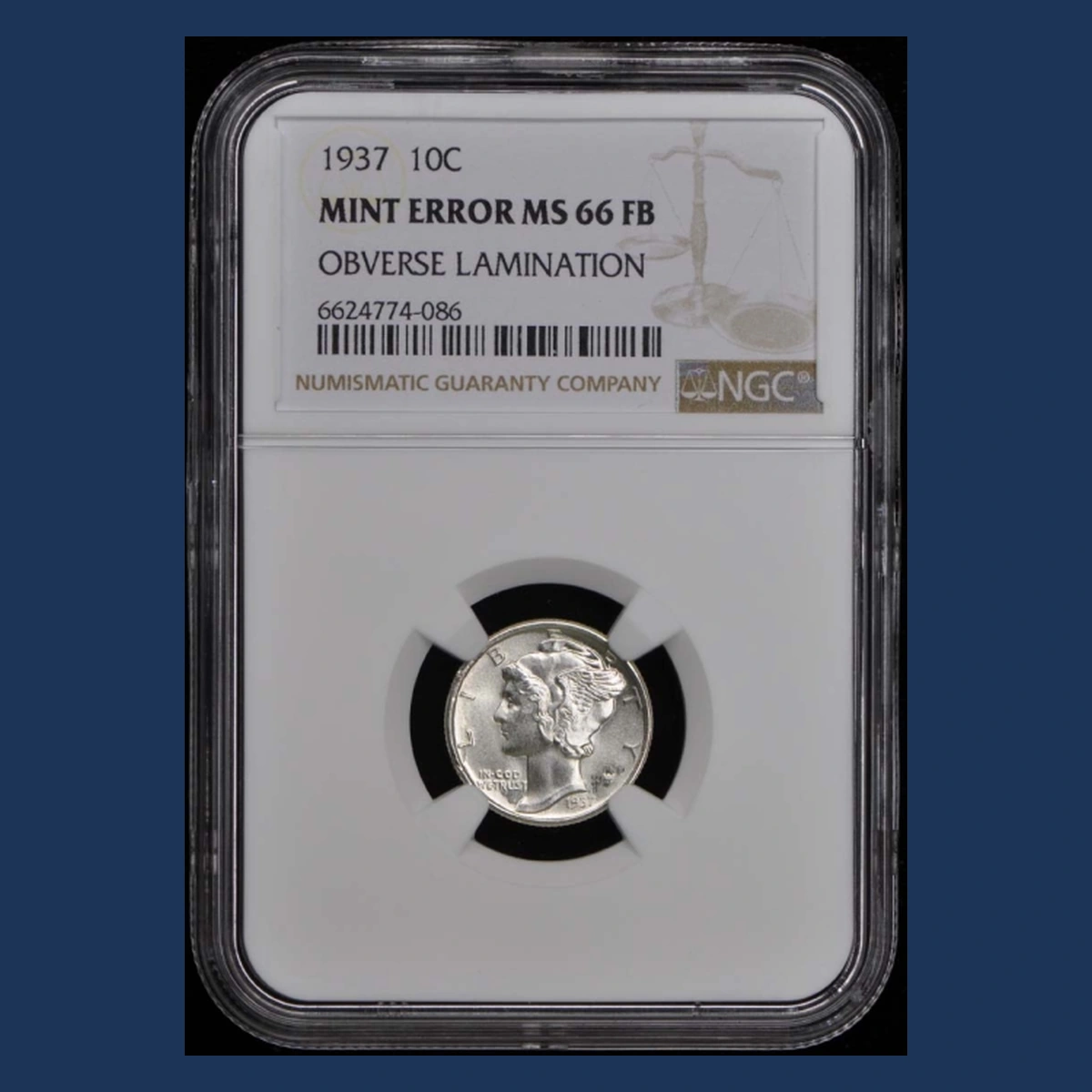
A layer can peel from a well-preserved dime even when its central reverse bands are sharply struck. A dealer listed a Philadelphia 1937 example as NGC MS66FB with a lamination.
MS66 describes no circulation wear and few marks; FB means the central bands are clearly separated. Neither feature explains the peeling itself.
A lamination starts with weakness inside the silver-copper mixture. A thin layer can open or detach from the body of the coin.
The listing does not give an exact position for the flaw. Its location must be read from that coin’s image, not borrowed from another example.
Estimated Value
The archived dealer listing asked $115 for the MS66FB coin. That is an offering price, not a recorded amount paid by a buyer.
Estimate $30–$350 from modest examples through more visible separations. The condition of the coin and the size of the flaw both matter.
The listing shows that a high grade need not mean a large error premium. A broad attached flap can attract different interest from a faint line or small peeling patch.
How to Identify
Use the complete coin image to locate the flaw before enlarging it. Then inspect the boundary with a 10× magnifier and light from the side.
A thin layer lifting from the surface differs from a gouge cut into solid metal. A deposit resting over complete design is not part of the original alloy separating.
Leave any attached flap alone. A scale and calipers can compare a loose example with the normal 2.50 g and 17.9 mm, while edge photographs help with a sealed one.
The edge normally has grooves. A very thin peel may barely affect weight, so the quickest clue is the visible layer lifting from the coin itself.
3. Reported 1937 Mercury Dime Doubled Die Reverse (Comparison Range Up to $400)
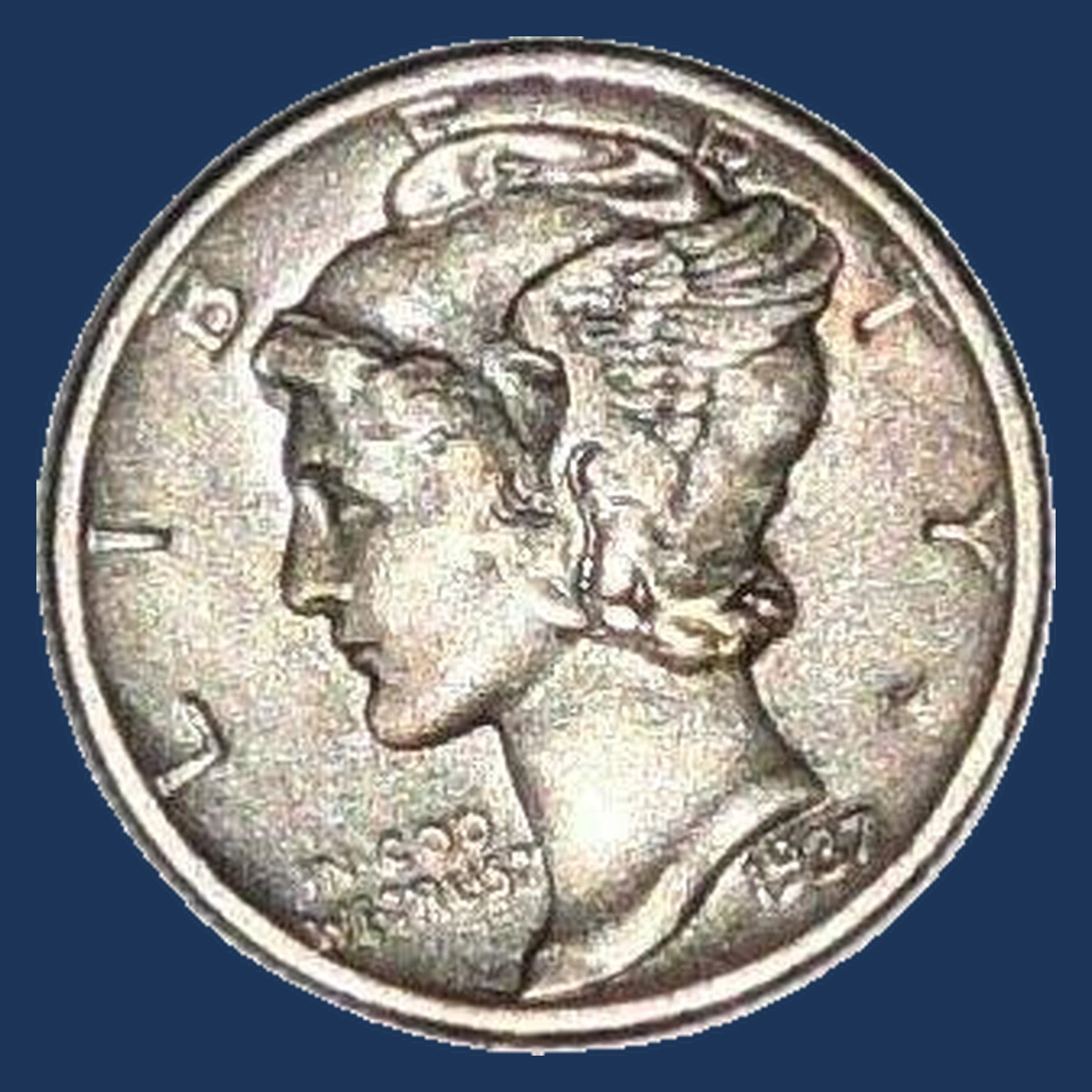
A doubled back must show repeated parts of the back design. The source’s suggestion to inspect the designer’s AW initials is misplaced, because those initials are on the front.
A genuine doubled die carries an extra outline before the coin is struck. Later coins can receive that repeated raised detail from one impression of the tool.
The 1937 reverse claim remains a reported category without a matched, authenticated example here. It does not establish one exact letter or position.
Normal paired bands on the back are also part of the intended design. They do not by themselves prove doubling.
Estimated Value
For a genuine minor doubled back, use a conditional estimate of $75–$400 from circulated condition through modest unworn coins. The comparison comes from related small die varieties and guide figures.
It is not a recorded transaction for an established 1937 example. The estimate applies only after actual repeated back detail has been identified.
An ordinary coin with clearly separated Full Bands should be valued for its strike quality. Normal bands do not turn it into a doubled die.
How to Identify
Stay on the back, where the bundle and inscriptions appear. A close-up of AW shows the front and cannot prove this reverse claim.
Compare the suspected detail with a normal 1937 coin under a 10× magnifier. Look for rounded extra contours or small splits, rather than low flat shelves or the normal paired bands.
Recorded measurements, or a scale and calipers for a loose coin, should fit 2.50 g and 17.9 mm. Check the grooved edge as well.
Those checks identify the basic coin, not the reported variety. Begin with a real repeated shape in the back design that remains separate from its normal lines under changing light.
4. Reported 1937 Mercury Dime Clipped Planchet (Estimated Up to $500)
Part of the original blank was already missing when a clipped dime received its design. That order of events separates a mint clip from a piece cut off later.
The metal and rim formed around the existing gap during striking. Their shapes can help show when the missing section developed.
The 1937 reports do not identify a specific mint or establish whether the gap was curved or straight. Both faces and the full outline need to be examined.
A clip percentage or position taken from another year does not describe this one. The coin itself must supply those details.
Estimated Value
Estimate $50–$150 for smaller genuine clips on circulated coins and $150–$500 for larger or better-preserved examples. These are comparison ranges, not a stated 1937 auction result.
A documented 1934 ANACS MS63 curved clip supplies a related Mercury dime example. MS63 means no circulation wear but noticeable marks.
That comparison establishes a similar error, not the shape or grade of a 1937 coin. Readable dates, surviving design, and original surfaces matter more than an unsupported percentage claim.
How to Identify
A low weight cannot distinguish an original clip from a later cut. Both remove metal, so use a scale reading against 2.50 g only as supporting information.
Examine the missing section’s endpoints with a 10× magnifier. Look for struck metal flowing toward the gap, and inspect the opposite rim for possible weakness.
Do not require a curved arc when the report does not establish the gap’s shape. Calipers across an intact span can be compared with the normal 17.9 mm diameter.
Inspect surviving edge grooves and the missing section’s wall together. The best first check is natural rim formation around the gap, without tool marks cutting through an already finished design.
5. Reported 1937 Mercury Dime Cud (Estimated Up to $600)
A cud is a raised patch joined to the rim. It forms after a piece breaks from the edge of a stamping tool.
Silver flows into the empty space during a later strike. The coin gains a lump where the broken tool can no longer impress normal detail.
The 1937 guide reports this category without identifying an original specimen’s mint or position. Its size claim is therefore not a measured feature of a confirmed coin here.
A thin crack is different, as is a small tool chip inside the design. A cud needs a clear connection to the rim.
Estimated Value
Estimate $50–$150 for a small genuine rim break and $150–$600 for a larger, clearer cud. These are Mercury dime comparisons adjusted for condition and visibility.
They are not verified sale prices for the guide’s unnamed 1937 example. The higher allowance assumes a strong visible feature and an appealing coin.
An unworn coin may also have substantial value for condition alone. That amount should not all be credited to the raised patch or an enthusiastic seller’s description.
How to Identify
Look from the raised patch into the neighboring design with a 10× magnifier. The patch should join the rim and replace detail that the broken tool could no longer make.
A deposit sitting above complete design has a different explanation. Inspect for solder, an impact-raised lip, or a seam around added metal.
A scale and calipers can compare a loose coin with 2.50 g and 17.9 mm, and the edge normally has grooves. Extra weight may prompt a closer check for added material.
Weak detail on the opposite face may help support the error. Start with the rim-connected raised patch and missing design beneath it, rather than a lump alone.
6. 1937-S Mercury Dime Tapered Planchet (Estimated Up to $1,200)
One part of a tapered blank is thinner than another. The difference is gradual rather than a missing surface flake or a blank that is equally thin everywhere.
Heritage sold a 1937-S example graded NGC MS67 Full Bands. It had excellent preservation without circulation wear and clearly separated central reverse bands.
A thinner area may not fill the stamping tool as completely. That can leave local weakness while the central bands remain sharp.
No exact weight for this example is used here. A weight printed beside another tapered dime in the catalog belongs to that other coin.
Estimated Value
Heritage’s archive lists $312 on September 16, 2024 for the NGC MS67FB example. Estimate $250–$1,200 for genuine coins of this general high-grade tapered-blank type.
The actual result includes the San Francisco coin’s preservation and Full Bands strike. It does not separate a price just for the taper.
A stronger thickness difference and changing collector demand can affect another coin’s value. The upper estimate is not a claim that this specimen sold for $1,200.
How to Identify
Compare thickness at several positions around the edge, rather than relying on one measurement. Careful caliper readings on a loose coin can show a gradual change.
Use recorded measurements and clear edge photographs for a sealed example. The normal dime weighs 2.50 g, measures 17.9 mm, and has a grooved edge.
A scale checks total metal, but low weight alone can come from wear or corrosion. Use a 10× magnifier to compare the thinner edge with any nearby weak design.
Grinding can thin a coin but usually changes the surface too. The useful combination is a gradual thickness change and matching strike weakness, without abrasive marks where the metal becomes thinner.
7. Reported 1937 Mercury Dime Off-Center Strike (Estimated Up to $1,500)
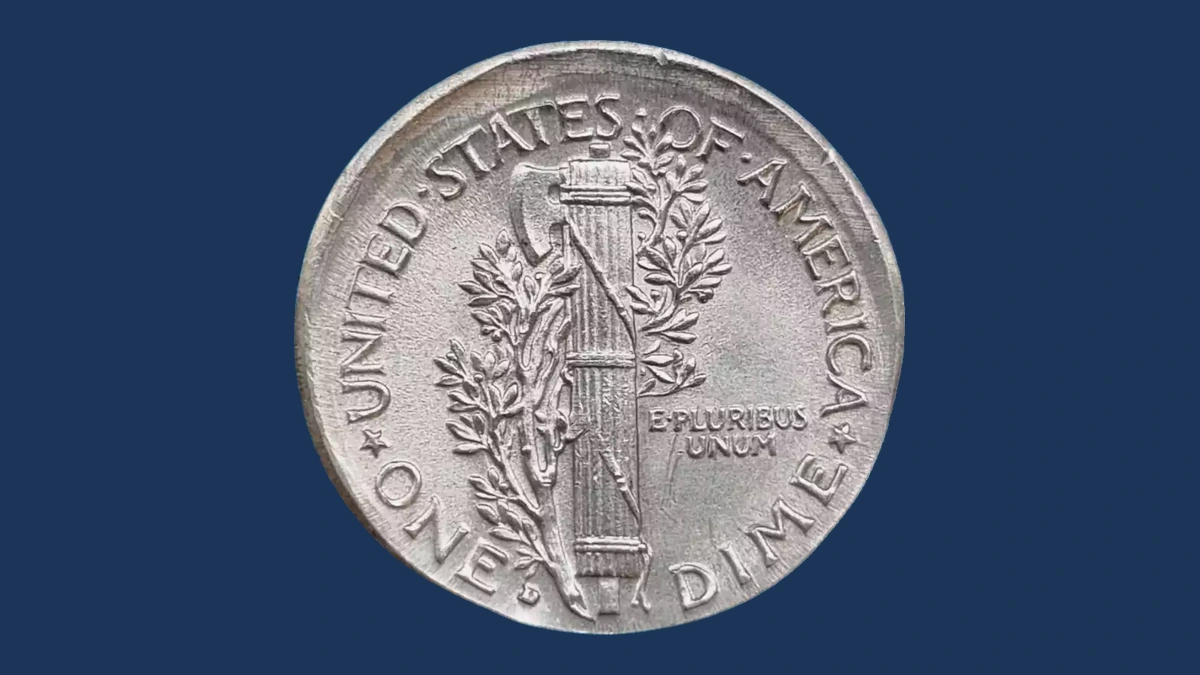
An off-center strike leaves part of the blank untouched while some intended design misses the metal. The blank sat too far to one side between the stamping tools.
Both faces should show that misplaced position. An uneven rim on only one face can have another cause.
The 1937 sources report this type without connecting a confirmed auction coin to a particular direction or percentage. General price examples are not measurements of a known specimen.
Read the year and any surviving mint letter directly. A missing mintmark area does not prove Philadelphia, because the strike may simply have missed that part.
Estimated Value
Estimate $150–$500 for circulated examples with readable dates, extending to $500–$1,500 for stronger unworn coins or more dramatic shifts. Surface quality remains important.
A dealer offered a 1934-D dime struck 10% off center and graded PCGS AU50 for $350. AU50 means light wear.
That quote concerns another date and a known Denver coin. It is not a 1937 sale, but offers a nearby-year comparison for a modest readable-date shift.
How to Identify
Compare both faces with their full outlines visible. If only one design is shifted, consider a moved stamping tool instead of a misplaced blank.
A 10× magnifier helps inspect where the struck design meets untouched silver. A broadstrike can have an uneven border but keeps its complete design, while filing removes metal rather than leaving a blank crescent.
A scale and calipers can compare a loose coin with the original 2.50 g and 17.9 mm standards. Examine remaining edge grooves for signs of alteration.
Keep the readable 1937 date and any mint letter with the same coin. The quick check is matching blank areas and design lost beyond the edge on both faces.
8. 1937 Mercury Dime Doubled Die Obverse (Estimated Up to $2,000)
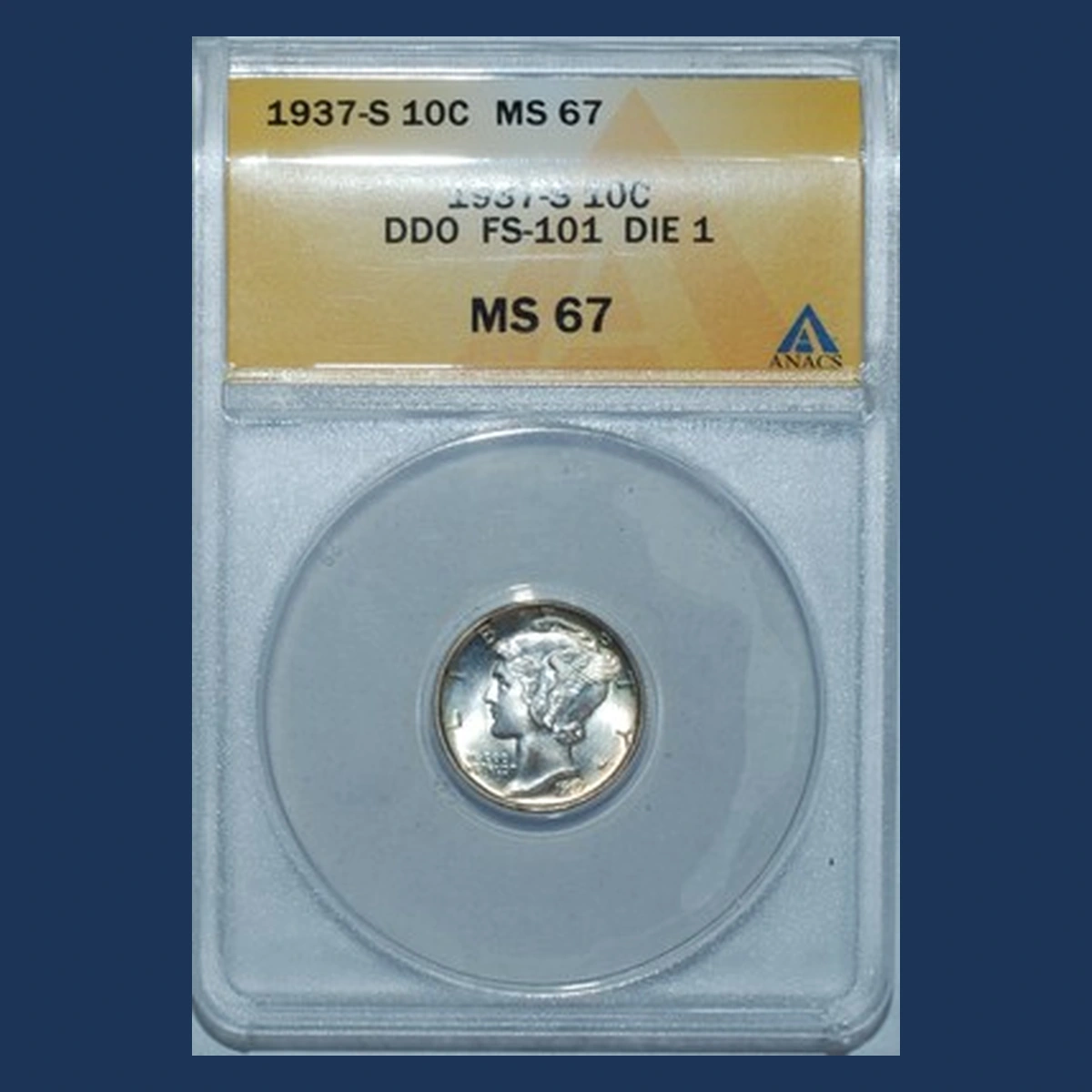
Philadelphia and San Francisco each have cataloged examples of a doubled front design in 1937. Their extra shapes need different comparisons.
The duplication formed in the stamping tool before coins were made. A normal strike could then leave repeated raised details in the date or motto.
San Francisco’s recognized variety is called FS-101. PCGS lists it among ordinary coins made for circulation, including examples with Full Bands.
Philadelphia also made proofs, which are special collector coins. Their existence does not turn these ordinary-strike varieties into proofs, and a photograph from one mint cannot identify a doubled design from the other.
Estimated Value
PCGS records $1,500 for a 1937-S FS-101 MS67FB sold on August 31, 2022. That coin combined excellent preservation with sharply separated reverse bands.
Estimate $100–$500 for clearly identified lower-grade examples and $500–$2,000 for stronger high-grade San Francisco coins. The sale reflects the whole coin, not doubling alone.
Philadelphia varieties need their own matching photographs and condition comparisons. Applying the San Francisco record to every doubled-looking 1937 dime would overstate what it shows.
How to Identify
Check the mint letter before selecting a photograph of the variety. San Francisco’s FS-101 cannot substitute for a Philadelphia comparison, and a proof needs its own matching evidence.
Use a 10× magnifier on the date and motto to follow the repeated raised contours. Flat shelves or wear-distorted lettering have different shapes.
Normal circulation dimes weigh 2.50 g and measure 17.9 mm with grooved edges. A scale and calipers can check a loose example, while recorded measurements serve for a sealed coin.
Check Full Bands separately on the back. The direct evidence for front doubling is the matching extra date or motto outline, not the sharpness of the reverse bands.
9. Reported 1937 Mercury Dime on Cent Planchet (Comparison Range Up to $6,000)
A dime made on a cent blank would combine dime designs with the cent’s metal. For this reported 1937 candidate, the comparison is a bronze cent blank.
A contemporary United States cent blank was bronze, weighing about 3.11 g and measuring 19.05 mm before striking. It was larger and heavier than a normal silver dime blank.
Copper color alone cannot prove this error. Nor should missing edge design be explained by calling the cent blank smaller.
No authenticated 1937 example is established by the description here. The coin’s actual metal and measurements must support the proposed identity.
Estimated Value
For an authenticated dime struck on a cent blank, use a conditional estimate of $1,500–$6,000. This is not a realized-price range for a verified 1937 specimen.
As broader context, NGC describes a 1942 Mercury dime on an Ecuador five-centavos blank that sold for $11,400 in July 2023. It was graded MS62FB.
That foreign blank, later year, and rarity differ from the cent candidate. Its sale shows wider collector interest, not a direct price for this reported 1937 error.
How to Identify
Weigh the coin with a scale and measure it with calipers. A proposed 1937 cent blank should be assessed against bronze, about 3.11 g and 19.05 mm before striking.
The normal dime is 90% silver, 2.50 g, and 17.9 mm. A professional metal test that leaves the surface intact can check composition beyond its color.
Use a 10× magnifier around the edge for plating or seams. The original cent blank lacked dime grooves, but the final edge depends on how the strike met the surrounding ring.
The readable 1937 dime design must be on that same metal. Begin with the larger, heavier bronze blank measurements together, rather than accepting a copper-colored surface alone.
Conclusion
Estimated values for these 1937 errors run from $30 to $6,000, with the highest range reserved for an authenticated wrong-blank example. The reported cent candidate is not yet established by the available description.
For other types, follow the actual extra letter, separating layer, rim patch, or shifted design. Keep Full Bands and condition separate from the error’s cause, and distinguish dealer asking prices from completed sales.