1882 Dime Error List with Pictures

An 1882 F-105 dime sold for $3,840 in February 2022, graded MS67+. Its tiny extra shape inside Liberty’s base belongs to an exceptionally preserved complete coin.
These 1882 Liberty Seated dime errors span estimated whole-coin values of $20–$4,500. Some leave missing detail, others add raised lines or extra number outlines.
Read on to tell a broken date punch from a repeated punch, then compare the correct coin and condition.
1. 1882 Liberty Seated Dime Broken Date Punch (Estimated Up to $600)
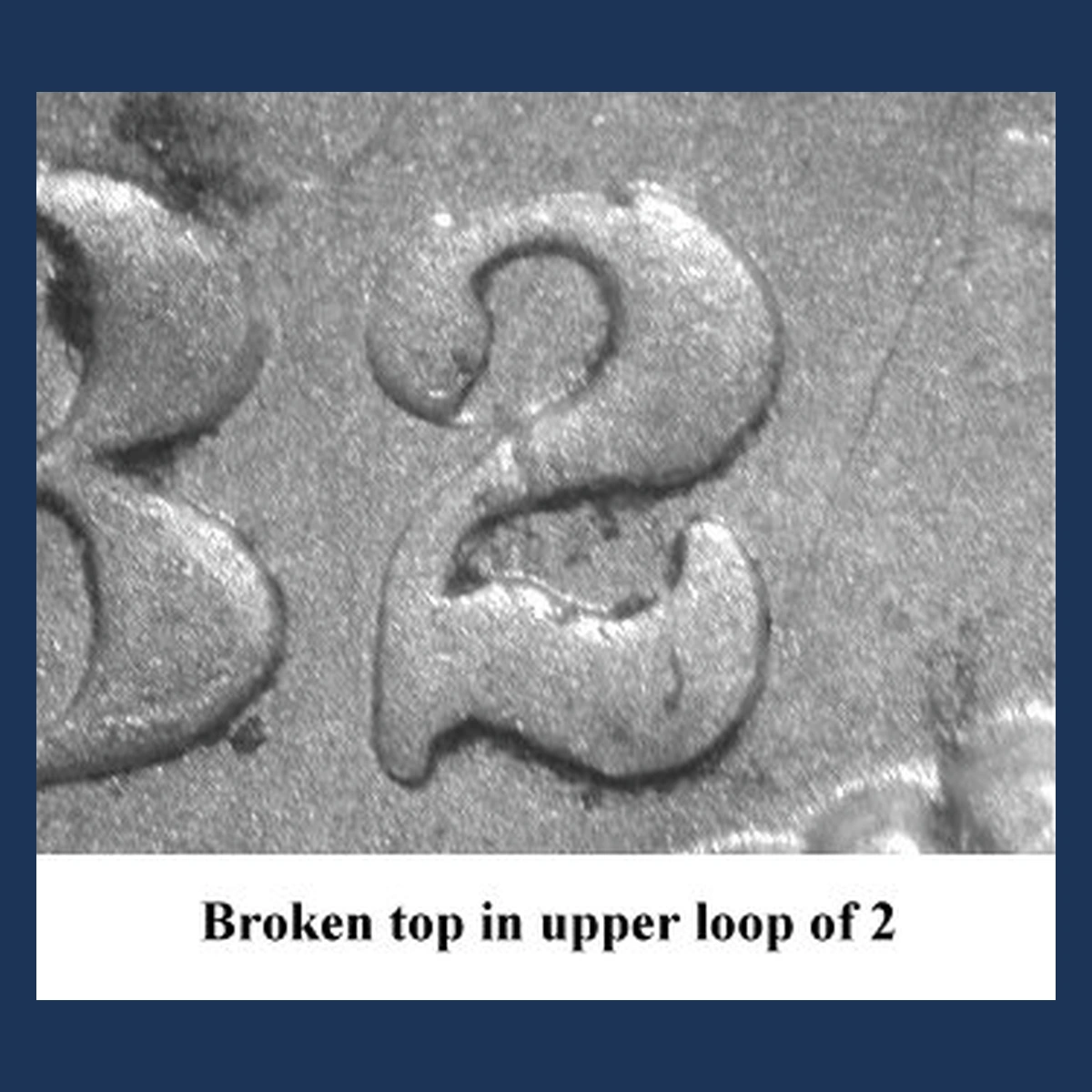
A small gap interrupts the top curve of the 2 on several Philadelphia circulation varieties. The same missing piece appears because the date punch used to prepare their stamping tools was damaged.
The gap is not a separate injury on each coin. Different tools could repeat the flaw after receiving the date from that broken punch.
The F-101 Proof, a specially made collector coin, has an intact upper 2. It instead carries repeated detail elsewhere on that digit.
Missing part of a number and adding an earlier outline are therefore different features to check.
Estimated Value
Estimate $20–$600 for circulated through lower-grade unworn examples with the recognizable broken-top 2. Because several tools repeat it, the gap alone does not establish great rarity.
PCGS records an F-102 repunched-date MS63 at $185 in 2021. That variety also carries the broken-punch feature.
The amount values the whole coin rather than the gap alone. Wear, original surfaces, and overall preservation remain the main price factors for ordinary examples, even when the missing piece is clear.
How to Identify
Use a magnifier on the top curve of the 2 and compare it with the nearby digits. The expected gap can remain while the rest of the date looks normally struck.
General wear tends to soften other high details too. A nick cutting through the number has another cause, so inspect the gap’s edges under changing light.
Confirm Philadelphia’s absence of a mintmark. Use a scale and calipers against 2.50 grams and 17.9 mm, then check the edge grooves.
This is a 90% silver dime. For the quickest match, compare the gap in the same part of the 2 with a documented circulation example rather than the intact Proof digit.
2. 1882 Liberty Seated Dime Reverse Die Clash (Estimated Up to $750)
Faint extra picture traces appear on the back of the F-102 variety, which also has wreath cracks. The two features have different causes.
A clash occurs when the steel stamping tools meet without a coin between them. They pick up marks from each other and transfer unwanted design traces to later coins.
The reference does not map every clash contour to one exact spot. The actual shapes need comparison with the front-side design.
The wreath’s raised crack lines are not a substitute. A broken tool can leave a line without copying the opposite picture.
Estimated Value
For a worn through lower-grade unworn F-102 with recognizable clash marks, estimate $30–$750. This is the value of the complete coin and its condition.
PCGS records an MS63 repunched-date F-102 at $185 in 2021. MS63 describes an unworn coin with noticeable marks.
The price is a useful same-variety comparison, not a separately measured clash premium. Clear transferred shapes can add interest, but a scratch or an ordinary wreath crack cannot support the same identification.
How to Identify
Check the F-102 date pattern on the front before examining the back with a magnifier. Compare the two designs at the same scale to identify shapes that could come from the opposite tool.
Trace the wreath cracks separately. Their routes record broken steel, while a clash should repeat a piece of the front-side picture.
Use a scale and calipers against 2.50 grams and 17.9 mm for the normal 90% silver dime. Inspect the grooves around the edge for alteration.
Do not count unusual lines as proof of a clash. Start by matching one recognizable opposite-face contour on the confirmed F-102 back.
3. 1882 Liberty Seated Dime Weak Denomination Transfer (Estimated Up to $900)
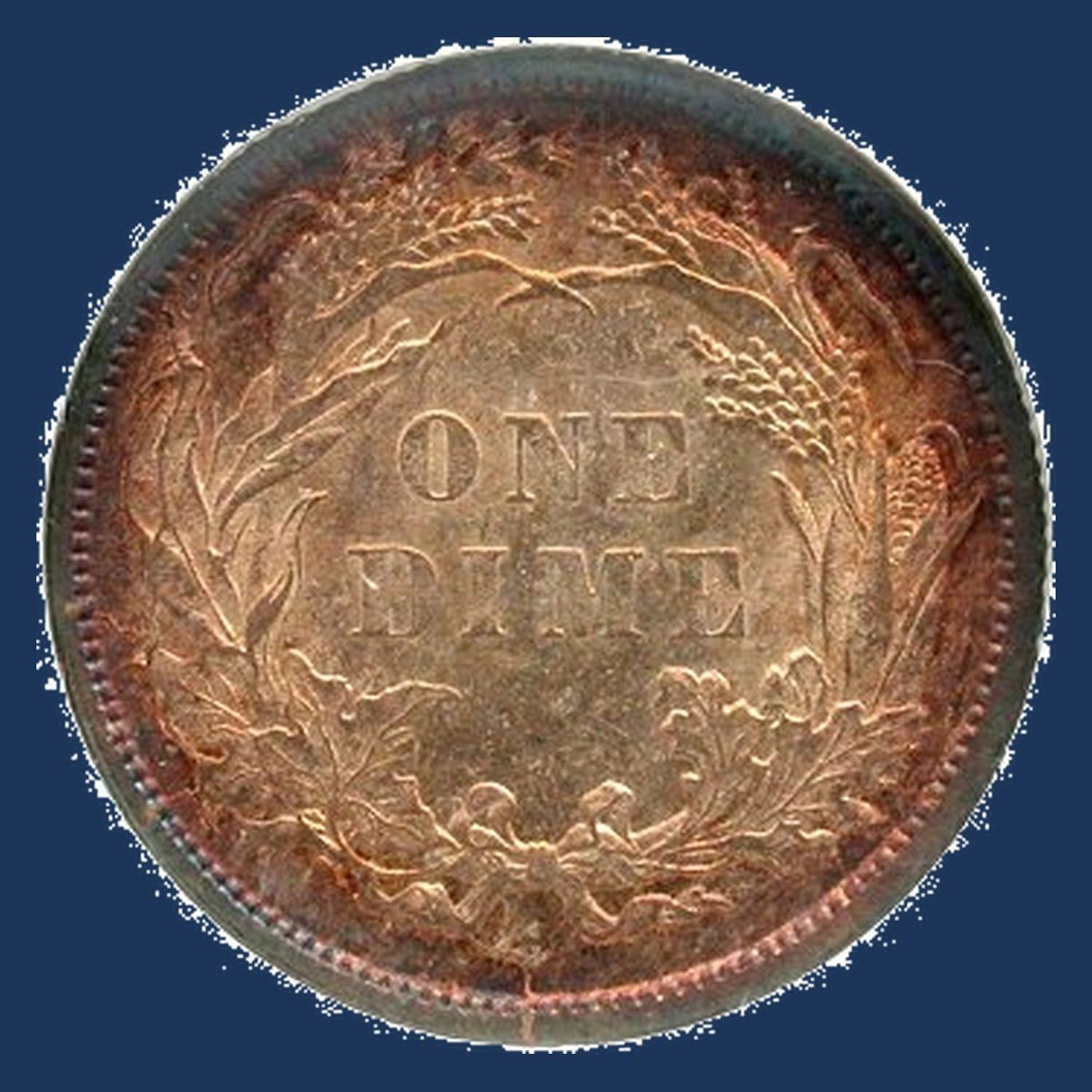
ONE DIME looks unusually shallow inside a wreath that still holds much of its detail. This contrast is recorded on the F-108a variety, including an NGC MS64 example.
The explanation concerns how the stamping tool was made. The master tool did not press the lettering deeply enough into the working tool, according to the revised specialist account.
An earlier polishing explanation was replaced by that account. The same later tool also has strong wreath cracks.
Other coins can have faint letters from wear or a weak strike, so the whole pattern must match.
Estimated Value
Estimate $40–$900 for collectible worn through roughly MS64 examples with a convincing F-108a match. MS64 is an unworn grade, showing that these shallow letters are not limited to heavily worn coins.
The range is an estimate rather than a recorded F-108a auction price. The surrounding surfaces and detail affect the whole-coin value.
An original coin with selective letter weakness is more convincing than one worn smooth everywhere. Missing letters alone do not establish the variety or its premium.
How to Identify
Compare ONE DIME directly with the wreath using a magnifier and low-angle light. Check whether the letters are selectively shallow while the leaves retain stronger detail.
Then trace the crack from below the bow through the left wreath to the rim near ten o’clock. That additional pattern helps match F-108a rather than ordinary wear.
Use a scale and calipers against 2.50 grams and 17.9 mm, then inspect the edge grooves. Those normal dimensions do not explain the weak letters by themselves.
For the quickest identification, pair the shallow ONE DIME with the matching, clearly raised bow-to-left-wreath crack on the same coin.
4. 1882 Liberty Seated Dime Gown Die Defect (Estimated Up to $1,000)
A raised mass sits on Liberty’s gown just right of the shield’s horizontal lines. That location makes the F-111 feature easier to find than a general description of a rough front.
The specialist calls it a die defect, meaning an irregularity in the stamping tool. Its precise cause is not identified as rust, drilling, or another specific event.
An irregular hollow in the tool can fill with silver and leave a raised shape on the coin. Material stuck onto a finished dime is different.
Another variety also has a gown lump and needs its own comparison.
Estimated Value
Estimate $40–$1,000 for circulated through lower-grade unworn examples with the original gown feature. A clear raised shape on attractive surfaces is easier to study and display.
This is a whole-coin estimate, not a recorded sale of the illustrated F-111. Heavy wear or corrosion can make a useful comparison harder.
Match the full outline and location before allowing any variety premium. Added metal can imitate a lump, so the visible shape needs to fit the original struck surface.
How to Identify
Find the shield’s horizontal lines, then use a magnifier on the gown immediately to their right. Tilt the light to see how the raised mass joins the surrounding picture.
Do not probe or scrape it. Loose material or a visible attachment line may indicate something added after striking.
Compare the full front and back with the correct variety photograph. Another gown lump on a different tool does not automatically identify F-111.
Use calipers against 17.9 mm and a scale against 2.50 grams, and inspect the edge grooves. Begin by matching the complete raised outline beside the shield, including its connection to the original surface.
5. 1882 Liberty Seated Dime Straight Planchet Clip (Estimated Up to $1,200)
The top of the coin has a straight missing section in a historical 1882 report. A 1979 catalog describes it as about 5% missing at twelve o’clock, without a modern certification.
A straight clip can begin when the punch cutting round discs overlaps the edge of the metal strip. The incomplete disc then enters the press.
That differs from a curved gap made by overlapping an earlier round hole. Both can occur before the picture is struck.
Filing the top of a finished dime can imitate this outline, so the endpoints need close inspection.
Estimated Value
A 1906 Barber dime with a 12% straight clip sold for $288 in July 2021, graded PCGS MS62. It is a different design and year with a larger gap.
Estimate $150–$1,200 for genuine 1882 examples in circulated through lightly worn condition. The earlier coin’s condition and original surfaces affect that comparison.
The historical 5% report has no completed sale price recorded here. The $288 result provides a mechanism comparison, not its own transaction.
How to Identify
Hold the front upright and use a magnifier at the straight boundary near twelve o’clock. Inspect both ends where the surviving rim meets the missing section.
Look for original striking detail there, rather than parallel file marks or a fresh sheared wall. A neat straight outline by itself proves little.
Use calipers across intact parts against 17.9 mm and a scale against the usual 2.50 grams. Wear also reduces weight, so do not turn the difference directly into a clip percentage.
Inspect the remaining edge grooves. For the quickest check, compare both endpoint transitions with a confirmed pre-strike straight clip rather than judging the smoothness of the cut.
6. 1882 Liberty Seated Dime Die Cracks (Estimated Up to $1,500)
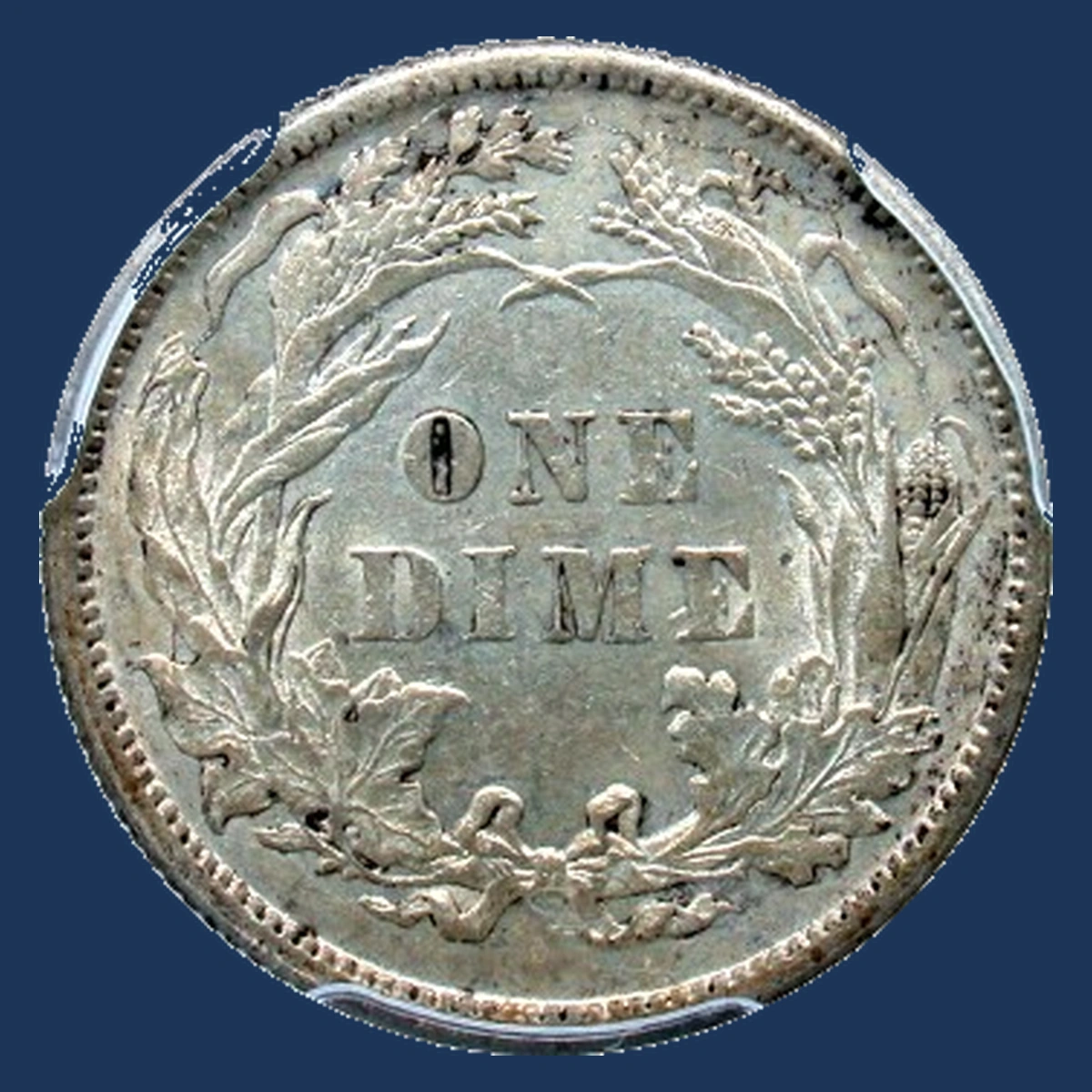
A raised front-side line starts at the last S of STATES and crosses Liberty’s head toward the cap. This belongs to the F-105 example with an extra base fragment and repeated 2.
A separate back-side route begins below the bow, crosses the left wreath, and reaches the rim near ten o’clock. Other varieties have their own wreath cracks.
These ridges formed when silver entered cracks in the stamping tools. They were struck onto the coin rather than cut into it afterward.
The route identifies the tool, while stronger lines can show how its cracks developed.
Estimated Value
Estimate $25–$1,500 for visible matching cracks on circulated through roughly MS64 examples. Clear routes and original surfaces improve the whole-coin comparison.
Exceptional grades can cost more. PCGS records an MS67+ F-105 at $3,840 in 2022, with its misplaced digit and other date features.
That sale includes an unusually well-preserved coin, not just a raised line. It does not show that an ordinary crack on a worn dime alone commands several thousand dollars or a separate premium for every branch.
How to Identify
Choose the relevant face before tracing the line. STATES through the head belongs on the front; the bow-to-left-wreath route belongs to a separate back-side comparison.
Use a scale and calipers against 2.50 grams and 17.9 mm. Check the edge grooves for cuts or later impact damage.
With a magnifier, angle the light from both sides to see whether the line rises above the silver. A dark scratch can seem convincing until its sunken shape becomes clear.
Follow the ridge from one named landmark to the next. The quickest match is the complete raised route on the correct variety, rather than an isolated segment near the right general area.
7. 1882 Liberty Seated Dime Repunched Date (Estimated Up to $3,500)
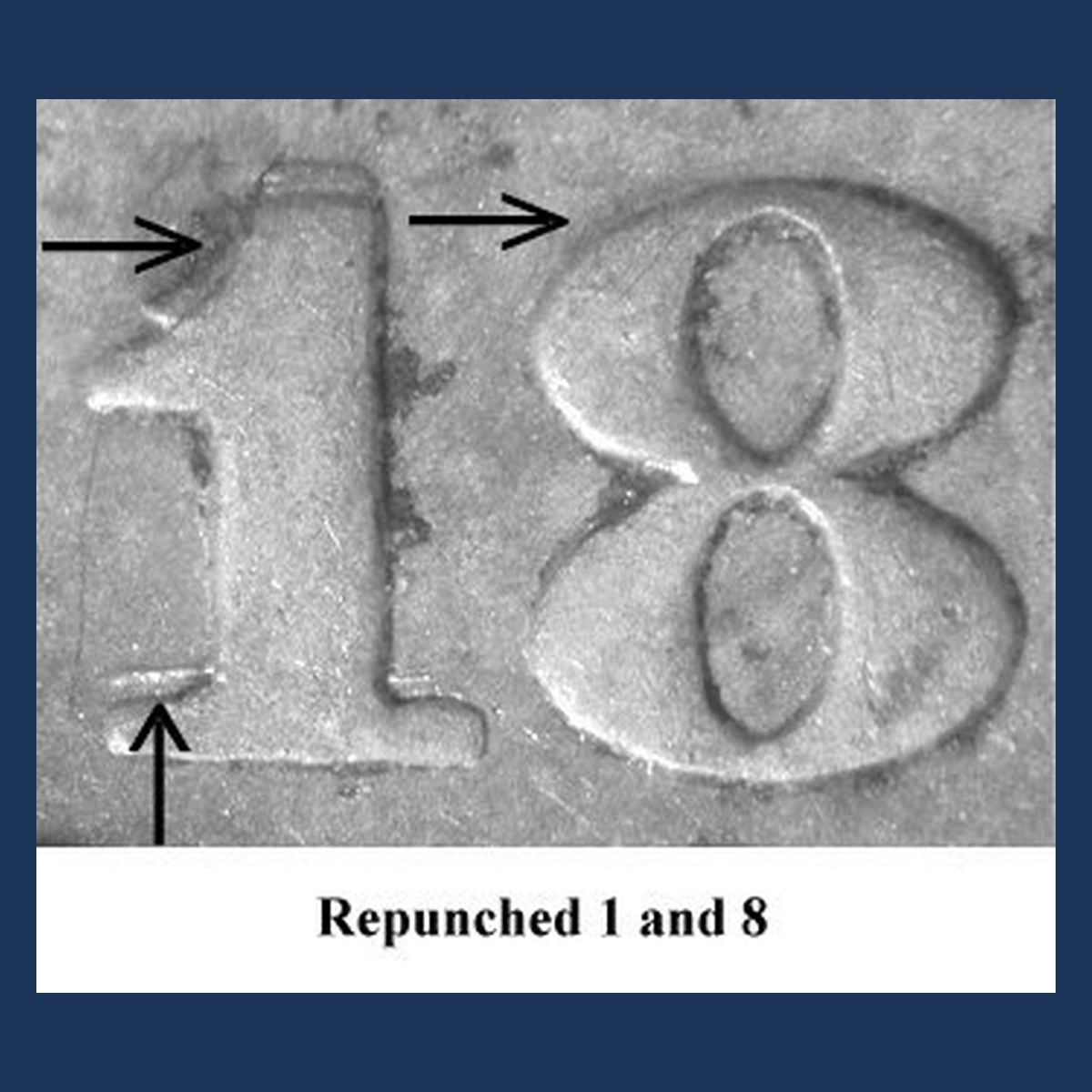
Extra outlines appear above the top and both sides of the base of 1 on F-102. The first 8 also retains an earlier curve at its upper loop.
The date punch entered the tool more than once, leaving pieces of the earlier placement. Other varieties repeat detail inside the upper 2 or beneath its base.
The beneath-base pattern belongs to Proof-related tools, including later use for circulation coins. Those are separate examples.
A broken gap at the top of 2 is different. Repunching requires extra raised detail, not simply part of the final number missing.
Estimated Value
PCGS lists an MS63 F-102 sale at $185 on October 2, 2021. Estimate $30–$1,200 for identified circulation coins from worn through lower-grade unworn examples.
Collectible lower-to-middle-grade Proofs have a separate estimated range of $300–$3,500. Proofs are specially made collector coins, judged by their complete finish and condition.
The later use of a Proof tool does not make every coin it strikes a Proof. Match the actual surfaces and strength of the remaining date traces before comparing prices.
How to Identify
Keep the whole date visible under a magnifier and choose the correct number pattern. For F-102, compare the extra strokes above 1 and the first 8’s upper loop.
For other examples, check whether the trace is inside the upper 2 or beneath its base. Do not combine those positions into one required pattern.
Use a scale and calipers against 2.50 grams and 17.9 mm, then inspect the edge grooves. Judge the Proof or circulation finish from the complete coin.
Record the top gap in a broken 2 separately. For a quick repunching check, match the extra raised outlines at the exact positions on the confirmed variety.
8. 1882 Liberty Seated Dime Misplaced Digit in the Base (Estimated Up to $4,500)
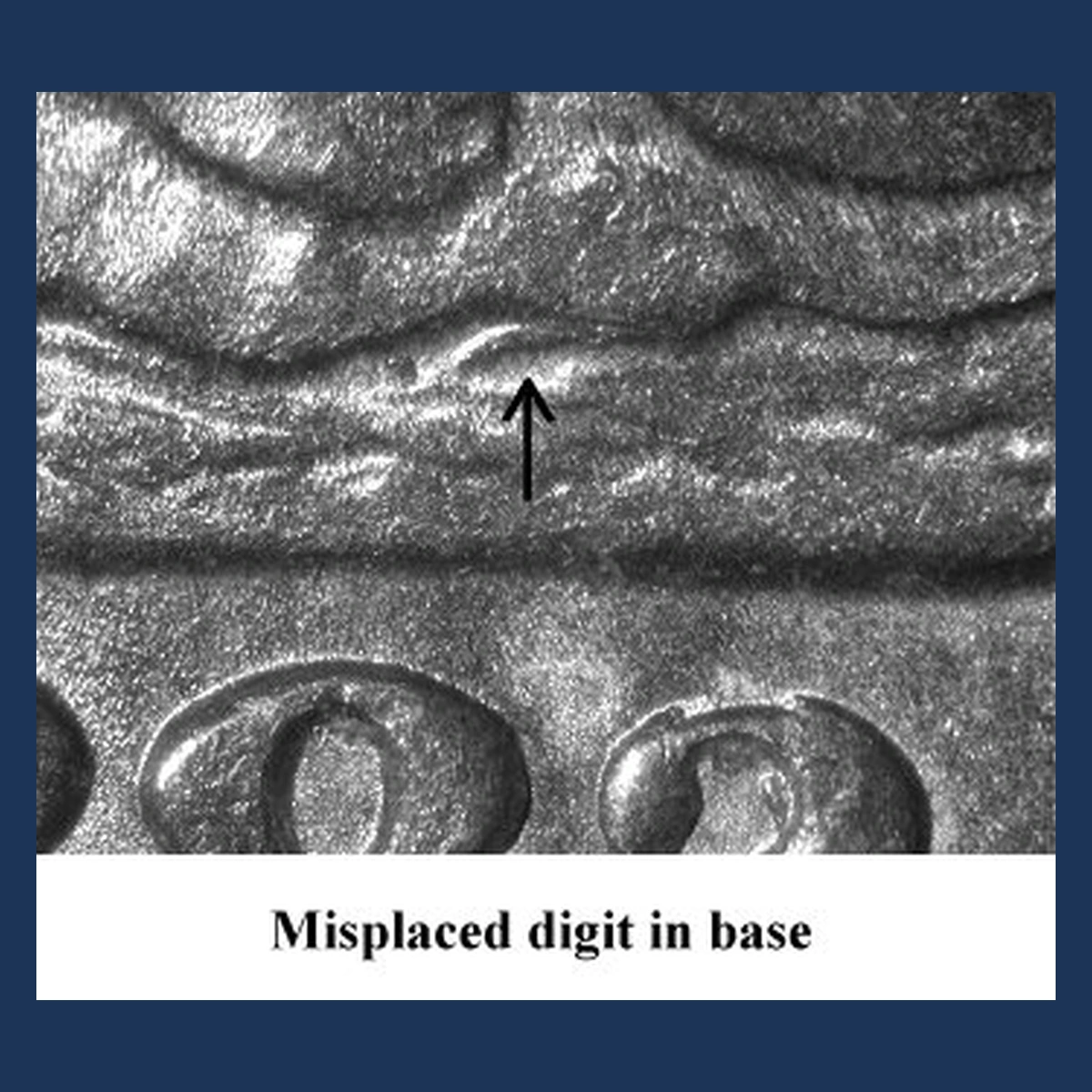
A small extra shape sits inside Liberty’s base directly above the gap between the final 8 and 2. The F-105 reference interprets it as a misplaced digit, possibly the top of an 8.
The visible position can be matched even though the original number’s identity is not fully settled. A curve should not automatically be called a proven extra 8.
The same tool also has a repeated 2 and other identifying features. Those clues support the variety without adding more misplaced digits.
A random scratch through the base would not repeat the same raised shape.
Estimated Value
PCGS records an MS67+ F-105 at $3,840 from Heritage on February 27, 2022. An estimated $3,000–$4,500 applies to that exceptional level of preservation.
More typical circulated through lower-grade unworn examples have an estimated range of $40–$1,200. Both ranges value the whole coin.
The difference reflects condition and overall appearance, as well as the variety. The record does not price the tiny base remnant separately from the date features and unusually fine surfaces.
How to Identify
Confirm a Philadelphia dime with no mintmark and compare its full front and back with F-105. Check 17.9 mm with calipers, 2.50 grams with a scale, and the edge grooves.
Use a magnifier directly above the midpoint between the final 8 and 2. Keep the normal date visible to hold that position accurately.
Compare the raised shape with the specialist photograph. A natural line in the rock or a scratch can look like a number when seen alone.
The repeated 2 provides another feature to check. Begin with an exact raised-shape match at that point in the base, without requiring the suggested 8 identity to be certain.
Conclusion
Estimated whole-coin values for these 1882 dimes range from $20 to $4,500. A repeated gap, extra number outline, shallow denomination, and raised gown patch have different explanations.
Use the complete date and both faces when matching small details, especially where several features share one variety. The $3,840 F-105 sale includes exceptional preservation; it should not become a separate price for each mark on the same coin.