1935 Dime Error List with Pictures

A Philadelphia 1935 doubled-die dime sold for $2,306.25 in July 2024, graded PCGS MS64. Its repeated lettering is a small feature with a substantial documented price.
These 1935 Mercury dime errors have estimated whole-coin values of $30–$3,600. Others involve a missing piece of metal, a shifted strike, a repeated S, or material blocking part of the picture.
Read on to find the right feature and distinguish an asking price from a completed sale.
1. 1935 Mercury Dime Struck Through (Estimated Up to $150)
A hollow mark or a patch of missing detail can appear while the surrounding picture remains clear. Material caught between the coin and a stamping tool can block normal contact.
This is a strike-through. The unwanted material may leave an impression before falling away.
The 1935 report does not identify the material on a certified example. A smooth weak patch should not automatically be called a wire or fabric mark.
Wear can also remove detail, so the rest of the coin matters. The boundary around the affected patch should support an interruption during striking.
Estimated Value
The year guide gives an estimated $30–$150 range for ordinary, visible strike-throughs. It is not a list of completed sales for a particular mint or certified coin.
A recognizable shape can attract more interest than a small weak patch. Heavy wear may make the cause difficult to show.
This range does not price an identified object still attached to the coin. Such a piece would need its own comparison, based on the object and how it affected the strike.
How to Identify
Compare the patch with the coin’s other high points before magnifying it. General wear should affect exposed areas, while an obstruction can interrupt one patch beside clear details.
Use a magnifier along the hollow’s boundary. A later impact may push metal up at its edges, and a shape seen only in tarnish does not identify a foreign object.
Check the edge grooves for alteration. Use a scale and calipers against 2.50 grams and 17.9 mm, or consult recorded measurements for a sealed coin.
Weight loss with disturbed edge metal needs another explanation. For a quick first check, follow the intact struck picture up to the affected patch and compare that boundary with a confirmed strike-through.
2. 1935 Mercury Dime Clipped Planchet (Estimated Up to $300)
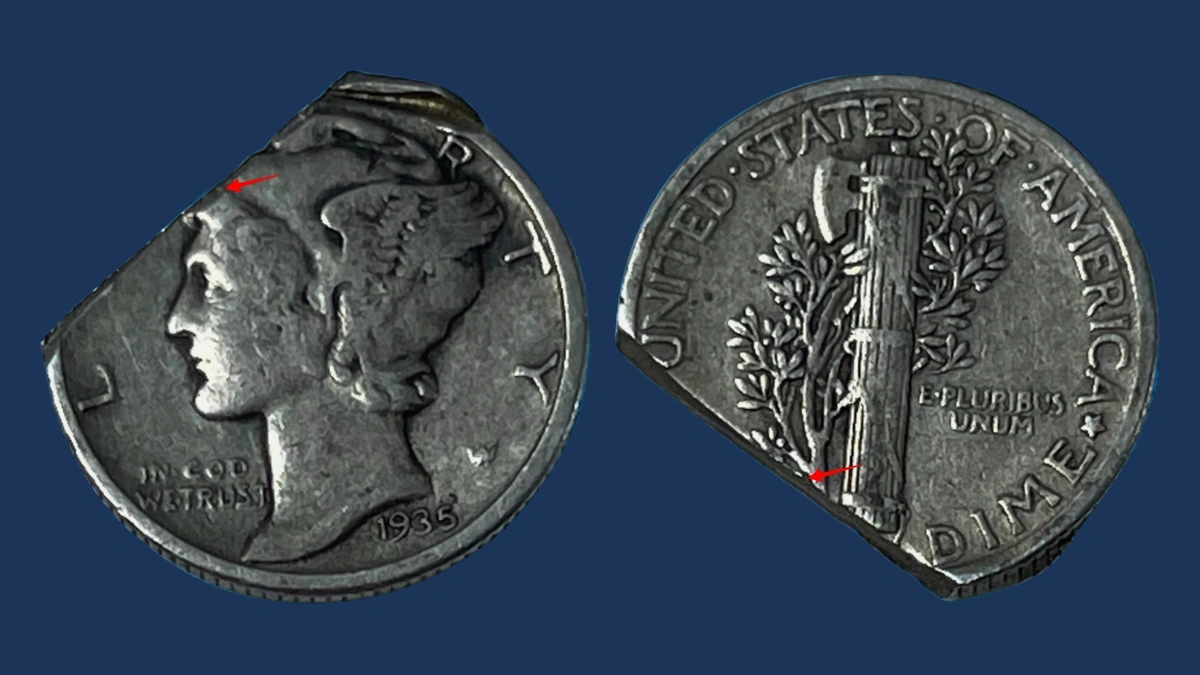
A bite missing from the edge can begin while round metal discs are being cut from a strip. Overlapping an earlier hole creates a curved gap, while crossing the strip’s edge can leave a straight one.
The incomplete disc then receives the dime design. This is a clipped planchet; planchet means the metal piece prepared for striking.
The 1935 report does not assign one mint to the category. Each coin needs its date and mint checked.
A smooth gap alone is not enough, because someone can also cut a finished coin after minting.
Estimated Value
Small circulated clips are estimated at $50–$125, while clear larger clips are estimated at $150–$300. The guide associates these with about 5–10% and 15–25% of the metal missing.
Those percentages describe missing metal, not an off-center picture. Remaining condition and a readable date affect the whole-coin comparison.
Especially attractive pieces may need higher comparisons. These estimates do not establish an actual sale of a specific 1935-D or 1935-S clip, or authenticate an edge merely from its size.
How to Identify
Weigh the dime first against the normal 2.50 grams. A missing section lowers weight, but wear also removes metal, so the reading is supporting evidence rather than proof.
Use calipers across intact parts against 17.9 mm. With a magnifier, inspect the surviving edge grooves and both ends of the gap.
Look for sharp tool lines or design cut off after striking. The remaining metal should show how the picture formed around an already incomplete disc.
The opposite rim may also be weak, though this is not equally visible on every example. Begin by checking the gap’s struck boundary and nearby grooves for a natural transition, rather than a later cut.
3. 1935 Mercury Dime Off-Center Strike (Estimated Up to $1,000)
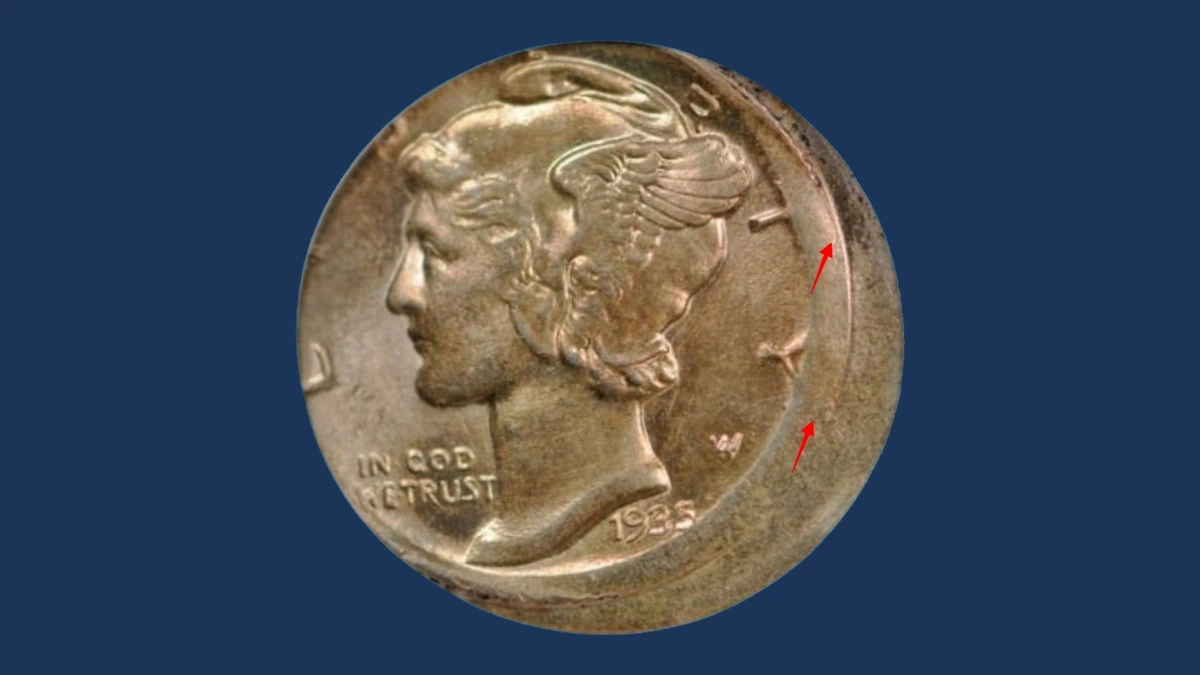
A plain crescent beside a shifted design can show that the dime’s metal disc sat off-center. Part of the stamping tools missed it, leaving some silver without a picture.
The year guide describes a roughly 10% off-center example with a visible date and Full Split Bands. That term describes clear separation in the horizontal bands on the back.
It does not explain why the coin was off-center. The description gives no certified grade or mintmark to attach to this example.
The shifted picture and unstruck margin should fit together on both faces.
Estimated Value
The roughly 10% example was listed at $395, an asking price rather than a completed sale. An estimated $200–$1,000 covers readable-date circulated pieces through stronger, attractive off-center examples.
The source places dramatic 25–50% examples at $500 or more. Losing the date can reduce the benefit of a larger shift.
The Full Bands description belongs to the advertised coin. It should not be assumed for every 1935 off-center dime or added as a universal premium.
How to Identify
Compare both faces to see whether the pictures share the same shift. If one face stays centered, a single stamping tool may have been out of place instead.
With a magnifier, inspect the plain crescent for original surface texture. Grinding away finished design can create false blank space with a different boundary.
Follow the edge grooves toward the area that missed normal contact with the retaining ring. Measure with calipers against the usual 17.9 mm outline and weigh against 2.50 grams.
Locate the complete date and any mintmark. For the quickest check, match the displaced design on both faces with the same intact, unstruck part of the coin.
4. 1935-S Mercury Dime Repunched Mintmark (Estimated Up to $1,500)
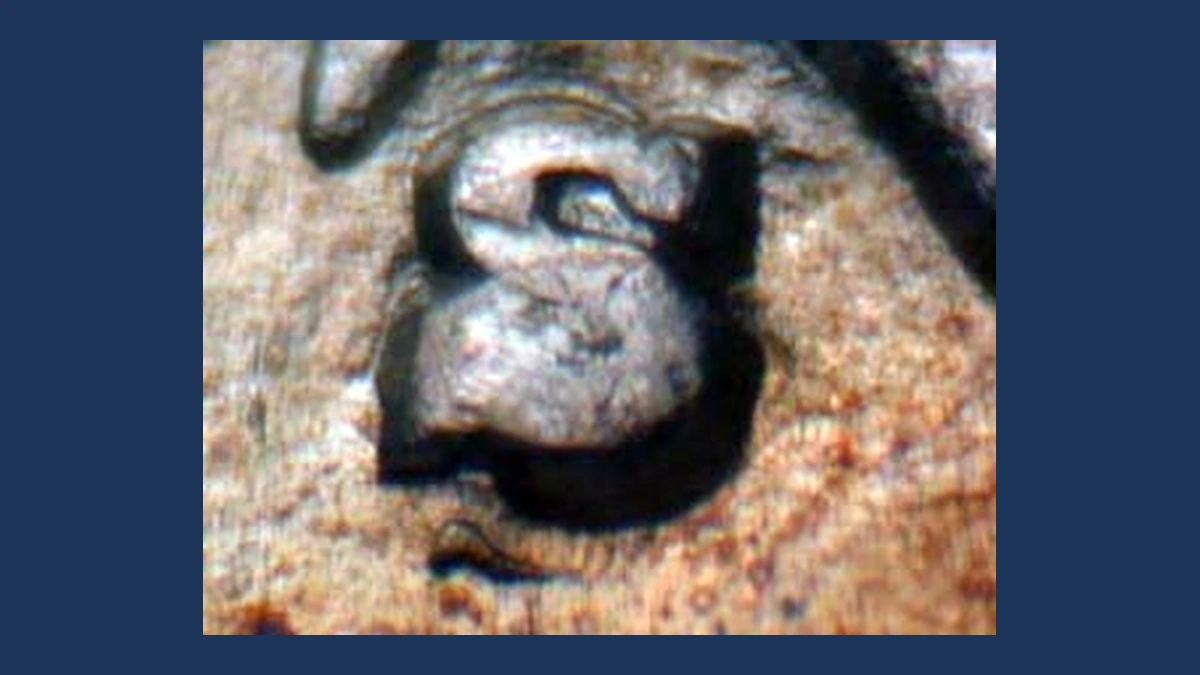
The S below the left side of the back’s bundle of rods may show part of another S. In 1935, the mintmark was punched by hand into the steel stamping tool.
A second punch in a slightly different place could leave traces of the earlier letter. Later coins would repeat that mark in one normal strike.
The 1935 guide reports an S/S variety called FS-501. That name concerns the mintmark alone.
A small raised lump beside S is not enough; the extra shape should follow part of another letter.
Estimated Value
Estimate $40–$1,500 for circulated through attractive unworn examples with a matching repunched S. The quality of the identification is essential to the comparison.
The year guide reports an MS67 sale at $1,320 at Heritage in October 2019. MS67 describes exceptional unworn preservation, and this is a source-reported result.
It is not a price for every doubled-looking S. Lower-grade coins generally belong lower in the range, especially when cleaning or damaged surfaces affect their appeal.
How to Identify
Use a magnifier on both loops of S and the space around it. Look for a second curved or upright part that follows the letter’s shape, rather than an isolated dot.
Compare the whole mark with a confirmed S/S image. No fixed direction is assigned here, so do not assume the extra outline must sit above or below it.
Check the full 1935 date and the nearby back design. Use a scale and calipers against 2.50 grams and 17.9 mm, or recorded measurements if the coin is sealed.
Inspect the edge grooves for damage. Start by matching the secondary S shape to the same part of the letter on a confirmed example.
5. 1935 Mercury Dime Doubled Die Obverse (Estimated Up to $3,600)
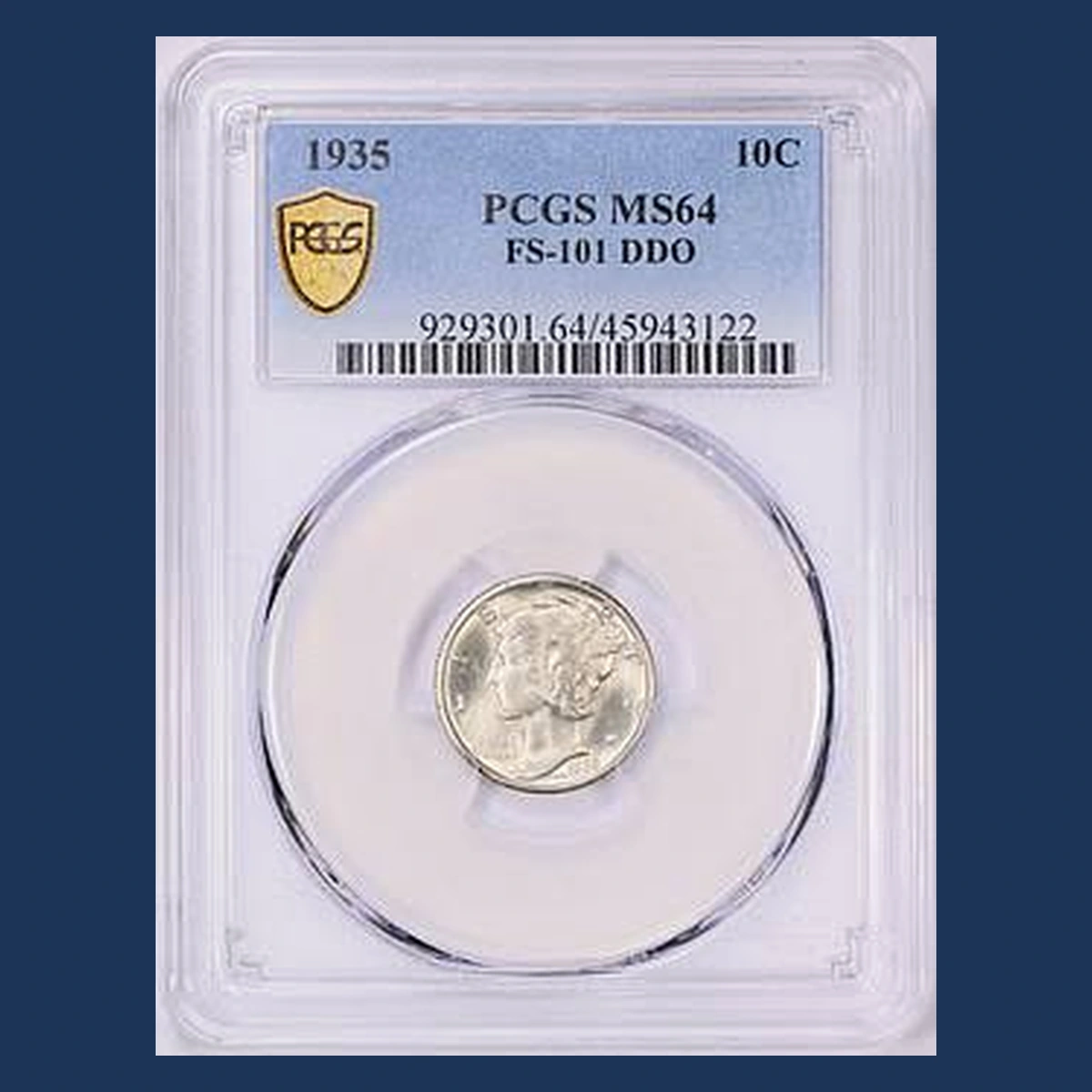
Letters on the front can show extra raised outlines, especially in LIBERTY and the motto. The Philadelphia FS-101 variety has a recorded PCGS MS64 example at GreatCollections.
The repeated detail was already in the die, the steel stamping tool. One blow from that tool could put both outlines onto a coin.
This is a doubled die, not a coin that received two full strikes. The guide also discusses date detail, but one thick digit alone does not identify it.
The complete pattern should match the lettering on a confirmed FS-101 example.
Estimated Value
A PCGS MS64 FS-101 sold for $2,306.25 at GreatCollections in July 2024. An estimated $2,000–$3,600 applies to identified unworn examples.
The upper range includes the guide’s allowance for Full Bands, meaning sharply separated back-side bands. That feature adds strike quality to the front-side variety.
A circulated coin needs a different comparison. Flat shelf-like doubling caused during striking should not be priced by borrowing this MS64 result or its upper Full Bands estimate.
How to Identify
Compare the front lettering with an FS-101 photograph under a magnifier. Look for rounded separation or small notches where doubled strokes meet, rather than a flattened shelf.
Check the back for Philadelphia’s absence of a mintmark. A D or S would require a different variety comparison.
Examine the date as part of the whole front pattern. One apparent extra digit cannot replace the lettering match.
Use a scale and calipers against the usual 2.50 grams and 17.9 mm, or recorded measurements for a sealed coin. Inspect the edge grooves, then make the quick check by matching repeated outlines in the same letters as the confirmed FS-101 example.
Conclusion
Estimated whole-coin values for these 1935 dime errors run from $30 to $3,600. The Philadelphia doubled die needs a lettering match, the S/S needs a mintmark match, and clips or shifted strikes need checks of the whole disc.
Keep the $395 off-center asking price separate from completed sales. Clear dates, original surfaces, and the correct mint identity make a comparison useful before a price is applied.