1928 Dime Error List with Pictures

A 1928-S dime struck off center sold for $1,086 in August 2020. NGC graded it MS65, meaning unworn with relatively few marks.
The four 1928 dime errors below span estimated values of $25–$1,500. They include peeling silver, an incomplete coin blank, a raised rim break, and a misplaced design.
Look at each feature’s boundary to see whether metal is missing, lifting, or simply in the wrong place.
1. 1928 Mercury Dime Silver-Alloy Lamination (Estimated Up to $200)
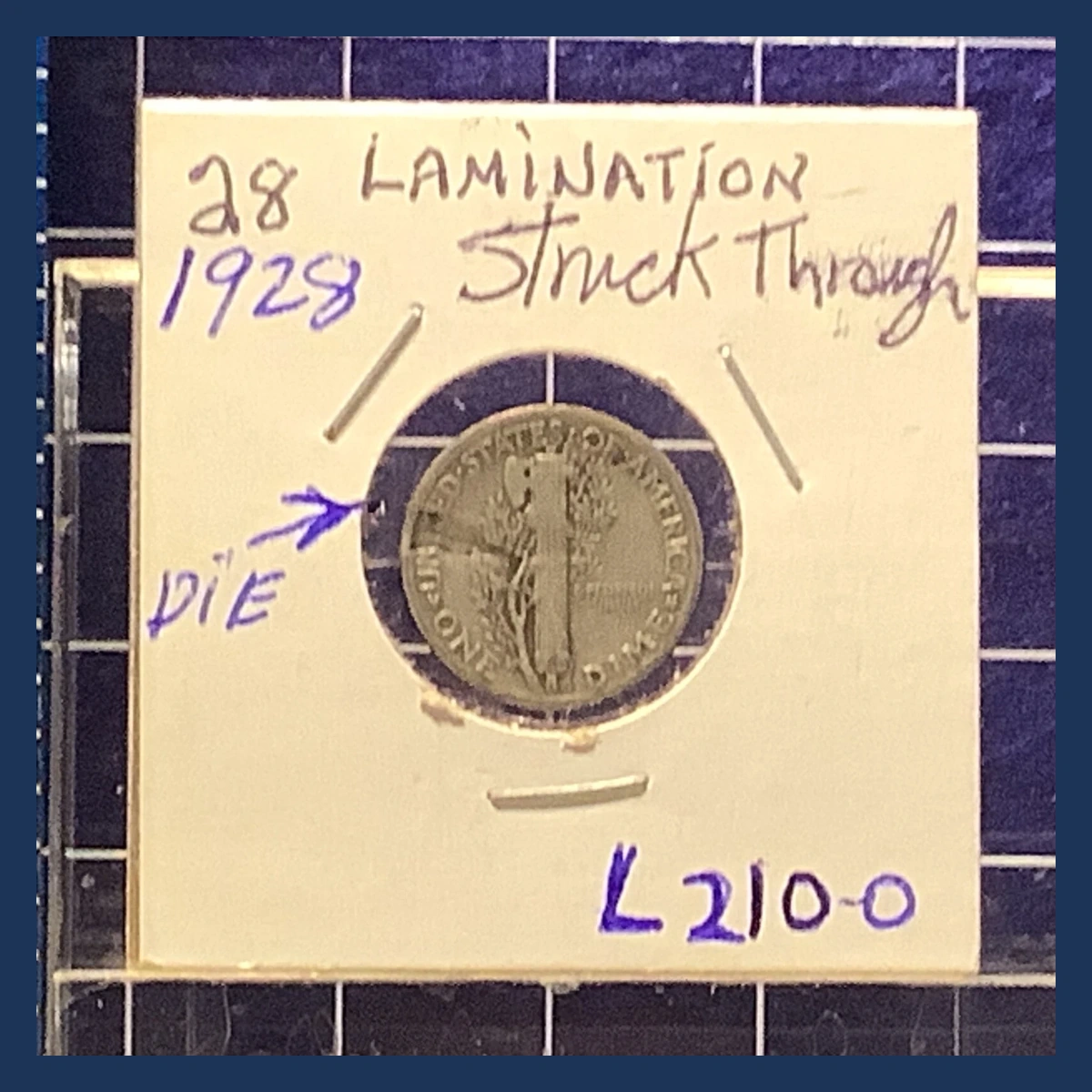
A thin flake can lift from the surface when the metal has a weakness inside it. This kind of separation is called lamination.
The 1928 dime is made from silver mixed with copper throughout. It does not have the separate outer layers and copper center found in modern dimes.
A missing patch therefore shows a break within the alloy, not the loss of a modern outer layer. An attached flap should be left alone.
Lamination is reported for 1928 without a particular mint or graded example being identified. Its exact position depends on the individual coin.
Estimated Value
The estimated range is $25–$200 for a worn 1928 dime with a clear original lamination. A small separation belongs near the lower end.
A larger attached flap or naturally missing area can attract more interest if the rest of the coin is appealing. This range is an estimate, not a recorded sale of one named example.
Pulling away a flap does not reliably increase value. It can remove the evidence that helps explain the error.
How to Identify
Leave the flap attached and inspect it with a 10× magnifier. Look for a thin sheet separating along a natural boundary in the metal.
Do not push anything beneath it. A photograph from a low angle can show the separation without risking further damage.
A gouge with raised edges or a patch of corrosion has a different appearance. Check both faces and the edge for signs of those problems.
When safely accessible, use a scale and calipers against the normal 2.50 g and 17.9 mm. The dime is 90% silver and has grooves around its edge.
A small attached flap may barely change weight. The more useful clue is a thin metal layer separating naturally from the surrounding coin surface.
2. 1928 Mercury Dime Clipped Planchet (Estimated Up to $350)
A coin blank can be incomplete before it receives a design. A cutting punch that overlaps an earlier hole leaves a curved gap.
A blank cut across the edge of the metal strip can instead lack a straighter section. Both shapes are reported in the 1928 error list.
That report does not establish a mint or clip percentage for a particular pictured coin. Those details belong to the individual example.
The important question is when the metal went missing. A true clip existed before striking, while a later cut removes part of an already finished coin.
Estimated Value
The estimated range is $50–$350, from worn examples through lower unworn grades. A 1943 Mercury dime with a 10% curved clip sold for $264 in July 2021.
NGC graded that comparison MS63 Full Bands. MS63 means unworn with noticeable marks, while Full Bands describes clearly separated bands in the back design.
That is a different-year coin. Its clip size and grade do not belong to the 1928 report, and smaller clips can bring less.
How to Identify
Look where each end of the gap meets the rim. A blank that was already incomplete can affect how metal flowed during striking.
A saw or file used later may leave tool marks across the finished edge. Use a 10× magnifier and compare views from both faces.
The rim opposite a clip may be weak. That supports a genuine clip but is not required on every example.
Use calipers across an intact part against 17.9 mm and compare weight with the original 2.50 g when safely accessible. Inspect the surviving edge grooves of this 90% silver dime.
The gap should fit a coin struck after its blank lost that section. Its endpoints and nearby rim tell more than missing weight by itself.
3. 1928 Mercury Dime Rim Cud (Estimated Up to $400)
A raised patch can replace normal design when a piece breaks from the edge of a die. The die is the steel tool that stamps coins.
Metal enters the opening left by the missing piece and forms a lump joined to the rim. Collectors call that a cud.
This kind of rim break is reported for 1928, without a specific side, mint, or position being given. A particular coin must supply those details.
A small bump inside the portrait is not automatically the same error. The connection to the rim is an essential part of a cud.
Estimated Value
The estimated range is $50–$400 for worn through unworn examples with a genuine rim cud. Small breaks with little visual impact sit near the lower end.
A larger raised patch replacing recognizable design can support a stronger price, especially on an attractive coin. No specific 1928 auction sale is assigned to this report.
A tiny bump inside the design should not receive the same estimate just because a seller calls it a cud.
How to Identify
Start at the rim and follow the raised area inward with a 10× magnifier. Check whether the ordinary design disappears into the same mass of metal.
Move the light to examine the boundary. A dent with a pushed-up edge, added solder, or impact damage can create a lump for different reasons.
The coin normally weighs 2.50 g and measures 17.9 mm, with 90% silver and grooves around the edge. Use a scale and calipers when safely accessible.
A cud moves the coin’s existing metal instead of attaching another piece. Check the edge and surface for evidence of added material.
The useful combination is a raised patch joined to the rim, with the nearby struck design ending naturally at its boundary.
4. 1928 Mercury Dime Off-Center Strike (Estimated Up to $1,500)
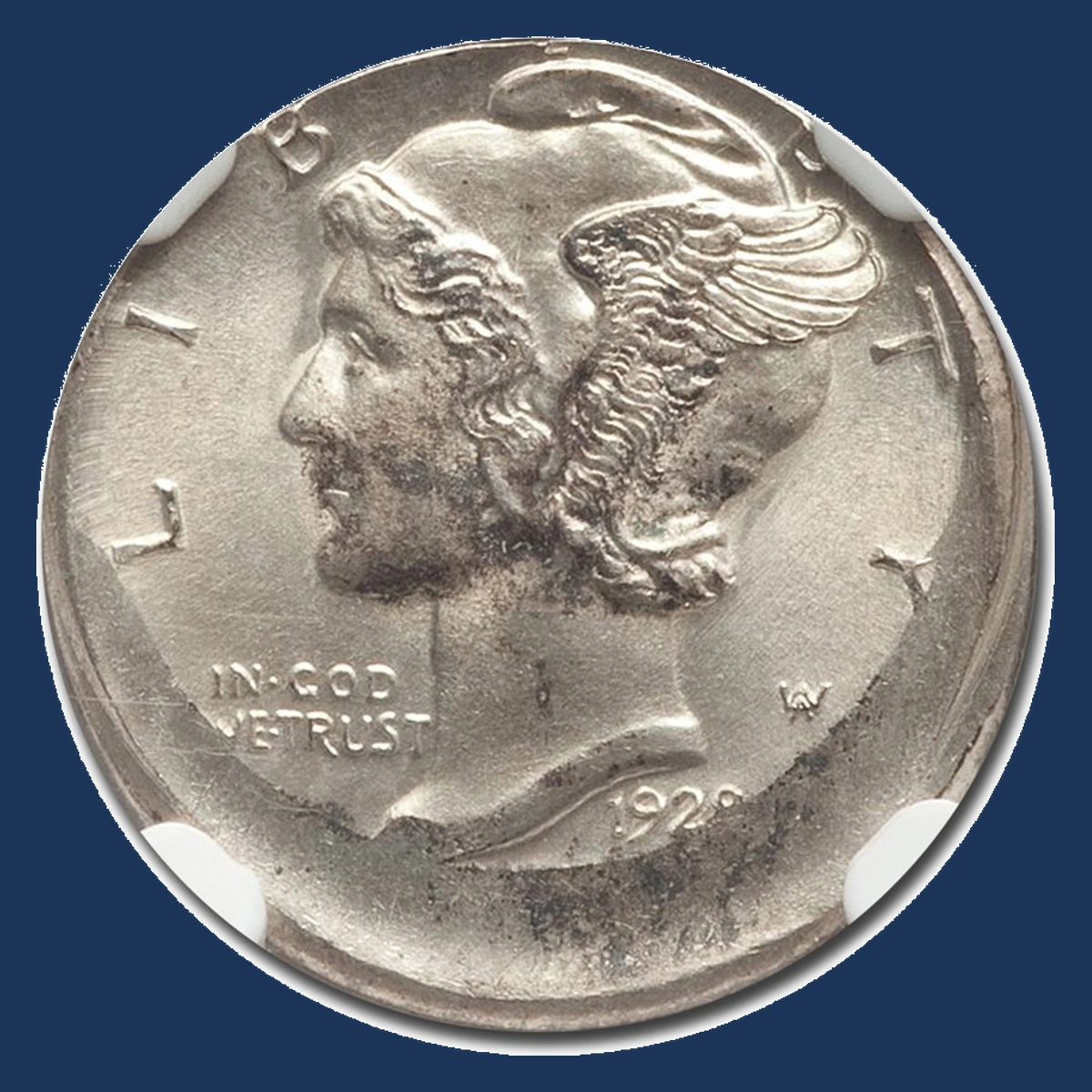
A blank that misses its proper position can receive only part of the design. The struck picture ends beside an area of metal that stayed blank.
The recorded 1928-S NGC MS65 example sold in 2020. A separate earlier coin was described as 15% off center and graded MS63 Full Bands.
That earlier coin kept enough of its displaced date to identify the year. Its percentage and band detail should not be transferred to the MS65 example.
Full Bands describes separated horizontal bands on the bundle shown on the back. It is a detail of the strike, not another error.
Estimated Value
The NGC MS65 example brought $1,086 on August 12, 2020. The estimated range is $150–$1,500, covering worn examples through attractive unworn ones.
A visible date and mint letter help buyers identify the coin. Surface quality and the amount of displacement also affect its appeal.
A larger blank area does not automatically mean a higher price. A worn coin with a hard-to-read date should not inherit the MS65 result solely because it is farther off center.
How to Identify
Keep the entire outline in your photograph, including the blank crescent. Cropping that area away hides the relationship between the design and unused metal.
Use a 10× magnifier to check which outside letters or picture details are cut off. Confirm how much of 1928 and the S on the back remain.
Examine the horizontal bands separately if Full Bands is claimed. A wide border or a rotated photograph does not itself demonstrate an off-center strike.
For an accessible coin, use a scale and calipers against 2.50 g and 17.9 mm. Check the edge grooves of the 90% silver dime for later cutting or flattening.
The design must be interrupted beside genuine unstruck metal on the same coin, rather than merely sitting unevenly inside a broad rim.
Conclusion
Estimated values for these 1928 errors range from $25 to $1,500. The $1,086 off-center sale belongs to one graded 1928-S coin, while the other reports still need their own individual comparisons.
Check the boundaries carefully: a lifting flap, missing section, raised rim patch, and blank crescent have different causes. Clear photographs of both faces and the edge help show which one is actually present.