1927 Dime Error List with Pictures

A recognized 1942/1 Mercury dime sold for $480 in August 2025. That other-year sale shows why identifying an extra date shape matters; it does not confirm the reported 1927/6-S.
These 1927 dime errors have estimated and comparison ranges of $20–$6,000. Visible cracks and misplaced strikes need different checks from tiny extra letters.
Read on to see where to look and which comparisons fit each reported feature.
1. 1927 Mercury Dime Die Crack (Estimated Up to $200)
A fine raised line can cross a dime when its stamping tool begins to crack. The steel tool is called a die.
Silver enters the opening during striking and leaves a narrow ridge on the finished coin. A later scratch usually cuts into the surface instead.
The year guide reports cracks on 1927 dimes without identifying one mint or fixed route. The actual coin must show where its line runs.
A thin ridge is different from a broad raised lump near the rim. That larger feature needs evidence that a piece of the tool broke away.
Estimated Value
Estimate $20–$200 for worn through slightly worn coins with clear genuine cracks. A noticeable line on attractive surfaces belongs higher than a faint line among many scratches.
This is an estimate, not a recorded sale of a named 1927 crack. It describes modest examples rather than every possible grade.
An exceptionally preserved 1927-D or 1927-S can cost more because of its mint and condition. That higher whole-coin value does not mean the crack itself caused the price.
How to Identify
Move a lamp from one side to the other while viewing the line with a 10× magnifier. A shadow alone cannot tell you whether the metal is raised or sunken.
A scratch may push up metal beside a cut. Look at the center of the line as well as its edges.
Keep enough of Liberty or the back design in the photograph to show the line’s complete route. Inspect the grooved edge for squeezing or impacts.
Use a scale and calipers when safely accessible against 2.50 grams and 17.9 mm. Those measurements support the coin’s identity but do not identify the line.
A continuous ridge joined to the original struck surface supports a crack better than a channel with rough raised lips.
2. Reported 1927 Mercury Dime Repunched Mintmark (Estimated Up to $500)
Part of an earlier D or S can remain beside the final mint letter. During this period, workers punched the letter into the stamping tool by hand.
Placing the punch in slightly different positions could leave pieces of both impressions. Coins made with that tool would repeat the same extra shape.
The 1927 value guide reports both D and S examples. It gives no confirmed variety number or direction for either.
An extra loop therefore needs to fit the shape of the main letter. A bump, scratch, or distorted edge can look similar without representing another punch.
Estimated Value
The reporting website gives a $75–$500 guide range for clear repunched mintmarks. These are estimates, not documented sales of named 1927 varieties.
Use the range for a correctly identified earlier letter that remains visible beside the final D or S. A seller’s label alone does not establish that feature.
Stronger separation and better surfaces support higher values. Ordinary thickness or damage to a letter does not earn the same added value simply because it looks unusual.
How to Identify
Find D or S on the back before inspecting the extra outline. A Philadelphia coin without either letter cannot match this reported feature.
Use a 10× magnifier to trace a curve or small end stroke that could belong to the same letter. Compare with a normal mintmark under matching light.
Keep the complete letter in every close-up. The report gives no fixed direction, so do not name one from an indistinct shadow.
A scale and calipers can check a safely accessible coin against 2.50 grams and 17.9 mm. Inspect its grooved edge and use existing measurements for sealed examples.
A recognizable earlier letter matching a documented variety is stronger evidence than an isolated lump beside D or S.
3. 1927 Mercury Dime Off-Center Strike (Estimated Up to $1,500)
A bare crescent beside the picture can show where metal missed the stamping tools. On the opposite side, some of the intended design runs beyond the coin’s edge.
The blank, or metal disc, entered the press out of position. Both faces should show the effects of that same misplaced strike.
Coin Identifier’s year guide reports this category without identifying a certified example’s mint. The coin itself must supply that detail.
A dramatic shift may remove the date needed to identify the year. Keep the readable digits with the full outline rather than relying on a seller’s description.
Estimated Value
Genuine examples with a readable date have an estimated $150–$1,500 range, from modest worn shifts through stronger well-preserved ones. A 1926 guide’s $150–$400 worn-coin range offers a neighboring-year comparison.
That comparison is not a 1927 sale. The remaining date, mint letter, surface quality, and amount of missing design all affect the value.
A large blank area does not establish the year. An unreadable date cannot receive a 1927-specific price merely because an owner believes that is what it originally said.
How to Identify
Start with a scale reading against the normal 2.50 grams. An off-center strike usually keeps the original blank, while cutting or grinding removes metal.
Use calipers across several spans against the normal 17.9 mm. The misplaced strike can distort the final outline.
Inspect both faces with a 10× magnifier. They should show corresponding bare metal and missing design; a centered back with only the front shifted suggests a moved tool.
Follow the edge grooves into the area that missed the retaining ring. File marks or a scraped surface point toward later damage.
The strongest combination is original blank metal beside matching design loss on both faces, with the readable 1927 date still part of that same coin.
4. Reported 1927/6-S Mercury Dime Date Anomaly (Comparison Range Up to $2,000)
An extra shape beneath the final 7 led a year-value website to use the name 1927/6-S. The supplied evidence does not establish it as a recognized grading-service variety.
An overdate means a stamping tool carries parts of two different dates. A single extra curve does not prove that an earlier 6 is present.
Damage or another tool flaw can also change the area around a numeral. Compare the complete shape before giving it a name.
The explanation must also fit how Mercury dime tools were made. An account about individually recutting digits does not establish this reported example.
Estimated Value
A $400–$2,000 comparison range applies to recognized worn Mercury overdates, not an established 1927/6-S market. PCGS records $480 in August 2025 for a 1942/1 graded NGC XF Details.
XF indicates strong detail with wear; Details notes a condition problem. That sale belongs to another date and its own condition.
The reported 1927 shape needs a confirmed identification before using an overdate comparison. A curved blemish alone does not qualify for the same added value.
How to Identify
Place a normal 1927-S date beside the candidate at the same size and angle. Use a 10× magnifier to compare the lower part of the final 7.
Look for a recognizable part of 6 rather than treating every curve as an old numeral. Examine surrounding metal for scratches or added cuts.
Photograph the full back showing S and the full front connecting the detail to 1927. Keep those views together for a specialist’s examination.
A scale and calipers check safely accessible coins against 2.50 grams and 17.9 mm; inspect the grooved edge too. Correct measurements cannot authenticate an overdate.
The extra numeral shape must match a confirmed example before the website’s 1927/6-S name becomes a reliable identification.
5. Reported 1927 Mercury Dime Doubled Die Obverse (Comparison Range Up to $6,000)
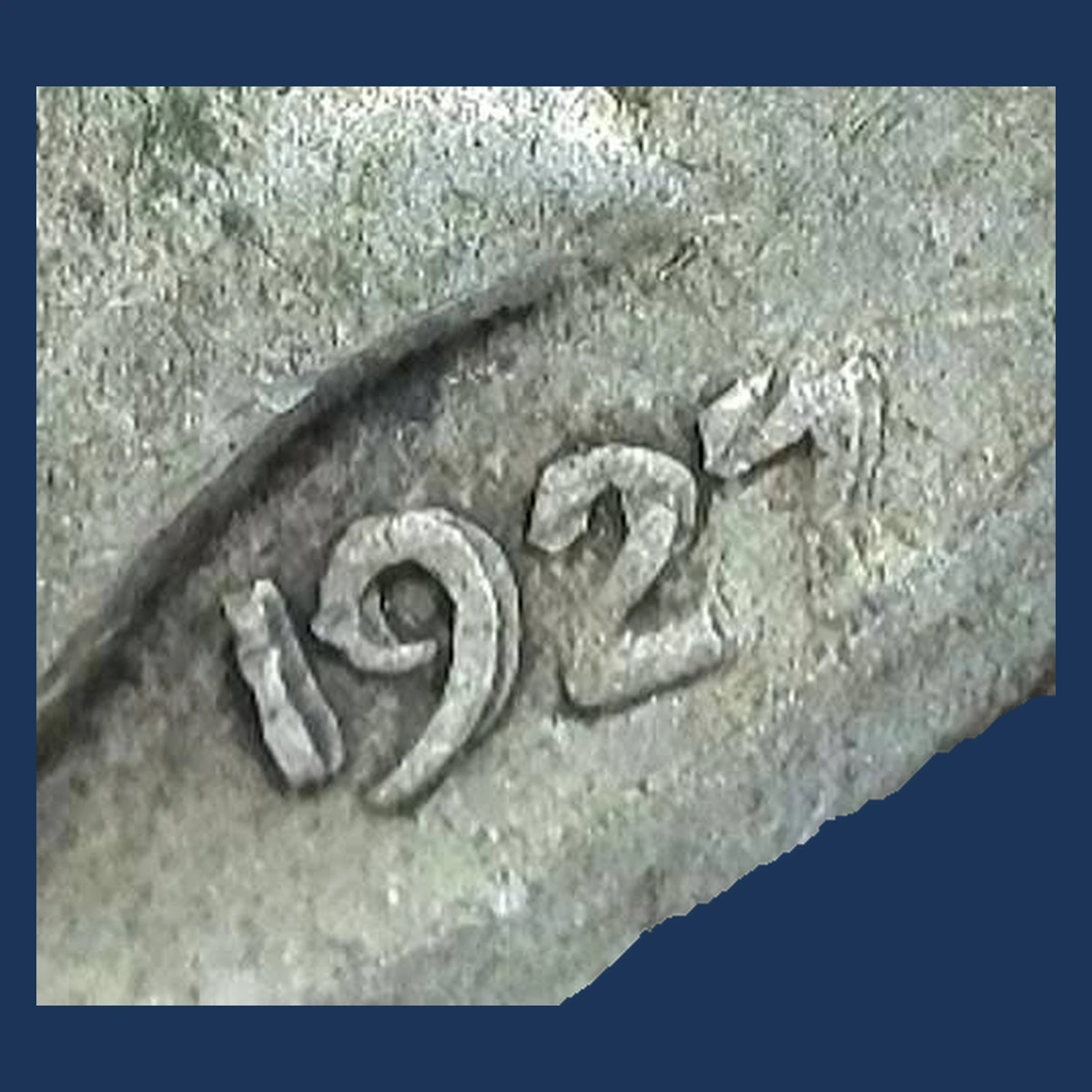
The 1927 value website directs readers to the date and front lettering for doubled details. It does not identify a confirmed mint or named variety.
A doubled die carries extra design outlines in the steel stamping tool. Each coin it makes can copy those shapes in a single strike.
The added outlines may be rounded, with small splits at corners. Movement during striking can instead leave low, flat shelves beside the normal letters.
Thick lettering alone is not enough. A clear repeated pattern needs to match an established example before it receives a specific variety name.
Estimated Value
Use $200–$6,000 as a comparison estimate for confirmed Mercury doubled dies, from modest worn varieties to scarce, prominent examples. Reported 2025 marketplace results for the recognized 1926 FS-101 include $2,495 in G6 and $2,972 in VG8.
Both grades describe heavy wear with readable design. The amounts belong to the neighboring year.
They neither identify nor price a particular 1927 tool. A 1927 candidate needs a matching known pattern and comparable strength before receiving a similar variety premium.
How to Identify
Compare the date and front letters with an ordinary 1927 dime under matching light. A 10× magnifier can reveal small split corners and rounded extra outlines.
Follow the pattern across more than one detail. Random marks on separate digits do not explain a repeated design.
Flat shelves that narrow the main stroke suggest movement during striking. Broad swollen edges may come from worn stamping tools instead.
Keep the back mint letter and grooved edge in the record. Check safely accessible examples with a scale and calipers against 2.50 grams and 17.9 mm.
Rounded extra outlines matching a documented tool provide the useful identification; a large photograph of thick lettering by itself does not.
Conclusion
Estimated and comparison ranges span $20–$6,000 across these reports. Start with what the metal shows: a raised ridge, an earlier letter, a bare crescent, or a repeated outline.
Keep the date and mint letter beside every close-up. The reported 1927/6-S needs a confirmed match, and prices from recognized other-year varieties should stay attached to the coins that actually produced those results.