1870 Dime Error List with Pictures

Two tiny number tops hide near the rim of an 1870-S dime that sold for $8,225 in 2015. They sit below the main date, where a quick glance can miss them.
These 1870 dime errors have estimated whole-coin values of $40–$15,000. The list also includes cracks, extra letter outlines, and flaws in the metal itself.
Read on to find each feature and see why the mint, condition, and coin type affect its price.
1. 1870 Liberty Seated Dime Reverse Doubling (Estimated Up to $2,500)
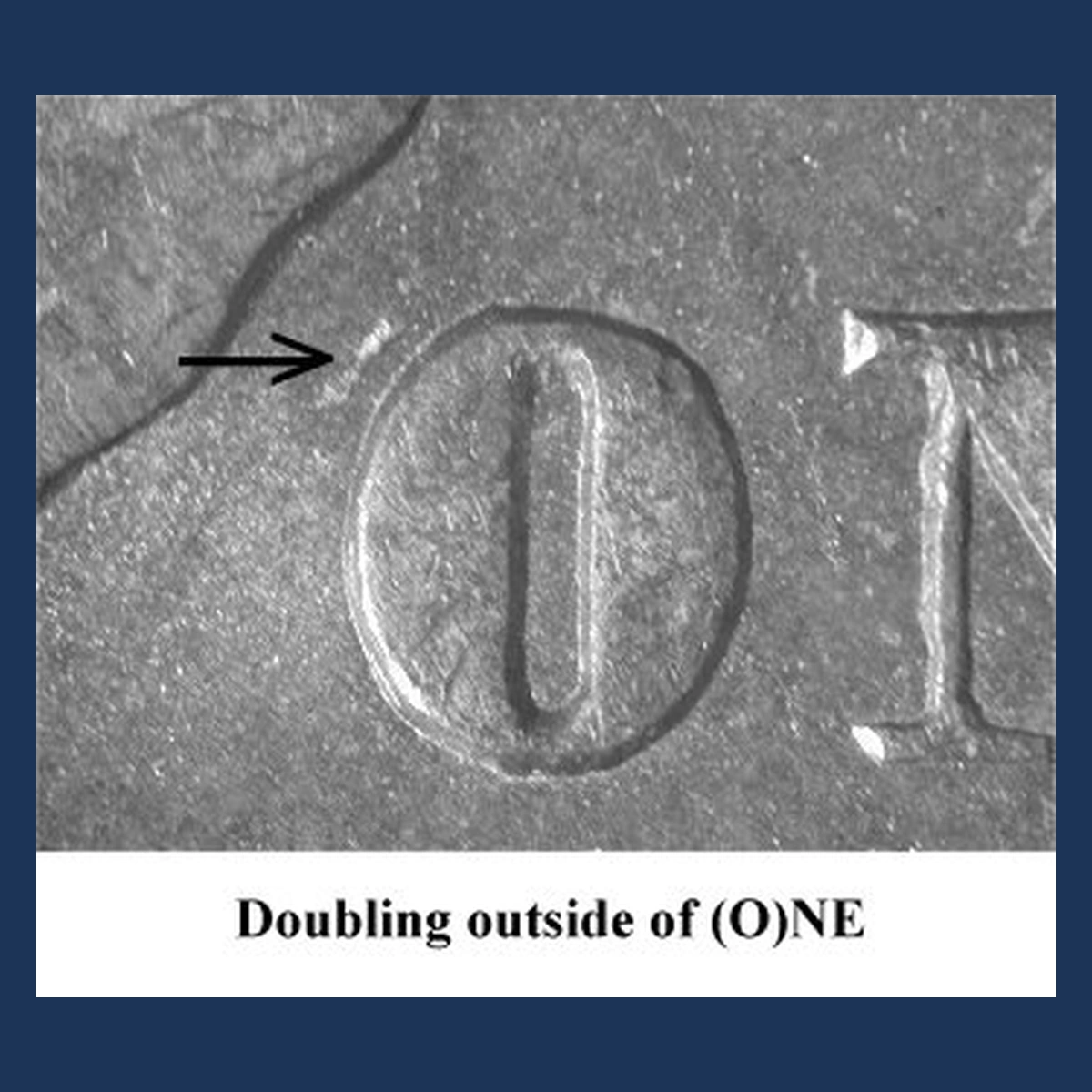
The O in ONE and D in DIME can show extra outlines on the variety called F-105. These two letters are the places to compare.
The catalog reports doubling but does not establish exactly how it formed. A die is the steel tool that stamps a coin.
If that tool carries a doubled design, it can leave rounded extra shapes on each coin. Movement during the actual strike can instead leave a low, flat shelf beside a letter.
That difference matters. Seeing two edges does not automatically make this coin a rare doubled-die variety.
Estimated Value
Estimate $40–$2,500 for worn through well-preserved examples with the reported letter outlines. Much of the value comes from the ordinary 1870 dime and its condition.
GreatCollections records $2,392.88 for a PCGS MS65 CAC example, a coin without circulation wear and with few marks. That was a general condition comparison, not a separately priced F-105 doubling sale.
A flat shelf caused during striking does not justify the premium of a rare doubled die.
How to Identify
Keep the coin still while moving a lamp across O and D. A 10× magnifier will help reveal whether each extra edge is rounded and raised or low and flat.
Compare both letters with clear F-105 photographs. One bright edge alone can be caused by glare or wear on a normal letter.
A shelf that seems to reduce the width of the main letter differs from another rounded design outline. The catalog’s general word “doubling” does not settle that distinction.
The dime normally weighs about 2.49 g and measures 17.90 mm, with a grooved edge. After checking those with a scale and calipers, return to the useful clue: the shape and height of both extra letter edges.
2. 1870 Liberty Seated Dime Lamination (Estimated Up to $2,800)
A thin flap or long split can reveal metal separating within the coin. This is called a lamination.
The silver alloy did not hold together properly, allowing a layer to lift or break away. The problem lies in the coin’s metal, rather than in the design on a stamping tool.
The 1870 year guide reports this error type without naming one example’s mint or exact location. A small peeling patch should therefore be described by what is visible.
It is not the same as a complete split through the blank that leaves half the coin missing.
Estimated Value
A genuine lamination has an estimated range of $60–$2,800, from worn coins with small flaws through attractive unworn examples. The size of the split and whether metal remains attached both matter.
An 1893-O Barber dime with a lamination sold for $381.88 at Heritage in December 2014. Its NGC MS63 grade means no circulation wear, with noticeable marks.
That coin uses the same silver alloy but a different design and year. It is a comparison, not an 1870 sale.
How to Identify
Leave any loose flap alone. Lifting it can break off metal and destroy the shape that helps explain the flaw.
Use side lighting and a 10× magnifier to inspect the split. Look for thin layers continuing into the opening, rather than a gouge with silver pushed up beside it.
A scale may show nearly the normal 2.49 g if the flap remains attached. Missing metal can lower the weight, but wear also does that.
Check the 17.90 mm diameter with calipers and follow the affected area toward the grooved edge. Scattered pits suggest corrosion instead of a clean separation between layers.
The immediate clue is a thin layer lifting or separating naturally from the metal beneath it.
3. 1870 Liberty Seated Dime Repunched Date (Estimated Up to $3,000)
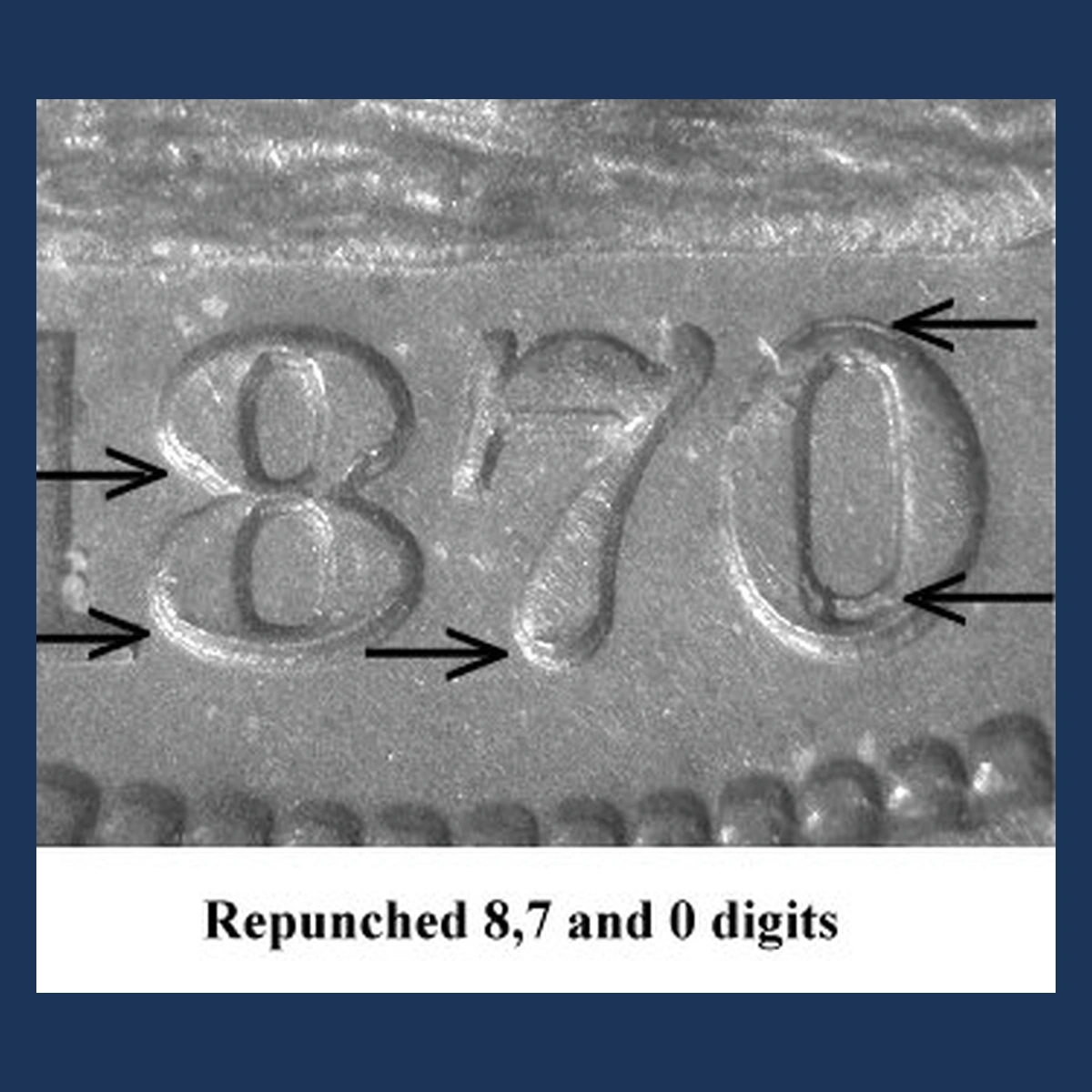
Inside the lower opening of 0, a small extra stroke gives this date variety away. Additional pieces involve the 8 and 7.
A worker punched the date into the stamping tool more than once, with the punch in slightly different positions. Parts of the earlier numbers remained beside the final date.
Collectors call this variety F-104. The extra strokes belong to the date itself, unlike misplaced digits hidden farther down among the rim teeth.
The finished coin did not need two strikes to receive these marks. One impression from the already altered tool was enough.
Estimated Value
Allow an estimated $75–$3,000 for circulated through well-preserved F-104 examples. The earlier number pieces need to remain clear enough to recognize.
An NGC MS62 F-104 brought an indexed $336 at Heritage on February 6, 2022. MS62 means no circulation wear but fairly noticeable marks.
That is an actual sale of the date variety, not the top of its possible range. Cleaner surfaces, attractive color, and sharper date details can support a higher price for another coin.
How to Identify
Start inside the bottom of 0, where the Fortin variety list places the clearest extra stroke. Use a 10× magnifier, then work back across 7 and 8.
The mark should be raised metal, not a dark cut or a reflection that shifts with the light. Compare the complete date and nearby rim teeth so you do not mistake a stray crack for a number.
Philadelphia examples have no mint letter on the back. They retain the normal grooved edge, roughly 17.90 mm diameter, and original weight near 2.49 g.
A scale and calipers can check the coin’s size, but the small raised stroke inside the lower opening of 0 is the fastest place to look.
4. 1870 Liberty Seated Dime Off-Center Strike (Estimated Up to $4,000)
A broad blank crescent can make an off-center coin recognizable without a magnifier. The design has shifted to one side and partly missed the metal.
The blank was not centered between the stamping tools. Both faces can show the same misplaced strike.
This type appears in the 1870 year guide, but the report does not identify one coin’s mint or percentage of shift. Those details must come from the example being examined.
An uneven rim alone is different. A tool moving on one side can create a lopsided border without leaving the expected blank crescent on both faces.
Estimated Value
Estimate $500–$4,000 for genuine examples with a readable date. The range extends from worn coins with modest shifts to better-preserved pieces with more dramatic displacement.
An 1864 dime struck 10% off center sold for $720 at Heritage in June 2025. Its NGC Fair 2 grade describes very heavy wear.
That is a different-year Seated dime comparison. The amount of shift, remaining detail, damage, and readable 1870 date all affect the price of a candidate from this year.
How to Identify
Match the blank area on the front with the one on the back. Both designs should show a shift that agrees with the blank being in the wrong place.
Read 1870 directly instead of guessing a missing digit. A large shift can remove the date needed to identify the year.
Measure the outline with calipers against a normal 17.90 mm dime. A scale checks against about 2.49 g, since shifting the strike does not itself remove metal.
Under a 10× magnifier, inspect the boundary between design and blank silver, then the remaining edge grooves. Filing or polishing can leave abrasive marks.
Look first for matching untouched margins on both faces, paired with design lost beyond the opposite edge.
5. 1870 Liberty Seated Dime Die Cracks (Estimated Up to $7,500)
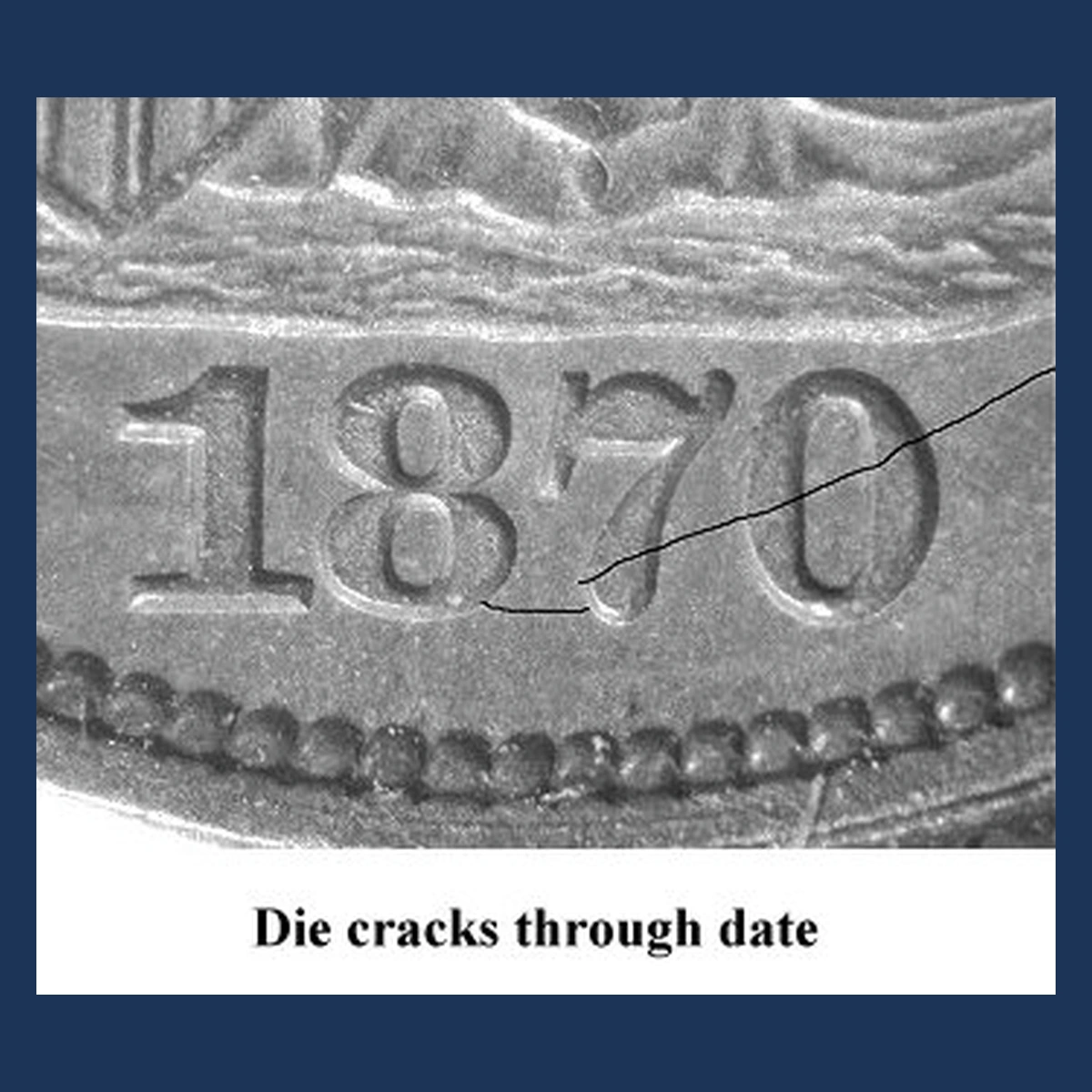
Thin raised lines can cross the ribbon ends on the back of an 1870 dime. The feature is recorded on both ordinary circulation coins and proofs, which are specially made collector coins.
The proof varieties called F-101 and F-103 show this route, as does the ordinary F-101a. Other tools developed different cracks.
F-104 has cracking in the wreath, while F-106 has a crack through the date. These positions identify separate examples of the same process.
When steel cracks, silver enters the opening during striking. It leaves a raised line on the coin, not a cut into its surface.
Estimated Value
Estimated prices are $40–$3,000 for ordinary circulation coins and $500–$7,500 for proofs. Condition and original surfaces account for much of the difference.
A PR67 proof brought $7,200 at Stack’s Bowers in June 2024, according to PCGS CoinFacts. That is a very well-preserved collector coin.
Its sale is not a measured premium for a crack. A small raised line usually matters less to price than exceptional surfaces and proof quality.
How to Identify
Do not call a coin a proof just because one patch shines. Establish its overall collector finish and matching variety before comparing it with proof prices.
Both coin types use the normal 2.49 g weight, 17.90 mm diameter, and grooved edge. A scale and calipers therefore cannot distinguish them by size.
For the ribbon examples, trace the lower reverse under a 10× magnifier with light from the side. For other listed varieties, inspect the wreath or date instead.
A scratch lies below the surface and may show pushed metal alongside it. Follow the line where it crosses letters or other details.
The clear sign is a continuous raised route matching the known ribbon, wreath, or date crack.
6. 1870-S Liberty Seated Dime Misplaced Date (Estimated Up to $15,000)
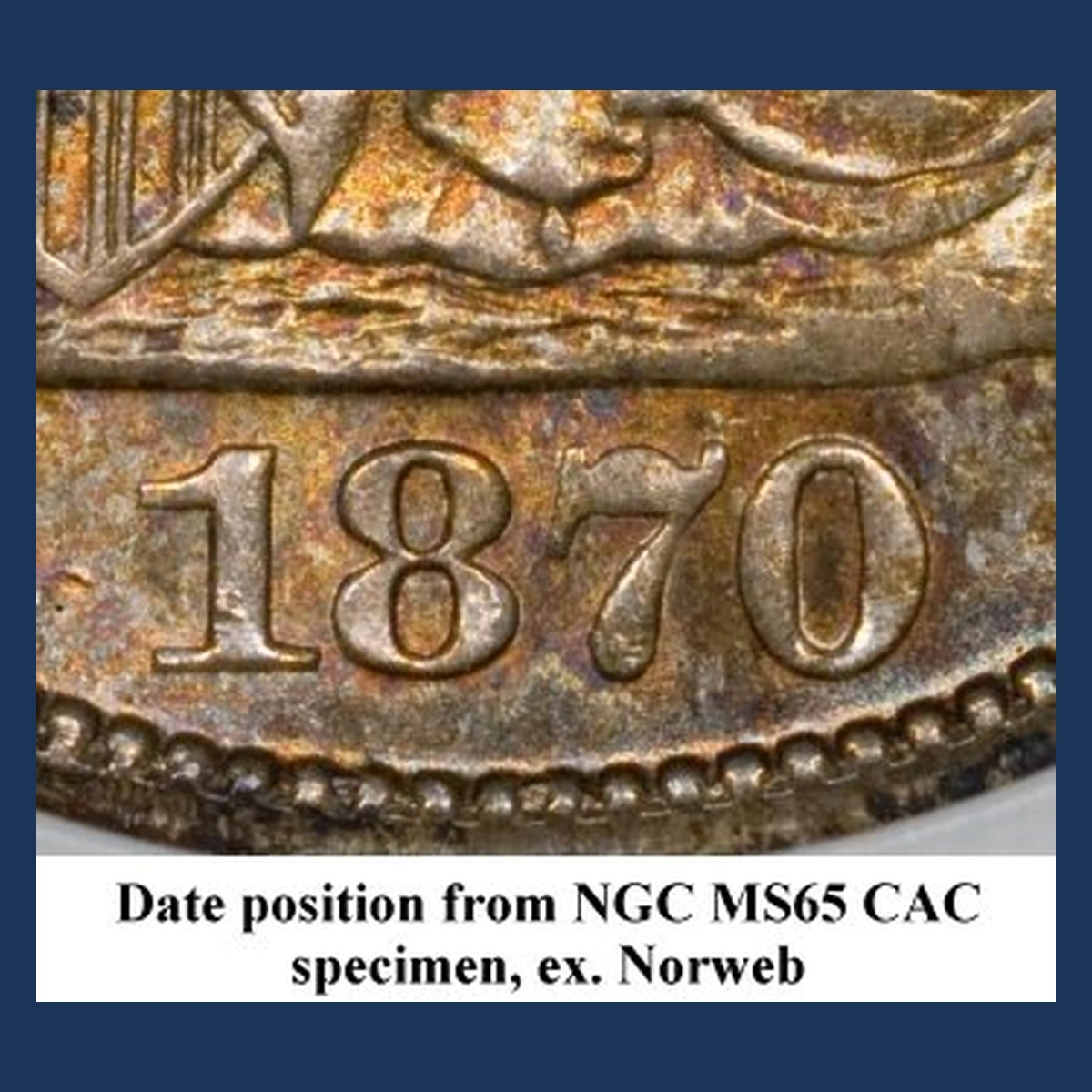
The extra number tops sit below the main date, not beside its digits. On the San Francisco F-101 variety, pieces of 8 and 7 appear among the small rim teeth.
These came from date punches placed too low in the stamping tool. High-resolution photographs added to the specialist guide in 2013 showed the small shapes clearly.
The coin also has a small S mintmark that can be weak. The words on the back may look softly struck too.
Those weak areas are useful comparisons, but they do not mean the mint letter was missing from the tool.
Estimated Value
Estimate $100–$15,000 from heavily worn examples through especially attractive coins without circulation wear. The scarce date and condition account for much of the price.
A PCGS MS65 CAC F-101 sold for $8,225 at Heritage in October 2015. MS65 indicates no circulation wear and few marks.
The specialist guide links pricing to this low-mintage date. The full sale amount should therefore not be described as an extra charge just for the misplaced number pieces.
How to Identify
Inspect the row of rim teeth beneath the date with a 10× magnifier. Two small number tops interrupt the repeating pattern.
Compare the curves and angles with a clear F-101 photograph. A damaged tooth can make an odd bump without forming part of an 8 or 7.
Now find the small S on the back. It can be weak along with the nearby words, so an inconspicuous letter does not automatically mean Philadelphia.
A loose dime can be measured against 17.90 mm and 2.49 g using calipers and a scale. Check the grooved edge for alteration as well.
The quickest useful match is the pair of recognizable 8 and 7 tops among the teeth directly below the date.
Conclusion
Estimated prices for these 1870 dimes range from $40 to $15,000. Look inside the date for repunching, but below it for the San Francisco coin’s misplaced numbers.
Raised cracks, peeling metal, and a blank crescent need different checks. Keep the mint and proof status with every comparison, since the condition and rarity of the entire coin can matter far more than the size of its unusual mark.