1923 Dime Error List with Pictures

A 1923-S dime struck 10% off-center sold for $276 in March 2021, graded NGC VF35. A separate reported coin is much more dramatic, with a 70% shift.
These 1923 Mercury dime errors have estimated whole-coin values of $20–$2,500. They range from small raised lines to peeling silver, missing edges, and expanded or shifted strikes.
Read on to compare the metal and the picture before choosing the right price range.
1. 1923 Mercury Dime Die Crack (Estimated Up to $150)
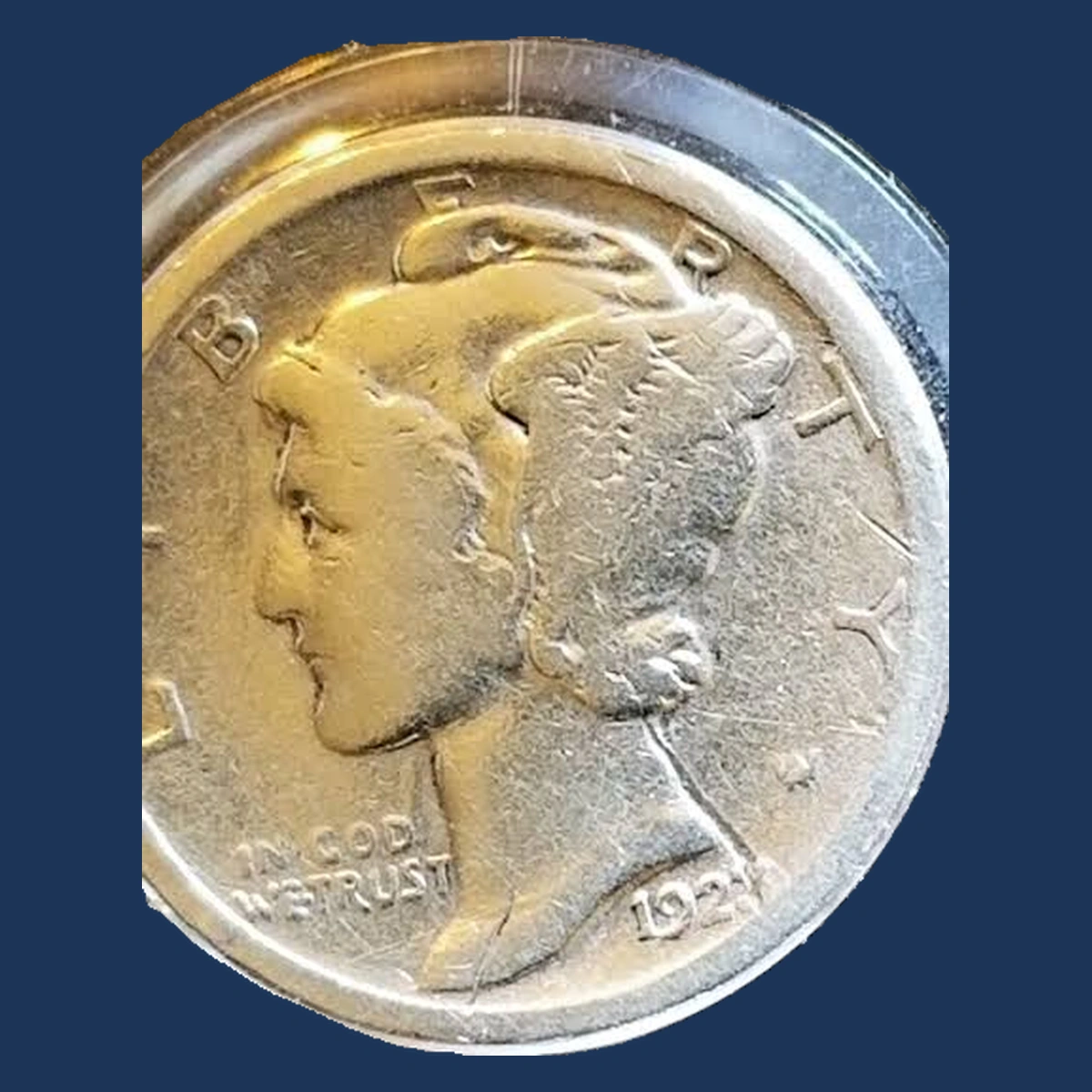
A thin raised line can cross the surface without cutting into it. The line forms when a die, the steel stamping tool, cracks and silver enters the opening during a strike.
The coin then carries a ridge where the original design had no line. It may be small and easy to overlook.
A March 2012 coin-show report mentions a 1923 dime with a die crack, without identifying its mint or the crack’s route. No particular eye or back-side line is established.
The actual candidate must show a raised feature, rather than merely a scratch in an interesting place.
Estimated Value
Use an estimated $20–$150 for ordinary circulated coins with a visible crack. This whole-coin range draws on minor Mercury dime tool defects.
The 2012 show report gives no transaction amount. The range is therefore an estimate, not a recorded sale of that coin.
A small line usually adds only modest interest. A scarce, well-preserved 1923-S may cost more for its mint and condition, without the crack being responsible for the higher price.
How to Identify
Use a magnifier and low-angle light to see whether the line rises above the surface. A scratch cuts down and may push silver up along its edges.
Follow the line across nearby picture details rather than judging one bright spot. A loose flap or a thin opening in a layer of silver points toward peeling instead.
Check the complete date and mintmark area, since the report supplies no fixed route or mint. Inspect the edge grooves for unrelated damage.
Use a scale and calipers against 2.50 grams and 17.9 mm. For a quick first test, trace a continuous raised ridge rather than a sunken cut or lifted metal layer.
2. 1923 Mercury Dime Lamination (Estimated Up to $250)
A thin flap may lift from the silver, or leave a shallow rough patch after it falls away. This is lamination, a separation within the coin’s metal.
The 1923 guides list the type without assigning one facial location or mint. An actual example needs its own close look.
The flaw concerns the metal disc used to make the coin. It does not mean the picture was struck twice.
A small surface peel also does not establish that the entire disc split into two complete pieces. Those are different claims with different physical evidence.
Estimated Value
Estimate $25–$100 for localized peeling on circulated coins. A larger, obvious separation can support a whole-coin estimate of about $100–$250.
These are working comparisons for the reported category, not sales of a specific 1923 example. An attached flap may show the feature more clearly than a faint seam.
The underlying mint and grade still matter. A valuable 1923-S does not lose its separate condition value merely because the peel is small, and damaged surfaces can reduce appeal.
How to Identify
Weigh the coin against 2.50 grams and use calipers against 17.9 mm. A thin peel may leave both measurements near normal, while a larger lost piece can reduce the weight.
With a magnifier, follow the boundary between intact silver and the patch. Look for a thin separating layer rather than adhesive sitting on top or directional scraping marks.
Inspect the edge grooves where any seam reaches the perimeter. Do not lift an attached flap to get a better view.
Keep both faces visible in the comparison. To identify the likely cause quickly, find where a thin layer separates through the original struck surface, without disturbing it.
3. Reported 1923 Mercury Dime Struck-Through Error (Estimated Up to $300)
A depressed patch can interrupt the picture while nearby details remain sharp. Something between the metal disc and stamping tool prevented normal contact during the strike.
The obstruction may leave its shape behind before falling away. This is a strike-through.
The 1923 guide reports the type for Philadelphia and San Francisco without identifying one certified impression or retained object. A particular material should not be named from that general description.
A foreign substance stuck on afterward is different. The surface must show how the original strike was interrupted.
Estimated Value
A shallow local interruption has an estimated range of $30–$100. A larger, clear genuine impression may fit about $100–$300 as a whole-coin value.
These estimates use minor Mercury strike-through comparisons and the guide’s general prices. No particular 1923 auction result is assigned here.
The upper range assumes an identifiable Mint-made feature with appealing surrounding surfaces. It does not add a premium for retained wire or cloth, because no such object has been established for this report.
How to Identify
Check the usual 2.50 grams and 17.9 mm with a scale and calipers, then inspect the edge grooves. A small obstruction generally leaves those basic measurements unchanged.
Use a magnifier along the boundary between intact detail and the weak or hollow patch. Look for a change caused during striking, rather than picture details merely hidden beneath dirt.
Wear tends to rub the exposed high points, while corrosion may leave rough porous cavities. Do not scrape the patch to test either possibility.
For a quick first comparison, follow the original picture into the affected area and check how the design stops or weakens at its boundary.
4. Reported 1923 Mercury Dime Doubled Die Obverse (Estimated Up to $300)
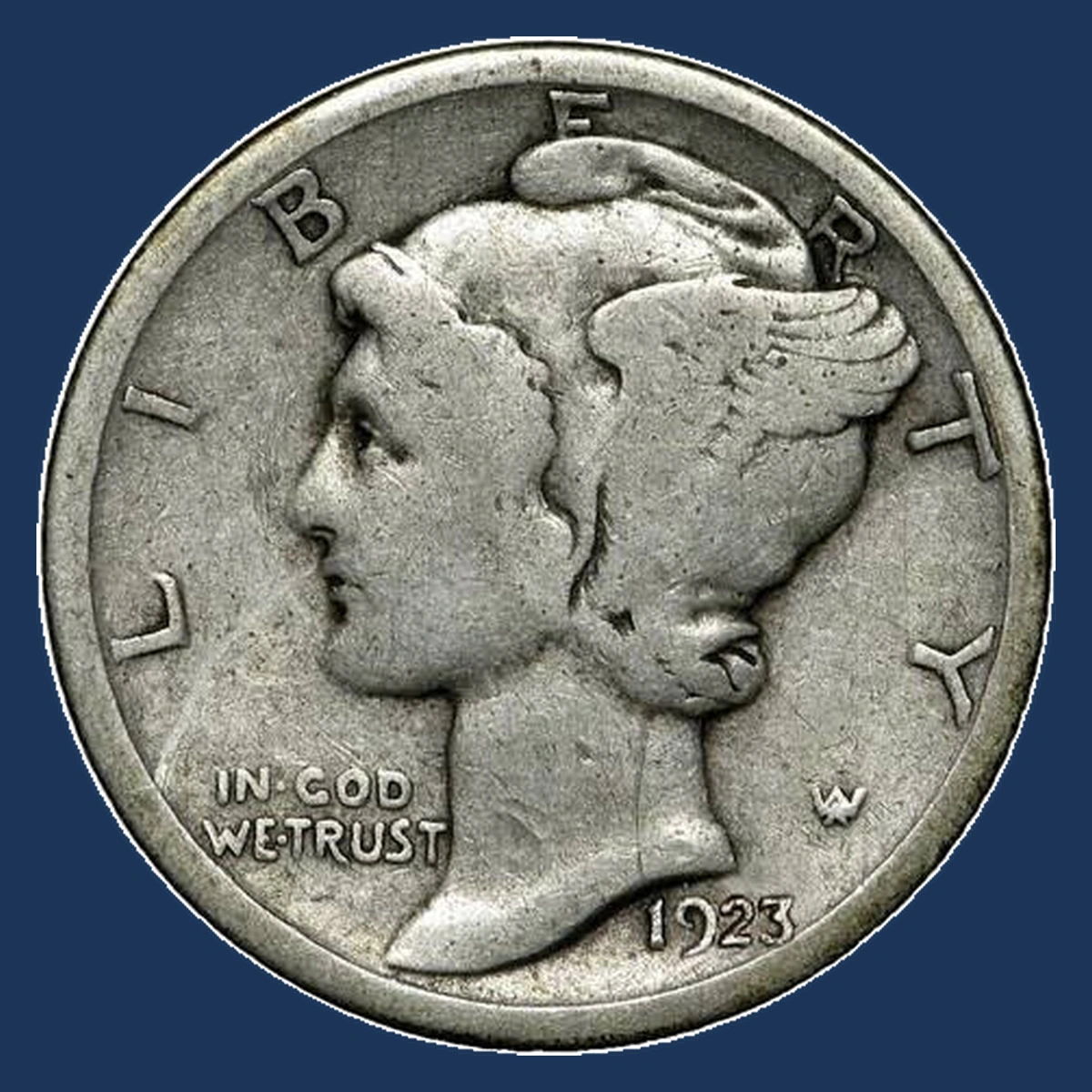
An extra raised outline beside a letter or number may suggest a doubled die. That means the steel stamping tool already carried repeated picture details before making the coin.
One normal strike could transfer both outlines. The coin would not need a second blow.
The 1923 reports discuss minor Philadelphia and San Francisco examples without pairing a specific variety number with a diagnostic photograph. The date, letters, and portrait are places to inspect, not a proven checklist.
A thick digit alone therefore does not establish that every other part of the front is doubled.
Estimated Value
Use a comparison estimate of $50–$300 after genuine minor doubled-die detail is established. The range follows the guide’s reported values for the category.
It is not backed here by a named 1923 auction specimen. Stronger separation, clearer identification, and original surfaces can support the upper part of the range.
Flat doubling caused by movement during striking does not receive the same allowance. Such a coin should mainly be valued for its mint and condition rather than its doubled-looking edge.
How to Identify
Place a normal front photograph beside the candidate and compare the same letters with a magnifier. Look for rounded extra outlines or small split corners rather than a flat shelf.
Keep the comparison tied to the same actual coin. A doubled-looking date does not prove that LIBERTY or the portrait must also show it.
Check the back: no mintmark means Philadelphia, while S identifies San Francisco. AW is the designer’s mark, not a mintmark.
Use a scale and calipers against 2.50 grams and 17.9 mm, then inspect the edge grooves. Begin by matching repeated raised shapes on several affected details before treating one thick edge as a doubled die.
5. Reported 1923 Mercury Dime Clipped Planchet (Estimated Up to $400)
A missing edge section may begin before the disc reaches the press. The remaining metal receives the design around an already existing gap.
This is a clipped planchet, meaning an incomplete metal disc prepared for striking. Its boundary differs from a notch cut into a finished dime.
A 1923 discussion illustrates a coin labeled as a Very Good clip. That report does not establish a mintmark, measured percentage, or position for the gap.
A later cut can leave a similar gap. Its endpoints and nearby rim should show that the coin was struck after the metal went missing.
Estimated Value
Small genuine clips on circulated Mercury dimes suggest an estimated $50–$125. More obvious examples can fit about $150–$400.
These are whole-coin comparisons for the reported category, not a sale price for the illustrated Very Good coin. Very Good describes a heavily worn piece.
The gap’s size, readable date, mint, and surfaces affect the comparison. A valuable San Francisco coin may need separate consideration, while a later cut or jewelry alteration does not earn a Mint-error premium.
How to Identify
Use a magnifier on the rim opposite the missing section. Local weakness there can support a curved clip, though wear may hide it and not every example shows it strongly.
Then inspect the gap and adjacent edge grooves. Saw marks, a sharp cut wall, or abruptly removed design can point to later trimming.
Weigh against the usual 2.50 grams and measure intact spans with calipers against 17.9 mm. Wear also lowers weight, so a light reading alone proves little.
Keep the complete date and mintmark area visible. For the quickest check, compare the gap’s original striking detail and nearby rim with a confirmed clip rather than relying on its curved shape.
6. Reported 1923 Mercury Dime Broadstrike (Estimated Up to $500)
The dime can spread beyond its usual width while keeping the full picture. The collar, the metal ring that normally holds the edge during striking, failed to contain the silver.
This is a broadstrike. Without normal restraint, metal moves outward around the design.
The 1923 guides report the category without a certified specimen or measured expanded diameter. The actual coin therefore needs measuring rather than an assumed extra width.
The complete picture is central to the distinction. An off-center strike instead loses part of the intended design beyond the metal.
Estimated Value
The guide places ordinary circulated broadstrikes around $75–$200. For a clean, more obvious example, use an estimated whole-coin range of $200–$500.
The upper figure allows for visual appeal and condition. It is not a recorded 1923 sale.
An expanded disc with all its outer design visible is generally more appealing than a slight edge disturbance. A high-grade San Francisco dime may exceed these general comparisons because of its mint and preservation, requiring its own assessment.
How to Identify
Measure the coin with calipers against 17.9 mm, recording more than one direction if it is oval. Use a scale against 2.50 grams to check whether it retains normal metal.
Trace every outer letter and picture detail on both faces. The design should remain present inside the expanded area, rather than partly disappear beyond the edge.
With a magnifier, inspect the side for reduced or absent normal grooves where the retaining ring failed. A filed edge can also look smooth, so that alone is insufficient.
For the quickest useful test, pair the measured expansion with a complete struck picture and an edge that has not been ground or compressed later.
7. 1923 Mercury Dime Off-Center Strike (Estimated Up to $2,500)
The recorded 1923-S has a modest 10% shift and was graded NGC VF35. Part of its design misses the metal, leaving an original plain margin elsewhere.
A separate dealer snapshot lists a “1923-x” coin struck 70% off-center and graded PCGS AU55. The x leaves the mint unresolved; it does not mean Philadelphia or San Francisco.
These are different coins with very different amounts of surviving design. The readable date becomes especially important on the more extreme example.
Both involve a misplaced metal disc, rather than a small crack or a repeated design already on a tool.
Estimated Value
Heritage’s 1923-S VF35 sold for $276 on March 8, 2021. Comparable modest, readable-date circulated examples have an estimated range of $150–$500.
More dramatic attractive pieces can fit a broader $500–$2,500 comparison range. The 70% AU55 listing has no recorded selling price here.
That larger shift deserves a separate comparison, not an invented auction result. Its unknown mint also should not receive a San Francisco premium without supporting evidence.
How to Identify
Keep the surviving date and both faces together when comparing the examples. The auction coin is 1923-S VF35 at 10%; the separate 70% AU55 has no resolved mint.
With a magnifier, check for corresponding displacement on both faces. A shift limited to one face can come from a single misaligned tool instead.
Plain metal remains outside the struck area, so missing design does not mean missing weight. Use a scale against 2.50 grams and calipers against 17.9 mm, allowing for altered shape.
Inspect the edge grooves and original margin for cutting. Begin by matching both shifted pictures to the same intact plain area, then confirm the readable date and surviving mintmark.
Conclusion
Estimated whole-coin values for these 1923 Mercury dime errors range from $20 to $2,500. A raised line, peeling layer, missing edge, and plain unstruck margin each need a different check.
The $276 San Francisco sale provides a firm comparison for the modest off-center coin. Keep the separate 70% listing and its unresolved mint distinct, and judge smaller features by their actual surfaces before choosing an estimate.