1914 Dime Error List with Pictures

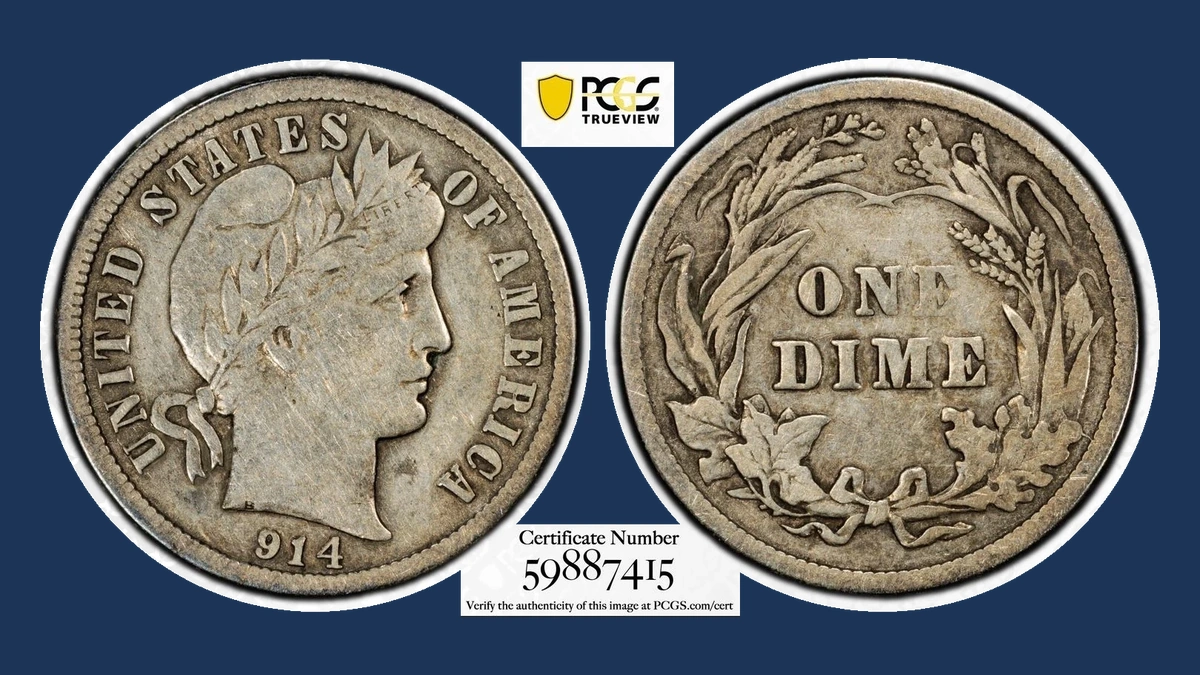
A wide, uneven border helped a 1914-D broadstrike bring $373.75 in 2008. A different 1914 dime with peeling metal on its back sold for $317 in June 2026.
This 1914 Barber dime error list covers seven types with estimated values of $20–$1,500. Some change the coin’s outline; others leave only a small line or extra letter shape.
Read on to see which visible features separate them.
1. 1914-D Barber Dime Die Crack (Estimated Up to $200)
A raised line runs inward from the back rim on a reported 1914-D dime. The year guide does not describe its exact path through the wreath.
A die is the steel tool that stamps coins. When it cracks, silver can enter the narrow opening and leave a raised line on the finished piece.
The same line may appear on many coins made by that tool. It can also grow as the crack spreads.
A scratch has another cause. It cuts into a finished coin, rather than repeating a split in the stamping tool.
Estimated Value
A genuine crack on a circulated Denver dime has an estimated whole-coin value of $20–$200. A small line usually adds only a modest amount, while stronger branching may draw more interest.
This is an estimate for the reported feature, not a recorded sale. The $317 Philadelphia lamination coin was a different mint, condition, and error.
Its price cannot be assigned to this crack. Judge the visible line together with the coin’s wear and surfaces.
How to Identify
Find D below the wreath bow, then trace the raised line from the rim inward with a 10× magnifier. Keep the full route in your photograph.
Shine light across the surface from the side. A crack should stand above the surrounding silver; a scratch cuts below it.
Normal wreath stems and dark corrosion edges can also look like lines. Compare their shapes instead of deciding from brightness alone.
The usual 90% silver dime weighs 2.50 g before wear and measures 17.9 mm, with a grooved edge. A scale and calipers can check a loose coin.
The useful first test is a raised ridge continuing inward from the rim, rather than a cut or an ordinary wreath stem.
2. 1914 Barber Dime Struck-Through Date (Estimated Up to $300)
Part of the date failed to form normally on a dime described in the year guide. The reported coin was VF30, meaning noticeable wear with much detail still visible.
The guide does not name the mint or say exactly which number was affected. It describes the feature as struck through material.
Something between the blank and the stamping tool blocked part of the design. A hard object can leave a hollow; softer material may leave only weak detail.
Neither effect requires the object to stay attached. The missing stroke still needs to be distinguished from wear or later damage.
Estimated Value
Estimate $30–$300 for matching examples from circulated condition through light wear. A clear, local interruption is easier to appreciate when enough of 1914 remains readable.
The reported VF30 grade does not supply a sale price. For comparison, a seller asked $300 for a different-year 1896-S dime with several strike-through marks.
That was an asking price for another coin, not a completed sale. It does not establish what the reported 1914 example would bring.
How to Identify
Compare the weak date stroke with neighboring numbers and nearby raised details. Under a 10× magnifier, one local interruption looks different from wear flattening every high point.
Look for scraping, a cut, or added material that could hide part of the date. Do not assume grease or cloth caused the mark; the report names neither.
Include the whole date and rear mintmark area in photographs. A normal loose coin can be checked with a scale and calipers against 2.50 g and 17.9 mm.
Its metal is 90% silver and the edge normally has grooves. Focus first on missing detail in one small area beside sharper, undamaged date strokes.
3. 1914 Barber Dime Clipped Planchet (Estimated Up to $400)
A piece of the outer edge was missing before this dime received its design. That makes it a clipped blank, also called a clipped planchet.
The Rippere Collection example sits in an older ANACS holder marked Uncirculated Details with a net AU50 grade. This means no circulation wear was found, but a condition problem lowered the overall assessment.
It is not a problem-free AU50 coin. The distinction matters when comparing prices.
The auction title gives no measured clip size or location. Those must be read from the coin’s photographs, including how the design meets the missing edge.
Estimated Value
Allow an estimated $40–$400 for matching clips from circulated condition through lightly worn examples. The clarity of the missing section and any surface problems both affect value.
The Rippere ANACS listing establishes the example, but no sale price is used here. A different, undated silver dime blank with a clip sold for $59 in March 2025.
That PCGS MS60 blank never received a design. It is a comparison, not the finished 1914 coin.
How to Identify
Examine both ends of the missing segment under a 10× magnifier. Saw marks, file lines, or abruptly cut design can reveal metal removed after striking.
View the edge from the side as well as from above. The nearby stamped details should fit a blank that was already incomplete.
Use calipers across undamaged areas against the normal 17.9 mm diameter, and a scale against 2.50 g. Wear and deliberate removal also reduce weight, so a low reading alone proves little.
Check remaining edge grooves and look for weakness on the opposite rim, though that clue is not always strong. Begin with the natural-looking meeting of struck detail and the gap, without cutting marks.
4. 1914 Barber Dime Reverse Lamination (Estimated Up to $500)
A layer of metal separates on the back of the Philadelphia example. This surface flaw is called a lamination.
The coin was graded NGC MS65, meaning no circulation wear and few marks. A flaw in the original metal can exist alongside that high condition grade.
Barber dimes mix silver and copper in one alloy. They do not have the separate bonded outer layers used for modern clad coins.
Here the separation comes from weakness within that alloy, not a missing cladding sheet. Its boundary may show where a flake lifted or broke away from the struck surface.
Estimated Value
The NGC MS65 reverse-lamination example sold for $317 at Heritage in June 2026. Estimate $30–$500 from modest worn examples through attractive coins without circulation wear.
That sale values the coin’s condition and flaw together. A larger peeled area is not automatically more desirable if it removes important design or looks unattractive.
A small, clear separation can still interest collectors. Look at how much detail survives and whether the rest of the coin remains appealing.
How to Identify
Tilt the back under a lamp and photograph where intact silver meets the separated area. Use a 10× magnifier, but do not lift any remaining flap.
A gouge often leaves pushed metal or tool lines around its hollow. Corrosion can remove silver too, without showing a thin layer separating from the metal beneath.
The ordinary dime is 90% silver, 2.50 g, and 17.9 mm, with a grooved edge. Weigh a loose example on a scale and measure sound edges with calipers.
A retained flap may leave normal weight; a lost flake may reduce it. The clearer clue is the layered boundary between intact surface and the lifted or missing patch.
5. 1914 Barber Dime Repunched Mintmark (Estimated Up to $800)
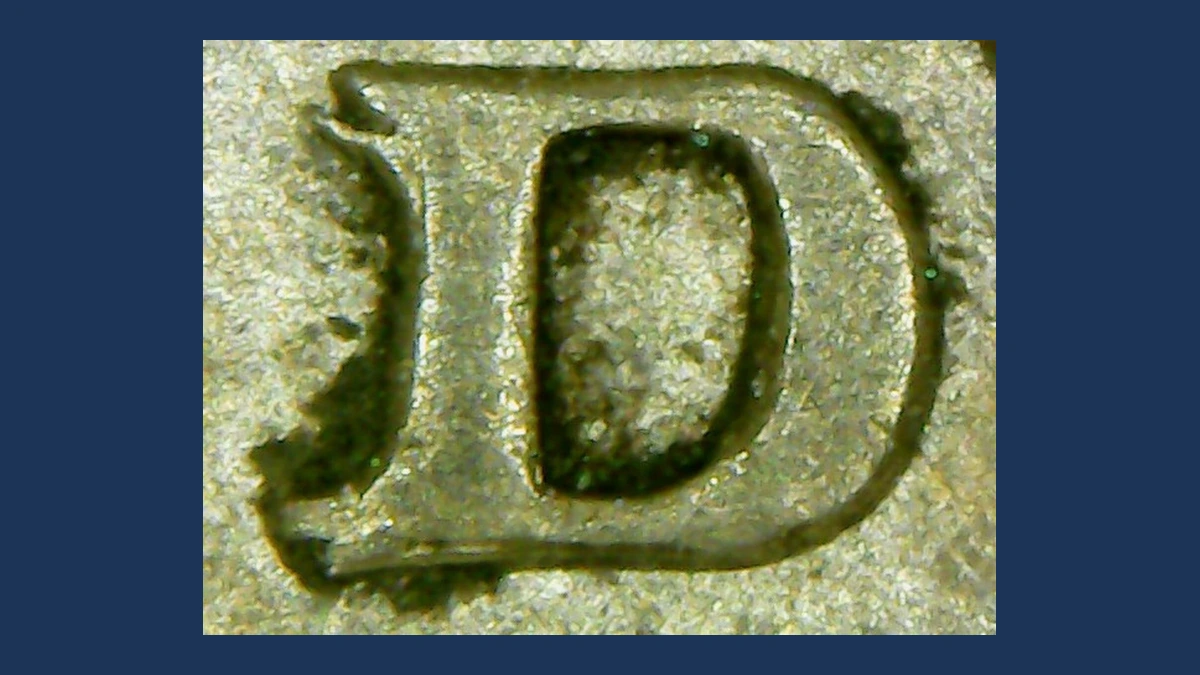
Part of an earlier D sits above and to the right of the main mintmark on the Denver variety. Its lower serif, the small finishing stroke, extends toward the wreath.
The worker punched the mint letter into the stamping tool more than once. Part of the earlier letter survived beside the final D.
Coins made with that tool copied the extra shape during an ordinary strike. They did not need a second strike to produce it.
A San Francisco repunched mintmark is also reported, but its direction is not established by the Denver example. It needs its own comparison.
Estimated Value
Estimate $30–$800 for clearly identified examples from worn condition through coins without circulation wear and with some marks. Mint, visible extra letter shape, and overall preservation affect the price.
An 1899-O dime with an O punched over another O sold for $115 in May 2023. It had light wear and a condition problem.
That Barber dime sale offers a general comparison. It is not a sale of the 1914-D variety or the separately reported San Francisco coin.
How to Identify
Keep the bow and D together in the close-up. The mintmark guide photograph shows the extra letter extending toward the upper right and wreath.
Study the small earlier serif with a 10× magnifier and light from the side. Rounded letter pieces differ from flat shelves caused by movement during striking.
Check any S coin against its own photographs, without applying the Denver direction. A normal loose dime can be measured with a scale and calipers against 2.50 g and 17.9 mm.
The alloy remains 90% silver with a grooved edge. On Denver coins, look first for the earlier D’s small stroke above and right of the main letter.
6. 1914-D Barber Dime Broadstrike (Estimated Up to $1,200)
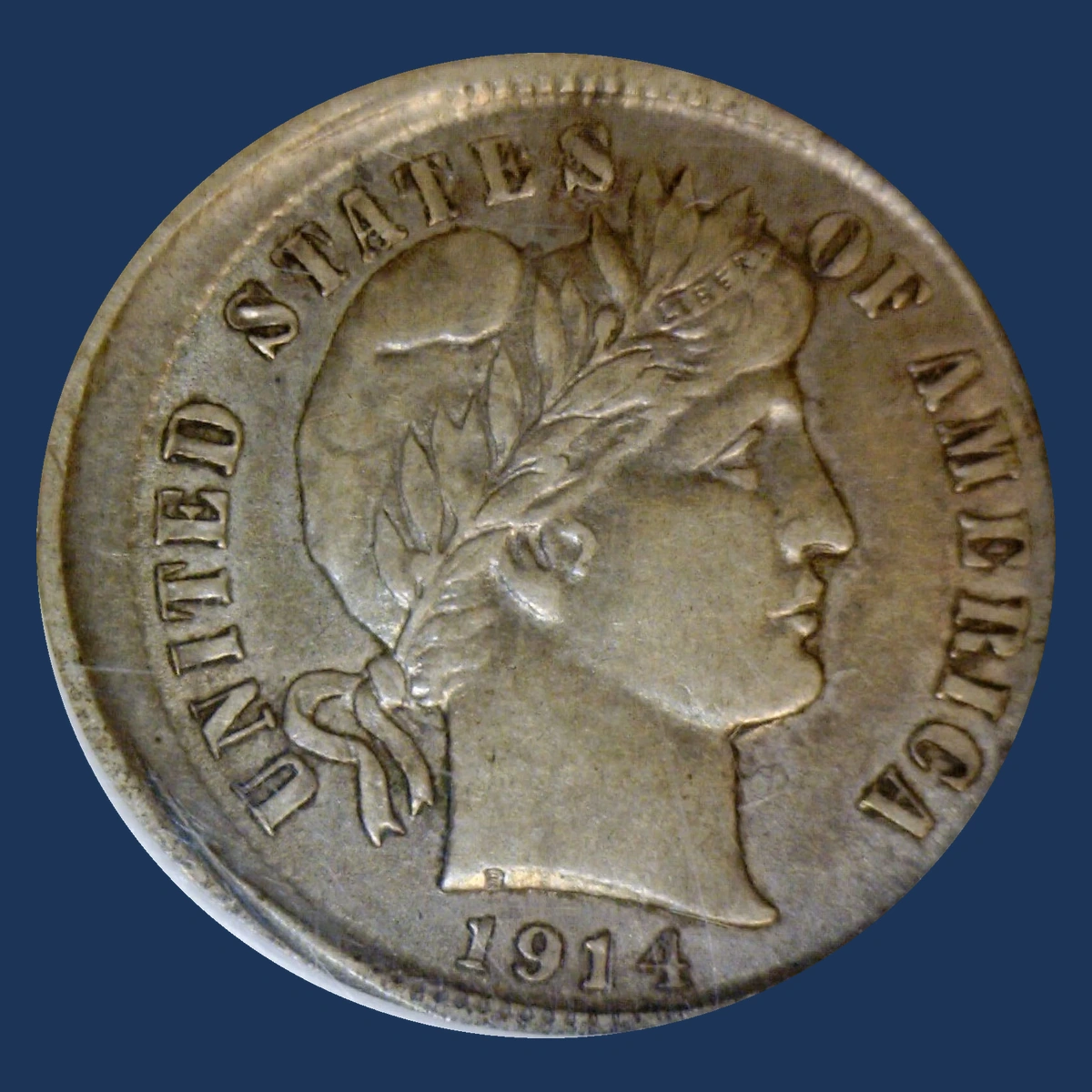
The wider margin lies near eight o’clock on this Denver dime, while the design sits toward two o’clock. Yet the complete design still fits on the metal.
That makes it a broadstrike despite its uneven appearance. The blank was struck without full support from the collar, the ring that normally controls width and makes edge grooves.
Metal spread outward beyond its usual limit. It did not need to lose part of the design.
The documented example is PCGS MS64, meaning no circulation wear and relatively few marks. Its wide, uneven outline records one striking mistake.
Estimated Value
Heritage sold the MS64 broadstrike for $373.75 on August 1, 2008. Estimate $150–$1,200 for circulated through attractive unworn Denver examples with clear outward spread.
A different-year 1900-S broadstrike graded NGC VF30 has an indexed $342 result from March 2026. That coin showed noticeable wear.
The newer sale provides another Barber dime comparison, but its mint and condition differ. Neither result gives every broadstrike the same present-day value.
How to Identify
Follow the outermost design on both sides before judging the wide border. It should remain complete rather than disappear beyond the metal.
Use a 10× magnifier to inspect the edge for outward spread and loss of normal, continuous grooves. Hammering may widen a coin too, but often crushes its details.
A scale should be compared with the usual 2.50 g weight for this 90% silver dime. Calipers can show how its width differs from the normal 17.9 mm.
Keep the D visible and compare the published coin’s two-o’clock design and eight-o’clock margin. The quickest distinction from an off-center strike is a complete design still contained within the wider outline.
7. 1914-D Barber Dime Off-Center Strike (Estimated Up to $1,500)
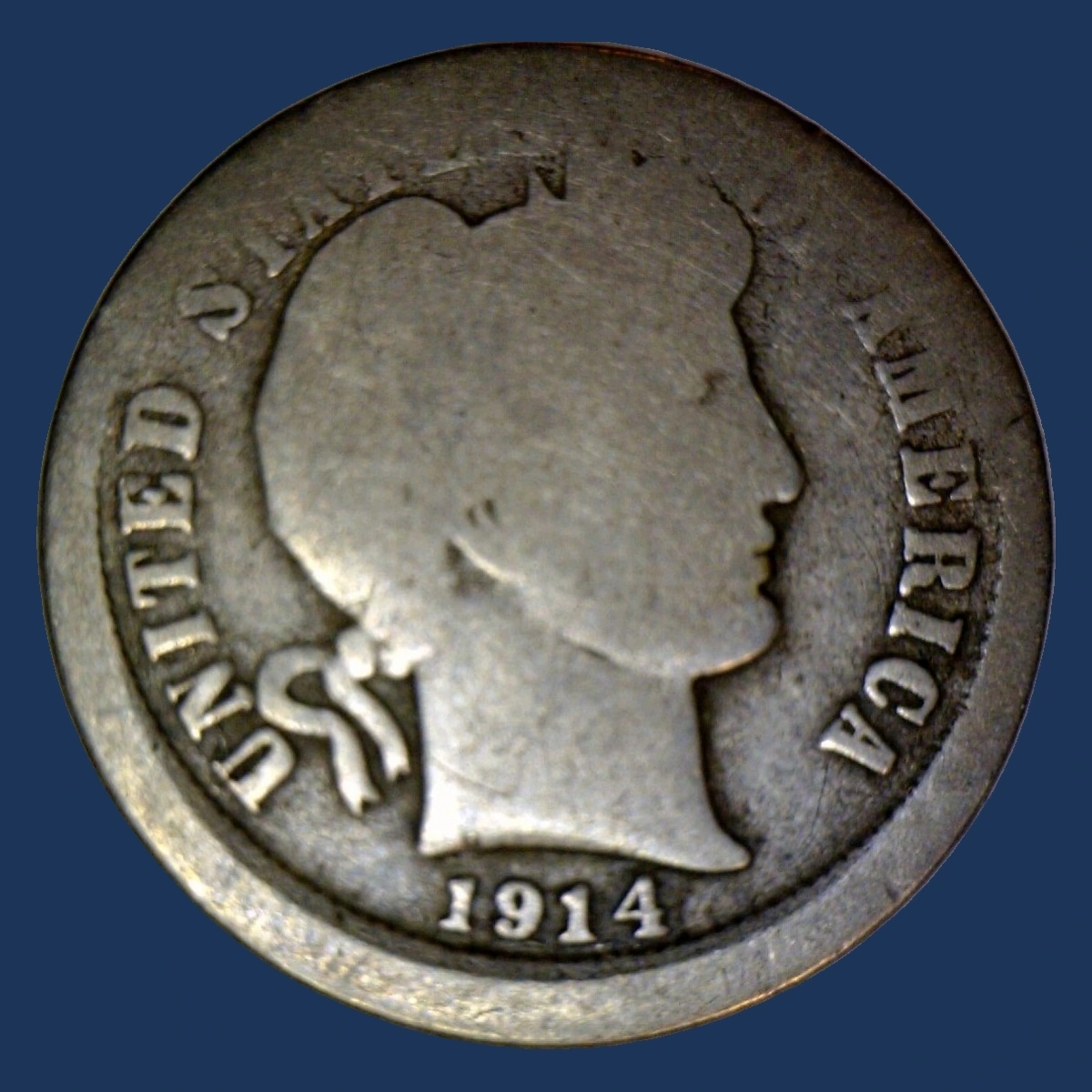
Some design falls beyond the metal on an off-center strike. A blank area remains at the opposite side because that part never met the stamping tools.
APMEX lists a 1914-D example struck 5% off center and graded PCGS XF40, meaning light to moderate wear. The year guide also reports a 10% example.
Those percentages describe different amounts of the same mistake. They do not create two separate error types.
Unlike the broadstrike, the design is incomplete. The blank area’s position and the direction the design moved are opposite descriptions, so they should not be confused.
Estimated Value
Estimate $150–$1,500 for readable-date examples from circulated condition through coins with no circulation wear and some marks. The XF40 5% coin represents a modest shift.
The APMEX listing supplies its graded identity, but no price is used here. A different-year 1902 Barber dime struck off center sold for $561.20 in June 2026.
That ANACS AU50 example had light wear. It offers a recent comparison, not a sale price for either reported 1914-D coin.
How to Identify
Read 1914 and find D, then examine how each face meets the blank area. The PCGS XF40 listing identifies the 5% example without requiring a guessed direction.
Under a 10× magnifier, look for original blank texture beside the stamped design. Grinding can leave abrasive lines, while a shift on only one face may involve a moved tool instead.
The normal 90% silver dime weighs 2.50 g and measures 17.9 mm, with a grooved edge. Use a scale and calipers for a loose coin, or recorded measurements for one in a holder.
The visible test is missing outer design paired with untouched blank metal on both sides.
Conclusion
These 1914 dimes have estimated values from $20 to $1,500. A broadstrike keeps the complete design within a wider outline, while an off-center strike loses part of the design.
For clips and laminations, examine the metal itself. For cracks and repunched mintmarks, follow the raised line or extra letter shape, keeping each coin’s mint, wear, and surface problems attached to the price comparison.