1899 Dime Error List with Pictures

An 1899 dime struck 10% off center sold for $312 in June 2023. Its VF25 grade describes a worn coin with clear remaining design.
These 1899 dime errors range from tiny extra numeral pieces to a visibly widened or shifted coin. Estimated values span $50–$1,500 for the condition levels discussed below.
Look at where the unusual detail appears, then check the mint letter to choose the right comparison.
1. 1899-O Barber Dime Repunched Mintmark (Estimated Up to $600)
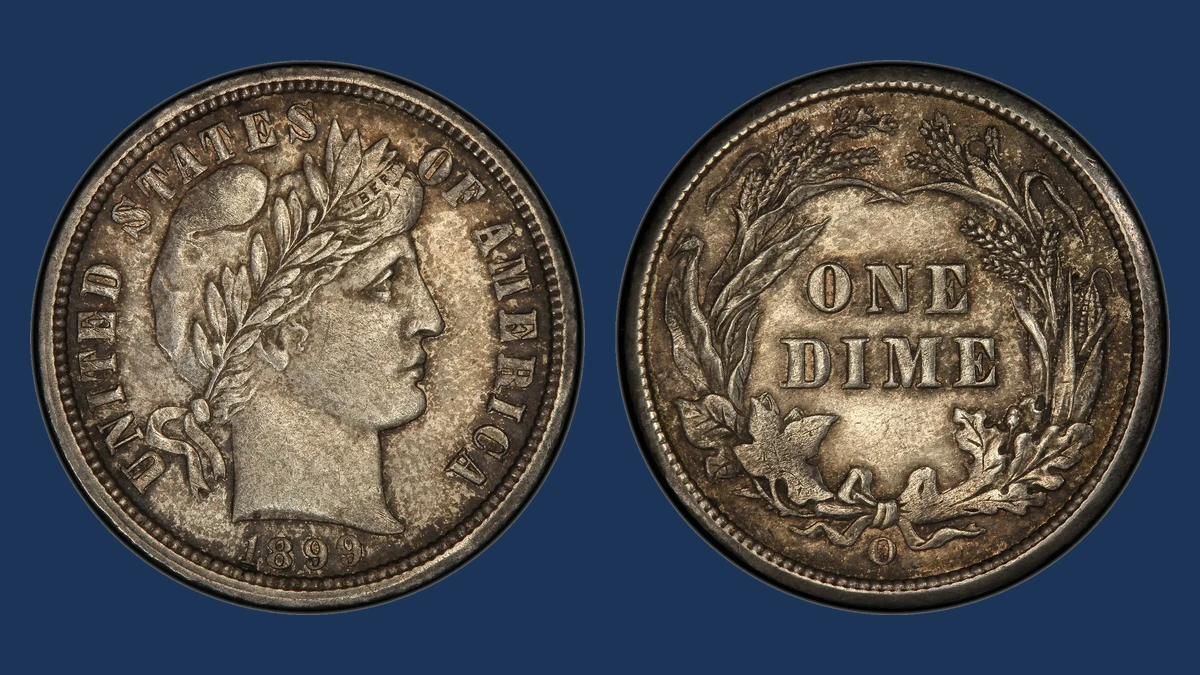
An extra rounded outline can remain beside the O below the bow. It comes from a second position of the mint-letter punch.
The punch entered the die, the steel tool that stamps coins, before any dimes were made. Coins produced with that tool could then carry the same repeated outline.
PCGS recognizes this New Orleans variety as FS-501, also described as O/O. The notation means one O impression over another.
A thick or misshapen letter is not enough. A knock to the finished coin can move metal around the O without reproducing the same earlier punch shape.
Estimated Value
PCGS records a $115 Heritage sale on May 22, 2023 for an AU Details example. AU means slight wear, while Details indicates a surface or condition problem.
The estimated whole-coin range is $50–$600 for worn through attractive lightly worn examples. Clear extra outlines and original surfaces support the higher end.
The $115 result should not price an undamaged coin automatically. Exceptional unworn examples fall outside the worn-coin range used here.
How to Identify
Locate the O below the wreath bow in a full view of the back. Then use a 10× magnifier to compare its outline with a known FS-501 example.
Move the lamp while keeping the coin still. The extra raised shape should remain in the metal as highlights move.
A gouge, flat shelf, or metal pushed beside a contact mark can make an ordinary O look doubled. Check the surrounding surface for those signs.
This 90% silver dime normally weighs 2.50 g and measures 17.9 mm. Use a scale and calipers when safely accessible, and inspect the edge grooves.
The important match is the second rounded O outline in the correct relationship to the main letter, not just an unusually thick mint letter.
2. 1899 Barber Dime Broadstrike (Estimated Up to $800)
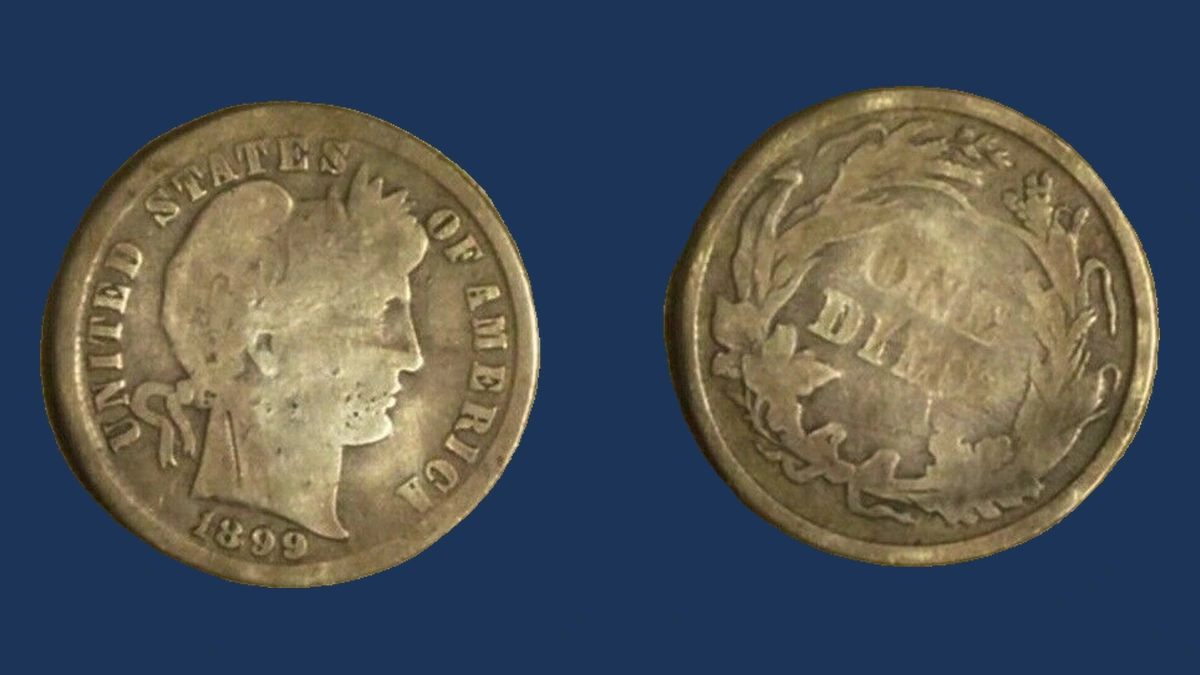
A broadstrike can be wider than a normal dime while keeping the whole design. The collar, a ring that controls width and forms edge grooves, failed to contain the strike normally.
Pressure then pushed the metal farther outward. That differs from an off-center strike, where part of the design misses the coin.
The reported Philadelphia example was graded ANACS AU Details with a net XF40 assessment. Cleaning and corrosion had affected its surface, lowering the overall assessment.
Those problems happened to the coin’s condition. They do not explain the original spreading caused by the failed retaining ring.
Estimated Value
The market summary reports $161 at Heritage in June 2005 for the Philadelphia broadstrike. Cleaning and corrosion limit its usefulness as a comparison for original surfaces.
The estimated range is $100–$800 for worn through lower unworn examples. The amount of visible spreading and the remaining design both matter.
A wide, clear outline usually shows the error better than a nearly normal one. Do not treat the altered auction example as the price of every broadstrike.
How to Identify
Use calipers to measure the widest and narrowest parts when the coin is safely accessible. Compare them with the normal 17.9 mm diameter.
A scale should remain reasonably close to the original 2.50 g, allowing for wear. Spreading moves metal rather than requiring a section to disappear.
Inspect every outside letter and the date with a 10× magnifier. If design is missing at one side, consider an off-center strike instead.
Look along the edge for abnormal contact with the retaining ring and incomplete or missing grooves. Later hammering can widen a coin too, but often crushes its existing design.
A genuine broadstrike combines the complete struck picture with metal spread beyond the normal outline, without the crushing expected from later flattening.
3. 1899-O Barber Dime Repunched Date (Estimated Up to $1,000)
Both 9s carry the extra marks on this New Orleans variety. Pieces of an earlier date impression remain beside the final numeral positions.
The date punch entered the stamping tool more than once. Later dimes received the main date and those surviving remnants together.
PCGS calls this variety FS-301. Its extra marks sit beside the normal numbers, unlike the stray digit pieces down in the border of the San Francisco variety.
Wear can blur the earlier strokes until they merge with the main figures. A readable 1899 date therefore does not guarantee that enough detail remains to identify the variety.
Estimated Value
The estimated range is $75–$1,000 for worn examples with visible date remnants. Sharp, attractive coins with only slight wear belong toward the stronger end.
This is a whole-coin estimate, not a recorded auction range for FS-301. The related O/O mint-letter variety sold for $115 in 2023 as an AU Details coin.
That different feature provides a same-year comparison only. The repeated date needs its own assessment of clarity, wear, and surface problems before a price is chosen.
How to Identify
Check for the O below the back bow before inspecting the date. Philadelphia coins and the San Francisco misplaced date do not fit this comparison.
Study each 9 with a 10× magnifier, then compare both with the PCGS FS-301 pictures. The earlier numeral pieces must occupy matching positions.
Use a scale and calipers on an accessible coin against 2.50 g and 17.9 mm. Examine the edge grooves, while remembering that ordinary measurements do not prove a date variety.
Scratches cut into the surface, while the date remnants should stand above it and follow numeral shapes. Look for those matching raised pieces beside both 9s, rather than a flat shelf running around several nearby features.
4. 1899-S Barber Dime Misplaced Date (Estimated Up to $1,200)
Three small numeral tops interrupt the border below the normal date. They are parts of an 8 and both 9s on the San Francisco variety.
The tiny border teeth are called denticles. A date punch placed too low in the stamping tool left pieces of numbers among those teeth.
The complete date remains above them in its normal position. Seeing both together helps explain why the lower marks are called a misplaced date.
The Barber dime variety pictures show the arrangement. These low numeral tops differ from the repeated 9s beside the normal New Orleans date.
Estimated Value
The estimated whole-coin range is $75–$1,200 for worn through lightly worn examples with readable misplaced digits. Wear at the border can hide those small tops.
An 1859 Seated dime with a misplaced date sold for $118.12 at GreatCollections in October 2024. It was graded VF30, indicating wear with clear remaining detail.
That comparison has a different year and design. It shows a modest price for the same general mistake, not an actual 1899-S sale.
How to Identify
Keep the normal date and the border teeth in one magnified view. An isolated bump cannot show the spacing of the three extra numeral tops.
Confirm the S on the back, then compare the lower date area with the variety picture. Use a 10× magnifier to follow the 8 and two 9s where they enter the border.
A rim knock may flatten several teeth or raise irregular metal. That damage should not be mistaken for a coordinated group of numeral pieces.
Check weight and diameter with a scale and calipers when safely accessible against 2.50 g and 17.9 mm. Inspect the edge grooves.
The useful match is all three stray tops sitting beneath the full date in the same positions as the pictured San Francisco example.
5. 1899 Barber Dime Off-Center Strike (Estimated Up to $1,500)
Part of the design can miss the blank when it sits too far to one side in the press. An untouched area remains opposite the side where the picture runs beyond the coin’s edge.
Reported Philadelphia examples include a 10% off-center NGC VF25 and a 5% off-center PCGS MS62. They are separate coins with different amounts of movement.
The percentage describes how far the strike shifted, not a different cause. A readable 1899 date helps identify either example.
The surviving picture must also establish a Barber dime. A blank crescent by itself does not identify the year or denomination.
Estimated Value
The 1899 market summary reports $312 at Heritage in June 2023 for the NGC VF25 coin struck 10% off center. It is a dated sale of a worn example.
The estimated range is $200–$1,500 for readable-date coins through attractive lower unworn grades. The separate 5% example was graded PCGS MS62, meaning unworn with noticeable marks.
No sale price is assigned to that MS62 coin here. Its grade alone does not establish the range’s upper end.
How to Identify
Place photographs of both sides together and follow where each design ends. An off-center strike changes both designs’ relationship to the same blank.
A front stamping tool sitting out of position can leave the back normally centered. That is a different reason for an uneven border.
Use a 10× magnifier at the transition from design to blank metal. Inspect the edge grooves for filing, cuts, or added material around that area.
When safely accessible, compare scale and caliper readings with 2.50 g and 17.9 mm. Some spreading can change the outline without removing metal.
Keep the readable date in the picture. The convincing match combines the correct date, displaced designs, and an original unstruck area on the same coin.
Conclusion
Estimated values for these 1899 errors run from $50 to $1,500 within the stated condition ranges. The position of extra detail helps separate an O/O, repeated 9s, and numeral tops below the date.
For a widened or shifted coin, compare both sides and the edge. The whole design should remain on a broadstrike, while an off-center strike loses part of it.
Cleaning, corrosion, and wear still matter when comparing prices.