1898 Dime Error List with Pictures

A cup-shaped 1898 dime sold for $8,235 in January 2026. It had stayed attached to a stamping tool, allowing later blows to push its metal outward and upward.
This 1898 Barber dime error list also covers extra date marks, repeated wreath details, and a reported uneven border. Estimated whole-coin values stretch from $25 to $15,000.
Read on to see which details belong to Philadelphia, New Orleans, or San Francisco coins, and how their prices compare.
1. 1898 Barber Dime Reported Broadstrike or Misaligned Die (Estimated Up to $600)
The reported coin has been called a small broadstrike, a misaligned die, and a small off-center strike. Those names describe different results.
A broadstrike spreads because the collar, the ring controlling width, does not hold the blank normally. The complete design can remain.
A misaligned die means a stamping tool sits out of position, often shifting only one side. An off-center strike can leave part of the design missing on both sides.
The border and surviving pictures must decide which explanation fits this coin. A seller’s combined title does not establish all three errors together.
Estimated Value
The estimated range is $50–$600 for a modest genuine striking error of this kind. The original listing reports the uneven border but supplies no completed sale price.
A 1902 off-center Barber dime sold for $561.20 in June 2026. ANACS graded that different-year comparison AU50, meaning light wear.
A small shift on only one side would usually call for a lower estimate. The exact error and condition must be identified before making the comparison.
How to Identify
Compare both sides while keeping track of the same part of the rim. If only one picture has shifted, a front photograph alone cannot prove an off-center strike.
Use a 10× magnifier to see whether any design is missing or merely close to the rim. Look for blank metal that never received a design.
When safely accessible, measure the widest part with calipers against the normal 17.90 mm. Compare scale weight with 2.50 g and inspect the edge grooves.
Filing, clipping, and flattening can also change the outline, but they leave different signs at the edge. The deciding check is how the two designs sit inside the same outline: both sides must be considered together.
2. 1898 Barber Dime Doubled Die Reverse (Estimated Up to $1,500)
Extra outlines appear on the bow and ribbons of the 1898-O doubled die. A doubled die is a stamping tool that already carries a repeated image.
The Barber dime variety reference calls this back design DDR-001. It also describes doubling in lower-left wreath details and right-side leaves and corn.
Those features came from the tool, rather than a second complete blow on the coin. The matching front also has a repeated impression of the 1 in the date.
Both can appear on one dime. The date mark and wreath doubling still need their own close examination.
Estimated Value
The estimated whole-coin range is $50–$1,500, covering worn examples through lower unworn grades. Clearly separated wreath details can attract collectors of varieties.
An ordinary 1898-O sold for $312 in April 2025. ANACS graded it AU55, indicating slight wear.
That coin was not identified as DDR-001 in the sale record. Use it as a condition comparison, rather than adding a fixed bonus for every doubled leaf or for the repeated date on the same coin.
How to Identify
Find the O below the wreath to establish the New Orleans mint. Then study the bow and ribbons with a 10× magnifier.
Follow any second outline into the listed wreath areas. Keeping nearby leaves in view helps separate genuine repeated shapes from glare on an isolated detail.
Turn to the front and inspect the repeated 1, but do not let that date mark replace the back-side comparison. The bow and wreath must match too.
A normal dime weighs about 2.50 g and measures 17.90 mm. Use a scale and calipers when safely accessible, and check the edge grooves and surfaces for alteration.
Finish by comparing the bow, ribbon, and adjoining leaves with a known example under similar light. Look for the same connected pattern of doubled contours.
3. 1898 Barber Dime Repunched Date (Estimated Up to $2,500)
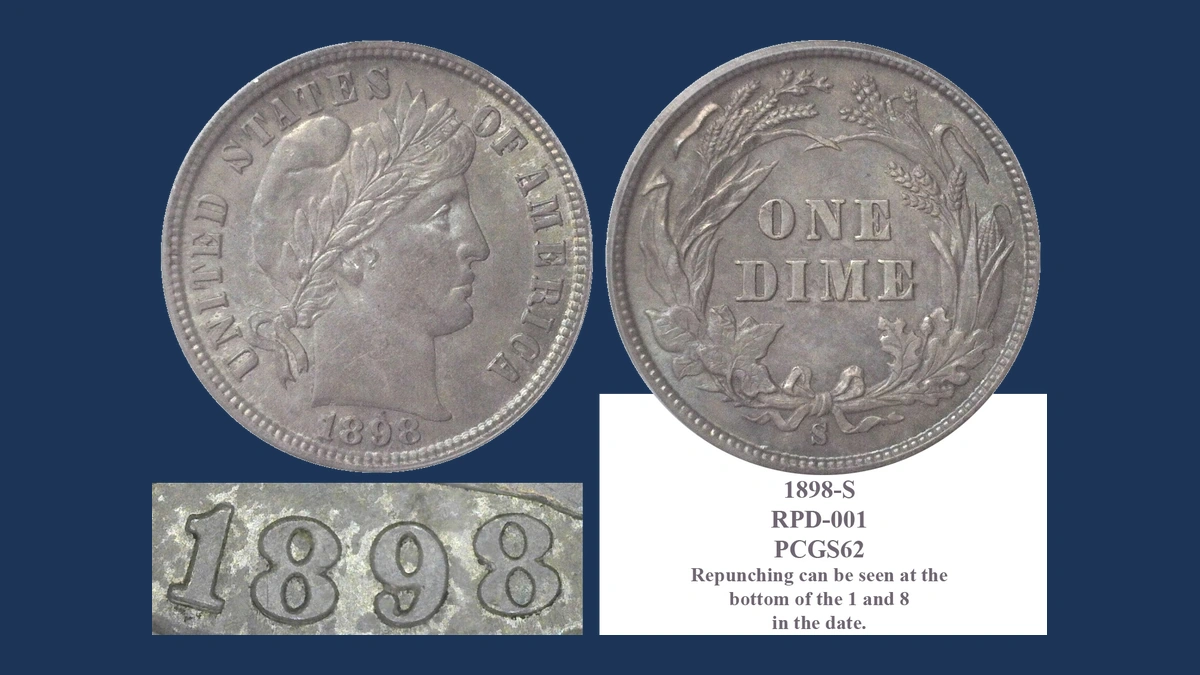
The reported date marks change with the mint. On New Orleans coins, the repeated 1 belongs with the doubled wreath described above.
Philadelphia reports place remnants near the lower left of the 9 and below selected date numerals. San Francisco reports describe extra outlines at the final 8.
These are repunched dates: a punch entered the stamping tool more than once, leaving pieces of an earlier numeral position. Coins made with that tool repeated those small marks.
Choose the comparison for the correct mint. Details taken from several different coins should not be combined into one date pattern.
Estimated Value
The estimated range is $25–$2,500, with the mint and condition explaining much of the difference. An ordinary 1898-S graded NGC MS63 brought $1,082.40 in April 2025.
MS63 means unworn with noticeable marks. That sale was not identified as a repunched date.
A different-year 1895-S FS-301 appears in the PCGS index at $199 in November 2025, described as VF Details. That means wear plus a condition problem, and it is not an 1898 sale.
How to Identify
Start on the back: no mint letter, O, and S lead to different date comparisons. Keep that information beside your close-up of 1898.
For O, examine the 1; for S, study the final 8. For Philadelphia, compare the lower left of 9 and the reported marks below other numerals.
Use a 10× magnifier while changing the light. The remnants should resemble pieces of numbers, rather than a flat shelf or a bright reflection.
A scale and calipers can check an accessible coin against 2.50 g and 17.90 mm. Inspect the edge grooves, but remember that normal measurements cannot prove a date is unaltered.
Look for matching numeral pieces in the right place for that mint, with no fresh cuts around them.
4. 1898 Barber Dime Uncentered Obverse Die Cap (Estimated Up to $15,000)
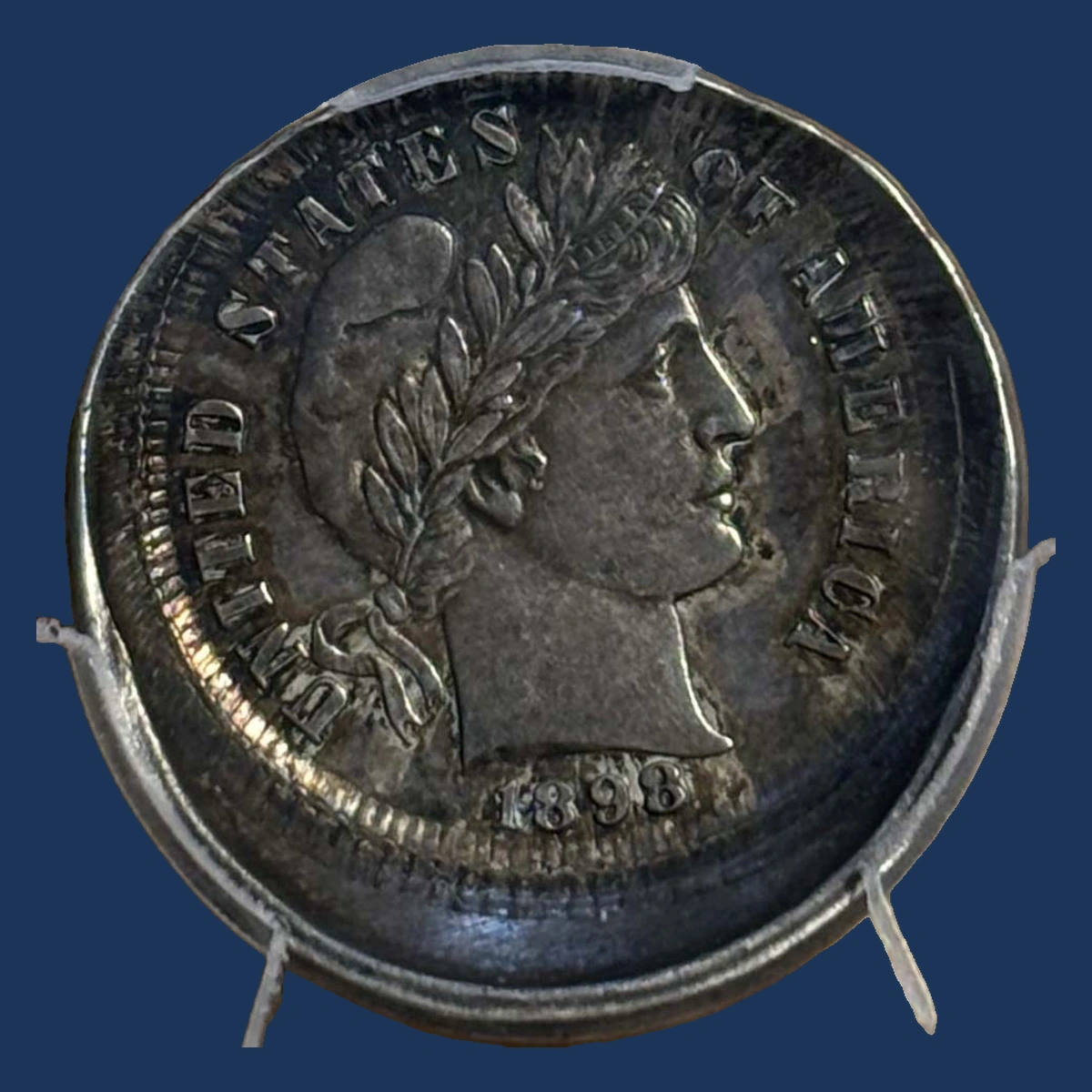
The front design sits unevenly inside this cup-shaped coin, while the back is slightly off center. Both belong to the same trapped dime.
The coin stayed attached to the front stamping tool. As new blanks entered, repeated blows forced its metal outward and upward around that tool.
Mike Byers describes both displaced designs on the recorded 1898 cap. Its changed shape records the pressure it experienced inside the press.
This object is the cap itself. A separate coin struck against it would carry a different result, rather than becoming the same cup-shaped object.
Estimated Value
The estimated range is $6,000–$15,000 for a genuine comparable 1898 cap. The recorded example sold for $8,235 at Heritage on January 17, 2026.
PCGS graded it MS61, an unworn grade allowing many marks. Its surviving cup and readable design make the comparison useful.
An unusual shape alone does not establish the same value. Later bending can produce a bowl-like dime, while this range applies to a cap formed during minting.
How to Identify
Study the cup from the side, then compare the design position on each face. The recorded example has different amounts of displacement on the front and back.
A 10× magnifier should show stretched design details that agree with the expanding metal. Inspect the walls and remaining edge grooves for bending marks, cutting, or a seam.
Compare the complete coin with photographs of the PCGS MS61 example. A bowl shape made later by pressing or bending does not reproduce all its features.
If safely accessible, weigh it against the usual 2.50 g. Calipers should record its actual width and height, rather than demand the normal 17.90 mm diameter.
The cup walls and expanded design must fit together as the result of repeated pressure in the press.
Conclusion
Estimated 1898 error values range from $25 to $15,000, from small date features to a genuine die cap. A useful first step is checking the mint letter before comparing the date or wreath.
For a wide or uneven coin, examine both sides and the edge. For the cap, include a side view of the walls.
Several features can share one coin, so their separate estimates should not be added together.