1797 Dime Error List with Pictures

A sixteen-star 1797 dime graded XF45 sold for $10,575 in January 2016. That whole-coin comparison reflects an early, scarce dime with moderate wear, rather than a separately priced crack.
These 1797 dime errors include raised cracks, faint copied outlines, and a large break that nearly erased the date. Estimated circulated values run from $1,500 to $25,000.
Read on to compare the damaged areas with the portrait, stars, and back design.
1. 1797 Draped Bust Dime Die Cracks and Date-Area Failure (Estimated Up to $20,000)
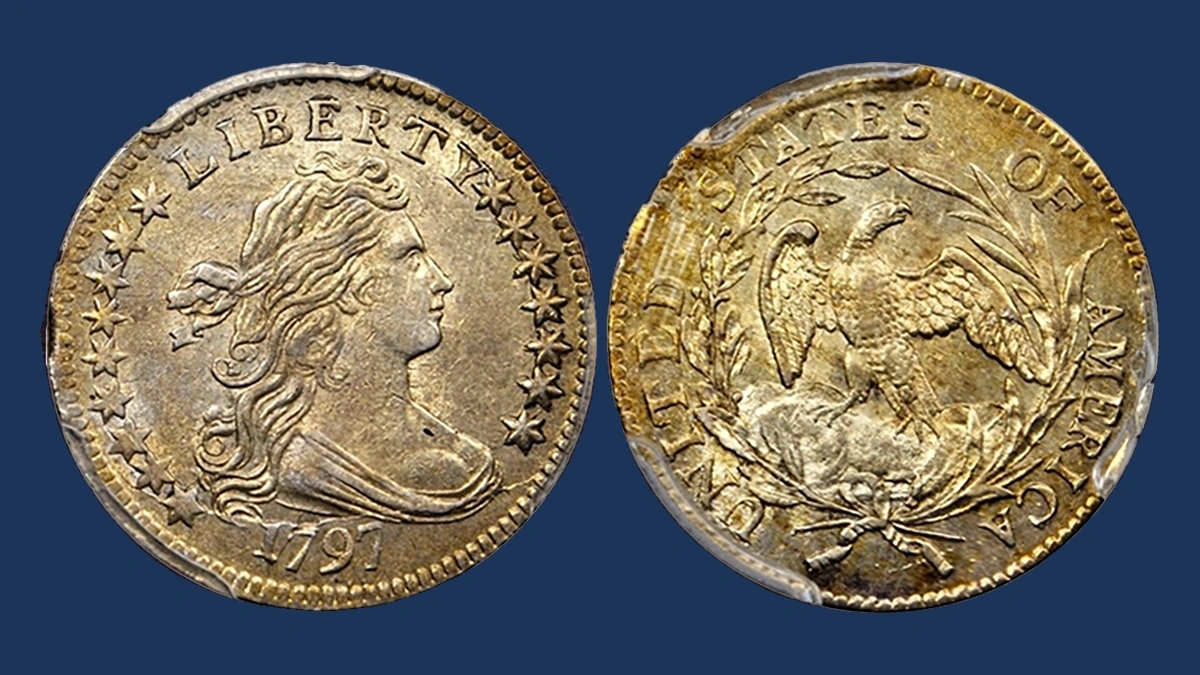
Raised lines run beside the lower-right stars and beneath Liberty’s bust on some sixteen-star 1797 dimes. They cross the area above the date, which can become weak as the damage grows.
The die, a steel stamping tool, cracked. The coin itself did not need to split for those raised lines to appear.
Earlier coins may show separate cracks, while later ones show a larger connected failure. A weak date therefore does not automatically mean someone removed it.
The thirteen-star 1797 design is a different variety. Its date alone does not make this sixteen-star crack pattern a valid match.
Estimated Value
Estimate $1,500–$20,000 for circulated sixteen-star examples with these cracks. The whole coin’s wear and original surfaces explain much of that range.
A PCGS XF45 with CAC approval sold for $10,575 in January 2016, as quoted in a Legend catalog. That comparison values a scarce early dime; it does not isolate an added crack premium.
The catalog’s AU50 with cracks and clash marks is a separate coin. Its old guide figures are not completed sale prices.
How to Identify
Count the sixteen stars before following any line near the date. A 10× magnifier should show raised cracks beside the lower-right stars and underneath the bust.
Compare the full route with a documented example. A scratch cuts into the surface, while a crack in the tool leaves raised coin metal.
The original dime standard is about 2.70 grams and 19.8 mm. A scale and calipers can check these measurements, allowing for wear; inspect the grooved edge for damage.
A freshly abraded or lowered date area needs another explanation. Begin with the connected raised lines around the lower portrait, rather than the faint date alone.
2. 1797 Draped Bust Dime Die Clashes (Estimated Up to $20,000)
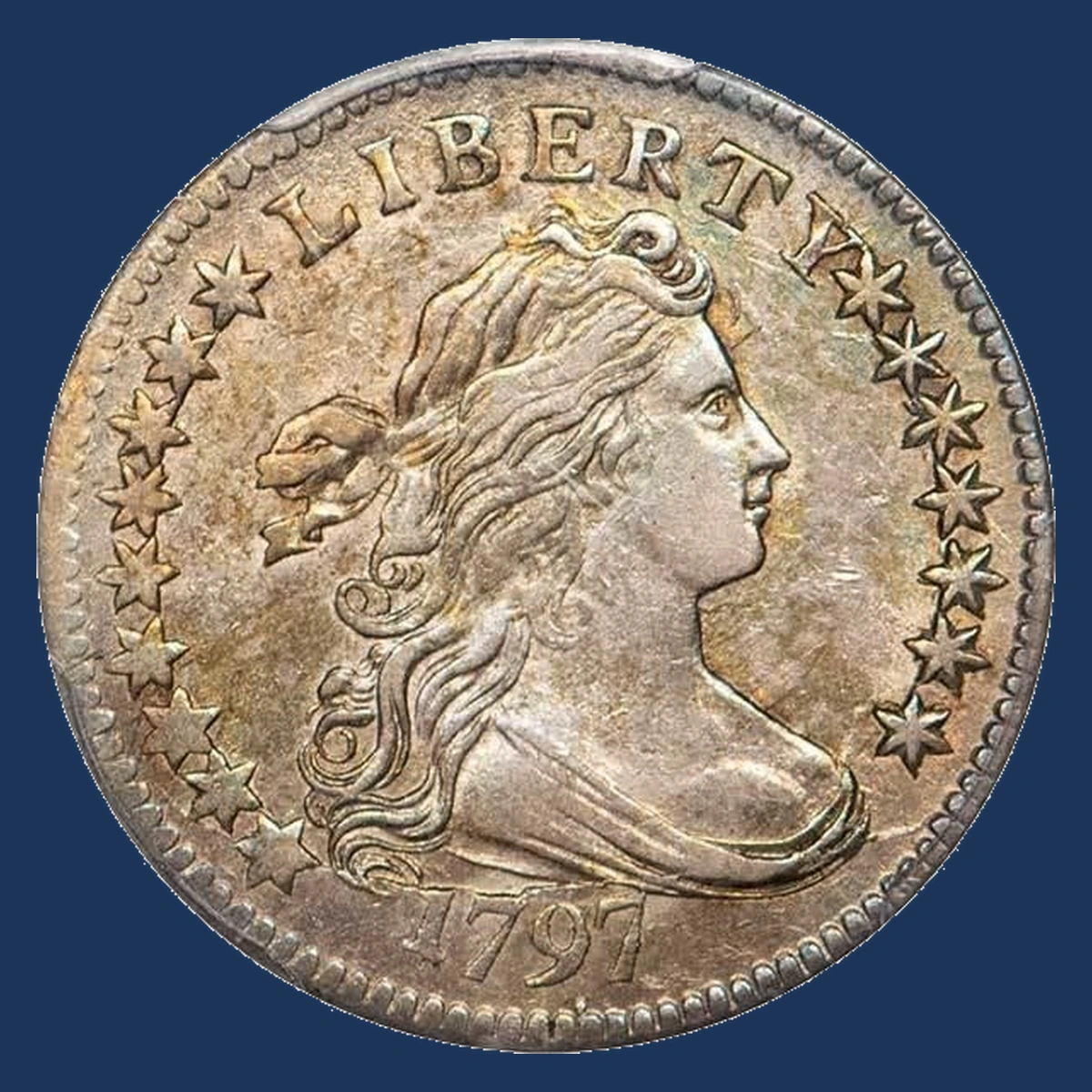
Faint extra shapes appear in the smooth background of a sixteen-star dime graded PCGS AU50. That grade describes a coin with some circulation wear.
The auction catalog calls the shapes clash marks. They formed when the two stamping tools met with no blank between them, transferring pieces of their designs to each other.
Later coins could receive those unintended outlines alongside the normal portrait and eagle. This example also has separate cracks near the date.
The report does not name every line’s exact position. The AU50 photographs are needed, rather than a pattern borrowed from a similarly dated half dime.
Estimated Value
The estimated whole-coin range is $1,500–$20,000 for circulated sixteen-star dimes with recognizable original clashes. Remaining detail and surface quality carry much of the value.
The reported AU50 also has date-area cracks. Those two features are not priced as separate coins.
Its catalog quoted the $10,575 XF45 sale from January 2016 for comparison. That historical amount is neither a recorded sale of the AU50 nor a measured extra premium for its faint clash marks.
How to Identify
Check that you have the small-eagle dime, with sixteen front stars, rather than a similarly dated half dime. A scale and calipers compare about 2.70 grams and 19.8 mm, allowing for wear; also inspect the grooved edge.
Then place the AU50 photographs beside the opposite design and use a magnifier to follow a faint extra outline. Low side lighting should help you see whether its shape fits a recognizable part of Liberty or the eagle.
Random scratches do not form that specific connection, and the separate date cracks need not have become a large rim break. Start with a copied outline that fits the opposite design in the correct place.
3. 1797 Draped Bust Dime Advanced Rim-Connected Die Break (Estimated Up to $25,000)
The date almost disappears on a heavily worn Fine-15 example, while Liberty remains much clearer. Only faint lower parts of 79 were described as visible.
The tool’s cracks had grown into a broad rim-connected failure, approaching a complete break. This is much more extensive than two separate raised lines.
The back also shows weakness near the final S of STATES, opposite the affected front area. Both faces help explain the damage to the tool.
The AU50 used to show clashes had not reached this stage. Its separated cracks and the Fine-15’s large failure belong to different coins.
Estimated Value
The Fine-15 sold for $7,050 at Stack’s Bowers in 2013, according to PCGS Auction Prices. Estimate $2,500–$25,000 for advanced examples, from heavily worn coins to unusually well-preserved circulated survivors.
The wide range reflects both the scarce dime and its condition. It does not imply that every faint 1797 date has the same large break.
The earlier AU50’s guide figures also should not be presented as a sale of this advanced form.
How to Identify
Turn to the final S of STATES on the back before judging the weak date. A magnifier should show the corresponding weak design described for the advanced example.
Now compare the front with the Fine-15 photographs. Faint lower date traces should sit below a portrait retaining much more detail.
Weigh against the original 2.70 grams and measure width against 19.8 mm with calipers. Inspect the grooved edge for a cut or a missing piece of the coin itself.
Two separated cracks alone do not show this later stage.
The first useful match combines the broad date-area failure with the weak final S on the opposite face.
Conclusion
Estimated whole-coin values for these 1797 dimes run from $1,500 to $25,000. The underlying coin’s wear and original surfaces matter alongside the visible tool damage.
A weak date needs context. Follow the raised cracks, compare faint clash outlines with the opposite design, and check the final S for the advanced break.
Keep the earlier AU50 and later Fine-15 examples separate when choosing photographs and prices.