1896 Dime Error List with Pictures

An ordinary 1896 Philadelphia dime sold for $960 in June 2025, showing how much condition can matter before any error is considered. A tiny extra 6 near the rim asks a different question: how did that number get there?
This 1896 Barber dime error list covers four types with estimated whole-coin values of $50–$2,000. Read on to compare extra date pieces, blocked impressions, and a design struck partly off the coin.
1. 1896 Barber Dime Misplaced Date (Estimated Up to $1,500)
Directly below the 9, the top of another number hides among the small teeth along the rim. It is part of an extra 6.
The date punch landed too low when a worker was preparing the die, the steel tool that stamps coins. The misplaced number piece remained below the correctly positioned date.
Coins struck by that tool then carried the extra shape. The Barber dime guide calls this Philadelphia variety MPD-001.
Those letters and numbers are a catalog label. The same label used for an Indian cent would describe an entirely different coin.
Estimated Value
Estimate $50–$1,500 for a matching dime from worn condition through coins with no circulation wear and some marks. A clear extra 6 and an undamaged rim make the feature easier to see.
An ordinary Philadelphia dime graded PCGS MS65 sold for $960 in June 2025. That grade describes a coin without circulation wear and with few marks.
The sale was not this misplaced-date variety. It shows why the whole coin’s preservation still matters when judging an error.
How to Identify
Use a 10× magnifier to examine the rim teeth directly beneath the 9. Look for a curved number top, rather than just a lump on a damaged tooth.
The picture on printed page 49 of Flynn’s Barber dime guide shows where the extra 6 belongs. Include all four date digits and the rim in your comparison photograph.
Turn the coin over: this Philadelphia example has no mint letter. Normal dimes contain 90% silver, weigh 2.50 g before wear, and measure 17.9 mm across, with a grooved edge.
Use a scale and calipers if the coin is loose. The clearest clue is the small curved top of 6 directly below the main date’s 9.
2. 1896 Barber Dime Repunched Date (Estimated Up to $1,500)
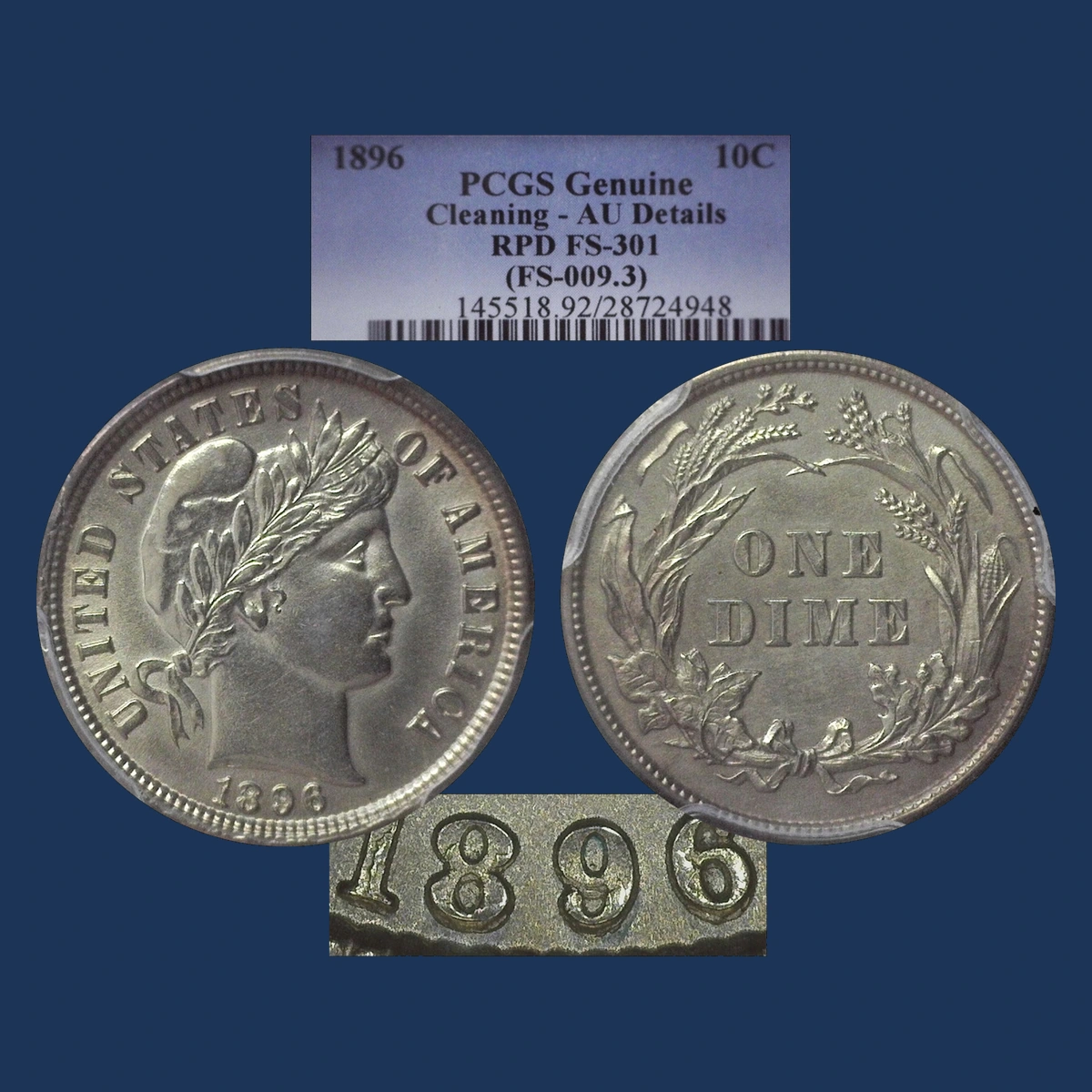
Extra strokes within or beside 896 can show that the same date was punched more than once. The label 1896/896 does not mean that 1896 was stamped over 1895.
NGC lists FS-301 for ordinary Philadelphia coins made for circulation. A separate guide entry, RPD-001, shows several lower impressions of parts of 1896.
On that second example, extra strokes appear near the foot of 1, through 89, and on 6. Both are repunched dates, but their catalog labels should not be assumed to describe the same stamping tool.
Estimated Value
These Philadelphia repunched dates have an estimated whole-coin range of $50–$1,500. It covers worn coins through examples with no circulation wear and some marks, provided the extra numbers can be matched.
The ordinary 1896 MS65 dime’s $960 sale is a comparison for condition, not a sale of either date variety. A faint stroke on a worn coin does not justify that price.
Likewise, two catalog descriptions do not mean two separate premiums should be added together.
How to Identify
Photograph the entire date before enlarging individual numbers. For RPD-001, follow the lower foot of 1, the repeated curves through and below 89, and the extra pieces on 6.
A 10× magnifier helps separate rounded number remnants from flat shelves caused by movement during striking. A scratch cuts into the surface instead of forming another raised number shape.
For FS-301, use photographs labeled FS-301 rather than copying the other variety’s pattern. These Philadelphia coins have no rear mint letter.
A loose example can be checked against the normal 2.50 g weight and 17.9 mm diameter with a scale and calipers, then inspect its edge grooves. Match the full arrangement of extra number pieces, not one isolated line beside a digit.
3. 1896-S Barber Dime Multiple Strike-Throughs (Estimated Up to $1,500)
Several shallow marks on an 1896-S dime were described by a seller as multiple strike-throughs. The listing did not give a grading-service identification or show exactly where each mark lay.
A strike-through happens when material gets between the stamping tool and the metal blank. It blocks part of the design and can leave a hollow or a weak patch.
The shape depends on what got in the way. The seller did not name that material, so the marks cannot be described specifically as cloth, wire, or grease impressions from this report alone.
Estimated Value
Estimate $150–$1,500 for genuine examples from circulated condition through slight wear. The seller asked $300 for the reported coin; no completed sale is established here.
An ordinary 1896-S graded PCGS VF30 with CAC approval sold for $600 in January 2026. VF30 means noticeable wear with substantial detail remaining.
That was a different, graded coin. Its price and condition should not be assigned to the seller’s ungraded strike-through example.
How to Identify
Start by finding 1896 on the front and S below the wreath on the back. Then examine every claimed mark under a 10× magnifier, changing the light to reveal its edges.
A strike-through should interrupt the design where material blocked the tool. Compare the surrounding design with the hollow or weak patch itself.
Corrosion eats holes into silver, a sharp impact pushes metal aside, and a surface flake can leave a ragged hollow. These can look similar at first.
A normal 90% silver dime has a grooved edge, weighs 2.50 g before wear, and measures 17.9 mm. Use a scale and calipers to check those measurements, but begin the error check where missing design meets the edges of each mark.
4. 1896 Barber Dime Off-Center Strike (Estimated Up to $2,000)
An off-center strike leaves a blank crescent on one side of the coin. Across from it, some of the design falls beyond the metal and never appears.
The cause is a blank sitting off to one side between the stamping tools. This differs from cutting a piece off a finished coin.
The 1896 coin guide includes this error type but does not establish one confirmed example’s mint or amount of shift. Those details need to be read from an actual coin, including enough of its date to show 1896.
Estimated Value
A genuine example with a readable date has an estimated range of $200–$2,000. This covers circulated coins through examples without circulation wear but with some marks.
A different-year 1902 Barber dime struck off center sold for $561.20 in June 2026. It was graded ANACS AU50, meaning light wear.
That recent sale provides a same-design comparison, not a price paid for an 1896 coin. A larger shift may help, but damage or a missing date can reduce appeal.
How to Identify
Compare photographs of both faces at the same size. The missing outer design and the untouched margin should agree on both sides if the blank was off center.
A shifted stamping tool can move only one face’s design. Also distinguish a broadstrike, which spreads the metal outward but keeps the complete design.
Read the year and any surviving mint letter, then examine the blank area with a 10× magnifier for grinding or polishing. Check remaining edge grooves for alteration.
Normal dimes are 90% silver, 2.50 g, and 17.9 mm; use a scale and calipers when accessible. The easiest visual check is blank metal on one side paired with design missing beyond the opposite edge.
Conclusion
Estimated values for these 1896 dimes range from $50 to $2,000. An extra 6 near the rim needs a different comparison from repeated shapes within the date.
For larger marks, inspect where the normal design stops and what remains around it. Keep the seller’s $300 asking price separate from completed sales, and judge the whole coin’s wear and damage before deciding what an error adds.