1880 Dime Error List with Pictures

A high-grade 1880 Proof sold for $4,800 in November 2025. A Proof is a specially made collector coin, and that sale did not identify the particular defects described here.
This 1880 Liberty Seated dime error list covers incomplete date digits, a doubled S, rough back texture, and an altered M. Estimated whole-coin values range from $250 to $5,000.
Read on to locate each feature and compare the correct regular-strike or Proof example.
1. 1880 Liberty Seated Dime Broken Date Punch (Estimated Up to $5,000)
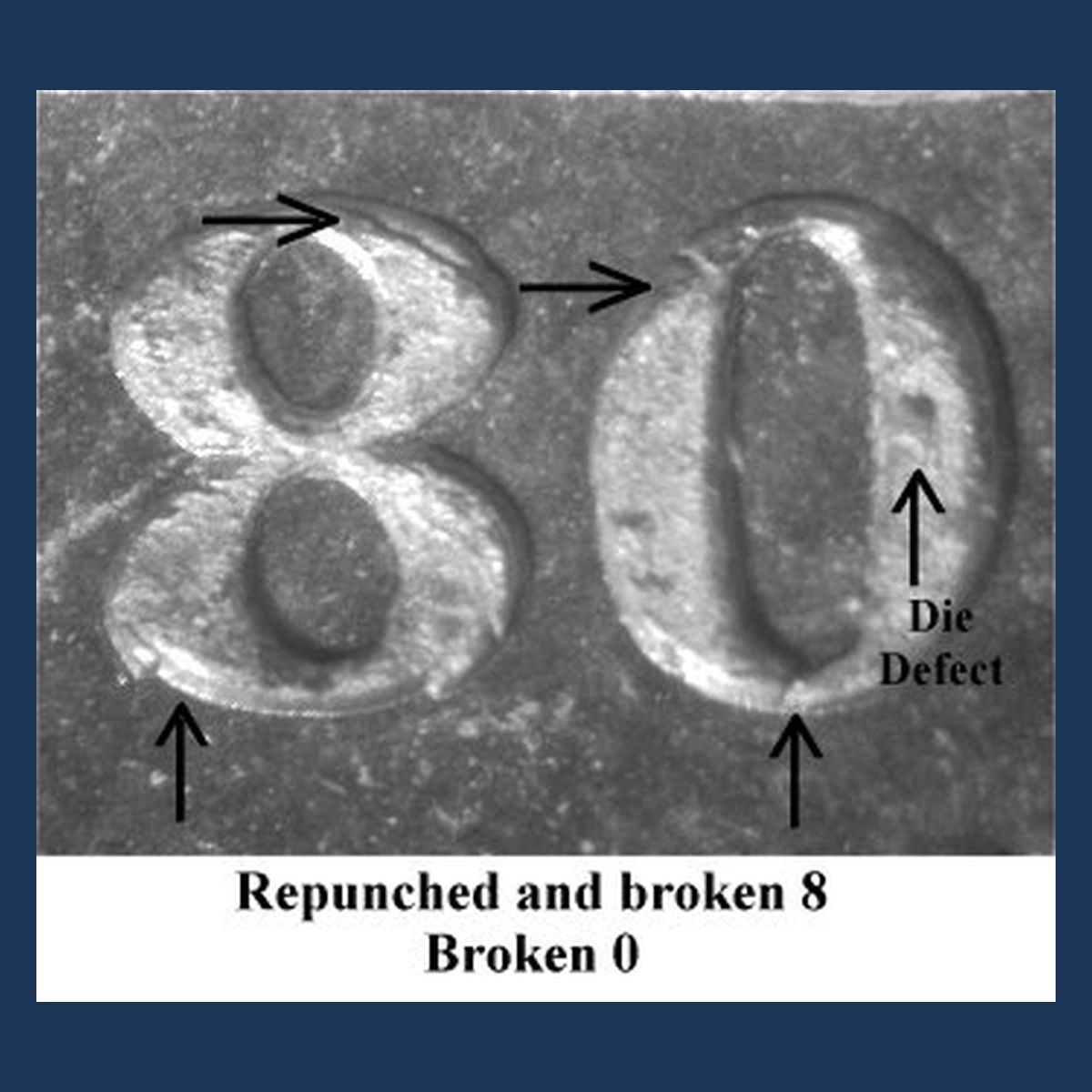
Part of the second 8 is missing on the date of an F-101 Proof. The related F-102 Proof and F-102a regular strike instead show the affected final 80.
These names identify different combinations of dies, the steel tools that stamp coins. The incomplete number shapes came through those tools.
A worn numeral loses detail after striking. A broken punch leaves its own repeated interruption in the date, so the surrounding shapes should match other examples.
The F-103 reference describes a complete date. That coin provides a useful comparison even if its back has a separate defect.
Estimated Value
Estimate $250–$5,000 for correctly identified examples, from circulated regular strikes through attractive Proofs. Grade and finish account for much of the difference.
An auction index lists $660 for an F-102a NGC MS62 in 2024. The $4,800 PR68 sale in 2025 offers high-grade Proof context without confirming the same date defect.
These are whole-coin comparisons. If a coin also has a doubled S or rough back, its price is not counted again for each feature.
How to Identify
Photograph the entire date before enlarging the final digits. Use a magnifier to compare the second 8 with F-101, or the final 80 with F-102 and F-102a.
Check nearby digits for general wear. A repeatedly missing section differs from high points flattened across the whole date.
The normal silver dime weighs 2.50 grams and measures 17.90 mm across. A scale, calipers, and a view of the grooved edge help rule out a coin changed after striking.
Bright backgrounds alone do not prove a Proof finish. Begin with the exact clearly interrupted numeral shape, keeping the complete-date F-103 separate from the broken-date examples.
2. 1880 Liberty Seated Dime Doubled Die Obverse (Estimated Up to $5,000)
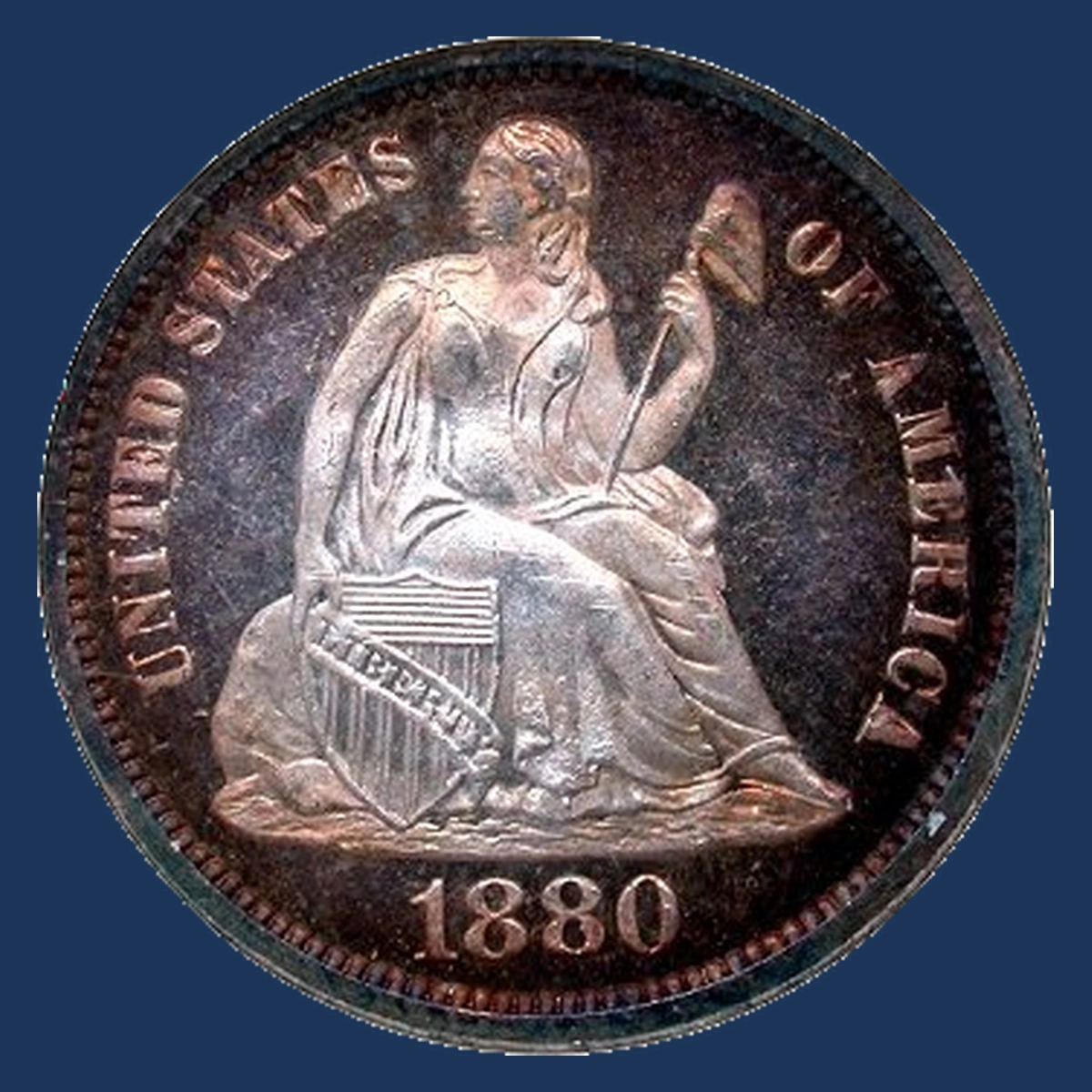
The first S in STATES carries a second outline on the F-102 family. It appears on both the F-102 Proof and the related F-102a regular strike.
The extra shape was part of the front stamping tool’s design. A coin did not need two separate blows to receive it.
This is a small, local feature. It does not mean the whole portrait or every letter should look doubled.
The shape of the added S edge matters. A reflection may vanish as the light moves, while a flat shelf from movement during striking has a different surface.
Estimated Value
The F-102a NGC MS62 sale listed at $660 in 2024 gives a comparison for this particular tool pairing. MS62 means no circulation wear, though the coin can have noticeable marks.
Use an estimated $250–$5,000 whole-coin range, including worn regular strikes and attractive Proofs. A clear S helps identify the variety, but condition still controls much of the price.
The same coin’s broken date or rough back does not create separate additional values.
How to Identify
Place the first S in STATES beside a clear comparison photograph at similar magnification. Follow its curves under a magnifier instead of searching for extra lines across the entire portrait.
Change the light direction and check whether the additional outline stays attached to the raised letter. A narrow reflection can disappear, while a flat shelf may show movement during striking.
Both versions are Philadelphia coins without mintmarks; their regular or Proof finish needs separate judgment. Use a scale and calipers to check against 2.50 grams and 17.90 mm, with an edge check for damage.
The useful first match is the specific second S outline, visible in the same position under changing light.
3. 1880 Liberty Seated Dime Rusted Reverse Die (Estimated Up to $5,000)
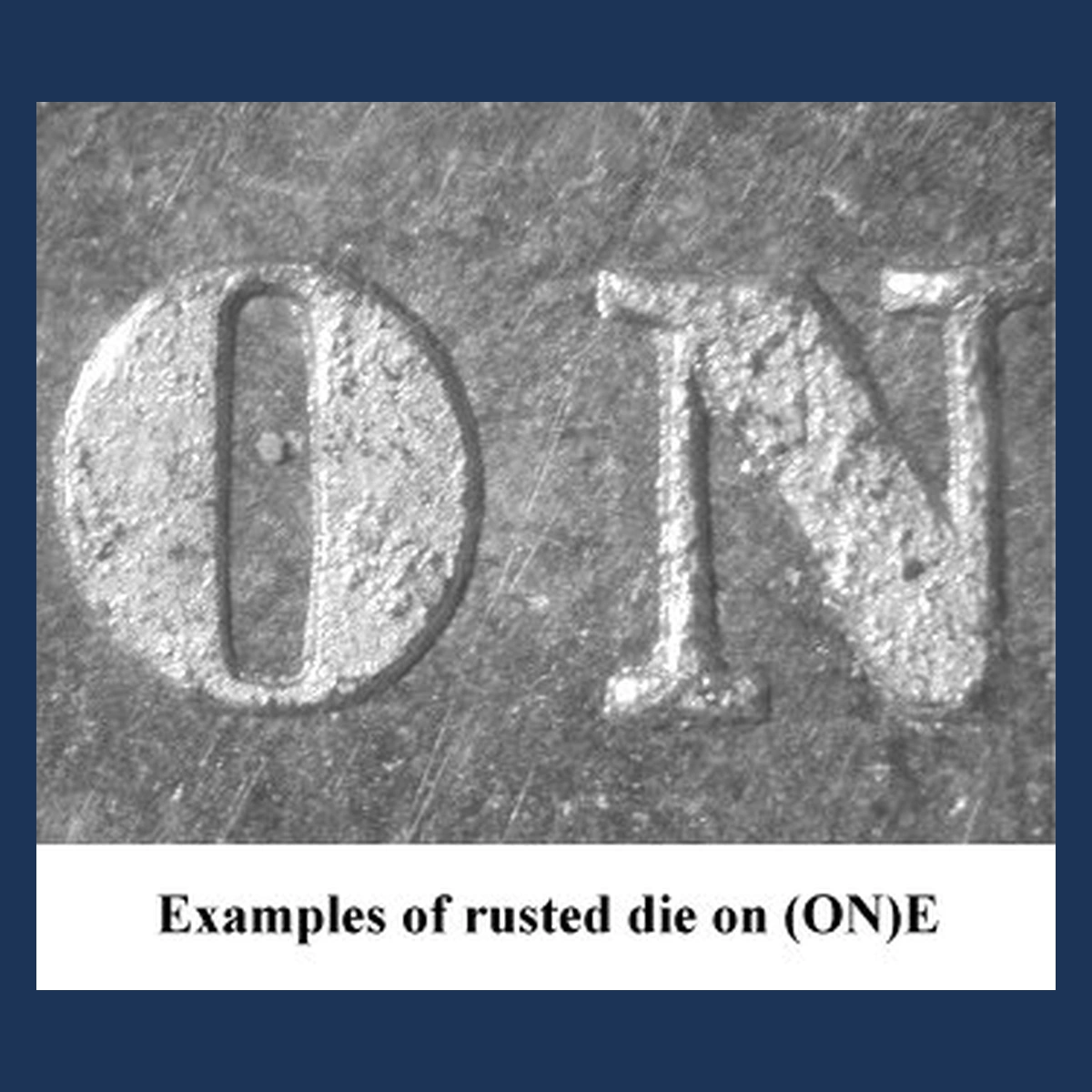
Tiny raised spots can make a silver coin look rough even when its own metal has not corroded. Rust pits in a steel stamping tool allow fresh coin metal to enter and form those small bumps.
The specialist gallery identifies the back tool used for F-102 and F-102a as rusted. Both Proof and regular-strike examples can carry its texture.
Corrosion on the coin itself can instead eat into the surface and leave pits. Dirt or residue can also look rough.
The pattern must match the known tool. Roughness alone does not identify this variety.
Estimated Value
A correctly matched example is estimated at $250–$5,000 as a complete coin. That broad range includes worn regular strikes and much better-preserved Proofs.
The indexed F-102a NGC MS62 sale at $660 in 2024 provides one relevant comparison. More expensive examples need the finish and surface quality to justify their higher level.
The texture records the tool’s condition. It is not extra silver, and it does not automatically add a separate rarity premium to the coin.
How to Identify
Do not clean the rough area. Use low side lighting and a magnifier to see whether the texture consists of raised bumps or sunken pits.
Compare its distribution with the known F-102 or F-102a back. A matching pattern is stronger evidence than one rough patch or similar color.
Dirt sitting on the surface can imitate raised texture. Inspect the surrounding metal and edge for signs of corrosion or damage elsewhere.
A scale and calipers check the normal 2.50 grams and 17.90 mm.
Start with the repeated raised pattern shown in the reference, rather than general roughness across an altered surface.
4. 1880 Liberty Seated Dime Reverse M Die Defect (Estimated Up to $5,000)
The M in DIME has an altered shape on the F-101 Proof. The same back-tool family also appears with F-103, whose front date is complete.
That combination shows why the date and back must be checked separately. A normal-looking 1880 date does not rule out the recorded M feature.
The catalog calls it a die defect but does not give a specific cause. The unusual letter shape is the evidence to match.
A hit can also push metal against M, and dirt can cover part of it. Those changes to an individual coin are different from a repeated tool-made shape.
Estimated Value
For the F-101 Proof feature, estimate $400–$5,000, from impaired or lower-grade examples through attractive high-grade coins. The $4,800 NGC PR68 sale in November 2025 gives Proof-market context, but does not identify this M defect.
An F-103 regular strike has a separate estimated range of $250–$2,500, from circulated pieces through lower unworn grades. Its back mark does not turn it into a Proof.
Match finish and condition before comparing the price.
How to Identify
Keep the whole word DIME visible while enlarging M, so you can compare its position beside I and E. Use a magnifier and move the light without rubbing the letter; dirt or pushed metal can hide the true outline.
The normal coin weighs about 2.50 grams and measures 17.90 mm, checked with a scale and calipers if it is loose. Inspect the grooved edge, then identify its finish before matching the front and back photographs.
A complete F-103 date can occur with this back defect, so broken numerals are not required. Begin with the exact altered M shape and its relationship to the neighboring letters.
Conclusion
Estimated 1880 dime values run from $250 to $5,000 across these regular-strike and Proof examples. Several features can share one coin, so the prices are not added together.
Check the interrupted date, first S in STATES, back texture, or M according to the feature you see. Then match the other face and the finish.
Preserve the surfaces, because wear, scratches, and residue can hide or imitate these small details.