1824 Dime Error List with Pictures

An 1824/2 dime sold at GreatCollections for $1,017.50 in 2025. The slash describes its unusual date: parts of an earlier 2 remain beneath the final 4.
All 1824 dimes have that changed date, while some also show faint transferred designs or a raised crack. This guide to 1824 dime errors covers estimated values of $200–$1,600 for worn examples.
Check the date first, then look for the quieter marks around Liberty’s portrait.
1. 1824 Capped Bust Dime 4-over-2 Overdate (Estimated Up to $1,300)
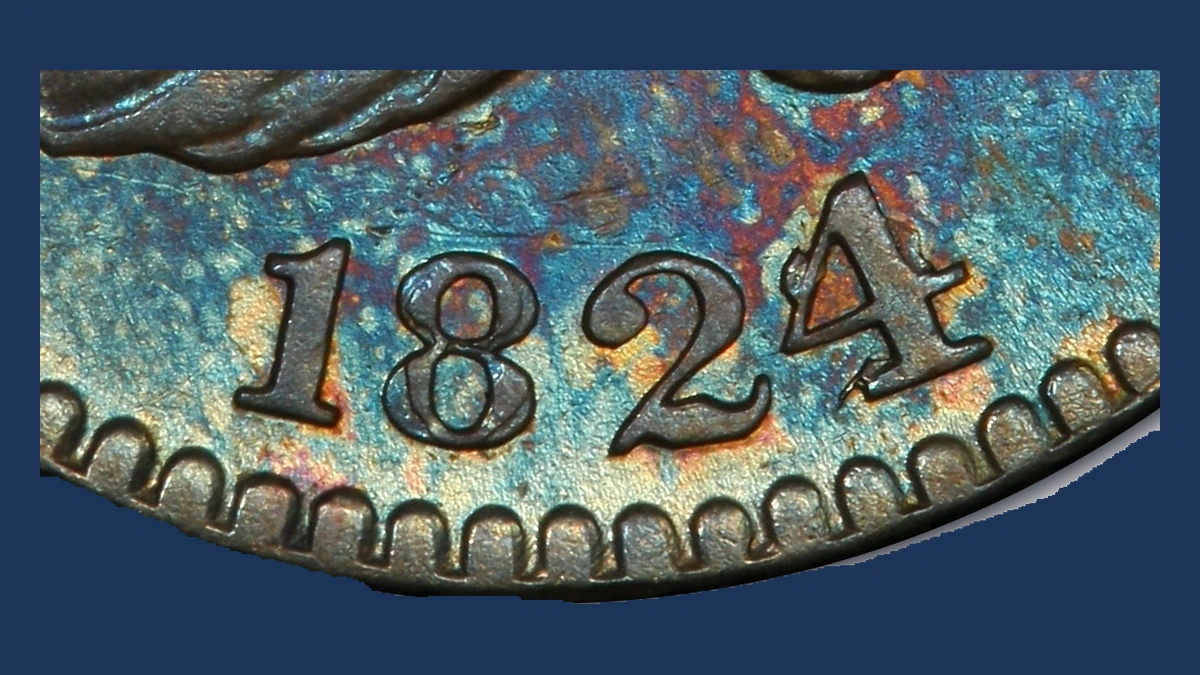
The last number was changed before the coin was made. An unused die dated 1822 received a new 4 over its final 2.
A die is the steel tool that stamps coins. The earlier number was not fully removed, so pieces of it appeared beneath the 4 on coins made with that tool.
Every 1824 dime uses this changed date, called an overdate. Two different back designs were paired with the same front.
Their differences can be seen in the 1 of 10C. Those back designs do not change how the 4-over-2 date was created.
Estimated Value
The estimated whole-coin range is $200–$1,300 for many worn examples. The 2025 sale brought $1,017.50 for a VF35 coin with CAC quality approval.
VF35 indicates wear with substantial detail remaining. The changed date is already part of every 1824 dime, rather than a separate bonus added to those values.
A scarcer back design or a higher condition grade can require a different comparison. Exceptional unworn examples can exceed this range for worn coins.
How to Identify
Keep all four date digits visible before looking closely at the last one. A 10× magnifier should reveal the old numeral’s remaining strokes beneath the 4.
Compare those strokes with a clear 1824/2 example. Move the light so shadows beside the raised number are not mistaken for extra metal.
Check the coin’s edge grooves and overall shape. If safely accessible, use a scale and calipers against 2.70 g and about 19 mm; the metal is roughly 89.2% silver.
The 1 in 10C can then help distinguish the two back designs. For the overdate itself, return to the last date digit: it is the visible remains of a 2 beneath the 4 that make the match.
2. 1824 Capped Bust Dime Clashed Dies (Estimated Up to $1,500)
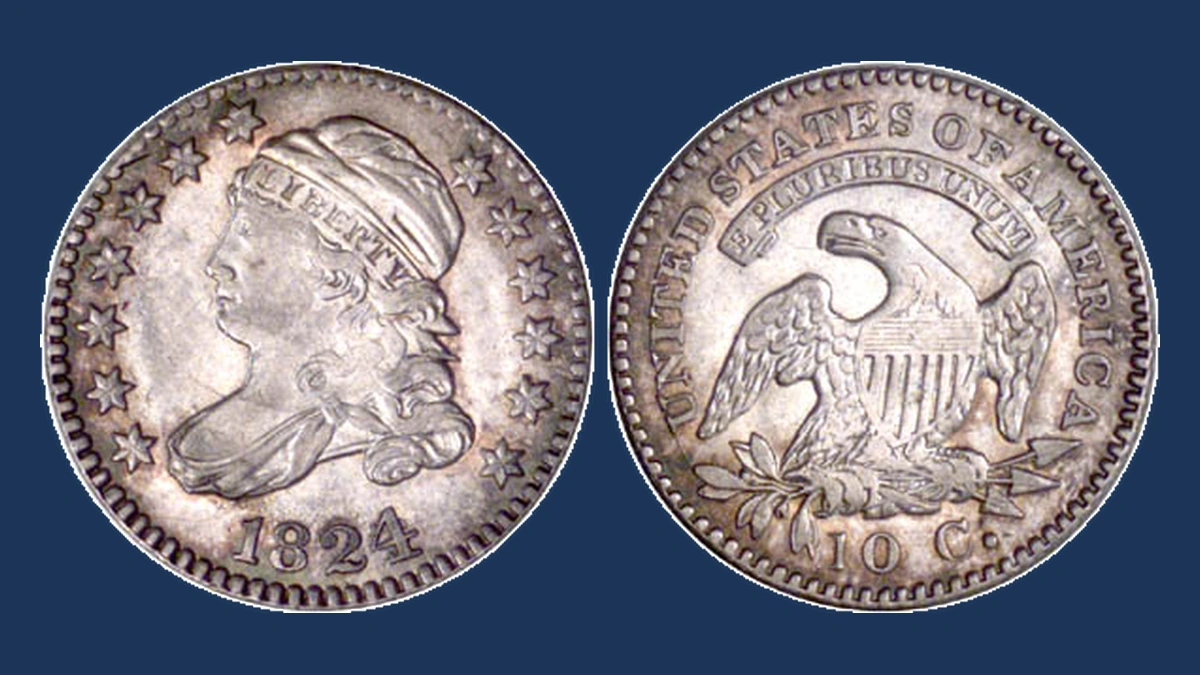
Faint traces of the opposite design are reported on both sides of an 1824/2 collection coin called JR-1. These marks are known as die clashes.
They begin when the two stamping tools meet without a blank between them. Each can pick up part of the other’s design and pass it onto later coins.
The faint shapes therefore relate to the opposite side. They do not come from the whole coin moving before another blow.
The back tool was also used in other years. An error on one of those later coins does not automatically belong to 1824.
Estimated Value
The estimated range is $250–$1,500 for worn examples with recognizable light clash marks. This prices the complete early dime, including its condition.
The 2025 VF35 sale at $1,017.50 gives a same-year comparison. That sale does not establish clash marks on the coin sold.
A stronger price needs more than a claim of extra lines. The marks should be visible and match the opposite design, while the surrounding surface should remain attractive for its grade.
How to Identify
Photograph both sides upright, then compare each faint mark with the design on the opposite side. A clash should borrow a recognizable shape from that other design.
Use a 10× magnifier and move the light across the surface. Scratches, flat doubled edges, and random lines need different explanations.
When safely accessible, record weight and diameter with a scale and calipers. Normal starting figures are 2.70 g and about 19 mm, with edge grooves and roughly 89.2% silver.
Use pictures of the actual 1824 example for comparison. A later coin sharing its back tool may carry a different error.
The best check is whether the faint mark repeats part of the opposite design in the matching position, rather than merely looking unusual.
3. 1824 Capped Bust Dime Obverse Die Crack (Estimated Up to $1,600)
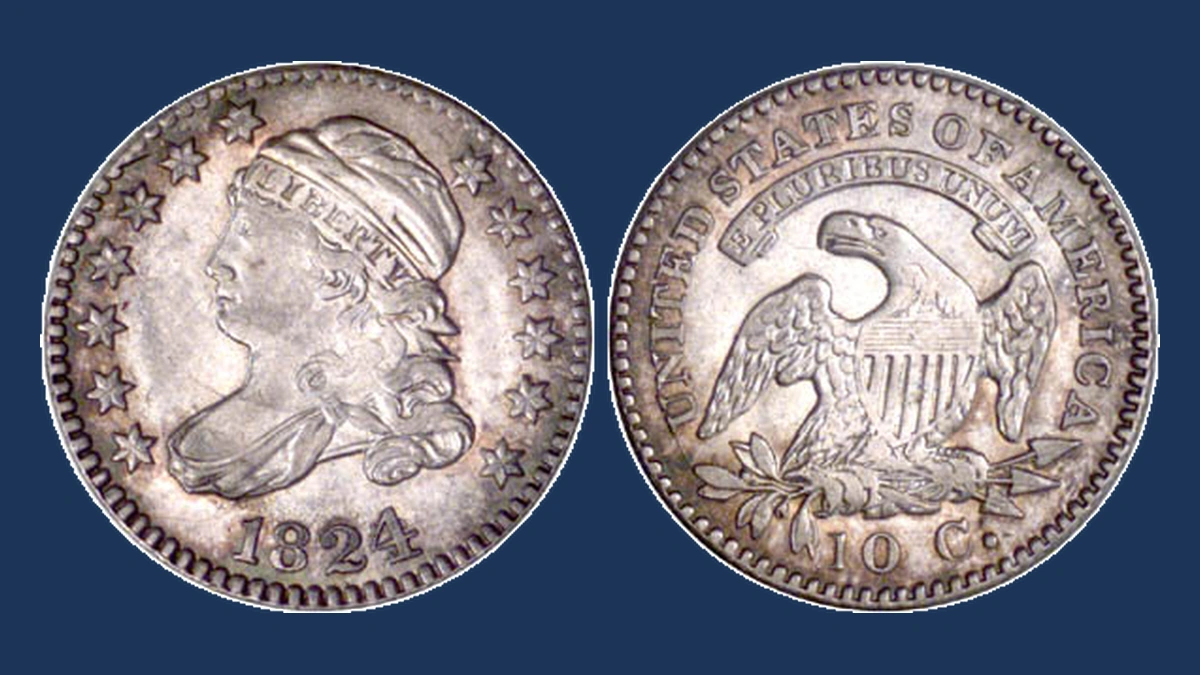
Look above stars six and seven for a raised line leading into the open space above Liberty’s cap. That is the reported route of this front-side crack.
The crack was in the stamping tool, not in the finished silver coin. Metal entered the narrow opening and formed a raised ridge during striking.
Its position gives you a more specific place to look than the faint clash marks. Follow the visible route without assuming it continues to the rim.
This crack can appear with the overdate. The changed date came first; the crack developed as the tool wore out.
Estimated Value
The estimated whole-coin range is $250–$1,600 for worn examples showing this crack. A clear continuous line and well-preserved nearby detail make the feature easier to appreciate.
The $1,017.50 VF35 sale from 2025 is a same-year comparison. It does not establish this particular crack on that auction coin.
The estimate combines the early dime’s condition with interest in the raised line. It is not a newly recorded sale of the collection example described here.
How to Identify
Tilt the coin until light falls across the area above stars six and seven. A raised ridge should stand above the surrounding silver rather than sink into it.
Follow that ridge toward the open space above the cap with a 10× magnifier. Dirt and scratches can look like lines in one photograph, so change the lighting angle.
Keep the full date visible and note where wear interrupts the ridge. Do not add an unseen route beyond the part you can follow.
Use a scale and calipers when safely accessible, comparing with 2.70 g and about 19 mm. The early dime contains roughly 89.2% silver and has edge grooves.
The useful match is a raised line in that specific star-to-cap position, supported by the surrounding original design.
Conclusion
Estimated values for these worn 1824 dimes run from $200 to $1,600. The old 2 beneath the 4 is part of every coin from this year, while clashes and cracks can add other visible features.
After checking the date, look for shapes borrowed from the opposite side or the raised line above stars six and seven. Keep each mark tied to what you can actually see on the coin.