1853 Dime Error List with Pictures

A rare 1853 collector Proof sold for $52,875 in June 2014. Its PR66 grade describes a very well-preserved coin specially made for collectors.
This 1853 dime error list spans estimated whole-coin values of $25–$100,000, with the highest range belonging to those rare Proofs. Ordinary arrows beside the date mark a weight change and are not errors.
Check the arrows, mint, and type of manufacture first, then follow the extra marks below.
1. 1853 Liberty Seated Dime Reverse Doubling (Estimated Up to $600)
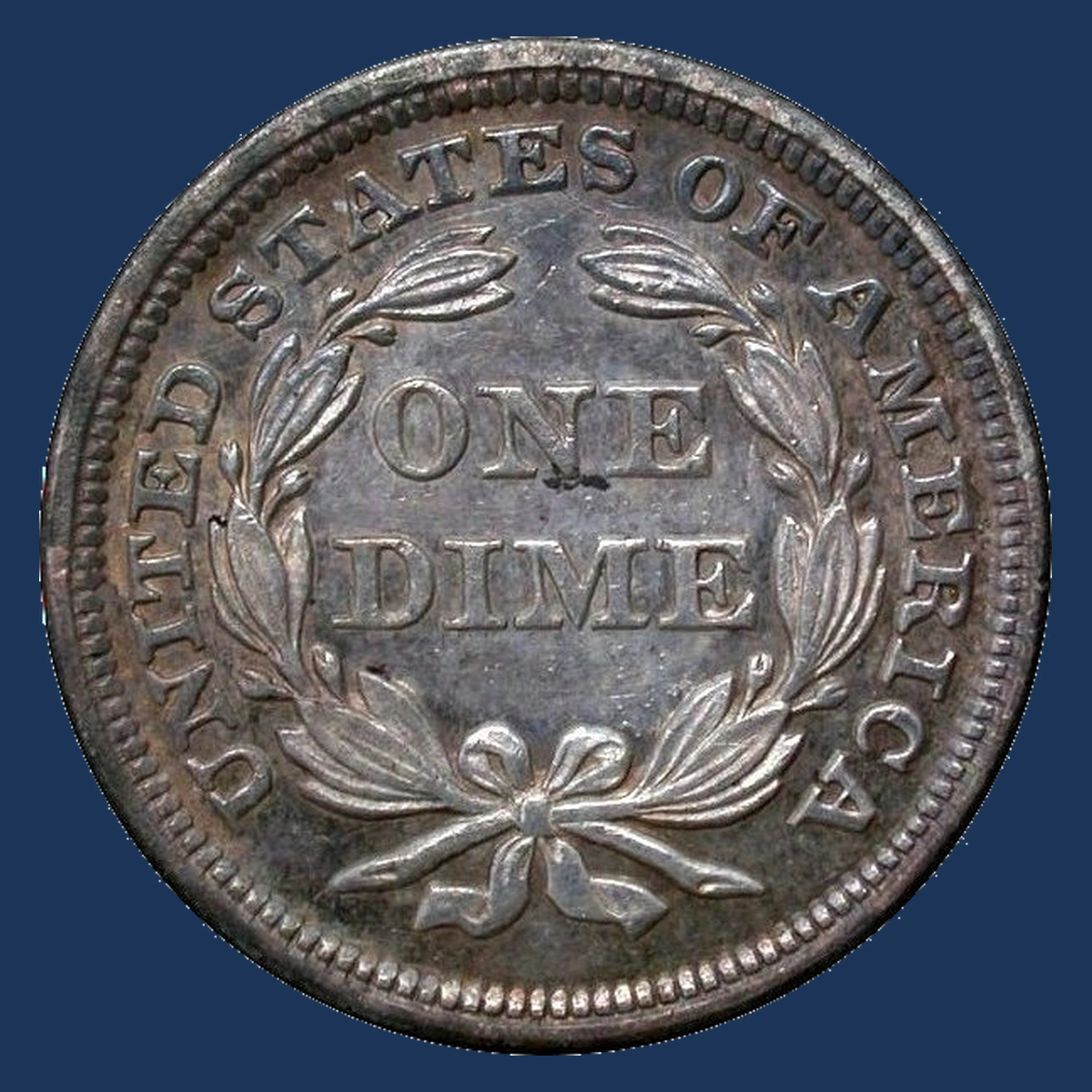
UNITED has the repeated outline described on the Philadelphia F-109 With Arrows dime. Cracks also run from the later letters of that word toward the rim.
The front gives another clue: the right arrow stem joins the date’s 3. Together these details connect the reported doubling to a particular example.
The catalog describes doubling without establishing its exact cause. The visible extra outline should therefore be examined before assuming a doubled stamping tool made it.
A thick-looking word alone is not enough. Compare the actual letter shape as well as the matching cracks and arrow placement.
Estimated Value
The estimated whole-coin range is $25–$600 for worn through lightly worn examples. The overall condition accounts for much of that price.
An ordinary With Arrows dime graded PCGS AU55 sold for $288 in November 2025. AU55 means slight wear.
That result is not a sale of the F-109 doubling. It offers a condition comparison, with additional interest depending on a clear matching feature rather than the word doubled in a description.
How to Identify
Use a 10× magnifier on UNITED and move the light across the letters. Compare any second outline with a clear F-109 picture.
A rounded extra contour and a flat shelf can have different causes. Inspect their shape rather than simply counting two edges.
Check the cracks toward the rim and the right arrow stem joining 3 on the front. Those details support the comparison without replacing the letter examination.
When safely accessible, use a scale and calipers against 2.49 g and 17.9 mm. This With Arrows dime is 90% silver and has edge grooves.
The useful match is the repeated UNITED outline on the correct coin, with the arrow and cracks agreeing. Normal weight does not establish the doubling.
2. 1853 Liberty Seated Dime Die Cracks (Estimated Up to $700)
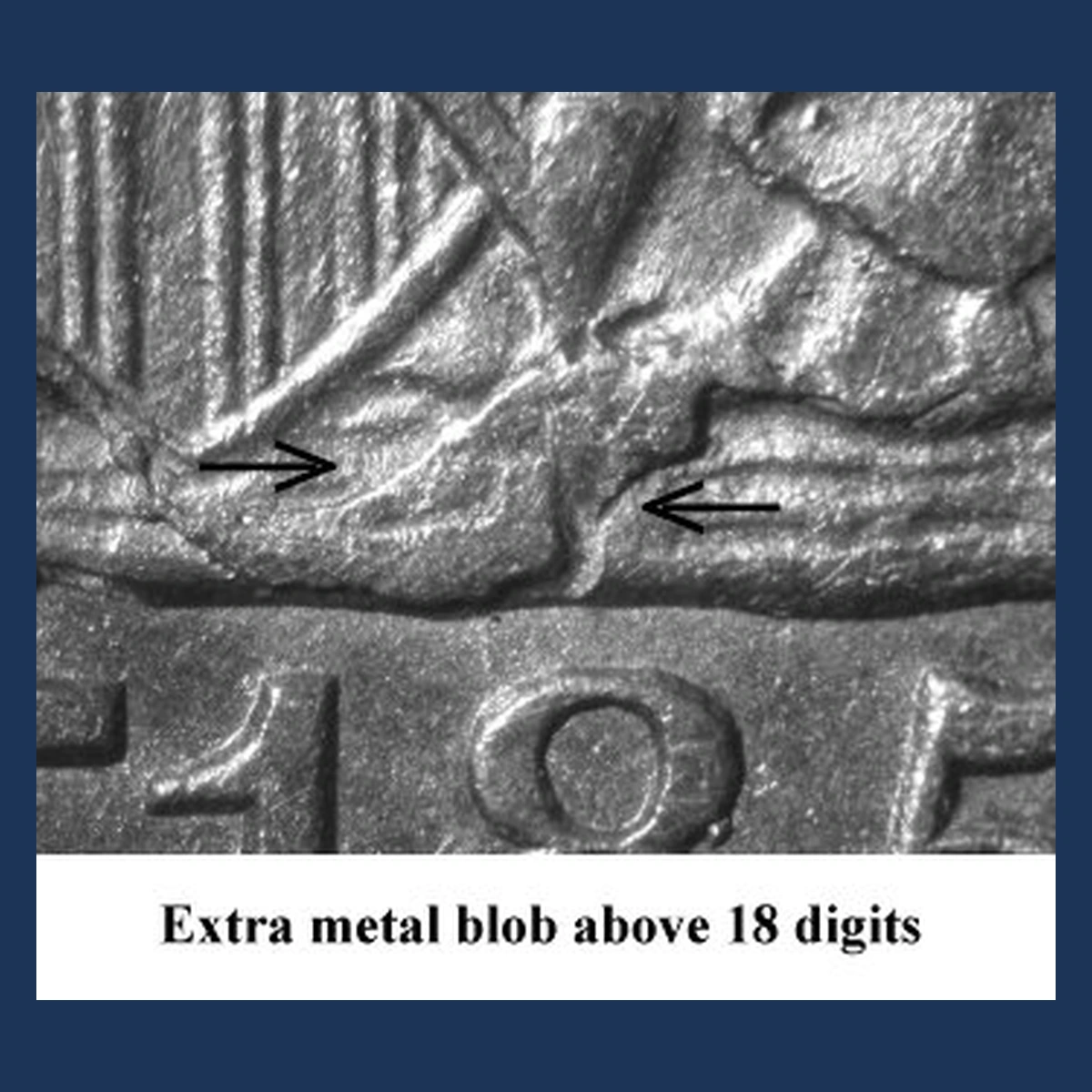
The Philadelphia and New Orleans crack reports point to different sides. Philadelphia has back-side lines from STATES toward the wreath.
New Orleans examples have front breaks around the base above 8 and near the first star. These positions should not be combined into one crack pattern.
The crack began in the die, the steel tool that stamps coins. Silver entered its opening during striking and formed a raised ridge.
The line can grow or branch as the tool wears out. Several branches record the progress of the same failure, rather than a new kind of error for each added line.
Estimated Value
The estimated whole-coin range is $25–$700 for worn through lightly worn examples. Compare Philadelphia and New Orleans separately.
Small cracks usually add modest collector interest. The ordinary Philadelphia AU55 sale of $288 in November 2025 gives a condition comparison, not a price for either listed crack pattern.
A strong network can draw more attention than a faint line. The mint, remaining design, and original surfaces still help decide where the actual coin belongs within the range.
How to Identify
Look for the O on the back before choosing a picture. On Philadelphia coins, follow the raised lines from STATES toward the wreath.
For New Orleans, inspect the base above 8 and the area near star one. Use a 10× magnifier and tilt the light to see whether the line rises above the silver.
A scratch cuts inward, while dirt sits on the surface. Neither should be accepted just because it follows part of a similar route.
These reports concern With Arrows dimes, originally 2.49 g and 17.9 mm. Use a scale and calipers when safely accessible, and inspect the edge grooves.
Keep the arrows and mint letter visible in the photograph. The correct raised route must match that mint’s example.
3. 1853 Liberty Seated Dime Rotated Reverse (Estimated Up to $1,000)
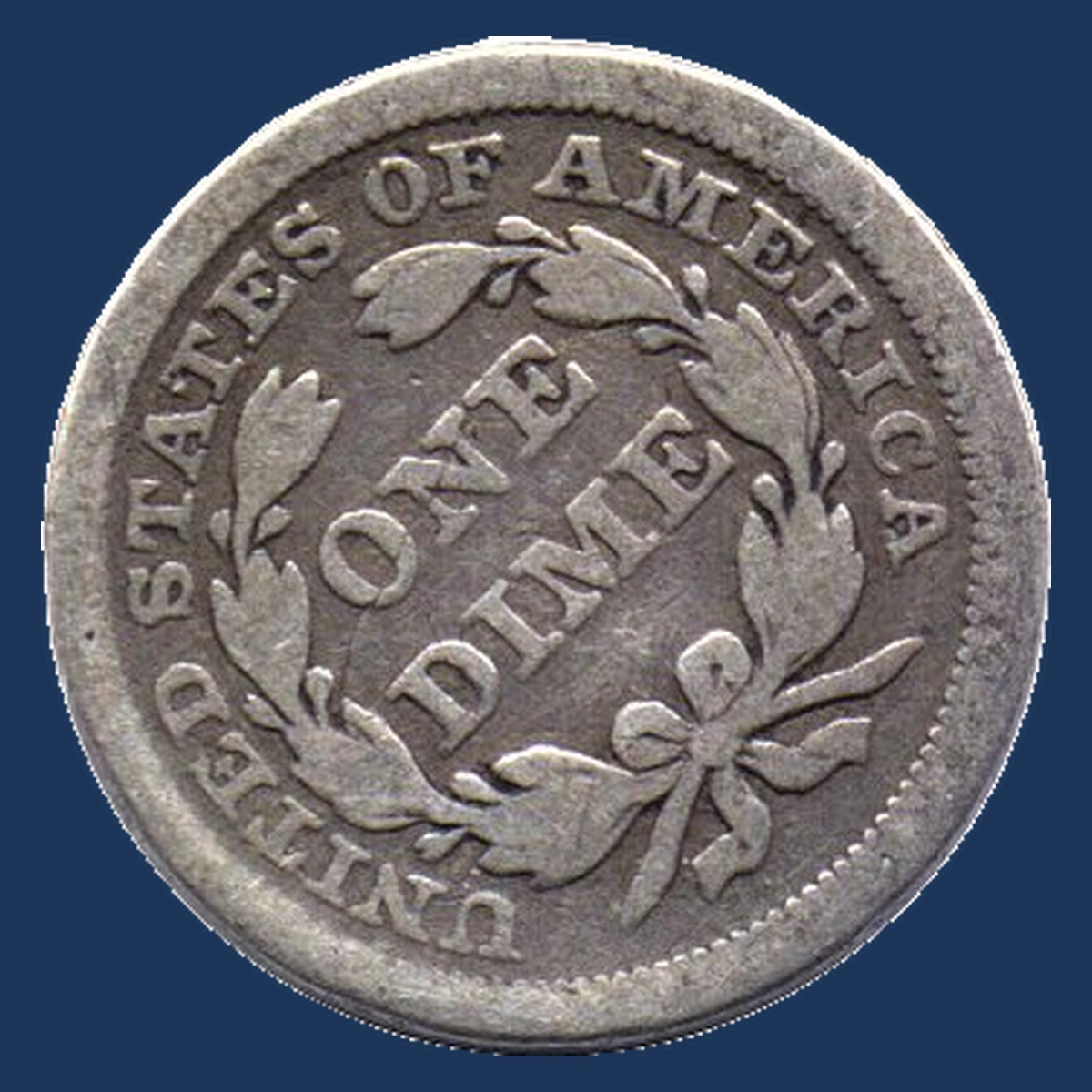
The back design leans right on two listed Philadelphia With Arrows examples. F-104a is recorded at 45 degrees, while F-115 is recorded at 32 degrees.
Their front tools were prepared differently. F-104a had the date and arrows entered separately; F-115 received them together from the master design.
That difference helps keep the comparisons separate. It does not change how you test the angle on the finished coin.
Hold the front upright and make a controlled turn. Two photographs straightened separately, or a coin sitting diagonally in a holder, cannot establish the relationship between its sides.
Estimated Value
The estimated whole-coin range is $75–$1,000 for worn through lightly worn examples with a demonstrated rotation. PCGS lists an F-115 MS62 sale at $600 in January 2025.
MS62 means unworn with noticeable marks. That sale compares the variety and condition; it does not prove the auction coin showed the recorded 32-degree angle.
Check the angle on the actual coin. A tilted position inside a holder does not add value as a rotation error.
How to Identify
Hold Liberty upright and turn the holder from top to bottom without a sideways twist. The back should normally end upright.
Measure any rightward lean against a vertical guide. Repeat the same turn to check that the angle is consistent.
Compare 45 degrees with F-104a or 32 degrees with F-115. Keep the correct date-and-arrow arrangement attached to each comparison rather than swapping the two angles.
Use a scale and calipers when safely accessible against 2.49 g and 17.9 mm. Inspect the edge grooves for seams or other changes.
A pair of photographs taken during the same controlled turn can show the result. The repeating rightward angle between the two designs, not the slant of one image, is the deciding evidence.
4. 1853 Liberty Seated Dime Repunched Date (Estimated Up to $1,500)
Extra strokes near 8, 5, and 3 can remain from an earlier date-punch position. On the listed Philadelphia With Arrows examples, they appear below or to the right of particular numerals.
Each piece should resemble part of the number the punch originally made. A random raised line beside the date is a different observation.
Not every 1853 front tool was prepared in the same way. The exact number and position of remnants therefore depend on the example.
Compare one complete date with its own picture. Do not expect every reported numeral to repeat in the same direction on every coin.
Estimated Value
The estimated whole-coin range is $50–$1,500 for worn through lower unworn examples with matching date remnants. Clear shapes and original surfaces help support stronger prices.
The ordinary Philadelphia With Arrows AU55 sold for $288 in November 2025. No repeated-date identification is attached to that sale here.
It supplies a condition comparison rather than a direct variety price. The correct match matters more than simply counting how many numbers seem to have an extra line.
How to Identify
With a 10× magnifier, follow each extra piece into the shape of an earlier numeral. Compare below and to the right of 8, 5, or 3 with the matching date picture.
Do not require every number to show the same pattern. Different tools left different remnants.
A scratch cuts into the date, while movement during striking can flatten a shelf beside it. Neither automatically demonstrates another date-punch position.
Confirm both arrows and the absence of an O on the back. This Philadelphia 90% silver dime normally weighs 2.49 g and measures 17.9 mm.
Use a scale and calipers when safely accessible, and inspect the edge grooves. The date identification rests on matching numeral-shaped remnants in the correct positions.
5. 1853 Liberty Seated Dime Rim Cuds and Retained Cuds (Estimated Up to $2,000)
Several Philadelphia With Arrows examples have raised areas joined to the rim. Listed locations include two to three o’clock on the back and four or nine o’clock on different fronts.
Other backs have retained breaks near twelve to one or eight to nine o’clock. In a retained break, the cracked tool piece remains in place instead of falling away.
Some design can therefore survive inside the affected area. A missing piece can leave a larger raised patch with less detail.
These locations describe separate examples. One dime does not need every listed lump to show a genuine rim failure.
Estimated Value
The estimated whole-coin range is $75–$2,000 for worn through lightly worn examples. Large clear breaks and attractive original surfaces can support stronger prices.
The ordinary With Arrows AU55 sale of $288 in November 2025 provides a starting condition comparison. It was not identified as a cud sale.
Compare the actual raised boundary and any remaining design with the right example. Several affected areas still belong to one coin, rather than creating several full-coin prices.
How to Identify
Hold the correct side upright before assigning a clock position. Follow the raised or shifted area to the rim with a 10× magnifier.
Look for surviving design inside a clear boundary. That can indicate a broken tool piece remained in place.
Compare the location with the matching 1853 picture. An interior bump lacks the same rim connection, while a later knock can fold existing metal over the design.
Check for added solder or disturbed surface around the patch. Use a scale and calipers when safely accessible against 2.49 g and 17.9 mm, then inspect the adjoining edge grooves.
The useful feature is the matching rim-connected boundary. A cud changes the struck shape without requiring a piece of the silver coin to be missing.
6. 1853 Liberty Seated Dime Clashed Dies (Estimated Up to $3,000)
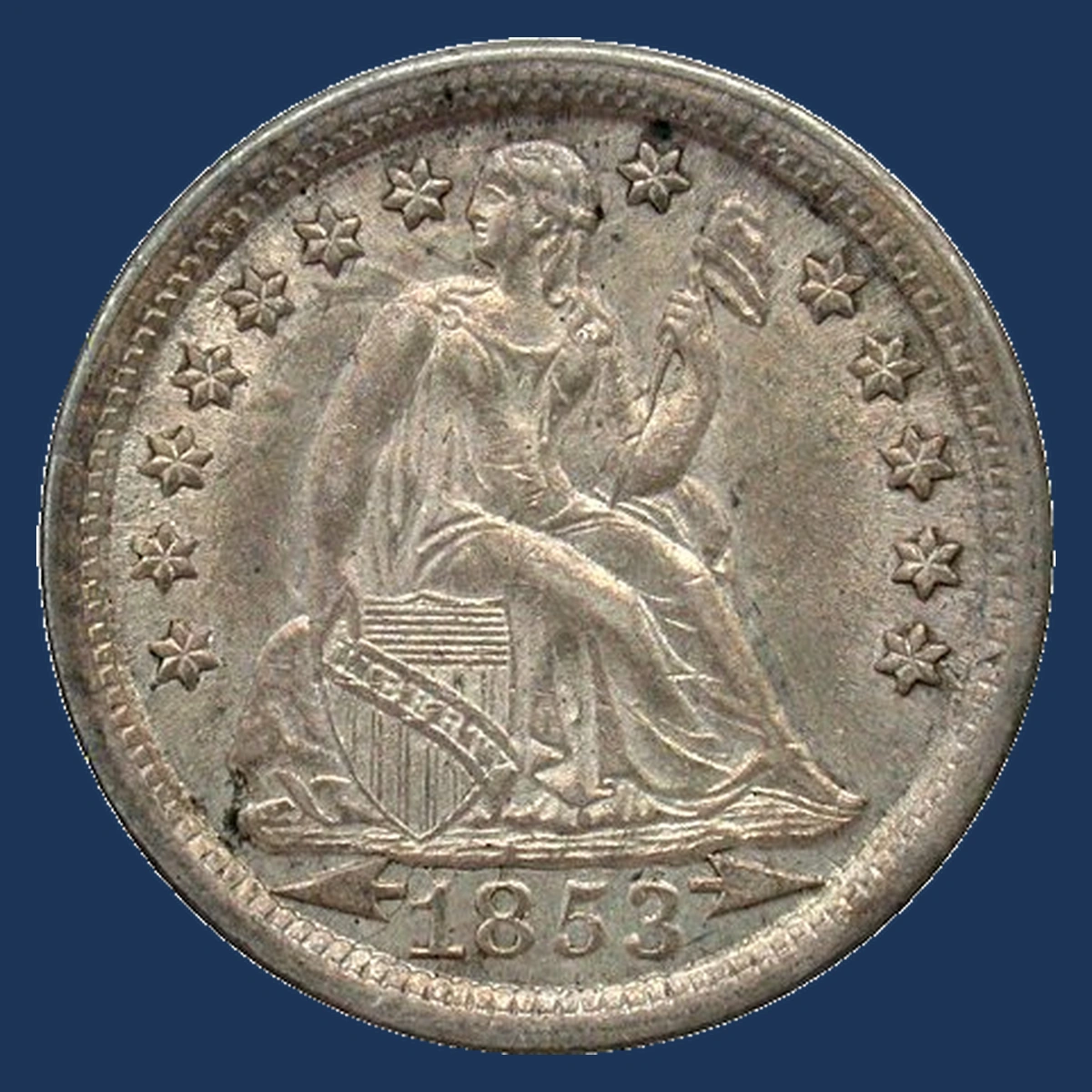
A Philadelphia No Arrows example has extra design traces beside Liberty’s right arm. A separate New Orleans With Arrows report places clashing on the back without the same detailed shape description.
The two coins belong to different weight versions. Their pictures should not be exchanged simply because both read 1853.
Clashes form when the stamping tools meet without a blank between them. They can acquire parts of the opposite design and copy those traces onto later coins.
A recognizable borrowed shape is the useful clue. A random line in the same general area does not establish that the tools collided.
Estimated Value
Estimated whole-coin values are $200–$3,000 for Philadelphia No Arrows and $40–$700 for New Orleans With Arrows. These ranges cover worn through lightly worn examples.
The scarcer No Arrows coin has a different underlying value. A clear clash can add interest, but it does not remove that distinction.
Neither estimate applies to rare collector Proofs. The ordinary Philadelphia With Arrows AU55 sale at $288 provides only a broader condition comparison, not a direct clash price.
How to Identify
Check beside the date first. A Philadelphia No Arrows dime began at 2.67 g, while a With Arrows dime began at 2.49 g.
Both normally measure 17.9 mm and have edge grooves. Use a scale and calipers when safely accessible, allowing for wear.
On the No Arrows front, inspect beside Liberty’s right arm with a 10× magnifier. Compare any extra shape with the opposite side’s design.
For New Orleans, confirm the O and choose a With Arrows back-side picture. A sunken backward image pressed in by another coin has a different cause.
The matching feature is a trace of the opposing design in the correct location for that version. A stray scratch beside an arm or wreath is not enough.
7. 1853 Liberty Seated Dime Repunched Arrows (Estimated Up to $100,000 for Proofs)
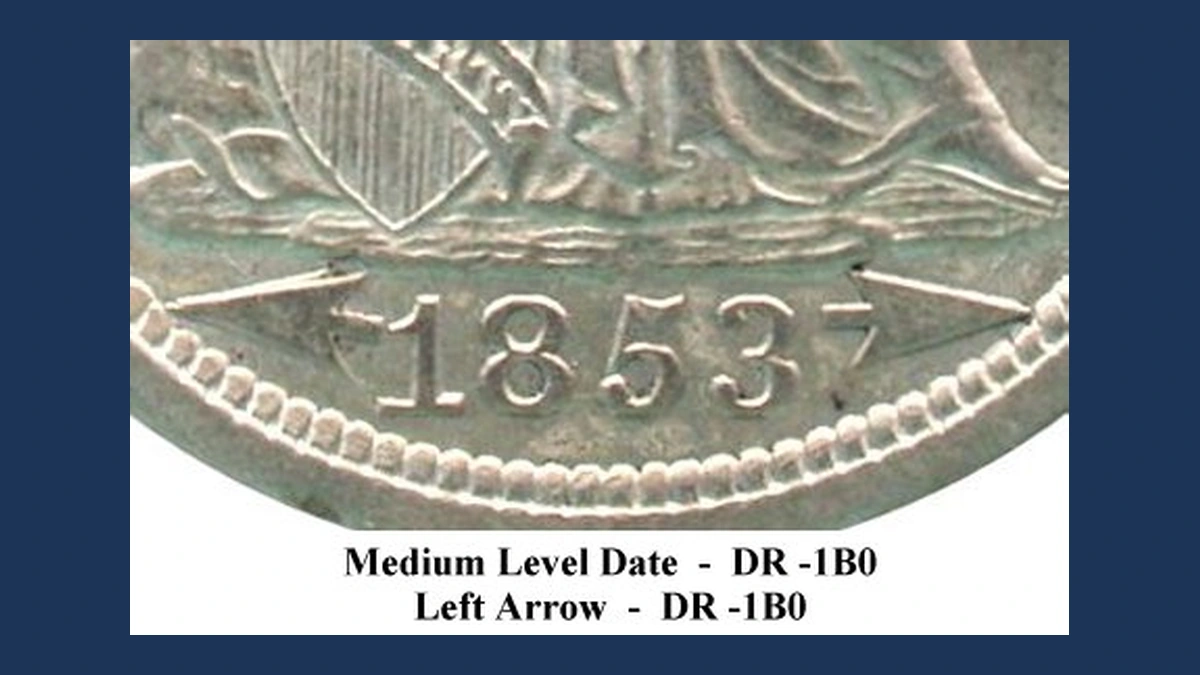
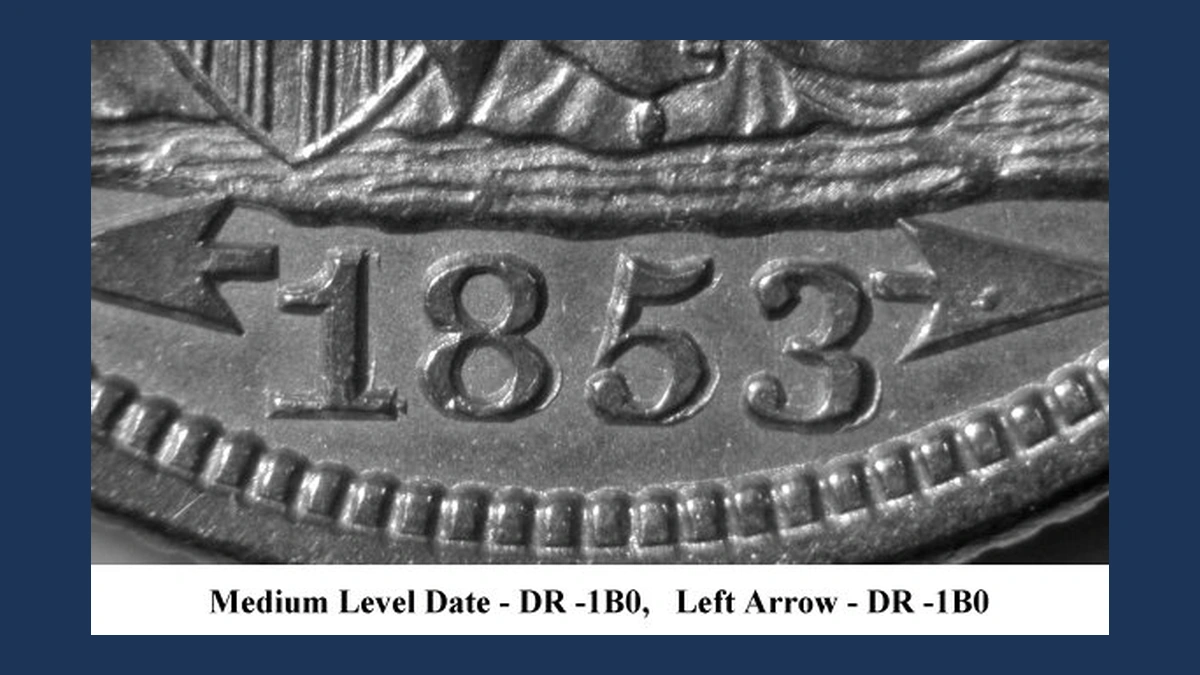
The left arrow has extra detail from an earlier punch position on two Philadelphia examples. F-101 is a collector Proof, while F-103 was made for everyday use.
F-103 also has a high date, with its arrow stem overlapping the short end stroke of 1. Both examples are described with clash marks as well.
Those marks do not make the regular coin a Proof. Each example must be identified from its complete design and surfaces.
The normal arrows intentionally mark the weight change. The unusual feature is the extra punch outline near the left stem, not the simple presence of arrows.
Estimated Value
Estimated ranges are $40–$1,500 for worn through lower unworn regular coins and $20,000–$100,000 for the rare collector Proofs. PCGS records $52,875 for the PR66 Gardner Proof in June 2014.
That result prices the whole rare Proof, not just a repeated arrow. Its manufacture, condition, and scarcity explain the large difference.
A regular coin with a similar arrow mark cannot inherit Proof pricing. Compare the extra outline only after the kind of coin is established.
How to Identify
Examine the left arrow stem with a 10× magnifier and compare its extra outline with the correct picture. On F-103, check the high date and the stem overlapping the end stroke of 1.
A nearby crack or clash has a different origin. Follow the arrow-shaped remnant itself rather than combining all extra lines.
A collector Proof needs matching surfaces, strike, and tool details. Polishing a regular coin does not create that manufacturing history.
The With Arrows version began at 2.49 g and measures 17.9 mm, with edge grooves. Use recorded measurements or a scale and calipers when the coin is safely accessible.
The useful match is the extra left-arrow contour on the correctly identified Proof or regular example, with its other design details agreeing.
Conclusion
Estimated whole-coin values span $25–$100,000 across these 1853 features, with rare collector Proofs at the highest end. Most ordinary worn examples belong to much lower ranges.
The arrows identify the lighter weight version, while the mint and manufacture determine which comparison fits. Then follow the actual numeral, arrow outline, raised crack, or transferred design.
For rotation, repeat the same controlled turn. A coin’s position in one photograph cannot establish its angle.