1849 Dime Error List with Pictures

A New Orleans 1849 dime with a repunched date sold for $371.25 in July 2026. A different coin with a turned back was once offered for $2,450, an asking price rather than a sale.
This guide to 1849 dime errors covers raised cracks, extra number strokes, and rotated designs. Estimated values for worn through lightly worn examples range from $50 to $3,500.
Read on to check the date, mintmark, and how the two faces line up.
1. 1849-O Liberty Seated Dime Die Cracks (Estimated Up to $1,500)
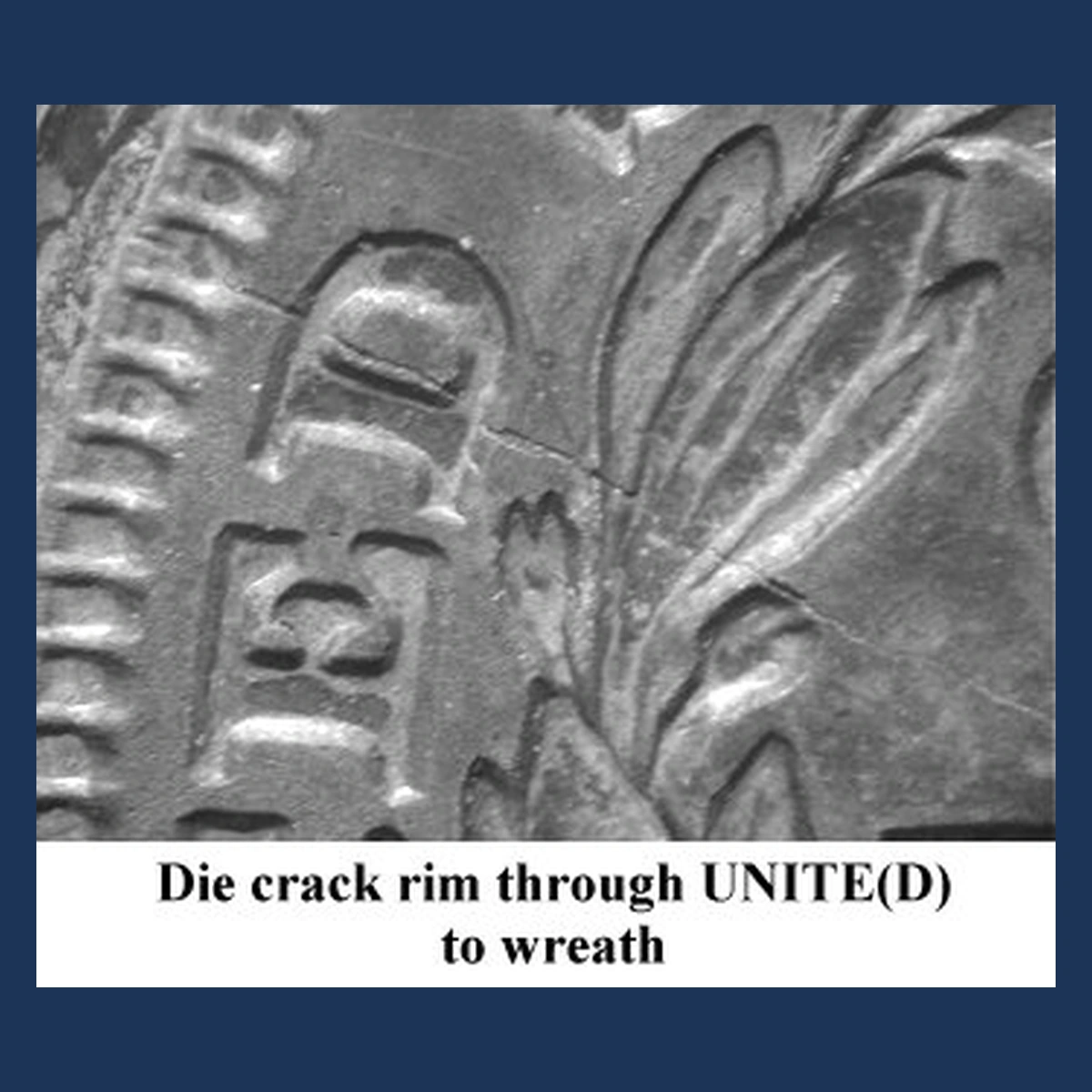
A raised line runs from the rim toward C in AMERICA on a small-O back. The O below the wreath identifies the New Orleans Mint.
The line came from a crack in the die, the steel tool that stamps the coin. Silver entered the opening and formed a raised ridge.
A different example with a large, tilted O also has back cracking. Its line follows its own route.
Mintmark size helps select the right photograph, but it does not prove a crack is present. A cracked tool also does not automatically mean the coin’s back was rotated.
Estimated Value
Estimated whole-coin values are $75–$1,500 for circulated New Orleans dimes with clear back cracks. Remaining detail and original surfaces carry much of the value.
For the same year’s market, a repunched-date PCGS VF35 sold for $371.25 in July 2026. It is a different feature on a different tool pairing.
That sale gives a comparison for the underlying New Orleans issue. It is not a sale of the exact small-O crack or a separate price for its raised line.
How to Identify
Find the small O below the wreath, then follow the line near C in AMERICA with a magnifier. Compare its full route toward the edge, not just one bright section.
A large-O coin needs its own photograph. Do not assume the two tools cracked in the same place.
The normal dime weighs about 2.67 grams and measures 17.9 mm. A scale and calipers check those figures, allowing for wear; inspect the grooved edge where the line reaches it.
Move the lamp to judge height. The useful first clue is a raised ridge in original metal, rather than a scratched trench or a split through the coin itself.
2. 1849 Liberty Seated Dime Repunched Date (Estimated Up to $2,000)
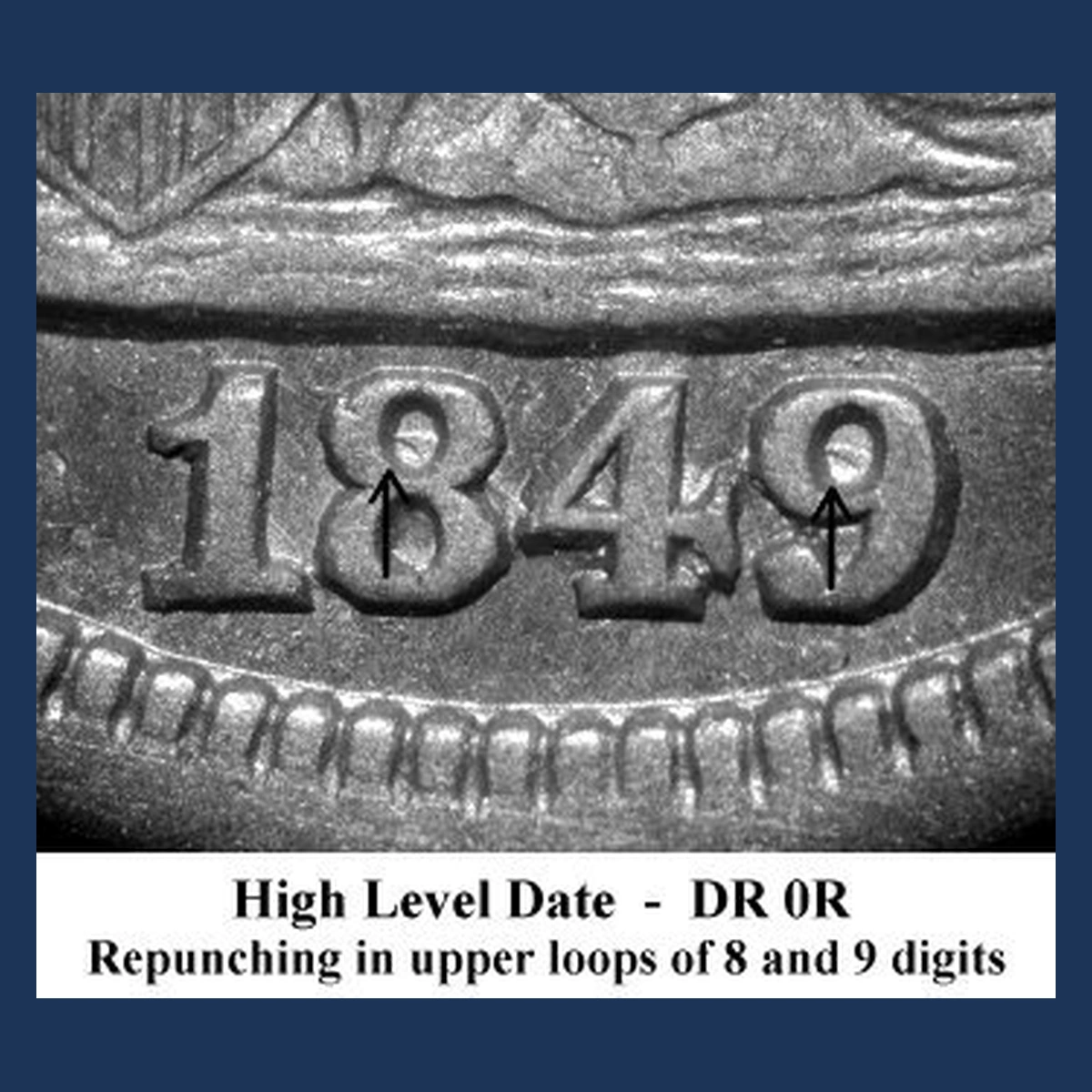
Extra number outlines appear inside 8 and 9 on the Philadelphia date. Older descriptions called it 1849/8, but the feature is now treated as a repunched date rather than a proven changed year.
The New Orleans pattern is different. Earlier strokes remain below the top of 1, the lower loop of 8, and the base of 4.
The date punch was used more than once while preparing the stamping tool. Parts of the earlier entry remained visible on later coins.
An O on the back identifies the New Orleans example. The two date patterns need separate comparisons.
Estimated Value
A New Orleans F-104 graded PCGS VF35 sold for $371.25 at GreatCollections in July 2026. VF35 describes a worn coin with substantial detail remaining.
Estimate $50–$500 for circulated Philadelphia repunched dates and $100–$2,000 for New Orleans examples ranging from worn to lightly worn. The higher range does not apply automatically to both mints.
The recent sale directly supports the O-mint comparison. The Philadelphia range remains an estimate for its different date pattern.
How to Identify
Check for an O below the wreath before choosing a date photograph. With a magnifier, inspect the Philadelphia outlines inside 8 and 9, or the New Orleans strokes below 1, 8, and 4.
Raised remnants should follow recognizable pieces of those numbers. A flat shelf beside a numeral can come from movement during striking instead.
Both mints used 90% silver dimes weighing about 2.67 grams and measuring 17.9 mm. Use a scale and calipers, and inspect the grooved edge for alteration.
The old 1849/8 name alone does not prove an earlier year. Begin with the exact extra strokes that match the coin’s own mint.
3. 1849-O Liberty Seated Dime Rotated Reverse (Estimated Up to $3,500)
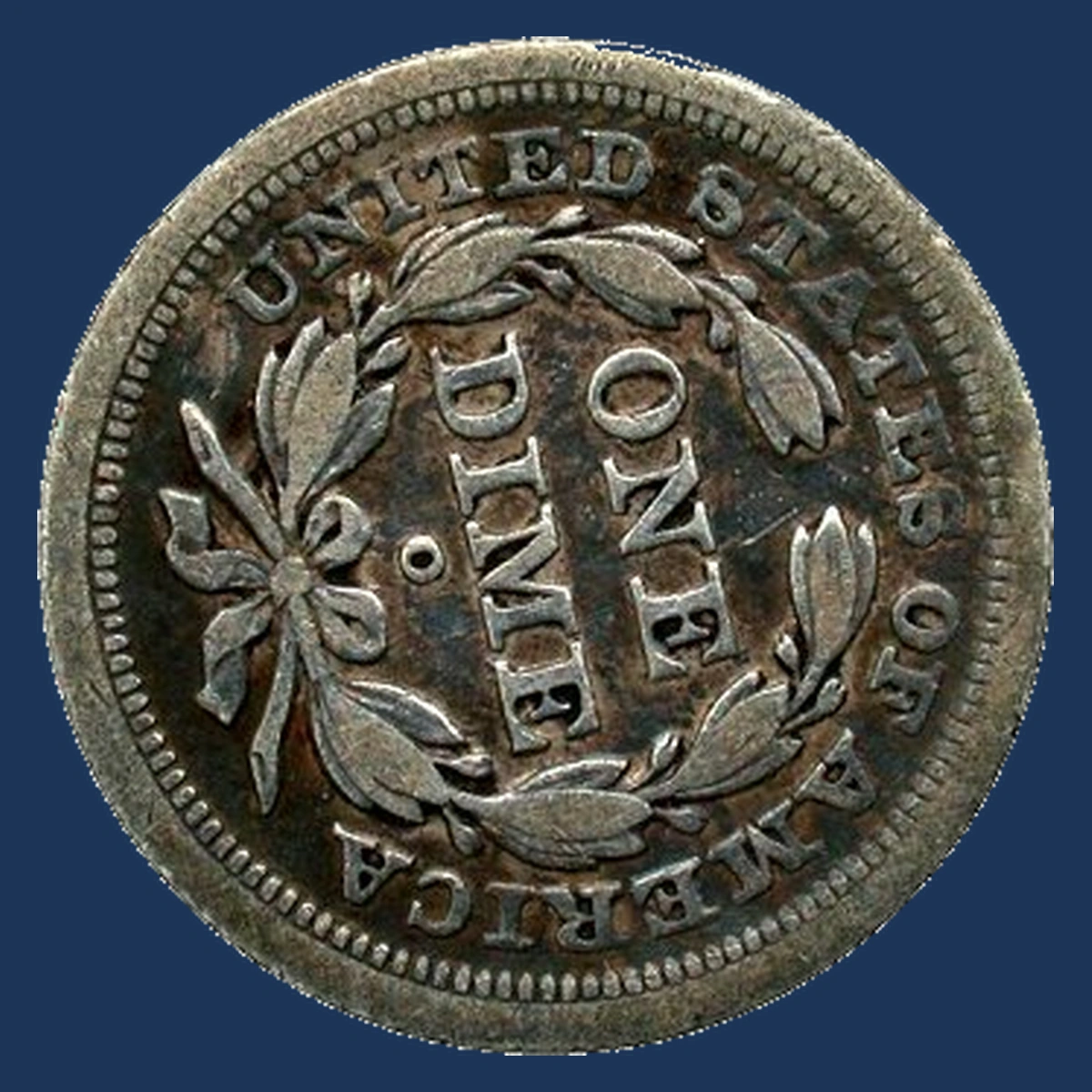
ONE DIME can finish noticeably tilted after a New Orleans coin is flipped in a fixed direction. That angle records how the two stamping tools lined up.
Specialist listings describe large-O backs turned left about 52 or 34 degrees. Small-O examples are recorded around 85 or 48 degrees.
These are separate examples, not four positions of one coin. A repunched date may occur with a rotation, but it cannot establish the angle by itself.
Straightening each photograph independently hides the feature. The front and back must be viewed through the same controlled flip to show their relationship.
Estimated Value
A rotated AU58 was offered for $2,450 in March 2008 in a specialist discussion. AU58 means only slight circulation wear, and the figure was an asking price.
Estimate $150–$3,500 for circulated through attractive lightly worn examples. The angle, mintmark pattern, and original surfaces all affect comparison.
The recent $371.25 repunched-date sale concerns another feature. Neither that transaction nor the old offer establishes a fixed price for every rotated New Orleans dime.
How to Identify
Hold Liberty upright against a vertical line and flip the dime top to bottom without adding a sideways twist. Record where ONE DIME lands, then repeat the movement to check that the angle stays the same.
Compare with the correct large-O or small-O reference, noting that descriptions may use different viewing directions. A magnifier can inspect the O and the edge for a seam from joined pieces.
A scale and calipers compare about 2.67 grams and 17.9 mm, but normal size does not rule out rotation. The simplest first test is ONE DIME repeatedly landing at the same unusual angle after a controlled flip.
Conclusion
Estimated 1849 dime error values range from $50 to $3,500. A crack, repunched number, and rotated back each need their own check and price comparison.
Keep the mintmark visible when studying the date or back lines. For rotation, record a controlled flip before straightening photographs.
One feature does not guarantee another, so describe only what that coin actually shows and compare its wear and original surfaces with a similar example.