1798 Dime Error List with Pictures

A 1798/7 dime with 16 stars above the eagle sold for $99,000 in January 2023. Its MS65+ grade describes an unworn coin with relatively few marks.
The old 7 remains partly visible beneath the final 8. This 1798 Draped Bust dime error list also covers raised cracks, small rim breaks, and transferred design marks.
Estimated whole-coin values span $1,000–$125,000. Read on to distinguish these features and choose a comparison with the correct date and star count.
1. 1798 Draped Bust Dime Die Cracks and Rim Breaks (Estimated Up to $70,000)
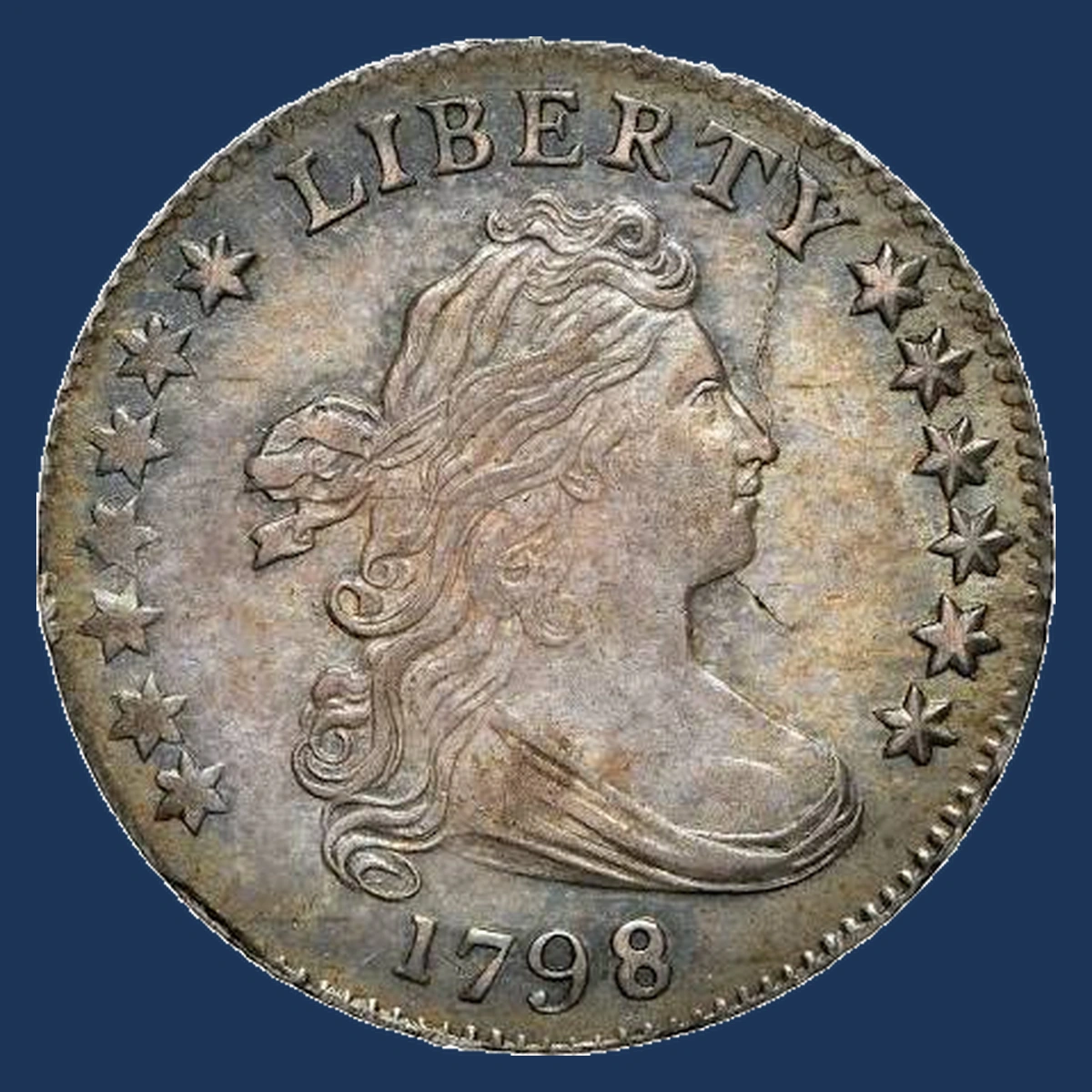
A raised line on the front runs from Y toward Liberty’s nose, then toward her chin. On the back, another joins the second feather tip of the left wing to the border.
These marks appear on reported Large 8 coins called JR-4. They formed when metal entered cracks in the die, the steel tool that stamped the coin.
Small parts of the same tool also crumbled above S OF at the rim. That left modest raised patches on later coins.
The scale matters: these are small rim breaks, not one large lump replacing the entire upper border.
Estimated Value
The estimated whole-coin range is $1,000–$70,000, from worn Large 8 coins to attractive unworn examples. Small breaks add interest within that larger value.
PCGS records a JR-4 graded MS64 at $61,000 in May 2026. MS64 means unworn with some marks.
A cleaned Large 8 graded Fine Details brought $1,680 in August 2025. That coin had wear and altered surfaces; neither result measures a separate payment for the exact cracks or rim breaks.
How to Identify
Use a 10× magnifier to follow the line from Y toward Liberty’s nose and chin. Then locate the second left-wing feather tip on the back and follow its line to the border.
Compare both routes with a clear JR-4 picture. A random scratch across the portrait does not make the same match.
Inspect the little raised patches above S OF. A blow to the rim usually pushes or dents metal rather than repeating the pictured shapes.
When safely accessible, use a scale and calipers against about 2.70 g and 19.80 mm, then check the edge grooves. Allow for weight lost through wear.
The Large 8 date and matching raised lines are the starting combination; examine the small rim breaks after those agree.
2. 1798 Draped Bust Dime Clashed Dies (Estimated Up to $100,000)
An unexpected patch of design in front of Liberty’s throat appears on a Large 8 dime graded PCGS MS64. Stack’s Bowers described that example in 2012.
The marks came from a die clash, when the stamping tools hit each other without a blank between them. Later coins received traces of the opposite design.
A different 1798/7 coin with 16 back stars also shows clashes. Its description records one clash, smoothing of the tool, and another clash afterward.
That history helps explain why some traces are weaker than others. Compare each example separately, although both show the same process.
Estimated Value
The 16-star overdate graded NGC MS66 sold for $43,125 in April 2009. MS66 is an unworn grade with few marks.
The estimated whole-coin range is $1,000–$100,000 across worn Large 8 coins and better-preserved overdates with visible clashes. Different varieties explain much of that wide spread.
The $99,000 overdate sale from 2023 gives a later high-grade comparison. It does not show that the price difference was caused by stronger clash marks.
How to Identify
Choose pictures for the right kind of dime before examining faint marks. The Large 8 example calls for a close look in front of the throat.
The 16-star overdate needs its own front-side comparison. Do not assume that both examples show identical marks in identical places.
Tilt the coin under light and use a 10× magnifier to match extra shapes with parts of the opposite design. Polishing lines or scratches do not necessarily form those recognizable shapes.
A normal dime started near 2.70 g and 19.80 mm. Record scale and caliper readings when safely accessible, and inspect its edge grooves.
The useful clue is a shape borrowed from the other side’s design, rather than simply a dark line or a bright streak.
3. 1798 Draped Bust Dime 1798/7 Overdate (Estimated Up to $125,000)
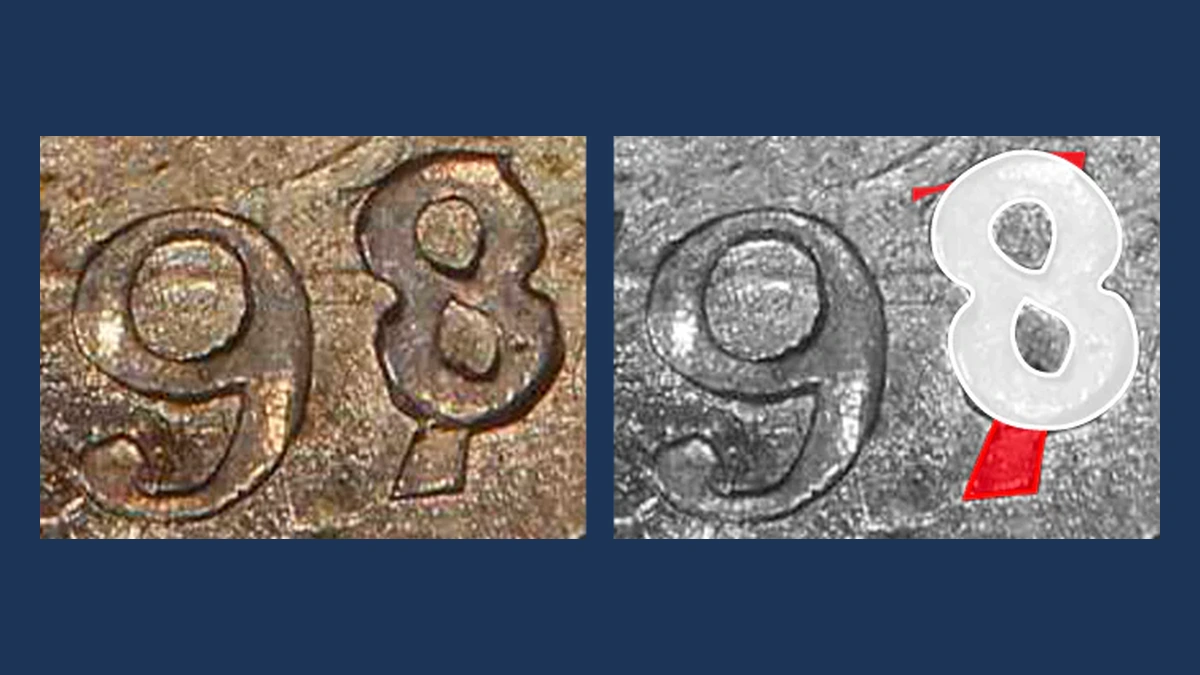
Part of an earlier 7 shows beneath the final small 8. The date was changed on the stamping tool, so later coins carried pieces of both numbers.
On the 16-star coin in the Heritage description, a corner of the old 7 projects at the upper right of the 8. That provides a specific place to look.
This changed date, called an overdate, occurs with either 13 or 16 stars above the eagle. Those are two varieties of the same date change.
An ordinary Small 8 or Large 8 is not automatically an overdate.
Estimated Value
The estimated range is $2,500–$125,000, from worn overdates to exceptional unworn examples. Star count, condition, and overall appearance all affect the price.
The PCGS 16-star record lists $99,000 for the MS65+ sale in January 2023. That result belongs to the 16-star variety.
It should not be treated as an automatic price for a 13-star coin. A readable old numeral helps identify the variety, but the rest of the coin still matters.
How to Identify
Aim a 10× magnifier at the upper right of the final 8. Compare the projecting corner with a clear picture of an identified 1798/7.
A cut, worn loop, or damaged number can create a misleading outline. Check that the extra raised stroke fits the old 7 rather than simply making the 8 look thick.
Count the stars above the eagle to separate the 13-star and 16-star varieties. The large eagle with a shield and the absence of a written value are normal for this Philadelphia dime.
Check the edge grooves, then use calipers and a scale when safely accessible against about 19.80 mm and 2.70 g. The deciding date detail remains the old 7 under the 8; star count alone cannot establish an overdate.
Conclusion
Estimated values range from $1,000 to $125,000 across these 1798 varieties and condition levels. An overdate, a raised crack, and a clash mark can all occur on the same coin.
Identify the date first, then count the back stars where relevant. Compare the smaller marks with pictures of that same variety.
A clear view of both sides helps prevent a normal star count or ordinary rim damage from being mistaken for an additional error.