1839 Dime Error List with Pictures

An 1839-O dime with a repeated O mint letter sold for $12,925 in March 2016. Its MS67+ grade describes exceptionally well-preserved, unworn surfaces.
This 1839 Liberty Seated dime error list includes tilted designs, repeated date marks, and raised cracks, with estimated whole-coin values of $50–$20,000. The O below the wreath means New Orleans; Philadelphia left that space blank.
Check that mint detail first, then use the comparisons below to find the right features.
1. 1839 Liberty Seated Dime Rotated Dies (Estimated Up to $1,500)
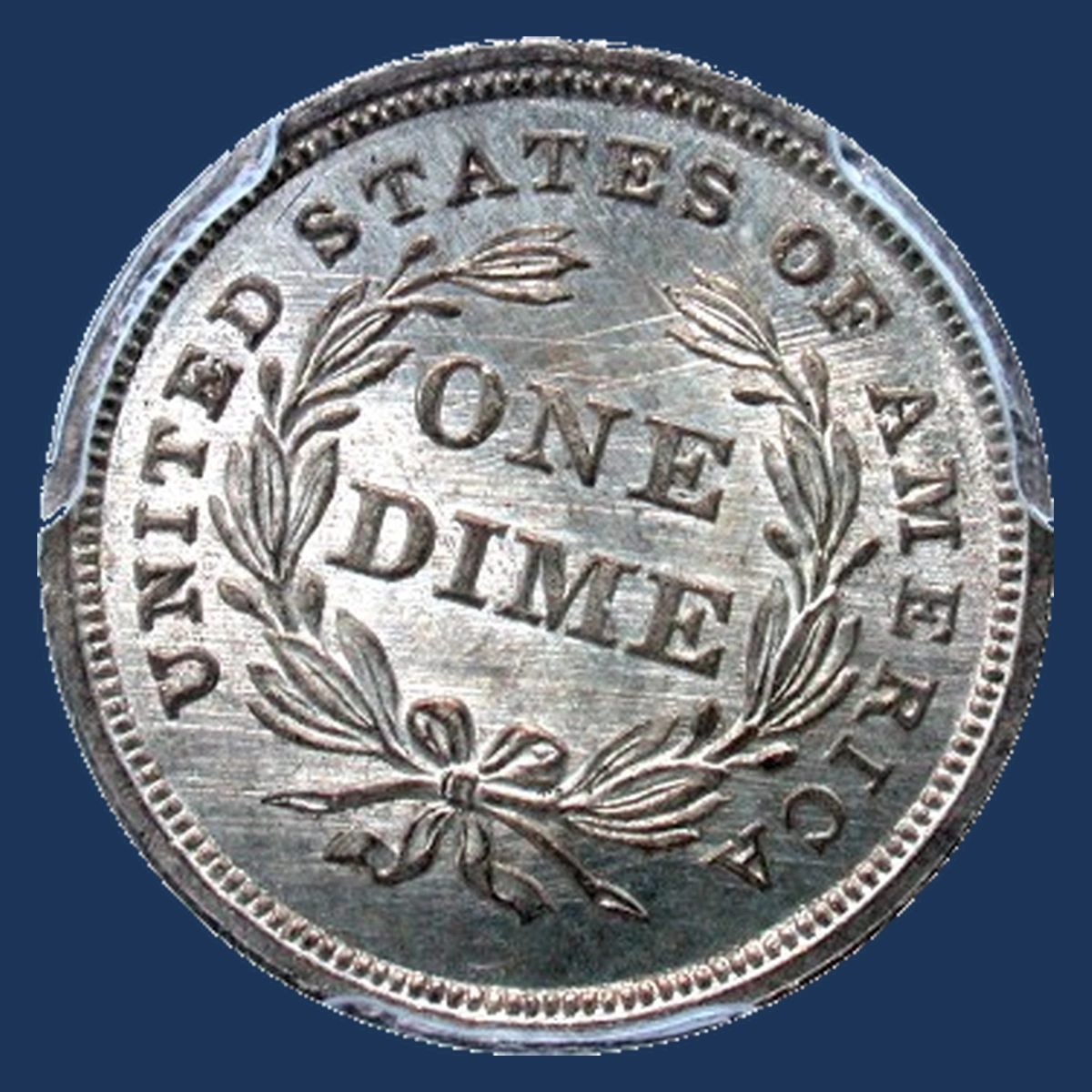
The back can lean slightly even when Liberty is held upright before a top-to-bottom turn. That tilt records the alignment of the dies, the steel tools that stamp both sides.
A Philadelphia F-104 example is reported 18 degrees left, while a separate F-109 is about 12 degrees right. Other examples show about 23 degrees left or normal alignment.
These angles belong to particular examples and stages of tool use. The year alone does not promise one angle.
Check the actual coin with a controlled turn. Separately straightened photographs cannot show how its two sides originally line up.
Estimated Value
The estimated whole-coin range is $50–$1,500 for worn through lightly worn Philadelphia examples. The modest angle adds interest, while condition remains a major price factor.
A PCGS MS64 coin with CAC quality approval sold for $2,400 in 2024. MS64 means unworn with some marks, placing it above much of this worn-coin range.
That result compares condition. It does not show that an 18-degree rotation by itself deserves a four-figure bonus.
How to Identify
Place Liberty upright in a stable transparent holder. Turn it from top to bottom without twisting sideways, then see whether ONE DIME stands upright.
Repeat the turn against a vertical line behind the holder. A genuine rotation should return to the same angle each time.
Use a 10× magnifier to confirm the date and the absence of an O below the wreath. The listed comparisons here are Philadelphia coins.
When safely accessible, check weight and diameter with a scale and calipers against 2.67 g and 17.90 mm. Inspect the edge grooves for seams or other changes.
Use the same turning direction as the comparison photograph. A repeated left or right lean under that controlled turn is the useful evidence, not a tilted photograph alone.
2. 1839 Liberty Seated Dime Repunched Date (Estimated Up to $5,000)
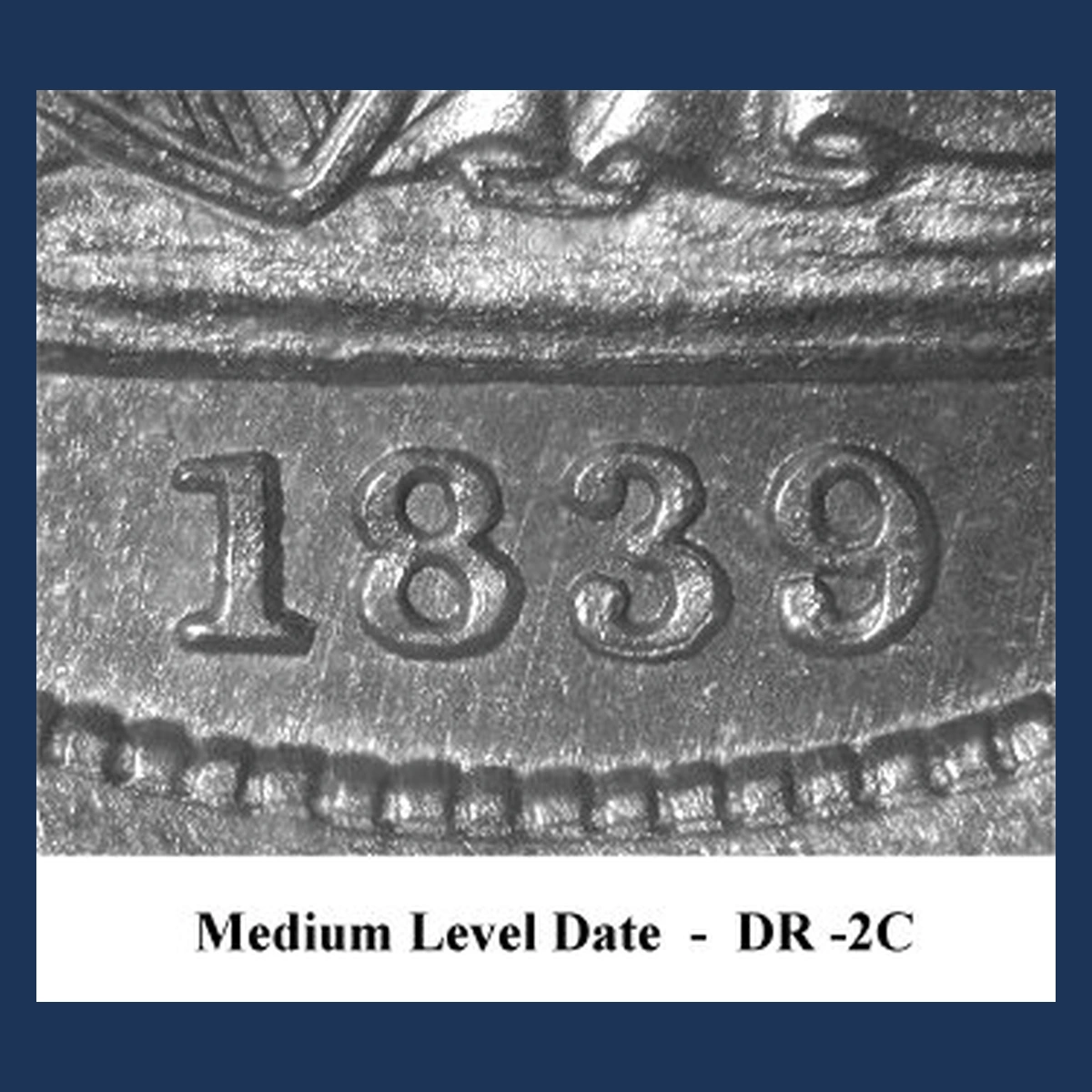
Extra pieces of date numerals can remain when a punch enters the stamping tool more than once. Coins made with that tool repeat those remnants.
The Philadelphia F-104 example has repeated marks on 39. A different front, described as F-105a, shows a slight extra mark on 1 and clearer repetition on 3.
An older description included 9 for that second front, but a later examination specifically confirmed 1 and 3. Those observations should stay with their separate examples.
There is no need to find four doubled numbers. The useful match is the particular date pattern of the coin being examined.
Estimated Value
The estimated range is $75–$5,000, from worn examples to very well-preserved unworn coins. The whole coin’s condition remains central.
CAC’s market discussion reports a PCGS MS64 CAC sale of $2,400 in January 2024. It also reports a PCGS MS65 CAC dealer sale of $3,750 in January 2025.
MS65 generally allows fewer marks than MS64. Neither comparison specifically prices the repeated date marks, and the dealer sale should not be presented as an auction result.
How to Identify
Confirm a dime rather than the smaller half dime, and check that no O appears below the wreath. The intended Philadelphia issue is the No Drapery design, without an extra cloth fold used on later coins.
For an accessible coin, compare scale and caliper readings with 2.67 g and 17.90 mm, then inspect its edge grooves. These checks identify the coin, not the extra date strokes.
Use a 10× magnifier to compare the whole date with the correct front picture. For F-104, look at 39; for F-105a, concentrate on the slight 1 remnant and stronger 3.
Move the light so a shadow or scratch near 9 is not treated as another number. Start with the repeated shape on 3 and check that the remaining date agrees with the same example.
3. 1839 Liberty Seated Dime Die Cracks and Shattered Dies (Estimated Up to $6,000)
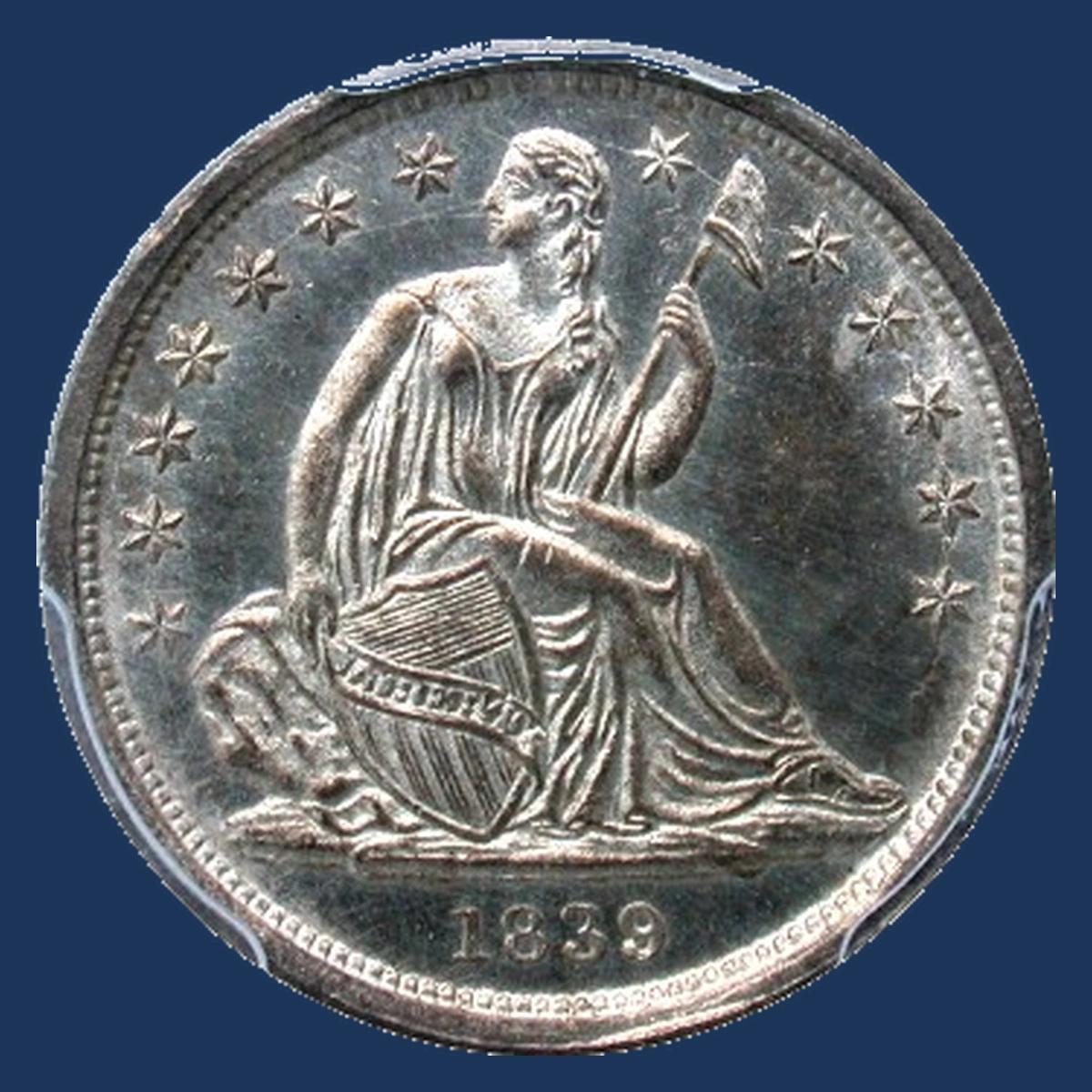
One Philadelphia crack runs from the rim through star 2, Liberty’s hand, and the shield’s left side to the date’s 3. That route identifies the reported F-104 front.
On the New Orleans F-104a back, a long crack instead crosses DIME between the surrounding lettering and wreath. These are different coins.
Other examples have crack arrangements nicknamed pie-shaped or cobweb. The names describe the pattern, not a new denomination or a fixed extra price.
Coin metal entered cracks in the stamping tool and formed raised ridges. Keep each pattern with its own mint and side of the coin.
Estimated Value
The estimated whole-coin range is $50–$6,000, from worn examples to attractive unworn coins. A clear network can interest specialists, especially when the surrounding surface remains original.
The $2,400 Philadelphia MS64 sale offers one condition comparison. A New Orleans XF40 sold for $384 in 2025, showing a much more worn level.
Neither sale is assigned to the exact crack pattern here. A dramatic line still needs to match the correct coin before it affects the estimate.
How to Identify
Find the mint letter before choosing a crack photograph. Philadelphia F-104 calls for the raised route through star 2, the hand, shield, and date.
For New Orleans F-104a, follow I in UNITED through the left wreath and DIME. Continue through the lower right buds toward C in AMERICA.
Compare that route with the New Orleans photographs using a 10× magnifier. Scratches cut inward, while clothing folds belong to the normal design.
Check an accessible coin with a scale and calipers against about 2.67 g and 17.90 mm, and inspect the edge grooves. The useful match is the complete raised route on the correct side for that mint, rather than one line that happens to cross the design.
4. 1839-O Liberty Seated Dime Repunched Large O Mintmark (Estimated Up to $20,000)
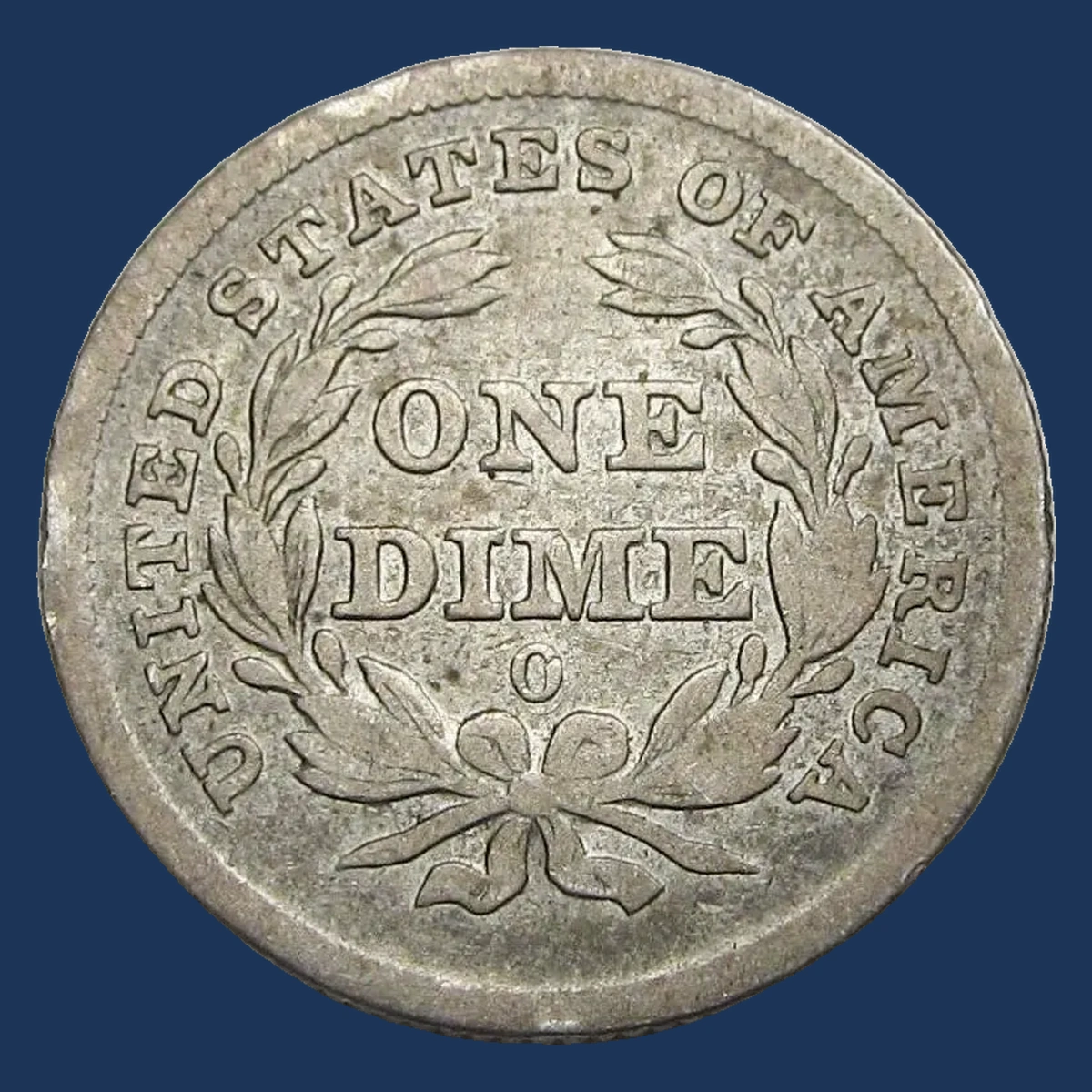
Look below and to the lower right of the O for another rounded outline. It remains from an earlier position of the mint-letter punch.
The punch entered the stamping tool more than once, leaving pieces of both impressions. Later coins carried that repeated O.
Collectors call the variety FS-501, with an earlier stage listed as F-104 and a later one as F-104a. The later stage also has a crack crossing the back.
The repeated O remains the same feature as the tool develops that crack. A large O by itself is not enough; the extra outline must be present.
Estimated Value
PCGS records $12,925 for an MS67+ example in March 2016. An earlier NGC MS67 example brought $10,350 in August 1999; both were exceptionally well-preserved whole coins.
The estimated range is $75–$20,000, from worn examples to very high unworn grades. Clear O details and original surfaces support stronger prices.
The variety record concerns a dime. A separately cataloged 1839-O half dime is a different denomination, even if a similar catalog number appears.
How to Identify
Magnify the lower and lower-right edges of the O below the wreath. Compare the extra rounded shape with a pictured FS-501 example.
A normal Large O differs from a normal Small O, but size alone is not repunching. The second outline is what matters.
On a later F-104a, the crossing back crack can help confirm the stage. Repeated detail on front star 8 offers another supporting clue.
Use a scale and calipers when safely accessible against about 2.67 g and 17.90 mm, then examine the edge grooves. Confirm the denomination before comparing prices.
Photograph the O closely enough to see its extra outline. That matching shape below and to the right is more useful than a dramatic crack somewhere else on the coin.
Conclusion
The estimated $50–$20,000 range covers different 1839 mints, varieties, and condition levels. Check for the O before comparing a date, crack pattern, or repeated mint letter.
A tilted back needs a controlled turn, while a small extra numeral needs magnification. Neither test replaces the other.
Keep the whole coin’s condition in view when comparing prices, and avoid adding a separate cash bonus for every feature on one example.