1951 Half Dollar Error List with Pictures

A second S can make a big difference. An unusually well-preserved 1951-S half dollar with this feature sold for $3,782 at Heritage in May 2026.
Other 1951 half dollar errors have extra ‘teeth,’ doubled designs, or too little metal. Estimated prices across the examples below run from $40 to $4,000, depending on the error and condition.
Read on to see where each feature appears and how size, weight, and a magnifier can help you tell them apart.
1. 1951 Franklin Half Dollar Bugs Bunny Die Clash Error (Estimated Up to $300)
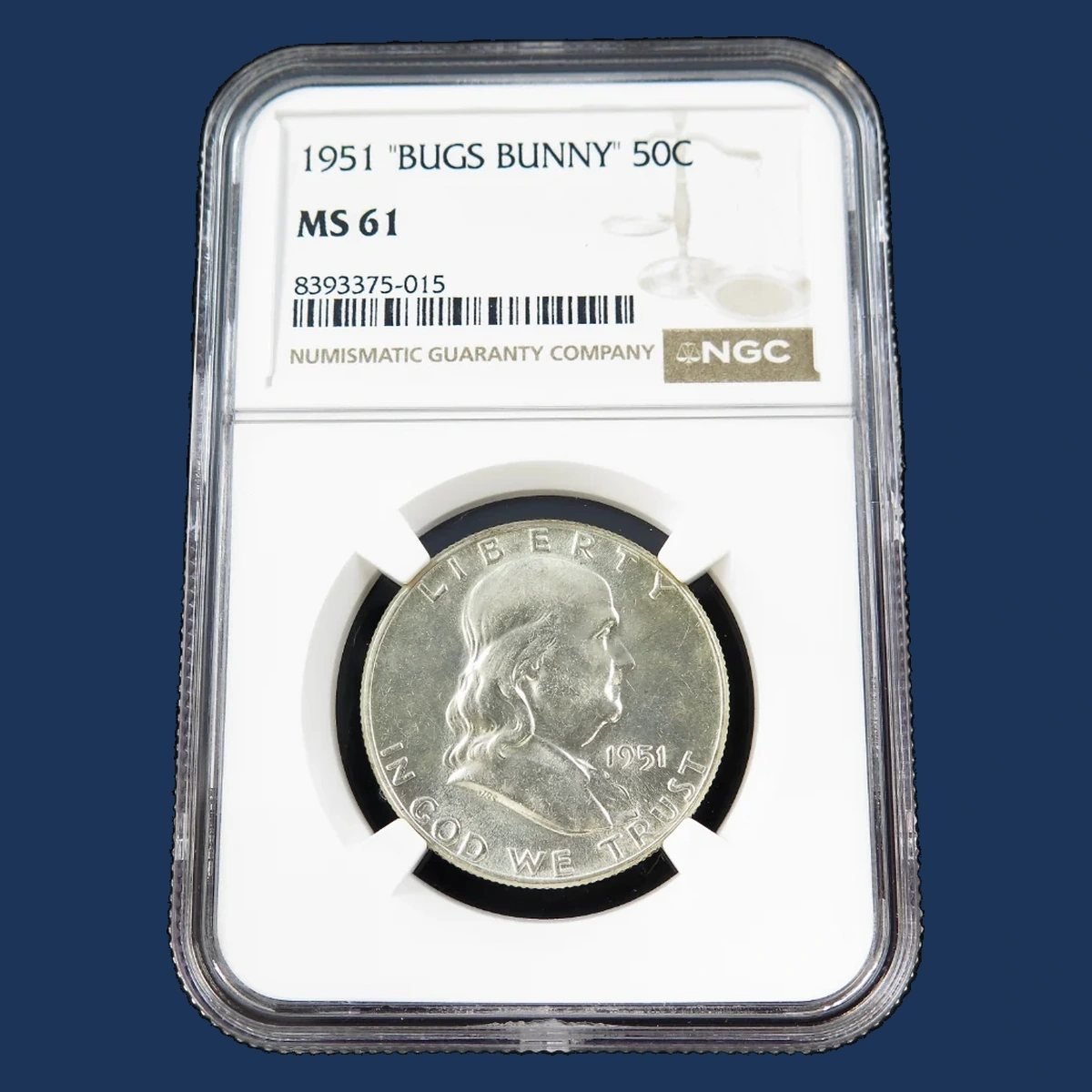
Look at Franklin’s mouth. Small raised shapes on his upper lip give this Philadelphia half dollar its Bugs Bunny nickname.
They came from an eagle’s wing on the back design. A die is a steel tool that stamps coins.
Here, the two dies hit each other without a metal disc between them.
The collision left wing marks on the front die, which then stamped them onto later coins. This is called a die clash.
The teeth are part of the coin’s raised design. Random lines near the face do not establish this particular feature.
Estimated Value
Allow an estimated $40–$300 for worn examples through attractive, lightly marked unworn coins. A coin graded MS64 Full Bell Lines sold on eBay for $235 in November 2020.
Full Bell Lines means the horizontal lines across the bell remain sharply defined. It describes design quality, not another error.
Clear teeth help buyers recognize the variety. Wear, scratches, and the bell’s detail still affect what someone will pay for the whole coin.
How to Identify
Use a 10× magnifier to examine the upper lip, then tilt the coin under a lamp. The little teeth should rise above the surface rather than cut into it.
Compare their outline with a known Bugs Bunny example. A scratch leaves a channel, while dirt may only make the mouth look different in a photograph.
This Philadelphia coin has no mint letter above the bell on the back. Keep both sides in your photographs so the date and mint can be checked together.
When safely accessible, use a digital scale and calipers to check against 12.50 grams and about 30.6 millimeters. The edge has grooves; normal measurements support the check, but the matching raised teeth identify the feature.
2. 1951-S Franklin Half Dollar Struck on Thin Quarter Stock (Estimated Up to $750)
A coin can have the right width and still contain too little metal. Denny Polly reported a 1951-S half dollar weighing 153.1 grains, or about 9.92 grams.
He described its blank—the metal disc before stamping—as cut from thin silver strip intended for quarters. The cutting tool gave it half-dollar width, but the strip left it thinner than normal.
Both sides show weak detail. Thin metal may not fill the stamping tools fully, although low weight and weak detail alone do not prove that quarter stock was used.
Estimated Value
An estimated $250–$750 suits a confirmed thin-stock example. A useful comparison is a 1962 Franklin half dollar weighing 10 grams, sold for $305.50 at Heritage in February 2017.
That coin was graded MS62 and described as made from stock rolled 20% too thin. The published sale concerns another year and a different description of the thin metal; it was not a sale of this reported 1951-S quarter-stock coin.
How to Identify
Start with calipers. A width near the normal 30.6 millimeters separates this possibility from a half dollar stamped on a smaller quarter blank.
Compare its thickness at several points with a normal Franklin half, and examine the edge grooves. Filing often leaves cuts or uneven surfaces where someone has removed metal.
A digital scale should show how much weight is missing when the coin is safely accessible. The reported example weighs about 9.92 grams, against the normal 12.50 grams.
Check for the S above the bell. Under a 10× magnifier, examine the weak design and surfaces for grinding or chemical damage; a full-width, evenly thin coin with intact stamped detail deserves closer examination.
3. 1951 Franklin Half Dollar Doubled Die Reverse Error (Estimated Up to $1,000)
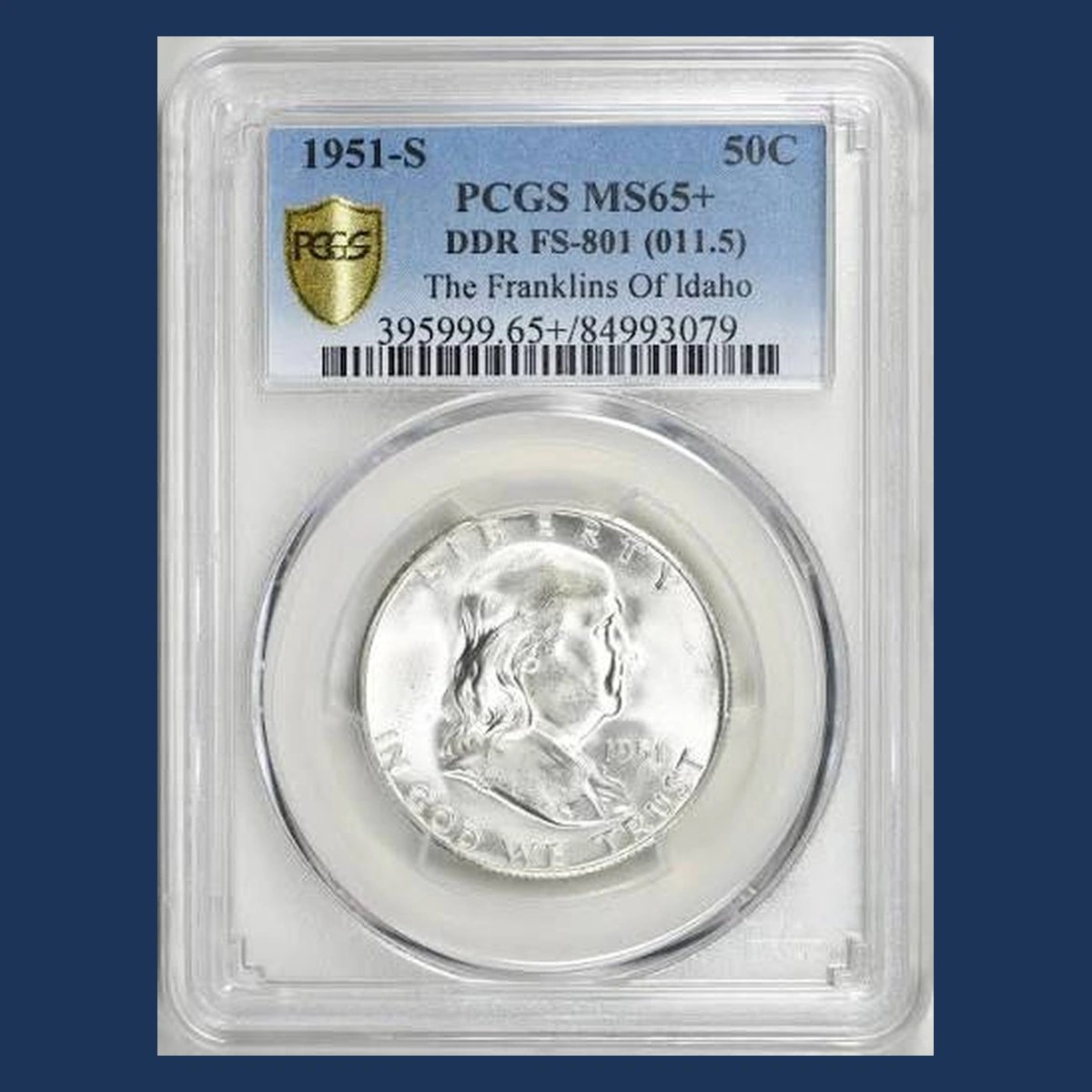
Some 1951 half dollars have doubled details on the back. The extra outlines were already in the die, so it stamped both versions onto the coin.
Two different issues belong here. One is a San Francisco coin made for everyday use; the other is a Philadelphia Proof, specially made for collectors.
The San Francisco variety has the catalog number FS-801. PCGS also lists a doubled back design for the Proof issue, but the two need separate photo comparisons.
Shine is not enough. A polished everyday coin does not become a Proof, and unrelated doubling will not identify either variety.
Estimated Value
San Francisco examples have an estimated $75–$400 range. Stack’s Bowers sold an MS63 for $109 in April 2026 and a better-preserved MS66+ for $336 in March 2023.
For Philadelphia Proofs, use an estimated $250–$1,000 for ordinary through attractive examples. This is an estimate, not a recorded Proof sale.
The San Francisco sales provide background. Proofs with frosted designs against mirrored surfaces need a separate price comparison.
How to Identify
Which kind of coin are you holding? An S above the bell points to the San Francisco issue, while the Philadelphia Proof has no mint letter.
A reliable grading label helps establish Proof status. Bright surfaces alone cannot do that job.
Both issues normally contain 90% silver, weigh 12.50 grams, and measure about 30.6 millimeters across. Check accessible coins with a digital scale and calipers, and inspect the grooves around the edge.
Now compare the doubled back details under a 10× magnifier with photographs of that exact issue. Look for matching extra outlines; a flat shelf caused by movement during stamping, or a scratch beside a letter, is a different feature.
4. 1951 Franklin Half Dollar Struck on a Quarter Blank (Up to $1,840)
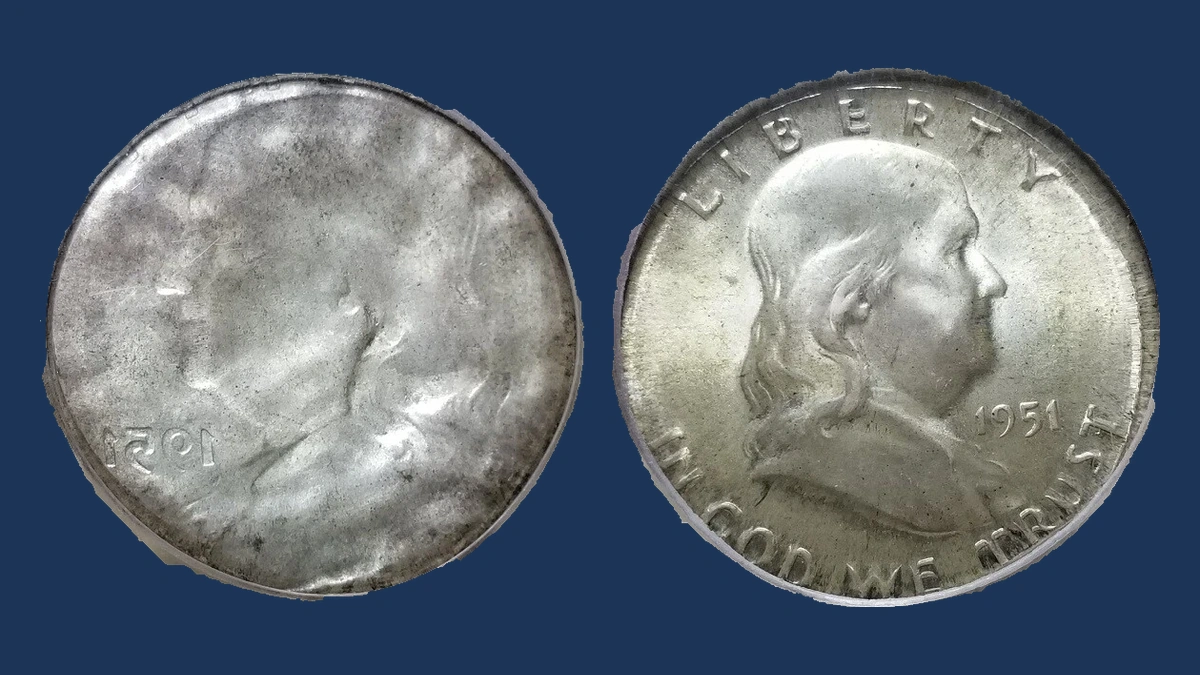
Where did LIBERTY go? On the documented Philadelphia coin, the entire word fell beyond the edge because a quarter blank was too small for the half-dollar design.
The design sits toward 12 o’clock, and most of the coin’s value lettering is missing too. Heritage recorded its weight as 6.3 grams.
A thin mark near 3 o’clock on the front came from material caught between the die and blank during stamping. It belongs to this same coin.
A Denver example on a quarter blank is also reported. Its design position and remaining letters need their own photographs.
Estimated Value
Heritage sold the NGC MS63 Full Bell Lines example for $1,840 on June 4, 2010. Comparable certified coins with readable dates have an estimated $1,500–$3,500 range.
That estimate uses an older sale as its starting point. It does not represent a recent transaction, and neither the small front mark nor the sharp bell lines has a separate price to add to the coin’s value.
How to Identify
A digital scale is especially useful here. The auction coin weighs 6.3 grams, close to a silver quarter’s normal 6.25 grams and far below a half dollar’s 12.50 grams.
Measure an accessible coin with calipers and compare it with the normal half-dollar width of about 30.6 millimeters. Its smaller metal disc should explain why the design runs off the edge.
Inspect that edge with a 10× magnifier. Cutting down a normal half dollar can leave filing marks, fresh cuts, or damaged grooves; a genuine wrong-blank piece has naturally stamped surfaces.
The small front mark helps identify the Philadelphia specimen. Keep the reported Denver coin separate.
The quickest check combines a readable date, quarter-like weight, and a smaller edge with naturally stamped surfaces.
5. 1951-S Franklin Half Dollar Repunched S Mintmark Error (Up to $3,782)
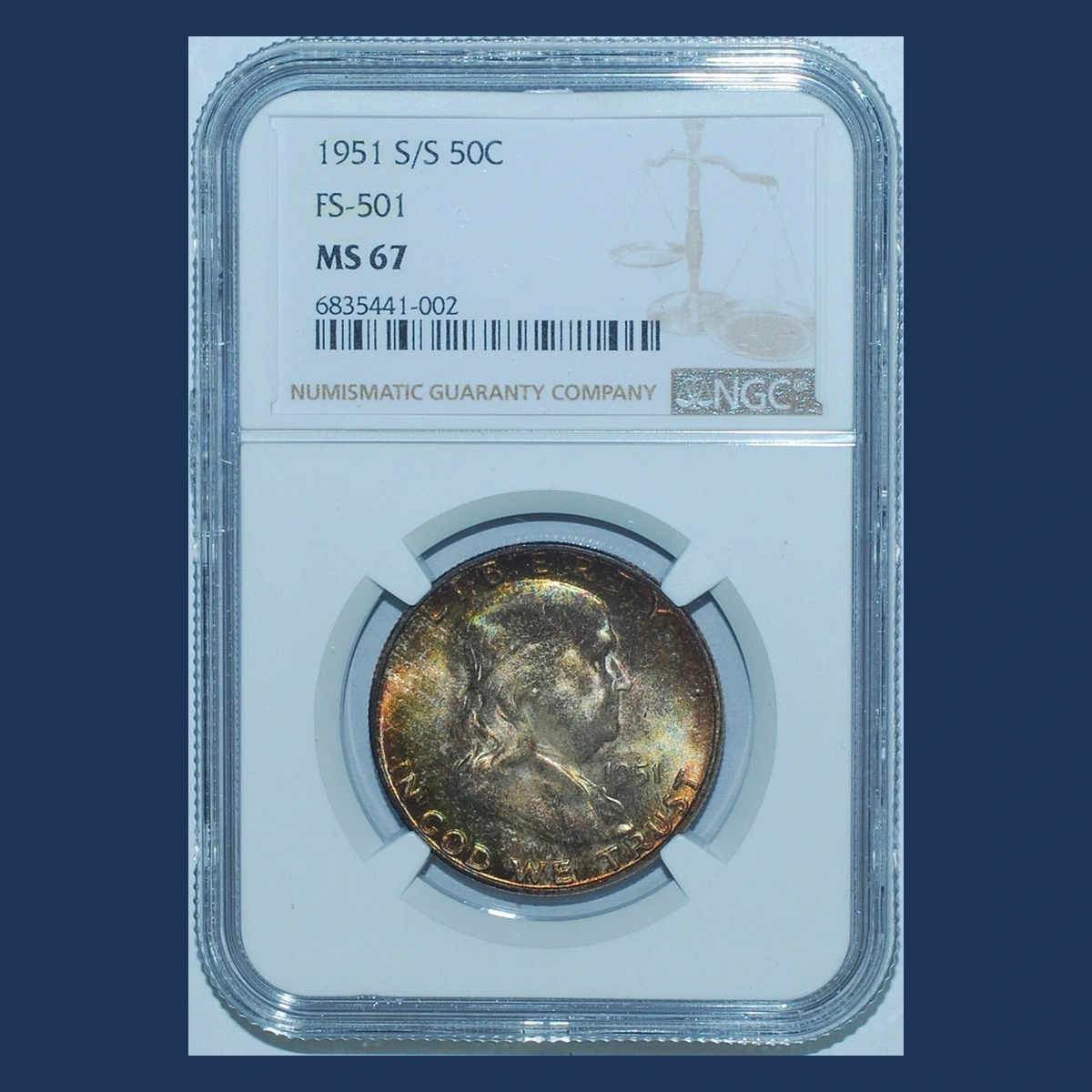
The S above the bell can show traces of an earlier S underneath it. Look around the letter’s middle and bottom, where the first impression remains visible.
Mint workers added this letter to a die with a hand punch. Punching it again in a slightly different position left two overlapping impressions, which then appeared on coins.
This is a repunched mintmark. The specialist Franklin guide also warns that flat doubling can appear at the top of the same letter during stamping.
Those effects have different causes. The lower traces are especially useful when checking the repunched S.
Estimated Value
A PCGS MS66 example sold for $145 at Stack’s Bowers in September 2025. An exceptionally clean NGC MS67+ Full Bell Lines coin reached $3,782 at Heritage in May 2026.
The estimated range is $50–$4,000, from worn coins to superb examples with sharp bell lines. That higher sale rewards the whole coin’s condition; a second S on an ordinary worn piece does not make it worth thousands by itself.
How to Identify
Focus on the bottom half of the S with a 10× magnifier. The specialist photographs show where parts of the earlier letter remain below the later one.
A thick-looking S is not enough. Match the shape and position of those extra curves, then check nearby metal for cuts or dents.
The letter’s flat upper shelf may come from movement during stamping. Keep that separate from the rounded traces of the earlier punched S.
Photograph the date as well as the back. Check an accessible coin against the normal 12.50-gram weight and roughly 30.6-millimeter width.
The edge should retain its grooves. For the fastest match, compare the lower S curves with a known example of this variety.
Conclusion
The smallest detail here is an extra part of the S; the largest change is a half-dollar design squeezed onto quarter-sized metal. A thinner coin can still have normal half-dollar width, so measurements matter as much as photographs.
Estimated values run from $40 to $4,000. Before choosing a price comparison, check whether your coin is worn, unworn, or a collector Proof, and whether its bell lines remain clear.